Article

The Novel Hazard Control and Accident Prevention System for Sustainable Chemical Lab Management

1
Department of Laboratory Construction and Administration, Nanjing Tech University, Nanjing 211816, China
2
School of the Environment and Safety Engineering , Jiangsu University, Zhenjiang 212013, China
3
School of the Emergency Management, Jiangsu University, Zhenjiang 212013, China
*
Authors to whom correspondence should be addressed.
Sustainability 2025, 17(17), 8015; https://doi.org/10.3390/su17178015
Submission received: 30 June 2025 / Revised: 14 August 2025 / Accepted: 2 September 2025 / Published: 5 September 2025
(This article belongs to the Section Economic and Business Aspects of Sustainability)

Abstract

The safe and effective operation of labs is essential for the sustainable development of universities and academies. However, due to the need for more experience in lab management to eliminate safety risks, it is primarily necessary to solve the problem of inadaptability caused by the simple application of other industry management models. According to the comprehensive survey research on the current management status of chemical labs, this paper explores a new sustainable safety management system based on the trajectory intersecting model. This work established a hierarchical model that includes the layers of base, analysis, control, and goal to systematically analyze the safe operation of chemical labs and identify hazards and related evolving potential accidents. Then, multiple targeted suggestions for practical system applications are formulated and continuously acted upon until the development of the hazard has halted. The results of this study could establish a sustainable safety-protecting shell for chemical labs through step-by-step promotion and optimization feedback between layers. Thus, the chemical lab management will achieve its safety target more effectively. Finally, these findings have implications for improving the existing chemical lab management model and quality.

1. Introduction

Chemical labs, one of the essential departments in universities and academies, provide the scientific environments for teaching, learning, researching, and discovery [1]. Here is the front line for people exploring uncharted territories with scientific experiments or tests, which can also be hazardous workplaces for lab personnel [2]. Chemical labs have numerous potential hazards, including chemical, physical, biological, and even radioactive [3]. In the past decades, there have been many accidents in labs worldwide reported with significant injuries and fatalities [4,5]. Not long ago, an explosion accident happened in the lab of the National University of Colombia, causing one death and two injuries in July 2023 [6]. Similarly, another severe explosion accident occurred in a lab in China, resulting in two deaths and nine injuries in October 2021 [7]. All these accidents are closely related to the flammable chemicals usually used in experiments or tests [8]. Across the analysis of 197 lab accidents in the past 39 years, Lu points out that chemical hazards are the highest percentage of accident causes [9]. In the meantime, Ye also found that the proportion of chemical hazard accidents reached 62%, with the statistics for 150 lab safety accidents in China [10]. Therefore, as one of the primary responsibilities, the university or academy administrator should ensure that the labs operate safely, healthily, and sustainably [11,12].
Safety management, one major branch of safety science, has paid more attention to many industry sectors with higher safety standards, more comprehensive analysis, and more integrated management systems [13]. However, there are not many safety management studies about the lab. A few small-scale studies have focused on the risk analysis of lab safety using approaches mainly applied in industry. As the typical reports of these studies, a risk evaluation index system has been established by investigating the potential hazards of the chemical labs using the method combined with the SHELL and the HACCP [14,15]. The network model of the risk revolution process in lab accidents was created by analyzing risk factors in university labs. Some analysis methods, including SOP-FRAM, rule learning, and fuzzy Bayesian networks, have been used for lab risk analysis [16]. Although the previous studies revealed the critical factors of lab safety, they are like the expanded application of industry safety methods, which do not fit the lab safety problem well [17,18]. In addition, some case studies or reports of significant accidents remain to help labs improve safety operation guidelines, including hazardous materials, dangerous equipment, and high-risk reactions. However, these improvements are limited and short on systematization. To this day, lab safety studies are being undeveloped, and the necessary systematic data analyses remain lacking [4].
In this paper, we employ a novel approach to investigate the safety issues in chemical labs. We utilize a multiple case study with statistical analysis and lab accident causation analysis based on the trajectory intersecting model of lab accidents in China over the past seven years. And then, we designed and established a hazard control and accident prevention system for sustainable chemical lab management. Firstly, we collected the complete information about 30 typical lab accidents that occurred in China from 2018 to 2024 as the research objects of this paper. Secondly, we successively performed the within-case analysis of each case and cross-case analysis among different cases. Then, the trajectory intersecting analysis is conducted to discover the causation process of lab accidents and clarify their principal leading factors. Finally, the hierarchical hazard control and accident prevention system has been established based on the former analyses.

2. Methods

2.1. The Case Collection

Over a long period, Chinese researchers have collected and analyzed many lab accidents in previous studies, as shown in Table 1. These studies primarily drew upon regional cases with limited data, making them susceptible to insufficient information and unable to conduct a thorough investigation. Secondly, some studies had a broad timespan, which did not effectively capture the essential features of more recent incidents. Additionally, there was a paucity of sustainable improvement research based on accident case extension. In fact, with China’s rapid development and prosperity in higher education and scientific research, the labs have undergone substantial changes in their operations in recent years. Many new chemicals, materials, and apparatuses have been used in chemical labs today. Thus, their potential hazards and possible accidents also differ from those before.
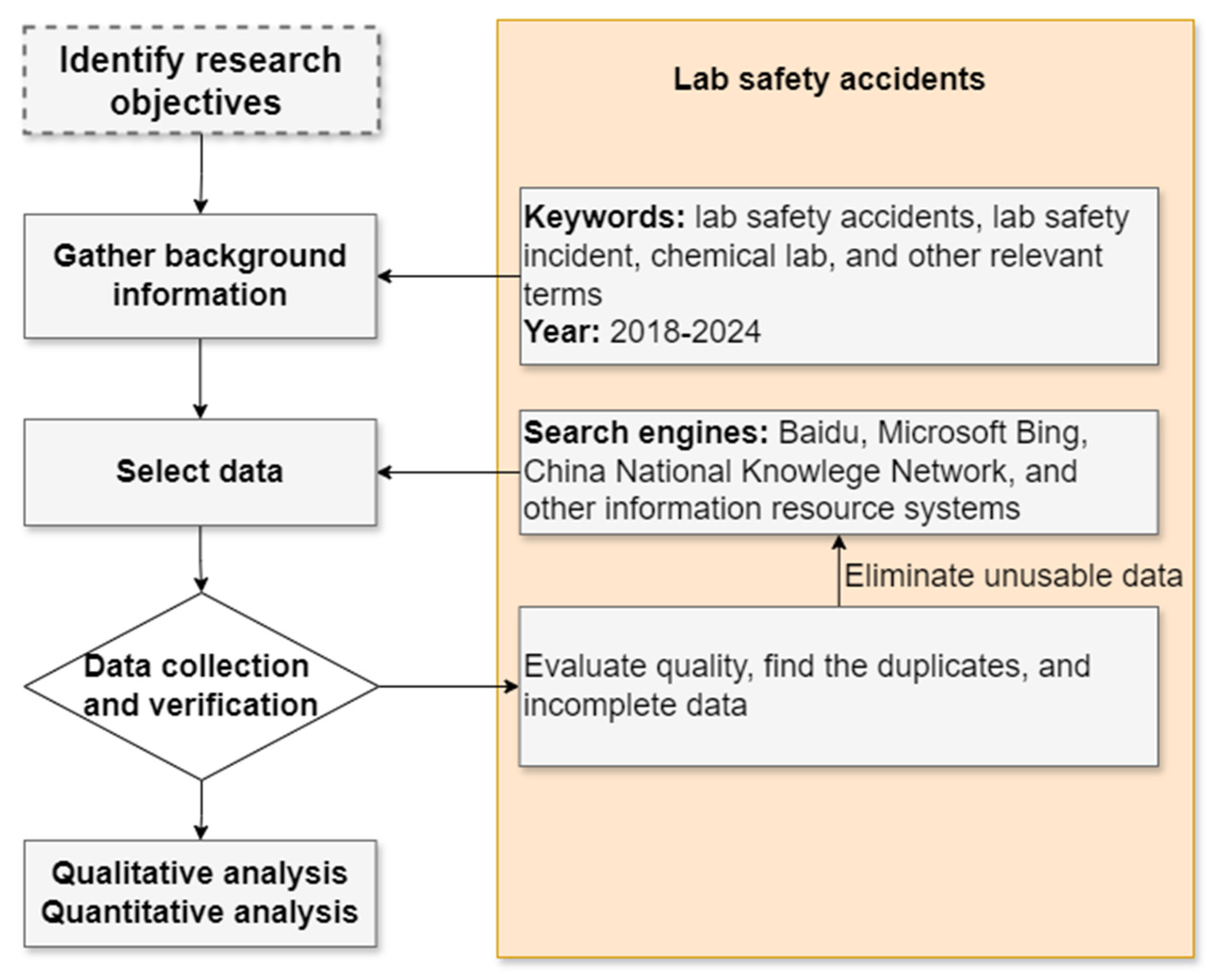
Therefore, we searched the Internet and the databases of different countries about safety management to collect the lab accident cases that happened worldwide in the past seven years to understand today’s lab accidents better. Figure 1 shows the case-collecting process. As a result, information on the 313 lab safety accidents was gathered from different sources. Unfortunately, many are unclear, incomplete, or cannot be verified in different ways [4,25].
Finally, we confirmed the usable ones after recognizing and verifying the information of the gathered cases for further study. Considering regional differences, we focused on China’s lab safety management by deeply analyzing 30 cases in China.

2.2. The Multiple Case Study

We revealed the basic characteristics of typical lab accident cases using the multiple case study method, which is widely applied in social science research [26]. Multiple case studies not only conduct an in-depth analysis of the small sample within its environmental context, but they also focus on the differences and similarities between cases. This method usually uses more resources and is costlier than the single case study in achieving a similar depth of analysis. However, its findings are also more robust than others. Thus, the multiple case study relies on its advantages of scale expansion, analytical accuracy, and problem discovery, which could effectively solve the ‘what, why, and how’ questions of lab accidents. In this process, we first carefully investigated each case and extracted the accident elements and processes as the within-case analysis. Later, we combined these individual results and conducted an in-depth statistical analysis to discover the typical accident evolution process for the cross-case analysis.

2.3. The Trajectory Intersecting Analysis

In safety science, accident causation models are used to discover the deeper roots of why accidents happen and explore the various contributing factors. Those models are the foundation of safety management and provide powerful scientific tools for post-accident analysis and future accident prevention. Since the concept of accident proneness was first introduced in 1919, numerous accident causation models have been developed and used to help prevent future accidents and promote a safer environment, such as the Domino model, Loss Causation model, Energy Damage model, Reason model, Functional Resonance Accident model, and more [27,28]. This paper carries a comparative analysis of models, shown in Table 2. Although those models have performed well in different sectors, some are complex with multiple factors and nonlinear processes that are difficult to understand accurately and apply effectively without professional training. On the other hand, lab accidents are more complicated than other accidents in terms of lab types, users, materials, apparatuses, and operations. However, they sometimes do not suit the complex accident causation models well. Hence, we used the trajectory intersecting model to analyze the causation process of lab accidents and point out the principal matters about direct and indirect causes [29].
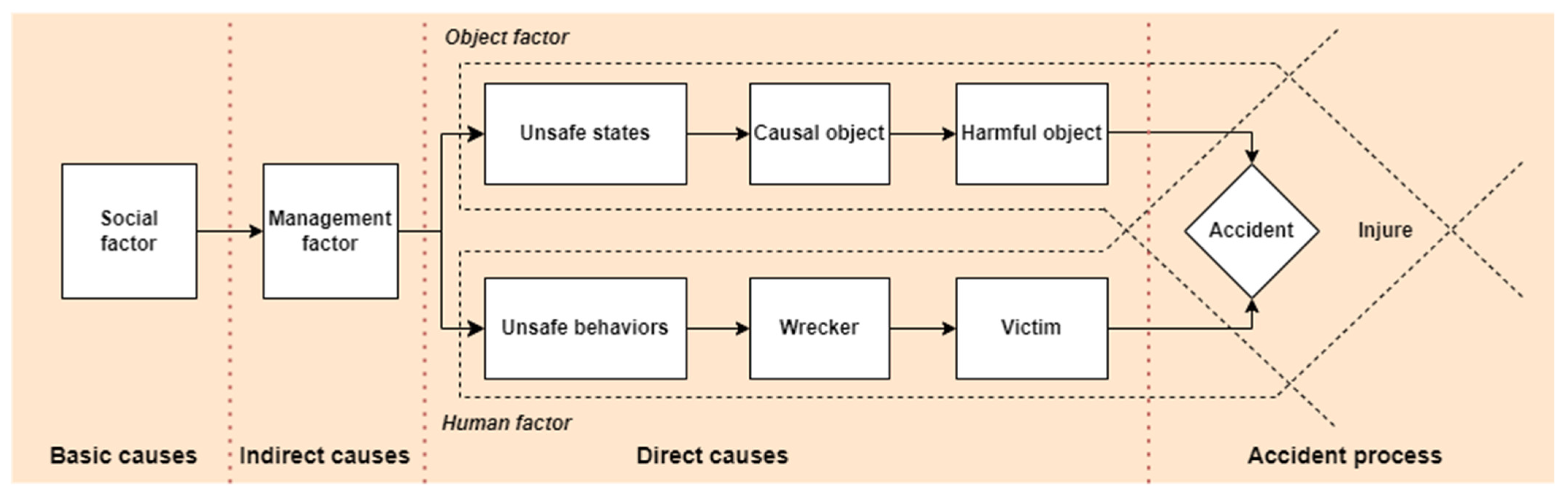
The trajectory intersecting model is one of the most famous accident causation models widely used in China [30]. It suggests that accidents occur when trajectories intersect between people’s behaviors and object motion within a specific time-space domain, as Figure 2 presents. While the trajectories intersect, the related factors of humans may be defects in themselves (physiological, physical, and mental), social environment, organized management, acquired psychological traits, the different senses among people of energy, or even unsafe behaviors. Meanwhile, the factors of the object will include defects in designing, producing, maintaining, using, or the workplace environment. Researchers in China believe that non-intersecting trajectories would directly avoid accidents. Furthermore, eliminating potential hazards and installing safety devices will help solve safety problems in accident prevention.

3. Result

3.1. Data Analysis

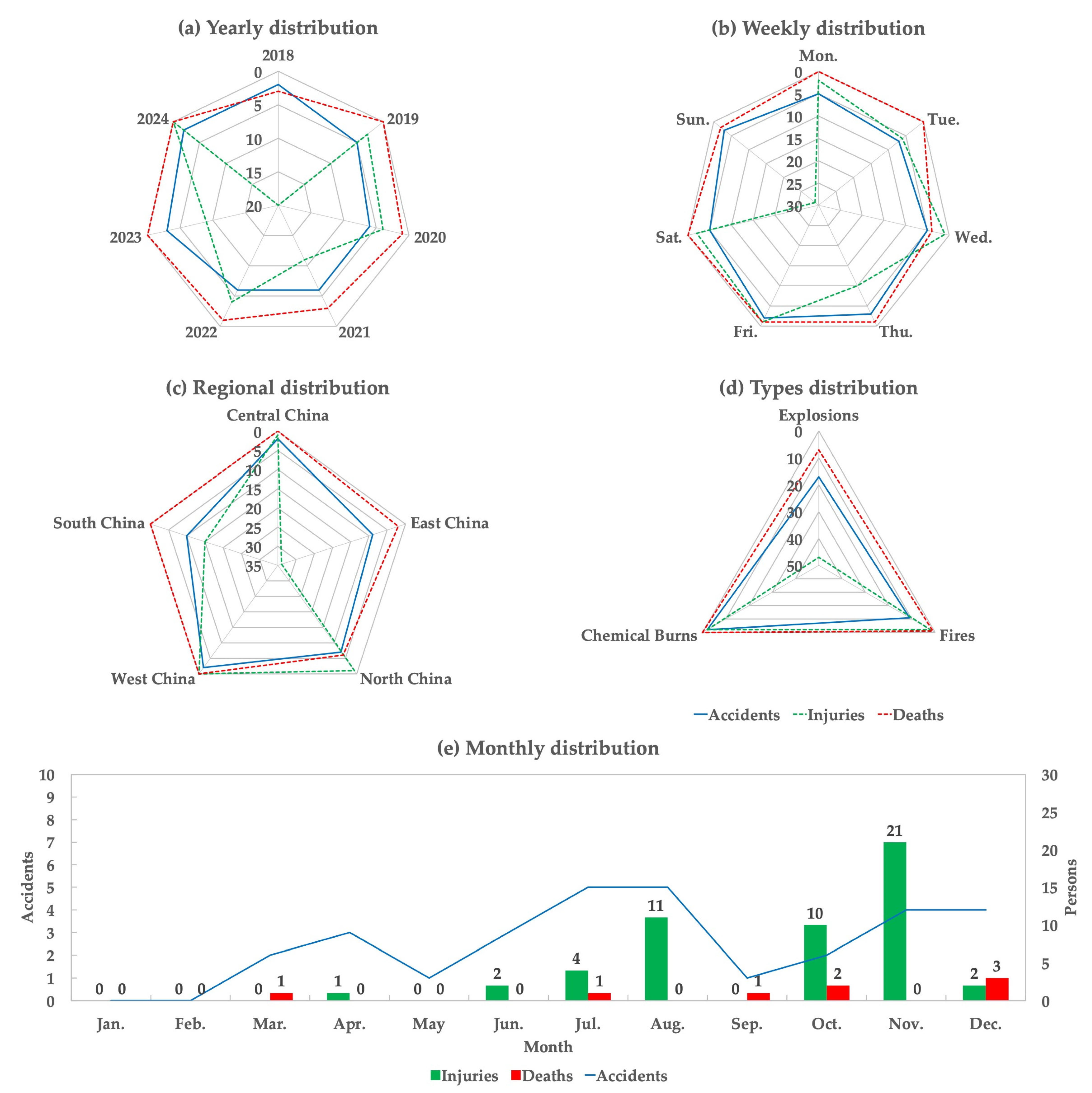
The 30 collected lab accident cases, which occurred from 2018 to 2024, claimed 8 deaths and 51 injuries. The basic information of those cases has been sorted out through careful review of their reports and records. Figure 3 shows the general classification of those cases by occurrence time, region, and type.
Safety management faces a significant challenge in all lab administration departments worldwide. In August 2018, the U.S. Chemical Safety Board released a document about lab incident data from January 2001 to July 2018. They identified 261 incidents in various organizations and settings, in which nearly half occurred at higher education institutions, resulting in 5 deaths and 185 injuries. The number of collected cases per year is above 5 except in 2018, 2023, and 2024. Due to the lack of a specialized database on lab accident statistics, the actual number of lab accidents that occurred is much higher. The monthly distribution shows that lab accidents occurred more frequently at the end of each semester and summer vacation, specifically in July, August, November, and December. These times are also the busy periods in the labs’ operating cycles. In many universities, lab courses are usually scheduled at the end of the semester, meaning some experiments utilize shared lab spaces and apparatus, where the safety risk of labs also significantly increases. On the other hand, many students about to graduate are anxious to complete their experimental work before graduation. Generally, experimental works are more complex and dangerous than lab courses and will directly increase the labs’ safety risk. During summer vacation, the open service of labs is usually heavier than that in the semester. Additionally, the weather is very hot during this period, which makes experimenters more easily fatigued and more prone to making mistakes. In contrast, the number of lab accidents in January and February is much lower than in other months. The probable reason for this is that it is the period of the Spring Festival and also the winter vacation of universities, so many experiments are suspended and labs are closed. The weekly distribution reflects that lab accidents often occur at the beginning of the week, but their scale is small with fewer casualties. In this period, the labs are on task for the whole week. The workload at this moment is the heaviest in the week, so accidents may occur easily. On the weekend, the number of accidents is lower than on workdays. However, the severity of these accidents is greater, resulting in more injuries and fatalities. This difference is closely related to the slack of the experimenters and lab managers on days off. Furthermore, we also discovered that most lab accidents frequently occur in the daytime, far more than at night. Many lab administration departments strictly conduct and control nighttime experiments to avoid their high safety risks, which makes labs busier in the daytime, where accidents are more likely to occur. For other accidents, the fatigue of experimenters at nighttime could be the leading cause of accidents.
According to the regional distribution, the collected cases occurred in many regions of China, mainly in South, East, and North China, which are also regarded as economically developed regions. This phenomenon reflects that the regional economic level is one of the factors influencing lab safety, which suggests that labs are in high demand in developed regions. In these regions, labs not only work for educational tasks of universities or academies but also serve scientific and technological research needs for economic development. So, many experiments conducted in those labs are highly exploratory and risky. That is why these regions have higher accident occurrences than others. As previous studies reported, most reported accidents are serious and cause high casualties. In the types distribution, explosions and fires are the main types of lab accidents, taking up 57% and 37% of all cases. Both types of lab accidents cause severe consequences with significant casualties and property losses. As shown in the types distribution, almost all injuries and deaths are due to explosions and fires in labs.

3.2. Case Study Analysis

Some scholars have proposed that using the information related to investigating major accidents to explore the root cause of accidents is a very effective analytical means [31]. However, after studying the information of the collected cases, we found that not all accident cases disclosed the investigation results. In Chinese laws, accidents are classified into four grades according to the casualties or direct economic losses: general, larger, serious, and extra serious. Different accident grades correspond to different investigation departments, which should provide the investigation report to the public. Among the 30 cases, there are four general accidents and one larger accident that the city or county governments should investigate. In addition, minor accidents that do not meet the legally defined accident classification may be surveyed privately by the university. Therefore, their information mostly lacks complete accident process and investigation details, which undoubtedly brings great difficulty to accident analysis.
According to the trajectory intersecting model analysis process, the multiple case study of accidents requires three steps, and more details are provided in Table 3. The first step is accident data collection about the time, location, material status, and operation details of the personnel involved in the accident. We classified and listed the details described in each accident investigation report according to each element and subdivision of the aforementioned model in Table 3. Second, making sure the direct cause of the accident is a crucial step in accident analysis based on the model. It posits that the direct cause of accidents arises exclusively from two simultaneous factors: unsafe human behavior and the unsafe state of an object, converging at the same time and location. Finally, the last step of the analysis is to trace the underlying causal chain, which needs to be traced to management or systemic causes while distinguishing direct and root causes. For example, the human factor tracing needs to investigate physiological/psychological states, training gaps, management flaws, or socio-environmental factors. In comparison, object factor tracing needs to analyze design defects, maintenance failures, procurement errors, and supply chain system failures. Through the above steps, the key nodes causing the accident can be accurately identified, enabling targeted prevention measures to be implemented in the future.
Table 3 illustrates four accident cases to analyze the accident’s causes, including one larger, one general, and two minor accidents. Cases 1 and 2 are explosion accidents, while cases 3 and 4 are fire accidents, representing the most hazardous and frequent types of accidents in the chemical lab. Although these accidents differed in type and grade, there was a link between causality and common factors. The summary is as follows.
(1)
Regarding human factors, if the wrecker exhibits unsafe behaviors in the lab, it may injure the victim or lead to an accident. The factors of safety awareness, knowledge, and experimental operation may affect accidents. The four cases display three types of unsafe behaviors collectively in the lab. Specifically, the experimenters had insufficient risk awareness associated with the chemicals used. They did not wear appropriate personal protective equipment (PPE) during the experiment. Furthermore, they ignored and violated established standard operating procedures.
(2)
Regarding object factors, if the lethal hazards of hydrogen, magnesium, and methylaluminoxane exceed the acceptable safety range, they may lose control and harm the experimenters. In case 1, the lab stored two barrels of magnesium powder, totaling 66 kg, which were not registered on the university chemical list. Magnesium powder is a flammable and explosive chemical, leading to dust explosion accidents after reaching the explosion limit. In case 2, the equipment manufacturers used acetylene and oxygen without permission in the lab, which did not have the conditions to monitor gas usage. Truly, acetylene is a flammable gas that reacts with oxygen to cause an explosion. In case 3, a student used an oil bath for long-term heating but left the lab during the experiment. Subsequently, the oil bath caught fire due to excessive temperature. In case 4, experiments frequently loaded and unloaded the connecting hoses of the equipment, causing the hoses to age. Methylaluminoxane, a pyrophoric liquid, was accidentally released through the worn-out connecting hose. The above-mentioned substances are in an unsafe state and may cause serious injury or damage.
(3)
Regarding causality, the accident is not a coincidence, but the result of the combined effect of human and object factors. For example, in case 1, magnesium dust had already diffused during the experimental mixing process before the explosion. Similarly, in case 2, the illegal use and storage of flammable and oxidizing gases had already occurred two months before the experiment. Furthermore, before the accident occurred, the experimenter overlooked the overheating of the oil bath in Case 3 and the wear of the connecting hose in Case 4, thus sowing the seeds of a potential safety hazard. The analysis results of the four case studies showed that the occurrence of accidents is not linear; instead, the mechanism of accident occurrence is due to several contributing factors. Undoubtedly, the long-existing unsafe state of substance and the unsafe behavior of experimenters jointly promoted the evolution process of the accident.
This study encompasses only two types-chemical explosions and substance fires—unique to this case study and may not be considered typical contributing factors for all types of accidents. Hence, to enhance the efficacy of accident prevention through the lessons learned, conducting a broader investigation and analysis encompassing multiple accidents is imperative to identify common contributing factors.

3.3. Accident Causes Analysis

The causation analysis of 30 cases, with the trajectory intersecting model, revealed the different kinds of direct and indirect causes. The direct causes include human and object factors, and the relevant indirect causes mainly involve formulating and implementing lab management measures. Furthermore, we carried out a statistical analysis of those causes based on the collected cases. The proportion of each cause that the analysis gives will show the key points of lab accident prevention and predicting potential accidents [32].

3.3.1. The Human Factor

As the leaders of the experiments, people are biological individuals with self-awareness and subjective initiative, which makes human factors have diverse manifestations in the accident causation processes. As indicated by the analysis of the collected cases, safety awareness, safety knowledge, safety skills, safety execution, and safety operation are the key factors influencing accident occurrences. The comprehensive analysis of human factors and their occurrence proportion based on the case study will help prevent potential lab accidents [33,34]. Table 4 shows the various types of human factors and their calculated proportions in the collected cases.
As demonstrated by Table 4, safety awareness is the critical human factor contributing to lab accidents, and its proportion accounts for 79%, about double that of other factors. Similarly, many lab accident investigation reports indicate that the lack of safety awareness is an important cause of these accidents. Safety awareness, as the primary part of human safety management, directly affects people’s behaviors in related activities. So, raising safety awareness gives a good beginning for a successful safety program. That is also why safety awareness became a high-frequency phrase that is mentioned in safety education. The secondary human factor is the safe operation, which directly affects the experiment processes. In chemical labs, one minor unsafe operation will make the experiment dangerous. Thus, there is a critical need for enhanced focus on human factors, especially safety awareness and safety operations. However, many experimenters usually fail to devote enough attention to those factors and do less on experiment risk identification and evaluation. Consequently, they pose a danger to labs, which may cause accidents easily.

3.3.2. The Objects Factor

In chemical labs, the object factors are mainly from chemicals and experimental equipment. Chemical labs have various chemicals, some of which are hazardous chemicals, such as explosives, flammables, corrosives, and acute toxins. Those chemicals form potential hazard sources in labs that could cause different accidents or aggravate existing accidents [35]. In order to gain in-depth insight into the hazardous chemicals usage and storage in chemical labs, we conducted a comprehensive survey at a university in eastern China to gather statistics on the top 20 hazardous chemicals used in labs and listed them in Table 5. During the survey, we found that most of the top 20 hazardous chemicals are widely used in different chemical labs. The primary hazards of those chemicals indicate that they possess multiple hazardous characteristics, and more than half are flammables, followed by corrosives. Highly toxic, explosives precursors, and precursor chemicals are supervised strictly by government and university administrators in law due to their extremely hazardous characteristics for safety and even threaten public security. Thus, the total amounts of those chemicals are limited and are not fully reflected in Table 5, but the safety and security of supervised chemicals are still the primary concerns of the lab’s chemical management.
Numerous experiments conducted in chemical labs involve extreme conditions, such as heating, freezing, pressuring, vacuuming, and high-speed machining processes. All these conditions are primarily achieved through the use of experimental equipment. Faulty or unsafe use of experimental equipment will pose another hazard source in labs. Nevertheless, poor maintenance and improper usage of experimental equipment are common issues in labs. Table 6 presents the calculated proportions of object factors from the collected cases, categorized as inherent and extrinsic. The inherent factors are the original properties of chemicals and equipment, which constitute the basic risks of the lab. In contrast, extrinsic factors refer to property changes caused by usage, contributing to additional lab risks. The calculated results indicate that the inherent factors are more than twice as proportionate as the extrinsic factors in the causes of the collected cases. This appearance was mainly due to the various hazardous chemicals used in experiments, which bring significant potential risks into labs. However, there is a big difference between human and object factors in usual cases. Once the object factor is formed, it may persist in future usage for a long time and become an unsafe trajectory.

3.3.3. The Management Factors

As indirect causes, management factors serve as the intermediaries in the progressive relationship between basic causes and direct causes, in which they can trigger unsafe human behavior or an unsafe state of the object forming the unsafe trajectories. While those unsafe trajectories intersect, accidents occur. The analysis of indirect causes focuses on the dynamic development of human and object factor trajectories before the accident.
In industry, management causes usually manifest as deficiencies in the institution, resource allocation, implementation, or supervision. However, though intensely studied in accident cases, the management factor may be summarized and revised to five aspects for the chemical labs, as shown in Table 7, regarding the organization, program, safety training, safety inspection, and risk management. Firstly, organizational factors form the foundations of the experimenter’s health and safety environment in the labs. In some universities, the safety management organizations and staff responsible for the labs do not meet the required standards of number and quality. At the same time, there is a lack of evident safety commitment from the most senior manager downwards. Moreover, suitable work patterns and adequate supervision are pivotal in safety management; if the safety leader ignores that, it may lead to an accident. In the accident cause analysis in case 1, the lab manager’s illegal purchase and storage of chemicals had not been supervised by the institution without an effective regular supervision mechanism.
In the second aspect, the program may include a responsibility system, change management, operating procedures, an emergency response mechanism, a reward and punishment mechanism. In case 3, the student had left the labs without extinguishing the fire after they found it. Emergency response plans for chemical accidents are incomplete, and emergency equipment is not fully equipped.
As we know, researchers possess profound expertise in their respective professional domains. However, statistical results from the cases indicate that their safety knowledge might be comparatively inadequate or frequently exhibit notable deficiencies in safety consciousness and emergency response abilities. These issues have been proven to be caused by inadequate safety education and experimental training [36,37]. Similarly, the experimenters’ unattended operations or insufficient personal protection are related to safety training in cases 3 and 4. Thus, inadequate safety training is the third aspect that leads to defects in controlling human behavior
In addition, safety inspection and risk management are both practical for safety management factors to avoid lab accidents. Case studies found that the manifestation deficiencies in cases 1 and 2 were inadequate risk assessment mechanisms, and case 4 failed to implement a closed-loop inspection process. The analysis of other cases can also prove the existence of management deficiencies.
In summary, the five types of reasons can cover management deficiencies, but the proportions of each factor can not be counted due to insufficient details of the cases. For the same reason, it is sufficiently revealed that a systematic and standard management is absent for lab safety based on the study of management factors. There is an urgent need to enhance both the standards and specifications, as well as a variety of management tools and strategies, in a more transparent, professional, and targeted manner.

4. Discussion

4.1. System Design for Sustainable Chemical Lab Management

Nowadays, safety management researchers’ primary focus is on industrial safety. Few researchers have deeply and scientifically investigated safety issues in lab management, especially in chemical labs. As discussed in the management factors above, many universities’ current lab safety management is undeveloped. Thus, many university lab administrations have invested energy in lab management research to improve their practical work, which might be an efficient approach without a theoretical depth.
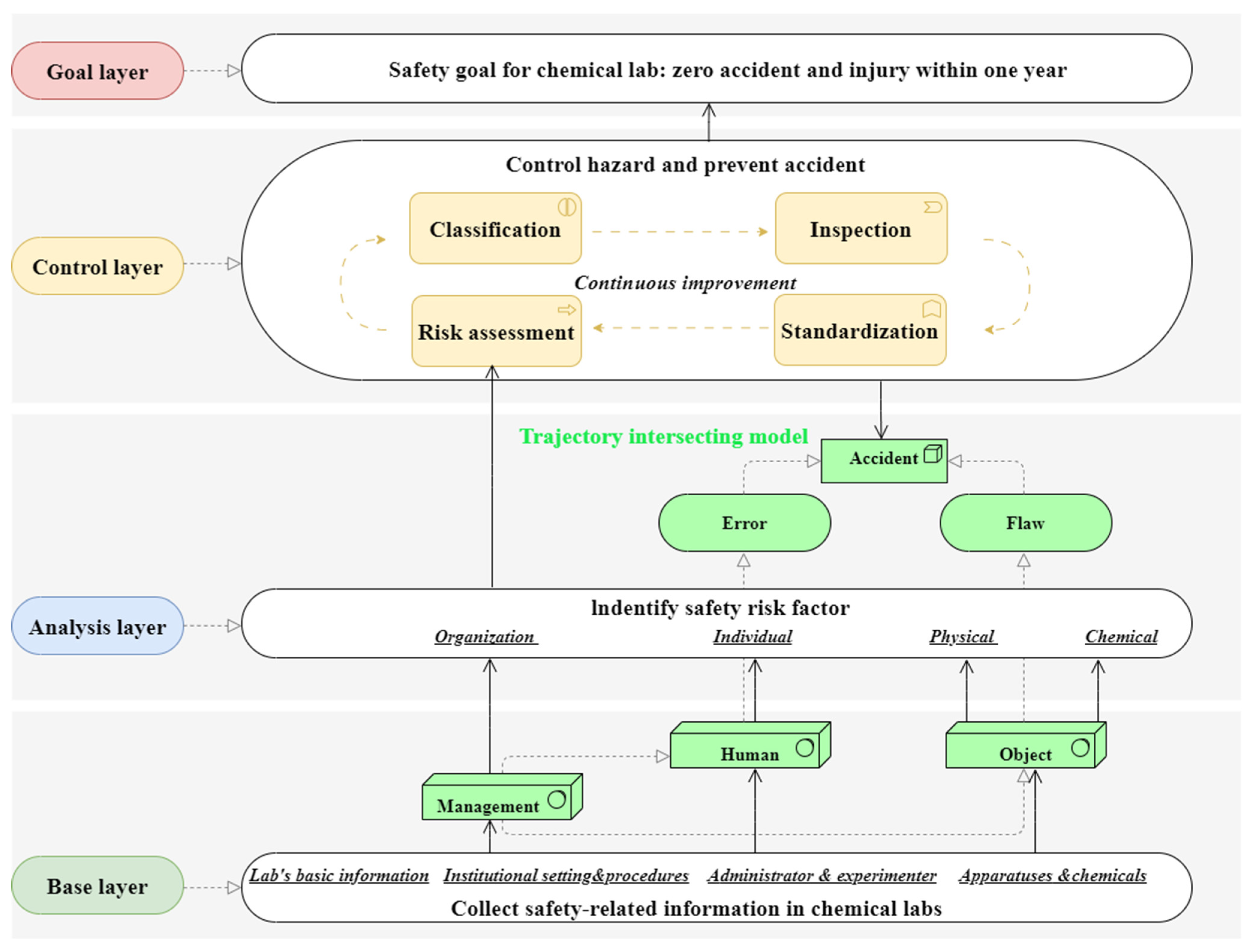
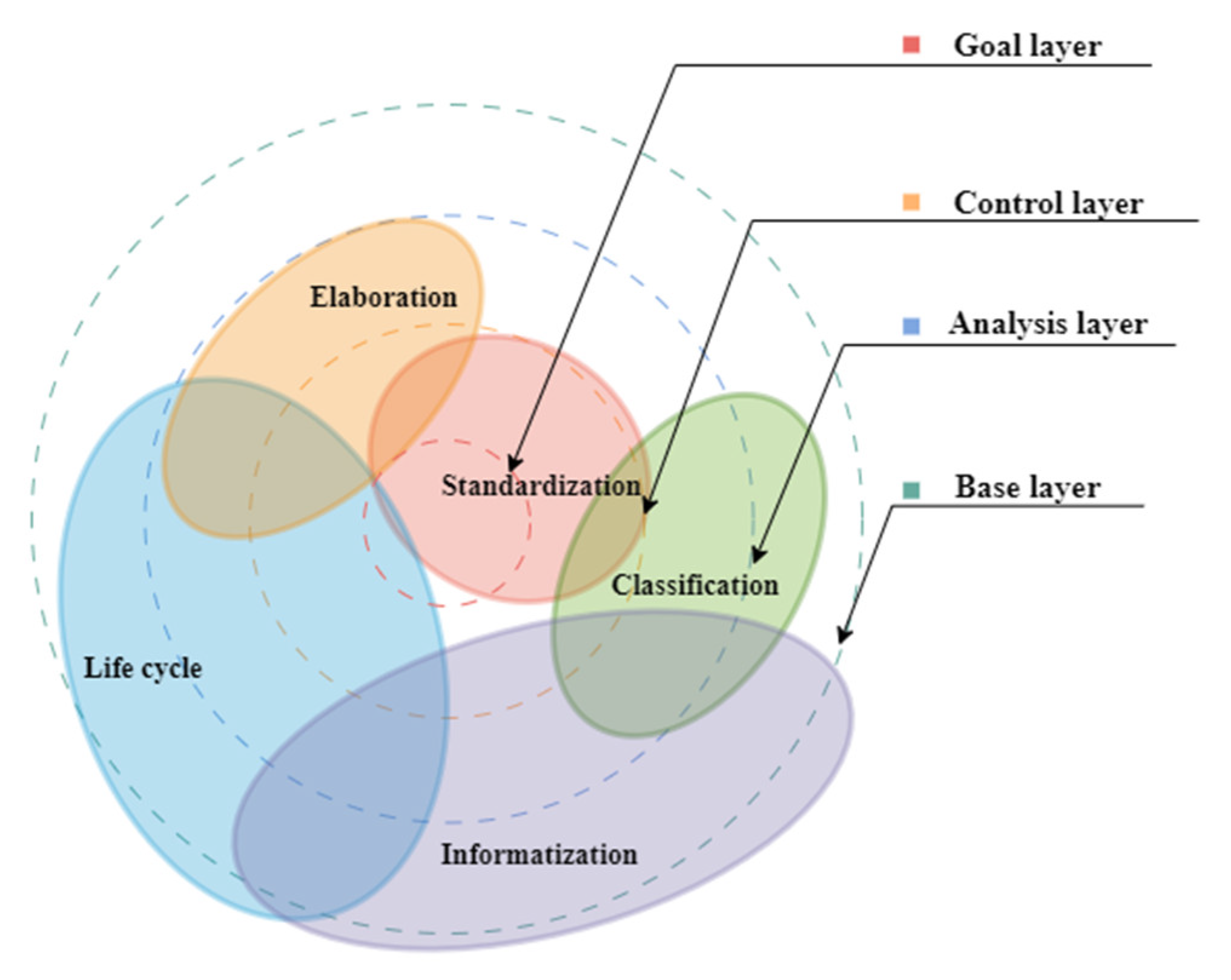
In the current lab’s management background, we analyze the previous lab accident cases using the trajectory intersecting model to reveal the primary sources of lab risk. Moreover, we built a sustainability safety system for chemical lab management. The system is constructed with four layers around the safety issues of lab management in Figure 4, including the layers of base, analysis, control, and goal. According to the operating process of each layer of management, the system works through step-by-step promotion and optimization feedback between layers to continuously improve chemical lab safety.
  • Base layer
The base layer’s primary role is to collect safety-related information about the chemical lab, typically including the lab’s basic information, administrator, experimenter, apparatuses, chemicals, and procedures. Firstly, every lab must follow uniform rules to establish, maintain, and periodically update the lab’s basic information. More details, such as the room number, lab’s name, area in the university, and category, may be available accurately. Secondly, the appointment of lab administrators is essential, as they have specific job duties and assume corresponding safety responsibilities. Then, people who want to enter the lab must undergo safety education and successfully pass specific security exams. Lastly, gathering and listing information about apparatuses, processes, and chemicals likely present in the labs is crucial through an information platform. For example, we need to know the number of muffle furnaces or the types and quantities of chemicals to identify hazards in the next step. In particular, the chemical information gathered will automatically match the contents of the chemical safety protocol by the CAS number. Based on their requirements, we will manage the chemicals normatively. The administrator and experimenter, who must collect, organize, and review information from both internal and external sources, need to accomplish the information gathering through a collaborative effort. In addition, they should also use digital technology to summarize and manage the data for further analysis, such as an information and management platform.
2.
Analysis layer
The analysis layer mainly analyzes the safety risk factors in chemical labs to build a model of the process from hazard to accident. It identifies the principal risk factors and their influences throughout the accident life cycle, based on the advanced theories of accident evolution and control in safety science and engineering. Specifically, we need to draw the trajectory of accident occurrence, clarifying the triggering factors and conditions. Furthermore, it harmonizes the internal and external environmental elements and other influencing factors of chemical labs, balancing each factor’s relative importance. The above efforts ultimately help prevent the likelihood of lab incidents, accidents, or near misses.
Based on the accident causes analysis above, including human, object, and management factors, we identify the four most common risk factors: organization, individual, physical, and chemical hazards. The hazards of organization are stressors that cause psychosocial hazards such as tension, anxiety, or strain to experimenters. Individual hazards, such as individual characteristics or unsafe behaviors, can cause injuries directly under specific conditions. Physical hazards are factors related to the environment that can harm the body without necessarily touching it. Chemical hazards are present when an experimenter is exposed to any chemical preparation (solid, liquid, or gas). This classification analysis approach facilitates the identification of harmful factors within a given lab, examining the potential types of accidents that could ensue in Table 8.
3.
Control layer
Understanding the risk factors is only the first step; however, implementing adequate safety precautions is where the real impact lies. The main work of the control layer is closed-loop management to control hazards and prevent accidents, and it has good self-adaptability and continuous improvement. Through the analysis of accident patterns and evolutionary pathways associated with different risk types, various hazard control and accident prevention measures are implemented to reduce the level of risk comprehensively. Multiple safety assessment methodologies, such as Safety Check-List (SCL) and Likelihood–Exposure–Consequence (LEC), are employed to determine the nature and quantitative magnitude of risks. Hierarchical management is then conducted based on the severity of the analyzed risks, and differentiated vertical and horizontal risk management and control strategies are applied to ensure effective risk control and the mitigation of potential hazards.
However, not all risks are immediately apparent, or some may develop over time due to changes in the experiment environment or processes. Setting aside time to inspect the labs for hazards regularly can help identify new shortcomings so that they can be addressed before an accident occurs. Experimenters will re-evaluate potential hazards and related risks for the planned changes when introducing new equipment, chemicals, or processes or changing operations. Continuous improvements refine the operational safety management model, forming the adaptability of standardized management practices.
4.
Goal layer
Chemicals are a double-edged sword. They are essential for conducting scientific research. However, chemical hazards can easily cause accidents and endanger the user if used out of control. Therefore, it is imperative to establish a clear safety goal for the chemical labs. This paper introduces the SMART principle as the guiding ideology of the safety goal: zero accidents and injuries in chemical labs within one year, preventing harm to the experimenter. If the goal is measurable and the experimenters know it, all safety objectives would be achievable and more accessible.

4.2. Suggestions for System Practical Applications

In China, the safety management of many chemical labs often relies on accident lessons to develop corresponding measures; however, the accidents reported are limited and underrepresented. As a result, the management framework tends to be fragmented and lacks a systematic approach. For example, lab managers may recognize the risks of explosive gas after an explosion accident involving acetylene gas has been published. Then, they implemented specific measures, such as summarizing the number of acetylene gas cylinders in use, conducting targeted inspections, and eliminating potential safety hazards. Some more proactive labs extended these measures to other flammable gases through analogical reasoning. Nevertheless, this reactive approach to safety management lacks comprehensive top-level planning and sufficient underlying data support. Therefore, the system proposed in this paper will play a constructive role in guiding safety management in chemical labs. During the implementation of this system, we identified five leading suggestions to facilitate the effective execution of the system. These suggestions work together in the hierarchical management system, as shown in Figure 5.
  • Standardization
The administrator should establish a regulatory framework to provide a reference for safety management in chemical labs. The lab needs to form targeted management rules and regulations in line with the characteristics of the discipline, mainly including lab inspection, chemical management, hazardous waste management, risk assessment, safety operating procedures, emergency plans, and a system of reward and punishment. Taking responsibility for safety in chemical labs is important because it ensures all experimenters understand the effects of their actions and can support others in creating a healthy environment. Individuals in chemical labs should clarify the bounden duty and divide the responsibility area. Once a safety incident or accident occurs, a personal accountability system must be implemented to ensure that safety is everyone’s responsibility.
The administrator should also establish a lab access system to ensure that all individuals entering the lab, hazardous substances, and experimental projects are under control. First, individuals must participate in special safety training and pass the assessment before entering the lab. Second, the procurement of dangerous substances should conform to the process and pass the acceptance before they can be stored. Finally, the experimental projects need to carry out the safety risk assessment. Project risk assessments, including control and emergency measures, have been well defined and can be carried out after the lab audit.
2.
Informatization
An information system for chemical management must be established using cloud computing, big data, the Internet of Things, and other technologies in the chemical labs. The system needs to contain four functions, including basic lab information, risk management, monitoring and forewarning, and safety education, which propose a methodology to achieve optimality for lab safety management.
As mentioned in the base layer, all types of information, such as individuals, organizations, and chemicals, will be sorted out in the lab. Meanwhile, an electronic information board at the lab entrance will display this basic lab information and chemical safety protocols. Regarding risk management, establishing hazardous substances distribution files grasps quantity, location, prevention, and emergency measures of various chemical hazard lists. The system allows experimentalists to understand chemical stocks and avoid mass storage or repeated purchases. Based on the data, it tends to carry out all kinds of safety checks and finish the risk report, improving the management level. The labs should install monitoring facilities and gas leak detection devices, forming visual databases for real-time control of chemical hazards and forewarning facilities. Finally, the safety training resources and the access assessment system have been operational online. Introducing the virtual lab, especially, can make people experience the lab environment in an immersive way, grasp the experimental risks in advance, and conduct emergency drills repeatedly. Therefore, the experimenters can learn about safety knowledge anytime and anywhere and can enter the lab after finishing the safety exam.
3.
Elaboration
Chemical handling comes with inherent risks that can jeopardize both human health and the environment. Elaboration management provides a comprehensive guide on ensuring a secure work environment when dealing with hazardous substances. The first principle is minimization. All experimental materials and equipment must be checked item by item before acceptance. The experimenters must strictly control explosives with a dual-person, dual-lock mechanism and implement limited management. In China, the total capacity of chemicals in a lab should be at most 100 L or 100 kg, with the capacity of a single package less than 20 L or 20 kg. These stock restrictions reduce lab hazards and prevent lab fires and explosions.
Usually, hazardous substances such as chemicals, gas cylinders, special equipment, and heating devices are regularly inventoried and updated in labs. Storing chemicals appropriately and labeling containers with accurate information prevents mix-ups and accidental exposures. Particularly, it is cautious when storing incompatible substances. Studies have shown that experimenters cannot put incompatible chemicals together. Even if both container lids are sealed, a small amount of escaping gas can still produce a chemical reaction that causes harmful effects. For this reason, experimenters should strictly sort and store the chemicals in the cabinets by level and region.
4.
Life cycle
Life cycle management is a critical component of lab safety management. Take the chemical procurement as an example; it is imperative to pay attention to the management of sources and procurement procedures. Firstly, chemical management software is essential for achieving comprehensive life-cycle oversight, including procurement, acceptance, storage, and utilization. Secondly, supplier qualification audit procedures must be established to ensure that suppliers’ credentials, products, and services meet stringent security standards. Thirdly, it is imperative to regulate procurement channels, strictly prohibiting the purchase or acceptance of chemicals from external sources without proper authorization. Similarly, life cycle management also applies to hazardous waste, which requires qualified disposal units, a unified process of classified collection, and timely removal to prevent accumulation.
In addition, conducting a series of closed-loop inspections in the lab is necessary. Administrators and experimenters must draw up daily, weekly, and monthly inspection plans. Next, different check teams, focusing on diverse inspection themes, execute these plans strictly. The labs will undergo a comprehensive check within the scheduled period, and appropriate corrective measures will be implemented promptly when the teams find any potential risks. Meanwhile, the labs that violate relevant regulations and requirements will face penalties. Strongly, the dynamic safety evaluation utilizing three levels—’red’, ‘yellow’, and ‘green’—is carried out in chemical labs to enhance process supervision. If a lab receives a ‘red’ warning, suspending experimental activities to solve the issues will be necessary. In addition, experimenters will also be required to retake the safety training and pass the exam.
5.
Classification
Risk levels in the lab are categorized and pinpointed based on the sources of risk and hazard extent. Chemical labs can set up four risk levels. Level 1 is the most hazardous, containing hazardous substances such as explosives and toxic properties. Conversely, level 4 represents the least risk, without hazardous chemicals or dangerous equipment. According to the results of lab risk classification, professional safety measures can be developed to accomplish precise prevention and control of risks in labs.
Experimenters must wear appropriate PPE when entering the lab. For example, the labs of level 4 may only use computers for data analysis, with no chemical hazard involved, where the experimenters do not wear gloves or glasses. Generally, PVC gloves are inappropriate for high-risk labs, such as those classified at level 1, due to being less protective against chemicals or other hazards than latex or nitrile gloves.

5. Conclusions

This paper addresses the questions in safety management of chemical labs by integrating accident evolution and control theories from the field of safety science and engineering. The following work has been achieved.
Through the analysis of 30 lab accidents in China, multiple case studies have been conducted to understand the process of accidents and identify risk factors in chemical labs. Subsequently, based on the trajectory intersecting model, the primary causes of lab accidents are determined to include unsafe behaviors, unsafe states, and deficiencies in management.
A novel hazard control and accident prevention system has been developed for sustainable safety management in chemical labs. This system incorporates a closed-loop management approach to design and implement a multi-layered framework that effectively mitigates risks.
Five suggestions for system practical applications—standardization, informatization, refinement, life-cycle management, and classification—have promoted safety management by effective practices in chemical labs. These suggestions ensure individual health and the efficient execution of experimental activities. In practical implementation, further research is required to validate the proposed system’s operational feasibility and assess its potential to achieve zero accidents.

Author Contributions

Conceptualization, J.L. and Z.S.; methodology, J.L.; software, J.L.; validation, J.L. and Z.S.; formal analysis, J.L. and J.W.; investigation, J.W.; resources, J.W. and X.R.; data curation, J.L.; writing—original draft preparation, J.L.; writing—review and editing, Z.S.; visualization, X.R.; supervision, Q.Y.; project administration, Q.Y. and Z.S.; funding acquisition, Q.Y. and Z.S. All authors have read and agreed to the published version of the manuscript.

Funding

This research was funded by the Industry–Education–Research Collaboration Project of Jiangsu Province (No. BY20240289), University–Industry Collaborative Education Program (No. 241200627123523, 241100627155922), Research Project of Jiangsu Laboratory Research Committee of Higher Education Institution (No. GS2024ZD04), and the Deputy Technology Manager Project of Jiangsu Province (No. FZ20240552).

Institutional Review Board Statement

Not applicable.

Informed Consent Statement

Not applicable.

Data Availability Statement

Some data that support the findings of this study are available from the corresponding author upon reasonable request.

Conflicts of Interest

The authors declare no conflicts of interest.

References

  1. Peplow, M.; Marris, E. How Dangerous Is Chemistry? Nature 2006, 441, 560–561. [Google Scholar] [CrossRef]
  2. Van Noorden, R. A Death in the Lab. Nature 2011, 472, 270–271. [Google Scholar] [CrossRef]
  3. Abedsoltan, H.; Shiflett, M.B. Mitigation of Potential Risks in Chemical Laboratories: A Focused Review. ACS Chem. Health Saf. 2024, 31, 104–120. [Google Scholar] [CrossRef]
  4. Ménard, A.D.; Trant, J.F. A Review and Critique of Academic Lab Safety Research. Nat. Chem. 2020, 12, 17–25. [Google Scholar] [CrossRef]
  5. Yang, Y.; Reniers, G.; Chen, G.; Goerlandt, F. A Bibliometric Review of Laboratory Safety in Universities. Saf. Sci. 2019, 120, 14–24. [Google Scholar] [CrossRef]
  6. Explosión En Laboratorio Quimíco de Universidad En Colombia Dejó Un Fallecido y Dos Heridos–El Comercio. Available online: https://www.elcomercio.com/actualidad/mundo/accidente-laboratorio-quimico-universidad-colombia-fallecido-heridos/ (accessed on 6 May 2025).
  7. Chen, M.; Wu, Y.; Wang, K.; Guo, H.; Ke, W. An Explosion Accident Analysis of the Laboratory in University. Process Safety Progress 2020, 39, e12150. [Google Scholar] [CrossRef]
  8. Al-Zyoud, W.; Qunies, A.M.; Walters, A.U.C.; Jalsa, N.K. Perceptions of Chemical Safety in Laboratories. Safety 2019, 5, 21. [Google Scholar] [CrossRef]
  9. Lu, Z. Analysis of China Students’ Laboratory Accidents in the Past 39 Years and the Laboratory Management Reform in the Future. Educ. Chem. Eng. 2023, 42, 54–60. [Google Scholar] [CrossRef]
  10. Ye, X.; Ma, J.; Zhao, Y.; Shen, Y.; Ren, Z. Statistical Analysis and Safety Management Countermeasures Based on 150 Laboratory Accidents. Exp. Technol. Manag. 2020, 37, 317–322. [Google Scholar]
  11. Schröder, I.; Huang, D.Y.Q.; Ellis, O.; Gibson, J.H.; Wayne, N.L. Laboratory Safety Attitudes and Practices: A Comparison of Academic, Government, and Industry Researchers. J. Chem. Health Saf. 2016, 23, 12–23. [Google Scholar] [CrossRef]
  12. Gopalaswami, N.; Han, Z. Analysis of Laboratory Incident Database. J. Loss Prev. Process Ind. 2020, 64, 104027. [Google Scholar] [CrossRef]
  13. Galasso, A.; Luo, H.; Zhu, B. Laboratory Safety and Research Productivity. Res. Policy 2023, 52, 104827. [Google Scholar] [CrossRef]
  14. Ezenwa, S.; Talpade, A.D.; Ghanekar, P.; Joshi, R.; Devaraj, J.; Ribeiro, F.H.; Mentzer, R. Toward Improved Safety Culture in Academic and Industrial Chemical Laboratories: An Assessment and Recommendation of Best Practices. ACS Chem. Health Saf. 2022, 29, 202–213. [Google Scholar] [CrossRef]
  15. Zhao, X.; Wei, Z.; Gao, Y.; Yin, P. Laboratory Risk Assessment Based on SHELL-HACCP-Cloud Model. Sustainability 2023, 15, 16590. [Google Scholar] [CrossRef]
  16. Ebrahimi, H.; Zarei, E.; Ansari, M.; Nojoumi, A.; Yarahmadi, R. A System Theory Based Accident Analysis Model: STAMP-Fuzzy DEMATEL. Saf. Sci. 2024, 173, 106445. [Google Scholar] [CrossRef]
  17. He, Y.; Kuai, N.-S.; Deng, L.-M.; Wang, Z.-L.; Peng, M.-J. An Investigation into Accidents in Laboratories in Universities in China Caused by Human Error: A Study Based on Improved CREAM and SPAR-H. Heliyon 2024, 10, e28897. [Google Scholar] [CrossRef]
  18. Nasrallah, I.; Sabbah, I.; Haddad, C.; Ismaiil, L.; Kotaich, J.; Salameh, P.; Kak, A.E.L.; Nasr, R.; Bawab, W. Evaluating the Academic Scientific Laboratories’ Safety by Applying Failure Mode and Effect Analysis (FMEA) at the Public University in Lebanon. Heliyon 2023, 9, e21145. [Google Scholar] [CrossRef] [PubMed]
  19. Lv, P.; Zhu, S.; Pang, L. Statistical Analysis of Laboratory Accidents in Chinese Universities from 2011 to 2021. Process Saf. Prog. 2023, 42, 712–728. [Google Scholar] [CrossRef]
  20. Yang, Q.-Z.; Deng, X.-L.; Yang, S.-Y. Laboratory Explosion Accidents: Case Analysis and Preventive Measures. ACS Chem. Health Saf. 2023, 30, 72–82. [Google Scholar] [CrossRef]
  21. Xu, C.; Guo, L.; Wang, K.; Yang, T.; Feng, Y.; Wang, H.; Li, D.; Fu, G. Current Challenges of University Laboratory: Characteristics of Human Factors and Safety Management System Deficiencies Based on Accident Statistics. J. Saf. Res. 2023, 86, 318–335. [Google Scholar] [CrossRef]
  22. Yang, J.; Xuan, S.; Hu, Y.; Liu, X.; Bian, M.; Chen, L.; Lv, S.; Wang, P.; Li, R.; Zhang, J.; et al. The Framework of Safety Management on University Laboratory. J. Loss Prev. Process Ind. 2022, 80, 104871. [Google Scholar] [CrossRef]
  23. Bai, M.; Liu, Y.; Qi, M.; Roy, N.; Shu, C.-M.; Khan, F.; Zhao, D. Current Status, Challenges, and Future Directions of University Laboratory Safety in China. J. Loss Prev. Process Ind. 2022, 74, 104671. [Google Scholar] [CrossRef]
  24. Zhu, C.; Tang, S.; Li, Z.; Fang, X. Dynamic Study of Critical Factors of Explosion Accident in Laboratory Based on FTA. Saf. Sci. 2020, 130, 104877. [Google Scholar] [CrossRef]
  25. Zheng, X.; Miao, F.; Yuan, J.; Xia, H.; Udomwong, P.; Chakpitak, N. Preliminary Design and Construction Database for Laboratory Accidents. Electronics 2023, 12, 2514. [Google Scholar] [CrossRef]
  26. Stocco da Silva, L.H.; de Abreu Rodrigues, L.C.; Nunes Diogenes, A.; Tedeschi Gomes Abrantes, A.C.; Baptista, A.; de Araújo Ponte, H. A Risk Reduction Approach for Academic Research Labs: A Case Study on Naphthenic Corrosion. J. Loss Prev. Process Ind. 2020, 64, 104061. [Google Scholar] [CrossRef]
  27. Ge, J.; Zhang, Y.; Xu, K.; Li, J.; Yao, X.; Wu, C.; Li, S.; Yan, F.; Zhang, J.; Xu, Q. A New Accident Causation Theory Based on Systems Thinking and Its Systemic Accident Analysis Method of Work Systems. Process Saf. Environ. Prot. 2022, 158, 644–660. [Google Scholar] [CrossRef]
  28. Ge, J.; Zhang, Y.; Chen, S.; Xu, K.; Yao, X.; Li, J.; Liu, B.; Yan, F.; Wu, C.; Li, S. Accident Causation Models Developed in China between 1978 and 2018: Review and Comparison. Saf. Sci. 2022, 148, 105653. [Google Scholar] [CrossRef]
  29. Fu, G.; Xie, X.; Jia, Q.; Li, Z.; Chen, P.; Ge, Y. The Development History of Accident Causation Models in the Past 100 Years: 24Model, a More Modern Accident Causation Model. Process Saf. Environ. Prot. 2020, 134, 47–82. [Google Scholar] [CrossRef]
  30. Xie, Z.; Peng, B. A Framework for Resilient City Governance in Response to Sudden Weather Disasters: A Perspective Based on Accident Causation Theories. Sustainability 2023, 15, 2387. [Google Scholar] [CrossRef]
  31. Fukuoka, K.; Furusho, M. A New Approach for Explosion Accident Prevention in Chemical Research Laboratories at Universities. Sci. Rep. 2022, 12, 3185. [Google Scholar] [CrossRef]
  32. Zhao, J.; Cui, H.; Wang, G.; Zhang, J.; Yang, R. Risk Assessment of Safety Level in University Laboratories Using Questionnaire and Bayesian Network. J. Loss Prev. Process Ind. 2023, 83, 105054. [Google Scholar] [CrossRef]
  33. Shariff, A.M.; Norazahar, N. At-Risk Behaviour Analysis and Improvement Study in an Academic Laboratory. Saf. Sci. 2012, 50, 29–38. [Google Scholar] [CrossRef]
  34. Walters, A.U.C.; Lawrence, W.; Jalsa, N.K. Chemical Laboratory Safety Awareness, Attitudes and Practices of Tertiary Students. Saf. Sci. 2017, 96, 161–171. [Google Scholar] [CrossRef]
  35. Marendaz, J.-L.; Suard, J.-C.; Meyer, T. A Systematic Tool for Assessment and Classification of Hazards in Laboratories (ACHiL). Saf. Sci. 2013, 53, 168–176. [Google Scholar] [CrossRef]
  36. Ting, J.M. Safety Moments in Chemical Safety Education. J. Chem. Educ. 2021, 98, 9–14. [Google Scholar] [CrossRef]
  37. Chen, C.-M.; Li, M.-C.; Tu, C.-C. A Mixed Reality-Based Chemistry Experiment Learning System to Facilitate Chemical Laboratory Safety Education. J. Sci. Educ. Technol. 2024, 33, 505–525. [Google Scholar] [CrossRef]
Figure 1. The case collecting process.
Sustainability 17 08015 g001
Figure 2. Overview of the trajectory intersecting model.
Sustainability 17 08015 g002
Figure 3. The general classification of collected cases, (a) yearly distribution, (b) weekly distribution, (c) regional distribution, (d) types distribution, (e) monthly distribution.
Sustainability 17 08015 g003
Figure 4. System for sustainable chemical lab management.
Sustainability 17 08015 g004
Figure 5. Five suggestions for the system’s practicality.
Sustainability 17 08015 g005
Table 1. The previous studies of lab accidents in China.
StudiesNumber of CasesTime SpanResults
Lv et al. [19]
(2023)
512011–2021 Give practical prevention suggestions for lab accidents from university lab safety management institutions, safety management systems, safety management responsibilities, safety education, emergency drills, safety construction investment, and information monitoring platforms.
Limitation: There is insufficient correlation between the accident statistic results and the management suggestions.
Lu et al. [9]
(2023)
1971983–2021 Implement lab management reform with the lab safety information sharing and analysis platform and set up the lab hierarchical and classified management system.
Limitation: There is a lack of scientific accident analysis methods.
Yang et al. [20]
(2023)
222012–2022 Set precautionary measures for accident prevention by identifying the explosion hazards in labs to assess the explosion risks and minimize the explosion hazards.
Limitation: There is no quantitative analysis for managing accidents.
Xu et al. [21]
(2023)
1242001–2021 Reveal the defects of current college lab management through the accident analysis by the 2-4 model.
Limitation: The causal factors of accidents based on a single case are incomplete.
Yang et al. [22]
(2022)
232012–2022 Complete the safety management system of the university lab via the life cycle safety management of hazardous chemicals.
Limitation: There is no comprehensive safety management framework except for discussing process safety management and the hazardous chemical safety management system.
Bai et al. [23]
(2022)
1102000–2019 Investigate the deficiencies in the safety management of universities using the 14 elements of PSM in industries.
Limitation: There is no discussion about the adaptability of PSM to lab management.
Zhu et al. [24]
(2020)
3002000–2020 Quantitative analysis of three primary explosion accident sources in labs, including gas cylinders, pressure devices, and hazardous chemicals, using the combined method with fault tree analysis and binary decision diagram.
Limitation: There is a lack of research about nonlinear time series and membership functions in the system’s unreliability estimation.
Table 2. Comparative analysis of accident causation models.
ModelYearAdvantagesDisadvantagesApplication
Domino Model1931Simple and easy to understand accident causes Inappropriate in complex systemsBehavioral correction training, frontline safety management
Trajectory Intersecting Model1982Avoid the limited of single-point analysis;
Strong operational feasibility
Difficult to predict the intersecting in dynamical systemProduction line monitoring, transport risk intervening
Energy Damage Model1961Quantitative energy threshold to set up the accident barrierWeak on non-energy-based accidents; High-risk areas like the chemical and energy industry
Loss Causation Model1985Highlights organizational accountability Neglects non-managerial factorsCorporate safety culture development, management accountability tracing
Reason Model 1990Gives the organizational factors of accident causesDynamic hole changes make prediction more complicated;
High implementation costs
Multi-layer defense systems in aviation and healthcare
FRAM2004Nonlinear analysis of complex dynamic systemsRequires professional teams’ supportDynamic risk management in complex systems
STAMP2004Enforcing constraints on system behavior and interactionsHigh implementation costsSpace launch systems,
autonomous vehicles, and medical device manufacturing
Table 3. Case analysis using the trajectory intersecting model.
Analysis ElementsCase 1Case 2Case 3Case 4
Injury3 Fatalities No injuredNo injured1 Fatality, 1 injured
AccidentLarger explosion accidentMinor explosion accidentMinor fire accidentGeneral fire accident
Direct causesHuman factorVictim3 ExperimentersNo victimNo victim2 Experimenters
WreckerProject leader, Lab managerProject leader,
Workers of manufacturer
ExperimenterExperimenters
Unsafe
Behavior
Illegal purchase and storage of chemicals,
Insufficient risk awareness,
Lack of hazard communication,
Violation
Illegal use of flammable and oxidizing gasesViolation of regulations about the overnight experiment,
Unattended operations,
Insufficient emergency response capability
Insufficient personal protection,
Insufficient risk awareness,
Violation
Object factorHarmful objectHydrogen, magnesium powderAcetyleneOil bathMethylaluminoxane
Causal
Object
Magnesium powder, phosphoric acid, sodium persulfateAcetylene, oxygen,
non-standard equipment
Oil bathMethylaluminoxane,
connecting hose
Unsafe stateExcessive storage of explosive metal dustPoor reliability of self-made non-standard equipmentLong duration heatingWorn-out connecting hose
Indirect causesManagement factorIneffective supervision mechanism,
Lack of experimental risk assessment
Inadequate experimental risk assessment Inadequate management of the overnight experiment,
Inadequate safety training
Unclosed loop inspection process,
Inadequate safety training
Basic causesSocial factorLack of an accident database,
Lack of risk management
Insufficient regulatory effortsLack of a safe cultural atmosphereImbalance in personnel and resource allocation
Table 4. Human factors and their proportions in the collected cases.
Human FactorsManifestationProportion
Safety awarenessLack of safety responsibility
Poor risk awareness
Neglect of personal protection
79%
Safety knowledgeUnable to identify risks
Inadequate comprehension of hazardous
Limited cognition on experimental procedures
42%
Safety skillsIdentify the risk untimely
Not stop or correct the errors immediately
Limited in emergency response
38%
Safety executionNoncompliance with rules33%
Safety operationWithout the pre-startup safety review
Unattended operations
Violation of standard operating procedures
Cleanup and hazard elimination after experiments
54%
Table 5. The top 20 hazardous chemicals used in labs.
NameCASPrimary HazardsSignalGHS Hazard Statements
Petroleum ether8032-32-4Flammable, Health Hazard, Irritant, Environmental HazardDangerH224, H304, H315, H336, H340, H411
Ethanol64-17-5FlammableDangerH225
Methanol67-56-1Flammable, Acute Toxic, Health HazardDangerH225, H301, H311, H331, H370
Hexane110-54-3Flammable, Irritant, Health Hazard, Environmental HazardDangerH225, H304, H315, H336,
H361f, H372, H411
Ethyl acetate141-78-6Flammable, IrritantDangerH225, H319, H336
Acetone67-64-1Flammable, IrritantDangerH225, H319, H336
Tetrahydrofuran109-99-9Flammable, Irritant, Health HazardDangerH225, H319, H335, H351
Toluene108-88-3Flammable, Irritant, Health HazardDangerH225, H304, H315, H336, H361d, H373
Acetonitrile75-05-8Flammable, IrritantDangerH225, H302, H312, H319, H332
Acetic acid64-19-7Flammable, CorrosiveDangerH226, H314
Diethyl Ether60-29-7Flammable, IrritantDangerH224, H302, H336
Phosphoric acid7664-38-2CorrosiveDangerH314
Sodium hydroxide1310-73-2CorrosiveDangerH314
Hydrochloric acid7647-01-0Corrosive, Acute ToxicDangerH314, H331
Silicon tetraacetate562-90-3CorrosiveDangerH314
Sulfuric acid7664-93-9CorrosiveDangerH314
Nitrogen7727-37-9Compressed GasWarningH280
Argon7440-37-1Compressed GasWarningH280
Dimethylformamide68-12-2Irritant, Health HazardDangerH312, H319, H332, H360D
Dichloromethane75-09-2Health HazardWarningH351
Table 6. Object factors and their proportions in the collected cases.
Object FactorsManifestationProportion
Inherent factorsPhysical, chemical, and mechanical properties
Operating conditions and requirements
Working modes
Stability, quality, and deficiency
Safety redundancy design and safety devices
77%
Extrinsic factorsNatural aging or performance deterioration
Work environmental impacts
Poor maintenance
Safety devices status
Residual life
27%
Table 7. Management factors in the collected cases.
Management FactorsManifestation of Deficiency
OrganizationUnsuitable team structures
Unclear safety roles and responsibilities
Poor work planning
Inadequate supervision
Program Vacancy in the responsibility system
Delay on the existing system update
Deficiency in operating procedures
Deficiency in the emergency response mechanism
Deficiency in the reward and punishment mechanism
Safety trainingInadequate safety training plan
Inadequate training content
Safety inspectionUnreasonable inspection arrangements
Unclear check content
Unclosed-loop inspection process
Risk managementInadequate risk assessment mechanism
Improper management of experimental equipment and materials
Improper management of hazardous waste
Table 8. Risk factors in chemical labs.
Risk FactorsExamples of HazardsPotential Types of Accidents
OrganizationUnfavorable work processes
Long working hours
High intensity of the activity
Lack of emergency procedures
Occupational injury
IndividualUnattended operations
Violations
Misoperation
Misuse of personal protective equipment
Occupational injury, poisoning,
fire, explosion, and so on
Physical Ionizing and non-ionizing radiation
Prolonged exposure to noise
Extreme temperatures
Defects in equipment and facilities
Occupational injury, mechanical injury, object blow, frostbite, scald, and so on
ChemicalFlammable and explosive chemicals,
Precursor chemicals,
Corrosive chemicals,
Hazardous waste, and so on
Fire, explosion, frostbite, chemical burn, asphyxia, poisoning, and so on
Disclaimer/Publisher’s Note: The statements, opinions and data contained in all publications are solely those of the individual author(s) and contributor(s) and not of MDPI and/or the editor(s). MDPI and/or the editor(s) disclaim responsibility for any injury to people or property resulting from any ideas, methods, instructions or products referred to in the content.