Article

Configuration of Sustainable Distribution Networks as a Determinant of Logistics Coordination Mechanism Selection


Logistics Institute, Department of Organization and Management, Silesian University of Technology, 44-100 Gliwice, Poland
*
Author to whom correspondence should be addressed.
Sustainability 2025, 17(17), 7994; https://doi.org/10.3390/su17177994
Submission received: 29 July 2025 / Revised: 20 August 2025 / Accepted: 1 September 2025 / Published: 4 September 2025

Abstract

This study’s purpose was to analyze how the configuration of a sustainable distribution network affects the effectiveness of logistics coordination mechanisms, specifically focusing on the role of 3PL (third-party logistics) providers. We examined 69 networks that used a 3PL provider. The study used a weighted regression approach, with coordination mechanisms scaled by importance using the Analytic Hierarchy Process (AHP). To enhance interpretability, the SHAP model from Explainable AI (XAI) was used to identify the most influential configuration factors, which included service recipient type, product characteristics, warehousing susceptibility, and assortment diversity. The findings indicate that while increasing network complexity enhances adaptability, it may simultaneously reduce the efficiency of certain coordination mechanisms. The study highlights warehousing susceptibility as a critical factor, with other variables having a weaker or statistically insignificant effect. The SHAP analysis provided additional practical insights beyond standard statistical thresholds. By integrating expert-based weighting (AHP) with XAI, we propose a hybrid analytical framework that helps 3PL operators select the most effective coordination tools, such as flow forecasting, for specific network and product types.

1. Introduction

The configuration of a distribution network is a crucial factor in building a competitive advantage. Since it encompasses the adaptation of collaborating organizations’ attributes, their locations, and the relationships between them to market requirements, it determines reliability, order fulfillment flexibility, product availability, and order lead time. Its importance grows in dynamically changing environmental conditions. Distribution networks [1] and, more broadly, supply networks, which are classified as complex adaptive systems [2], are reconfigured in response to evolving customer needs. Among the key determinants influencing contemporary configurations are market dynamics, the degree of product personalization, the diversity of customer segments, green and digital transformation of supply chain, and demand forecast fluctuations [3]. These determinants lead to new solutions in flow organization, such as multi-channel and omni-channel distribution. Coordinating flows in such systems requires selecting mechanisms in the areas of demand forecasting, inventory management, customer service, returns management, and transport process organization [4]. Among modern network coordination mechanisms, ICT-based solutions are becoming essential. The literature analyzes network coordination mechanisms relevant to flow management in distribution networks; however, these are often limited to flow-based mechanisms such as CPFR (Collaborative Planning Forecasting and Replenishment), QR (Quick Response), and VMI (Vendor Management Inventory) [5]. Given that distribution networks function as complex adaptive systems, these mechanisms require further development. Simultaneously, considering the configuration of distribution networks, it can be assumed that the selection of coordination mechanisms depends on the attributes of collaborating organizations, their locations, and the relationships between them [4]. While the existing literature extensively covers the configuration of distribution networks [6,7], focusing on optimizing structural elements like facility location, channel length, and intermediary roles, and separately analyzes coordination mechanisms, it often does so in a fragmented manner. Much of the research on coordination is limited to specific flow-based mechanisms [8,9] or concentrates on upstream procurement flows rather than the distinct challenges of downstream distribution. This highlights a research gap regarding the empirical relationship between the structure of sustainable distribution networks and the effectiveness of logistics coordination mechanisms. The relationship between sustainable distribution network configuration and the selection of finished goods flow coordination mechanisms has not yet been thoroughly studied. This paper takes on that challenge.
Our research assumes the leading role of third-party logistics (3PLs) in coordinating finished goods flows, a premise based on previous research findings [10].
Given this, we align with existing research while attempting to address the gap identified in the bibliometric analysis by exploring the following research question:
RQ.1: How does distribution network configuration impact the effectiveness of logistics coordination mechanisms?
To answer this question, we first refine the concepts of distribution network configuration and logistics coordination based on existing literature. We then present our research methodology, which employs a weighted regression and a SHAP model to analyze data from 69 distribution networks. Finally, we discuss the findings and their implications in comparison to prior studies. A key result of this study is the identification of relationships between the type of organization collaborating with the logistics provider (manufacturer, wholesaler, retailer) and the effectiveness of specific coordination mechanisms. A correlation is also observed between product type and the effectiveness of various coordination mechanisms. As coordination mechanisms shape flow predictability, resource allocation, and transport execution, they may indirectly affect the sustainability performance of distribution networks, including emission levels, inventory efficiency, and equitable product access.

2. Theoretical Background

2.1. Brief Bibliometric Background

In the literature, distribution networks are most often identified with energy networks. This simplification appears in many literature [11,12]. Our goal, however, is to study the configuration of finished product distribution networks and the mechanisms influencing this configuration.
To assess the potential of the chosen research topic and outline the research gap, we conducted a literature review using the Scopus database. The choice of Scopus was driven by its popularity and the authors’ access to its resources. The search was conducted using the following query.
TITLE-ABS-KEY (“supply chain configuration” OR “network configuration” OR “distribution channel configuration” OR “logistics configuration” OR “logistics system configuration” OR “network design” OR “supply chain design” OR “network structure” OR “supply chain structure” OR “orchestrating network”) AND TITLE-ABS-KEY (“network governance” OR “logistics coordination” OR “supply chain coordination” OR “distribution channel coordination” OR “network coordination” OR “flow mechanisms” OR “logistics mechanisms” OR “governance mechanisms” OR “coordination mechanisms”).
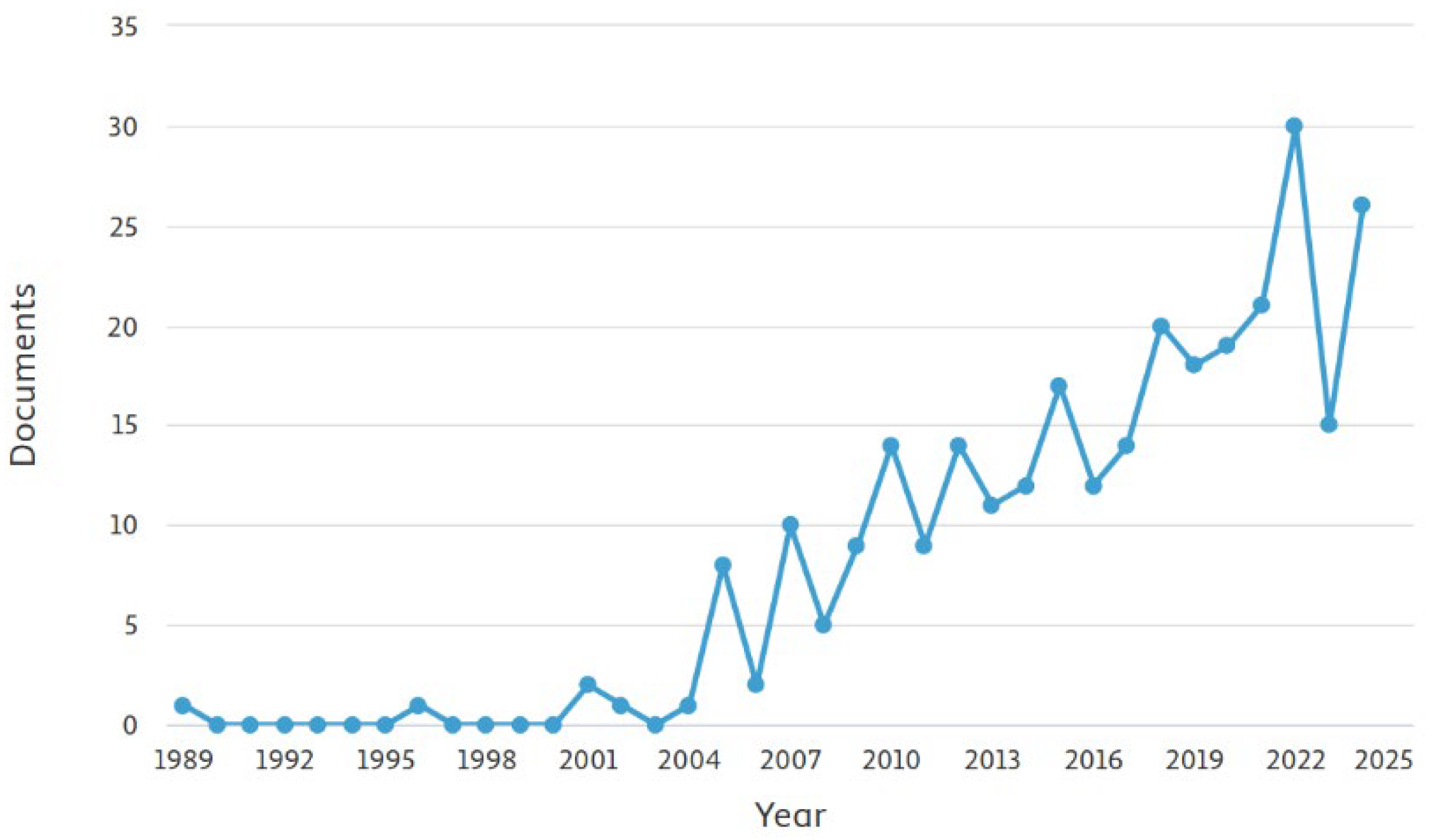
The articles retrieved from Scopus cover research on logistics network, supply network, distribution network, and supply chain configurations, as well as coordination and management mechanisms. In terms of network configuration, the search included publications on the design and structure of logistics networks, including distribution channel configurations, logistics systems, and network structure management. The analysis also covered supply chain and logistics network design, focusing on their impact on operational efficiency and functionality. Regarding coordination mechanisms, the reviewed articles focused on management and coordination mechanisms in logistics networks, distribution channels, and supply chain flows. The analyzed topics included network management mechanisms, coordination mechanisms, and strategies ensuring supply chain and logistics structure efficiency. The search was conducted in January 2025. The results yielded 358 documents, including 266 journal articles, 50 conference papers, 18 book chapters, 15 review articles, 6 conference reviews, 2 books, and 1 editorial. The majority of documents were classified under business, management, and accounting (152), engineering (112), computer sciences (89), social sciences (87), and decision sciences (62). Given the study’s scope, the results were narrowed to journal articles, conference papers, book chapters, and books within the fields of business, management and accounting, engineering, social sciences, environmental sciences, economics, econometrics and finance, and multidisciplinary research, reducing the dataset to 292 documents. Figure 1 presents the number of articles published over the years.
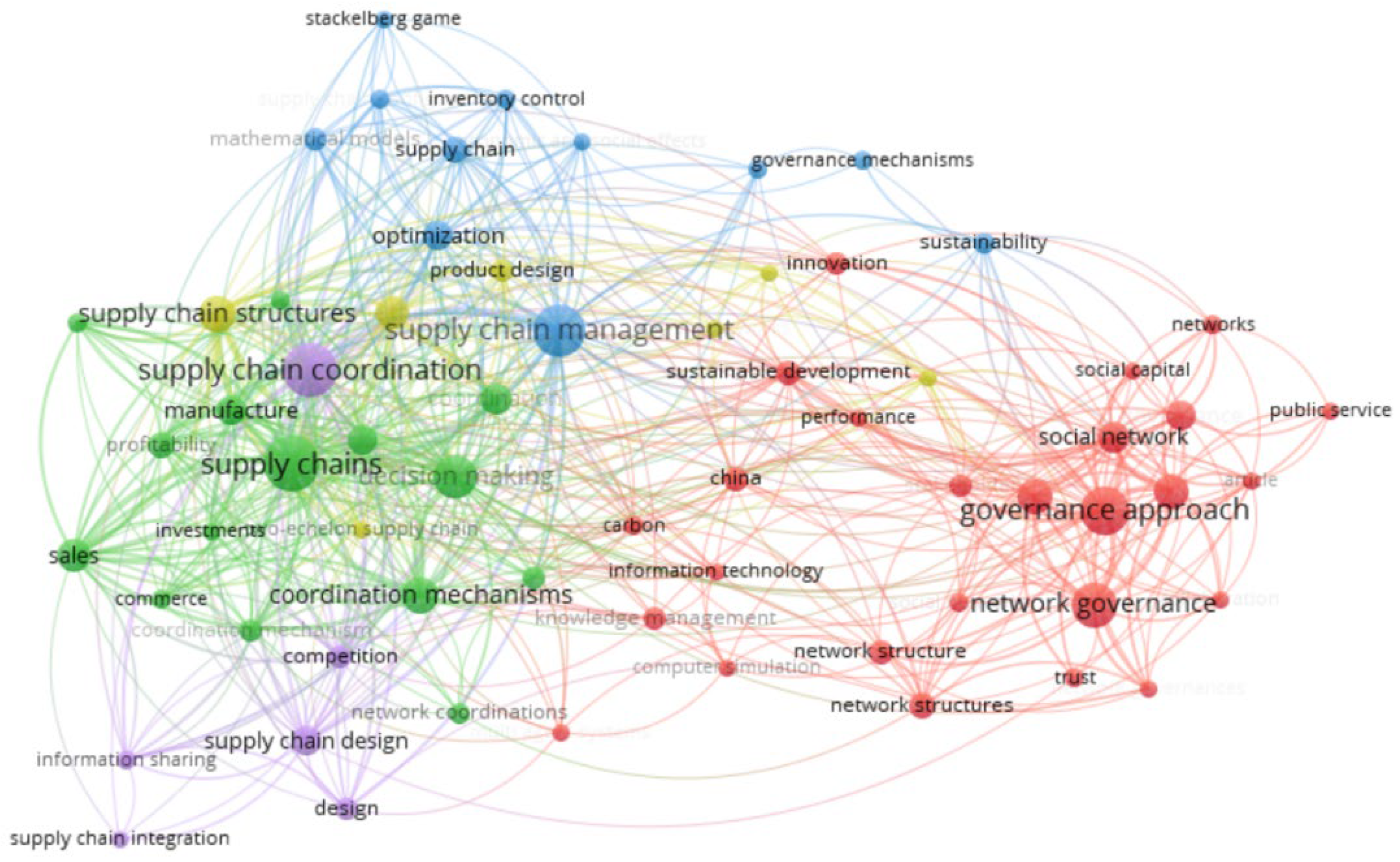
The sharp increase in publications since 2015 reflects a growing academic focus on the intersection of network design and coordination, moving beyond traditional optimization problems. Based on the selected articles, a map of relationships between indexed journal keywords and author-assigned keywords was created (Figure 2).
The analysis of the keyword map (Figure 2) reveals several distinct yet interconnected research streams. At the center are issues related to collaboration and coordination, represented by the green cluster (e.g., ‘supply chain coordination’, ‘information sharing’), which is strongly linked to the blue cluster, focused on optimization and mathematical modeling of decision-making processes. Meanwhile, the red cluster (‘governance approach’, ‘social network’) introduces a managerial and social perspective, highlighting the impact of governance mechanisms on coordination in supply chains.

2.2. Configuration of Distribution Network

Distribution networks are composed of interconnected manufacturing, commercial, and logistics enterprises. In the literature, distribution networks are often described as particularly complex systems [13,14,15]. This complexity arises from the collaboration of multiple enterprises (network nodes) with diverse strategies, resources, organizational cultures, and key processes. Research on the design and configuration of complex distribution systems has been ongoing and advanced for many years. Literature established a framework for designing different distribution networks and identified various factors that determine network selection, differentiating distribution network types based on customer and product characteristics [16]. This approach is widely applied in contemporary research on distribution systems and is also adopted in this article. The problem of configuring complex logistics systems, such as distribution networks, is examined in the literature from two perspectives: distribution channel configuration and the configuration of supply chains and logistics networks. This dual approach is justified, as modern distribution channels have a networked structure and simultaneously function as components of both supply chains and logistics networks, linking manufacturers with end customers. Research findings from these areas are collectively significant for the subject matter of this article, as each area encompasses key elements of distribution networks.
Studies on distribution channel configuration allow for an analysis of past results concerning the configuration of systems focused on finished goods flow [17,18]. Meanwhile, research on logistics network configuration provides a broader perspective on network relationships within logistics processes [18,19]. Thus, research on distribution channel configuration tends to focus more on manufacturing and commercial enterprises, whereas research on logistics networks concentrates on logistics service providers supporting these organizations. In this context, supply chain configuration research integrates these two approaches; however, it largely focuses on upstream flows (procurement side), rather than exclusively on the configuration of the distribution segment of the supply chain [20,21]. The most critical research outcomes in logistics regarding distribution channel configuration relate to evaluating the dependencies between a manufacturer’s warehousing and transportation operations and the location and specialization of intermediaries. Literature examined also a finished goods flow issues between a manufacturing plant and subsequent warehouse stages within a distribution channel [2]. Some other researchers extended this model by incorporating financial constraints (production costs, material flow costs, and customs duties) and operational constraints within production and distribution networks [22]. To ensure optimal configuration, the authors considered multiple distribution channel scenarios and proposed mixed-integer linear programming (MILP) as a solution. In subsequent years, researchers have shown increasing interest in multichannel distribution, which enables businesses to serve different customer groups effectively. Designing an efficient multichannel distribution system requires understanding the differences between process integration and separation across multiple channels [23]. Both multichannel and omnichannel distribution have become dominant themes in contemporary theoretical and empirical research on distribution channel configuration. Various algorithms, including nature-inspired algorithms, have been employed to find optimal solutions. Notably, the artificial bee colony algorithm has proven effective in determining service regions and assigning orders in omnichannel logistics [24].
Researchers also evaluated three different distribution networks in a multichannel environment, analyzing their environmental impact and operational costs [25]. Meanwhile, other authors examined the challenges faced by companies transitioning to omnichannel logistics, particularly in terms of distribution network design, performance and inventory management, and delivery planning and execution [26]. The organizational gaps in logistics processes identified by these authors are reflected in current research trends in logistics networks. In this context, logistics solutions for perishable food products was investigated, building upon earlier studies by [27]. These researchers developed a set of desired stakeholder characteristics for the horticultural supply chain, analyzing how stakeholders influence each other and play critical roles in supply chain operations. This stakeholder characteristic analysis formed the basis for the model presented in the mentioned research. Regardless of the chosen perspective on finished goods flow systems, network configuration assumes a dynamic nature. In this context, configuration is defined as the arrangement of individual components forming an inseparable whole or an arrangement of elements that can change in various ways under specific conditions [28]. This perspective is also adopted in this study’s concept of distribution network configuration. Research should include both commercial actors and logistics service providers when analyzing distribution networks. Distribution networks consist of multiple collaborating enterprises linked through various relationships. Participant type and relationship type are two primary dimensions of network configuration frequently discussed in research on logistics networks, supply chains, and distribution channels. Identified network participants include manufacturers, retailers, wholesalers, logistics operators, transport companies, and freight forwarders. In line with this interpretation of distribution networks, sustainable distribution networks will be interpreted in the article as cooperating organizations whose cooperation is directed towards the efficient delivery of products to customers while balancing the economic, environmental and social sides of the flows.
In modern complex distribution systems, these traditional channel participants diversify their business models by either integrating different value-creating processes or specializing in niche markets. The most significant factor driving business model evolution in distribution networks is the development of e-commerce systems. Both e-commerce distribution models and integrated models—including multichannel, cross-channel, and omnichannel approaches—have required the emergence of organizations with new relational competencies [29]. Consequently, the business models of cooperating organizations in these networks have become even more diverse. At the same time, network participant relationships exhibit different attributes that allow for their characterization. Among the most commonly cited classification criteria for network relationships are the degree of formalization, interaction frequency, and relationship duration. Publications on distribution channels highlight an essential configuration parameter: channel length. Channel length is understood as the number of enterprises with complementary competencies involved in the flow of goods from the producer to the final buyer. Alternatively, this parameter is defined as the number of intermediary stages in the product’s path to the final customer.
In publications on logistics networks, due to the focus on connecting nodes (in the form of warehouses, senders, and receivers) through transport processes, an important configuration parameter is the distance between network nodes [30]. When characterizing a distribution network and, consequently, its configuration, it is necessary to consider the type of participants (business model), their number (channel width), distribution channel length, distance between participants in the channel, and the type of relationships between participants. A key factor characterizing the network and influencing its configuration is the type of product and the breadth of the assortment.

2.3. Logistics Coordination of Distribution Networks

Coordination (governance, regulatory approach, authority) in supply chain collaboration encompasses all activities undertaken to manage relationships within the supply chain. It is a broader concept than control [31] and refers to a set of actions aimed at achieving a stable and mutually beneficial balance of interests and power [32]. The concept includes both planned and deliberate actions taken by entities, as well as unplanned elements that emerge as a result of collaboration. Coordination may refer to relationships between two entities within the supply chain or the entire supply chain considered as an extended organization. It can also be understood as a framework or structure in which inter-organizational relationships are initiated, developed, managed, and monitored. Coordination mechanisms include contracts, trust, standards, and ethical norms.
Similarly to configuration, coordination is discussed at the level of collaborating enterprise networks and supply chains. In a functional sense, coordination in the supply chain pertains to the harmonization and synchronization of activities and processes across the entire supply chain. The degree of coordination and power asymmetry in the value chain is determined by three variables [33]:
  • the complexity of transactions between enterprises (supply chain links);
  • the extent to which this complexity can be mitigated through codification, understood as the ability to specify product requirements;
  • the degree to which suppliers possess the necessary capabilities to meet buyers’ requirements.
These variables determine the models of value chain governance, including market, modular, relational (network-based), monopolistic, and hierarchical (vertically integrated) models (Table 1).
As shown in Table 1, the supply chain management model depends on the specific interactions taking place within it. It illustrates that as transaction complexity increases and the possibility of product standardization decreases, the need for more integrated, relational, or hierarchical forms of coordination increases. This demonstrates why different distribution network configurations require different strategies and management mechanisms to effectively synchronize activities. Coordination is supported by different mechanisms. Coordination mechanisms are formal and informal tools that integrate the actions of supply chain members to achieve shared objectives. They provide coordinators with the ability to influence flows across the network. Relational coordination mechanisms typically include flow mechanisms. Supply chain researchers often base their studies on contractual coordination mechanisms. This approach to supply chain coordination has resulted in numerous studies and interpretations of supply chain coordination [34]. According to this interpretation, coordination is the influence via mechanism in which the total profit of all members in a decentralized system equals the profit of a centralized system [35]. The goal of supply chain coordination is to integrate and optimize supply chain members so that optimal decisions are value-oriented to maximize overall supply chain benefits. This means that when a supply chain is uncoordinated—i.e., when participants seek to maximize their own benefits without aiming for the optimization of collective interests—it may lead to information asymmetry between supply chain tiers, a trust crisis between collaborating parties, and, ultimately, low operational efficiency [36]. Distribution networks, which are characterized by a large number of participants with different business models as well as a multitude of relationships between them (which are heterogeneous and highly developed both horizontally and vertically) and lower integration than distribution channels, are much more complex systems than distribution channels. The complexity arises both from the number of interconnected elements and the heterogeneous nature of relationships among them. Ensuring the harmonization and efficiency of activities among multiple participants is a significant challenge, especially in the presence of disruptions. This challenge highlights the importance of network governance (NG). Network coordination should be based on trust, reciprocity, negotiation, and mutual interdependence between entities [37]. These same NG elements are also defining characteristics in the framework proposed in the literature [38].
Distribution networks, regardless of specific attributes connected with centralization level, homogeneous/heterogeneous level, depth, width or length, are designed to ensure product availability in the required quantity, time, and location as expected by the customer. Thus, distribution network coordination must be focused on synchronizing processes to ensure reliable order fulfillment [39]. In such networks, flow mechanisms of network coordination are of particular importance, as they influence timeliness and completeness of order fulfillment. However, this group of mechanisms remains insufficiently discussed in the literature. The set of flow mechanisms constitutes the construct of logistics coordination in this study. Since logistics coordination aims to ensure reliable execution of processes (i.e., on-time, failure-free, and complete order fulfillment), even in the presence of disruptions, it can be assumed that the selection of flow coordination mechanisms also aims to enhance the resilience of the distribution system. Consequently, mechanisms are sought that maintain operational consistency and process continuity, regardless of factors affecting finished goods flows. In NG research, scholars point to mechanisms such as VMI (Vendor-Managed Inventory), CPFR (Collaborative Planning, Forecasting, and Replenishment), and others [40]. While these are detailed tools for managing flows, they do not fully address the logistical challenges faced by distribution network coordinators, supply networks, or supply chains.
A set of such mechanisms has been developed in studies on logistics coordination in distribution networks [4,10,41]. The logistical coordination framework proposed in these studies focuses on selecting coordination mechanisms that ensure on-time, complete, and failure-free execution of distribution processes to the customer-designated location. This enhancement of network coordination arises from the identified challenges posed by logistics management in multichannel systems. To ensure high flow efficiency in logistics networks, coordinators can utilize various mechanisms in combination. The first group of mechanisms focuses on product management within the network [42,43]. This group includes methods for managing resources within distribution networks, including inventory control models. The second group of mechanisms involves forecasting flows in the distribution network [44]. Forecasting models available to coordinators vary in complexity, with machine learning-based models becoming increasingly prevalent. The third group comprises transport and emergency transport mechanisms [1]. This area is extensively analyzed by logistics network researchers. Emergency transport serves as both a coordination mechanism and a resilience-enhancing tool for mitigating network disruptions.
In the proposed logistics coordination construct, as outlined in previous research [10], the study integrates knowledge from various mechanisms explored by different authors:
  • Network participants’ resource management from the logistics operator level [45],
  • Forecasting network flows [46],
  • Organization of transport and emergency transport [47],
  • Logistical information management from the logistics operator level [48],
  • Demand management [43,44].
Considering research trends and existing literature within the scope of logistics coordination mechanisms, the study identifies the following key mechanisms:
  • Flow forecasting (forecasting flows in the network),
  • Demand management (demand management),
  • Transport organization (organization of transport and emergency transport),
  • Logistics information management (logistical information management from the logistics operator level),
  • Special requirements in warehousing and transport (management of human resources and infrastructure at the network level, resource management from the logistics operator level).
In recent years, increasing attention in academic research and management practice has been devoted to the concept of sustainable supply chains. This term refers to logistics systems that integrate environmental, social, and economic objectives into the management of goods and information flows, as well as into the relationships among network participants. Table 2 presents the links between coordination mechanisms and elements of sustainable development.
Table 2 systematically demonstrates that logistics coordination mechanisms are tools that directly contribute to achieving sustainable development goals. For example, flow forecasting not only optimizes order volume (economic aspect) but also reduces CO2 emissions by eliminating overproduction (environmental aspect) and increases product availability (social aspect). Similarly, optimal transport organization reduces both logistics costs and emissions while improving customer service quality. This indicates that the operational choice of coordination mechanisms, determined by network configuration, has a direct and measurable impact on its sustainability performance.
The implemented logistics coordination mechanisms have significant potential to support the goals of sustainable development across environmental, social, and economic dimensions. At the core of this impact lies the ability to improve planning and synchronization of activities within the network. Advanced flow forecasting helps reduce overproduction, minimize inventory losses, and shorten delivery cycles [49], which, in the context of sustainability, directly translates into lower raw material and energy consumption and reduced operational costs [50]. This is complemented by demand management, which, through continuous alignment of actions with market needs, reduces the risk of surpluses or shortages, supporting the responsible use of resources and stable collaboration within the network [51]. On the operational level, transport organization optimization—including route planning and load consolidation [52]—results in lower greenhouse gas emissions and operational costs through more efficient use of assets [53]. The glue binding these activities is logistics information management, which, thanks to ICT systems, enables rapid data exchange and early detection of deviations from the plan [54,55], thus improving transparency and reducing losses. The final element is the management of special storage and transport requirements, which, through process adaptation for handling sensitive products [56], ensures the preservation of product quality, improves safety, and minimizes resource waste. Mentioned mechanisms are further analyzed in the following sections regarding their effectiveness in coordinating different distribution network configurations. The coordinator in the studied network is the 3PL.

3. Methodology

3.1. Research Methodology and Data Collection

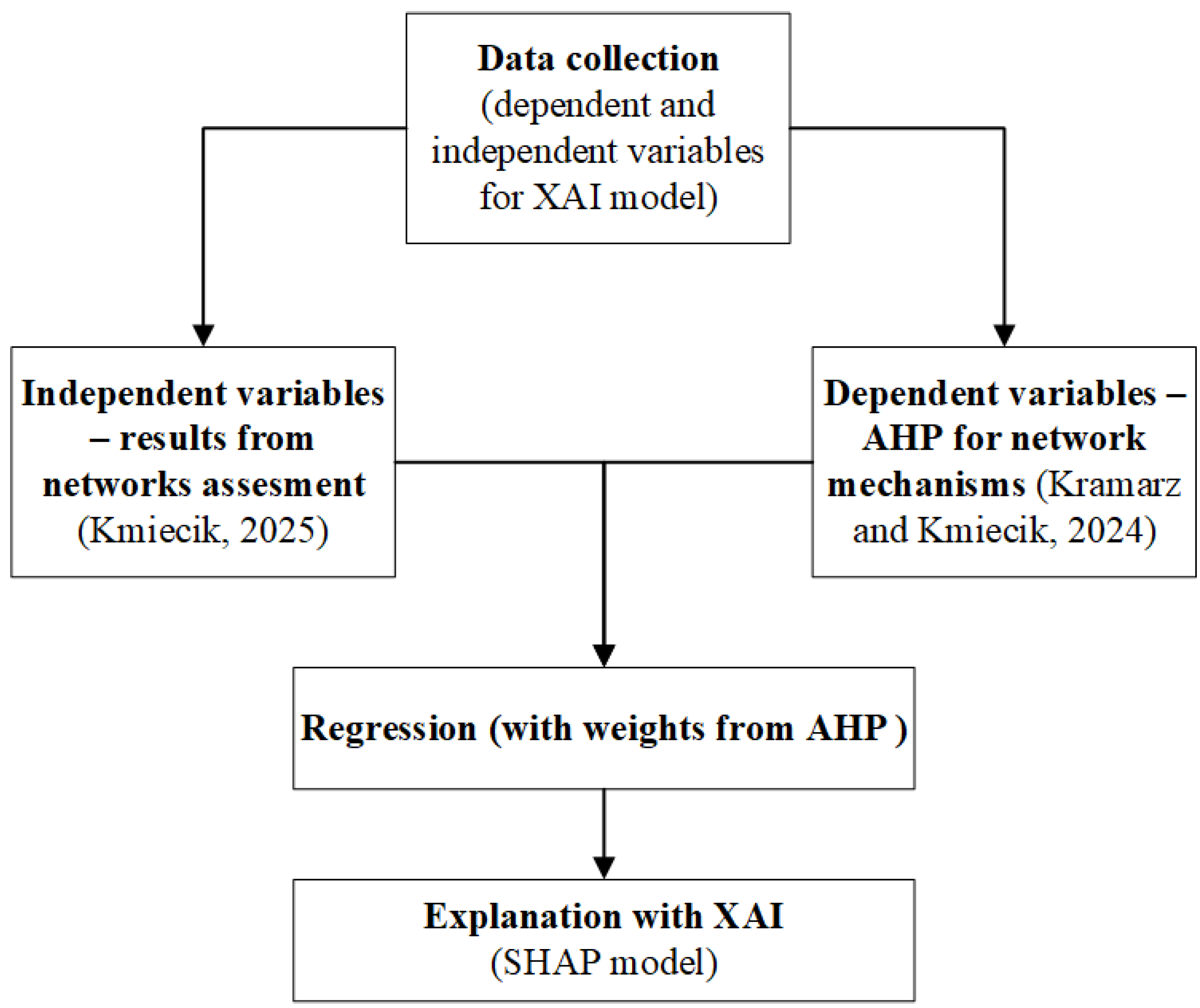
The study presented in this article was conducted in several stages, involving data collection and analysis, aimed at examining how network configuration influences the effectiveness of coordination mechanisms (Figure 3). This article presents an advanced stage of a multi-phase research program aimed at understanding and improving logistics coordination within modern distribution networks. The methodology, variable selection, and analysis presented herein are directly built upon the theoretical framework and empirical findings of two foundational publications [10,41].
The first foundational study [10] established the theoretical groundwork for the entire research. The study’s primary objective was to define the concept of “logistical coordination” as a distinct, fourth form of network coordination, alongside the established market, hierarchical, and social forms. It also aimed to create a practical tool for assessing the coordination competence of 3PL operators, specifically within complex omni-channel environments. The data consisted of expert knowledge gathered through structured interviews and questionnaires with a panel of eight senior managers from 3PL companies. This qualitative data was quantified and analyzed using the AHP to determine the relative importance of various coordination mechanisms. The study successfully developed a multi-criteria assessment tool based on 15 key coordination mechanisms.
The second study [41] moved from theory to empirical investigation, applying the framework from the first stage to real-world operational data. The main goal was to identify which structural and relational characteristics of logistics networks correlate with a high level of coordination competence demonstrated by a 3PL provider. This stage was based on a comprehensive dataset from 69 distinct distribution networks. The data was both quantitative and qualitative. Quantitative Data was extracted from Warehouse Management Systems (WMS) and demand forecasting tools, covering a standardized three-month operational period. This included metrics like forecasting accuracy, inventory levels per SKU, and transport delays in days. Qualitative Data was gathered through expert assessments by managers evaluating network characteristics such as SKU diversity, warehousing susceptibility, information flow clarity, and inter-organizational flexibility, using a Likert scale. The study sample was drawn from 9 logistics plants of a single 3PL provider across Poland and the Czech Republic, ensuring a consistent operational context while capturing network diversity. Using Pearson, Spearman, and Kendall correlation analyses, the study identified strong, statistically significant relationships. This second study provided the rich empirical dataset and the initial correlational insights that motivate the current research.
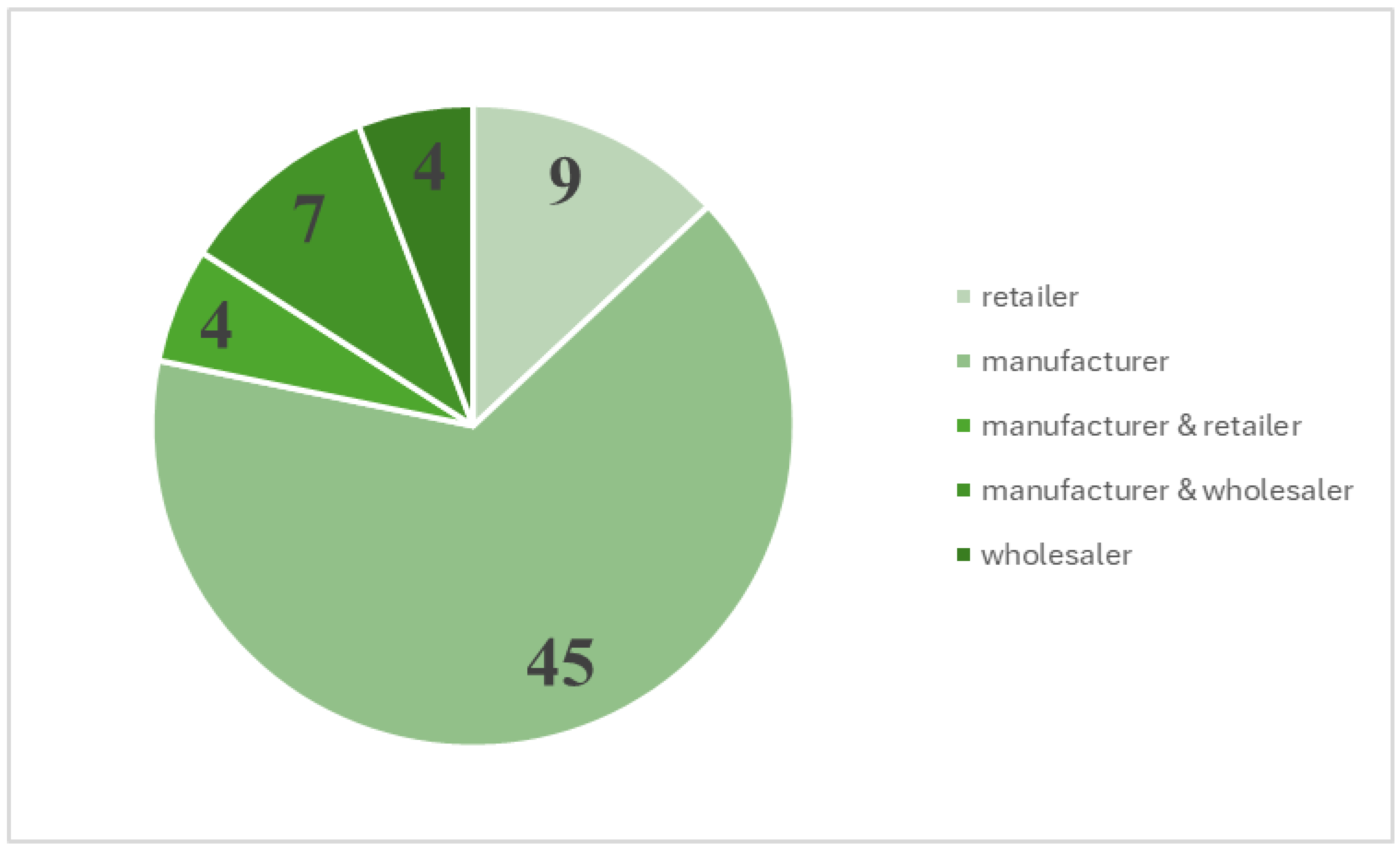
The article analyzes 69 distribution networks, whose common feature was a 3PL operator acting as an intermediary in material flows. The networks were differentiated based on various factors, including the type of enterprise that is the service recipient relative to the 3PL (Figure 4). The largest share of networks (65.22%) consisted of networks where the service recipients were manufacturers, who distributed their products to subsequent entities such as wholesalers, retailers, and other manufacturers. A key feature of these networks is their length, as they include multiple intermediaries, making them the longest among the analyzed configurations. The analysis also identified two other types of manufacturers, specifically manufacturer and wholesaler (10.14%), where the manufacturing enterprise was involved in both production and distribution to companies engaged in retail sales, and manufacturer and retailer (5.80%), where the manufacturer also engaged in retail sales. Additionally, the analysis included networks in which the service recipient was a wholesaler (5.80%) and networks in which the service recipient was a retailer (13.04%).
Analyzing the type of products flowing through the network, it can be concluded that the largest share consisted of pharma and cosmetics products (57.97%). The remaining networks were composed of those in which the flowing products were non-food (11.59%), food and non-food (10.14%), food (8.70%), cosmetics (5.80%), pet products (2.90%), and packaging products (2.90%). In this article, the decision was made to test how network configuration characteristics influence logistics coordination mechanisms. To achieve this objective, the dataset was divided into dependent and independent variables, which were later used for comparative data analysis. The distinction between dependent and independent variables is widely recognized and frequently applied in various research fields [57,58]. This division is also commonly associated with studies utilizing the SHAP model (SHapley Additive exPlanations) within Explainable AI (XAI) [59,60]. XAI represents a paradigm in machine learning and data science focused on developing techniques that render the outputs of complex models interpretable to human experts [57]. The primary objective of XAI is to elucidate the internal logic of otherwise opaque or “black-box” models, thereby enhancing their transparency, trustworthiness, and auditability. Although the weighted regression framework employed herein is not inherently a “black-box” algorithm, the high dimensionality resulting from the encoding of categorical variables, combined with the application of an expert-driven weighting scheme, introduces a level of complexity that can obscure the practical importance of individual predictors. XAI methods are therefore instrumental in moving beyond standard statistical metrics, such as coefficients and p-values, to provide a more nuanced understanding of feature contributions [59].
The logistics coordination mechanisms along with their respective weights [10], were identified as dependent variables. These mechanisms were evaluated using the Analytic Hierarchy Process (AHP) in the referenced publication, resulting in the following final weights:
  • Forecasting of flows (weight: 0.1312)
  • Demand management (weight: 0.0697)
  • Organization of transportation (weight: 0.0246)
  • Logistical information management (weight: 0.041)
  • Special requirements in the area of storage and transportation (weight: 0.041)
Weights were assigned to dependent variables (coordination mechanisms) based on expert evaluation using the Analytic Hierarchy Process (AHP). The independent variables represented characteristics related to the configuration of 69 distribution networks, as evaluated in previous research [41]. The assessment covered five key variables:
  • Service recipient type
  • Brief description
  • Total SKU
  • Diversity of SKU
  • Warehousing susceptibility
The evaluation of these criteria, as presented in the referenced publication, was based on quantitative data from the last three months of network operations as well as expert assessments for each network. The analysis was conducted from the perspective of the logistics service provider, which was a common feature among all networks. Both dependent and independent variables were analyzed in subsequent steps using weighted regression and the SHAP model.

3.2. Regression with Weights from AHP (Analytic Hierarchy Method) and Explainable AI (XAI)

Weighted regression is a statistical technique that allows for the incorporation of various weights assigned to dependent variables, enabling better modeling of complex phenomena. In data analysis, weights can reflect the significance of individual variables or differences in their impact on the analysis outcome. The application of weighted regression is particularly useful in studies where different observations have varying levels of reliability or importance, leading to more precise and reliable results [61,62]. Compared to logistic regression, which is primarily used for modeling binary dependent variables (e.g., success/failure), weighted regression is more flexible, adapting to continuous variables while incorporating weights [63]. This flexibility allows for more accurate parameter estimates, particularly when the significance of observations varies. Similarly, unlike standard correlation analysis, which only assesses the strength and direction of relationships between variables, weighted regression enables evaluating the impact of specific variables on the dependent variable while controlling for weights. Academic literature also emphasizes the importance of weighted regression in cases where standard methods may not provide sufficiently accurate results due to the aforementioned challenges. Literature highlights the importance of adaptive weight assignment in data analysis, which enhances the elimination of the impact of outliers or incomplete observations [64]. This approach ensures more stable and reliable estimations, which are critical in statistical analysis.
In this study, a non-standard approach to weighted regression was applied, where weights were assigned not to observations, but to the dependent variables themselves—representing coordination mechanisms in logistics. Each mechanism was assigned a weight reflecting its strategic relevance, as evaluated using AHP. While this deviates from conventional statistical usage of weighted least squares (WLS), where weights correct for heteroskedasticity or unequal reliability, this approach is well grounded in interdisciplinary practices combining decision-making tools with statistical modeling [61,63]. Similar methods have been used in multi-criteria decision-making (MCDM) and hybrid modeling in logistics research. This method allowed the authors to determine how different network configuration factors impact coordination mechanisms of varying importance. Thus, it offers practical insights into prioritization of logistics interventions, supporting managerial decision-making.
In this article, weighted regression was implemented using Python 3.12. The calculation procedure, presented in Appendix A, consists of the following steps:
  • Extracting independent variables (network configuration) and dependent variables (coordination mechanisms) from input data.
  • Transforming categorical variables into numerical variables using One-Hot Encoding.
  • Assigning weights to each dependent variable separately, based on their relative importance as determined by expert evaluation using the Analytic Hierarchy Process (AHP). These weights reflect the decision-making significance of each coordination mechanism within distribution network management.
  • Generating regression models using this modified weighting approach, where weights are applied not to observations (as in classical WLS), but to the dependent variables, thus forming a hybrid decision-statistical framework.
In the context of interpreting weighted regression results, the application of Explainable AI (XAI) techniques is crucial for understanding and analyzing complex models. Weighted regression, as a statistical technique, incorporates different weights assigned to variables, which can impact the analysis outcomes. Integrating XAI into this process allows for a better understanding of how and why specific variables influence model results, which is critical for decision-making based on these findings [65,66]. The article employs the SHAP model (SHapley Additive exPlanations), one of the most widely used XAI models, which, in its basic or modified form, is applied across various research fields, including: medicine [67], Big Data analysis [68], process automation [69] and logistics and supply chain management [70,71].
Similarly to the previous step, the SHAP model was implemented using Python 3.12 (Appendix B). The script followed these steps:
  • Retrieving data related to weighted regression and dependent and independent variables.
  • Building regression and SHAP models for each dependent variable, including:
    • Defining the regression model using pre-determined weights.
    • Fitting the model to the data (applying weights to each coordination mechanism according to its expert-assessed importance (from AHP), thus scaling each dependent variable before modeling).
    • Explaining results using SHAP.
    • Generating insights for result interpretation.
  • Identifying the most influential variables based on SHAP values, including:
    • Calculating the mean absolute SHAP value for each factor.
    • Describing the three most important factors.
Although dependent-variable weighting is unconventional, it was adopted here to reflect managerial priorities and incorporate expert knowledge. This methodological choice, while specific, offers practical insights.

4. Results

This section presents the results of the quantitative analysis aimed at answering the research question: How does distribution network configuration impact the effectiveness of logistics coordination mechanisms? To achieve this, data from 69 distribution networks coordinated by a 3PL operator were analyzed. A weighted regression model was employed, where network configuration characteristics served as independent variables, and the effectiveness of logistics coordination mechanisms—weighted by importance using the AHP—were the dependent variables. The subsequent tables detail the impact of specific configuration factors on each coordination mechanism, followed by a SHAP analysis to identify the most influential variables. The weighted regression results for the independent variable total SKU are presented in Table 3.
Table 2 presents how an increase in the number of SKU by one unit affects coordination mechanisms. Since the variable is not statistically significant (p > 0.05), these results should be treated as indicative only. For forecasting of flows, it is associated with a very small positive impact on the flow forecasting mechanism, suggesting that a more extensive product range (more SKU) may increase the need for more precise flow forecasting. However, the impact is very minor. For demand management, it is associated with a slight negative impact on demand management. This indicates that a more diverse SKU portfolio may slightly complicate the demand management process. For organization of transportation, it is associated with a small negative impact on transport organization, pointing to potential challenges in organizing transportation with greater product assortment diversity. For logistics information management, it is associated with a slight positive impact on logistics information management, which may indicate increasing requirements for managing logistics information with a higher number of SKU. For special requirements, it is associated with a small positive impact on special requirements related to storage and transportation. This suggests that a more diverse assortment may increase the need for adjusting specific requirements in these areas. The weighted regression results for diversity of SKU are presented in Table 4.
Forecasting of flows is associated with a positive impact on flow forecasting. This means that increased SKU diversity may heighten the need for more complex and precise forecasting models. The increase in SKU diversity shows a positive coefficient for demand management, but the effect is not statistically significant (p = 0.69), suggesting limited confidence in this relationship. An increase in SKU diversity by one unit has a negative impact on transport organization, indicating that a more diverse assortment may hinder efficient transport organization. The increase in SKU diversity has a positive impact on logistics information management, which may suggest that greater SKU diversity requires improved logistics information management systems. The increase in SKU diversity has a negative impact on meeting special requirements related to storage and transportation, meaning that a broader assortment increases difficulties in fulfilling specific requirements. The regression results for service recipient type are presented in Table 5.
The results illustrate the impact of the service recipient type in the sustainable distribution network on various logistics coordination mechanisms in the context of collaboration with a 3PL operator. The relationship between a manufacturer and a retailer has a positive impact on flow forecasting and demand management, indicating an increased need for advanced mechanisms in these areas. However, this type of relationship causes minor complications in transport organization. In contrast, collaboration between a manufacturer and a wholesaler is less favorable, particularly regarding flow forecasting and logistics information management, suggesting that these mechanisms are more challenging to implement effectively. The relationship with a retailer also indicates difficulties, especially in flow forecasting and information management, although demand management remains relatively positive. A wholesaler as a service recipient has a moderately negative impact on most coordination mechanisms, but its relationship has a positive effect on special requirements in storage and transportation. A manufacturer as an independent service recipient is primarily associated with a negative impact on coordination mechanisms, particularly on flow forecasting, which may suggest challenges in effectively managing logistics processes in this type of relationship.
Overall, the results indicate that different types of service recipients influence coordination mechanisms differently, with relationships with retailers and wholesalers being particularly demanding in terms of forecasting and logistics information management. The regression results for the brief description of networks in terms of the flowing products are presented in Table 6.
The results present the impact of the description of products flowing through the sustainable distribution network on various logistics coordination mechanisms. Products in the “food and non-food” category show a high positive impact on flow forecasting, indicating that this type of product requires particular attention in forecasting processes. At the same time, the impact on demand management and transport organization is negative, suggesting potential difficulties in these areas. Products in the “food” category also have a positive, though slightly smaller, impact on flow forecasting, while their impact on demand management, transport organization, and logistics information management remains negative. Non-food products exhibit the smallest positive impact on forecasting and the highest negative impact on transport organization, which may indicate that managing these products is more challenging.
The “packaging” category stands out with the greatest positive impact on flow forecasting, suggesting that packaging-related products must be carefully monitored in terms of future demand. However, this category has a negative impact on logistics information management, which may be due to more complex data management processes related to packaging. “Pet food” has a positive impact on special requirements for storage and transportation, indicating specific needs in these areas, but a negative impact on other mechanisms, particularly demand management and transport organization.
Products in the “pharmaceutical and medicines” category exhibit a moderately positive impact on flow forecasting, which is understandable given the precise forecasting requirements in the pharmaceutical industry. The only positive impact in this category is on transport organization, whereas the negative impact on logistics information management and demand management suggests challenges associated with handling pharmaceuticals and medical products. To verify the reliability of the regression results and support interpretation, statistical significance tests were performed for each independent variable within the weighted regression models. Table 5 results were extended to include p-values, confidence intervals, and R-squared values. Among the five analyzed models, the highest adjusted R2 was recorded for the model explaining special requirements in the area of storage and transportation (R2 = 0.56), followed by logistical information management (R2 = 0.23), indicating a relatively good fit of these models to the data. The remaining models, especially demand management (R2 = 0.10), showed weaker explanatory power, which should be considered in interpretation. A key observation is that warehousing susceptibility was statistically significant (p < 0.05) in four out of five models, indicating its consistent importance as a driver of coordination mechanisms. In the model for logistical information management, two additional variables were significant manufacturer and wholesaler (p ≈ 0.013), and packaging (p ≈ 0.049). In the model for special requirements, manufacturer and wholesaler (p ≈ 0.054) and diversity of SKU (p ≈ 0.094) were close to the 0.05 threshold. For the remaining models, most variables were not statistically significant, despite having nonzero coefficients. This suggests that observed directional trends (positive or negative) should be interpreted with caution.
In the next phase, the SHAP model was used to identify the most influential factors affecting each logistics coordination mechanism. For the forecasting of flows mechanism, the most influential network configuration factors were warehousing susceptibility (0.0889), type of flowing products, particularly pharmaceutical and medicines (0.0456) and food and non-food (0.0275), and service recipient type retailer (0.0210). The same configuration factors also influenced the demand management mechanism, where the impact of individual elements was as follows: 0.0270, 0.0200, 0.0166, 0.0089. However, in the case of forecasting of flows, their impact was significantly higher. For the organization of transportation mechanism, the most influential configuration factors were type of products, particularly non-food (0.0065), pharmaceutical and medicines (0.0051), food (0.0029), and food and non-food (0.0023), as well as diversity of SKU (0.0039). For the logistical information management mechanism, the most influential factors were type of product—pharmaceutical and medicines (0.0247), warehousing susceptibility (0.0153), and service recipient type, when the service recipient was manufacturer and wholesaler (0.0092). For the special requirements in the area of storage and transportation mechanism, the most influential factors were warehousing susceptibility (0.0247), diversity of SKU (0.0087), and service recipient type manufacturer and wholesaler (0.0051). Networks in which longer chains with manufacturer-type service recipients dominate exhibit a complex structure due to the presence of numerous intermediaries, which makes effective material flow management and transport organization more difficult. Collaboration with retailers in these networks has a strong positive impact on flow forecasting and demand management, resulting from greater demand predictability in retail trade. However, these same relationships may cause complications in transport organization due to the need for frequent and precise deliveries. Relationships with wholesalers, although representing a smaller percentage of the analyzed networks, are less favorable in terms of flow forecasting and logistics information management. This is due to greater variability in wholesaler requirements and the complexity of managing information for a large number of SKUs. On the other hand, collaboration with enterprises that combine manufacturing and distribution functions (manufacturer and wholesaler or manufacturer and retailer) can lead to more efficient demand management but negatively affects other mechanisms, such as transport organization and special requirements management.
The analysis of flowing products indicates that categories such as “pharmaceutical and medicines” and “food and non-food” pose significant logistics challenges. Pharmaceutical products require highly precise logistics information management and compliance with specific storage and transportation requirements, which may stem from regulatory requirements and specific environmental conditions. Food products, in contrast, require advanced flow forecasting mechanisms but create difficulties in demand management and transport organization due to limited shelf life and sensitivity to storage conditions. The non-food category has the least positive impact on flow forecasting, suggesting greater unpredictability in demand for these products and challenges in effective transport planning. Despite some models exhibiting limited explanatory power, the combination of weighted regression and XAI analysis enabled the identification of both statistical and practical drivers of coordination mechanisms. The variable warehousing susceptibility proved to be the most consistent and statistically significant predictor, providing robust support for decision-makers in network configuration assessment.

5. Discussion

5.1. Influence of Service Recipient Types and Product Categories on Coordination Mechanisms

The conducted analysis of sustainable distribution networks confirmed the significant impact of network configuration on the effectiveness of logistics coordination mechanisms, aligning with findings from the literature while also introducing new insights into the discussion. Collaboration with manufacturers and retailers proved to be the most beneficial in terms of demand management and flow forecasting, which corresponds with the literature emphasizing greater demand predictability in retail relationships [72]. At the same time, such relationships generate minor difficulties in transport organization due to the need for frequent and precise deliveries. Networks involving manufacturers and wholesalers encounter difficulties in flow forecasting and information management, which result from the greater variability in the requirements of these participants. Wholesalers as service recipients have a positive impact on special requirements in storage and transportation; however, their relationships generally weaken the efficiency of other mechanisms. A manufacturer as a service recipient exerts a predominantly negative impact on coordination mechanisms. The statistical analysis showed that, among the variables describing service recipient types, only the manufacturer and wholesaler category was statistically significant (p < 0.05) in the model for logistical information management. This suggests that, while directional effects observed for other recipient types may be theoretically valid, they should be interpreted with caution due to the lack of statistical support. Similarly, although the results indicated certain trends in the impact of flowing product categories on coordination mechanisms, most coefficients were not statistically significant. An exception was the packaging category, which was close to the significance threshold in the logistical information management model (p ≈ 0.049). Therefore, the practical implications of these variables should be acknowledged, but not overstated.
Similarly to what the literature suggests [73] different product categories influence the execution of logistics processes in various ways, and as shown by the research conducted in this article, they also affect logistics coordination mechanisms. Packaging-related products have the greatest positive impact on flow forecasting, which may be due to their predictability and easier planning possibilities. In contrast, non-food and pharmaceutical products generate the greatest difficulties in transport organization and logistics information management, which may stem from their specific requirements, such as legal regulations and demand variability. Pharmaceutical products require advanced logistics information management, a point frequently emphasized in the literature for these types of products [74]. Food products, despite their positive impact on flow forecasting, are logistically demanding, primarily in demand management and special requirements concerning storage and transportation.
These results correspond with findings in prior research showing that different types of products and recipient relationships determine the applicability and success of coordination mechanisms. Literature demonstrated that operational performance across dimensions such as delivery reliability and cost efficiency strongly depends on partner type and product complexity [75]. Similarly, other authors emphasized that collaboration effectiveness and firm performance are highly contingent on the nature of partners and product categories, confirming that heterogeneous service recipients may yield asymmetric coordination outcomes [76]. Other research pointed out that structural and relational linkages within the supply chain create different levels of “supply chain capital,” which explains why wholesalers or manufacturers may weaken certain mechanisms despite strengthening others [77].
Finally, embedding these findings within the sustainability perspective highlights that recipient- and product-driven variability in coordination effectiveness is consistent with broader trends in sustainable supply chain management. Sustainable supply chains require alignment of economic, environmental, and social objectives, and our findings indicate that product categories with higher regulatory and environmental demands (e.g., pharmaceuticals, food) impose disproportionately complex coordination requirements [78]. This is consistent with other research call for future research to better integrate such complexities into the theoretical development of sustainable supply chain management [79].

5.2. Distribution Networks Complexity and Coordination Mechanisms

The 3PL operator can most effectively apply logistics coordination mechanisms in networks with high demand predictability and clear information flows. These mechanisms are most effective in relationships with retail service recipients, allowing for precise alignment of flow forecasting and demand management mechanisms. However, high SKU diversity, as well as pharmaceutical and food products, impose additional requirements in information management and flow organization. Although these relationships were not statistically significant in the regression models, SHAP values indicated their relative influence across mechanisms. Complex networks with a large number of intermediaries and diverse assortments, as indicated by the literature [80], present significant challenges for logistics operators. These types of networks require the adaptation of coordination mechanisms such as VMI and CPFR to the specific conditions of collaboration among network participants. These mechanisms help increase transparency in material and information flows, but their effectiveness depends on appropriate alignment with network characteristics, including product type, number of participants, and the complexity of relationships. The flexibility of transport organization is another critical factor, particularly in networks with high assortment diversity and dynamically changing market conditions. Logistics operators must adjust their transport strategies to product-specific requirements, such as temperature control, delivery speed, or safety regulations.
This study supports previous findings that network complexity can weaken coordination effectiveness unless reinforced by advanced relational mechanisms. Prior research also shows that collaborative advantage mediates the link between coordination and performance [76]. From a sustainability perspective, effective coordination in complex networks is essential, as disruptions can disproportionately harm environmental and social goals [78]. Adopting innovative coordination mechanisms (e.g., digital information platforms, collaborative forecasting) can support both operational performance and sustainability outcomes, which aligns with the empirical tendencies observed in our analysis.

5.3. Implications for Sustainability

The findings presented in this article indicate a clear relationship between the structural configuration of sustainable distribution networks and the effectiveness of logistics coordination mechanisms. At the same time, it is well established in the literature that coordination mechanisms—particularly those related to demand forecasting, transport organization, information management, and inventory control—have the potential to support sustainable development objectives.
This connection leads to an important implication—if the configuration of a distribution network influences the effectiveness and selection of coordination mechanisms, and these mechanisms in turn affect sustainability performance, then it follows that network configuration indirectly impacts the sustainability of logistics systems. For example, a high level of SKU diversity (configuration) increases the need for advanced flow forecasting mechanisms (coordination), which in turn enables more accurate planning and reduces inventory waste and unnecessary transport emissions (sustainability). A network dominated by pharmaceutical products (configuration) requires specialized logistics information management and special storage coordination (mechanisms), which contributes to safer product handling and reduced spoilage (sustainability). Longer and more complex distribution channels (configuration) often necessitate more robust transport coordination (mechanism), which, when effectively implemented, can help optimize load planning and reduce CO2 emissions (sustainability). Our findings emphasize that logistical sustainability is not merely about technology or emissions data; it is fundamentally shaped by structural decisions. The network’s initial design, for example, predetermines the effectiveness of the very coordination mechanisms meant to ensure its efficiency and green performance.

5.4. Futher Research Directions

The presented study makes a significant contribution to the literature by providing empirical evidence on the impact of network configuration on the effectiveness of logistics coordination mechanisms. The use of weighted regression and SHAP analysis as XAI tools allows for a deeper understanding of these relationships. Future research should focus on dynamic changes in network configuration, especially in the face of disruptions, to better understand the interactions between configuration and the resilience of distribution systems. Based on the analyses conducted and the results obtained, several other areas requiring further research can be identified to deepen the understanding of how network configuration influences coordination mechanisms and to enhance the practical application of these mechanisms in dynamically changing market conditions. Technological advancements, including the development of AI-based tools, the Internet of Things (IoT), and blockchain, could significantly impact logistics coordination mechanisms. Future research could focus on analyzing the application of these technologies in different distribution network configurations, particularly in improving information management, flow forecasting, and transport organization. Further studies could also examine the dynamic changes in distribution network configuration in response to various types of disruptions, such as supply chain interruptions, demand fluctuations, or regulatory changes. A crucial aspect would be investigating which logistics coordination mechanisms are most effective in adapting to these disruptions and how logistics operators can proactively manage risk. Issues related to the environmental aspects of logistics and sustainable development are gaining increasing importance in the design and management of distribution networks. Further research could explore how coordination mechanisms can contribute to reducing the carbon footprint, optimizing resource consumption, and meeting circular economy requirements.

6. Conclusions

This study addressed the identified gap between the research domains of sustainable distribution network configuration and logistics coordination. By empirically investigating the relationship between a network’s structural characteristics and the effectiveness of coordination mechanisms, we have provided insights that carry significant theoretical and practical weight for the field of logistics management.

6.1. Theoretical Implications

This research makes several contributions to the existing body of literature. First and foremost, it empirically confirms a clear and significant relationship between the configuration of a sustainable distribution network—defined by channel length, participant types, assortment diversity, and product characteristics—and the effectiveness of specific logistics coordination mechanisms. Our findings move beyond general assumptions by identifying specific, influential relationships: warehousing susceptibility was shown to be the most critical factor for the effectiveness of flow forecasting and special requirements management, while product type had the strongest impact on transport organization and logistical information management. The study offers a nuanced perspective on network complexity, concluding that while greater complexity may enhance a network’s adaptability, it tends to decrease the efficiency of specific coordination mechanisms. From a methodological standpoint, this paper introduces a novel hybrid analytical framework. The integration of expert-based weighting through the Analytic Hierarchy Process (AHP) with weighted regression, and its subsequent interpretation using an Explainable AI (XAI) model (SHAP), provides a replicable and transparent approach for future research aimed at decoding complex relationships in logistics systems.

6.2. Practical Implications

The results are particularly relevant for third-party logistics (3PL) operators who act as network coordinators. Our research demonstrates that a one-size-fits-all approach to coordination is ineffective. Instead, operators should strategically tailor their portfolio of coordination mechanisms to the specific configuration of the network they are managing. For example, in networks characterized by high assortment diversity or those handling sensitive products like pharmaceuticals and food, an emphasis should be placed on robust logistical information management and flexible transport organization. Conversely, in networks with longer, more complex channels, operators must anticipate greater challenges in demand management and transportation. The analytical framework presented is not merely academic; it can serve as a practical decision-support tool. By assessing a network’s key attributes, a logistics operator can use this model to anticipate which coordination tools (e.g., flow forecasting, demand management) will be most effective, allowing for more informed strategic planning and resource allocation. This ultimately enables 3PLs to enhance their value proposition by improving the reliability, efficiency, and sustainability of the flows they manage.

Author Contributions

Conceptualization, M.K. (Marzena Kramarz) and M.K. (Mariusz Kmiecik); methodology, M.K. (Marzena Kramarz) and M.K. (Mariusz Kmiecik); software, M.K. (Marzena Kramarz) and M.K. (Mariusz Kmiecik); validation, M.K. (Marzena Kramarz) and M.K. (Mariusz Kmiecik); formal analysis, M.K. (Marzena Kramarz) and M.K. (Mariusz Kmiecik); investigation, M.K. (Marzena Kramarz) and M.K. (Mariusz Kmiecik); resources, M.K. (Marzena Kramarz) and M.K. (Mariusz Kmiecik); data curation, M.K. (Marzena Kramarz) and M.K. (Mariusz Kmiecik); writing—original draft preparation, M.K. (Marzena Kramarz) and M.K. (Mariusz Kmiecik); writing—review and editing, M.K. (Marzena Kramarz) and M.K. (Mariusz Kmiecik); visualization, M.K. (Marzena Kramarz) and M.K. (Mariusz Kmiecik); supervision, M.K. (Marzena Kramarz) and M.K. (Mariusz Kmiecik); project administration, M.K. (Marzena Kramarz) and M.K. (Mariusz Kmiecik); funding acquisition, M.K. (Marzena Kramarz) and M.K. (Mariusz Kmiecik). All authors have read and agreed to the published version of the manuscript.

Funding

This research was funded by Silesian University of Technology. Funding number: BK/13/050/BK-25/0018 & BKM-13/050/BKM-25/0019.

Data Availability Statement

Data could be shared by authors upon the reasonable request.

Conflicts of Interest

Authors declare no conflicts of interest.

Abbreviations

The following abbreviations are used in this manuscript:
3PLthird-party logistics
AHPAnalytic Hierarchy Process
CPFRCollaborative Planning, Forecasting, and Replenishment
ICTInformation and Communications Technology
IoTInternet of Things
MCDMmulti-criteria decision-making
MILPmixed-integer linear programming
SHAPSHapley Additive exPlanations.
SKUStock Keeping Unit
VMIVendor-Managed Inventory
WLSweighted least squares
XAIExplainable AI

Appendix A

Python script for regression
import pandas as pd import numpy as np import statsmodels.api as sm
Load data
df = pd.read_excel(‘input_data.xlsx’) # Replace with actual file path or use a relative path
Encode categorical variables
X = df[[‘Service recipient type’, ‘Brief description’, ‘Total SKU (based on last 3 months of activity)’, ‘diversity of SKU’, ‘warehousing susceptibility’]] X = pd.get_dummies(X, drop_first=True)
Add intercept and convert to float
X = sm.add_constant(X).astype(float)
List of dependent variables and associated AHP-based weights
y_vars = [‘forecasting of flows’, ‘demand management’, ‘organization of transportation’, ‘logistical information management’, ‘special requirements in the area of storage and transportation’] weights = [0.1312, 0.0697, 0.0246, 0.041, 0.041]
Collect results
results = []
Loop through each dependent variable
for i, y_var in enumerate(y_vars): weight = weights[i]
# Scale dependent variable using its AHP weight
y_weighted = df[y_var] * weight
y_weighted = y_weighted.astype(float)
# Fit OLS model
model = sm.OLS(y_weighted, X, missing=‘drop’).fit()
# Create DataFrame with regression output
summary_df = pd.DataFrame({
    ‘Variable’: model.params.index,
    ‘Coefficient’: model.params.values,
    ‘p-value’: model.pvalues.values,
    ‘CI lower (95%)’: model.conf_int()[0],
    ‘CI upper (95%)’: model.conf_int()[1],
    ‘R-squared’: model.rsquared,
    ‘Adjusted R-squared’: model.rsquared_adj,
    ‘Dependent Variable’: y_var,
    ‘Weight’: weight
})
results.append(summary_df)
Export results to Excel
final_df = pd.concat(results, ignore_index=True) final_df.to_excel(‘regression_results.xlsx’, index=False) # Replace with desired output path
print(“Done.”)

Appendix B

Python script for SHAP
import pandas as pd
import numpy as np
from sklearn.linear_model import LinearRegression
import shap
# File paths
input_file = r’input_file_path’
output_file = r’ output_file_path ‘
# Loading data
df = pd.read_excel(input_file)
# Extracting independent variables (network configuration) and dependent variables (coordination mechanisms)
X = df[[‘Service recipient type’, ‘Brief description’, ‘Total SKU (based on last 3 months of activity)’,
            ‘diversity of SKU’, ‘warehousing susceptibility’]]
X = pd.get_dummies(X, drop_first=True) # Transforming categorical variables
# Dependent variables (coordination mechanisms) and their assigned weights
y_vars = [‘forecasting of flows’, ‘demand management’, ‘organization of transportation’,
            ‘logistical information management’, ‘special requirements in the area of storage and transportation’]
weights = [0.1312, 0.0697, 0.0246, 0.041, 0.041]
# Regression result for each dependent variable
explanations = []
# Creating regression model and SHAP for each dependent variable
for i, y_var in enumerate(y_vars):
    # Weight for this dependent variable
    weight = weights[i]
    # Defining the regression model
    y = df[y_var] * weight # Scaling the dependent variable by its weight
    model = LinearRegression()
    # Fitting the model to the data
    model.fit(X, y)
    # Explaining results using SHAP
    explainer = shap.LinearExplainer(model, X, feature_perturbation=“interventional”)
    shap_values = explainer.shap_values(X)
    # Generating insights for result interpretation
    explanation = f”Results for dependent variable ‘{y_var}’:\n”
    explanation += f”The coordination mechanism ‘{y_var}’ is most significantly influenced by the following network configuration factors:\n”
    # Identifying the most influential variables based on SHAP values
    shap_mean = np.abs(shap_values).mean(axis=0) # Calculate mean absolute SHAP value for each factor
    sorted_indices = np.argsort(shap_mean)[::-1] # Sorting from the most influential variables
    for idx in sorted_indices[:3]: # Describe the top 3 factors
            feature_name = X.columns[idx]
            impact = shap_mean[idx]
            explanation += f”- {feature_name}: impact {impact:.4f}\n”
    explanation += “\n”
    explanations.append(explanation)
# Saving results to an Excel file
results_df = pd.DataFrame({“Explanation”: explanations})
results_df.to_excel(output_file, index=False)
print(f’Descriptive explanations of the results have been saved to the file {output_file}’)

References

  1. Kramarz, M.; Kramarz, W. Simulation modeling of complex distribution system. Procedia Soc. Behav. Sci. 2011, 20, 203–291. [Google Scholar] [CrossRef][Green Version]
  2. Amiri, A. Designing a distribution network in a supply chain system: Formulation and efficient solution procedure. Eur. J. Oper. Res. 2006, 171, 567–576. [Google Scholar] [CrossRef]
  3. Deflorin, P.; Dietl, H.; Lang, M.; Lucas, E. Determinants of the optimal network configuration and the implications for coordination. Inst. Strategy Bus. Econ. Univ. Zur. Work. Pap. Ser. 2011, 152, 1–38. [Google Scholar] [CrossRef]
  4. Kramarz, M. Logistics coordination in building the resilience of the distribution network. Sci. Pap. Silesian Univ. Technology. Organ. Manag. Ser. 2023, 170, 233–248. [Google Scholar] [CrossRef]
  5. Czakon, W. Uwarunkowania i mechanizmy koordynacji sieci. Stud. Ekon. 2013, 141, 62–71. [Google Scholar]
  6. Babaei, A.; Khedmati, M.; Jokar, M.R.A.; Babaee, T.E. Performance evaluation of omni-channel distribution network configurations considering green and transparent criteria under uncertainty. Sustainability 2022, 14, 12607. [Google Scholar] [CrossRef]
  7. Correia, I.; Melo, T. Distribution network redesign under flexible conditions for short-term location planning. Comput. Ind. Eng. 2022, 174, 108747. [Google Scholar] [CrossRef]
  8. Tahirov, N.; Akhundov, N.; Emde, S.; Glock, C.H. Configuration of last-mile distribution networks for an encroaching manufacturer. Ann. Oper. Res. 2025, 344, 679–720. [Google Scholar] [CrossRef]
  9. Amico, A.; Vaccario, G.; Schweitzer, F. Efficiency and resilience: Key drivers of distribution network growth. EPJ Data Sci. 2024, 13, 52. [Google Scholar] [CrossRef]
  10. Kramarz, M.; Kmiecik, M. The role of the logistics operator in the network coordination of omni-channels. Appl. Sci. 2024, 14, 5206. [Google Scholar] [CrossRef]
  11. Sellami, R.; Khenissi, I.; Guesmi, T.; Alshammari, B.M.; Alqunun, K.; Alshammari, A.S.; Neji, R. Optimal reconfiguration of distribution network considering stochastic wind energy and load variation using hybrid SAMPSO optimization method. Sustainability 2022, 14, 11208. [Google Scholar] [CrossRef]
  12. Yang, Z.; Min, H.; Yang, F.; Shen, Y.; Liu, Y.; Shi, L. Configuration evolution model for distribution network with high-proportion new energy based on system dynamics. In Proceedings of the 2023 5th International Conference on Electrical Engineering and Control Technologies (CEECT), Chengdu, China, 15–17 December 2023; IEEE: New York, NY, USA; pp. 36–41. [Google Scholar]
  13. Guan, Y.; Aamir, M.; Dayo, Z.A.; Rahman, Z.; Abro, W.A.; Ali, I.; Hu, Z. A coordinated optimization model of the complex system of the green supply chain distribution network. Discret. Dyn. Nat. Soc. 2021, 2021, 12. [Google Scholar] [CrossRef]
  14. Kazmi, S.A.A.; Shahzad, M.K.; Khan, A.Z.; Shin, D.R. Smart distribution networks: A review of modern distribution concepts from a planning perspective. Energies 2017, 10, 501. [Google Scholar] [CrossRef]
  15. Abbasi, M.; Varga, L. Steering supply chains from a complex systems perspective. Eur. J. Manag. Studies. 2022, 27, 5–38. [Google Scholar] [CrossRef]
  16. Chopra, S. Designing the distribution network in a supply chain. Transp. Res. Part E 2003, 39, 123–140. [Google Scholar] [CrossRef]
  17. Prabhuram, T.; Rajmohan, M.; Tan, Y.; Johnson, R.R. Performance evaluation of omni-channel distribution network configurations using multi-criteria decision making techniques. Ann. Oper. Res. 2020, 288, 435–456. [Google Scholar] [CrossRef]
  18. Brandenburg, M. Supply network configuration—A benchmarking problem. Chaos 2018, 28, 033121. [Google Scholar] [CrossRef]
  19. Frederick, S.; Lim, W.T.; Srai, J.S. Examining the anatomy of last-mile distribution in e-commerce omnichannel retailing–a supply network configuration approach. Int. J. Oper. Prod. Manag. 2016, 1738, 1735–1764. [Google Scholar]
  20. Chandra, C.; Grabis, J. Supply Chain Configuration: Concepts, Solutions, and Applications; Springer: Boston, MA, USA, 2007. [Google Scholar]
  21. Yao, X.; Askin, R. Review of supply chain configuration and design decision-making for new product. Int. J. Prod. Res. 2019, 57, 2226–2246. [Google Scholar] [CrossRef]
  22. Tsiakis, P.; Papageorgiou, L.G. Optimal production allocation and distribution supply chain networks. Int. J. Prod. Econ. 2008, 111, 468–483. [Google Scholar] [CrossRef]
  23. Agatz, N.A.; Fleischmann, M.; Van Nunen, J.A. E-fulfillment and multi-channel distribution—A review. Eur. J. Oper. Res. 2008, 187, 339–356. [Google Scholar] [CrossRef]
  24. Singh, P.; Arora, L.; Sahu, T.; Bhatt, V.; Sharma, B.K. Investigating Customer Experiences in Omni Channel Retail: A Systematic Literature Review and Future Research Avenue. SCMS J. Indian Manag. 2023, 20, 19–43. [Google Scholar]
  25. Jeanpert, S.; Paché, G. Successful multi-channel strategy: Mixing marketing and logistical issues. J. Bus. Strategy 2016, 37, 12–19. [Google Scholar] [CrossRef]
  26. Hübner, A.; Wollenburg, J.; Holzapfel, A. Retail logistics in the transition from multi-channel to omni-channel. Int. J. Phys. Distrib. Logist. Manag. 2016, 46, 562–583. [Google Scholar] [CrossRef]
  27. Dharma, R.A.; Arkeman, Y. An intelligent decision support system for horticultue. J. Teknol. Ind. Pertan. 2010, 19, 3. [Google Scholar]
  28. Kawa, A. Kształtowanie relacji z klientami w handlu zintegrowanym wielokanałowo. Organ. I Kier. 2017, 176, 285–298. [Google Scholar]
  29. Melacini, M.; Tappia, E. A critical comparison of alternative distribution configurations in omni-channel retailing in terms of cost and greenhouse gas emissions. Sustainability 2018, 10, 307. [Google Scholar] [CrossRef]
  30. Orjuela Castro, J.A.; Orejuela-Cabrera, J.P.; Adarme-Jaimes, W. Logistics network configuration for seasonal perishable food supply chains. J. Ind. Eng. Manag. 2021, 14, 135–151. [Google Scholar] [CrossRef]
  31. Varoutsa, E.; Scapens, R.W. The governance of inter-organisational relationships during different supply chain maturity phases. Ind. Mark. Manag. 2015, 46, 68–82. [Google Scholar] [CrossRef]
  32. Nooteboom, B. Inter-Firm Alliances: Analysis and Design; Routledge: Oxfordshire, UK, 1999. [Google Scholar]
  33. Gereffi, G.; Humphrey, J.; Sturgeon, T. The governance of global value chains. Rev. Int. Political Econ. 2005, 12, 78–104. [Google Scholar] [CrossRef]
  34. Wu, M.; Li, X. Loss-aversion supply chain coordination with a revenue sharing contract. Mathematics 2024, 12, 844. [Google Scholar] [CrossRef]
  35. Luo, H.; Zhang, L.; Nie, J. Quality and distribution channel selection on hybrid platform. Transp. Res. Part E Logist. Transp. Rev. 2022, 163, 102750. [Google Scholar] [CrossRef]
  36. Ryciuk, U. Supply chain governance mechanisms: A review and typology. In Eurasian Business Perspectives: Proceedings of the 23rd Eurasia Business and Economics Society Conference, Madrid, Spain, 27–29 September 2017; Springer: Cham, Switzerland; pp. 145–159.
  37. Provan, K.G.; Kenis, P. Modes of network governance: Structure, management and effectiveness. J. Public Adm. Res. Theory 2007, 18, 229–252. [Google Scholar] [CrossRef]
  38. Fadda, N.; Rotondo, F. What combinations of conditions lead to high performance of governance networks? A fuzzy set qualitative comparative analysis of 12 Sardinian tourist networks. Int. Public Manag. J. 2020, 25, 517–543. [Google Scholar] [CrossRef]
  39. Kramarz, M. Problem odporności w koordynacji sieci dystrybucji. Stud. Ekonomiczne. Zesz. Nauk. Uniw. Ekon. W Katowicach 2018, 351, 34–45. [Google Scholar]
  40. Soundararajan, V.; Brammer, S. Developing country sub-supplier responses to social sustainability requirements of intermediaries: Exploring the influence of framing on fairness perceptions and reciprocity. J. Oper. Manag. 2018, 58, 42–58. [Google Scholar] [CrossRef]
  41. Kmiecik, M. Logistics Network Features Supporting Coordination by 3PL. J. Ind. Integr. Manag. 2025, 10, 153. [Google Scholar] [CrossRef]
  42. Swierczek, A.; Szozda, N. The impact of dyadic relationships in supply chain triads. Int. J. Oper. Prod. Manag. 2023, 44, 155–178. [Google Scholar] [CrossRef]
  43. Szozda, N. Zarządzanie produktem w łańcuchu dostaw w dobie transformacji cyfrowej (No. 310). In Wydawnictwo Uniwersytetu Ekonomicznego We Wrocławiu; Wydawnictwo Uniwersytetu Ekonomicznego we Wrocławiu: Wrocław, Poland, 2023. [Google Scholar]
  44. Kmiecik, M. Prognozowanie Popytu W Sieciach Dystrybucji; Wyd. Politechniki Śląskiej: Gliwice, Poland, 2022; ISBN 978-83-7880-830-5. [Google Scholar]
  45. Kmiecik, M.; Wolny, M. Forecasting needs of the operational activity of a logistics operator. LogForum 2022, 18, 197–212. [Google Scholar] [CrossRef]
  46. Kramarz, M.; Kmiecik, M. Quality of forecasts as the factor determining the coordination of logistics processes by logistic operator. Sustainability 2022, 14, 1013. [Google Scholar] [CrossRef]
  47. Kramarz, M.; Kramarz, W. Managing the flow components in supply chains. Metalurgija 2019, 58, 158–160. [Google Scholar]
  48. Choy, K.L.; Gunasekaran, A.; Lam, H.Y.; Chow, K.H.; Tsim, Y.C.; Ng, T.W.; Tse, Y.K.; Lu, X.A. Impact of information technology on the performance of logistics industry: The case of Hong Kong and Pearl Delta region. J. Oper. Res. Soc. 2014, 65, 904–916. [Google Scholar] [CrossRef]
  49. Borucka, A. Seasonal methods of demand forecasting in the supply chain as support for the company’s sustainable growth. Sustainability 2023, 15, 7399. [Google Scholar] [CrossRef]
  50. Li, J.; Cui, T.; Yang, K.; Yuan, R.; He, L.; Li, M. Demand forecasting of e-commerce enterprises based on horizontal federated learning from the perspective of sustainable development. Sustainability 2021, 13, 13050. [Google Scholar] [CrossRef]
  51. Rajani, R.L.; Heggde, G.S.; Kumar, R.; Chauhan, P. Demand management strategies role in sustainability of service industry and impacts performance of company: Using SEM approach. J. Clean. Prod. 2022, 369, 133311. [Google Scholar] [CrossRef]
  52. Hoffa, P.; Pawlewski, P. Models of organizing transport tasks including possible disturbances and impact of them on the sustainability of the supply chain. In Process Simulation and Optimization in Sustainable Logistics and Manufacturing; Springer: Cham, Switzerland, 2014; pp. 141–151. [Google Scholar]
  53. Mo, F.; Wang, D. Environmental sustainability of road transport in OECD countries. Energies 2019, 12, 3525. [Google Scholar] [CrossRef]
  54. Zhang, H. Design of Logistics Information Management System Based on Information Technology. IOP Conf. Ser. Mater. Sci. Eng. 2020, 750, 012202. [Google Scholar] [CrossRef]
  55. Lu, C.; Wu, Y. Optimization of Logistics Information System based on Multi-Agent Reinforcement Learning. In Proceedings of the 2024 5th International Conference on Mobile Computing and Sustainable Informatics (ICMCSI), Lalitpur, Nepal, 18–19 January 2024; pp. 421–426. [Google Scholar]
  56. Nagy, G.; Szentesi, S. Green logistics: Transforming supply chains for a sustainable future. Adv. Logist. Syst.-Theory Pract. 2024, 18, 29–42. [Google Scholar] [CrossRef]
  57. Salih, A.M.; Galazzo, I.B.; Raisi-Estabragh, Z.; Petersen, S.E.; Menegaz, G.; Radeva, P. Characterizing the Contribution of Dependent Features in XAI Methods. IEEE J. Biomed. Health Inform. 2024, 28, 6466–6473. [Google Scholar] [CrossRef]
  58. El-Khawaga, G.; Abu-Elkheir, M.; Reichert, M. Xai in the context of predictive process monitoring: An empirical analysis framework. Algorithms 2022, 15, 199. [Google Scholar] [CrossRef]
  59. Mamalakis, A.; Barnes, E.A.; Ebert-Uphoff, I. Carefully choose the baseline: Lessons learned from applying XAI attribution methods for regression tasks in geoscience. Artif. Intell. Earth Syst. 2023, 2, e220058. [Google Scholar] [CrossRef]
  60. Van der Waa, J.; Nieuwburg, E.; Cremers, A.; Neerincx, M. Evaluating XAI: A comparison of rule-based and example-based explanations. Artif. Intell. 2021, 291, 103404. [Google Scholar] [CrossRef]
  61. Shin, S.H.; Hanna, S.D. Accounting for complex sample designs in analyses of the survey of consumer finances. J. Consum. Aff. 2016, 51, 433–447. [Google Scholar] [CrossRef]
  62. Nkeki, F.N.; Osirike, A.B. Gis-based local spatial statistical model of cholera occurrence: Using geographically weighted regression. J. Geogr. Inf. Syst. 2013, 5, 531–542. [Google Scholar] [CrossRef]
  63. Grau, E.; Potter, F.; Williams, S.; Diaz-Tena, N. Nonresponse adjustment using logistic regression: To weight or not to weight. American Statistical Association, Survey Research Methods Section. Alexandria 2006, 1, 3073–3080. [Google Scholar]
  64. Heiberger, R.M.; Heiberger, R.M.; Burt Holland, B.H. Statistical Analysis and Data Display an Intermediate Course with Examples in R.; Springer: Berlin/Heidelberg, Germany, 2015. [Google Scholar]
  65. Auletta, F.; Kallen, R.W.; Bernardo, M.D.; Richardson, M.J. Predicting and understanding human action decisions during skillful joint-action using supervised machine learning and explainable-AI. Sci. Rep. 2023, 13, 4992. [Google Scholar] [CrossRef]
  66. Graziani, M.; Dutkiewicz, L.; Calvaresi, D.; Amorim, J.P.; Yordanova, K.; Vered, M.; Nair, R.; Abreu, P.H.; Blanke, T.; Pulignano, V.; et al. A global taxonomy of interpretable ai: Unifying the terminology for the technical and social sciences. Artif. Intell. Rev. 2022, 56, 3473–3504. [Google Scholar] [CrossRef]
  67. Vimbi, V.; Shaffi, N.; Mahmud, M. Interpreting artificial intelligence models: A systematic review on the application of LIME and SHAP in Alzheimer’s disease detection. Brain Inform. 2024, 11, 10. [Google Scholar] [CrossRef]
  68. Younisse, R.; Ahmad, A.; Abu Al-Haija, Q. Explaining intrusion detection-based convolutional neural networks using shapley additive explanations (shap). Big Data Cogn. Comput. 2022, 6, 126. [Google Scholar] [CrossRef]
  69. Tahir, H.A.; Alayed, W.; Hassan, W.U.; Haider, A. A Novel Hybrid XAI Solution for Autonomous Vehicles: Real-Time Interpretability Through LIME–SHAP Integration. Sensors 2024, 24, 6776. [Google Scholar] [CrossRef]
  70. Abdulrashid, I.; Farahani, R.Z.; Mammadov, S.; Khalafalla, M.; Chiang, W.C. Explainable artificial intelligence in transport Logistics: Risk analysis for road accidents. Transp. Res. E Logist. Transp. Rev. 2024, 186, 103563. [Google Scholar] [CrossRef]
  71. Brochado, Â.F.; Rocha, E.M.; Addo, E.; Silva, S. Performance Evaluation and Explainability of Last-Mile Delivery. Procedia Comput. Sci. 2024, 232, 2478–2487. [Google Scholar] [CrossRef]
  72. Fildes, R.; Ma, S.; Kolassa, S. Retail forecasting: Research and practice. Int. J. Forecast. 2022, 38, 1283–1318. [Google Scholar] [CrossRef]
  73. De Keizer, M.; Akkerman, R.; Grunow, M.; Bloemhof, J.M.; Haijema, R.; Van der Vorst, J.G. Logistics network design for perishable products with heterogeneous quality decay. Eur. J. Oper. Res. 2017, 262, 535–549. [Google Scholar] [CrossRef]
  74. Brechtelsbauer, E.D.; Pennell, B.; Durham, M.; Hertig, J.B.; Weber, R.J. Review of the 2015 drug supply chain security act. Hosp. Pharm. 2016, 51, 493–500. [Google Scholar] [CrossRef]
  75. Wagner, S.M.; Grosse-Ruyken, P.T.; Erhun, F. An empirical examination of supply chain performance along several dimensions of risk. J. Bus. Logist. 2011, 32, 307–325. [Google Scholar] [CrossRef]
  76. Cao, M.; Zhang, Q. Supply chain collaboration: Impact on collaborative advantage and firm performance. J. Oper. Manag. 2011, 29, 163–180. [Google Scholar] [CrossRef]
  77. Autry, C.W.; Rose, W.J.; Bell, J.E. Supply chain capital: The impact of structural and relational linkages on firm performance. J. Bus. Logist. 2011, 32, 157–173. [Google Scholar]
  78. Carter, C.R.; Rogers, D.S. A framework of sustainable supply chain management: Moving toward new theory. Int. J. Phys. Distrib. Logist. Manag. 2008, 5, 360–387. [Google Scholar] [CrossRef]
  79. Pagell, M.; Shevchenko, A. Why research in sustainable supply chain management should have no future. J. Supply Chain. Manag. 2014, 50, 44–55. [Google Scholar] [CrossRef]
  80. Cheong, M.L. Logistics Outsourcing and 3PL Challenges; MIT Libraries: Cambridge, MA, USA, 2004. [Google Scholar]
Figure 1. Number of documents per years.
Sustainability 17 07994 g001
Figure 2. Relation between documents’ indexed and authors keywords.
Sustainability 17 07994 g002
Figure 3. Research procedure [10,41].
Sustainability 17 07994 g003
Figure 4. Number of different service recipients types for 3PL in the analyzed networks.
Sustainability 17 07994 g004
Table 1. Characteristics of Coordination Forms in Supply Chain Models.
Supply Chain Model (Coordination Type)Transactions ComplexityAbility to Product SpecificationCoordination Level
MarketLowHighLow
High
ModularHighHigh
RelationalHighLow
MonopolisticHighHigh
HierarchicalHighLow
Table 2. Links between coordination mechanisms and elements of sustainable development.
Coordination MechanismImpact on Environmental SustainabilityImpact on Social SustainabilityImpact on Economic Sustainability
Flow forecastingReduction of CO2 emissions by eliminating overproductionIncreased product availabilityOptimization of order volumes and reduction in losses
Demand managementReduction in resource and energy wasteBetter alignment with consumer needsMore efficient production and procurement planning
Transport organizationReduction in number of trips, lower emissions and fuel consumptionImproved delivery performance and customer service qualityLower logistics costs through route and load optimization
Logistics information managementBetter planning and elimination of inefficient operationsImproved transparency and collaboration in the networkShorter response times and increased reliability
Special requirements in warehousing and transportationAdaptation to environmental standards (e.g., cooling, safety)Compliance with sanitary and ethical standardsReduction in losses and risks through proper handling of sensitive goods
Table 3. Regression for total SKU.
Dependent Variable (Logistics Coordination Mechanisms)
Forecasting of FlowsDemand ManagementOrganization of TransportationLogistical Information ManagementSpecial Requirements in the Area of Storage and Transportation
Independent variableTotal SKU1.74 × 10−7−7.8 × 10⁻⁸−2.7 × 10−77.63 × 10−72.17 × 10⁻⁷
Table 4. Regression for diversity of SKU.
Dependent Variable (Logistics Coordination Mechanisms)
Forecasting of FlowsDemand ManagementOrganization of TransportationLogistical Information ManagementSpecial Requirements in the Area of Storage and Transportation
Independent variablediversity of SKU0.0071190.004079−0.004130.004046−0.0091
Table 5. Regression for service recipient type.
Dependent Variable (Logistics Coordination Mechanisms)
Forecasting of FlowsDemand ManagementOrganization of TransportationLogistical Information ManagementSpecial Requirements in the Area of Storage and Transportation
Independent variable (service recipient type)manufacturer and retailer0.0313050.056172−0.009650.01377−0.00431
manufacturer and wholesaler−0.086820.022231−0.00398−0.05069−0.02792
retailer−0.092730.03938−0.00836−0.02364−0.00252
wholesaler−0.02650.015029−0.00574−0.025130.007066
manufacturer−0.043670.03203−0.007−0.02338−0.00722
Table 6. Regression for brief description of networks.
Dependent Variable (Logistics Coordination Mechanisms)
Forecasting of FlowsDemand ManagementOrganization of TransportationLogistical Information ManagementSpecial Requirements in the Area of Storage and Transportation
Independent variable (brief description of products)food and non-food0.150658−0.09131−0.01277−0.02737−0.0057
food0.115449−0.04602−0.01832−0.03877−0.00929
non-food0.046966−0.0281−0.03162−0.0304−0.01598
packaging0.196737−0.00935−0.01421−0.086920.001025
pet food0.104449−0.06858−0.02511−0.017910.017887
pharmaceutical and medicines0.093496−0.041090.010419−0.05075−0.00831
Disclaimer/Publisher’s Note: The statements, opinions and data contained in all publications are solely those of the individual author(s) and contributor(s) and not of MDPI and/or the editor(s). MDPI and/or the editor(s) disclaim responsibility for any injury to people or property resulting from any ideas, methods, instructions or products referred to in the content.