Operational Criteria and Challenges in Management of Liquid Waste Treatment Facility Based on Chemical–Physical Processes and Membrane Biological Reactor in Thermophilic Conditions: A Case Study

 ,
,  ,
, 
Abstract
1. Introduction
- Characterize the operational and technological configuration of the selected treatment platform, with emphasis on flexibility and robustness in processing heterogeneous waste.
- Evaluate the integration of predictive influential quality assessment tools into real-time decision-making for waste acceptance or rejection.
- Propose a governance-oriented framework aimed at improving cooperation and accountability between producers and operators, thereby enhancing long-term system environmental sustainability.
2. Liquid Waste Treatment Plant
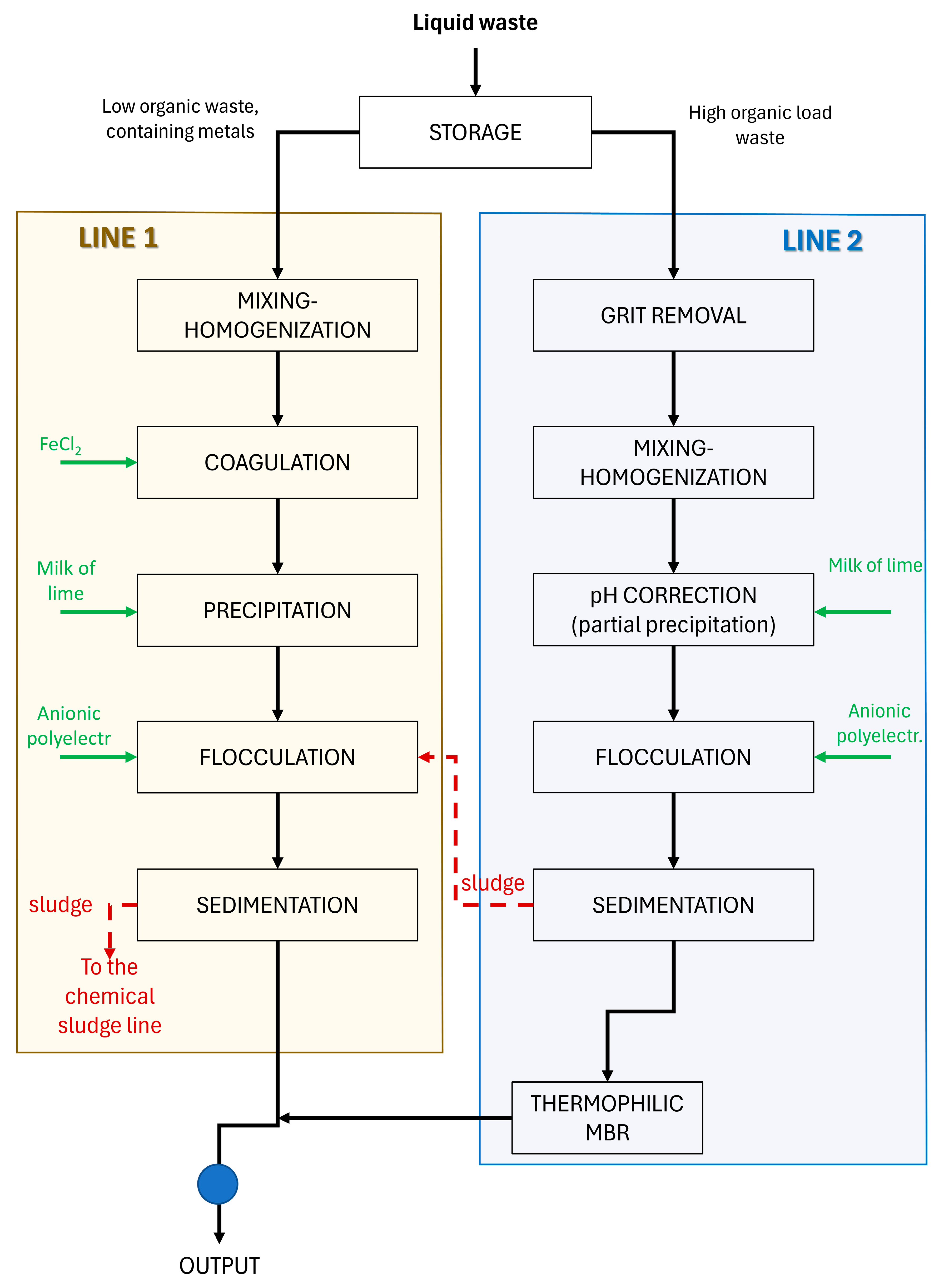
2.1. Plant Configuration
- High concentrations of metals (≥100 mg/L);
- Not odorous waste streams;
- Chemical oxygen demand (COD) of 25,000 mg/L.
- High concentrations of surfactants (≥5000 mg/L), typically from detergents and cosmetic formulations;
- High concentrations of nitrates (up to 20,000–30,000 mg/L);
- Odorous waste streams (provided they are free of heavy metals);
- Chemical oxygen demand (COD) higher than 25,000 mg/L.
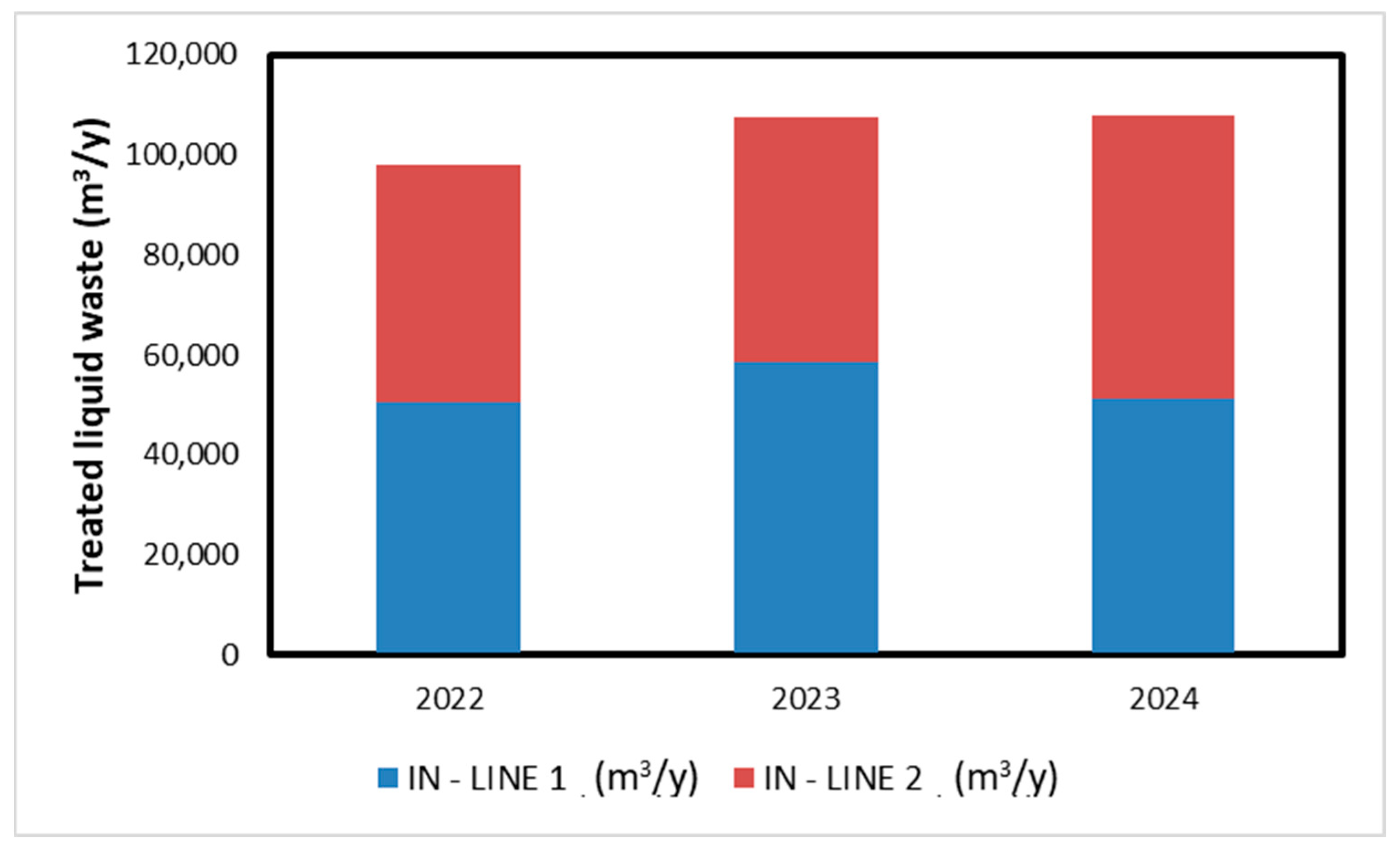
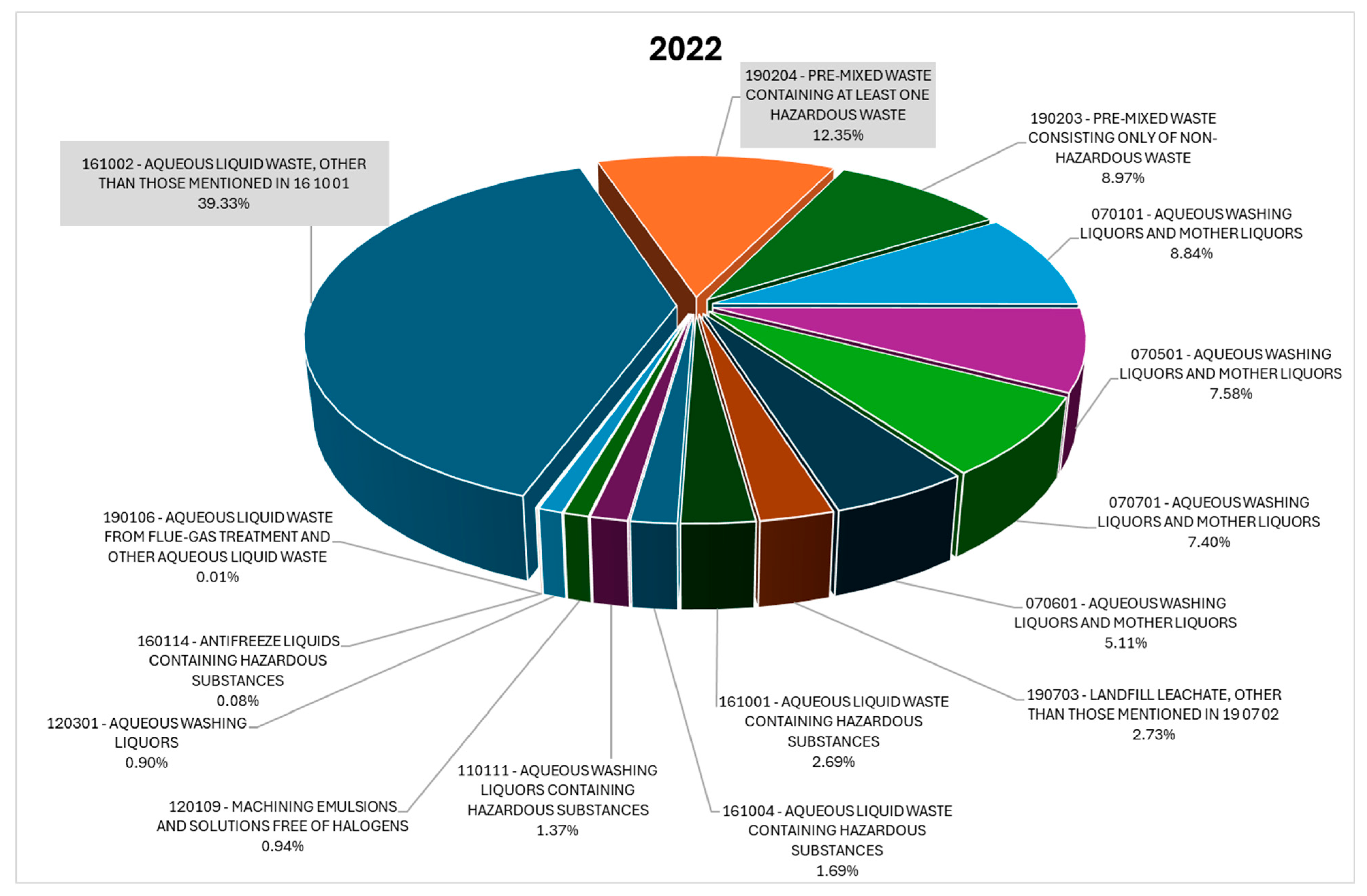
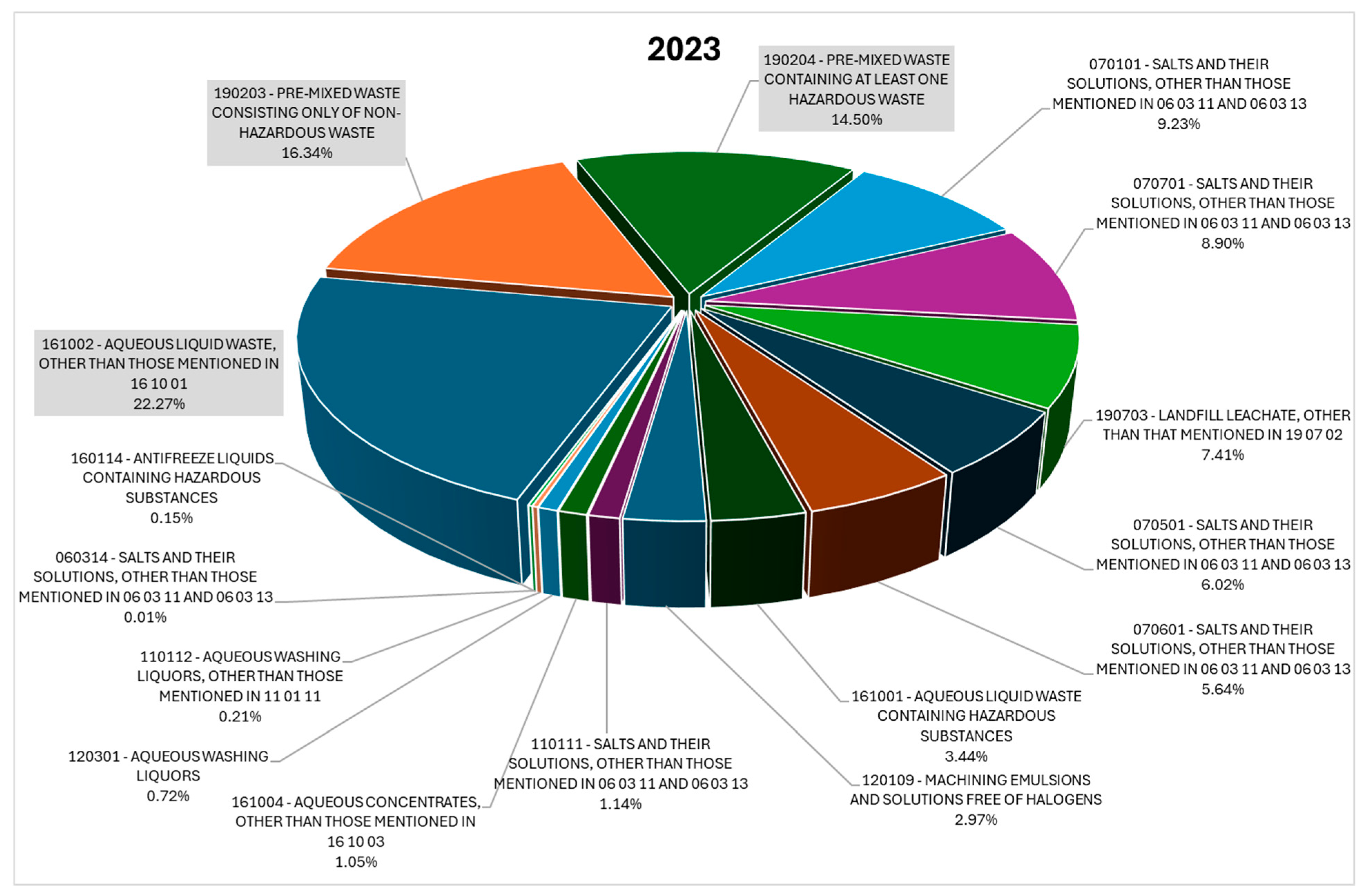
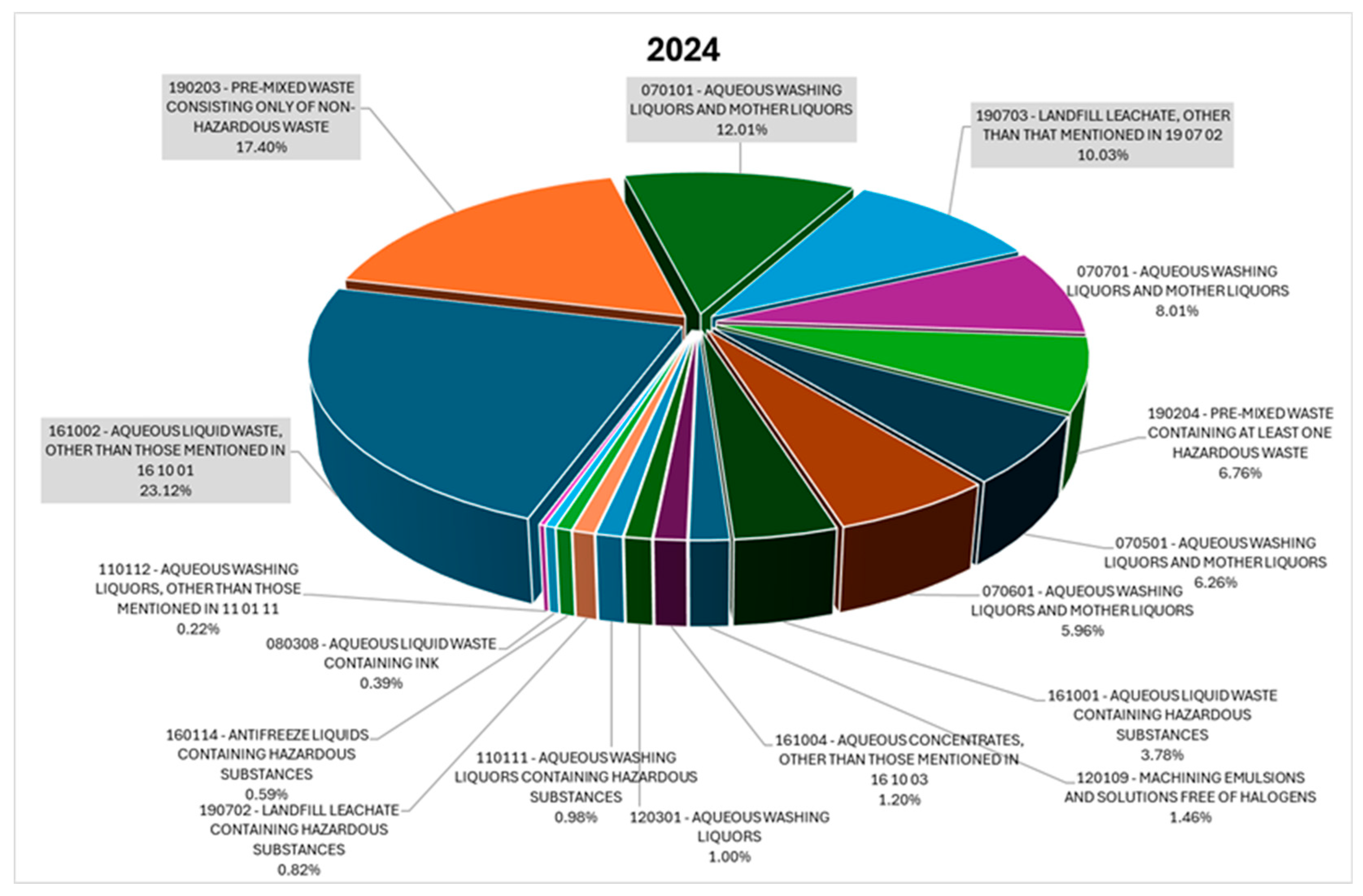
2.2. Liquid Waste Treated by the Plant
2.3. Consumption of Chemicals
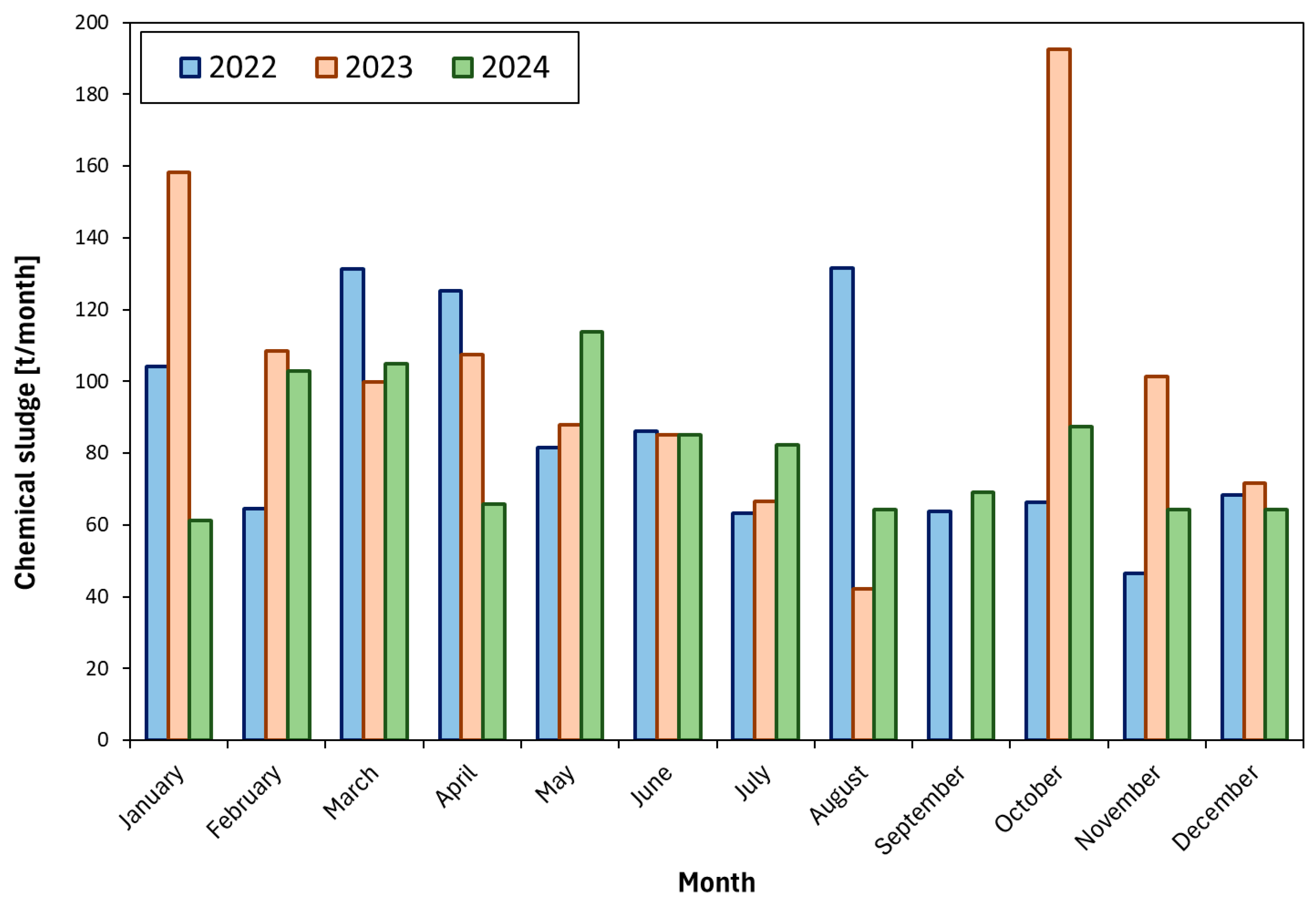
2.4. Sludge Production
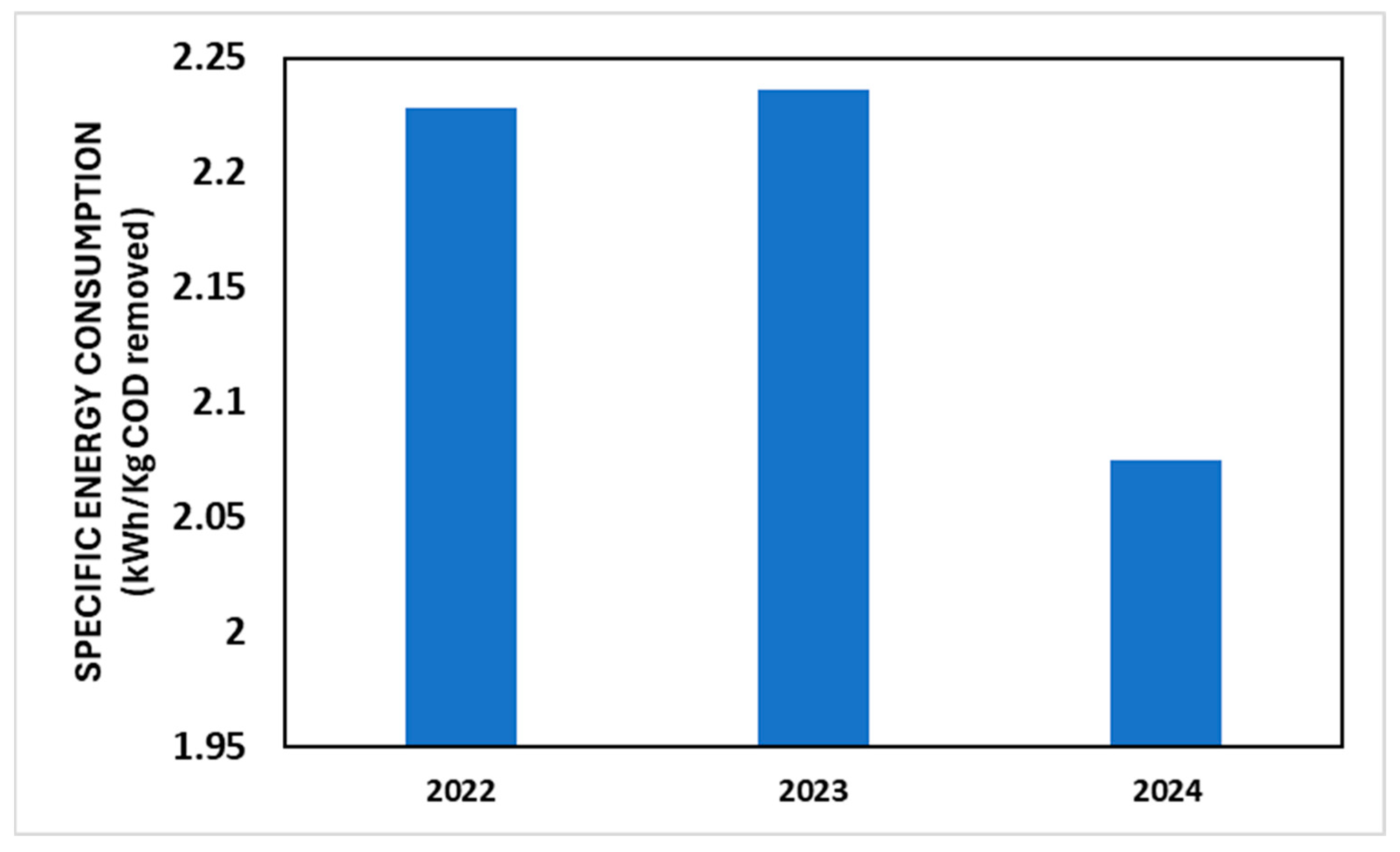
2.5. Energy Consumption
3. Characterization and Control of Incoming Liquid Waste at the Treatment Facility
3.1. Acceptance and Homologation Procedures
3.2. Ongoing Waste Characterization and Monitoring
4. Storage of Liquid Waste at the Treatment Facility
4.1. Scheduling of Deliveries
- Contract acceptance and payment of any required deposit;
- Compliance with discharge limits and the operational status of the treatment system;
- Pollutant load and mutual compatibility among waste streams;
- Maximum allowable storage and treatment capacities;
- Designated treatment line for each waste input.
4.2. Delivery and Controls
- Verification of the Waste Identification Form (FIR) to ensure alignment with contractual details (EWC code, origin) [32];
- Confirmation that the delivery is listed in the daily schedule. Unscheduled deliveries are assessed for exceptional approval by the Plant Manager;
- Compliance with ADR (European Agreement concerning the International Carriage of Dangerous Goods by Road) regulations, including inspection of vehicle certifications and driver qualifications [27].
4.3. Discharge into Storage Tanks
- Weekly intake scheduling;
- Distribution between different clarification–flocculation treatment lines (CF I and CF II);
- Pollutant load: storage tanks are classified by the hydraulic loading rate into slow, medium, or fast feed rates.
5. Criterion for Waste Management and Treatment
6. Conclusions
7. Innovation, Comparison, and Future Prospects
Author Contributions
Funding
Institutional Review Board Statement
Informed Consent Statement
Data Availability Statement
Conflicts of Interest
Appendix A. Main Reagents Used in the Liquid Waste Treatment Plant and Their Specific Role in the Process

| Category/Product | Specific Role |
|---|---|
| Plant—Line 1 and 2 | |
| Hydrated lime | pH adjustment and precipitation of metal hydroxides. |
| Ferrous chloride | Coagulant for removal of phosphorus, colloids, and metals. |
| Antifoam | Foam control in tanks and reactors. |
| Activated carbon | Adsorption of refractory organics, micropollutants, and odors. |
| Cationic polyelectrolyte | Flocculant to promote particle aggregation. |
| Anionic polyelectrolyte | Flocculant, often combined with cationic agents to improve settling. |
| Noxa Mix® | Nutrient/additive blend to enhance biological activity. |
| Micropan (nitrifying bacteria) | Inoculum of nitrifying bacteria to support nitrogen oxidation. |
| Sodium bicarbonate | Alkalinity source and pH buffer, essential for nitrification. |
| Hidrofloc CH 685® | Specific flocculant to improve sludge settling. |
| Sodium hypochlorite | Oxidant/disinfectant for controlling unwanted microorganisms and odors. |
| Thermophilic system | |
| Trione tablets | Biocide for controlling undesirable microbial growth. |
| Oxygen | Supply of pure oxygen to sustain thermophilic biodegradation. |
| Gemma salt | Regenerant for ion-exchange units and auxiliary systems. |
| Nutrient NUBIL D1® | Nutrient supplement (N/P) to balance stoichiometric ratios. |
| Nutrient NUBIL D5® | Alternative/complementary nutrient source for biological processes. |
| Clanclean® | Cleaning agent for MBR membranes. |
| Nitric acid | pH control and removal of scaling deposits in membrane systems. |
| Caustic soda (NaOH) | Neutralization, pH control, and membrane regeneration. |
| Fosfodnet NA® | Phosphorus-based additive to support biomass activity. |
Appendix B. Waste Characterization
| Section | Field | Information |
|---|---|---|
| A. Administrative/Identification Data | Name of Waste Producer | |
| Production Site Address | ||
| Municipality/Province/ZIP Code | ||
| Registered Office Address | ||
| Municipality/Province/ZIP Code | ||
| Tax Code/VAT No. | ||
| ATECO Code (2007) | ||
| IEA Site (Yes/No + IPPC codes) | ||
| RIR Site (Yes/No) | ||
| Production Site Activities | ||
| Is Producer a Waste Management Operator? (Yes/No + Details) | ||
| Website | ||
| Waste Management Contact (Name/Phone/Email) | ||
| Client/Intermediary Contact (Name/Company/Phone/Email) | ||
| B. Technical Data | Waste Coding and Classification | |
| EWC Code | ||
| Additional Description | ||
| Hazardous Characteristics (HP1–HP15) | ||
| Major Accident Hazard Regulation Applicable? (Yes/No) | ||
| Appearance and Chemical–Physical Parameters | ||
| Color | ||
| Physical State (Powder/Solid/Viscous/Sludge/Liquid) | ||
| Odor Characteristics | ||
| Specific Properties | ||
| C. Waste Origin and Quality Conditions | Waste Generation Mode | |
| Origin Production Process | ||
| Raw and Auxiliary Materials Used | ||
| Substances Listed in Legislative Decree 152/06 (List/Tick) | ||
| Presence of PFAS? | ||
| Presence of Solvents/Metals? | ||
| On-site Waste Storage Conditions | ||
| D. Logistics | Quantity per Service (m3/tons) | |
| Requested Collection Frequency | ||
| Packaging for Transport | ||
| ADR Regulation Compliance (Yes/No + Details) | ||
| E. Additional Information | Additional Notes | |
| F. Attachments | Laboratory Chemical–Physical Analysis | |
| Safety Sheets for Raw Materials | ||
| Safety Sheets for Final Products | ||
| Other (Specify) | ||
| Declaration | Declarant Name and Role | |
| Company | ||
| Date | ||
| Signature |
References
- Bandh, S.A.; Mushtaq, B. Wastewater Treatment Technology; Springer Water; Springer Nature: Cham, Switzerland, 2025; ISBN 978-3-031-86683-8. [Google Scholar]
- Obah Edom Tawo. Martin Ifeanyi Mbamalu Advancing Waste Valorization Techniques for Sustainable Industrial Operations and Improved Environmental Safety. Int. J. Sci. Res. Arch. 2025, 14, 127–149. [Google Scholar] [CrossRef]
- Rasheed, T.; Bilal, M.; Nabeel, F.; Adeel, M.; Iqbal, H.M.N. Environmentally-Related Contaminants of High Concern: Potential Sources and Analytical Modalities for Detection, Quantification, and Treatment. Environ. Int. 2019, 122, 52–66. [Google Scholar] [CrossRef] [PubMed]
- Jahan, N.; Tahmid, M.; Shoronika, A.Z.; Fariha, A.; Roy, H.; Pervez, M.N.; Cai, Y.; Naddeo, V.; Islam, M.S. A Comprehensive Review on the Sustainable Treatment of Textile Wastewater: Zero Liquid Discharge and Resource Recovery Perspectives. Sustainability 2022, 14, 15398. [Google Scholar] [CrossRef]
- Baidariko, E.A.; Pozdniakov, S.P. Simulation of Liquid Waste Buoyancy in a Deep Heterogeneous Aquifer. Water Resour. 2011, 38, 972–981. [Google Scholar] [CrossRef]
- Wilson, A.N.; Dutta, A.; Black, B.A.; Mukarakate, C.; Magrini, K.; Schaidle, J.A.; Michener, W.E.; Beckham, G.T.; Nimlos, M.R. Valorization of Aqueous Waste Streams from Thermochemical Biorefineries. Green Chem. 2019, 21, 4217–4230. [Google Scholar] [CrossRef]
- Xu, X.; Wang, J.; He, C.; Jiang, X.; An, Q. Sewage Treatment Equipment Supply Chain Collaboration and Resilience Improvement Path Analysis: Collaborative Decision-Making, Information Sharing, Risk Management. Sustainability 2024, 16, 9031. [Google Scholar] [CrossRef]
- Tian, G.; Zhang, Y.; Tian, R.; Gong, Y.; Sun, H.; Li, L.; Geng, S. Responsibility Disengagement or Sharing? Cooperative Fulfilling Mechanism of Solid Waste Management in the Remanufacturing Supply Chain. Environ. Sci. Pollut. Res. 2023, 30, 4792–4811. [Google Scholar] [CrossRef]
- Collivignarelli, M.C.; Pedrazzani, R.; Bellazzi, S.; Carnevale Miino, M.; Caccamo, F.M.; Baldi, M.; Abbà, A.; Bertanza, G. Numerical Analysis of a Full-Scale Thermophilic Biological System and Investigation of Nitrate and Ammonia Fates. Appl. Sci. 2022, 12, 6952. [Google Scholar] [CrossRef]
- Chintapalli, P.; Vakharia, A. The Waste Management Supply Chain: A Decision Framework. SSRN Electron. J. 2023, 55, 421–435. [Google Scholar] [CrossRef]
- Melear, E.L.; Zoltek, J. Physical and Chemical Methods. Water Pollut. Control Fed. 1982, 54, 584–592. [Google Scholar]
- Sathya, K.; Nagarajan, K.; Carlin Geor Malar, G.; Rajalakshmi, S.; Raja Lakshmi, P. A Comprehensive Review on Comparison among Effluent Treatment Methods and Modern Methods of Treatment of Industrial Wastewater Effluent from Different Sources. Appl. Water Sci. 2022, 12, 70. [Google Scholar] [CrossRef] [PubMed]
- Chandra Sekhar, K.; Kamala, C.; Chary, N.; Anjaneyulu, Y. Removal of Heavy Metals Using a Plant Biomass with Reference to Environmental Control. Int. J. Miner. Process. 2003, 68, 37–45. [Google Scholar] [CrossRef]
- Scott, J.P.; Ollis, D.F. Integration of Chemical and Biological Oxidation Processes for Water Treatment: Review and Recommendations. Environ. Prog. 1995, 14, 88–103. [Google Scholar] [CrossRef]
- Collivignarelli, M.C.; Bellazzi, S.; Caccamo, F.M.; Sordi, M.; Crotti, B.; Abbà, A.; Baldi, M. Statistical Characterization of Full-Scale Thermophilic Biological Systems to Inform Process Optimization. Environments 2024, 11, 36. [Google Scholar] [CrossRef]
- LaPara, T.M.; Alleman, J.E. Thermophilic Aerobic Biological Wastewater Treatment. Water Res. 1999, 33, 895–908. [Google Scholar] [CrossRef]
- Iorhemen, O.; Hamza, R.; Tay, J. Membrane Bioreactor (MBR) Technology for Wastewater Treatment and Reclamation: Membrane Fouling. Membranes 2016, 6, 33. [Google Scholar] [CrossRef]
- Collivignarelli, M.C.; Abbà, A.; Frattarola, A.; Manenti, S.; Todeschini, S.; Bertanza, G.; Pedrazzani, R. Treatment of Aqueous Wastes by Means of Thermophilic Aerobic Membrane Reactor (TAMR) and Nanofiltration (NF): Process Auditing of a Full-Scale Plant. Environ. Monit. Assess. 2019, 191, 708. [Google Scholar] [CrossRef]
- Ahmed, M.; Ahmad, S.; Fayyaz-ul-Hassan; Qadir, G.; Hayat, R.; Shaheen, F.A.; Raza, M.A. Innovative Processes and Technologies for Nutrient Recovery from Wastes: A Comprehensive Review. Sustainability 2019, 11, 4938. [Google Scholar] [CrossRef]
- European Commission. Commission Regulation (EU) No 849/2010 of 27 September 2010 Amending Regulation (EC) No 2150/2002 of the European Parliament and of the Council on Waste Statistics. Off. J. Eur. Union 2010, 253, 2–41. [Google Scholar]
- Wang, L.K.; Hung, Y.-T.; Shammas, N.K. (Eds.) Physicochemical Treatment Processes; Humana Press: Totowa, NJ, USA, 2005; ISBN 978-1-58829-165-3. [Google Scholar]
- Hawkins, R.G.; Shaw, H.S. The Practical Guide to Waste Management Law; Thomas Telford: London, UK, 2004. [Google Scholar]
- European Commission Commission Implementing Decision (EU) 2018/1147 Establishing BAT Conclusions for Waste Treatment. Off. J. Eur. Union 2018, 208, 38–90.
- Kapoor, V.; Li, X.; Chandran, K.; Impellitteri, C.A.; Domingo, J.W.S. Use of Functional Gene Expression and Respirometry to Study Wastewater Nitrification Activity after Exposure to Low Doses of Copper. Environ. Sci. Pollut. Res. 2016, 23, 6443–6450. [Google Scholar] [CrossRef]
- Kim, L.; Cuciureanu, A.; Pascu, L.F.; Tache, O.C.; Catrina, G.A. A Comprehensive Methodology for Assessing the Hazardousness of Waste Categorized in the European Union Legislation as “Mirror Entries”—Case Studies. Environments 2023, 10, 183. [Google Scholar] [CrossRef]
- European Commission. Commission Decision 2014/955/EU Amending Decision 2000/532/EC on the List of Waste Pursuant to Directive 2008/98/EC of the European Parliament and of the Council. Off. J. Eur. Union 2014, 370, 44–86. [Google Scholar]
- UNECE. European Agreement Concerning the International Carriage of Dangerous Goods by Road (ADR); United Nations Economic Commission for Europe: Geneva, Switzerland, 2023; Available online: https://unece.org/transport/standards/transport/dangerous-goods/adr-2023-agreement-concerning-international-carriage (accessed on 26 August 2025).
- ISO 5663:1984; Water Quality — Sampling — Guidance on the Design of Sampling Programmes and the Collection of Samples. International Organization for Standardization: London, UK, 1984.
- American Public Health Association (APHA); American Water Works Association (AWWA); Water Environment Federation (WEF). Standard Methods for the Examination of Water and Wastewater, 23rd ed.; American Public Health Association: Washington, DC, USA; AWWA: Denver, CO, USA; WEF: Alexandria, VA, USA, 2017. [Google Scholar]
- ISO/IEC 17025:2017; General Requirements for the Competence of Testing and Calibration Laboratories. International Organization for Standardization: London, UK, 2017.
- UNECE. ADR 2023 – Agreement Concerning the International Carriage of Dangerous Goods by Road; United Nations Economic Commission for Europe: London, UK, 2022. [Google Scholar]
- European Parliament; Council of the European Union. Directive 2010/75/EU of the European Parliament and of the Council of 24 November 2010 on Industrial Emissions (Integrated Pollution Prevention and Control). Off. J. Eur. Union 2010, 334, 17–119. [Google Scholar]


| Waste Characteristic | Decision/Allocation |
|---|---|
| High concentrations of heavy metals (≥100 mg/L) | Line 1—chemical–physical treatment only |
| Odorless waste streams | Line 1—if COD ≤ 25,000 mg/L |
| COD up to 25,000 mg/L | Line 1—efficient pollutant removal |
| High concentrations of surfactants (≥5000 mg/L) | Line 2—hybrid chemical–physical + thermophilic MBR |
| High nitrate concentrations (20,000–30,000 mg/L) | Line 2—hybrid chemical–physical + thermophilic MBR |
| Odorous waste streams (free of heavy metals) | Line 2—hybrid chemical–physical + thermophilic MBR |
| Very high COD (>25,000 mg/L) | Line 2—advanced thermophilic treatment |
| Other heterogeneous/variable streams | Real-time allocation based on capacity and regulations |
| Category | Product | 2022 [kg] | 2023 [kg] | 2024 [kg] | Average 2022–2024 [kg] |
|---|---|---|---|---|---|
| Plant—Line 1 and 2 | Hydrated lime | 181,000 | 255,720 | 267,740 | 234,820 |
| Ferrous chloride | 276,560 | 223,300 | 252,880 | 250,913 | |
| Antifoam | 2550 | 1700 | 2550 | 2267 | |
| Activated carbon | 0 | 4000 | 2000 | 2000 | |
| Cationic polyelectrolyte | 3000 | 4000 | 2950 | 3317 | |
| Anionic polyelectrolyte | 2000 | 3000 | 3750 | 2917 | |
| Noxa Mix® | 900 | 500 | 0 | 467 | |
| Micropan (nitrifying bacteria) | 0 | 100 | 40 | 47 | |
| Sodium bicarbonate | 0 | 600 | 400 | 333 | |
| Hidrofloc CH 685® | 0 | 175 | 0 | 58 | |
| Sodium hypochlorite | 0 | 1000 | 0 | 333 | |
| Total consumption (excluding thermophilic MBR) | 466,010 | 494,095 | 532,310 | 497,472 | |
| Thermophilic system | Trione tablets | 50 | 0 | 0 | 17 |
| Oxygen | 936,240 | 935,480 | 1,487,840 | 1,119,853 | |
| Gemma salt | 6100 | 5000 | 9000 | 6700 | |
| Nutrient NUBIL D1® | 128,580 | 58,580 | 0 | 62,387 | |
| Nutrient NUBIL D5® | 0 | 0 | 28,200 | 9400 | |
| Clanclean® | 0 | 0 | 280 | 93 | |
| Nitric acid | 0 | 2400 | 7950 | 3450 | |
| Caustic soda | 1300 | 1300 | 7800 | 3467 | |
| Fosfodnet NA® | 50 | 0 | 150 | 67 | |
| Total consumption (thermophilic MBR) | 1,072,320 | 1,002,760 | 1,541,220 | 1,205,433 | |
| TOTAL REAGENTS | 1,538,330 | 1,496,855 | 2,073,530 | 1,702,905 | |
| Specific consumption | |||||
| TOTAL REAGENTS PER COD IN INPUT | 0.74 | 0.82 | 0.77 | 0.77 | |
| TOTAL REAGENTS PER COD REMOVED [-] | 0.77 | 0.84 | 0.78 | 0.80 | |
| Parameter | Frequency |
|---|---|
| pH | Every delivery |
| Temperature | Every delivery |
| color | Every delivery |
| odor | Every delivery |
| Electrical conductivity at 20 °C | Every delivery |
| Settleable solids (2 h) | Semiannual |
| Suspended solids (TSS) | Semiannual |
| Chemical Oxygen Demand (COD) | Every delivery |
| Biochemical Oxygen Demand (BOD5) | Semiannual |
| Ammonium (NH4+) | Every delivery |
| Metals: Al, As, B, Ba, Cd, Cr total, Cu, Fe, Mn, Ni, Pb, Sn, Zn | Every delivery |
| Metals: Cr(VI), Hg, Se | Semiannual |
| Nitrates | Semiannual |
| Nitrites | Semiannual |
| Total nitrogen (TN) | Weekly |
| Total phosphorus (TP) | Every delivery |
| Organotin compounds | Semiannual |
| Total cyanides | Semiannual |
| Sulfides | Semiannual |
| Sulfates | Semiannual |
| Sulfites | Semiannual |
| Chlorides | Every delivery |
| Fluorides | Semiannual |
| Anionic surfactants (MBAS) | Semiannual |
| Non-ionic surfactants (TAS) | Semiannual |
| Animal/vegetable oils and fats | Semiannual |
| Total hydrocarbons | Semiannual |
| Phenols | Semiannual |
| Aromatic organic solvents | Semiannual |
| Chlorinated organic solvents | Semiannual |
| Nitrogen organic solvents | Semiannual |
| Phosphoric pesticides | Semiannual |
| Chlorinated pesticides | Semiannual |
| Other solvents | Semiannual |
| Hazard class characterization | Semiannual |
| Respirometric tractability test | At homologation and upon anomaly |
Disclaimer/Publisher’s Note: The statements, opinions and data contained in all publications are solely those of the individual author(s) and contributor(s) and not of MDPI and/or the editor(s). MDPI and/or the editor(s) disclaim responsibility for any injury to people or property resulting from any ideas, methods, instructions or products referred to in the content. |
© 2025 by the authors. Licensee MDPI, Basel, Switzerland. This article is an open access article distributed under the terms and conditions of the Creative Commons Attribution (CC BY) license (https://creativecommons.org/licenses/by/4.0/).
Share and Cite
Collivignarelli, M.C.; Bellazzi, S.; Calabria, L.M.R.; Sordi, M.; Crotti, B.M.; Abbà, A. Operational Criteria and Challenges in Management of Liquid Waste Treatment Facility Based on Chemical–Physical Processes and Membrane Biological Reactor in Thermophilic Conditions: A Case Study. Sustainability 2025, 17, 7928. https://doi.org/10.3390/su17177928
Collivignarelli MC, Bellazzi S, Calabria LMR, Sordi M, Crotti BM, Abbà A. Operational Criteria and Challenges in Management of Liquid Waste Treatment Facility Based on Chemical–Physical Processes and Membrane Biological Reactor in Thermophilic Conditions: A Case Study. Sustainability. 2025; 17(17):7928. https://doi.org/10.3390/su17177928
Chicago/Turabian StyleCollivignarelli, Maria Cristina, Stefano Bellazzi, Laura Maria Rita Calabria, Marco Sordi, Barbara Marianna Crotti, and Alessandro Abbà. 2025. "Operational Criteria and Challenges in Management of Liquid Waste Treatment Facility Based on Chemical–Physical Processes and Membrane Biological Reactor in Thermophilic Conditions: A Case Study" Sustainability 17, no. 17: 7928. https://doi.org/10.3390/su17177928
APA StyleCollivignarelli, M. C., Bellazzi, S., Calabria, L. M. R., Sordi, M., Crotti, B. M., & Abbà, A. (2025). Operational Criteria and Challenges in Management of Liquid Waste Treatment Facility Based on Chemical–Physical Processes and Membrane Biological Reactor in Thermophilic Conditions: A Case Study. Sustainability, 17(17), 7928. https://doi.org/10.3390/su17177928