Article

Ripple Effect or Spatial Interaction? A Spatial Analysis of Green Finance and Carbon Emissions in the Yellow River Basin

School of Economics and Management, Xinjiang University, Urumqi 830049, China
*
Author to whom correspondence should be addressed.
Sustainability 2025, 17(10), 4713; https://doi.org/10.3390/su17104713
Submission received: 19 April 2025 / Revised: 16 May 2025 / Accepted: 19 May 2025 / Published: 20 May 2025
(This article belongs to the Topic Sustainable and Green Finance)

Abstract

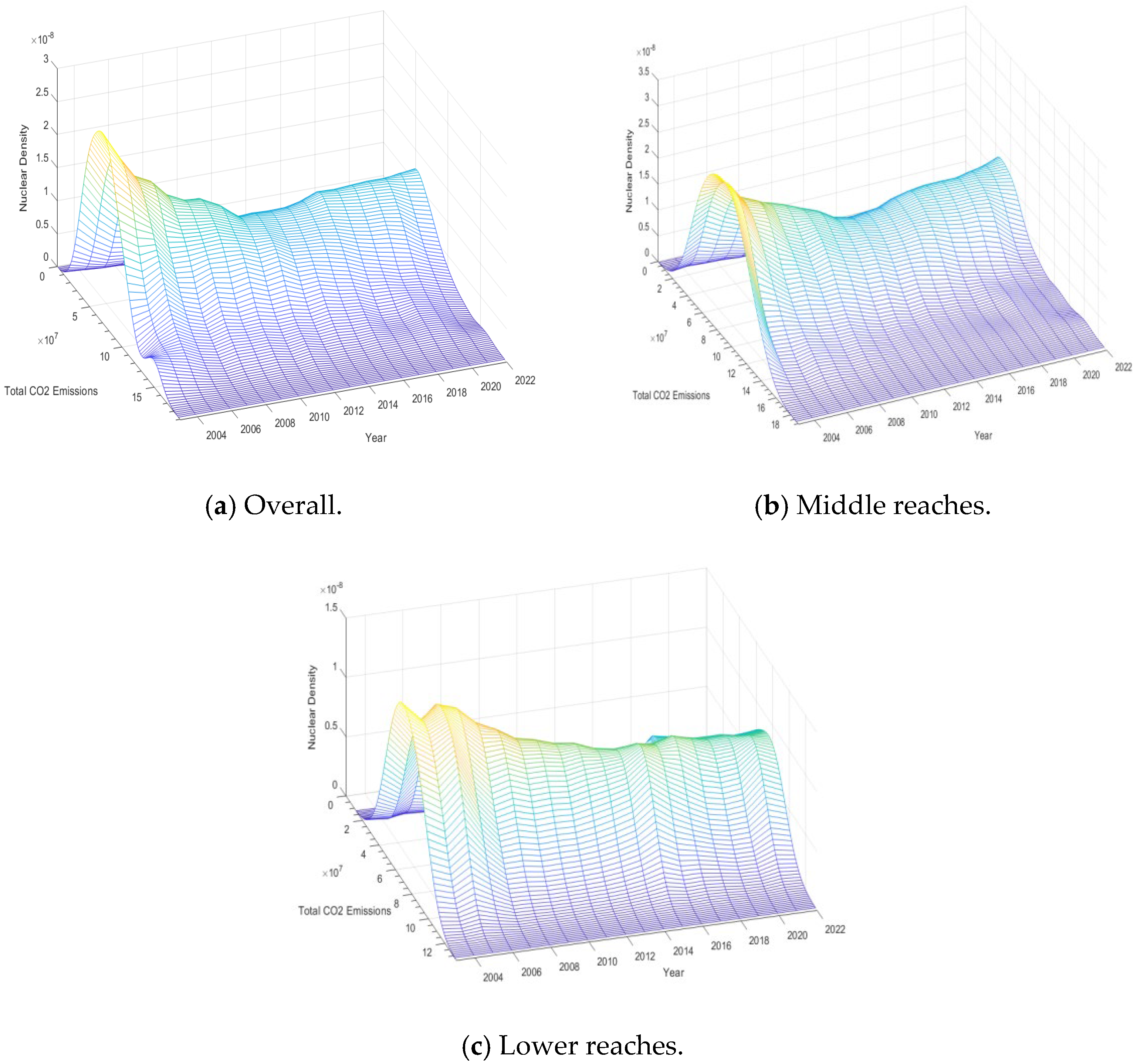
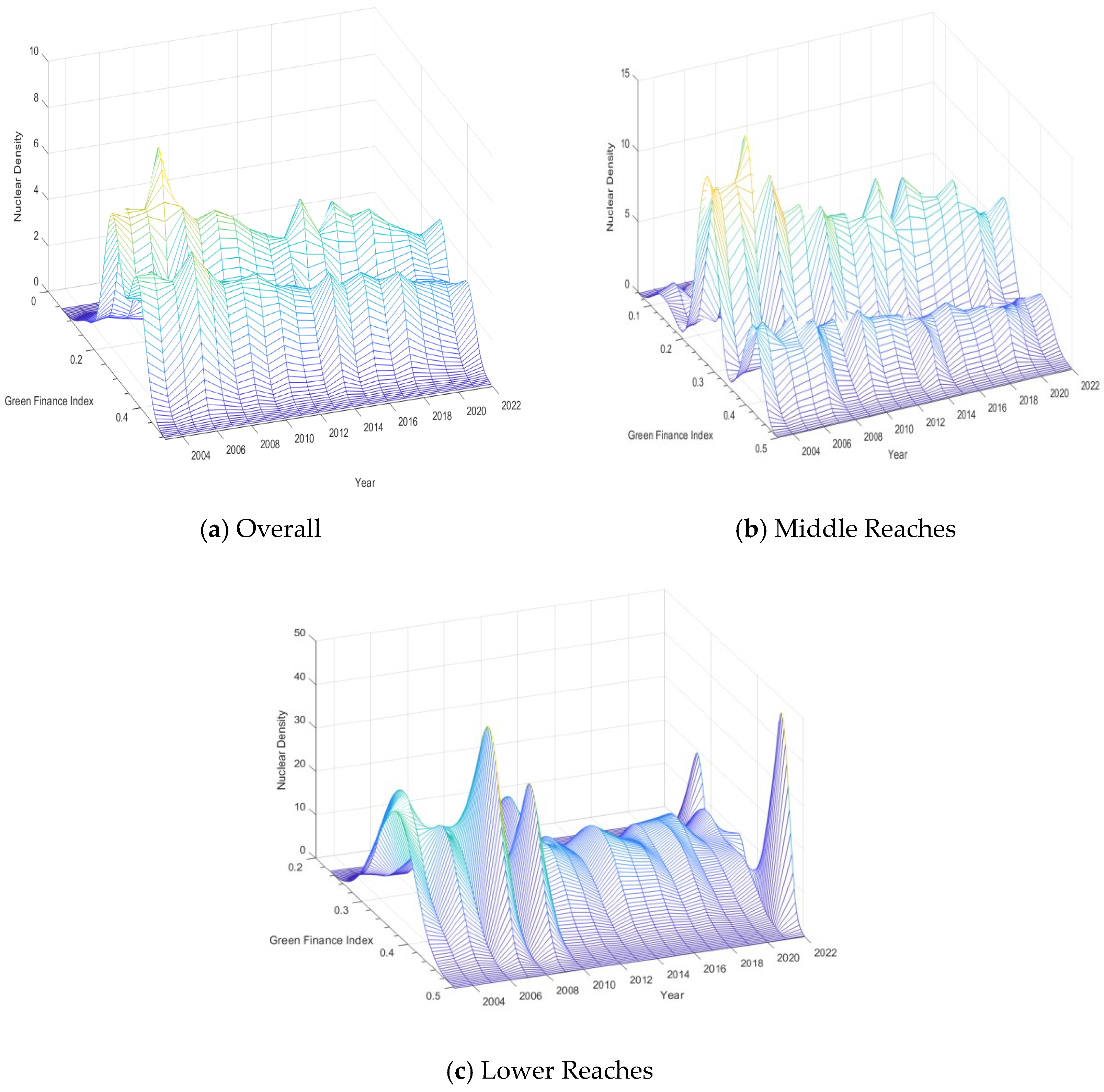
Grounded in the theory of new economic geography, this research develops a comprehensive theoretical framework to examine the spatial interaction mechanisms between the Green Finance Index and carbon emissions. Employing a range of econometric techniques—including three-dimensional kernel density estimation, spatial quantile regression, bivariate spatial autocorrelation analysis, and the spatial linkage equation model—the dynamic evolution, spatial pattern shifts, and mutual influences of green finance and carbon emissions in the middle and lower reaches of the Yellow River from 2003 to 2022 are systematically assessed. The findings indicate that (1) both carbon emissions and the Green Finance Index have experienced a trajectory of continuous growth, phased decline, and structural optimization, accompanied by a gradual shift in the regional center of gravity from coastal economic zones towards resource-intensive and traditional industry-concentrated areas; (2) significant spatial clustering is evident for both green finance and carbon emissions, demonstrating a strong spatial correlation and regional synergy effects; (3) a persistent negative spatial correlation exists between green finance and carbon emissions; and (4) green finance exerts a stable negative spatial spillover effect on carbon emissions, suggesting that the influence of green finance extends beyond localities to adjacent regions through spatial externalities, manifesting pronounced spatial transmission and linkage characteristics. By unveiling the bidirectional spatial association between green finance and carbon emissions, this study highlights the pivotal role of green finance in driving regional low-carbon transitions. The results provide theoretical insights for optimizing green finance policies within the Yellow River Basin and offer valuable international references for similar regional low-carbon development initiatives.
Keywords: green finance; carbon emissions; spatial interaction mechanisms; urban agglomerations; sustainable development; regional synergies green finance; carbon emissions; spatial interaction mechanisms; urban agglomerations; sustainable development; regional synergies