Article

Litter and Pruning Biomass in Mango Orchards: Quantification and Nutrient Analysis

1
Department of Agriculture and Fisheries, Berrimah Farm Science Precinct, GPO Box 3000, Darwin, NT 0801, Australia
2
Auckland Council, Private Bag 92300, Victoria Street West, Auckland 1142, New Zealand
3
Centre for Agriculture and Bioeconomy (CAB), Queensland University of Technology, Brisbane, QLD 4000, Australia
*
Author to whom correspondence should be addressed.
These authors contributed equally to this work.
Sustainability 2025, 17(10), 4452; https://doi.org/10.3390/su17104452
Submission received: 31 March 2025 / Revised: 7 May 2025 / Accepted: 12 May 2025 / Published: 14 May 2025
(This article belongs to the Special Issue Sustainable Management: Plant, Biodiversity and Ecosystem)

Abstract

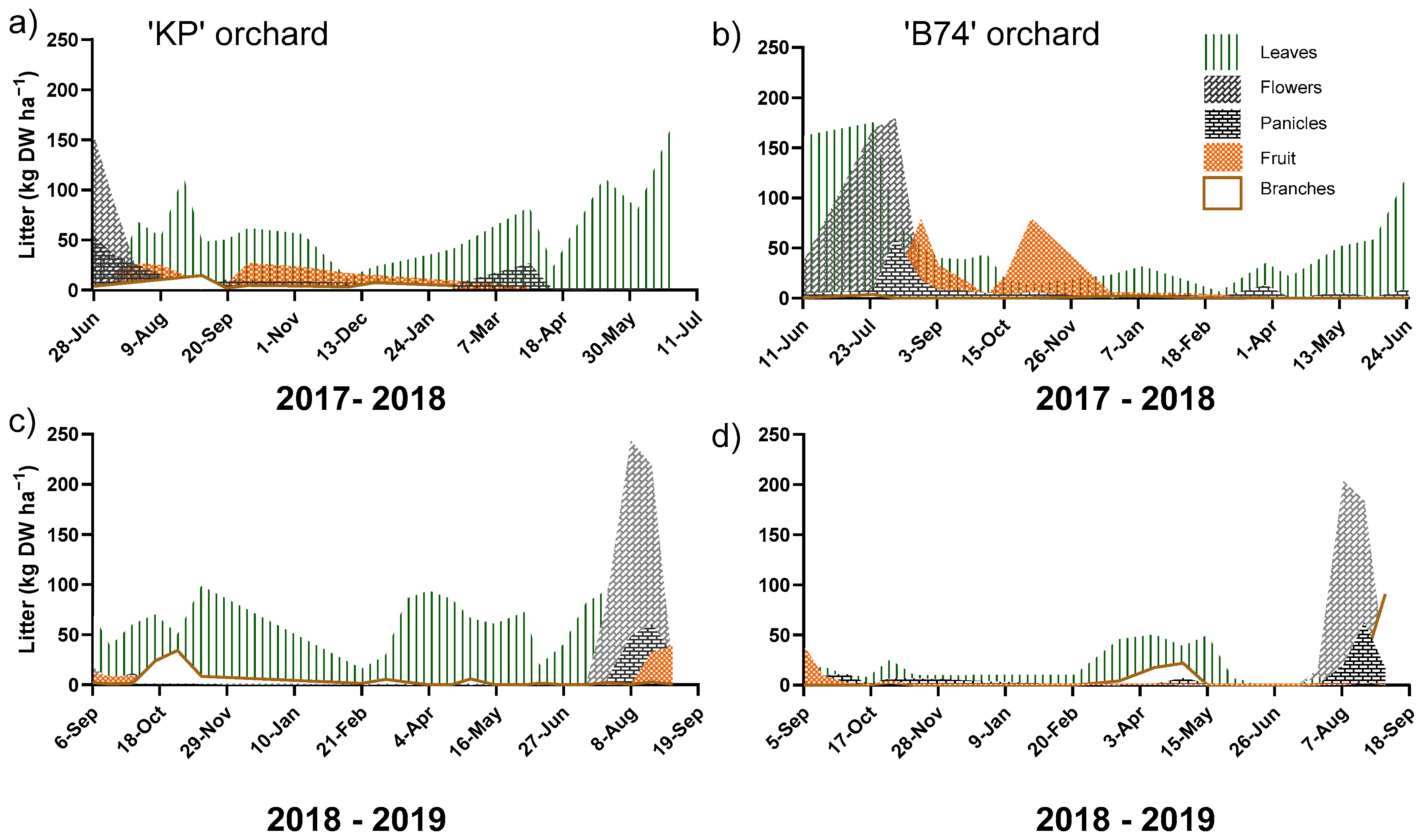
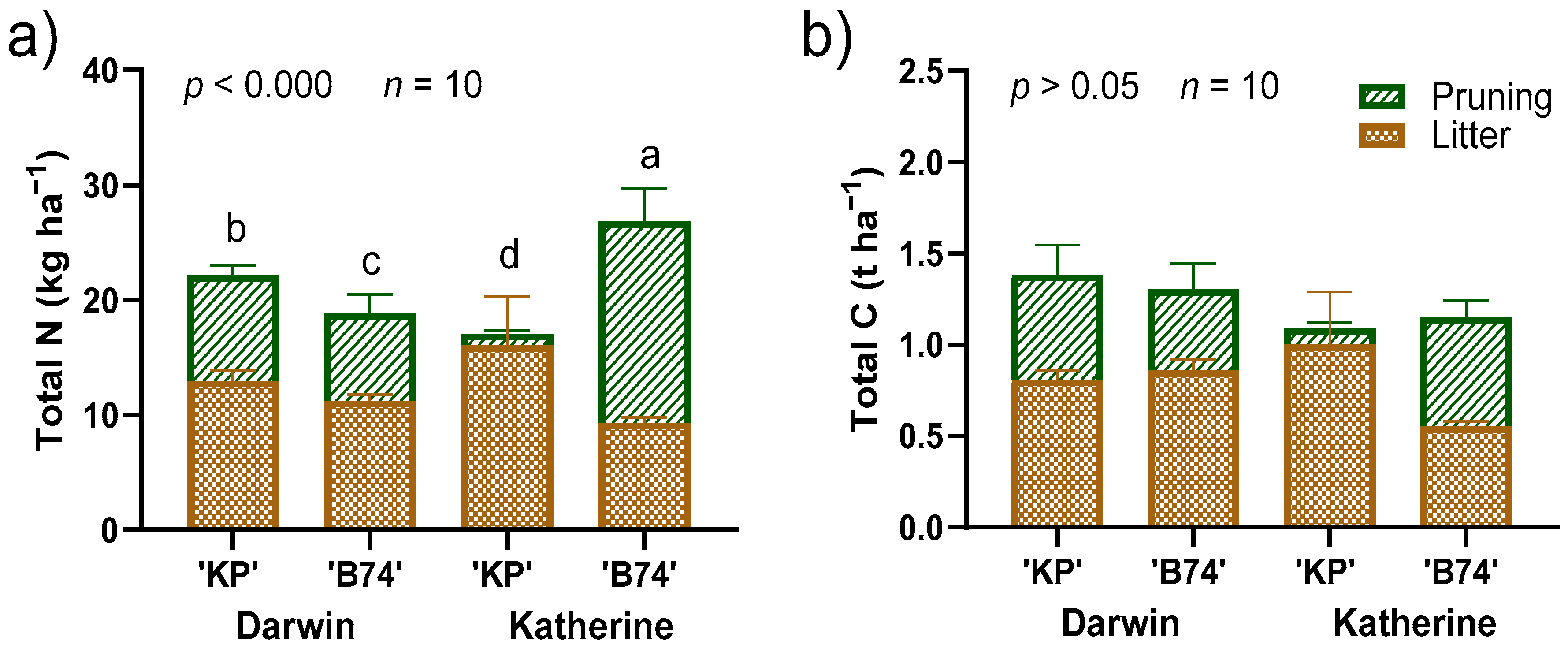
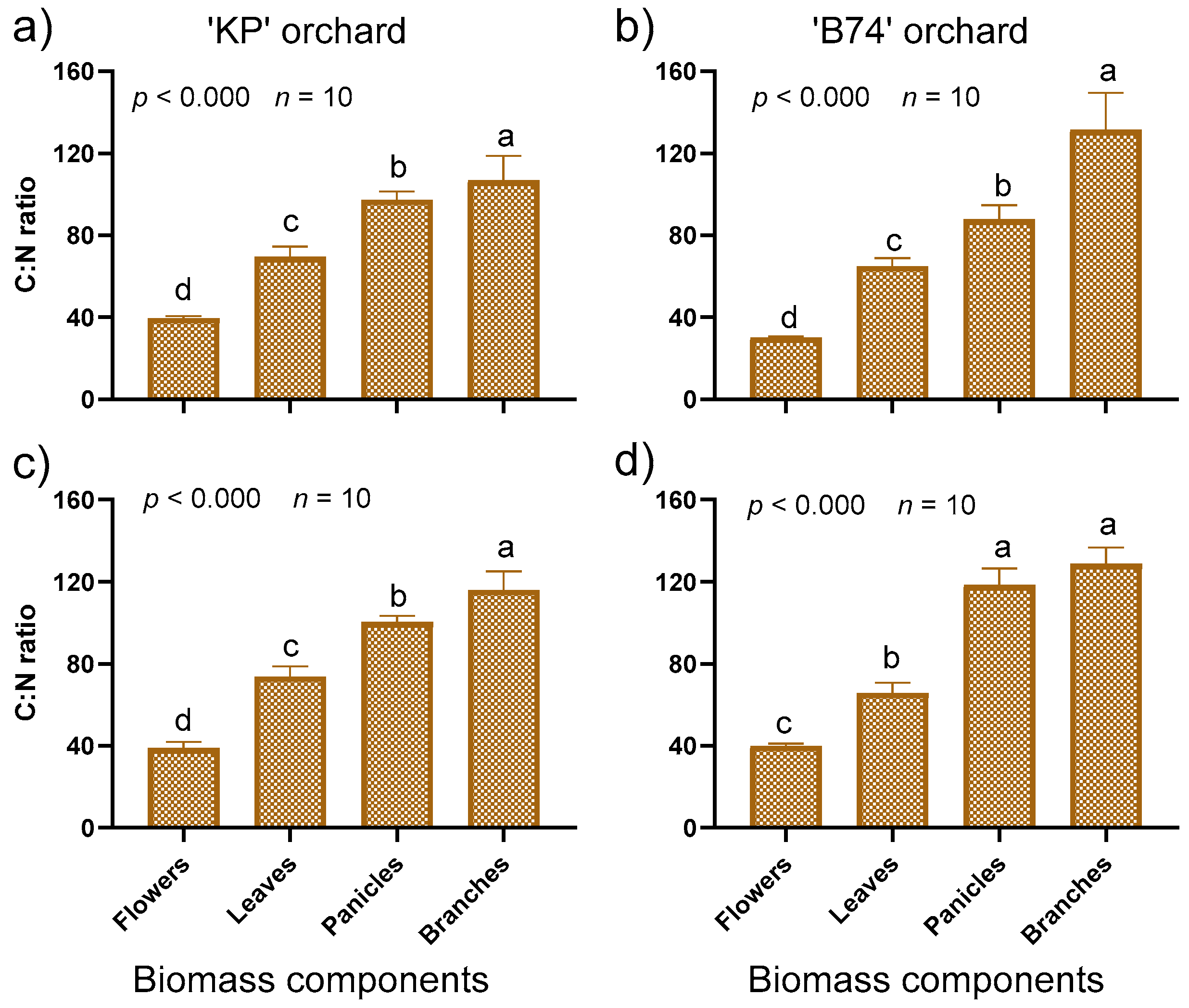
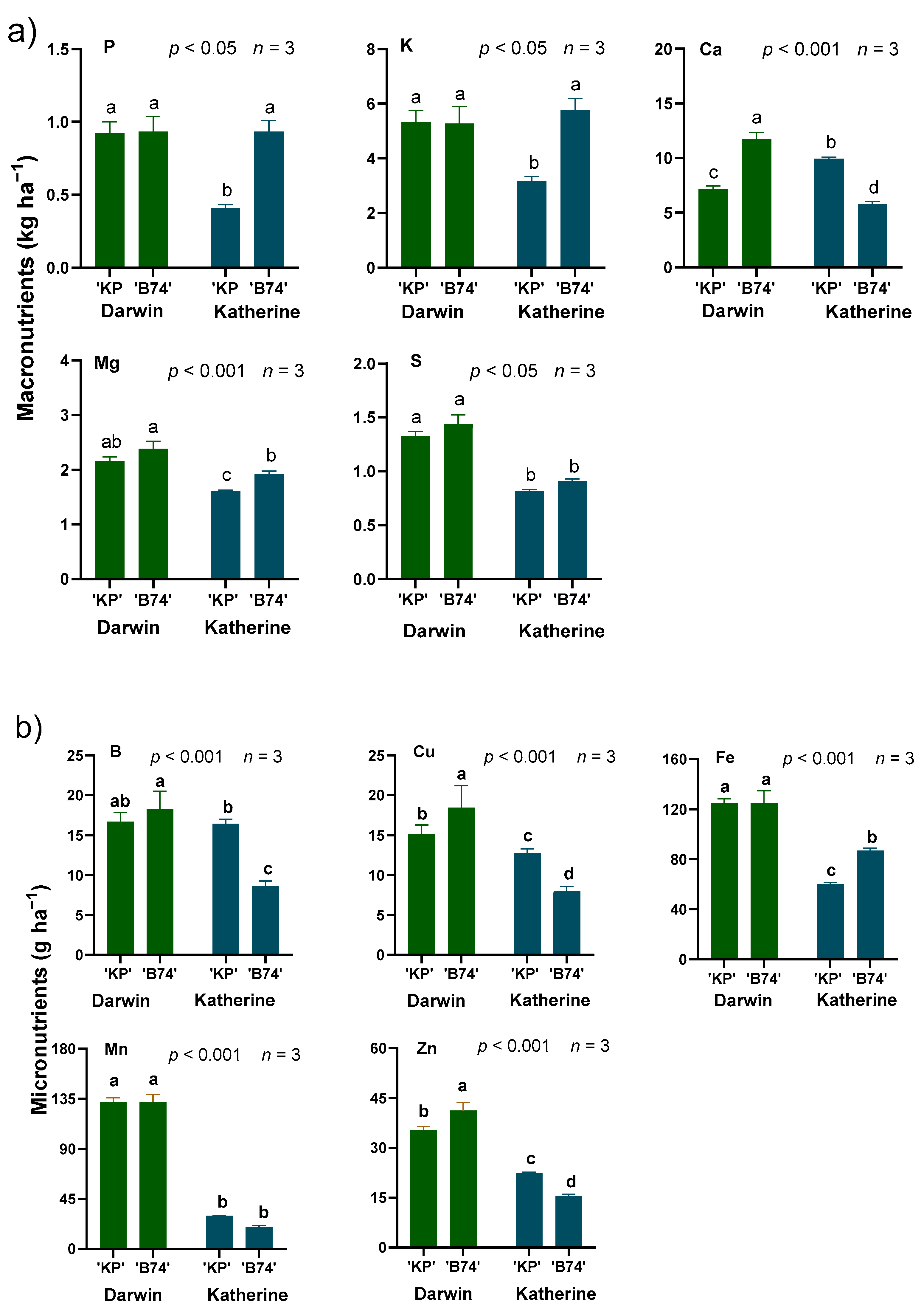
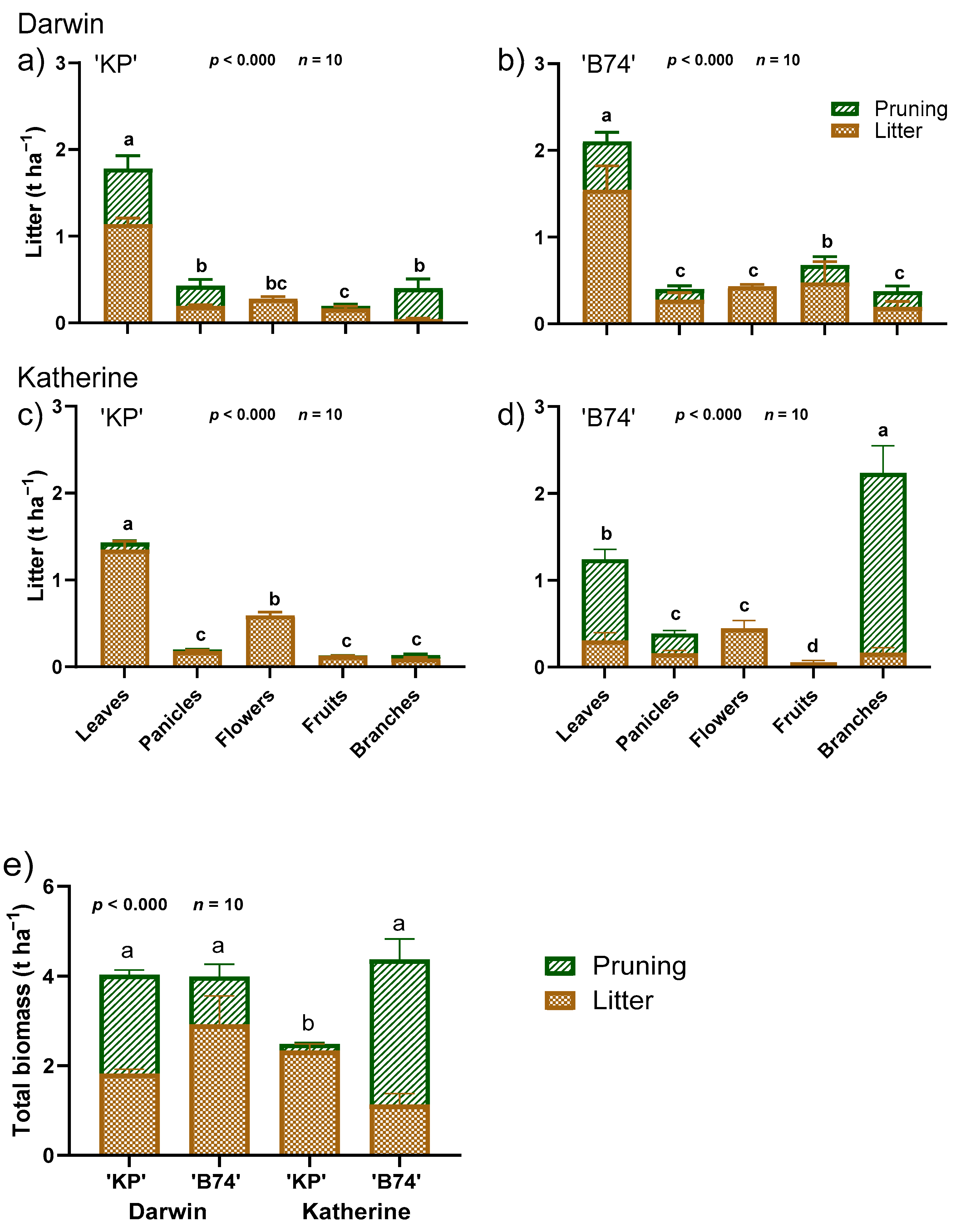
Litter and pruning biomass are integral to nutrient cycling in the plant–soil ecosystem, contributing significantly to organic matter formation and humus development through decomposition and nutrient mineralization, which ultimately influence soil fertility and health. However, the litterfall dynamics in mango orchards are not well understood, and its contribution to nutrient cycling has seldom been measured. This study aimed to estimate litterfall and pruning biomass in mango orchards and assess the nutrient contents of various biomass components. Litter and pruning biomass samples were collected from four commercial mango orchards planted with Kensington Pride (‘KP’) and ‘B74’ (‘Calypso®’) cultivars in the Darwin and Katherine regions, using litter traps placed on the orchard floors. Samples were sorted (leaves, flowers, panicles, fruits, and branches) and analyzed for nutrient contents. Results showed that most biomass abscissions occurred between late June and August, spanning approximately 100 days involving floral induction phase, fruit set, and maturity. Leaves made up most of the abscised litter biomass, while branches were the primary component of pruning biomass. The overall ranking of biomass across both regions and orchards is as follows: leaves > branches > panicles > flowers > fruits. The carbon–nitrogen (C:N) ratio of litter pruning material ranged from 30 (flowers) to 139 (branches). On a hectare basis, litter and biomass inputs contained 1.2 t carbon (C), 21.2 kg nitrogen (N), 0.80 kg phosphorus (P), 4.9 kg potassium (K), 8.7 kg calcium (Ca), 2.0 kg magnesium (Mg), 1.1 kg sulfur (S), 15 g boron (B), 13.6 g copper (Cu), 99.3 g iron (Fe), 78.6 g manganese (Mn), and 28.6 g zinc (Zn). The results indicate that annual litterfall may contribute substantially to plant nutrient supply and soil health when incorporated into the soil to undergo decomposition. This study contributes to a better understanding of litter biomass, nutrient sources, and nutrient cycling in tropical mango production systems, offering insights that support accurate nutrient budgeting and help prevent over-fertilization. However, further research is needed to examine biomass accumulation under different pruning regimes, decomposition dynamics, microbial interactions, and broader ecological effects to understand litterfall’s role in promoting plant growth, enhancing soil health, and supporting sustainable mango production.
Keywords: C:N ratio; litterfall dynamics; Mangifera indica; macronutrients; micronutrients; nutrient cycling; pruning biomass; soil fertility C:N ratio; litterfall dynamics; Mangifera indica; macronutrients; micronutrients; nutrient cycling; pruning biomass; soil fertility