Article

Organic Geochemical Characteristics and Hydrocarbon Significance of the Permian System Around the Bogda Mountain, Junggar Basin, Northwest China


1
Petroleum Exploration and Production Research Institute, China Petroleum & Chemical Corporation, Beijing 100083, China
2
CNOOC Research Institute Co., Ltd., Beijing 100027, China
*
Author to whom correspondence should be addressed.
Sustainability 2025, 17(1), 347; https://doi.org/10.3390/su17010347
Submission received: 4 December 2024 / Revised: 20 December 2024 / Accepted: 3 January 2025 / Published: 5 January 2025
(This article belongs to the Topic Recent Advances in Diagenesis and Reservoir 3D Modeling)
(This article belongs to the Section Sustainability in Geographic Science)

Abstract

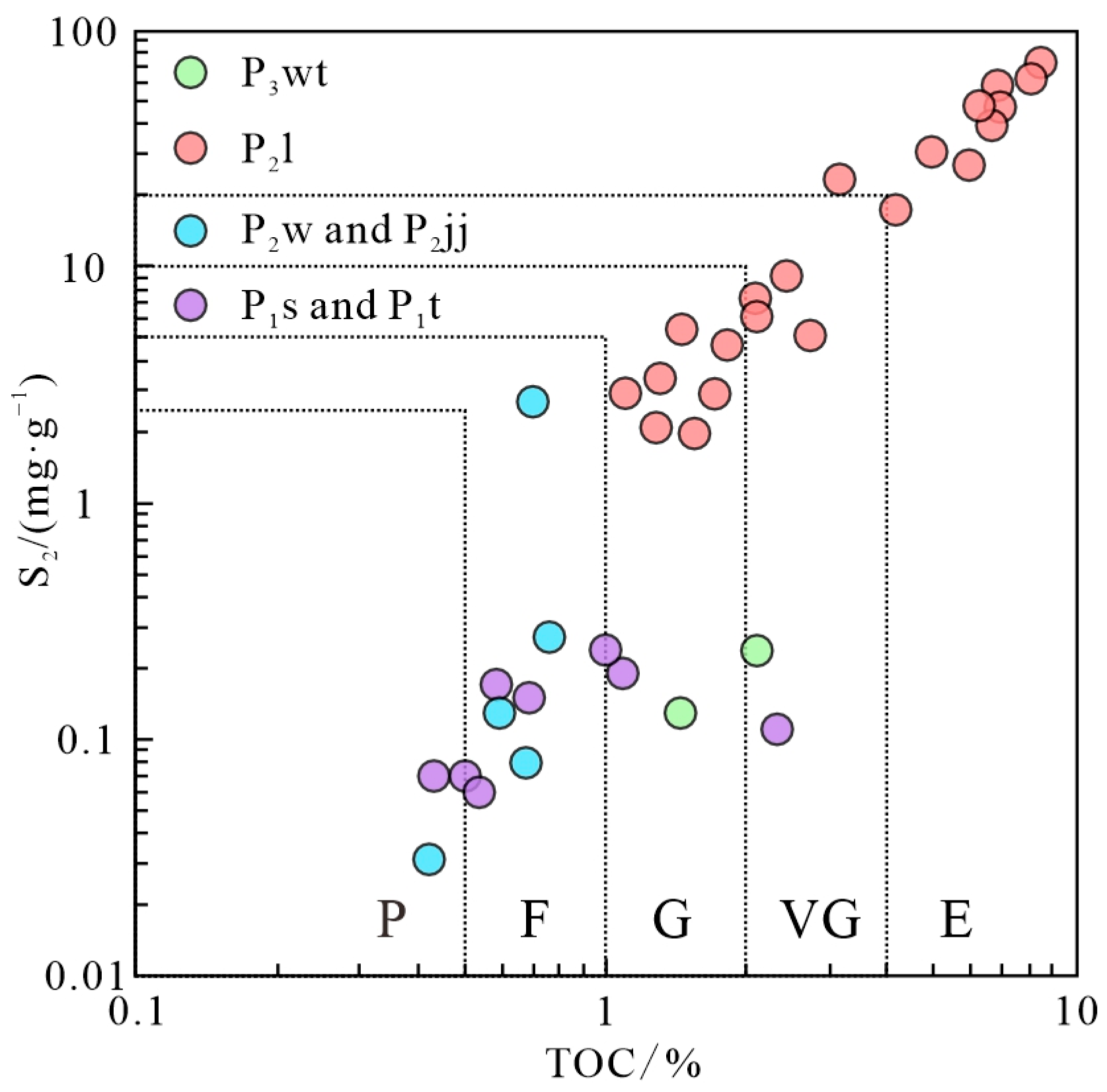
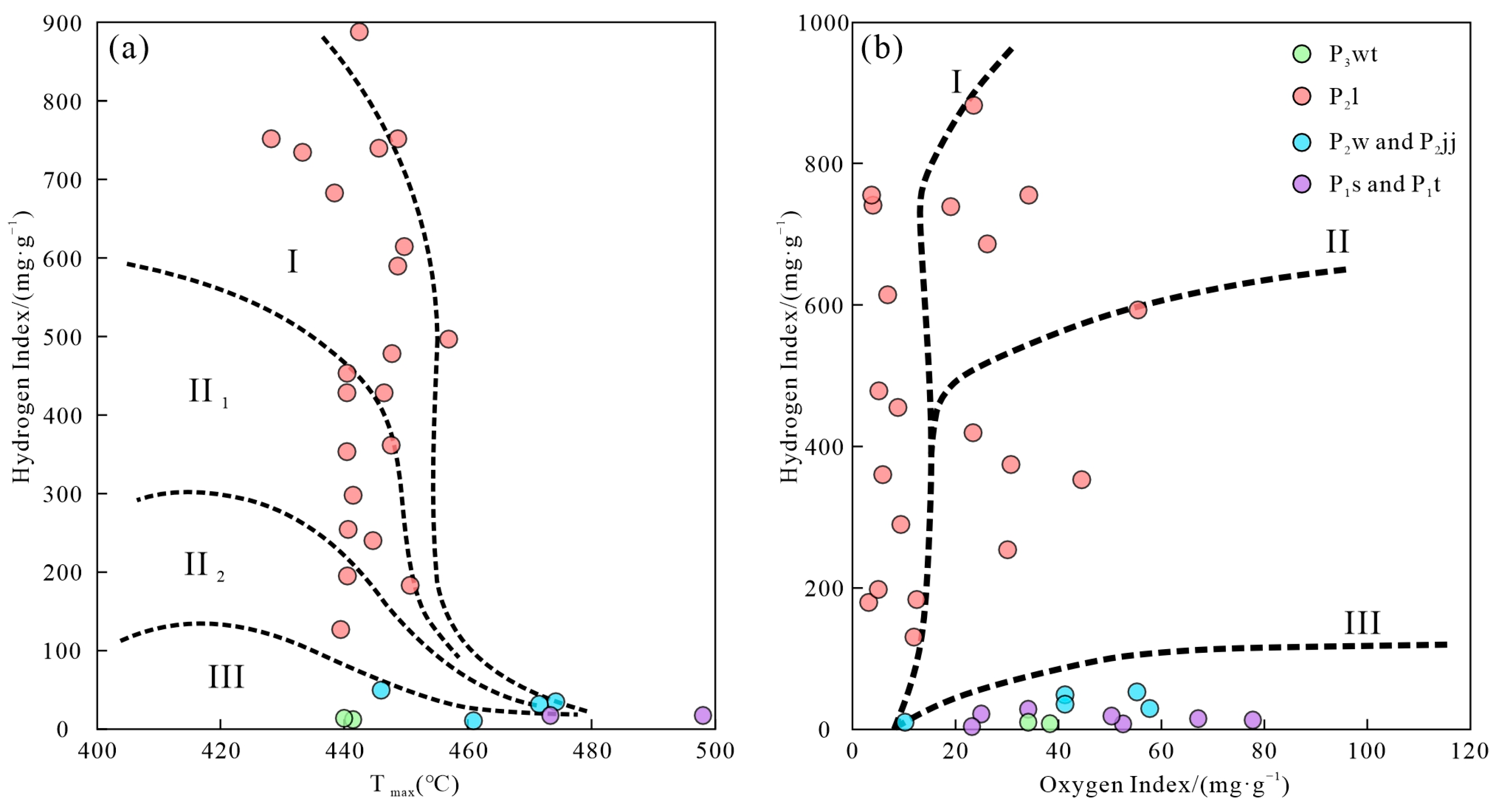
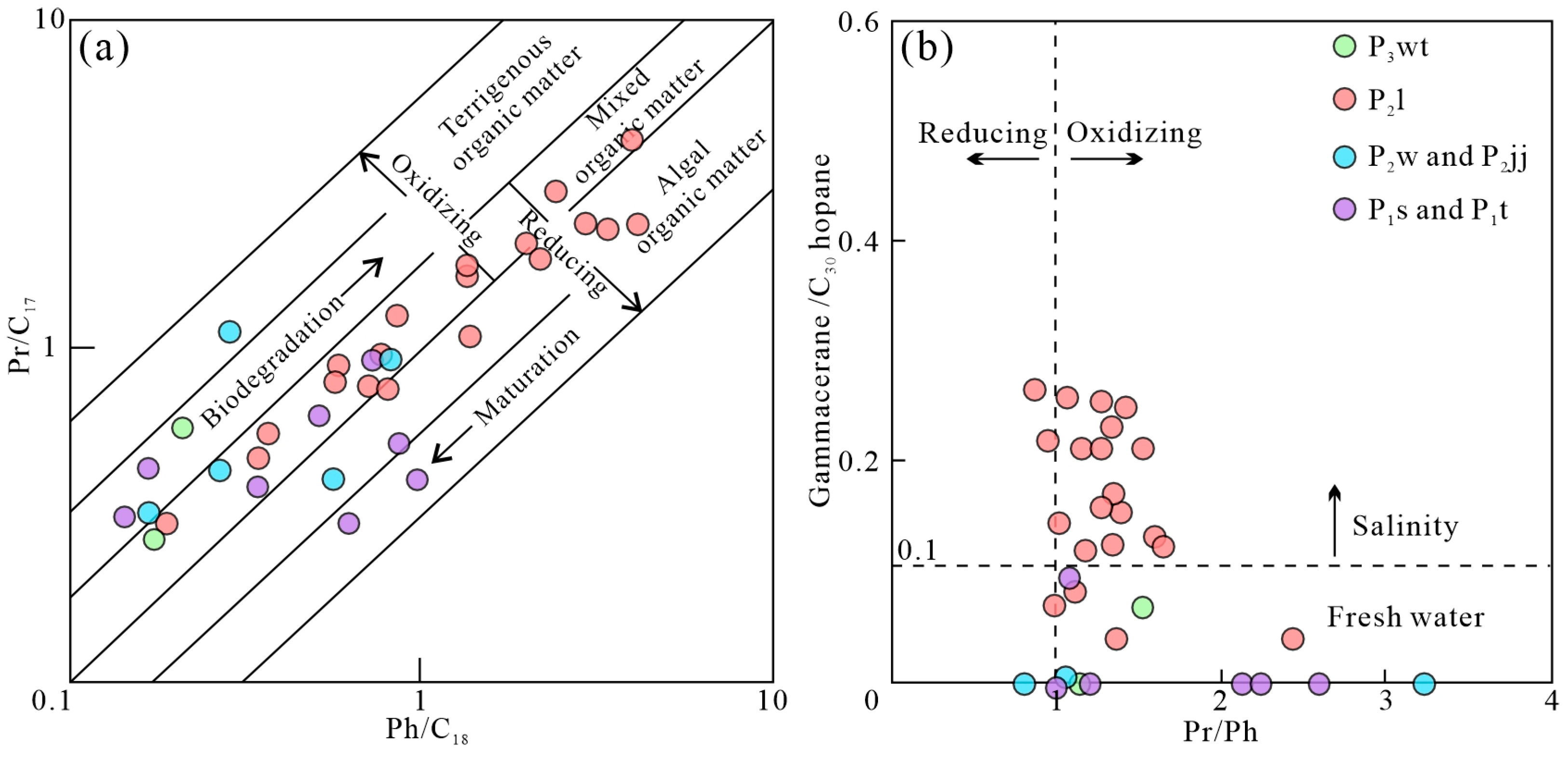
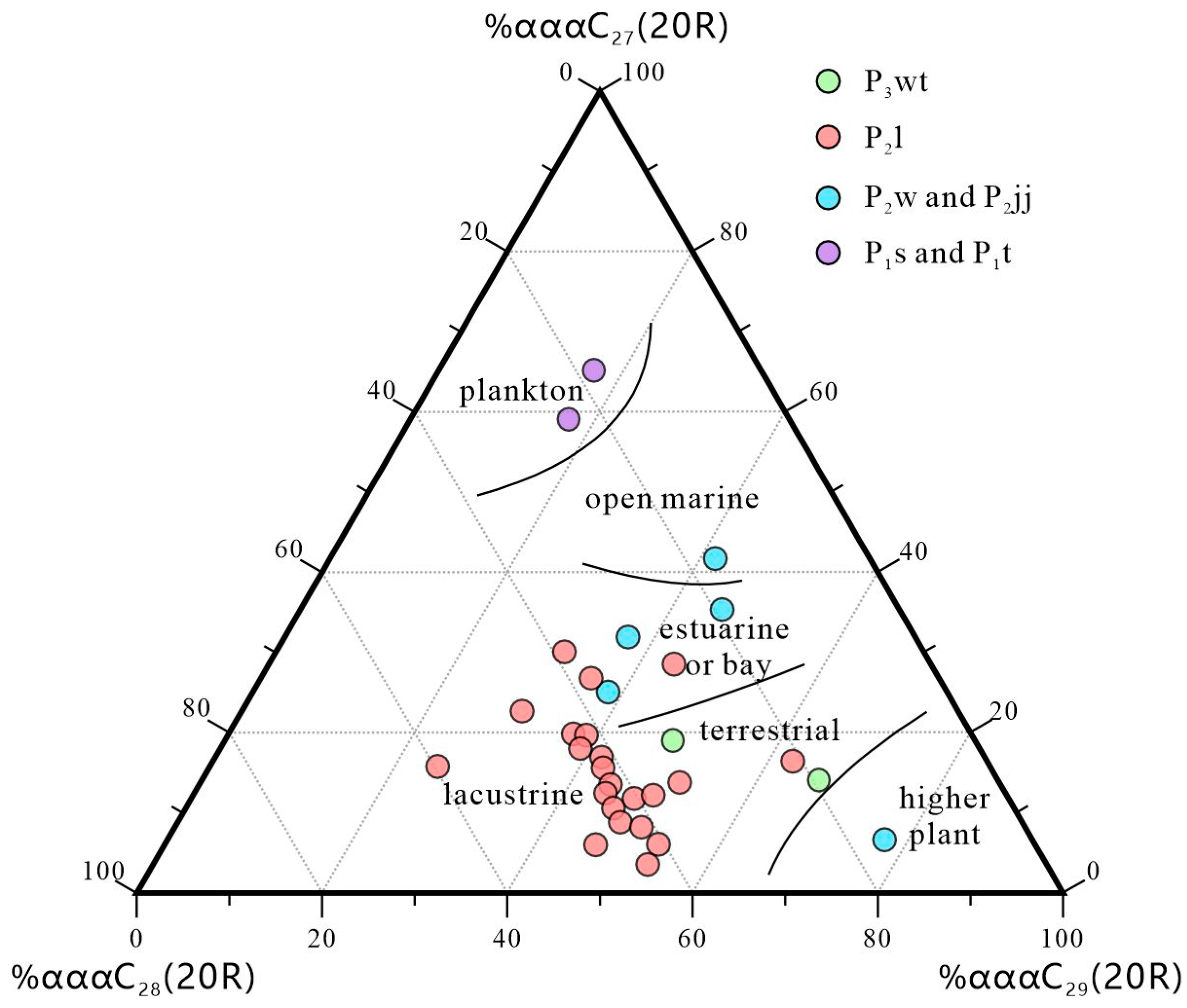
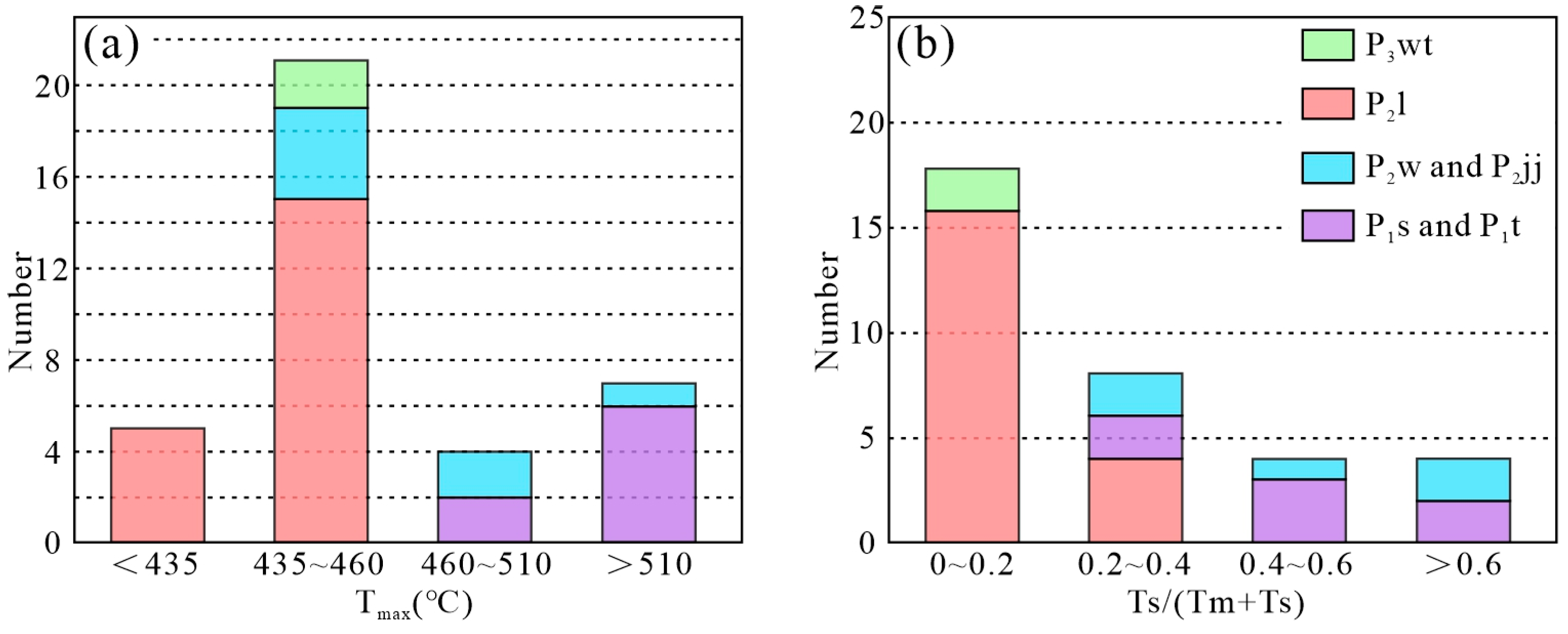
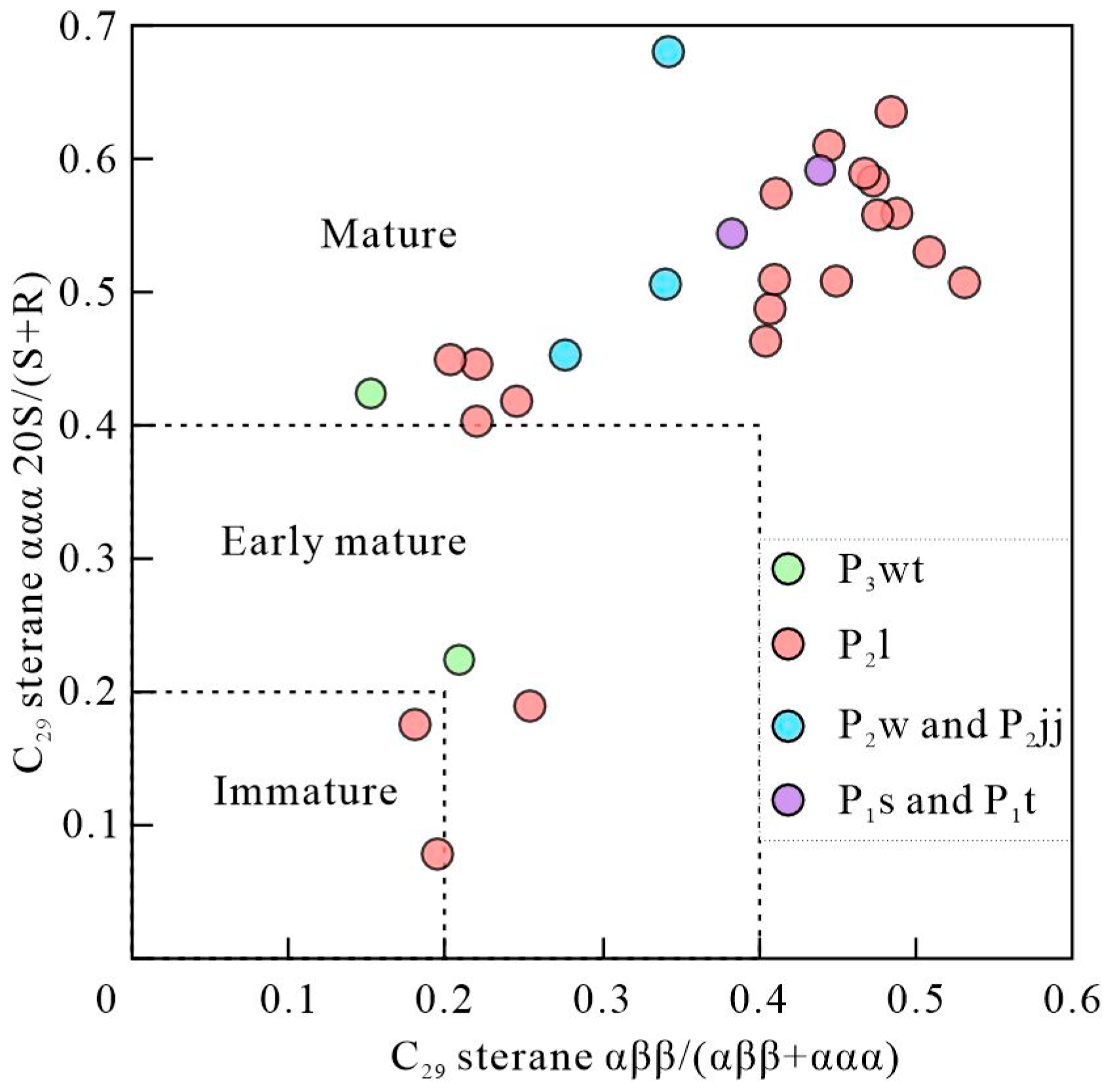
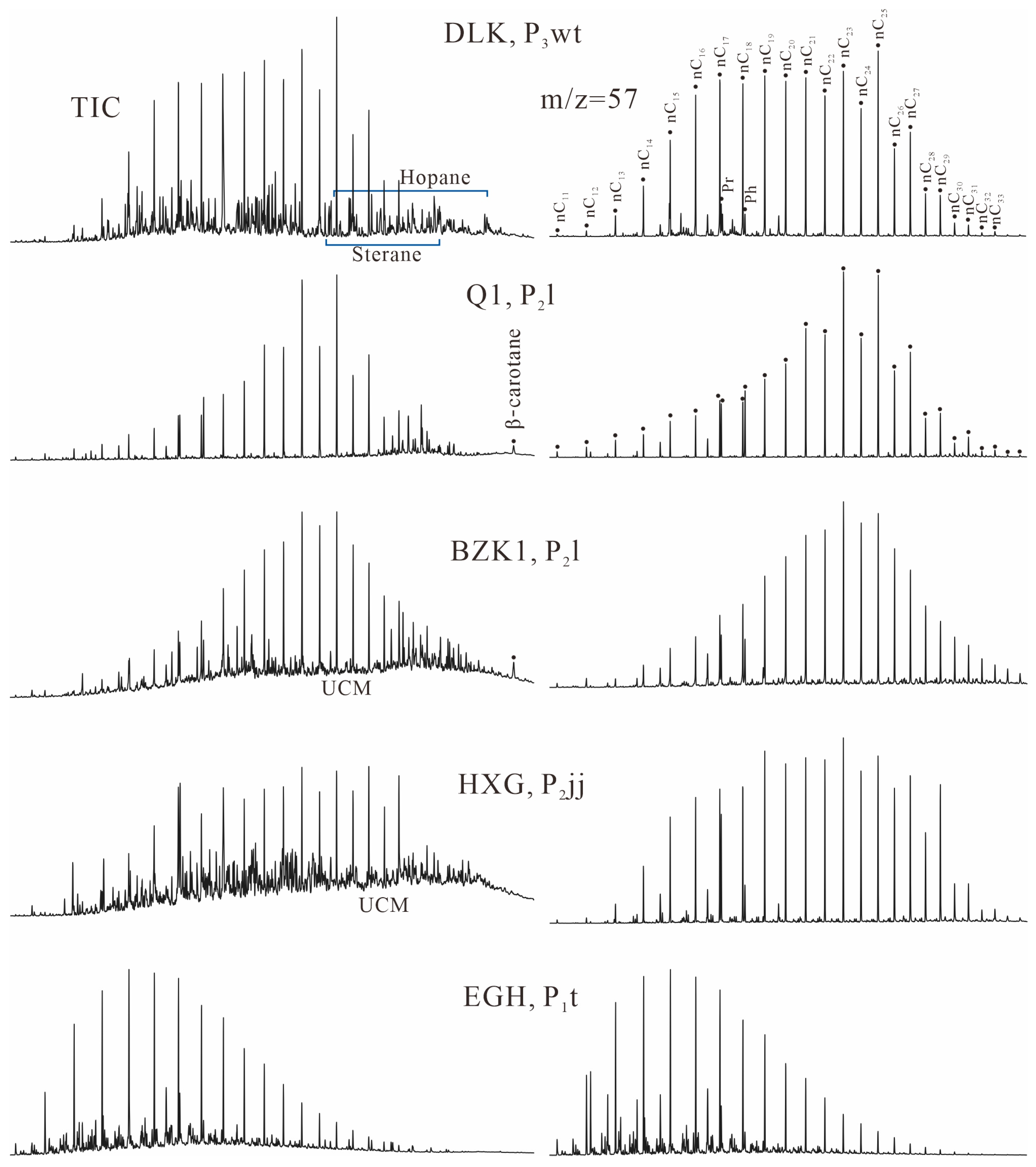
Shale oil and gas resources have become an alternative energy source and are crucial in the field of sustainable oil and gas exploration. In the Junggar Basin, the Permian is not only the most significant source rock, but also an important field in shale oil and gas exploration. However, there are significant differences in the effectiveness of source rocks in different layers. During the Permian, the Bogda region effectively recorded the transition from marine environments in the Early Permian to terrestrial environments in the Late Permian, providing a viable opportunity for studying the Permian source rock of the Junggar Basin. We conducted an analysis of the total organic carbon (TOC), Rock-Eval pyrolysis, vitrinite reflectance (Ro), and biomarker compounds of Permian source rocks around the Bogda Mountain. The results indicate that the Lower Permian strata were primarily deposited in a moderately reducing marine environment, with the main organic matter sourced from planktonic organisms. These strata are currently in a high to over-mature stage, evaluated as medium-quality source rocks, and may have already generated and expelled substantial quantities of oil and gas, making the Lower Permian hydrocarbon resources within the basin a noteworthy target for deep condensate oil and gas exploration in adjacent depressions. The Middle Permian Wulabo and Jingjingzigou formations were deposited in a moderately oxidizing marine–continental transitional environment with significant terrestrial organic input. The kerogen type is predominantly Type III, and these formations are presently in the mature to over-mature stage with low organic abundance and poor hydrocarbon generation potential. The Middle Permian Lucaogou Formation was deposited in a moderately reducing saline lacustrine environment, with algae and planktonic organisms as the primary sources of organic matter. The kerogen types are mainly Type I and II1, and it is currently within the oil-generation window. It is characterized by high organic abundance and evaluated as good to excellent source rocks, possessing substantial potential for shale oil exploration. The Upper Permian Wutonggou Formation was primarily deposited in a highly oxidizing continental environment with significant terrestrial input. The primary organic source comprises higher plants, resulting in Type III kerogen. These strata exhibit low organic abundance, are currently in the immature to mature stage, and are evaluated as poor source rocks with limited exploration potential. The information presented in this paper has important theoretical significance and practical value for oil and gas exploration and development in the Junggar Basin.
Keywords: source rock; geochemical characteristics; hydrocarbon significance; Permian; Junggar Basin source rock; geochemical characteristics; hydrocarbon significance; Permian; Junggar Basin