Article

Analyzing GDP Growth Drivers in Saudi Arabia: Investment or Consumption: An Evidence-Based ARDL-Bound Test Approach

by
Mwahib Gasmelsied Ahmed Mohammed
Finance and Investment Department, Faculty of Business Administration, University of Tabuk, Tabuk 47512, Saudi Arabia
Sustainability 2024, 16(9), 3786; https://doi.org/10.3390/su16093786
Submission received: 25 February 2024 / Revised: 27 April 2024 / Accepted: 28 April 2024 / Published: 30 April 2024
(This article belongs to the Special Issue Advanced Studies in Economic Growth, Environment and Sustainability)

Abstract

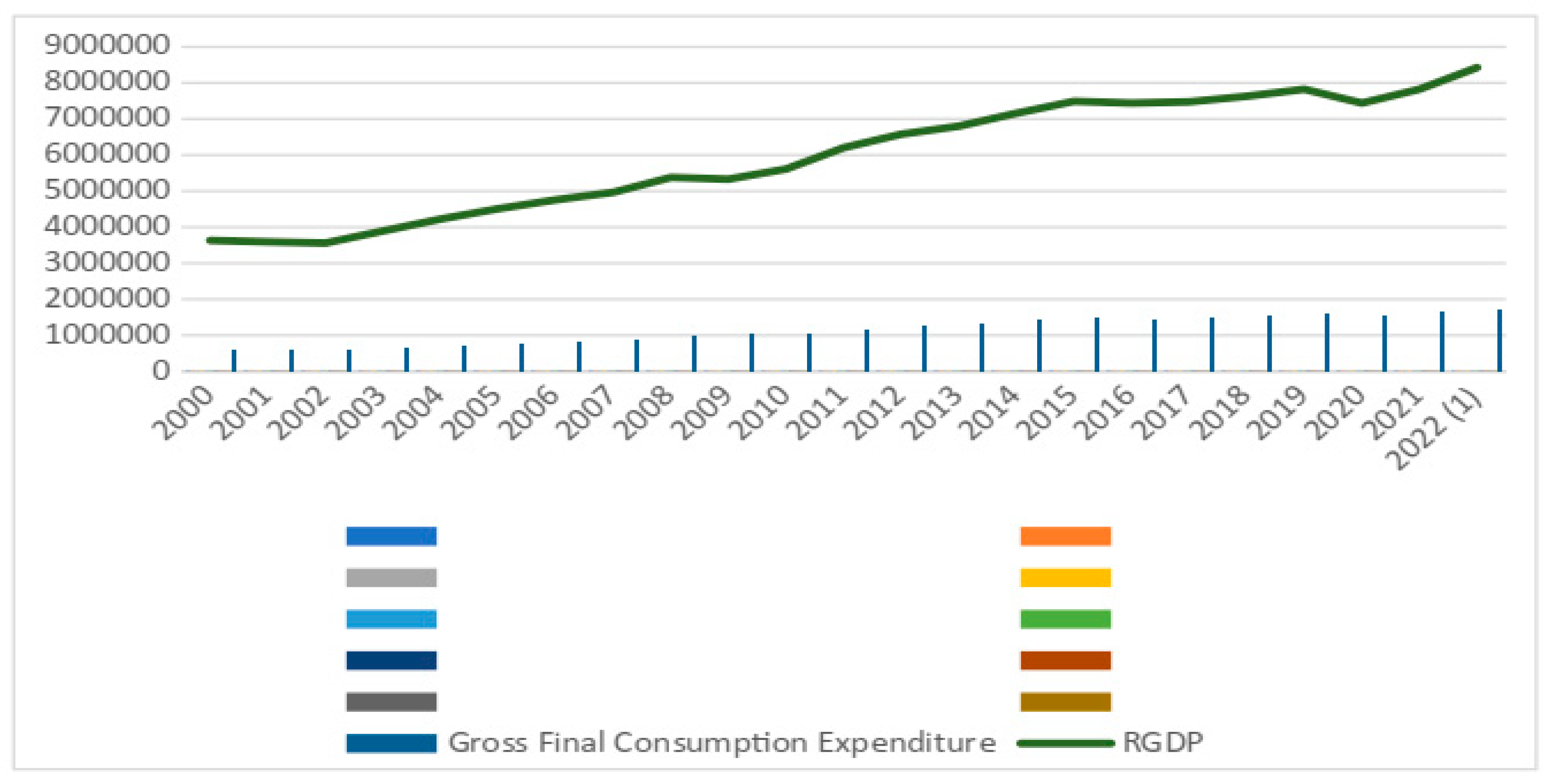
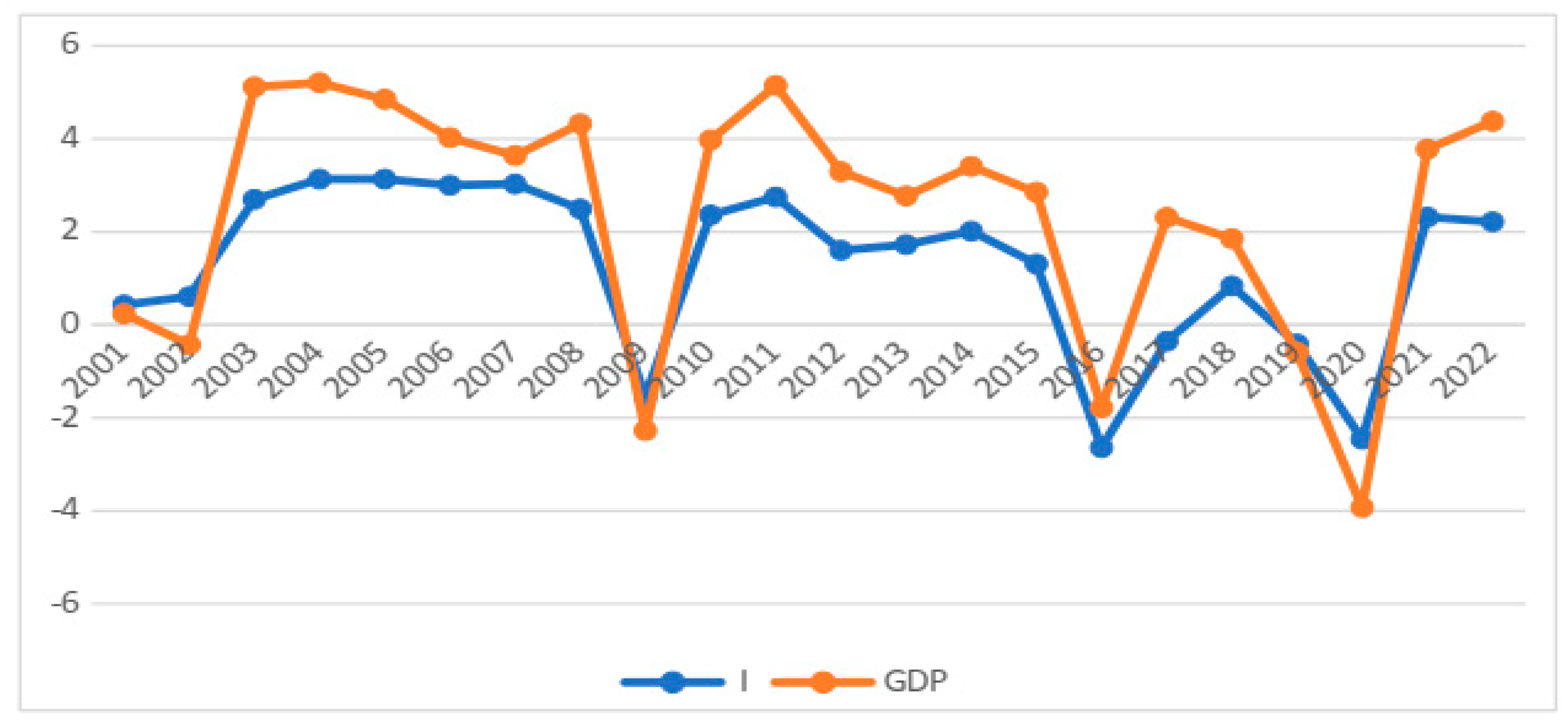
This study delves into the intricate interplay of economic growth components, specifically focusing on consumption and investment in Saudi Arabia from 2000 to 2022. Employing vector error correction models and co-integration techniques, we analyze the short- and long-term dynamics within the relationship of consumption, investment, and economic growth. Granger causality analysis is also used to discern these pivotal variables’ causal connections. Our empirical analysis reveals a persistent long-term cointegration relationship among the variables, underscoring the enduring nature of their interdependency. Furthermore, our findings highlight consumption and investment’s statistically significant positive impact on economic growth. Notably, the short-term analysis unveils a stable model characterized by an annual adjustment to equilibrium of 100%. Moreover, the Granger causality study demonstrates unidirectional causal linkages among consumption, investment, and economic growth. These findings hold substantial implications for policy formulation in Saudi Arabia. Policymakers must grasp the ramifications of burgeoning prosperity and evolving private consumption patterns on future environmental outcomes. Achieving sustainable long-term results necessitates equal emphasis on bolstering private consumption and fostering other facets of economic growth.
Keywords: gross domestic product (GDP); consumption; investment; Saudi Arabia gross domestic product (GDP); consumption; investment; Saudi Arabia