Article

Prediction and Feed-In Tariffs of Municipal Solid Waste Generation in Beijing: Based on a GRA-BiLSTM Model

1
Tianjin Zhongxinde Metal Structure Co., Ltd., Tianjin 300380, China
2
School of Management, Tianjin University of Technology, Tianjin 300384, China
*
Author to whom correspondence should be addressed.
Sustainability 2024, 16(9), 3579; https://doi.org/10.3390/su16093579
Submission received: 19 March 2024 / Revised: 8 April 2024 / Accepted: 17 April 2024 / Published: 24 April 2024

Abstract

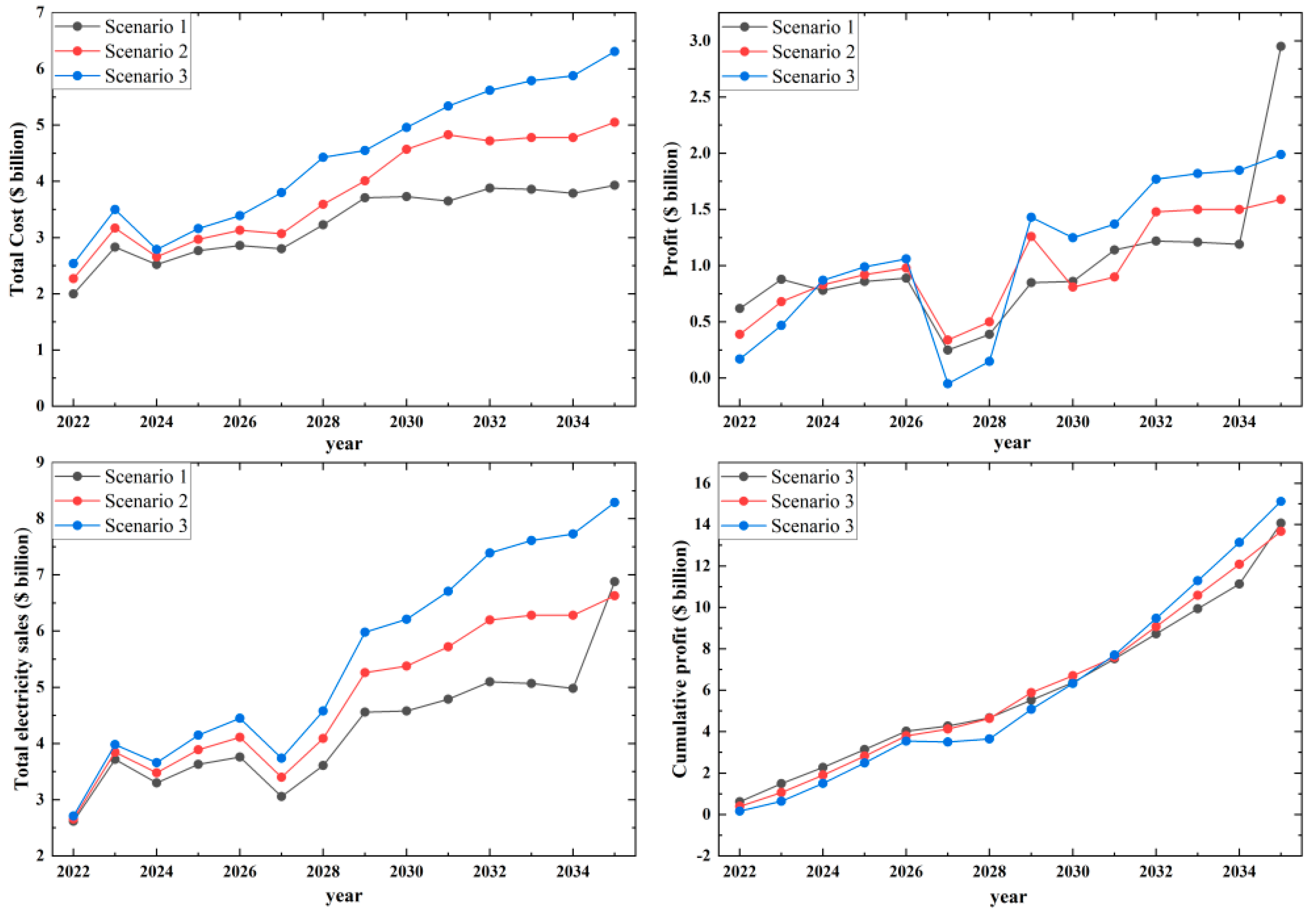
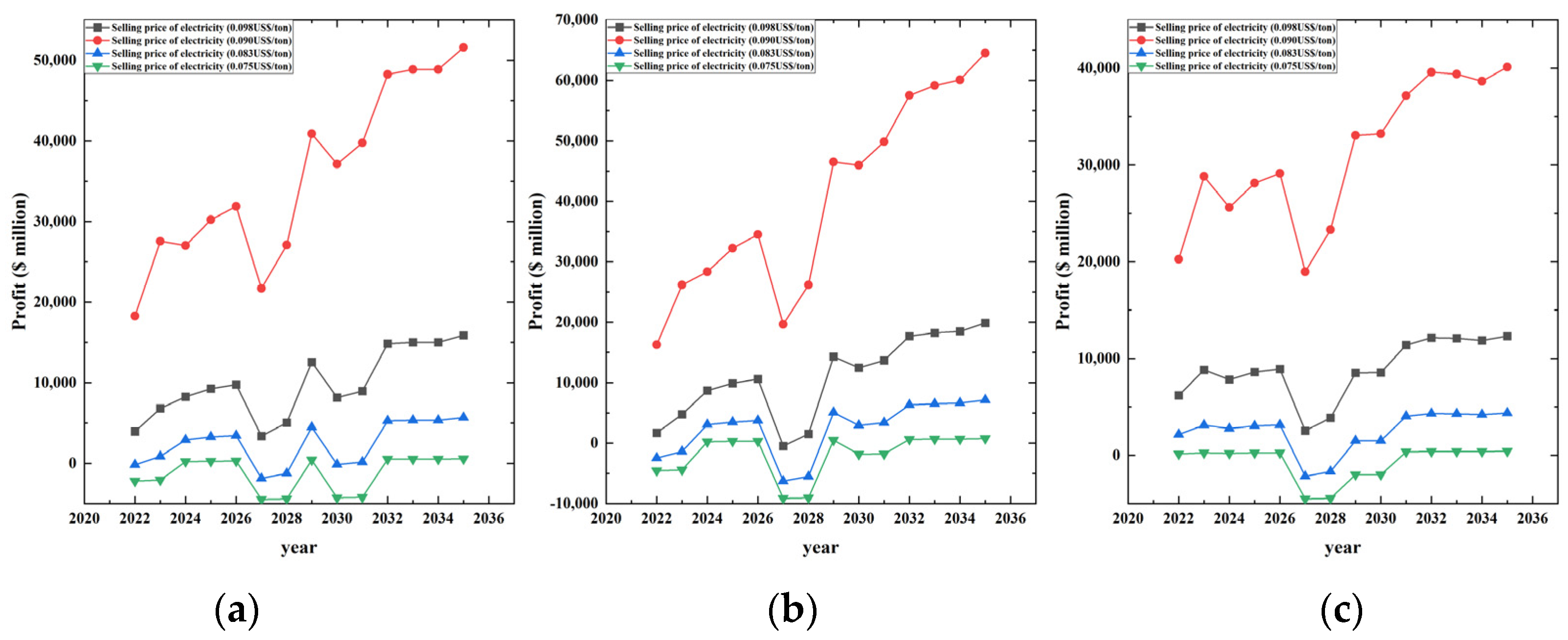
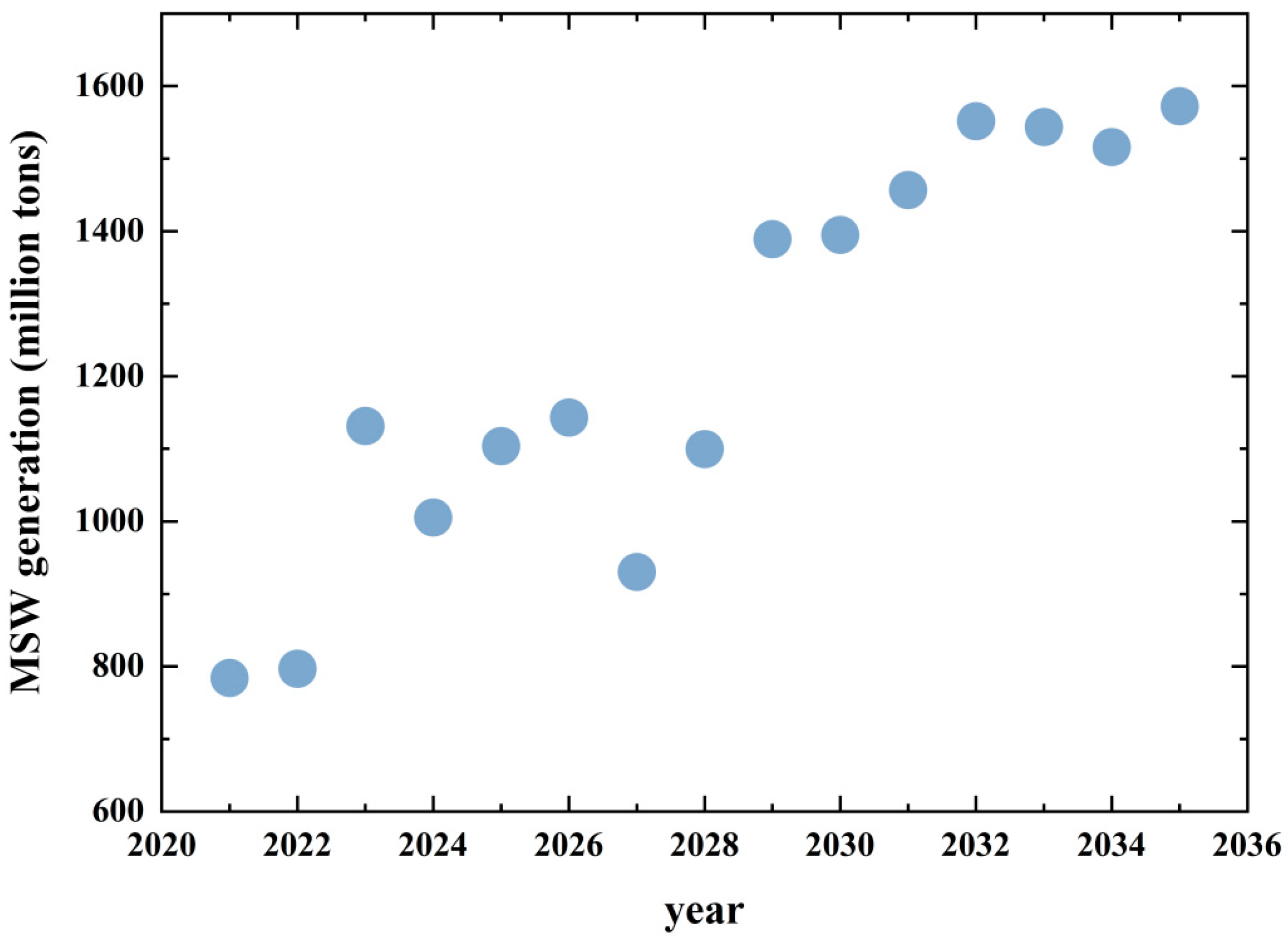
To cope with the increasing energy demand of people and solve the problem of a “Garbage Siege”, most cities have begun to adopt waste power generation (WTE). Compared to other WTE technologies, incineration has proven to be the most efficient technology for municipal solid waste (MSW) treatment. Therefore, to further explore the economic feasibility of MSW incineration plant construction, this study established a multi-factor prediction of MSW generation based on the GRA-BiLSTM model. By fully considering the relationship between the change in feed-in tariff (FIT) and the building of an incineration plant in Beijing, the economic feasibility of building an incineration plant is discussed based on the three scenarios set. The experimental results showed that (1) the combined model based on the GRA-BiLSTM showed good applicability for predicting MSW generation in Beijing, with MAE, MAPE, RMSE, and R2 values of 12.47, 5.97%, 18.5580, and 0.8950, respectively. (2) Based on the three scenarios set, the incineration power generation of Beijing MSW will show varying degrees of growth in 2022–2035. In order to meet future development, Beijing needs to build seven new incinerators, and the incineration rate should reach 100%. (3) According to setting different feed-in tariffs, based on the economic feasibility analysis, it is found that the feed-in tariff of MSW incineration for power generation in Beijing should be no less than $0.522/kWh. The government should encourage the construction of incineration plants and give policy support to enterprises that build incineration plants.
Keywords: municipal solid waste; GRA-BiLSTM model; feed-in tariff; waste-to-energy; cost municipal solid waste; GRA-BiLSTM model; feed-in tariff; waste-to-energy; cost