Article

Achieving Net Zero Condominiums through Energy Community Sharing

1
Department of Electrical and Electronic Engineering, University of Cagliari, Via Marengo 2, 09123 Cagliari, Italy
2
Department of Civil and Environmental Engineering and Architecture, University of Cagliari, Via Marengo 2, 09123 Cagliari, Italy
*
Author to whom correspondence should be addressed.
Sustainability 2024, 16(5), 2076; https://doi.org/10.3390/su16052076
Submission received: 19 January 2024 / Revised: 20 February 2024 / Accepted: 27 February 2024 / Published: 1 March 2024

Abstract

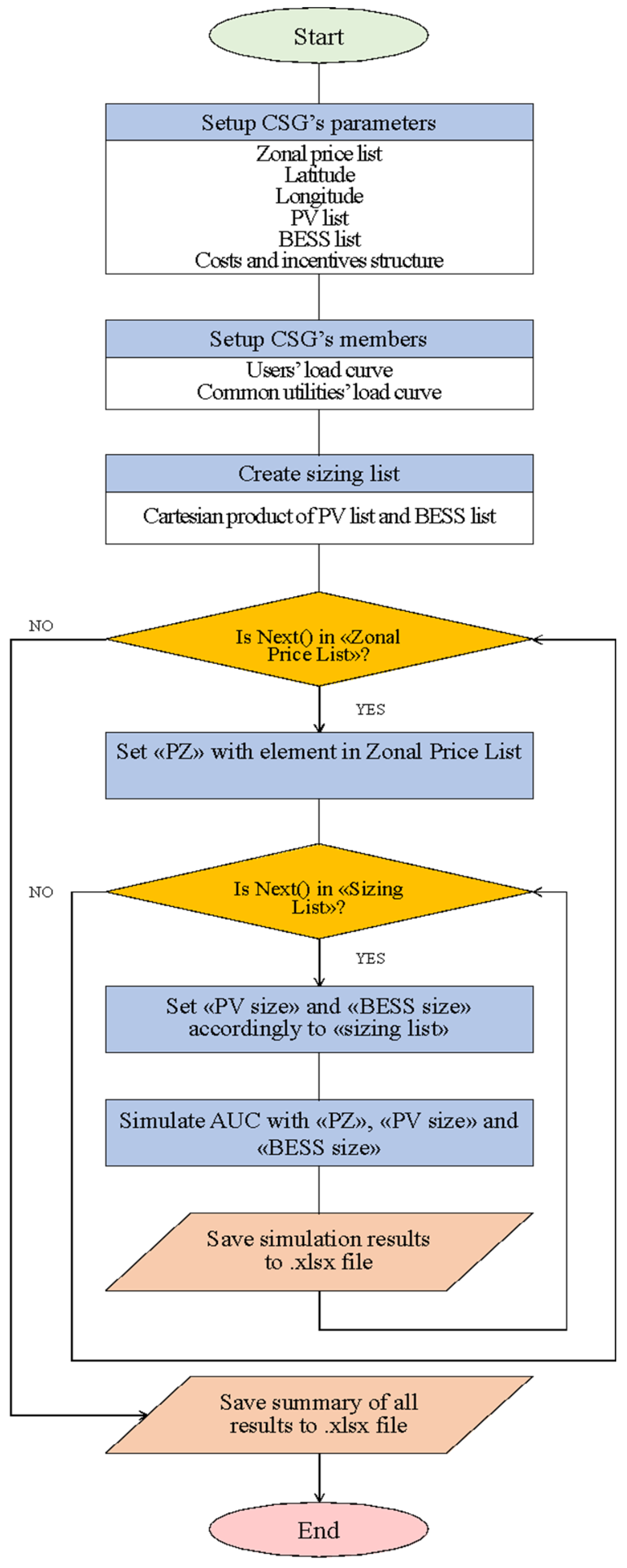
The European energy transition process is geared toward improving the economic viability of the energy sector through its democratization, which includes enabling citizens to generate, share, and sell energy produced by renewable sources. The current directives have led to the creation of energy communities and collective self-consumption groups to engage and raise awareness among citizens, with the goal of achieving social, economic, and environmental benefits through shared renewable energy generation and consumption. In the near future, more and more of these initiatives are anticipated; therefore, innovative technological tools are necessary to assist their growth path. This research introduces a multi-criteria techno-economic simulation framework that enables the evaluation of several investment scenarios for various plant sizes and energy prices. The findings are useful during the investment planning phase as they help guide decision-making toward the objectives of economic, energy, and environmental sustainability. To evaluate the methodology, a case study of a collective self-consumption group located in a smart building in Italy is proposed. The results are discussed from statistical, technical, economic, and financial standpoints, demonstrating how the proposed approach can contribute to the development of collective self-consumption groups, risk hedging, and the goal of developing energy self-sufficiency based on the net-zero energy building concept.
Keywords: renewable energies; net zero condominiums; collective self-consumption; diffused self-consumption; energy transition; simulation framework; multi-criteria analysis; techno-economic evaluation renewable energies; net zero condominiums; collective self-consumption; diffused self-consumption; energy transition; simulation framework; multi-criteria analysis; techno-economic evaluation