Article

Nonlinear and Synergistic Effects of Built Environment Indicators on Street Vitality: A Case Study of Humid and Hot Urban Cities


College of Tropical Agriculture and Forestry, Hainan University, Haikou 570208, China
*
Author to whom correspondence should be addressed.
Sustainability 2024, 16(5), 1731; https://doi.org/10.3390/su16051731
Submission received: 25 November 2023 / Revised: 2 February 2024 / Accepted: 16 February 2024 / Published: 20 February 2024
(This article belongs to the Topic Sustainable Smart Cities and Smart Villages, 2nd Volume)

Abstract

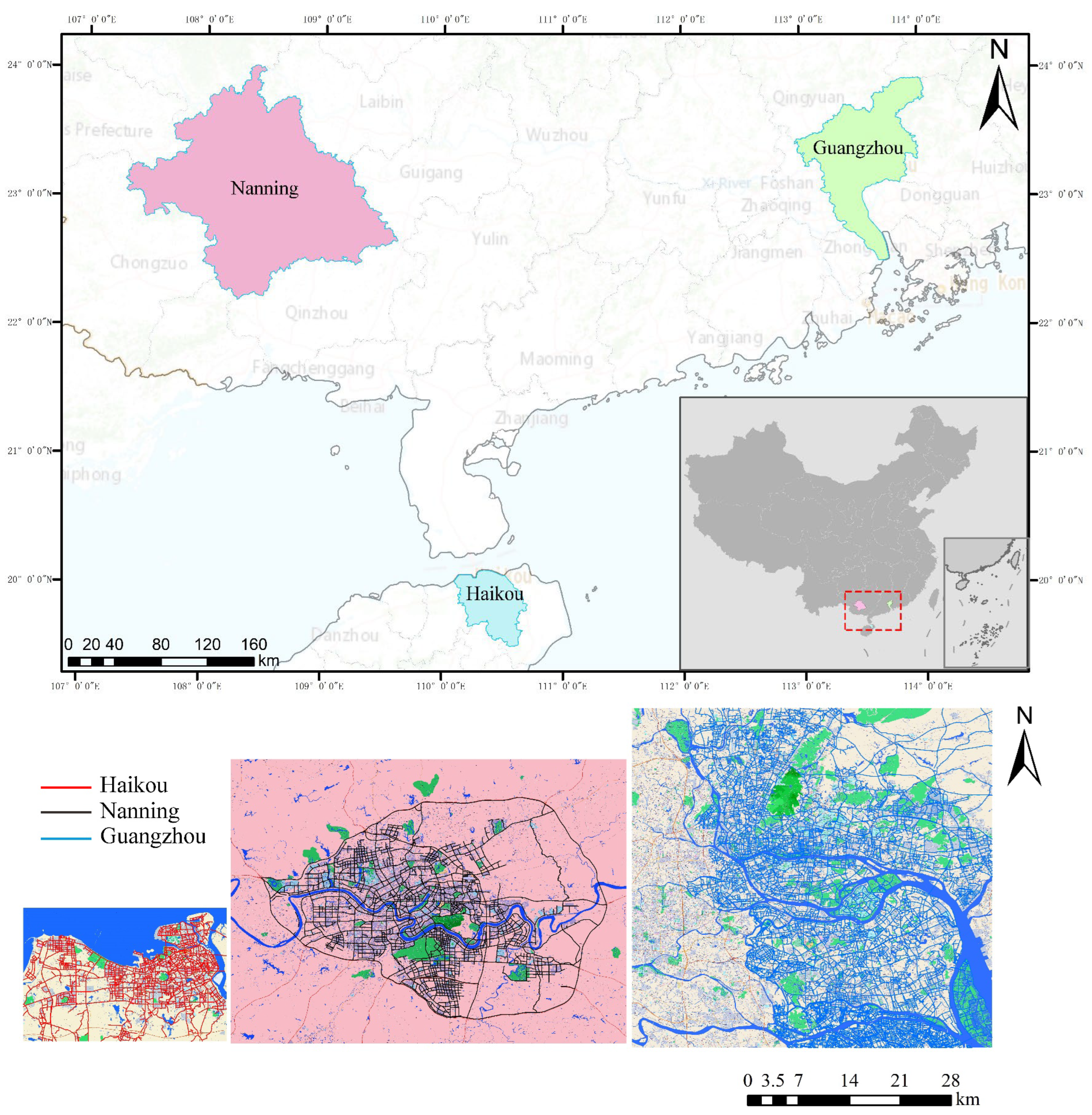
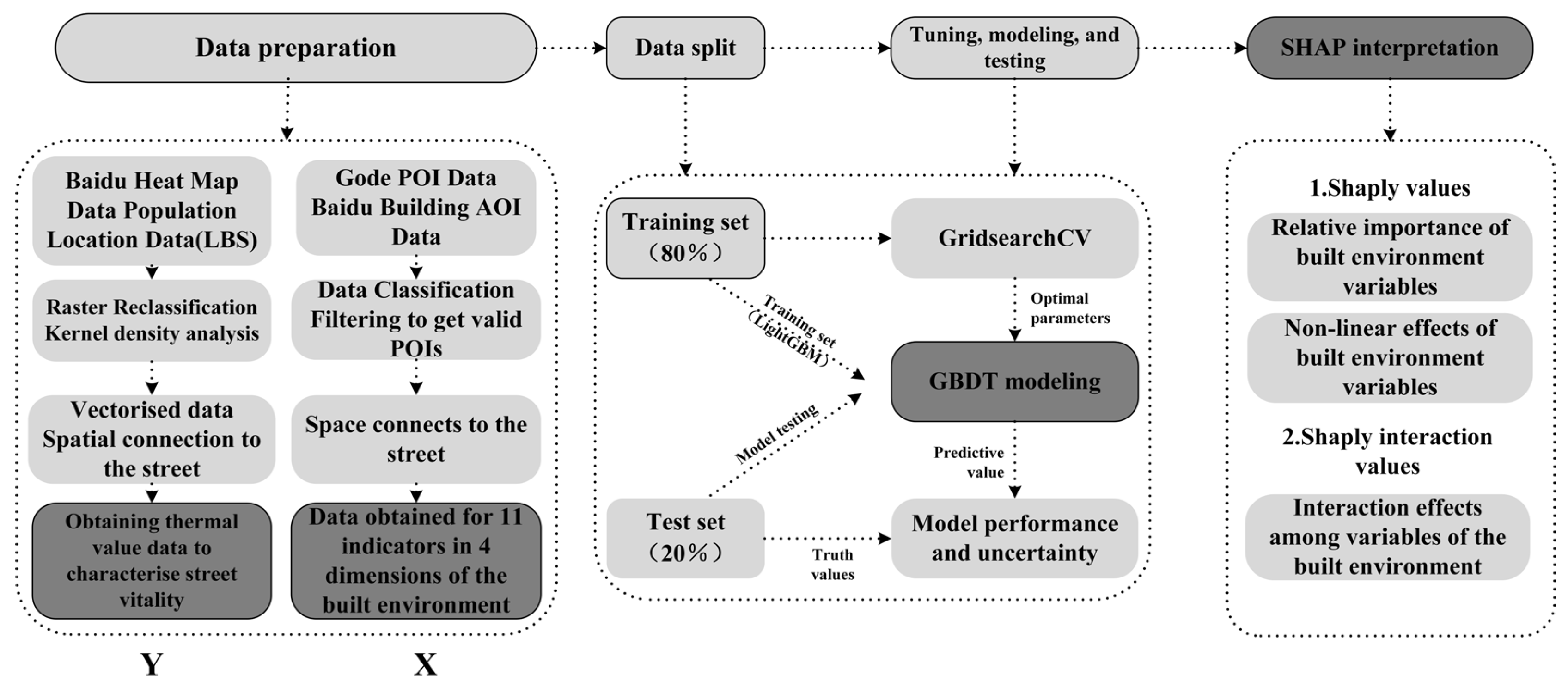
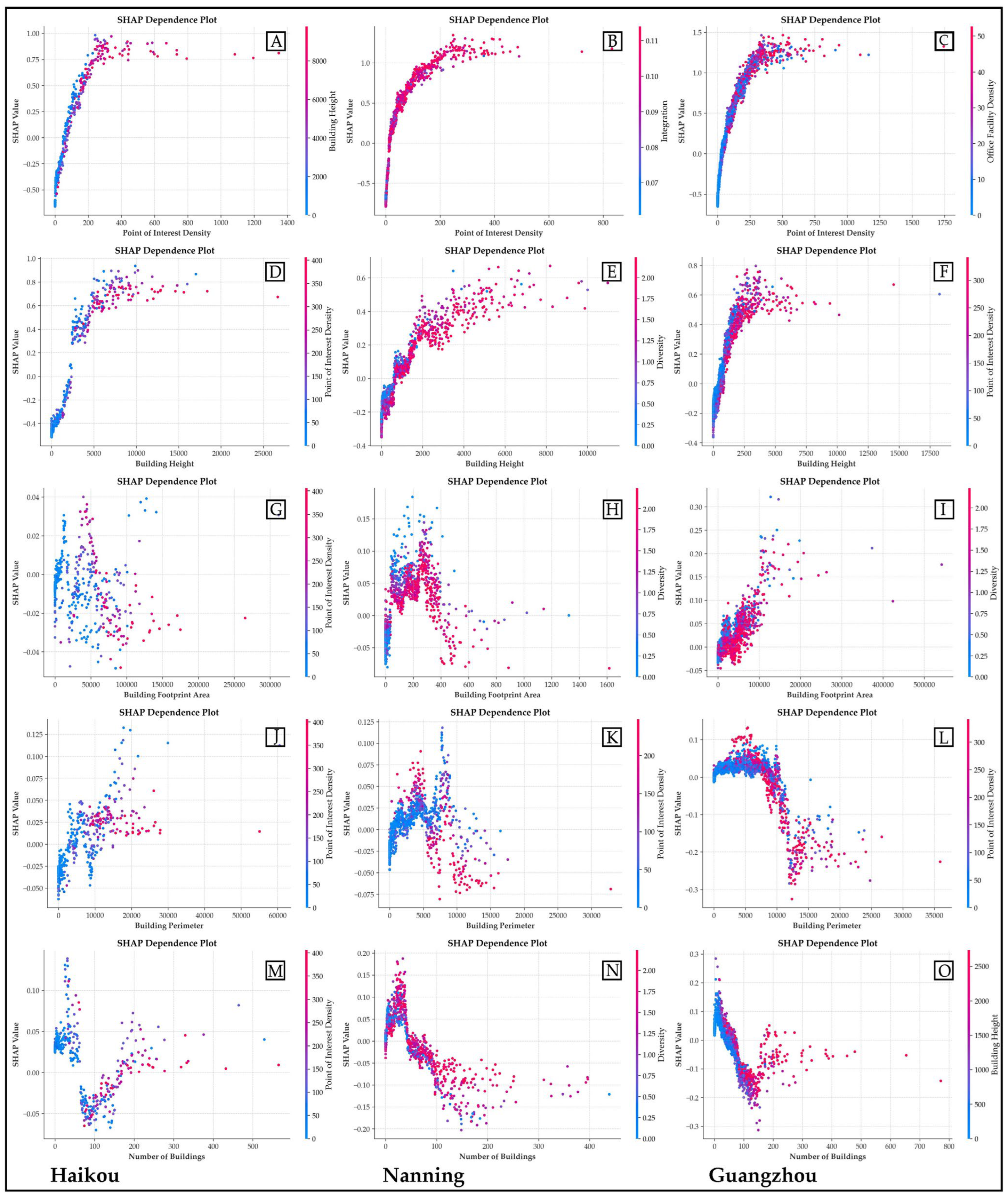
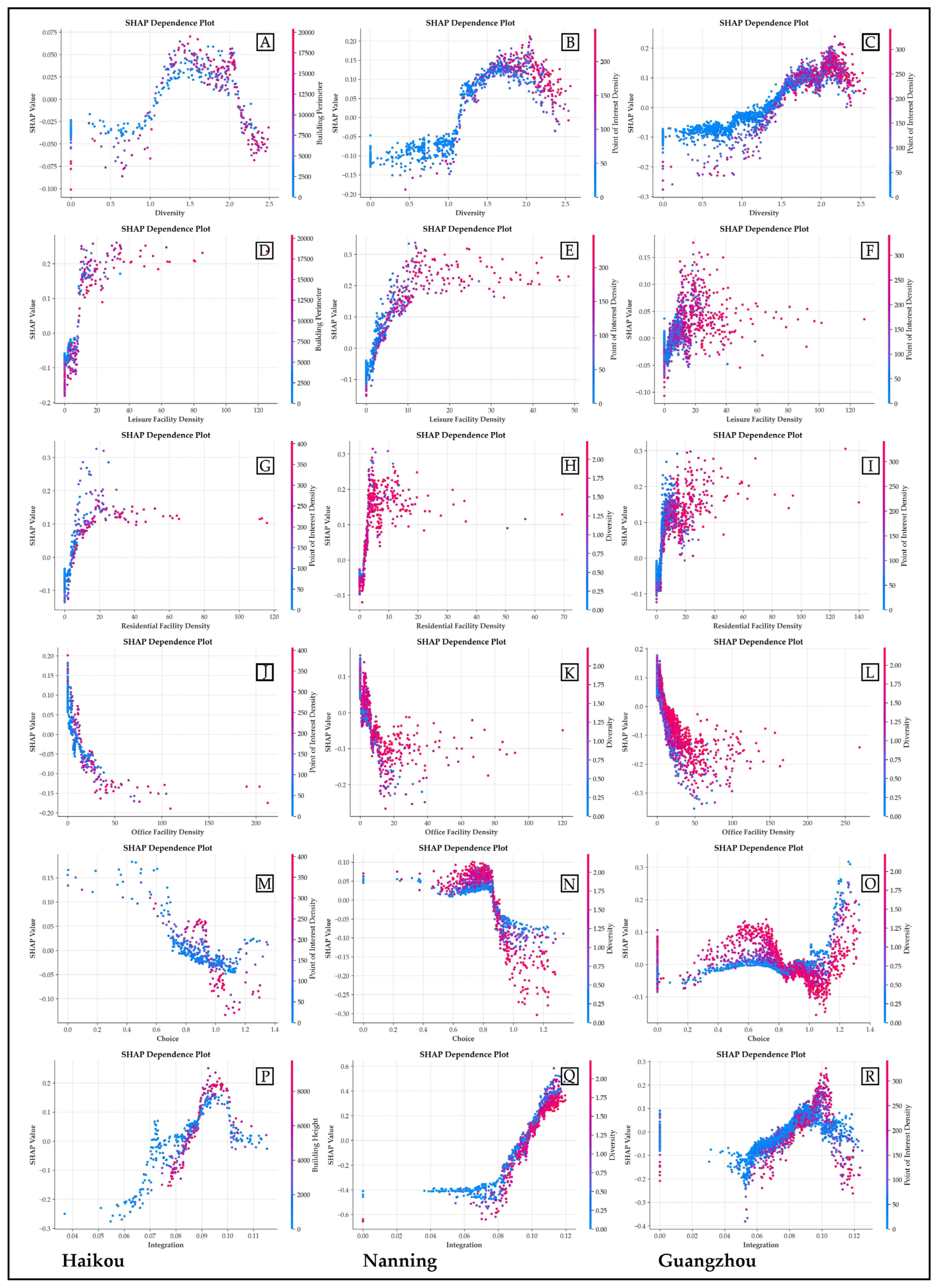
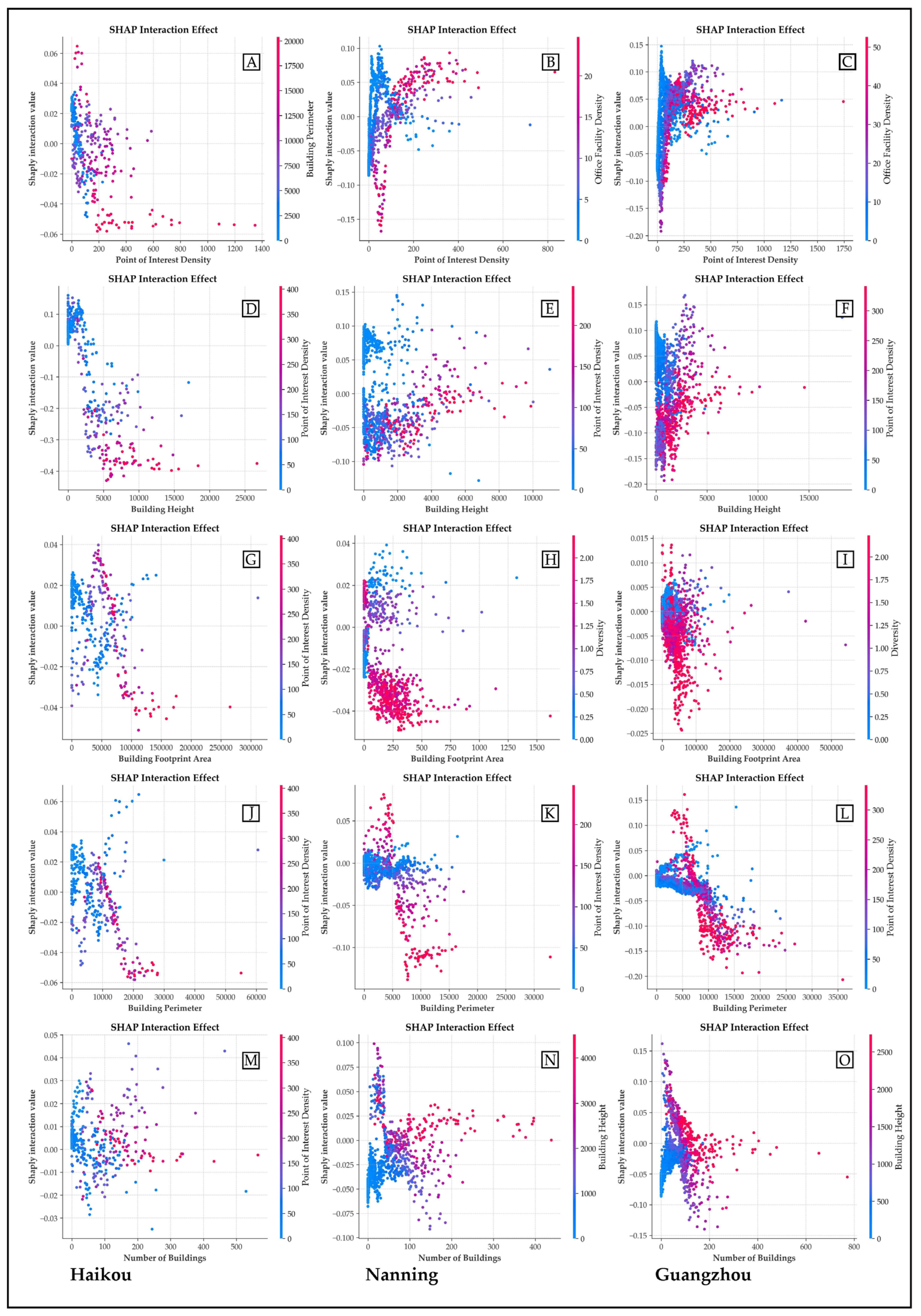
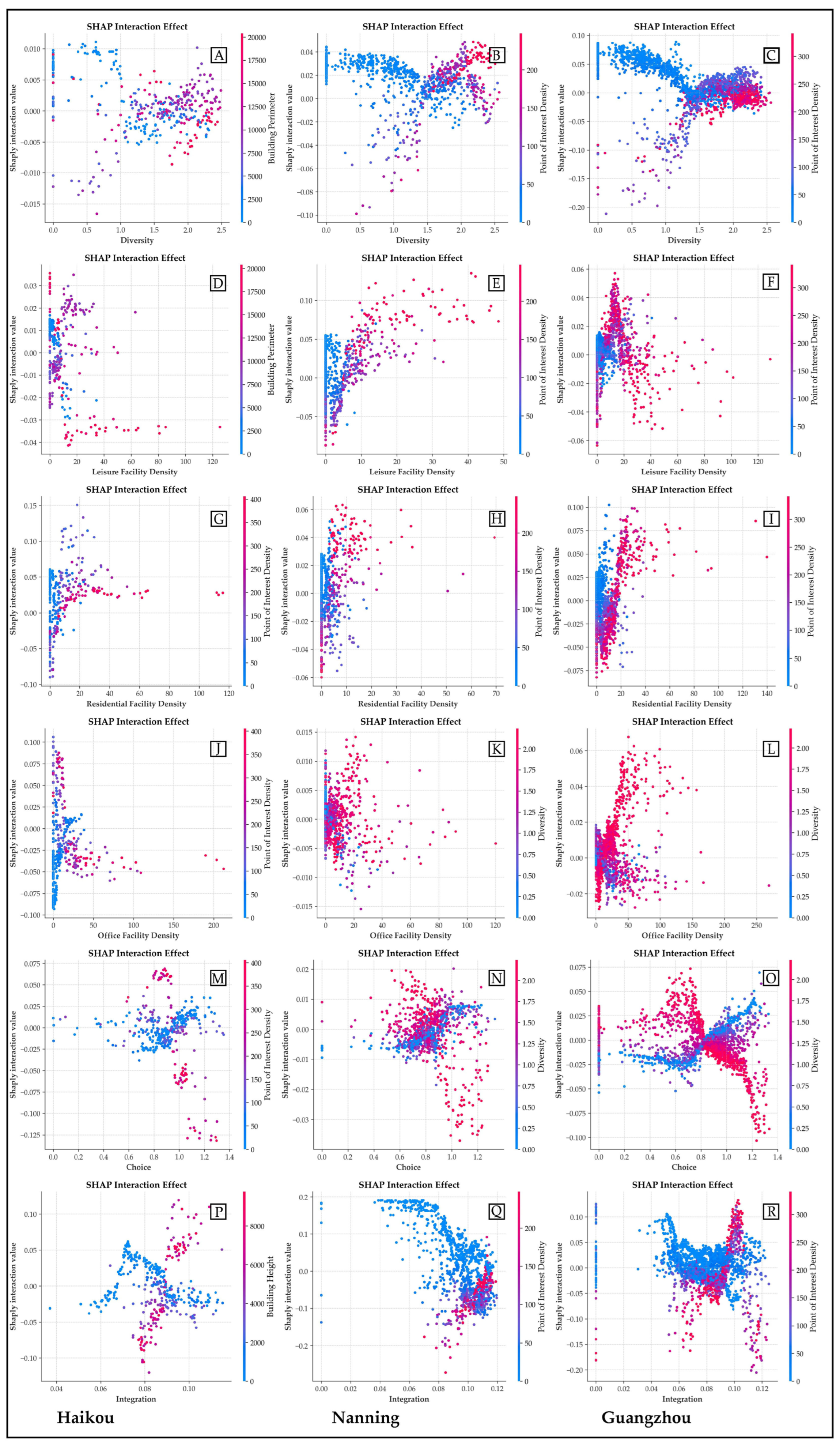
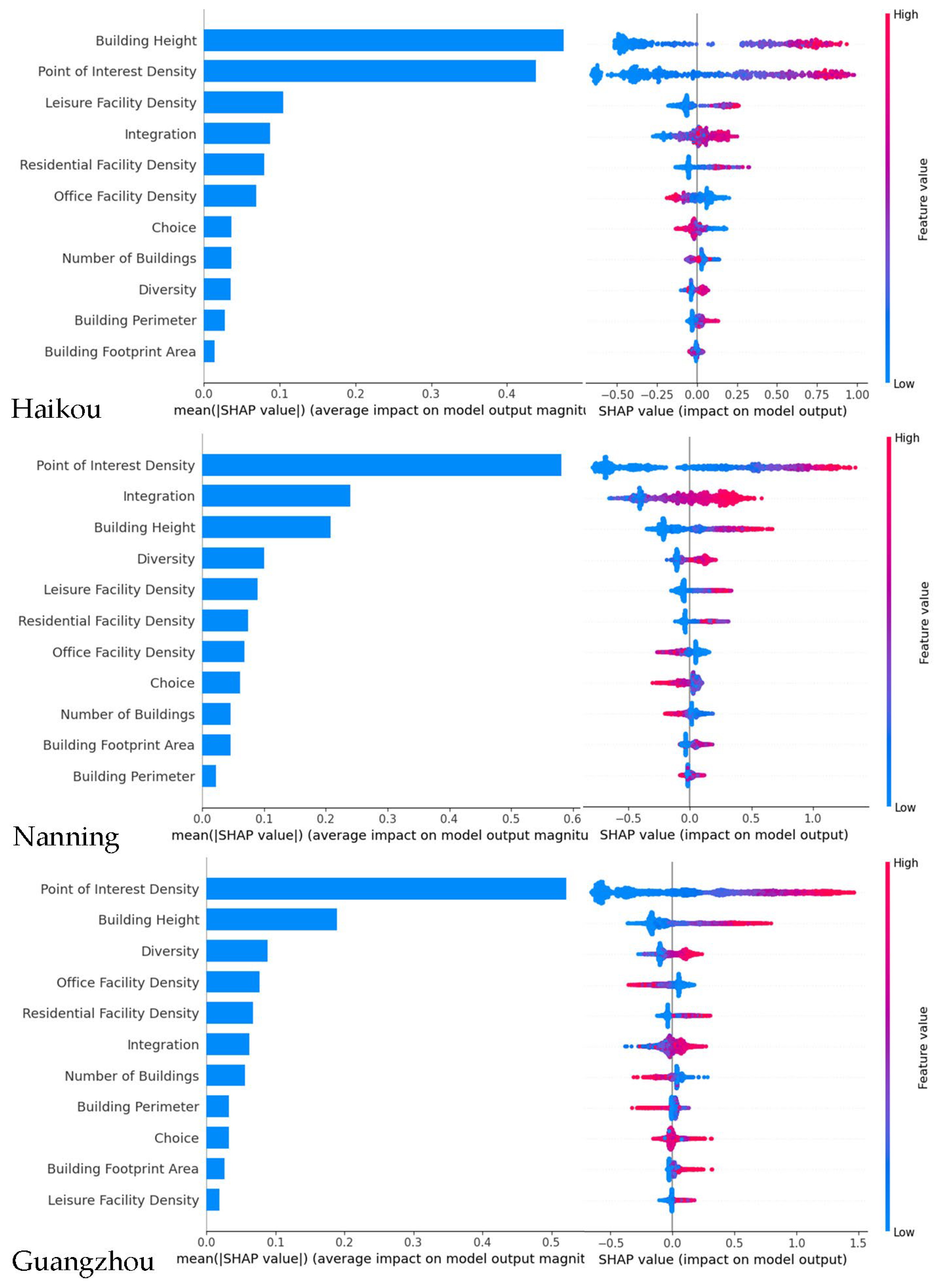
Street vitality has become an important indicator for evaluating the attractiveness and potential for the sustainable development of urban neighborhoods. However, research on this topic may overestimate or underestimate the effects of different influencing factors, as most studies overlook the prevalent nonlinear and synergistic effects. This study takes the central urban districts of humid–hot cities in developing countries as an example, utilizing readily available big data sources such as Baidu Heat Map data, Baidu Map data, Baidu Building data, urban road network data, and Amap’s Point of Interest (POI) data to construct a Gradient-Boosting Decision Tree (GBDT) model. This model reveals the nonlinear and synergistic effects of different built environment factors on street vitality. The study finds that (1) construction intensity plays a crucial role in the early stages of urban street development (with a contribution value of 0.71), and as the city matures, the role of diversity gradually becomes apparent (with the contribution value increasing from 0.03 to 0.08); (2) the built environment factors have nonlinear impacts on street vitality; for example, POI density has different thresholds in the three cities (300, 200, and 500); (3) there are significant synergistic effects between different dimensions and indicators of the built environment, such as when the POI density is high and integration exceeds 1.5, a positive synergistic effect is notable, whereas a negative synergistic effect occurs when POI is low. This article further discusses the practical implications of the research findings, providing nuanced and targeted policy suggestions for humid–hot cities at different stages of development.
Keywords: built environment; street vitality; threshold effect; synergistic effect; humid–hot climate; gradient boosted decision trees (GBDTs) model; multi-source data built environment; street vitality; threshold effect; synergistic effect; humid–hot climate; gradient boosted decision trees (GBDTs) model; multi-source data