Abstract
It is essential to conduct research on low-carbon behaviour in order to address global climate change and promote sustainable development. This study conducts a thorough examination of a bibliometric analysis of the existing literature in this field. We analysed 129 papers from the Web of Science Core Collection database to conduct a study on the concept of “low-carbon behaviour”. Review articles, proceedings papers, and editorial materials were all excluded. This investigation examines a diverse array of research environment factors, including the most highly ranked publications, publication trends, significant publishers, and patterns in citations and publications over time. The primary institutional contributors in the discipline and the most influential works worldwide are also mentioned. The application of advanced visualisation techniques, such as wordcloud representations, the spatial distribution of research output, and co-occurrence and overlay networks, is employed to generate maps of keyword relationships and collaboration networks using Bibliometrix Stable Version, VOSviewer 1.6.20, and Scimago Graphica Beta 1.0.45. This multi-modal methodology enables a comprehensive investigation of significant research issues and emerging directions in low-carbon behavioural studies. This study contributes to the ongoing endeavours to promote sustainable development and mitigate climate change by conducting a comprehensive evaluation of the current state of research and establishing a robust framework for future investigations into low-carbon behavioural patterns and behaviours.
1. Introduction
Low-carbon behaviour has become a critical concern for governments, enterprises, and individuals worldwide as a result of the increasing urgency of global climate change [1,2]. Low-carbon behaviour is a specific approach that aims to mitigate climate change by reducing carbon dioxide (CO2) emissions and other greenhouse gases [3]. This encompasses the minimisation of transportation emissions, the reduction of pollution, the utilisation of renewable energy sources, and the adoption of energy-efficient practices [1,4,5]. The objective is to reduce one’s carbon footprint and alleviate the effects of climate change [6].
Low-carbon behaviour has a substantial impact on the promotion of sustainable development and the mitigation of climate change. The primary cause of the intensification of climate change is the excessive emission of greenhouse gases, which primarily includes carbon dioxide [7,8]. Individuals and organisations that implement low-carbon behaviours, including optimising resource utilisation, reducing energy consumption, and utilising renewable energy, can effectively reduce carbon emissions and mitigate the trend of global warming [6]. These measures will not only mitigate environmental pressures but also mitigate the economic and social hazards associated with climate change [9,10,11]. Furthermore, sustainable development necessitates low-carbon behaviour, as it facilitates the effective utilisation of resources and environmental preservation, thereby facilitating the coordination of economic, social, and environmental development [12]. In order to guarantee the long-term health of the Earth’s ecosystems and quality of life, achieve global greenhouse gas reduction targets, motivate policymakers and businesses to adopt more proactive environmental protection measures, and enhance public awareness of environmental protection, the promotion of low-carbon behaviour is essential [13]. In an effort to comprehend and advocate for initiatives that reduce greenhouse gas emissions, contemporary research on low-carbon behaviour integrates insights from sociology, economics, psychology, and policy studies. Social norms, personal values, environmental awareness, and economic factors, such as technology costs and financial incentives, are all emphasised in research on the factors that influence low-carbon behaviour [14,15,16]. The formulation of effective interventions and policies is contingent upon these insights. In order to identify optimal policy design and best practices, studies assess the efficacy of carbon pricing mechanisms, subsidies, and behavioural strategies, including educational campaigns and nudges, in terms of interventions and policy measures [4,17]. The cost-effectiveness and financial benefits of adopting low-carbon practices are assessed through economic research, which analyses market trends in green technologies, long-term savings, and investment costs [18,19]. This practice facilitates the development of well-informed decisions regarding investments in low-carbon technologies.
The disparities in low-carbon behaviour across various areas are underscored by regional and cultural research, which demonstrates the impact of economic development, policy frameworks, and cultural values on adoption rates [20,21]. Included in this is a comprehension of the distinctions between developed countries which have access to green technologies and developing countries that are confronted with infrastructure and cost challenges [22,23,24,25]. Finally, assessment and monitoring initiatives concentrate on the development of metrics for the purpose of assessing the effectiveness of interventions, monitoring progress towards emission reduction objectives, and measuring carbon footprints [26,27]. Carbon calculators and sustainability indices are implemented [28,29,30] to assess the effectiveness of interventions and guarantee their ongoing efficacy. In the aggregate, these research areas provide valuable insights into the promotion and maintenance of low-carbon practices, which are essential for the advancement of global climate objectives and the attainment of sustainability.
We have only identified four literature evaluations on low-carbon behaviour specifically to date (Table 1). In general, personal behaviour is influenced by four categories of factors: demographic factors, internal influences, external influences, and mechanisms [31]. Wu et al. [32] examined the influence of public awareness on the transformation of low-carbon cities (LCCs) in China using databases such as the China National Knowledge Infrastructure (CNKI) and the Web of Science. They discovered a discrepancy between low-carbon awareness and behaviour, which is influenced by factors such as government policy and education. Sang et al. [33] also researched low-carbon cities. They identified critical areas, such as energy transition, urban planning, policy mechanisms, and technological advancements, based on the bibliometric analysis. The most recent literature review is concerned with low-carbon education and provides a thorough analysis of current trends and potential future research opportunities in this field [34]. The articles mentioned above have illuminated the topics of personal behaviour, low-carbon cities, and low-carbon education. Additional research is required to investigate the structure and evolution of the low-carbon behaviour field.
Table 1.
Literature reviews about low-carbon behaviour.
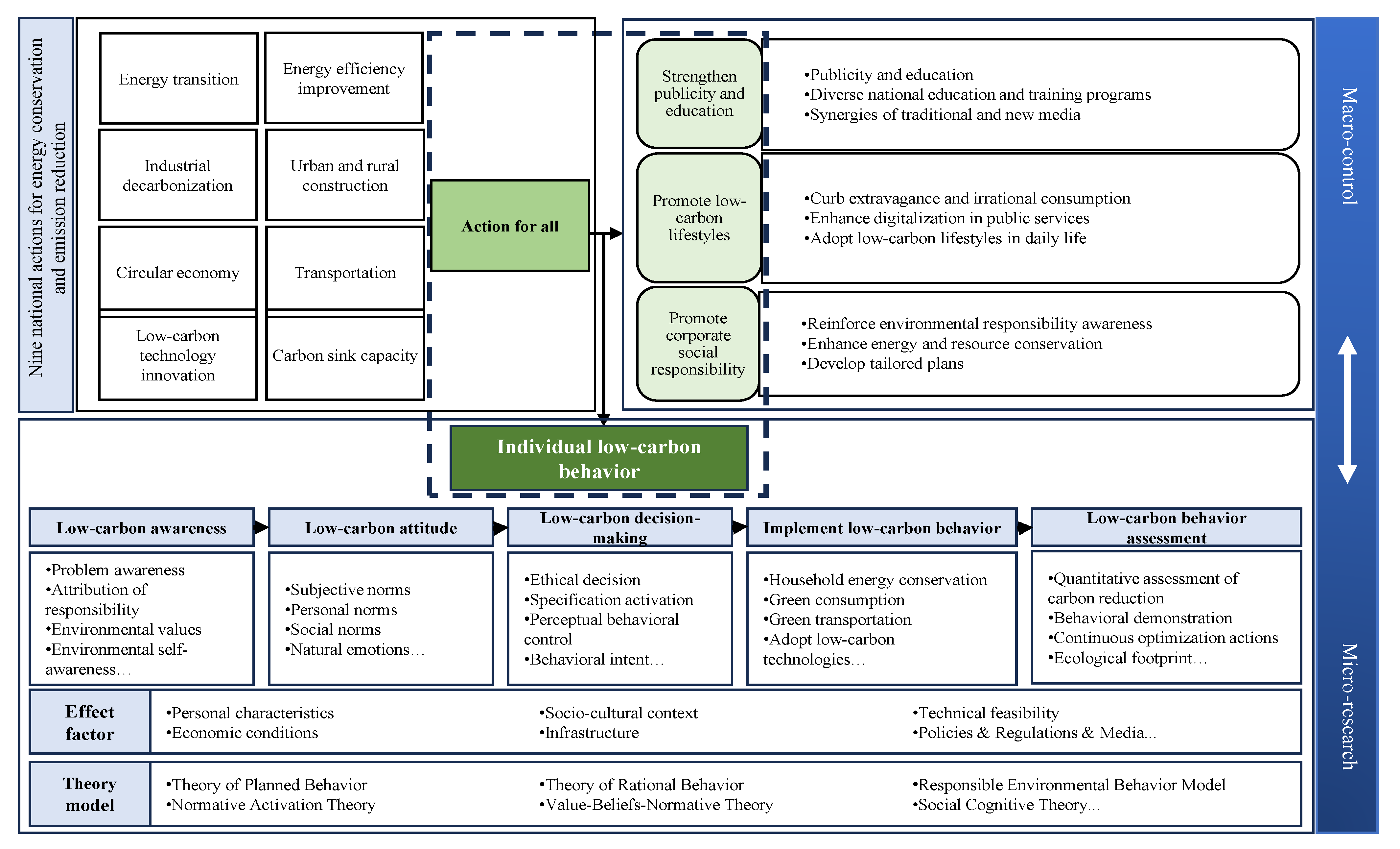
Figure 1 illustrates a framework for low-carbon behaviour research that includes macro-policies, meso-social dimensions, and micro-individual levels. The macro-level is concerned with technological innovation and energy transition, whereas the meso-level is focused on lifestyle adjustments and education. The micro-level examines the cognition, attitudes, and implementation of individual low-carbon behaviour. The framework considers personal, economic, and socio-cultural factors, in addition to relevant theoretical models. This implies that low-carbon behaviour is a multi-level, interdisciplinary research field that requires a comprehensive analysis to address climate change.
Figure 1.
Low-carbon behaviour conceptual model.
2. Materials and Methods
2.1. Methods
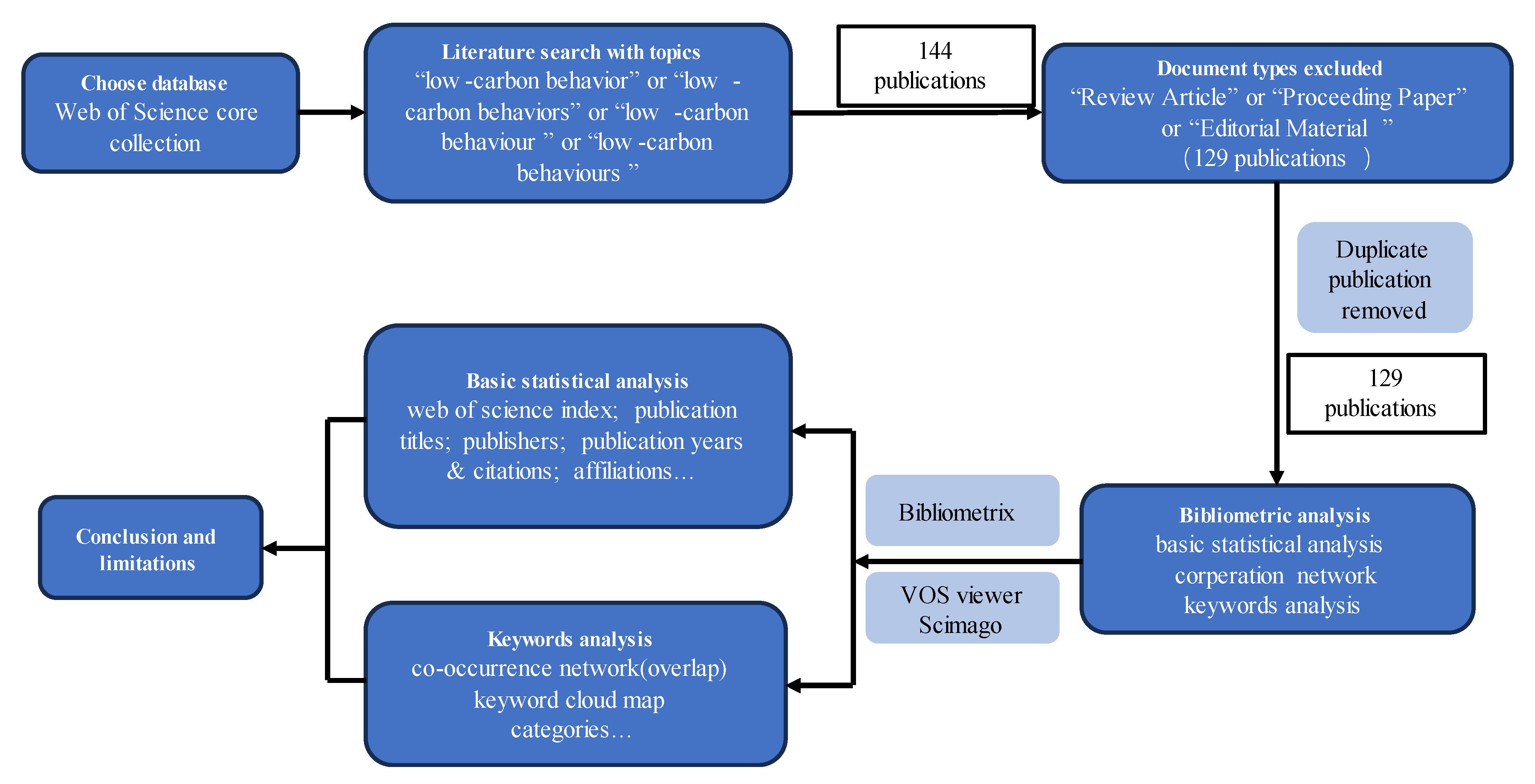
Bibliometric analysis and visualisation are conducted in this investigation using Bibliometrix Stable Version, VOSviewer 1.6.20, and Scimago Graphica Beta 1.0.45. The relationships between foundational knowledge can be revealed by employing graphical analysis tools for bibliometric testing of data. Bibliometrix Stable Version is a comprehensive R package for bibliometric analysis that offers tools for data collection, visualisation, and statistical analysis to simplify the identification of research trends and the evaluation of scholarly output. This study followed the PRISMA protocol to ensure the replicability, validity, and reliability of the research. However, the originality of this study is that this review employs bibliometric analysis together with social network analysis for keywords and theme identification. VOSviewer 1.6.20 was implemented for bibliometric analysis and keyword analysis in this investigation due to its user-friendly interface and uncomplicated output. Geographic visualisation mapping was implemented with Scimago Graphica Beta 1.0.45. Figure 2 illustrates the methodological framework of this investigation.
Figure 2.
The research design and methodology.
2.2. Data Source and Preparation
In this study, the dataset is sourced from the Web of Science Core Collection (WoSCC). This highly authoritative and extensively utilised resource features high-quality journals and offers a comprehensive data structure, enhancing the depth and accuracy of bibliometric analysis [35]. To enhance the transparency and reproducibility of this research, the coverage years for each sub-dataset are disclosed: Science Citation Index Expanded (SCI-EXPANDED, 1970–present), Social Sciences Citation Index (SSCI, 1970–present), Arts & Humanities Citation Index (A&HCI, 1975–present), and Emerging Sources Citation Index (ESCI, 2005–present) [36,37,38]. The search was conducted on 11 July 2024, and employed the following strategy: Topic = (“low-carbon behaviour” OR “low-carbon behaviours” OR “low-carbon behaviour” OR “low-carbon behaviours”), excluding document types = (“Review Article” OR “Proceeding Paper” OR “Editorial Material”). No limitations were set on publication years or language. This comprehensive approach resulted in the selection of 129 articles for visual analysis, ensuring transparency and reproducibility of the data collection process. This article selects the Web of Science Core Collection as the database. The Web of Science Core Collection is the recommended database for bibliometric research, encompassing leading journals across disciplines with extensive citation indexing and superior data quality as well as consistency [39]. Its rigorous selection criteria, robust analytical tools, and multi-faceted search capabilities offer dependable and extensive data assistance for bibliometric research [40].
3. Bibliometric Analysis of Low-Carbon Behaviour
This section primarily analyses the characteristics of low-carbon behaviour publications through bibliometric analysis, including the Web of Science index, the top publication sources, the publishers, the publication years and citations, and the top 25 affiliations of publications related to low-carbon behaviour.
3.1. Web of Science Index
Table 2 indicates that the Science Citation Index Expanded (SCI-EXPANDED) constitutes 77.5% of the total 129 records, indicating its dominance in the field. This concentration of records is significant. The dataset places a significant emphasis on social sciences, as evidenced by the Social Sciences Citation Index (SSCI) at 67.4%. In contrast, the Arts & Humanities Citation Index (A&HCI) and Emerging Sources Citation Index (ESCI) make a negligible contribution, accounting for only 3.1% and 0.8% of the records, respectively. This distribution indicates that the sciences and social sciences are the primary focus of the research, with a lesser emphasis on the arts and humanities and newly evaluated sources in this particular analysis.
Table 2.
Web of Science index.
3.2. The Top Publication Sources
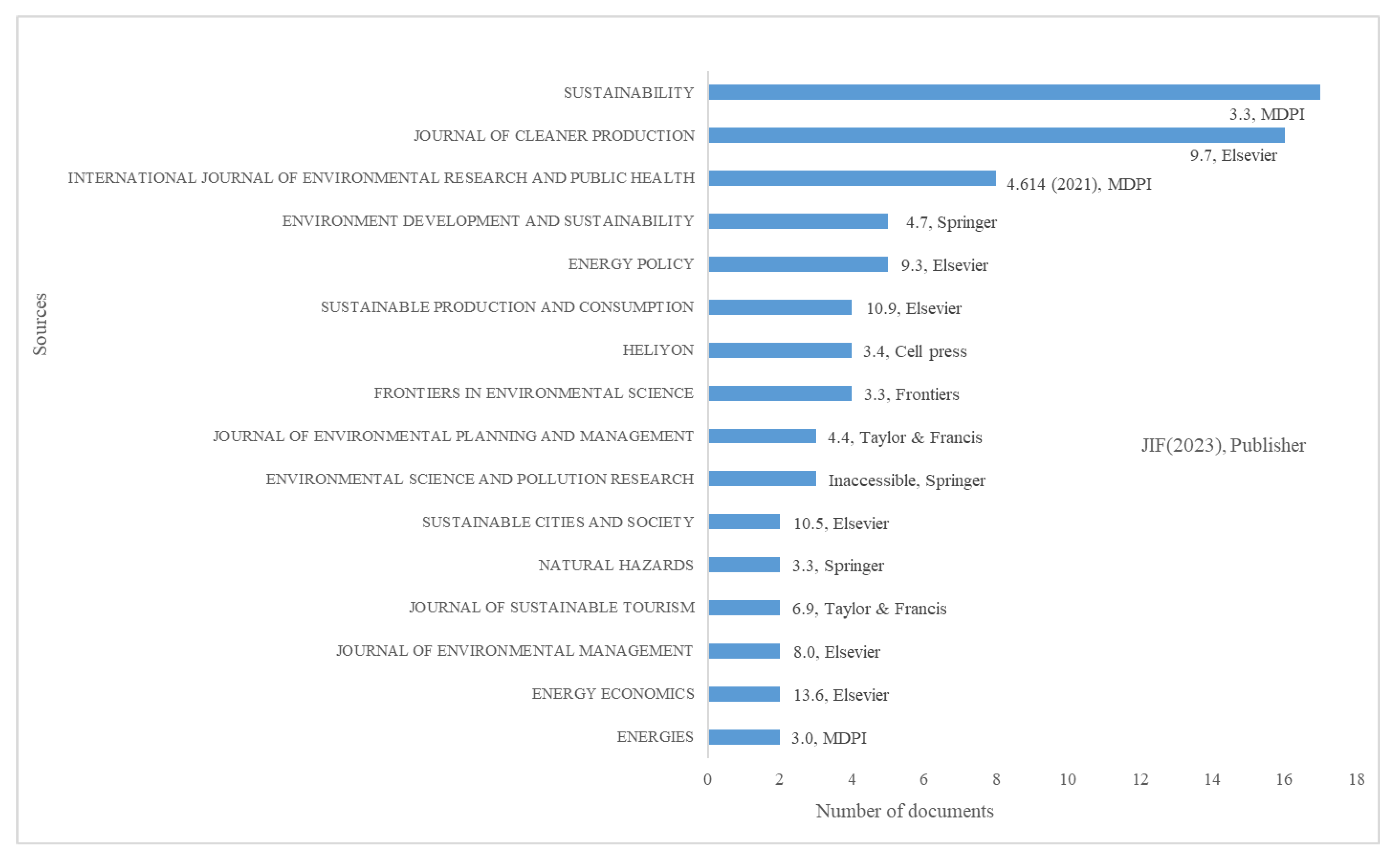
The 16 academic journals that have made the most significant contributions to the literature on low-carbon behaviour are described in Figure 3. Representing nearly 63% of the total number of articles published, 81 papers have been published in the best 16 of 25 publications. Specifically, Sustainability and the Journal of Cleaner Production are two of the most prominent magazines, and they publish over one-fourth of all research articles on low-carbon behaviour. The vast majority of these publications are concerned with energy, ecology, or sustainability. The journal impact factors (JIF) shown in the figure are generally high, with most ranging from 3.0 to 13.6, reflecting the importance of these journals in academia. In terms of publishers, Elsevier and MDPI dominate, publishing several high-impact journals, while other renowned publishers, such as Springer and Taylor & Francis, also make significant contributions.
Figure 3.
The top 16 publication sources related to low-carbon behaviour.
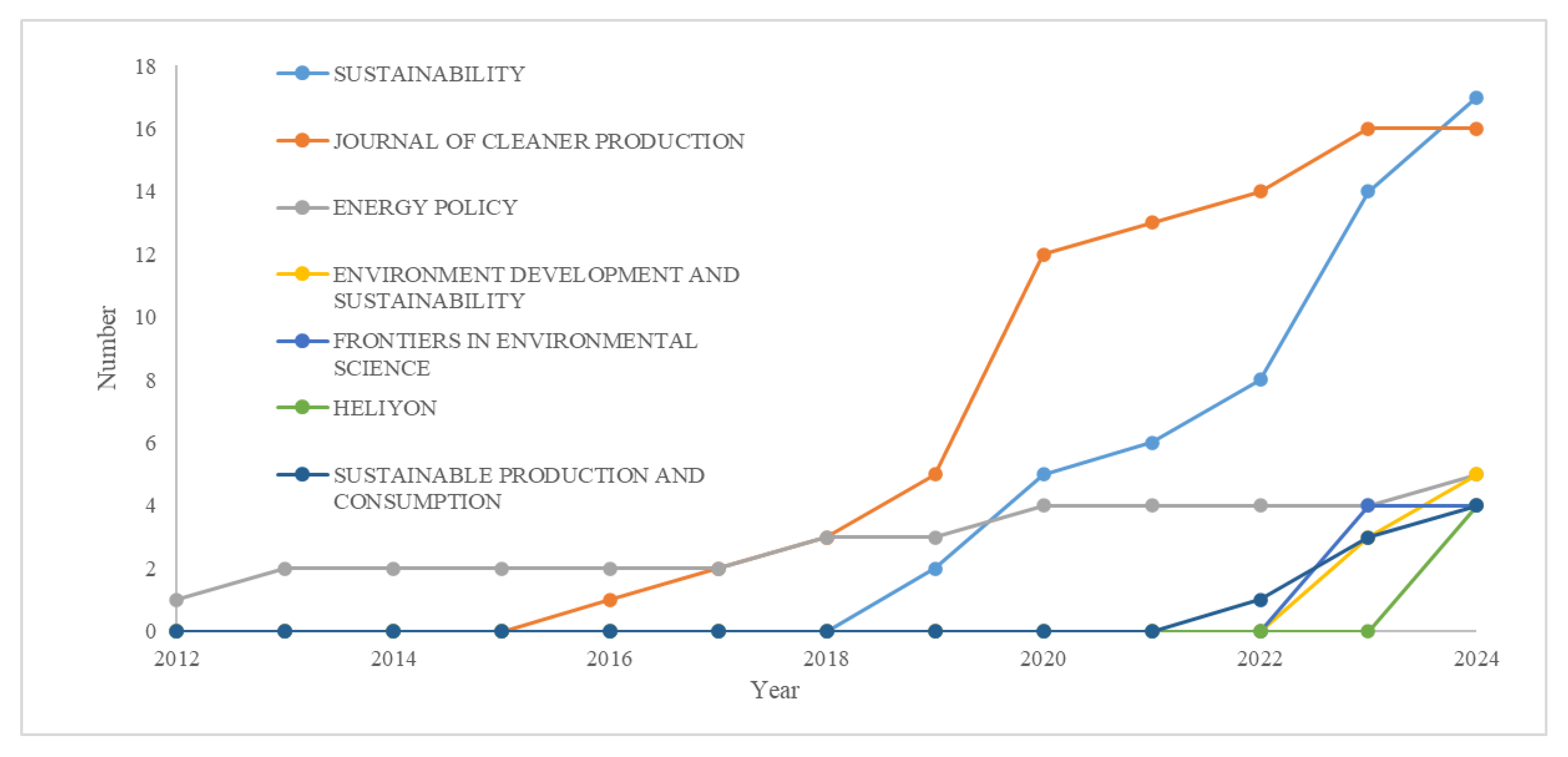
Figure 4 illustrates the trajectory of publications in five premier journals in terms of total publications that specialise in low-carbon behaviour from 2012 to 2024. The total publication volumes of the Journal of Cleaner Production and Sustainability are the highest, with 82 and 52 articles, respectively. They have experienced the most substantial increase in publications during this period, particularly after 2018, which is indicative of the increasing emphasis on sustainable practices and clean production. A substantial corpus of work has been published in recent years, as evidenced by the Journal of Cleaner Production’s peak around 2023. Sustainability exhibits a comparable trajectory, with a substantial increase that commenced in 2018 and will persist until 2024. The earliest journal that included research papers on low-carbon behaviour was Energy Policy, which ranks third in total publication volume. It has steadily increased in publication from 2012 to 2024. Among the seven journals, Environment Development and Sustainability, Frontiers in Environmental Science, and Sustainable Production and Consumption are tied for fourth place, demonstrating an upward trend. This suggests that there is a growing emphasis on environmental concerns in the context of sustainable development. In conclusion, this figure indicates that there has been a substantial increase in scholarly output in the fields of environmental health, sustainable production, and sustainability in recent years.
Figure 4.
The top 5 total publication sources over time.
3.3. Publishers, Publication Years, and Citations
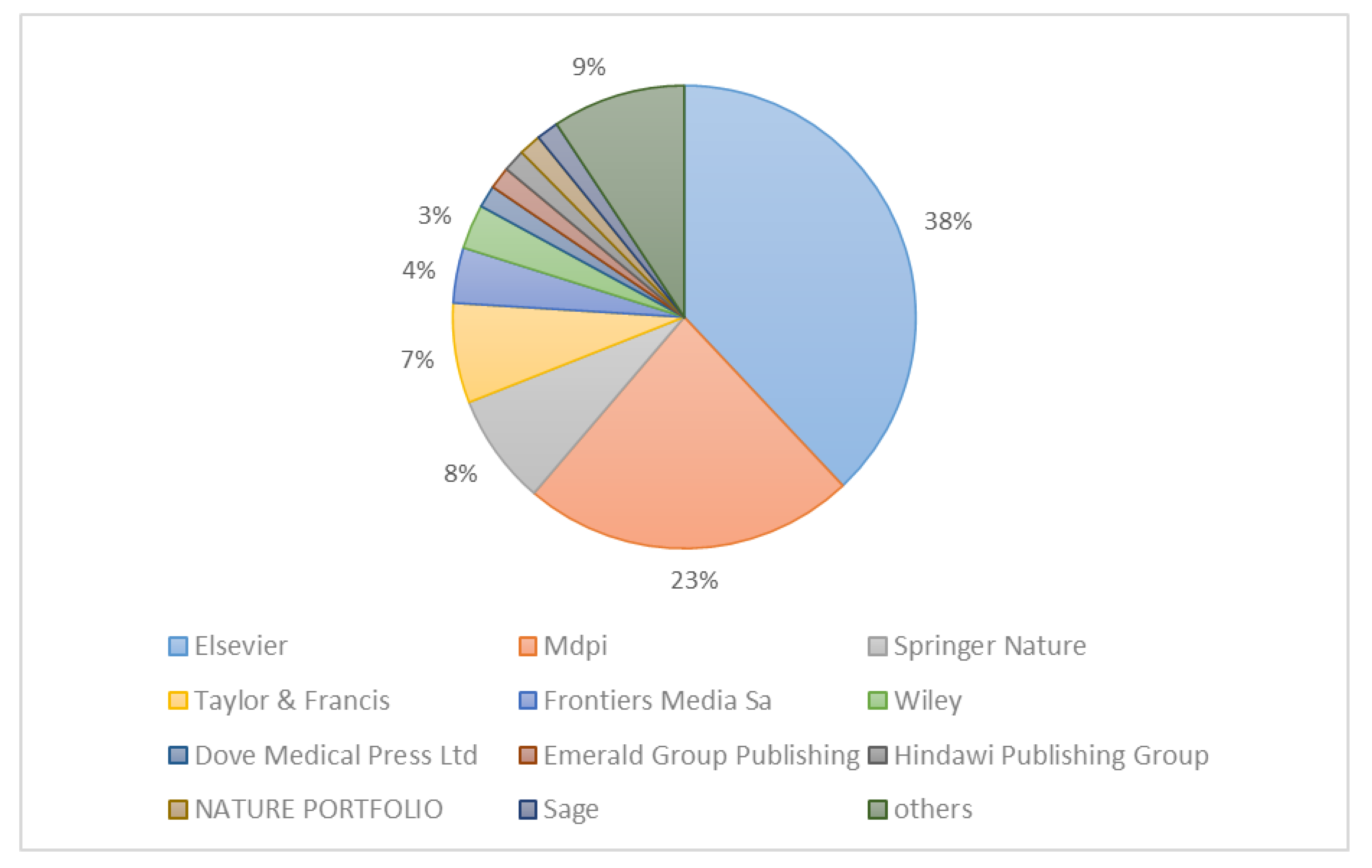
The publishers of publications related to low-carbon behaviour are depicted in Figure 5. Elsevier is the leading publisher, with 38% of all publications (49 papers), a significant increase to 23% for MDPI. The percentage of Taylor & Francis Wiley and Spring Nature is approximately 9%.
Figure 5.
Publishers of low-carbon behaviour.
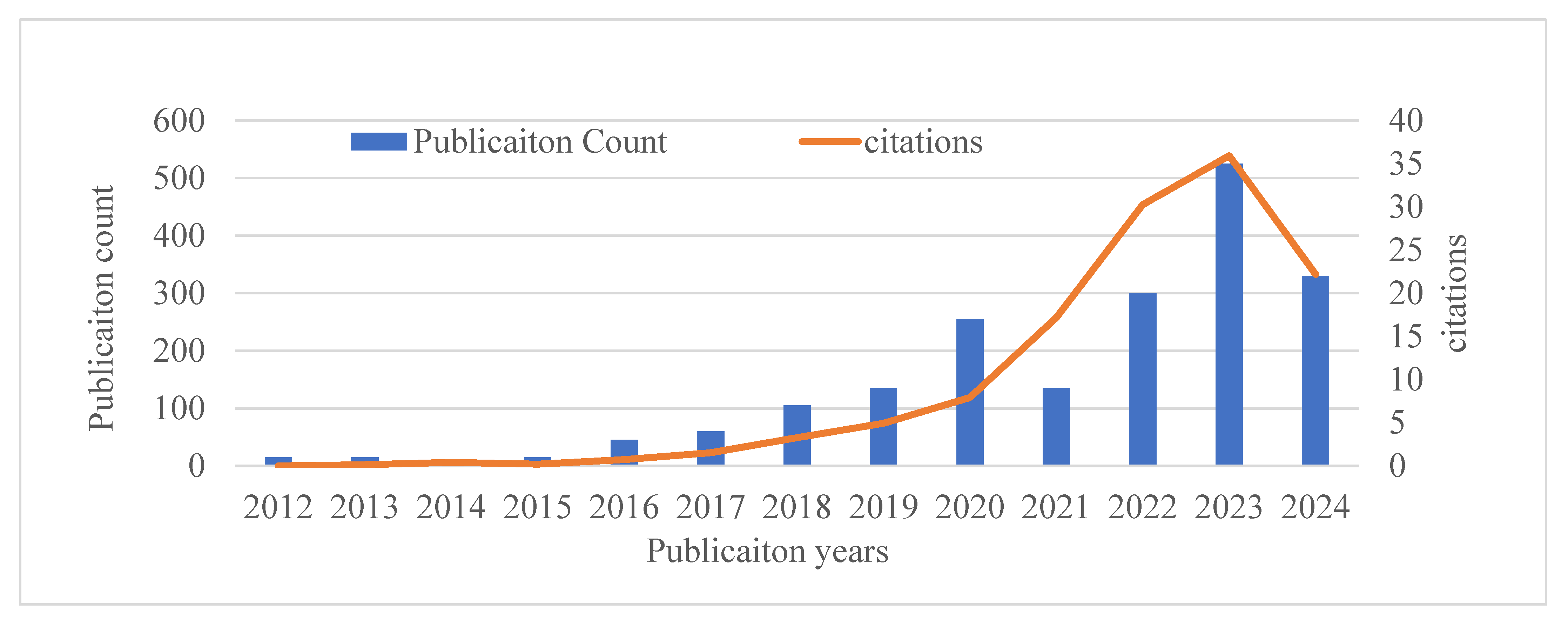
Visual representations of the evolution of research output and scholarly impact in the field of low-carbon behaviour studies from 2012 to 2024 are illustrated in Figure 6. The initial search in the Web of Science Core Collection identified 129 papers on low-carbon behaviour published up to July 2024, with the earliest paper in this dataset dating from 2012. However, it is essential to note that this may not represent the absolute beginning of research in this field due to the limited publication coverage before the 1990s and inconsistent indexing of authors’ KeyWords Plus before 2000 [41]. The number of citations is presented as an orange line, while the publication count for each year is represented by the blue bars. The publication count indicates a gradual increase from 2012 to 2019, emphasising a growing interest in low-carbon behaviour research. A substantial increase in the number of publications was observed in 2020, with the figure nearly doubling in comparison to the previous year. In 2021 and 2022, this upward trend persisted, culminating in 2023 with more than 500 publications. The orange line illustrates the general trajectory of the citation trend, which is comparable to that of the publication count, albeit with a discernible delay. Reflecting the time required for new research to achieve recognition and impact, citations remain relatively low and consistent from 2012 to 2019. Citations began to increase more rapidly in 2020, simultaneously with an increase in publication counts. This pattern reaches its pinnacle in 2023, with approximately 35 citations, suggesting that the research published in the years prior have garnered significant academic attention. At the time of writing, the year 2024 is still not finished, but is already showing a positive increment. This is to show that both publications and citations for low carbon behaviour are trending and increasing. One of the critical factors in the extraordinary increase in the number of low-carbon management research papers in recent years is related to global environmental and policy changes, especially the Chinese government’s financial support for achieving carbon neutrality and zero carbon development [42,43,44]. In 2020, China put forward a national strategy of carbon peak by 2030 and carbon neutrality by 2060, prompting the rise of a large number of related research articles and attracting international attention.
Figure 6.
Publication years and citations.
3.4. The Most Globally Cited Paper
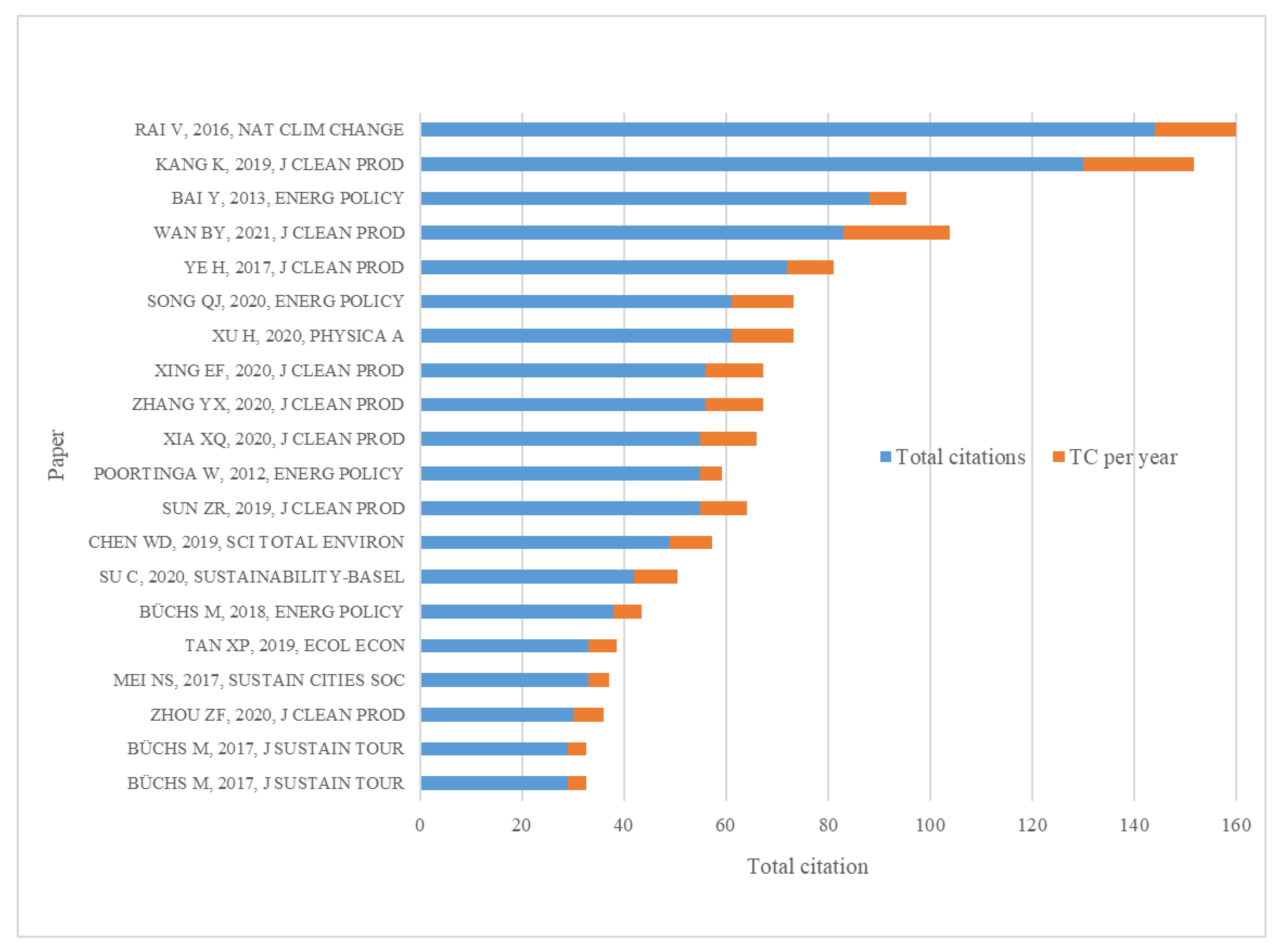
The cumulative citation counts and annual citation rates of the 20 most influential publications in the field of low-carbon behaviour, as determined by their global citation impact, are illustrated in Figure 7. Rai V (2016) ’s leading paper in Nature Climate Change has the maximum number of total citations, which suggests that it has a substantial influence and impact on the field. Kang K (2019) and Bai Y (2013), both published in the Journal of Cleaner Production and Energy Policy, similarly exhibit high citation counts, underscoring the significance of research on low-carbon behaviour in these journals. Notably, the list is dominated by numerous papers published in the Journal of Cleaner Production and Energy Policy, which implies that these journals are the primary sources of high-impact research on low-carbon behaviour. There is a consistent presence of papers from the 2020s, which suggests that there is a developing interest and recent progress in this field. The total citation (TC) per year metric can identify recent works that are garnering rapid attention, whereas total citations provide a measure of a paper’s overall impact; the bar lengths indicate this. For instance, the high TC per year of papers by Wan BY (2021) and Ye H (2017) is indicative of their significant contemporary relevance, although they are more recent publications. From the figure, after the year 2014, the TC for each author increased more than in the year 2013 and below. This shows the trend of literature publication.
Figure 7.
The top 20 of the most globally cited papers.
3.5. The Top Affiliations of Publications
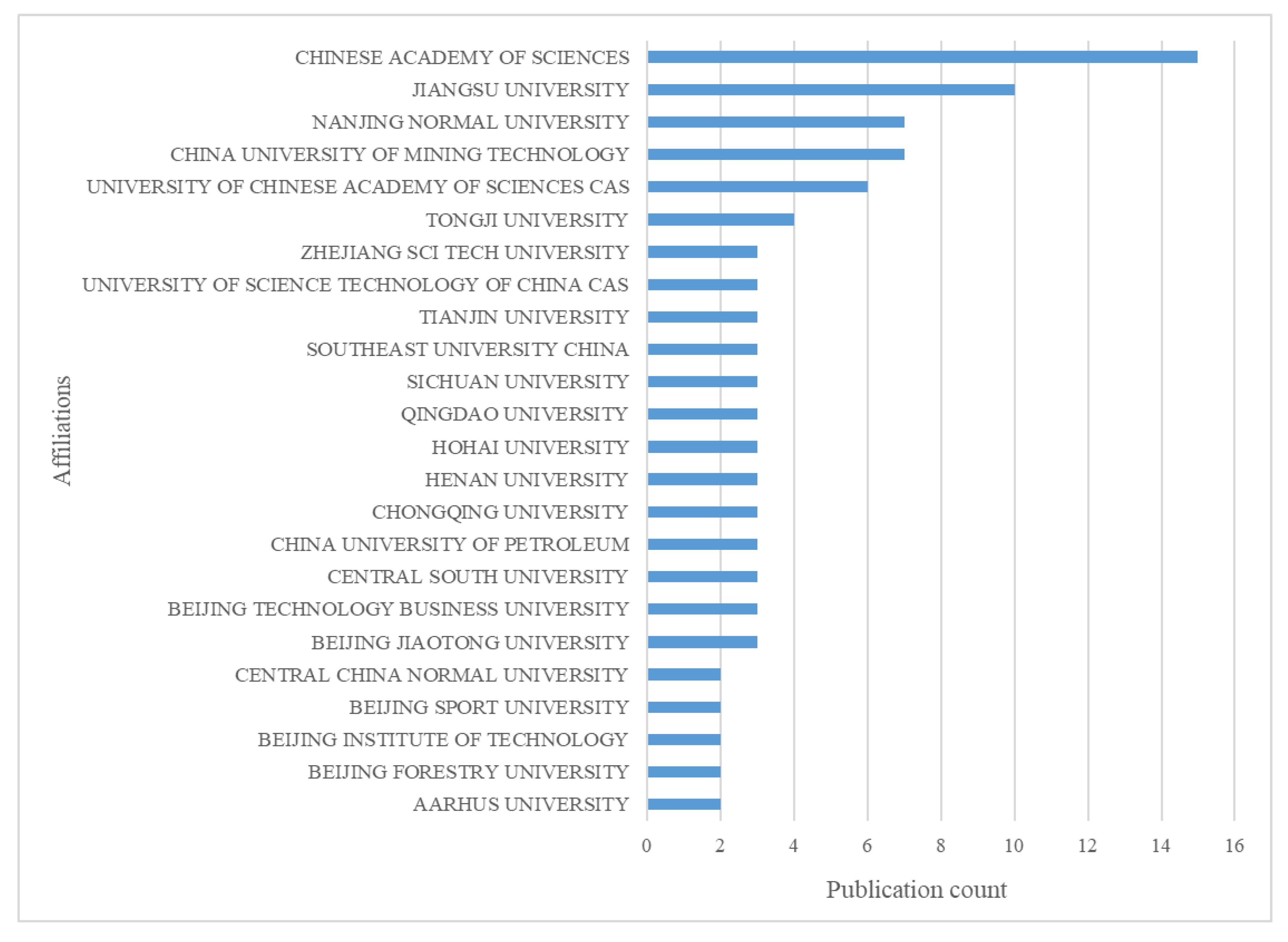
Figure 8 illustrates the contributions of various institutions in the field of “low-carbon behaviour” research. The graph is based on data from 214 institutions that have published relevant papers, highlighting 24 institutions that have published two or more papers. Notably, 23 of these institutions are from China, emphasising China’s absolute dominant position in the field of “low-carbon behaviour” research. The data clearly show that the Chinese Academy of Sciences leads by a significant margin with 15 publications, underscoring its central role in this field. It is closely followed by Jiangsu University (10 publications), Nanjing Normal University, and the China University of Mining Technology (7 publications each). It is worth noting that the top-ranking institutions also include renowned universities, such as the University of Chinese Academy of Sciences and Tongji University, reflecting the widespread engagement of Chinese higher education institutions in low-carbon behaviour research.
Figure 8.
The top 24 publications were affiliated with low-carbon behaviour.
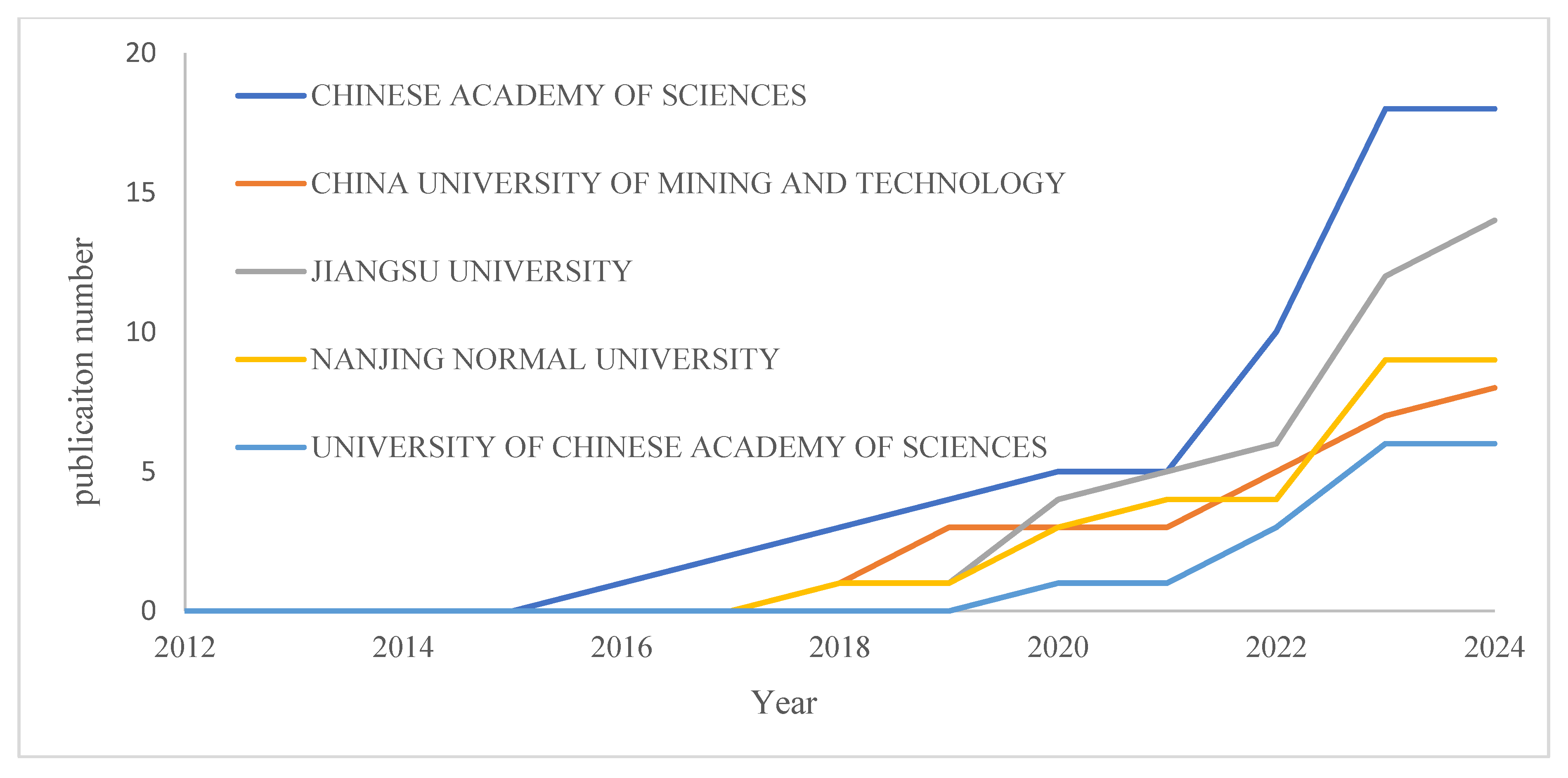
The publication trends over time for the top five affiliations that contribute to research on low-carbon behaviour are depicted in Figure 9. The Chinese Academy of Sciences has experienced a significant increase in publications since 2018, reaching a zenith of approximately 19 publications in 2024. This is indicative of its substantial and expanding influence within the field. Jiangsu University, Nanjing Normal University, and the China University of Mining and Technology have also experienced substantial increases in publications, particularly from 2020 onwards, underscoring their emerging positions in this research area. In particular, Jiangsu University experienced a significant increase in publications beginning in 2021, with an estimated 16 publications by 2024. Similarly, the University of Chinese Academy of Sciences and Nanjing Normal University exhibit consistent growth, with publication numbers increasing consistently from 2018 to 2024. This trend suggests that there is a growing academic interest and investment in low-carbon behaviour research at these institutions.
Figure 9.
The top 5 publications have affiliations over time.
3.6. Publication by Country and Collaboration Network
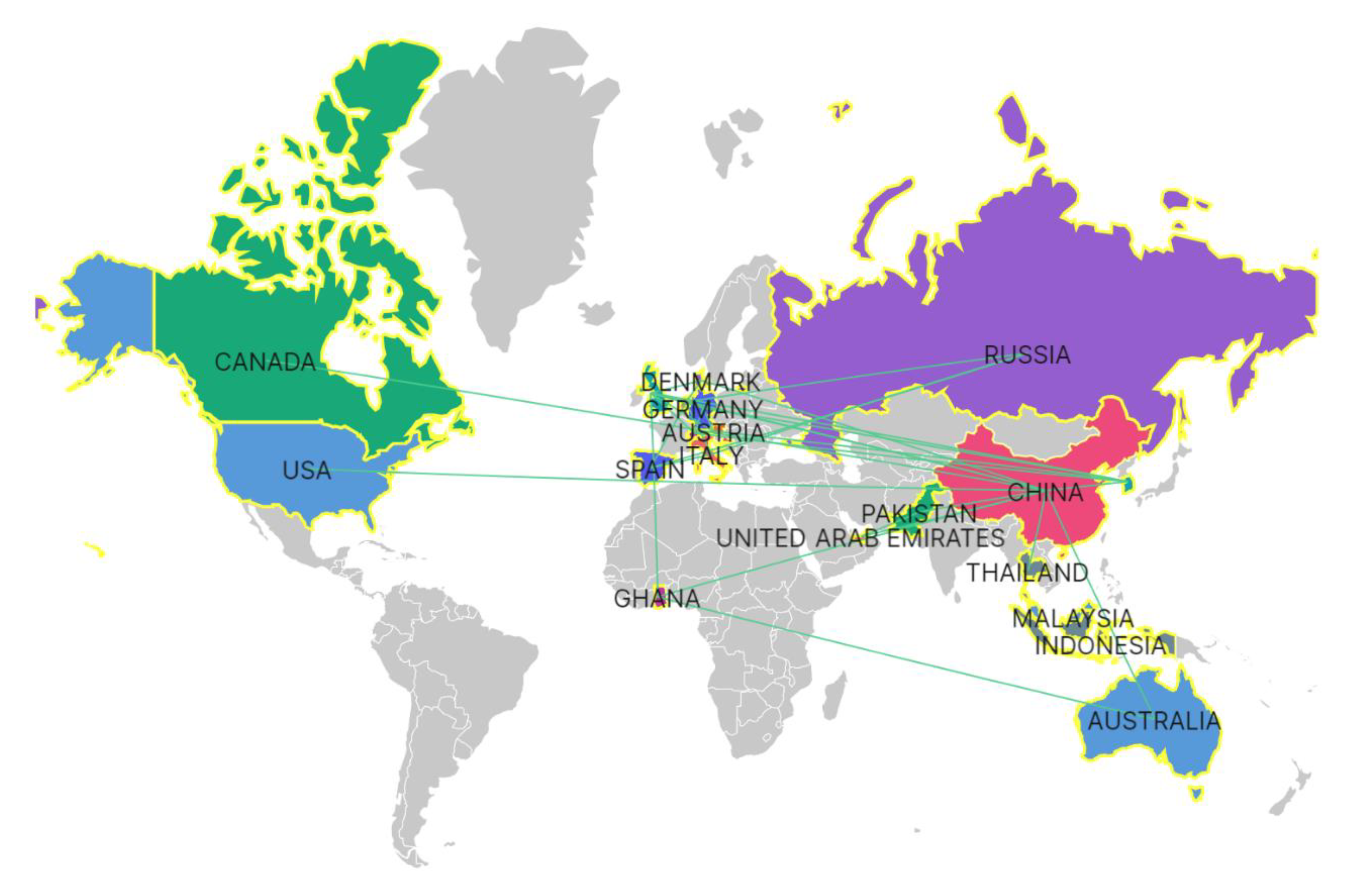
The statistical data indicate that the authors of 129 publications are from 21 countries and regions. Countries and regions are represented in Figure 10 according to the quantity of research publications. These 21 countries and regions comprise nine distinct categories. First in terms of research publications is China (106 publications), followed by the United Kingdom (13 publications), Australia (5 publications), and Germany (5 publications). China has already accomplished significant research on low-carbon behaviour. The green line, which denotes the co-author relationship, also demonstrates that China is the most active country in the field of low-carbon behaviour research. These findings corroborate numerous studies demonstrating China’s significant increase in academic publications in both natural sciences (SCIE-indexed papers) and social sciences (SSCI-indexed papers) [45,46]. This trend reflects China’s expanding influence in the global academic landscape. Factors contributing to this growth may include increased research funding, enhanced international collaborations, and supportive science and technology policies. This phenomenon not only exemplifies China’s advancing research capabilities but also signals a shift in the global distribution of academic influence, potentially having profound implications for international scientific cooperation.
Figure 10.
Publications of low-carbon behaviour by country.
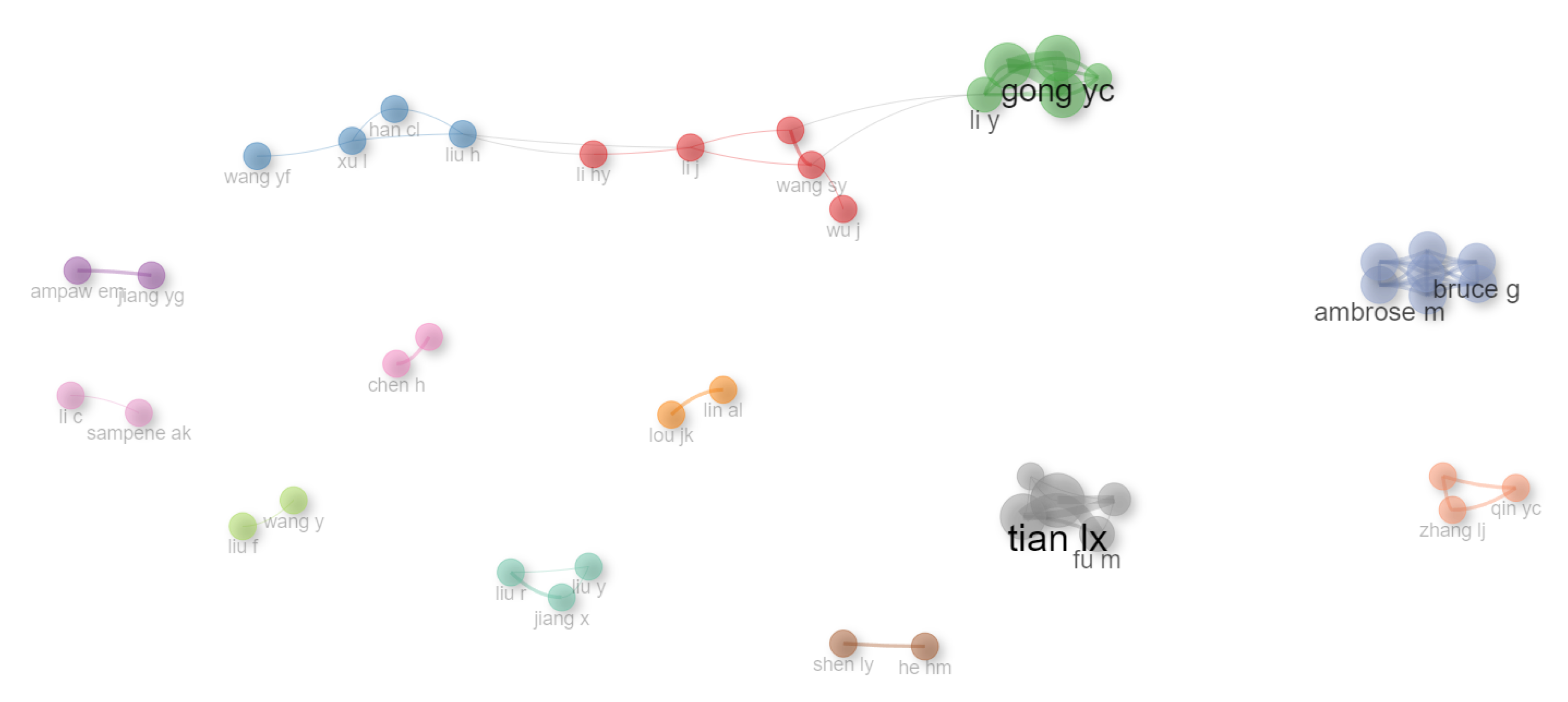
The collaboration network of publications related to low-carbon behaviour is depicted in Figure 11. It emphasises the presence of numerous clusters of authors who frequently collaborate on this research topic. The various hues are indicative of distinct collaboration groups, which are closely-knit networks of researchers who collaborate. The graph reveals several distinct collaborative clusters. The most prominent is a large group centred around “tian lx” and “fu m”, who appear to be critical researchers in this field. Other notable clusters include those centred around “gong yc” and “li y”, as well as a collaborative pair of “bruce g” and “ambrose m”. The relative isolation of these clusters suggests a degree of research fragmentation within the field. Additionally, several smaller or isolated nodes indicate the presence of emerging or independent research efforts. Overall, this network visualisation illustrates the collaborative patterns, principal research teams, and potential research diversification within the field of low-carbon behaviour studies.
Figure 11.
Collaboration network.
4. Keyword Analysis
To investigate and describe the hotspots and prospective trends in low-carbon behaviour research, this study employs visualisation analysis software, specifically, VOSviewer 1.6.20 and Scimago Graphica Beta 1.0.45. The initial section investigates the co-occurrence of all terms associated with low-carbon behaviour research. It then analyses the three-field plot to identify keywords, affiliations, and sources. The categories for the keywords are the final step. This research employed the Bibliometrix tool (e.g., thesaurus file) and Excel to clean the keywords (Table 3), which included merging data and eliminating duplicates, to guarantee the accuracy and effectiveness of the results. Ultimately, 50 keywords were selected as the data source for the subsequent visual analysis, as they appeared more than twice out of 424 keywords.
Table 3.
Data cleaning of keywords.
4.1. Keyword Co-Occurrence Network
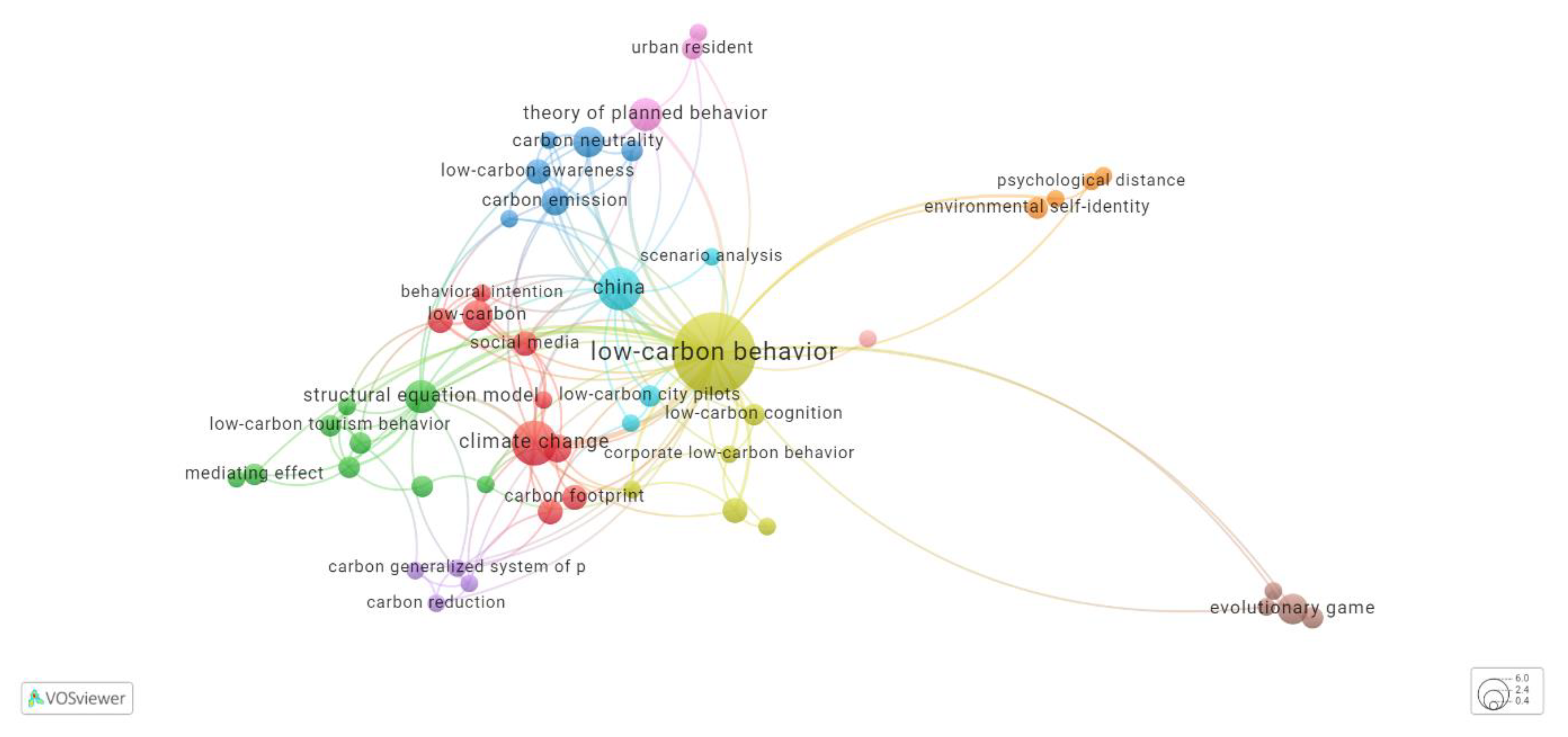
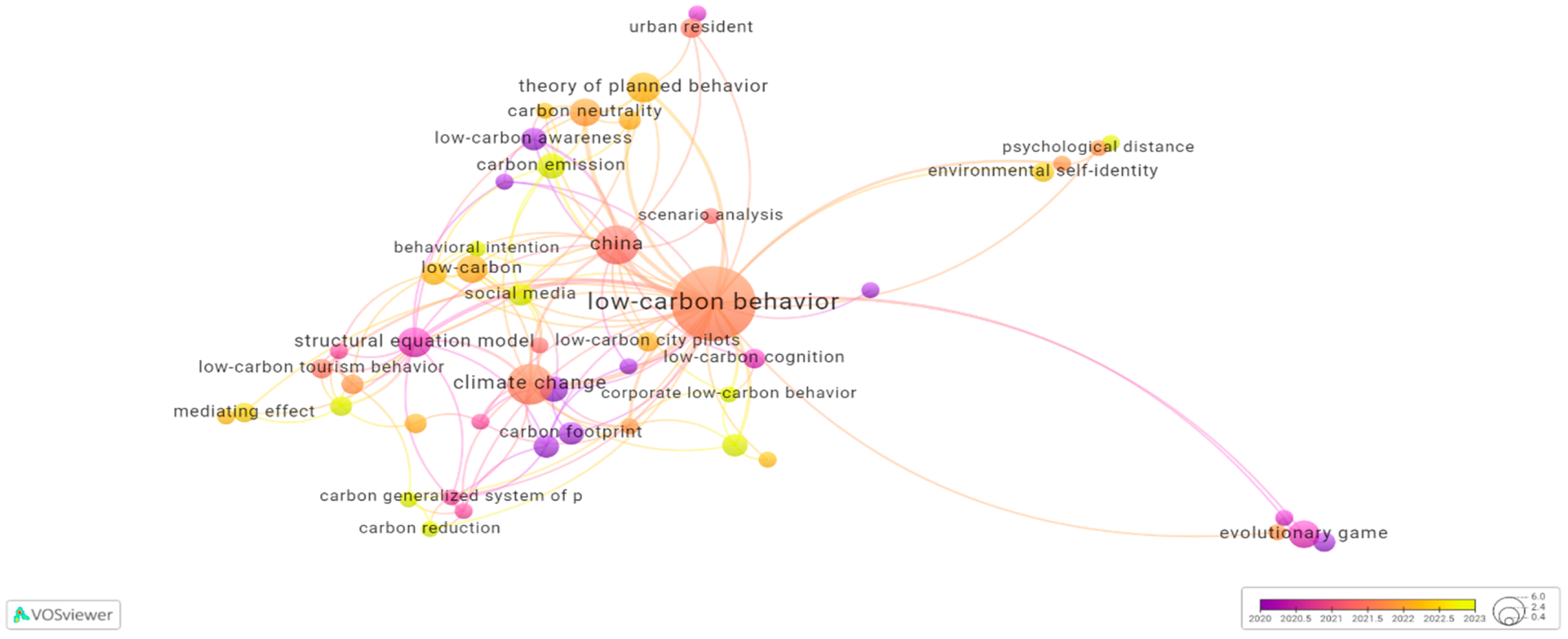
All author keywords for the keywords cloud are included in this section. The researchers established a minimum of two keyword occurrences. The criteria were satisfied by 50 of the 424 keywords. The relationships and co-occurrence frequencies of keywords in the field of low-carbon behaviour research are illustrated in this VOSviewer 1.6.20 keyword network map (Figure 12). The lines connecting the nodes imply co-occurrence in the same research publications, while the nodes represent individual keywords. The size of the nodes indicates the frequency of keyword occurrences, while the thickness of the lines indicates the intensity of the co-occurrence relationships. The primary focus of the research is “low-carbon behaviour” (Occurrences = 44, total link strength = 69), which is the most prominent node.
Figure 12.
Keyword co-occurrence network.
The frequency with which keywords appear in the same publication is the basis for the construction of a keyword co-occurrence network. For instance, if two keywords are frequently used in the same article, their network connection will be more robust. Keywords are organised into ten categories in this investigation, as illustrated in Figure 12. Research topics that are closely related are indicated by the use of distinct colours to represent each. The cluster of yellow colour underscores the implementation of low-carbon practices at the corporate and city levels, utilising keywords such as “corporate low-carbon behaviour”, “low-carbon city pilots”, and “low-carbon behaviour”. The Red Cluster is characterised by the presence of keywords such as “climate change”, “carbon footprint”, and “low-carbon”, which emphasise research on the impact of climate change and strategies for reducing carbon footprints. The Green Cluster incorporates keywords such as “low-carbon tourism behaviour”, “mediating effect”, and “structural equation model”, indicating a concentration on modelling and mediating factors in low-carbon tourism and behaviour research. The Blue Cluster contains keywords such as “carbon neutrality”, “carbon emission”, and “low-carbon awareness”, which denote research on strategies for reducing emissions and raising awareness. Keywords such as “urban resident” and “evolutionary game” are positioned more peripherally, suggesting that they are less central but still pertinent to the overall research network.
4.2. Keyword Co-Occurrence in Overlay Network
The temporal progression of research is illustrated in Figure 13 by the colour gradient from purple to yellow. Research topics that were conducted in the past are depicted in purple, while those that were conducted more recently are depicted in yellow. In a more recent timeframe (yellow), keywords such as “environmental awareness”, “social media”, “carbon emission”, “place attachment”, “corporate low-carbon behaviour”, and “behavioural intention” are displayed, indicating emerging areas of interest in the study of low-carbon behaviour. The research trend denoted by these keywords emphasises the importance of a comprehensive and multidisciplinary approach to the promotion of low-carbon behaviour. It emphasises the significance of psychological factors (environmental awareness, place attachment, behavioural intention), the influence of social media, the critical role of reducing carbon emissions, and the substantial impact of corporate actions. This trend is indicative of a growing recognition that the effective promotion of low-carbon behaviours necessitates coordinated efforts at the individual, social, and organisational levels.
Figure 13.
Keyword co-occurrence in overlay network of low-carbon behaviour.
4.3. Keyword Cloud Map
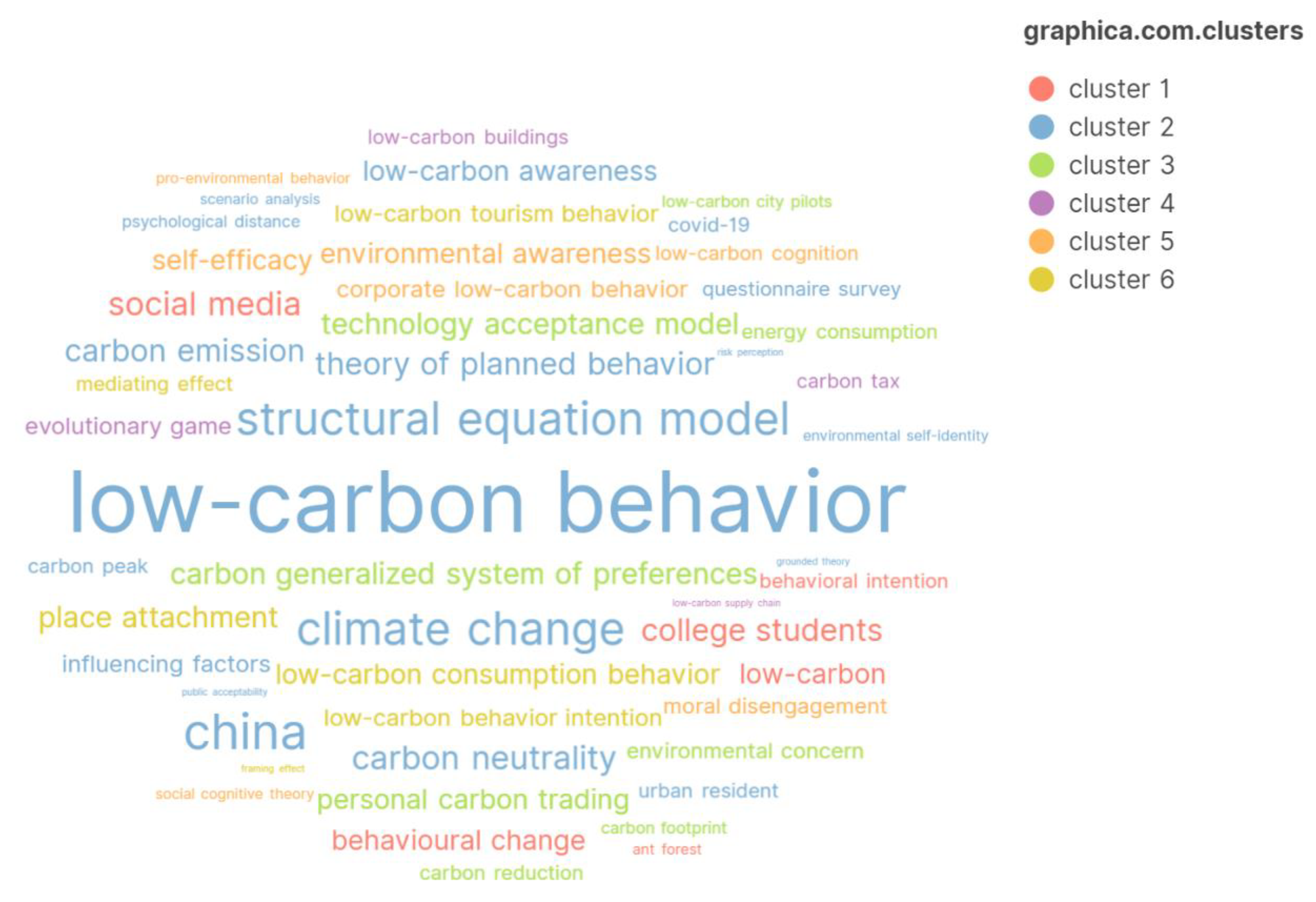
Figure 14 from Scimago Graphica Beta 1.0.45 effectively emphasises the central theme of “low-carbon behaviour” and the main research areas associated with it. Various pertinent topics, such as structural equation modelling, China, and climate change, surround it, illustrating the multidimensional nature of the research. From theoretical methodologies (e.g., planned behaviour theory) to specific applications (e.g., low-carbon tourism), and from influencing factors (e.g., environmental awareness) to policy tools (e.g., personal carbon trading), the six colour-coded clusters have a broad spectrum of topics. This visual representation indicates that low-carbon behaviour research integrates insights from a variety of disciplines, such as sociology, psychology, and economics, to address both macro-level policies (e.g., carbon neutrality) and micro-level behaviours (e.g., consumption patterns). The wordcloud’s structure underscores the systematic and intricate nature of this field, illustrating the academic community’s comprehensive investigation into the promotion of low-carbon behaviours.
Figure 14.
Keyword wordcloud map.
This keyword cloud visualisation identifies six distinct clusters, which are illustrated in Table 4. Cluster 1 emphasises the innovative role of new media platforms, such as Ant Forest, in fostering behavioural change (Occurrences = 5, total link strength = 7) toward low-carbon practices (Occurrences = 6, total link strength = 7) and toward social media and low-carbon behavioural intention. The potential of social media (Occurrences = 4, total link strength = 10) to influence environmental behaviours among younger demographics is notably highlighted by this cluster, which concentrates on the impact on college students (Occurrences = 4, total link strength = 9). Cluster 2, which encompasses low-carbon behaviour theories and research methods, is the centrepiece of the research domain. The central themes of the text are climate change (Occurrences = 13, total link strength = 20) and low-carbon behaviour (Occurrences = 44, total link strength = 69). This field’s methodological integrity is evidenced by the application of sophisticated research methodologies, such as structural equation modelling (Occurrences = 7, total link strength = 20) and the theory of planned behaviour (Occurrences = 7, total link strength = 9). Furthermore, this cluster emphasises China’s endeavours to achieve carbon neutrality (Occurrences = 6, total link strength = 11) while also addressing psychological factors such as psychological distance and risk perception (Occurrences = 12, total link strength = 24). The policy instruments of carbon footprint assessment (Occurrences = 4, total link strength = 3), personal carbon trading (Occurrences = 4, total link strength = 7), and low-carbon city pilots (Occurrences = 3, total link strength = 3) are the focus of Cluster 3, which comprises carbon management policies and technology acceptance. This cluster underscores the significance of the technology acceptance paradigm in the promotion of low-carbon technologies, as well as the interplay between energy consumption, environmental concerns, and low-carbon behaviours. Cluster 4 investigates the low-carbon economy and supply chain management by employing evolutionary game theory (Occurrences = 6, total link strength = 6) to investigate low-carbon buildings and supply chain management (Occurrences = 3, total link strength = 1). Carbon tax policies are incorporated into this cluster to demonstrate the incorporation of economic and management perspectives in low-carbon transition research. Cluster 5, which comprises corporate low-carbon behaviour and environmental cognition, examines environmental awareness (count = 4, total link strength = 7) and corporate low-carbon behaviour (count = 2, total link strength = 6). This cluster investigates the impact of moral disengagement, self-efficacy, and social cognitive theory on pro-environmental behaviour (Occurrences = 3, total link strength = 2), underscoring the contribution of cognitive factors to the implementation of low-carbon practices within organisations. The final cluster, cluster 6, concentrates on the psychological mechanisms and low-carbon consumption behaviour, specifically, tourism behaviours (Occurrences = 3, total link strength = 6) and low-carbon consumption (Occurrences = 3, total link strength = 7). It investigates the impact of framing and mediating factors on behavioural intentions, as well as the function of place attachment (Occurrences = 3, total link strength = 8) in promoting low-carbon behaviours. Consequently, it underscores the utilisation of consumer psychology in low-carbon research. These six clusters offer a comprehensive view of low-carbon behaviour research, encompassing theoretical foundations, practical applications, policy frameworks, and technological innovations from the individual to the organisational level. This discipline is fundamentally defined by key themes, such as climate change and low-carbon behaviour, while less frequent themes suggest emerging research directions and interdisciplinary trends. This assessment elaborates on the present state of low-carbon behaviour research and proposes potential future advancements in this critical field of environmental and social science.
Table 4.
Clusters in the keyword cloud map.
4.4. Three-Field Plot for Keywords, Affiliations, and Sources
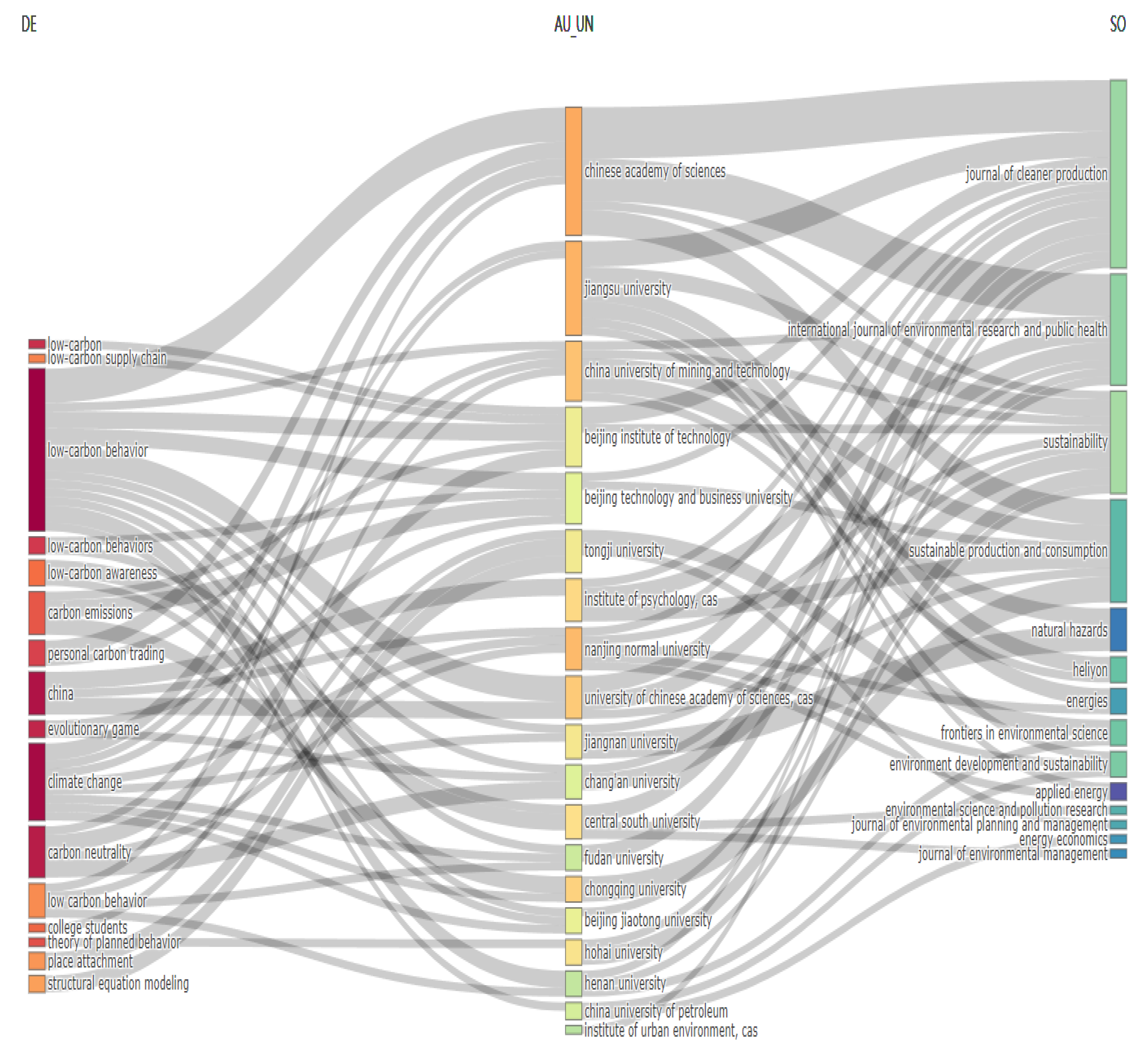
The interconnections among keywords (DE), author affiliations (AU_UN), and publication sources (SO) within the domain of research focused on low-carbon behaviour are depicted in a three-dimensional plot presented in Figure 15. The primary concepts and topics that have been investigated in the corpus of research on low-carbon behaviour are represented in the DE column. Chinese institutions are conducting a substantial amount of research on low-carbon behaviour, as evidenced by the AU_UN column, which underscores their leadership in this field. According to the SO column, these journals are highly regarded in the disciplines of public health, sustainability, and environmental science, which is consistent with the research themes on low-carbon behaviour. The figure primarily showcases the collaborative actions and research output in the field of low-carbon behaviour, which are published in prominent environmental and sustainability journals and are primarily led by Chinese institutions.
Figure 15.
Three-field plot for keywords, affiliations, and sources.
4.5. Categories and Occurrences of Keywords
Table 5 highlights the theories, variables, methodologies, and research objects that are integral to low-carbon behaviour research. The theory of planned behaviour is the most frequently referenced (Occurrences = 7), along with social cognitive theory and the technological acceptance model, each having two occurrences following in its wake. A comprehension of the psychological and social factors that influence low-carbon behaviour is contingent upon these theories. With 44 occurrences, low-carbon behaviour is the most extensively investigated variable. Additionally, carbon emissions, carbon footprint, and pro-environmental behaviour are all significant variables that suggest the impact and implementation of low-carbon behaviour in different ways. Four occurrences are observed for variables such as environmental awareness, low-carbon awareness, and behavioural intentions, indicating a focus on cognitive and intentional factors that influence behaviour. Structural equation modelling (SEM) is the most frequently employed methodology, as evidenced by its seven appearances, which underscores its significance in the examination of intricate relationships between variables.
Table 5.
Categories and occurrences of keywords.
Additionally, questionnaires are implemented, although they are implemented less frequently (Occurrences = 2), to gather information regarding individual attitudes and behaviours. These demographic categories are the primary research subjects in the study of low-carbon behaviour, as evidenced by the four occurrences of college students and the three occurrences of urban residents. In general, the data highlight the importance of a comprehensive approach to the examination of low-carbon behaviour.
Overall, this research is primarily concerned with the investigation of the practices that individuals, communities, corporations, and governments implement to mitigate carbon emissions. Various contexts, such as urban residents, corporate settings, and tourism behaviour, are included in the research. Concurrently, this investigation of low-carbon behaviour is multi-faceted, utilising a variety of independent and dependent variables rooted in multiple theoretical frameworks, as well as a variety of methodological approaches.
5. Direction for Future Research
5.1. Expanding Research Subjects and Geographic Scope
As indicated by the preceding analysis, the current research on low-carbon behaviour is primarily focused on urban residents (Occurrences = 3) and university students (Occurrences = 4). Future research should expand to encompass a broader spectrum of demographic groups, including low-income populations, the elderly, and rural residents. Furthermore, it is necessary to broaden the geographical scope. While China is the leading country in this discipline with 102 papers, the United Kingdom (10 papers) and Australia (5 papers) also make significant contributions. The generalisability and representativeness of research findings can be enhanced by expanding the geographical scope and diversifying research subjects. This is consistent with Stern [47], who underscored the necessity of examining environmental behaviour in various social contexts. Increasing the scope of the research will enable us to gain a more comprehensive understanding of the factors that influence low-carbon behaviour, thereby enabling the development of more targeted policies.
5.2. Deepening Research on Social Media and Corporate Behaviour
New research centres are emerging as “corporate low-carbon behaviour” (Occurrences = 3) and “social media” (Occurrences = 4) emerge from keyword analysis. The role of corporate low-carbon behaviour in the broader societal low-carbon transition, as well as the impact of social media on individuals’ low-carbon cognisance and behaviour, should be the subject of future research. According to Reuter et al. [48], this is consistent with their investigation of the influence of social media on environmental behaviour. The impact of various categories of social media content on the low-carbon behaviour of users and the role of corporate low-carbon practices in influencing the low-carbon behaviour of their supply chains and consumers could be the subject of investigations. Additionally, it would be advantageous to investigate the potential of social media technology to encourage the adoption of low-carbon lifestyles and encourage more companies to implement low-carbon initiatives. These studies will serve as indispensable references for utilising new media to elevate corporate social responsibility and disseminate low-carbon concepts. Although several systematic literature review papers have been published related to social media and sustainability [49,50], the context is more about its relationship rather than the outcome of social media practice to the environment. Thus, this study proposed that a study related to the outcome of low-carbon behaviour or low-carbon performance can improve current low-carbon practices, especially since there are plenty of studies related to social media.
5.3. Innovating Research Methods and Theoretical Frameworks
The study suggests that structural equation modelling (SEM) is the most frequently employed method in low-carbon behaviour research, as evidenced by its seven appearances. However, to acquire more dynamic and affluent data, future research should implement a more diverse methodology, including experimental methods, longitudinal studies, and big data analysis. In terms of theoretical frameworks, it is imperative to introduce and incorporate more pertinent theories, including the technology acceptance model (Occurrences = 2) and social cognitive theory (Occurrences = 2), in addition to the highly utilised theory of planned behaviour (Occurrences = 7). This aligns with the perspective of Steg and Vlek [51], who favoured an approach that was multi-faceted in its investigation of environmental behaviour. Innovative theories and methodologies will enable us to comprehend the formation mechanisms, influencing factors, and long-term consequences of low-carbon behaviour from a variety of perspectives, thereby offering more practical guidance and robust theoretical support for the promotion of low-carbon behaviour.
6. Conclusions and Limitations
To identify research trends, hot topics, and potential research directions in the field of low-carbon behaviour, this study executes a comprehensive bibliometric analysis of the literature. Systematic analysis of 129 pertinent articles from the Web of Science database is conducted through the utilisation of tools such as Bibliometrix Stable Version, VOSviewer 1.6.20, and Scimago Graphica Beta 1.0.45 in the research. This study derives the following significant conclusions by examining publication years, citation patterns, keyword co-occurrence networks, and other related dimensions:
First and foremost, the field of low-carbon behaviour research has experienced substantial growth since 2012, as evidenced by a substantial increase in publications and citations after 2020. This growth suggests that this subject is garnering increasing attention in academia. Secondly, China occupies a preeminent position in this domain, as evidenced by the substantial quantity of high-quality research conducted by institutions such as the Chinese Academy of Sciences. This work is indicative of China’s proactive initiatives to combat climate change and encourage low-carbon behaviour. Third, research themes are multi-faceted, encompassing a variety of topics, such as environmental awareness, carbon emissions, and climate change. The theory of planned behaviour is the most frequently employed theoretical framework, and structural equation modelling is the primary research process. Fourth, the current research predominantly concentrates on urban residents and college students, indicating a need for future studies to broaden the sample range to include rural residents, the elderly, and low-income groups. Finally, research hotspots such as corporate low-carbon behaviour and social media are gradually emerging, suggesting novel approaches to low-carbon behaviour research.
This method identified 129 relevant Web of Science publications, ensuring academic rigour. It is important to note that using one database may skew study results; for example, the shortcomings of the Web of Science in terms of coverage, disciplinary balance, language preference [52,53], and different subscriptions of the database [54]. Several scholarly databases and a range of dataset kinds should be added to data sources to make following study more thorough and reliable. This diverse data collection strategy will improve the comprehensiveness and balance of analytical views and boost the representativeness and persuasiveness of study conclusions. Comparative database analysis can also highlight disparities in academic platforms’ literature sets, deepening our understanding of low-carbon behaviour research.
Author Contributions
Conceptualisation, B.W. and M.S.S.; methodology, B.W. and A.G.; formal analysis, B.W., L.C. and M.S.S.; data curation, B.W. and M.S.S.; writing—original draft preparation, B.W. and M.S.S.; writing—review and editing, B.W., M.S.S., L.C. and A.G. All authors have read and agreed to the published version of the manuscript.
Funding
This work is funded by the Ministry of Higher Education of Malaysia under the FRGS Grant scheme FRGS/1/2023/SS02/USM/02/1.
Institutional Review Board Statement
Not applicable.
Informed Consent Statement
Not applicable.
Data Availability Statement
Data are contained within the article.
Acknowledgments
We would like to acknowledge the contribution of researchers under the FRGS grant scheme FRGS/1/2023/SS02/USM/02/1, such as Noor Hazlina Ahmad, Anwar Allah Pitchay, Yuvaraj Ganesan, and Zubir Azhar.
Conflicts of Interest
The authors declare no conflicts of interest.
References
- Wei, J.; Zhang, L.; Yang, R.; Song, M. A new perspective to promote sustainable low-carbon consumption: The influence of informational incentive and social influence. J. Environ. Manag. 2023, 327, 116848. [Google Scholar] [CrossRef] [PubMed]
- Hanss, D.; Böhm, G.; Doran, R.; Homburg, A. Sustainable Consumption of Groceries: The Importance of Believing that One Can Contribute to Sustainable Development. Sustain. Dev. 2016, 24, 357–370. [Google Scholar] [CrossRef]
- Dubois, G.; Sovacool, B.; Aall, C.; Nilsson, M.; Barbier, C.; Herrmann, A.; Bruyère, S.; Andersson, C.; Skold, B.; Nadaud, F.; et al. It starts at home? Climate policies targeting household consumption and behavioral decisions are key to low-carbon futures. Energy Res. Soc. Sci. 2019, 52, 144–158. [Google Scholar] [CrossRef]
- Ji, Z.; Gong, Y.; Tong, Z.; Li, Y.; Guo, H.; Pongpiachan, S.; Sun, Y. Factors influencing public support for the individual low-carbon behavior rewarding system: Evidence from a large-scale longitudinal survey in China. J. Clean. Prod. 2023, 409, 137187. [Google Scholar] [CrossRef]
- Vergura, D.T.; Zerbini, C.; Luceri, B.; Palladino, R. Investigating sustainable consumption behaviors: A bibliometric analysis. Br. Food J. 2023, 125, 253–276. [Google Scholar] [CrossRef]
- Berger, S.; Wyss, A.M. Measuring pro-environmental behavior using the carbon emission task. J. Environ. Psychol. 2021, 75, 101613. [Google Scholar] [CrossRef]
- Nema, P.; Nema, S.; Roy, P. An overview of global climate changing in current scenario and mitigation action. Renew. Sustain. Energy Rev. 2012, 16, 2329–2336. [Google Scholar] [CrossRef]
- Mikhaylov, A.; Moiseev, N.; Aleshin, K.; Burkhardt, T. Global climate change and greenhouse effect. Entrep. Sustain. Issues 2020, 7, 2897. [Google Scholar] [CrossRef]
- Kabir, M.; Habiba, U.E.; Khan, W.; Shah, A.; Rahim, S.; Rios-Escalante, P.R.D.L.; Farooqi, Z.-U.-R.; Ali, L.; Shafiq, M. Climate change due to increasing concentration of carbon dioxide and its impacts on environment in 21st century; a mini review. J. King Saud Univ. Sci. 2023, 35, 102693. [Google Scholar] [CrossRef]
- Campbell-Lendrum, D.; Neville, T.; Schweizer, C.; Neira, M. Climate change and health: Three grand challenges. Nat. Med. 2023, 29, 1631–1638. [Google Scholar] [CrossRef]
- Yang, M.; Chen, L.; Wang, J.; Msigwa, G.; Osman, A.I.; Fawzy, S.; Rooney, D.W.; Yap, P.S. Circular economy strategies for combating climate change and other environmental issues. Environ. Chem. Lett. 2023, 21, 55–80. [Google Scholar] [CrossRef]
- He, J.K. Global low-carbon transition and China’s response strategies. Adv. Clim. Chang. Res. 2016, 7, 204–212. [Google Scholar] [CrossRef]
- Ji, Z.; Gong, Y.; Li, Y.; Sun, Y. Effects of monetary and nonmonetary incentives in Individual Low-carbon Behavior Rewarding System on recycling behaviors: The role of perceived environmental responsibility. Sustain. Prod. Consum. 2023, 38, 90–103. [Google Scholar] [CrossRef]
- Tan, Y.; Ying, X.; Ge, J.; Gao, W.; Zhang, L.; Wang, S. Driving role of perceived psychological factors in households’ low-carbon behaviors: A study based on the Chinese household carbon generalised system of preferences. Energy 2024, 303, 131937. [Google Scholar] [CrossRef]
- Si, H.; Li, N.; Duan, X.; Cheng, L.; Bao, Z. Understanding the public’s willingness to participate in the Carbon Generalized System of Preferences (CGSP): An innovative mechanism to drive low-carbon behavior in China. Sustain. Prod. Consum. 2023, 38, 1–12. [Google Scholar] [CrossRef]
- Tan, Y.; Ying, X.; Gao, W.; Wang, S.; Liu, Z. Applying an extended theory of planned behavior to predict willingness to pay for green and low-carbon energy transition. J. Clean. Prod. 2023, 387, 135893. [Google Scholar] [CrossRef]
- Lin, B.; Yang, M. Choosing the right policy: Factors influencing the preferences of consumption-side personal carbon reduction policies. J. Environ. Manag. 2023, 326, 116706. [Google Scholar] [CrossRef]
- Panjaitan, T.W.S.; Dargusch, P.; Wadley, D.; Aziz, A.A. A study of management decisions to adopt emission reduction measures in heavy industry in an emerging economy. Sci. Rep. 2023, 13, 1413. [Google Scholar] [CrossRef]
- Yao, H.; Wan, Z.; Zeng, H.; Wu, Q. How Does Low-Carbon Financial Policy Affect Corporate Green Innovation?—Re-Examination of Institutional Characteristics, Influence Mechanisms, and Local Government Behavior. Sustainability 2024, 16, 3944. [Google Scholar] [CrossRef]
- Di, K.; Chen, W.; Zhang, X.; Shi, Q.; Cai, Q.; Li, D.; Liu, C.; Di, Z. Regional unevenness and synergy of carbon emission reduction in China’s green low-carbon circular economy. J. Clean. Prod. 2023, 420, 138436. [Google Scholar] [CrossRef]
- Zhan, P.; Shen, L.; He, H. Low-carbon behavior between urban and rural residents in China: An online survey study. Sustain. Prod. Consum. 2024, 46, 690–702. [Google Scholar] [CrossRef]
- Houssam, N.; Ibrahiem, D.M.; Sucharita, S.; El-Aasar, K.M.; Esily, R.R.; Sethi, N. Assessing the role of green economy on sustainable development in developing countries. Heliyon 2023, 9, e17306. [Google Scholar] [CrossRef] [PubMed]
- Falcone, P.M. Sustainable Energy Policies in Developing Countries: A Review of Challenges and Opportunities. Energies 2023, 16, 6682. [Google Scholar] [CrossRef]
- Song, Y.; Shahzad, U.; Paramati, S.R. Impact of energy infrastructure investments on renewable electricity generation in major Asian developing economies. Aust. Econ. Pap. 2023, 62, 1–23. [Google Scholar] [CrossRef]
- Cheng, P.; Wang, X.; Choi, B.; Huan, X. Green Finance, International Technology Spillover and Green Technology Innovation: A New Perspective of Regional Innovation Capability. Sustainability 2023, 15, 1112. [Google Scholar] [CrossRef]
- O’Regan, A.C.; Nyhan, M.M. Towards sustainable and net-zero cities: A review of environmental modelling and monitoring tools for optimising emissions reduction strategies for improved air quality in urban areas. Environ. Res. 2023, 231, 116242. [Google Scholar] [CrossRef]
- Anadon, D. Systematic Review of the Actual Emissions Reductions of Carbon Offset Projects Across All Major Sectors; Working Paper; ETH: Zurich, Switzerland, 2023. [Google Scholar] [CrossRef]
- Bouza, L.; Bugeau, A.; Lannelongue, L. How to estimate carbon footprint when training deep learning models? A guide and review. Environ. Res. Commun. 2023, 11, 115014. [Google Scholar] [CrossRef]
- Sasha, L.; Sashaluccioni, A.; Viguier, S.; Ligozat, A.L. Estimating the Carbon Footprint of BLOOM, a 176B Parameter Language Model. J. Mach. Learn. Res. 2023, 24, 1–15. [Google Scholar]
- Huang, L.; Long, Y.; Chen, J.; Yoshida, Y. Sustainable lifestyle: Urban household carbon footprint accounting and policy implications for lifestyle-based decarbonisation. Energy Policy 2023, 181, 113696. [Google Scholar] [CrossRef]
- Wang, T.; Shen, B.; Han Springer, C.; Hou, J. What prevents us from taking low-carbon actions? A comprehensive review of influencing factors affecting low-carbon behaviors. Energy Res. Soc. Sci. 2021, 71, 101844. [Google Scholar] [CrossRef]
- Wu, Y.; Martens, P.; Krafft, T. Public Awareness, Lifestyle and Low-Carbon City Transformation in China: A Systematic Literature Review. Sustainability 2022, 14, 10121. [Google Scholar] [CrossRef]
- Sang, M.; He, H.; Shen, L.; Xu, X. Research evolution on low-carbon city measure study: A bibliometric analysis. Environ. Impact Assess. Rev. 2024, 106, 107526. [Google Scholar] [CrossRef]
- Hudha, M.N.; Hamidah, I.; Permanasari, A.; Abdullah, A.G.; Rachman, I.; Matsumoto, T. Low carbon education: A review and bibliometric analysis. Eur. J. Educ. Res. Eurasian Soc. Educ. Res. 2020, 9, 319–329. [Google Scholar] [CrossRef]
- Abramo, G.; D’Angelo, C.A.; Grilli, L. The role of non-scientific factors vis-à-vis the quality of publications in determining their scholarly impact. Scientometrics 2024, 129, 5003–5019. [Google Scholar] [CrossRef]
- Leydesdorff, L.; de Moya-Anegón, F.; de Nooy, W. Aggregated journal–journal citation relations in scopus and web of science matched and compared in terms of networks, maps, and interactive overlays. J. Assoc. Inf. Sci. Technol. 2016, 67, 2194–2211. [Google Scholar] [CrossRef]
- Zhang, C.; Mayr, P.; Lu, W.; Zhang, Y. An editorial note on extraction and evaluation of knowledge entities from scientific documents. Scientometrics 2024, 1–6. [Google Scholar] [CrossRef]
- Šubelj, L.; Fiala, D. Publication boost in Web of Science journals and its effect on citation distributions. J. Assoc. Inf. Sci. Technol. 2017, 68, 1018–1023. [Google Scholar] [CrossRef]
- Shu, F.; Julien, C.A.; Larivière, V. Does the web of science accurately represent Chinese scientific performance? J. Assoc. Inf. Sci. Technol. 2019, 70, 1138–1152. [Google Scholar] [CrossRef]
- Ahlgren, P.; Colliander, C.; Sjögårde, P. Exploring the relation between referencing practices and citation impact: A large-scale study based on Web of Science data. J. Assoc. Inf. Sci. Technol. 2018, 69, 728–743. [Google Scholar] [CrossRef]
- Liu, W. Caveats for the use of Web of Science Core Collection in old literature retrieval and historical bibliometric analysis. Technol. Forecast. Soc. Chang. 2021, 172, 121023. [Google Scholar] [CrossRef]
- Irfan, M.; Razzaq, A.; Sharif, A.; Yang, X. Influence mechanism between green finance and green innovation: Exploring regional policy intervention effects in China. Technol. Forecast. Soc. Chang. 2022, 182, 121882. [Google Scholar] [CrossRef]
- Sun, Y.; Guan, W.; Cao, Y.; Bao, Q. Role of green finance policy in renewable energy deployment for carbon neutrality: Evidence from China. Renew. Energy 2022, 197, 643–653. [Google Scholar] [CrossRef]
- Wang, Z.; Sami, F.; Khan, S.; Alamri, A.M.; Zaidan, A.M. Green innovation and low carbon emission in OECD economies: Sustainable energy technology role in carbon neutrality target. Sustain. Energy Technol. Assess. 2023, 59, 103401. [Google Scholar] [CrossRef]
- Chen, L.; Zhang, M.; Xiong, W.; Liu, Q. Performance of China’s journals indexed in SCIE: An evaluation based on megajournal metrics. Learn. Publ. 2021, 34, 528–536. [Google Scholar] [CrossRef]
- Zhang, L.; Shang, Y.; Huang, Y.; Sivertsen, G. Toward internationalisation: A bibliometric analysis of the social sciences in Mainland China from 1979 to 2018. Quant. Sci. Stud. 2021, 2, 376–408. [Google Scholar] [CrossRef]
- Stern, P.C. New Environmental Theories: Toward a Coherent Theory of Environmentally Significant Behavior. J. Soc. Issues 2000, 56, 407–424. [Google Scholar] [CrossRef]
- Reuter, C.; Hughes, A.; Kaufhold, M. Social Media in Crisis Management: An Evaluation and Analysis of Crisis Informatics Research. Int. J. Hum. Comput. Interact. 2018, 34, 280–294. [Google Scholar] [CrossRef]
- Vladimirova, K.; Henninger, C.E.; Alosaimi, S.I.; Brydges, T.; Choopani, H.; Hanlon, M.; Iran, S.; McCormick, H.; Zhou, S. Exploring the influence of social media on sustainable fashion consumption: A systematic literature review and future research agenda. J. Glob. Fash. Mark. 2024, 15, 181–202. [Google Scholar] [CrossRef]
- Bhimani, H.; Mention, A.L.; Barlatier, P.J. Social media and innovation: A systematic literature review and future research directions. Technol. Forecast. Soc. Chang. 2019, 144, 251–269. [Google Scholar] [CrossRef]
- Steg, L.; Vlek, C. Encouraging Pro-Environmental Behaviour: An Integrative Review and Research Agenda. J. Environ. Psychol. 2009, 29, 309–317. [Google Scholar] [CrossRef]
- Singh, V.K.; Singh, P.; Karmakar, M.; Leta, J.; Mayr, P. The journal coverage of Web of Science, Scopus and Dimensions: A comparative analysis. Scientometrics 2021, 126, 5113–5142. [Google Scholar] [CrossRef]
- Zhu, J.; Liu, W. A tale of two databases: The use of Web of Science and Scopus in academic papers. Scientometrics 2022, 123, 321–335. [Google Scholar] [CrossRef]
- Gusenbauer, M.; Haddaway, N.R. Which academic search systems are suitable for systematic reviews or meta-analyses? Evaluating retrieval qualities of Google Scholar, PubMed, and 26 other resources. Res. Synth. Methods 2020, 11, 181–217. [Google Scholar] [CrossRef] [PubMed]
Disclaimer/Publisher’s Note: The statements, opinions and data contained in all publications are solely those of the individual author(s) and contributor(s) and not of MDPI and/or the editor(s). MDPI and/or the editor(s) disclaim responsibility for any injury to people or property resulting from any ideas, methods, instructions or products referred to in the content. |
© 2024 by the authors. Licensee MDPI, Basel, Switzerland. This article is an open access article distributed under the terms and conditions of the Creative Commons Attribution (CC BY) license (https://creativecommons.org/licenses/by/4.0/).