Article

Energy Consumption Trends and Determinants in Polish Hospitals: Implications for Energy Efficiency Strategies


by
Małgorzata Cygańska
1,* and
Magdalena Kludacz-Alessandri
2
1
Department of Finance, Economics and Finance Institute, The Faculty of Economics, University of Warmia and Mazury in Olsztyn, 10-719 Olsztyn, Poland
2
The College of Economics and Social Sciences, Warsaw University of Technology, 09-400 Plock, Poland
*
Author to whom correspondence should be addressed.
Sustainability 2024, 16(21), 9153; https://doi.org/10.3390/su16219153
Submission received: 12 September 2024 / Revised: 7 October 2024 / Accepted: 16 October 2024 / Published: 22 October 2024
(This article belongs to the Special Issue Energy Economy and Sustainable Energy)

Abstract

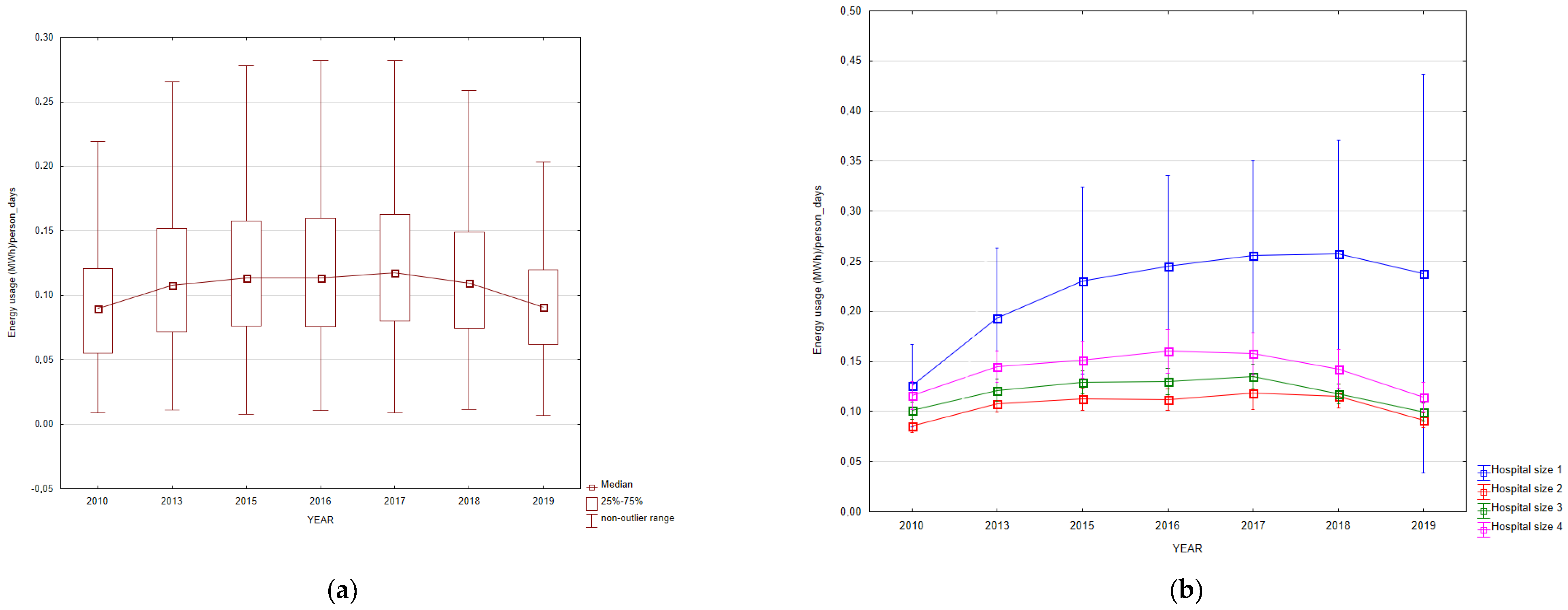
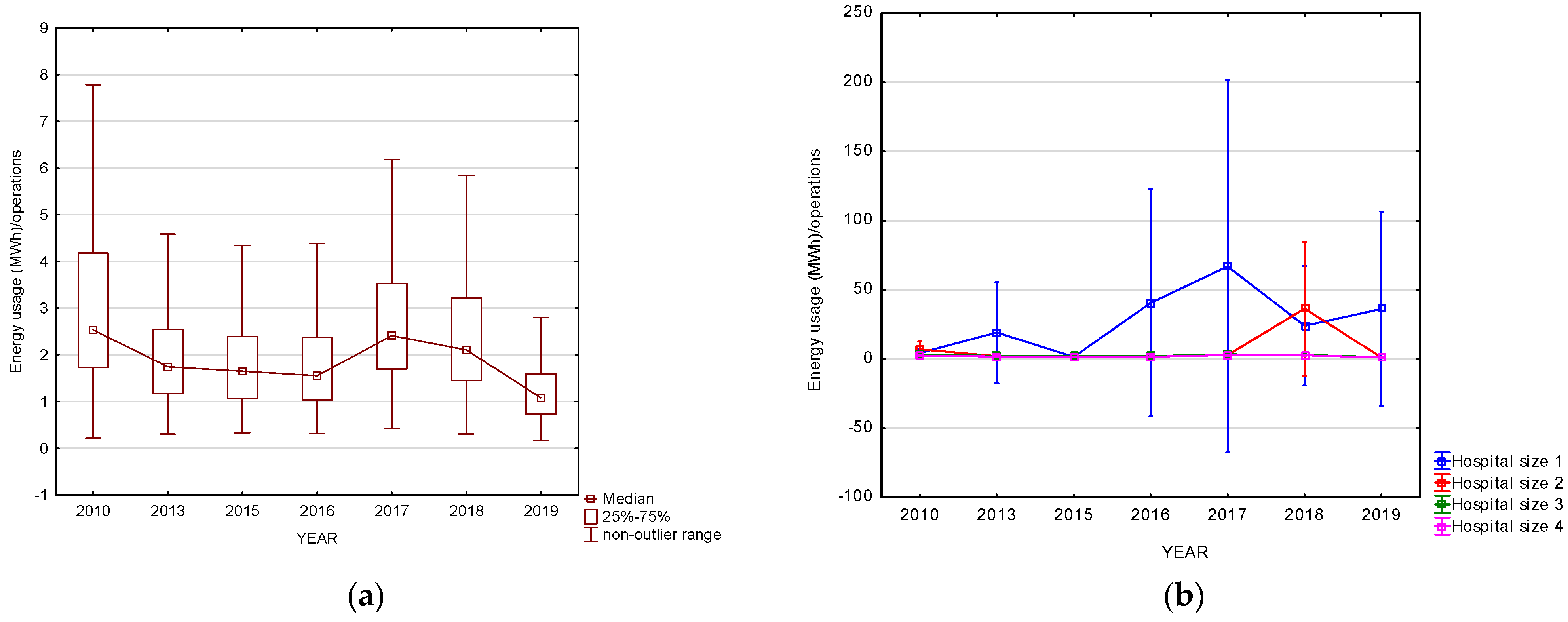
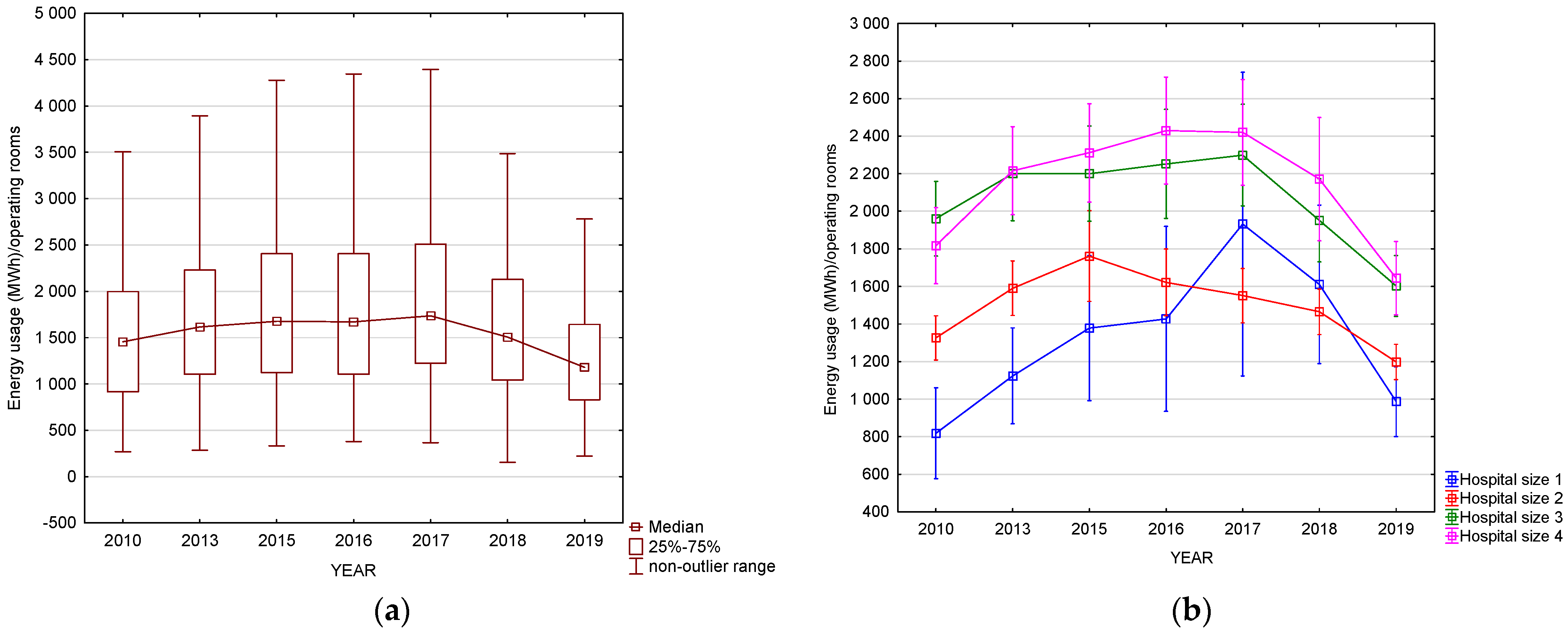
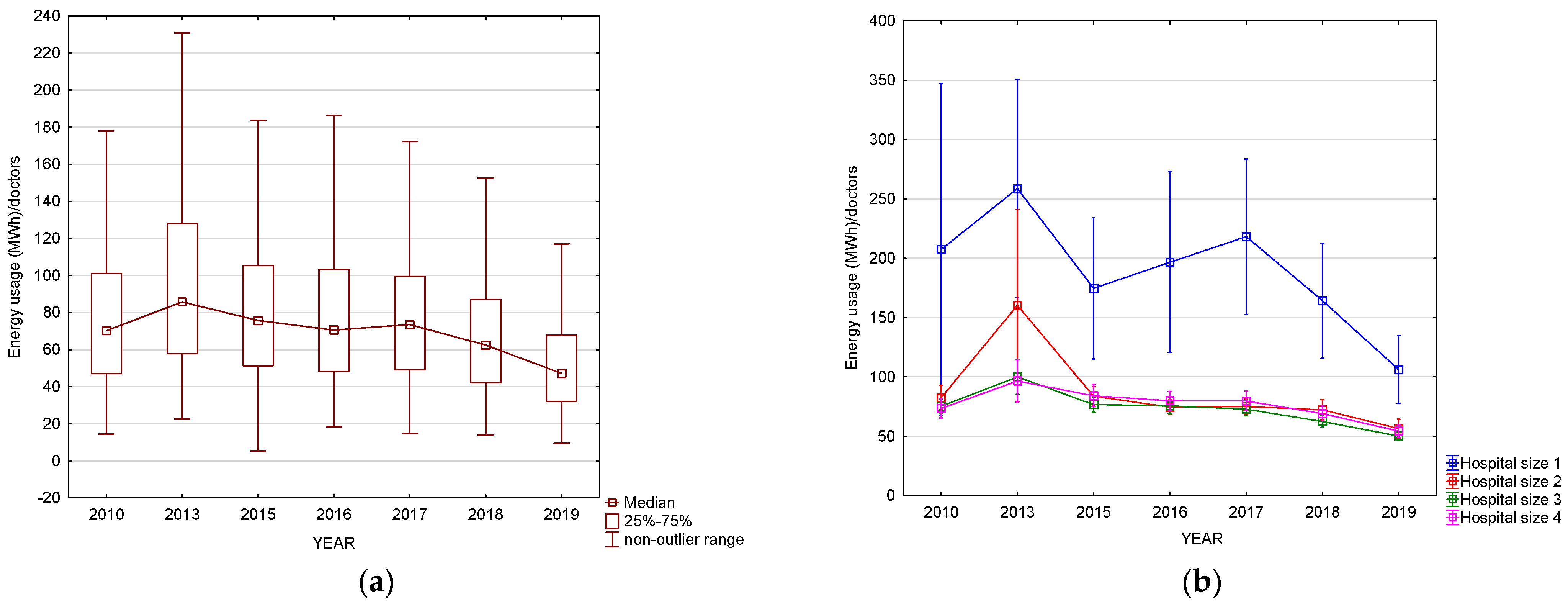
In the construction sector, hospitals are the buildings with the highest energy consumption. Due to the high demand for energy, hospitals’ energy efficiency is becoming very important. This study aims to examine the trends and factors that determine energy consumption in Polish hospitals from 2010 to 2019, highlighting the impact of hospital size and medical activities on energy efficiency. The analysis was carried out using data from 3061 hospital reports obtained from the e-Health Center, a state budgetary unit established by the Minister of Health. To measure and compare the efficiency of energy usage in hospitals, we developed eight energy usage efficiency indexes based on hospital size and medical activity. The size of the hospitals was described by the number of beds, operation rooms, doctors, nurses, and fixed assets value. Hospital activity was measured by the number of person-days, patients, and operations. Statistical analysis was carried out using StatSoft Statistica software version 13.3. The results show that larger hospitals are more energy efficient across various measures of energy use than smaller hospitals. The findings revealed also several important relationships between energy usage and factors connected with size and hospital activity, such as the number of beds, patients and person-days, medical staff, operations, and fixed asset values, underscoring the necessity for customizing energy efficiency strategies. This research contributes empirical insights that can guide policymakers and hospital administrators in their endeavors to improve energy efficiency and promote sustainability within healthcare facilities.
Keywords: energy efficiency; Polish hospitals; energy usage trends energy efficiency; Polish hospitals; energy usage trends