Article

EcoPrintAnalyzer: Assessing Sustainability in Material Extrusion Additive Manufacturing for Informed Decision-Making


Department of Civil and Industrial Engineering, University of Pisa, 56122 Pisa, Italy
Sustainability 2024, 16(2), 615; https://doi.org/10.3390/su16020615
Submission received: 12 December 2023 / Revised: 2 January 2024 / Accepted: 9 January 2024 / Published: 10 January 2024

Abstract

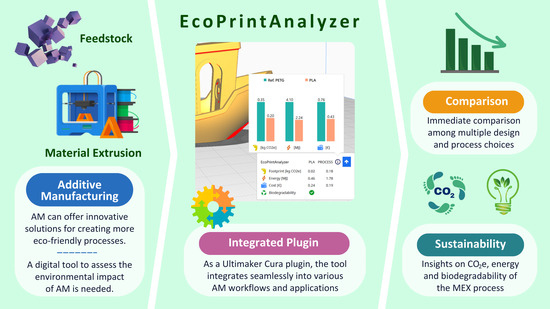
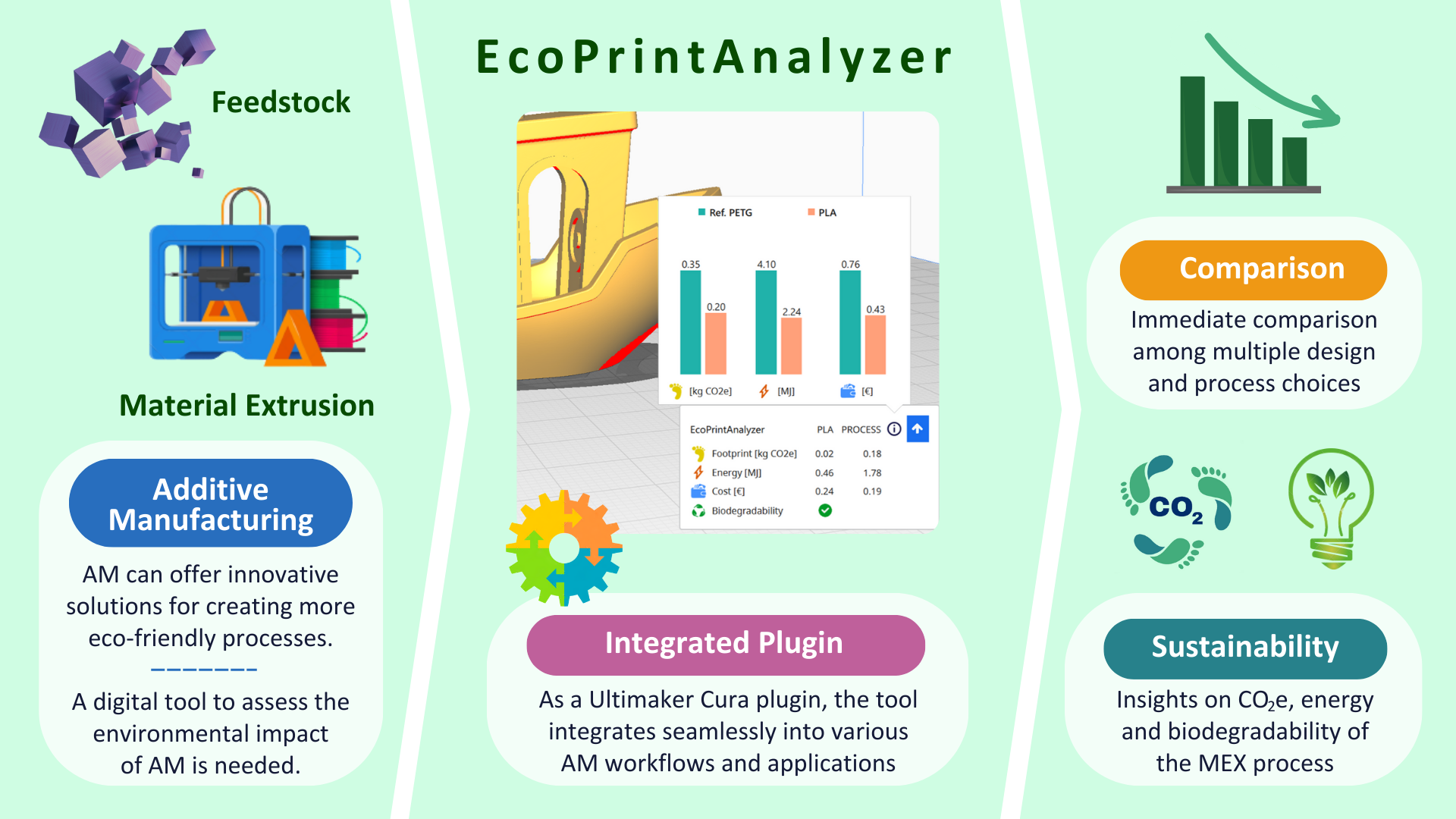
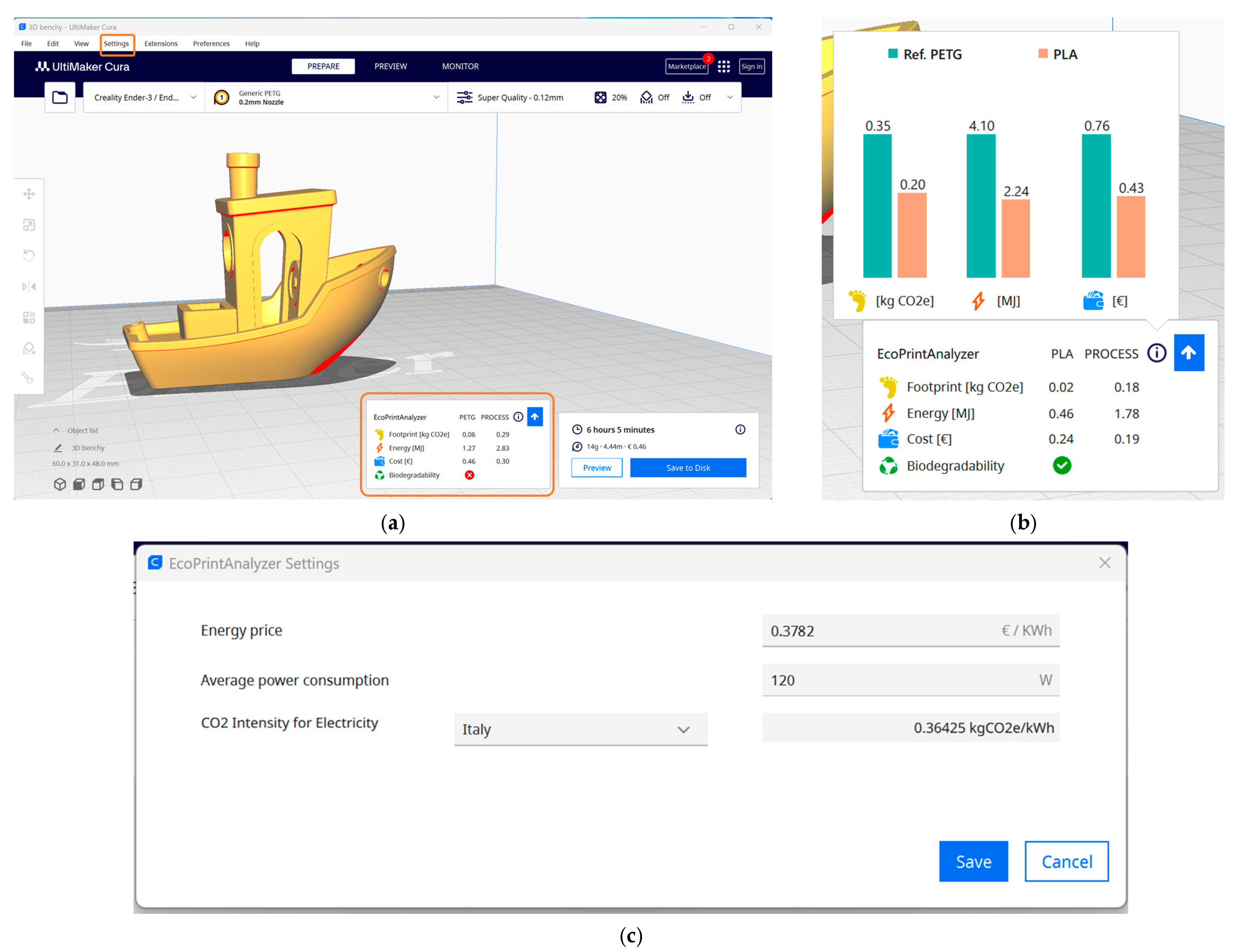
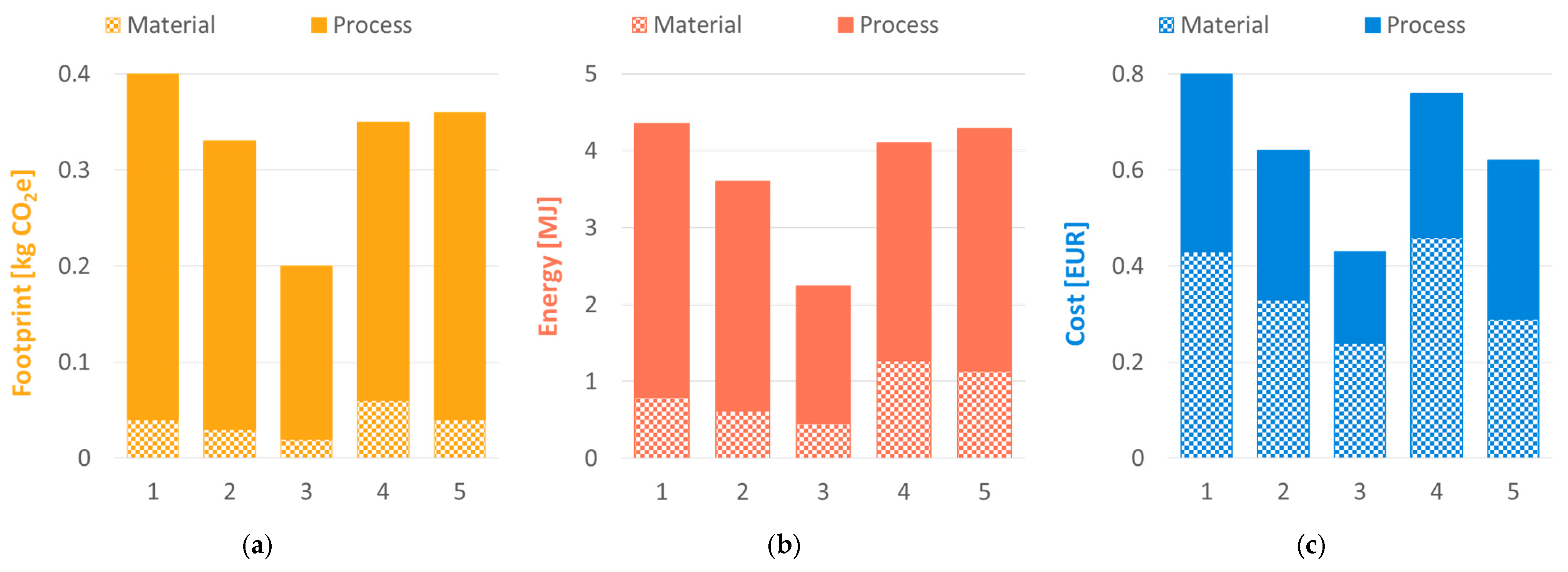
Sustainability is fundamental in the field of additive manufacturing (AM) for improving eco-consciousness and driving evolution toward environmentally responsible production methods. Compared to traditional manufacturing processes, AM technologies can be more resource-efficient and offer innovative solutions for creating eco-friendly processes and products. Nevertheless, there is significant potential for improvement in additive manufacturing sustainability. The key factors driving this improvement include design optimization and increased awareness. Designers and engineers can create designs that optimize material efficiency and reduce support structures. Raising awareness and educating stakeholders about the environmental benefits of AM can promote responsible choices throughout the industrial process. The development of a tool to assess the environmental impact of AM processes could be a significant contribution to advancing sustainability in the AM field. The EcoPrintAnalyzer, introduced as a complementary plugin for UltiMaker Cura, offers data on the equivalent carbon dioxide footprint and energy consumption in material extrusion additive manufacturing. This tool facilitates informed decision-making regarding materials, designs, and settings, enabling users to optimize their AM processes for reduced waste and enhanced energy efficiency. Beyond aiding decision-making, the EcoPrintAnalyzer fosters environmental consciousness and encourages the adoption of sustainable practices within the AM ecosystem. The efficacy of the tool is demonstrated through the 3DBenchy model case study, showcasing its intuitive interface and seamless integration within the AM process workflow for immediate and comparative environmental impact assessments across different process configurations.
Keywords: additive manufacturing; material extrusion; sustainability assessment tool; eco-design; carbon footprint; UltiMaker Cura; sustainable development additive manufacturing; material extrusion; sustainability assessment tool; eco-design; carbon footprint; UltiMaker Cura; sustainable development
Graphical Abstract