Article

Labile Fraction of Organic Carbon in Soils from Natural and Plantation Forests of Tropical China


1
College of Geography and Environmental Science, Hainan Normal University, Haikou 571158, China
2
Queensland Alliance for Environmental Health Sciences (QAEHS), The University of Queensland, Brisbane, QLD 4102, Australia
3
College of Life Sciences, Hainan Normal University, Haikou 571158, China
4
Center for Catalysis and Clean Energy, School of Environment and Science, Griffith University, Gold Coast, QLD 4222, Australia
*
Author to whom correspondence should be addressed.
Sustainability 2024, 16(17), 7836; https://doi.org/10.3390/su16177836
Submission received: 5 August 2024 / Revised: 24 August 2024 / Accepted: 4 September 2024 / Published: 9 September 2024
(This article belongs to the Section Soil Conservation and Sustainability)

Abstract

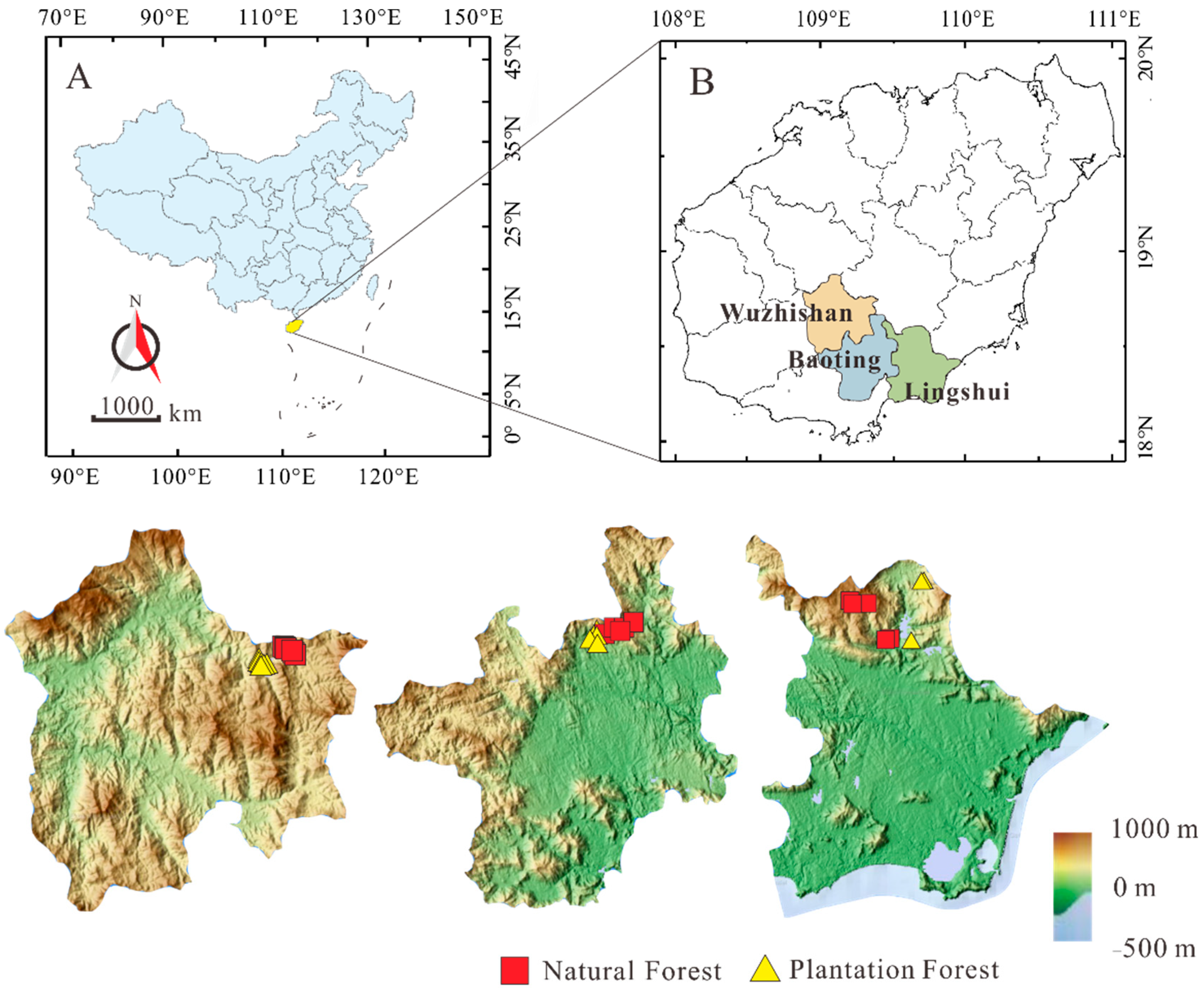
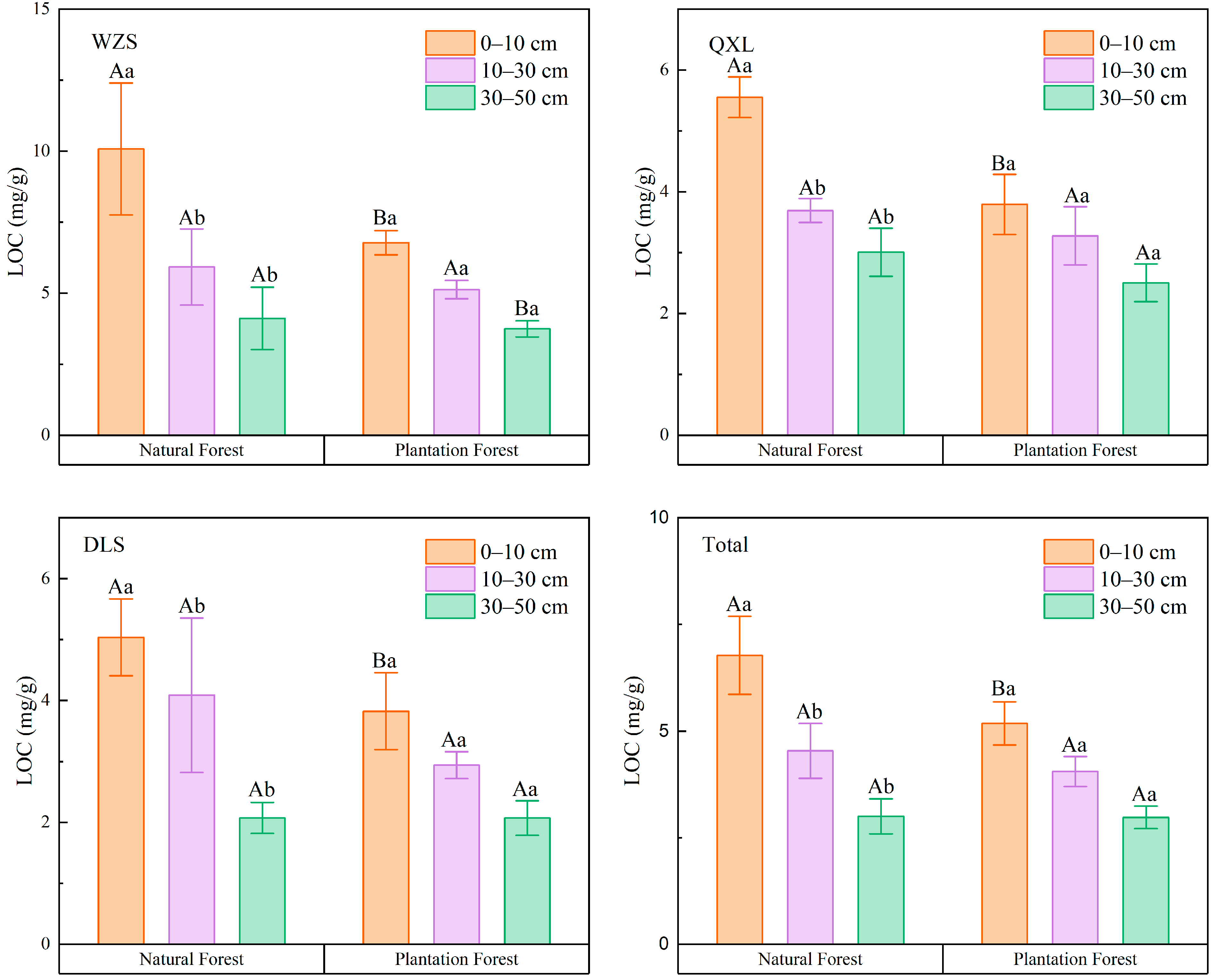
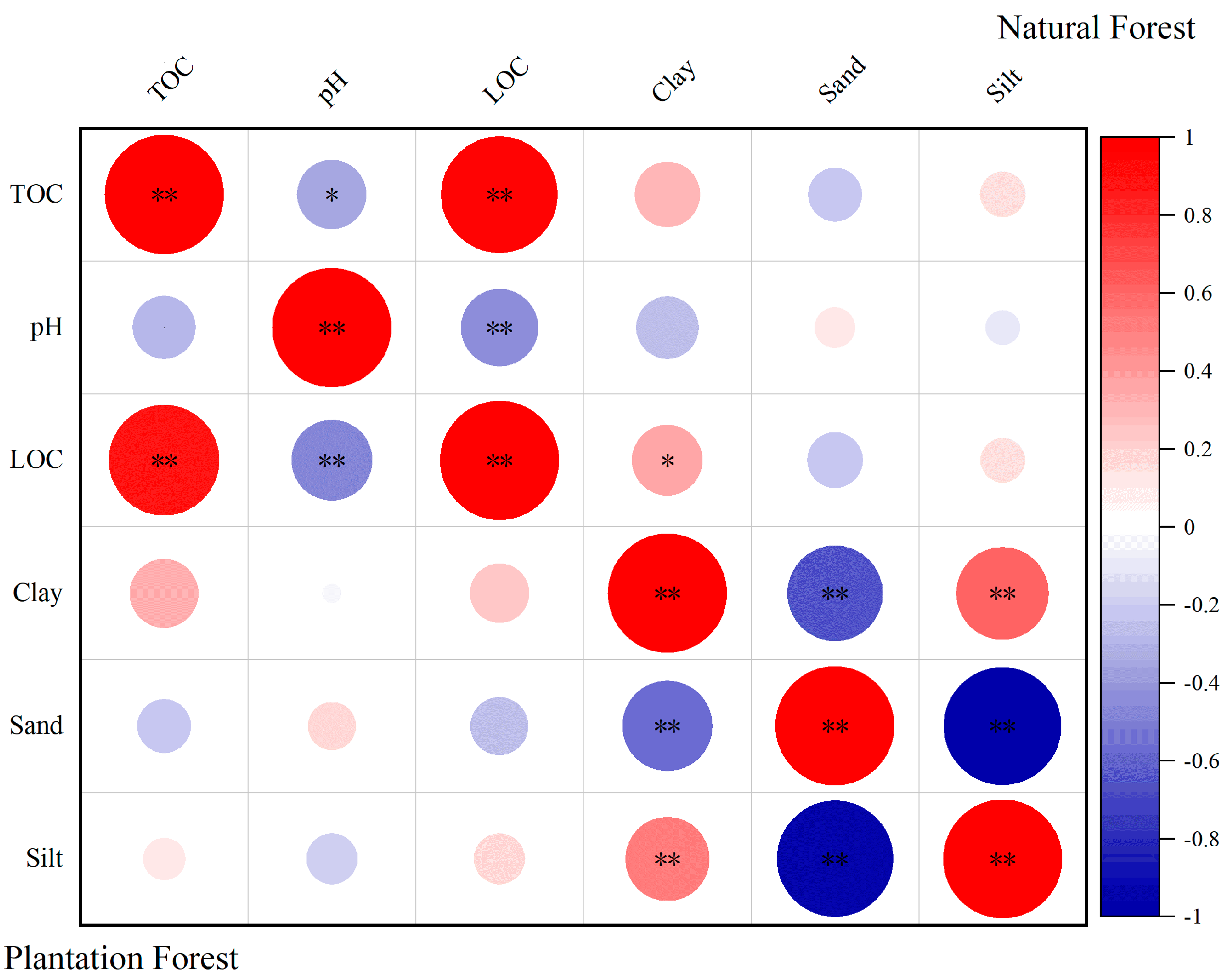
Labile organic carbon (LOC) is a key driver of forest ecosystem function and may mitigate global climate change through carbon sequestration. To explore the accumulation of LOC in tropical forest soils, we sampled from both planted and natural forests in Hainan Province, the southernmost province of China. We analyzed the concentrations of total organic carbon (TOC) and LOC and characterized various physicochemical properties such as pH and soil texture to understand their inter-relationships in tropical natural and plantation forests. Although the TOC concentration was higher in plantation forests (88.61 g/kg) than in natural forests (68.73 g/kg), the LOC concentration was higher in natural forests (5.12 mg/g) than in plantation forests (4.07 mg/g). Over a depth range of 0–50 cm from the surface, both forest types showed decreasing TOC and LOC concentrations with increasing soil depth, indicating surface aggregation. The soil is slightly acidic and primarily composed of sand particles. Correlation analysis showed a highly significant negative correlation between LOC concentration and soil pH in both forest types (p < 0.01). Soil LOC was positively correlated with soil clay and silt particles and negatively correlated with sand particles. This study provides valuable insights into soil carbon sequestration in tropical rainforest ecosystems in both plantation and natural tropical forests.
Keywords: readily oxidizable carbon; soil carbon sequestration; primary forest; physicochemical properties; tropical rainforest; forest sustainability readily oxidizable carbon; soil carbon sequestration; primary forest; physicochemical properties; tropical rainforest; forest sustainability