Article

Phosphorus Flow Analysis in Lithuania

Institute of Environmental Engineering, Kaunas University of Technology, LT-44249 Kaunas, Lithuania
*
Author to whom correspondence should be addressed.
Sustainability 2024, 16(14), 6001; https://doi.org/10.3390/su16146001
Submission received: 11 June 2024 / Revised: 3 July 2024 / Accepted: 9 July 2024 / Published: 14 July 2024

Abstract

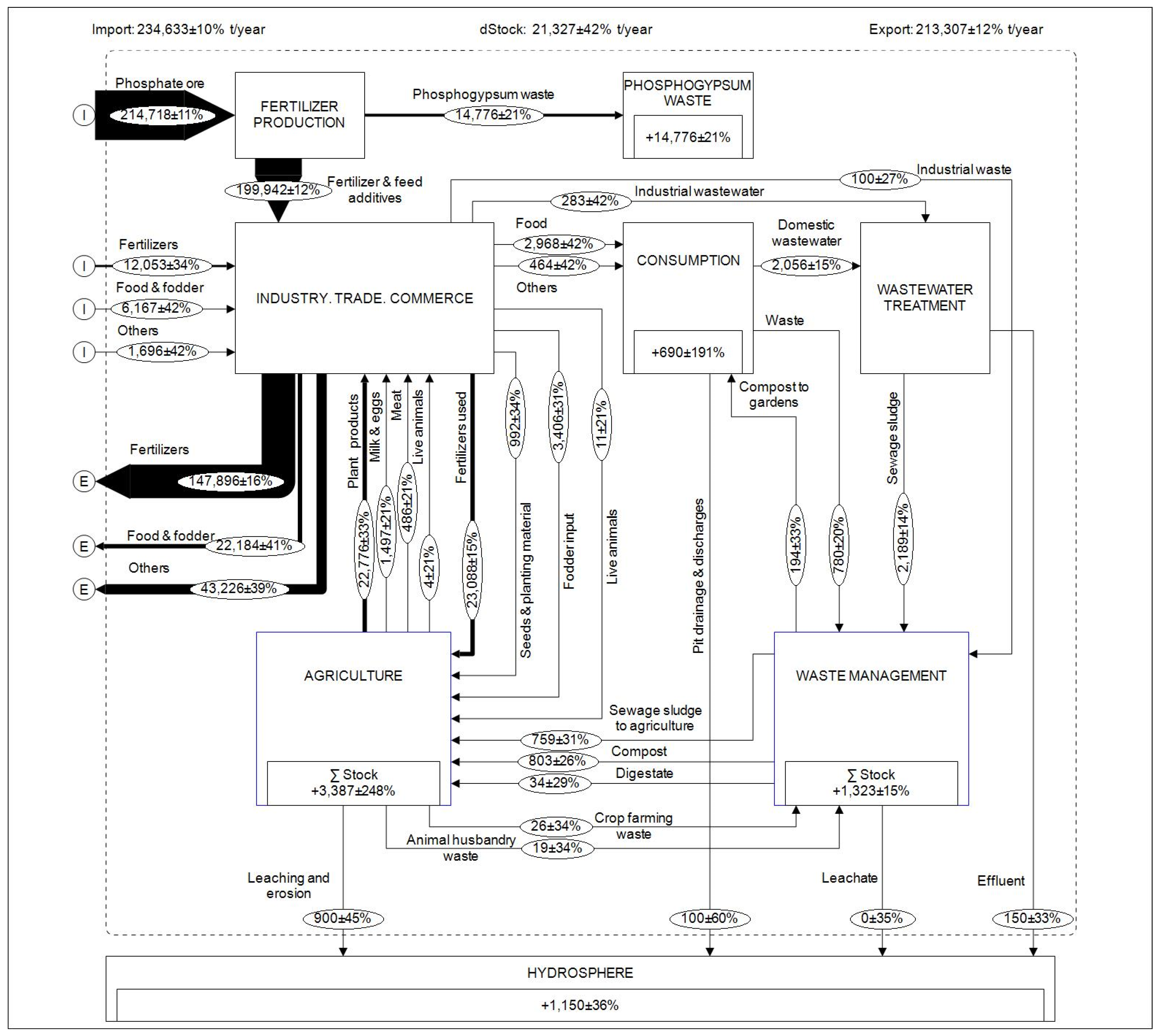
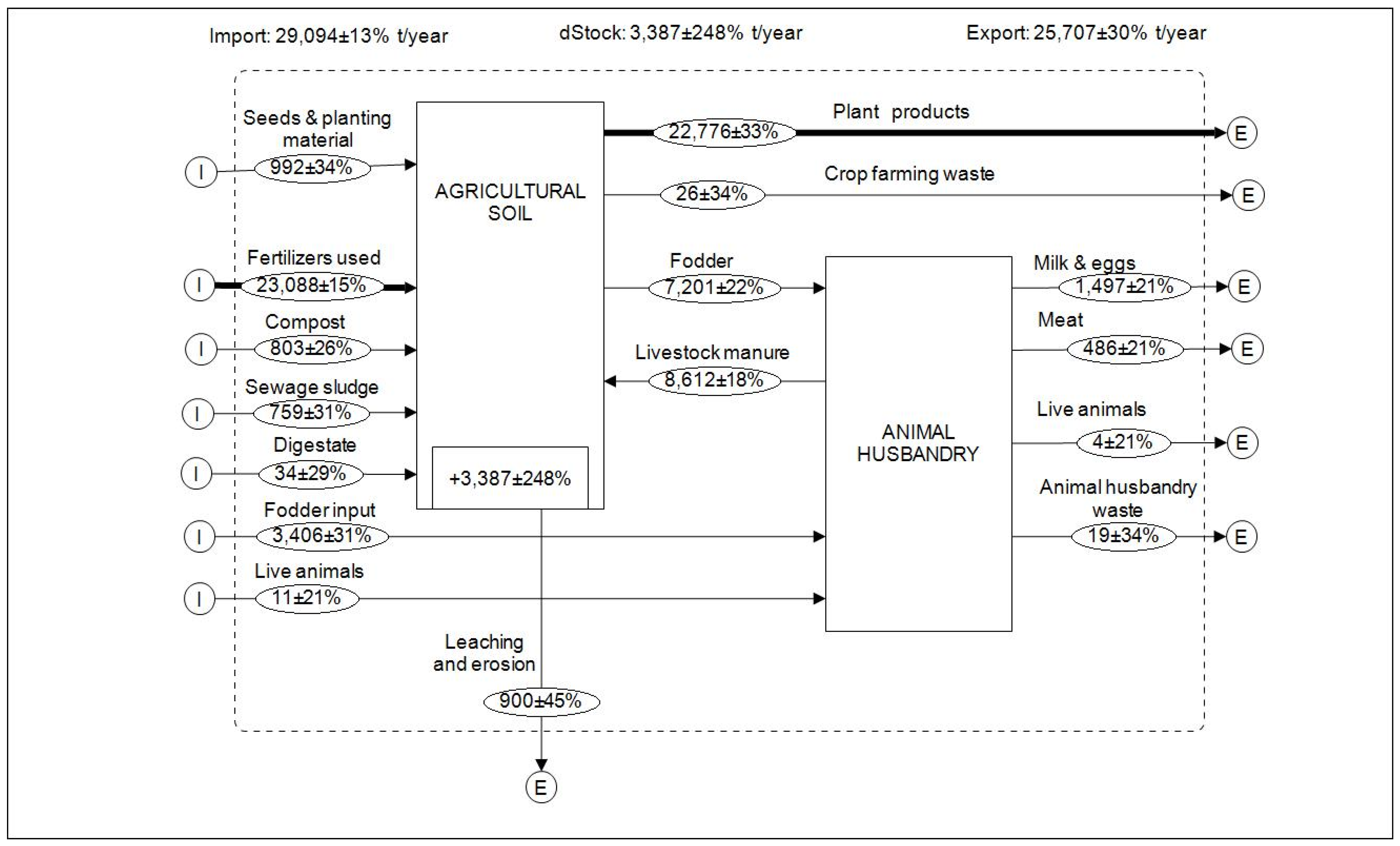
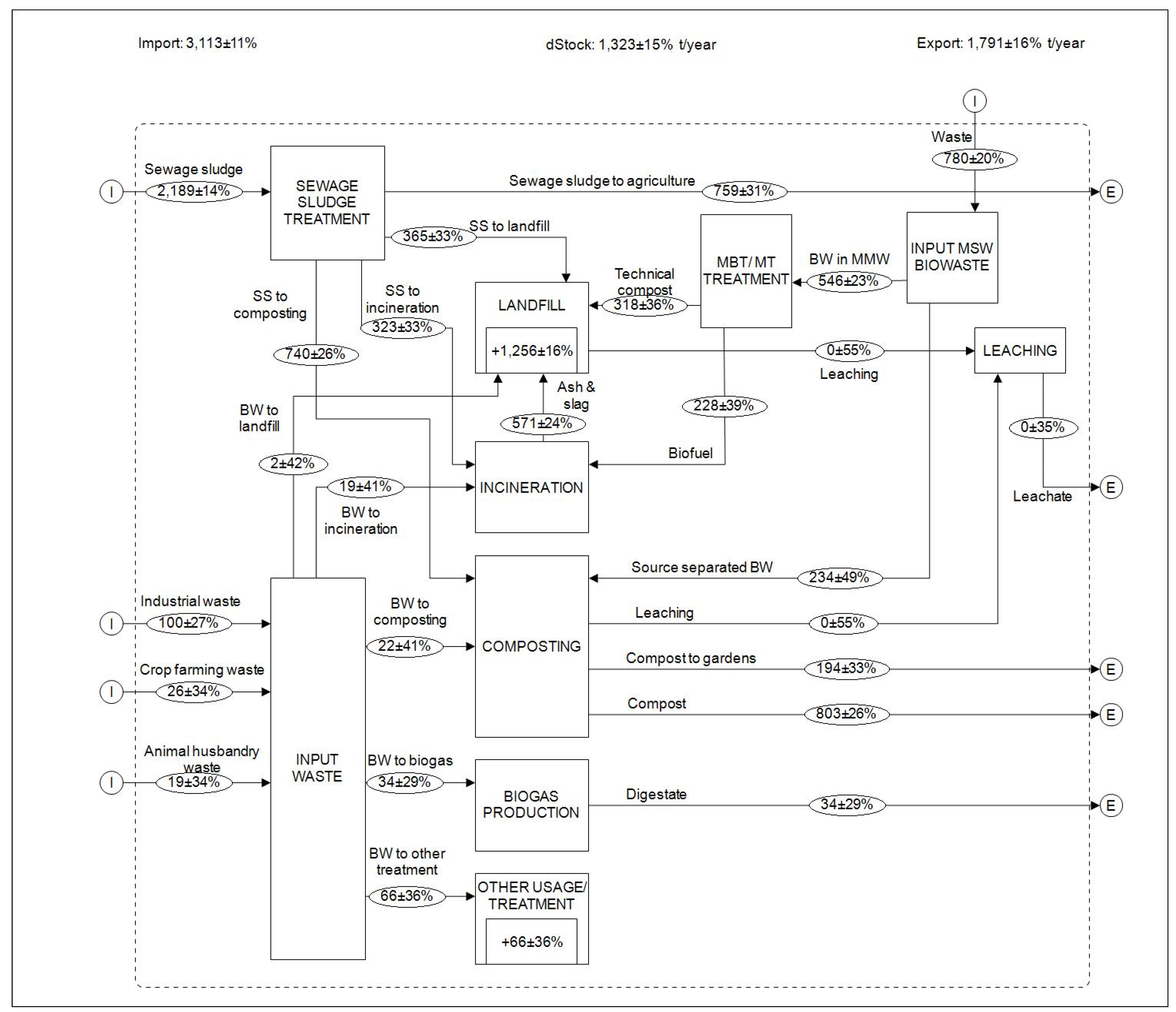
Substance flow analysis was used to analyze phosphorus (P) flows, accumulations and losses in Lithuania. P and phosphate rock are included in the list of EU critical raw materials, showing their importance for the EU economy, especially agriculture, and supply risks. It is important to minimize P losses as much as possible, avoid inefficient use, and maximize the potential of secondary P. The analysis showed Lithuania’s huge dependence on P imports, which occurred because one of the largest P fertilizer factories operates in the country, and the country also grows and exports a significant amount of cereals. In total, 69% of P addition to soil is from mineral fertilizers. The potential of secondary P is only partially used, mainly via manure, which constitutes 83% of the recycled P and adds 26% of P to agricultural soil. In total, 58% of P “waste” is either lost or accumulated, largely in phosphogypsum stacks. If this P was fully utilized, the country could reduce the current usage of mineral fertilizers by 71%; without P in phosphogypsum, the reduction would be just 7.2%. The P balance in Lithuanian soil is close to neutral. Agricultural leaching and erosion are the main reasons for P entering water bodies (78% of P) and, therefore, should be further reduced.
Keywords: phosphorus; substance flow analysis; material flow analysis; Lithuania; resource management phosphorus; substance flow analysis; material flow analysis; Lithuania; resource management