Abstract
Currently, reverse logistics and sustainability are recognized as strategies to enhance the performance of supply chain processes and customer service and to reduce environmental impact, which is reflected in the planning of and reduction in costs throughout the production process. This article developed a bibliometric review that considered the growth of reverse logistics and sustainability from the perspective of different organizations, authors, thematic subareas, countries, journals, keywords, and volume of citations and publications. For this, a methodology was developed that consisted of reviewing previous research, obtaining the Scopus data set, applying the analysis with Microsoft Excel 365 and VOSviewer version 1.6.18 to determine the applications and trends of future research, and identifying the global impact in the last six years on organizations. The search equation with the application of filters resulted in 22,625 articles. The Sustainability Switzerland journal provided the most significant number of contributions in terms of publications, and the Journal of Cleaner Production stood out for its number of citations. Tseng, M.L. and Govindan, K. were the most active authors. China, the United States, and the United Kingdom were the most notable countries. Chinese Academy of Sciences and the Ministry of Education of the People’s Republic of China were the most influential institutions. The main findings were the recognition of the potential research lines and industry 4.0 technologies applied in supply chains and the development of sustainable processes with the fusion of reverse logistics, sustainability, and circular economy.
1. Introduction
Reverse logistics is a strategy that focuses on the appropriate use of resources to mitigate environmental effects, regulate processes, and generate commitment on the part of companies as to the use and final disposal of the products they manufacture or market. Also, it allows for establishing business models based on the use, reuse, or remanufacturing of the final products recovered in the supply chain, so reverse logistics influences an organization’s legal, social, and environmental aspects [1]. Kroon and Vrijens [2] incorporated logistics practices so that products developed by manufacturers could be disassembled and reused as a sustainable development strategy. Carter and Ellram [3] proposed reducing material use by recycling and reusing products or some components to manufacture new products. In turn, Fleischmann [4] considered reverse logistics a continuous improvement process incorporating the flow of items, information, effectiveness, and efficiency of recovering value in a supply chain.
Reverse logistics includes integrating products that have ended their life cycle in the supply chain as valuable resources for developing other products. Therefore, organizations develop recovery and recycling processes for products that have ended their use in the market or with the end customer [5]. In this way, reverse logistics refers to reducing activities that damage the environment. It also helps to reduce, reuse, and recycle waste, promoting an excellent public image at the organizational level. It seeks to determine how products can be used repeatedly for similar processes [6].
Reverse logistics contributes to increased demand for products and services since they can be developed with lower cost and impact on the environment. The benefits may differ in each organization because the return on products differs for each organization [7]. Creating reverse logistics strategies and mitigating environmental impact changes the design criteria of products and operations. However, reverse logistics is limited by barriers that complicate transitioning to a more effective circular economy. Nevertheless, company internal action, state policies, and new technologies make its adoption possible to optimize resources, improve the agility of supply chains, and achieve sustainable manufacturing [8].
Sustainability considers economic, social, and environmental components [9]. Sustainability incorporates supply chain plans [10] to promote the reasonable use of natural resources for present generations and maintain the integrity of ecological systems [11]. Organizations have incorporated sustainability into decision-making, considering environmental and social aspects to improve the supply chain [12]. However, adopting new sustainable practices sometimes results from interest from other external parties or institutional issues and new environmental regulations. This approach helps gain greater market acceptance and vision [13]. Sustainability refers to problems related to the deterioration of our global ecology and economic and productive development [14].
Environmental impact is the effect exerted on the environment by people’s activities, actions, or processes to obtain products or services. The sensitization and awareness of society are sought for this issue, which allows for adaptation to new forms of relationships. Protection of the environment is based on forming social responsibility in new generations [15]. Some research on the topic is focused on sustainable inventory management, considering the optimization of the supply chain, thus establishing that the environment is crucial for obtaining competitive differences. However, these considerations can sometimes go against profitability, although efficient management can overcome these issues in the long term [16].
This research aims to (1) analyze the growth and development of reverse logistics and sustainability, (2) identify relationships between research topics and collaboration networks between authors, journals, and institutions, and (3) establish the countries or leading global institutions that promote research in reverse logistics and sustainability. It allows for identifying essential indicators such as authors, journals, citations, countries, and the most influential articles in publications. This research aims to respond to the following questions. (i) How has the topic of reverse logistics and sustainability evolved over the last six years (2018–2023)? (ii) What are the papers, authors, institutions, and most representative journals in reverse logistics and sustainability? (iii) Which countries generate the most influential contribution of publications and citations concerning research? (iv) What are the sub-themes of knowledge related to the study of reverse logistics and sustainability? Moreover, (v) what are the future lines of research regarding reverse logistics and sustainability?
This paper is structured as follows. Section 2 presents the method for searching for information for the research. Section 3 shows the bibliometric analysis results, including publications by year, most influential authors, countries with the most significant contribution, citations of authors and reviews, and the most influential journals and cooperations. Section 4 contains the discussion and implications of the topic, and Section 5 shows the research conclusions.
2. Materials and Methods
A bibliometric review analyzes statistical behavior over time regarding the knowledge of a topic, providing scientific results that include trends and lines of research for developing new projects [17]. This research reviewed the state of reverse logistics and sustainability considering the results obtained in the Scopus database, which provides access to articles and bibliographic references [18]. This analysis followed the methodology of bibliometric analysis applied by some authors [16,19,20,21,22,23]. Table 1 shows the keywords utilized for the literature examination.
Table 1.
Keywords utilized in the literature search.
Initially, a Scopus database was obtained; for the bibliometric analysis, the keywords used were Reverse Logistic and Sustainability. Related to the topic covered in this article, to provide greater clarity regarding the advances in this area, a search equation consisting of 6 filters was established. These allowed for the visibility of files directly related to the research and with the language specifications, type of area, type of publication, type of journal, keywords, and a time range between 2018 and 2023, considering the last six years. The equation search includes the keywords related to reverse logistics and sustainability (see Appendix A).
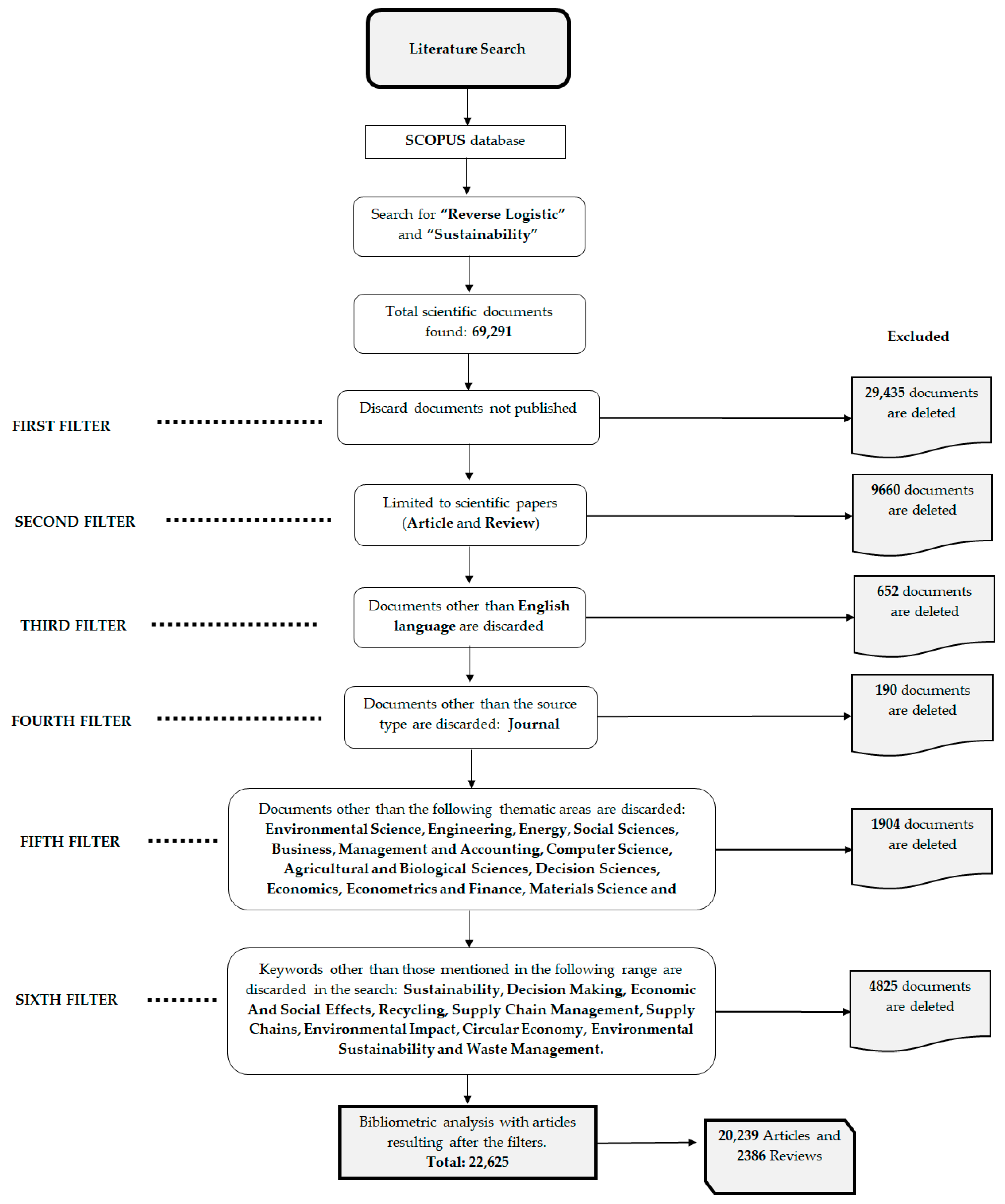
Figure 1 presents the methodological structure of the research. The first search filter was limited based on the criterion of discarding documents that needed to be published or developed from 2018 to 2023, excluding 29,435 documents. Afterward, the second filter established was limiting the search equation to scientific documents of an article or magazine type, discarding 9660. In the third filter, documents not in English were discarded, thus making 652 documents eliminated. The fourth filter used was by type of source. In this case, they were not published in magazines. In this phase, 190 documents were eliminated in their entirety. The fifth filter delimited the search equation based on thematic areas, discarding 1904 documents. Finally, the sixth search filter was applied with the premise of keywords not found in the established range, thus discarding 4825 documents and leaving 22,625 documents to proceed with the bibliometric analysis.
Figure 1.
Research methodology diagram.
Additionally, the indicators obtained were analyzed based on yearly scientific publications, most cited journals, publications and authors, countries with the most publications, institutions most active in the subject, and the analysis of keywords and publications by thematic areas [24]. The VOSviewer software version 1.6.18 was used to construct and visualize bibliometric maps and analyze the different clusters, citation analyses, and co-citations between authors, countries, and keywords [25].
In this way, for the analysis of the preliminary phase of the study, Figure 2 presents a network map with the final 22,625 documents. The relationship between them was identified through VOSViewer version 1.6.18, with 6 clusters among the topics, notable for subfields within a specific area, such as Blockchain technology, circular economy, product elimination, and sustainable innovation. Of the six main clusters, several publications were identified in the International Journal of Production Research, which has existed since 1961. Still, specifically in the subject matter, noteworthy articles existed between 2018 and 2019.
Figure 2.
Network map of the documents (preliminary phase).
3. Results
This section can be divided into subheadings to clearly and concisely describe the experimental results, their interpretation, and the resulting experimental conclusions.
3.1. Evolution of Reverse Logistics and Sustainability
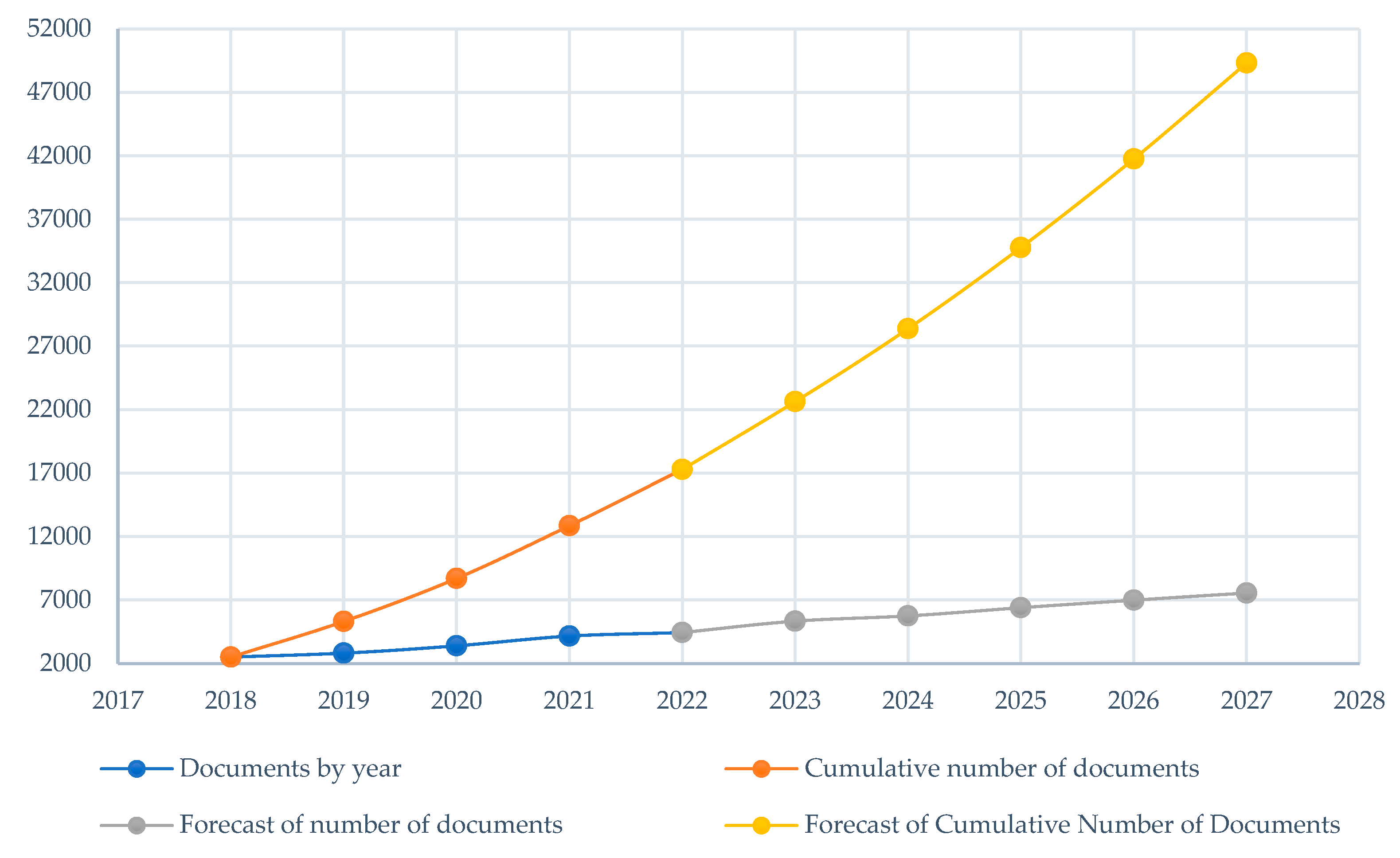
In this bibliometric review, a 6-year analysis period (2018 to 2023) was considered, and it is considered pertinent to review the evolution of publications about reverse logistics and sustainability throughout that time. Figure 3 shows an increasing trend in publications over the years. It reflects the interest of researchers and business organizations that seek to enhance the treatment and use of resources and preserve the environment (environmental awareness) to achieve sustainability in all areas (social, economic, environmental, and political). Therefore, new production policies, using raw materials and technologies, and the final disposal and reuse of products that meet their life cycle are proposed to obtain environmentally friendly products [1].
Figure 3.
Documents published per year.
Companies are accountable for the entire supply chain. Sustainable supply chain management aims to improve the long-term economic success of sustainability-focused organizations. To achieve this, it considers various raw material assessment methodologies such as criticality, life cycle impact assessment, and social life cycle assessment [26]. An example of this shift is the integration of reverse logistics in response to environmental standards or policies in commercial operations, which influences adopting environmentally sensitive practices. This provides a competitive advantage by addressing customer preferences and mitigating environmental impact [6].
Therefore, the forecast of the number of publications expected between 2024 and 2027 shows more significant contributions to research regarding reverse logistics and sustainability, reflecting the development of knowledge about the area and other derivatives. Likewise, the notable interest of society in the six years previously analyzed has encouraged progress in this field and the generation of a culture of environmental responsibility.
In 2018, there was increased recognition of the term “sustainable development” and the concept of sustainability. As a result, a clear relationship has been established between sustainable consumption and production practices and their impact on the environment, economy, and society throughout the life cycle of products. This understanding has led to proposals for improvements in the sustainability of product systems by identifying critical points in the value chain and considering life cycle costs [27].
In 2019, research was developed incorporating mixed integer linear programming models considering reverse logistics in collection centers, trained inspection and remanufacturing centers, customer areas, vehicle type selection, and carbon emissions [28]. Also, sustainable processes considering reverse logistics offer tools to generate value in organizations [29].
In 2020, it was considered that sustainable supply chain management must be accompanied by different technologies belonging to Industry 4.0, such as cyber-physical systems, big data, cloud computing, and the Internet of Things, among others, under cybersecurity guidelines [30]. Also, in 2021, sustainability trends included the digitalization of the supply chain. This approach considers information sharing, cooperation, and communication through digital media. It is more effective and reliable, influencing how companies or individuals interact with the environment [31].
In 2022, supply chain redesign was being considered from a sustainability perspective. This approach considers the facilities that need to be maintained, built, or consolidated based on the characteristics of the area or region, making environmental initiatives feasible. However, using such energy sources comes with costs and financial and non-financial demands for installation that some companies must be prepared to support [32].
In 2023, the focus was on implementing green strategies to prioritize energy efficiency and reduce environmental impact. In the logistics and operations field, storage systems with LED lighting, photovoltaic panels, thermal insulation, light sensors, and monitoring of packaging consumption were incorporated [33]. Additionally, rooftop distributed photovoltaic (RDPV) projects were implemented to design residential and industrial buildings to reduce carbon emissions [34].
3.2. Journals: Publications and Citations
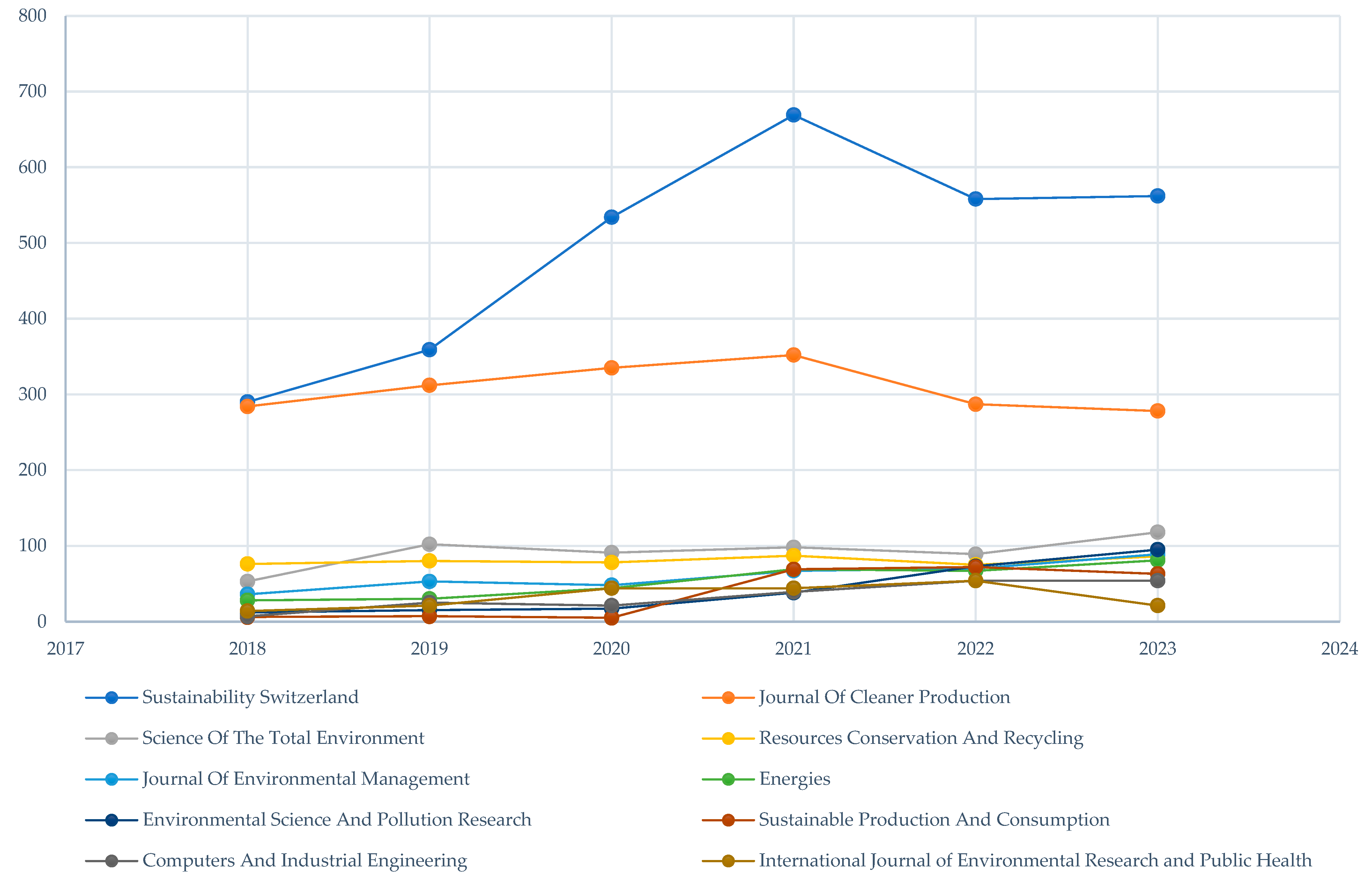
Table 2 presents a list of journals with the highest increase in the number of articles on reverse logistics and sustainability. The publications from these ten journals make up 39.2% of citations. Notable journals include Sustainability Switzerland, with 2972 publications; the Journal of Cleaner Production, with 1848 publications; and Science of The Total Environment, with 551 publications.
Table 2.
Journals with the highest number of publications in reverse logistics and sustainability.
Table 2 presents the top countries with journals that publish the most on reverse logistics and sustainability. Switzerland and the Netherlands have three journals, the United Kingdom has two journals, and the United States and Germany have one journal. Furthermore, it is identified that the thematic area Energy is present in four journals with a quartile between Q1 and Q2, according to Scimago Journal & Country Rank [35]. The participating journals are Sustainability Switzerland and the Journal of Cleaner Production, Energies, and Sustainable Production and Consumption.
The Environmental Science knowledge area includes 9 out of 10 of the most active journals, mainly within the Q1 quartile, with a few in Q2. Social Sciences has a lower rank, but with Q1, it is only present in Sustainability Switzerland, which is number one among the most active magazines. Additionally, the subject area of Engineering, with a variation of Q1 and Q2, is covered in the journals: the Journal of Cleaner Production, Energies, Computers and Industrial Engineering, and Sustainable Production and Consumption. Finally, Figure 4 presents the list of journals with the number of articles per year between 2018 and 2023 to evaluate the trend over the years and the interest in reverse logistics and sustainability topics.
Figure 4.
The number of documents per year by source of the ten most active journals in reverse logistics and sustainability.
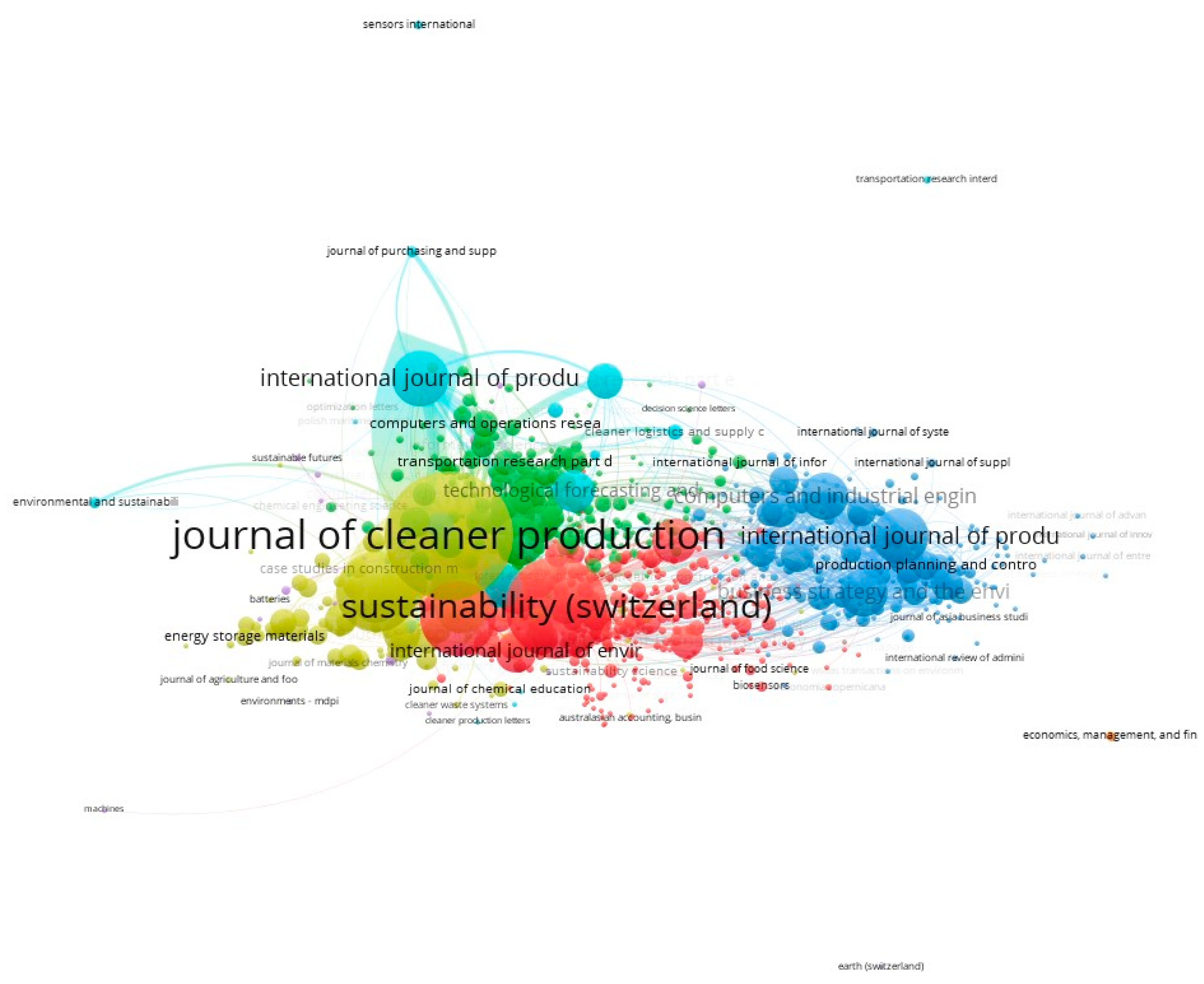
Figure 5 presents the network map of journals with the most citations on the topic and highlights 15 journals with the most significant link of citations. Sustainability Switzerland is the most influential magazine in terms of publications. This journal encourages scientists to publish research, promoting scientific predictions, estimates of global change impact, and sustainability and sustainable development studies. Despite this, based on citations, the most significant is the Journal of Cleaner Production, which aims at industrial innovation, new and improved products, and implementing new and cleaner processes, products, and services [35].
Figure 5.
A network map of the journals with the most influence on citations.
3.3. Authors: Publications, Citations, and Cooperations
3.3.1. Publications
This section analyzes the most active authors in reverse logistics and sustainability publications. Table 3 contains details such as the number of publications per author, their country of origin, total citations, average citations per year, and the number of citations by the first author. Some of the most notable authors with the highest number of publications are as follows: Tseng, M.L. (63 publications with 32% of citations as the first author), Govindan, K. (56 publications with 18% of citations as the first author), and Sarkis, J. (55 publications with 5% of citations as the first author). Other authors on the list and their respective percentage of citations as the first author are as follows: Ren, J. (12%), Mangla, S.K. (9%), Luthra, S. (8%), Raut, R.D. (7%), Kumar, A. (7%), Lim, M.K. (1%), and Garza-Reyes, J.A. (1%). Additionally, India is the country of origin for three of the authors mentioned.
Table 3.
Top 10 list of the most active reverse logistics and sustainability publications authors.
3.3.2. Citations
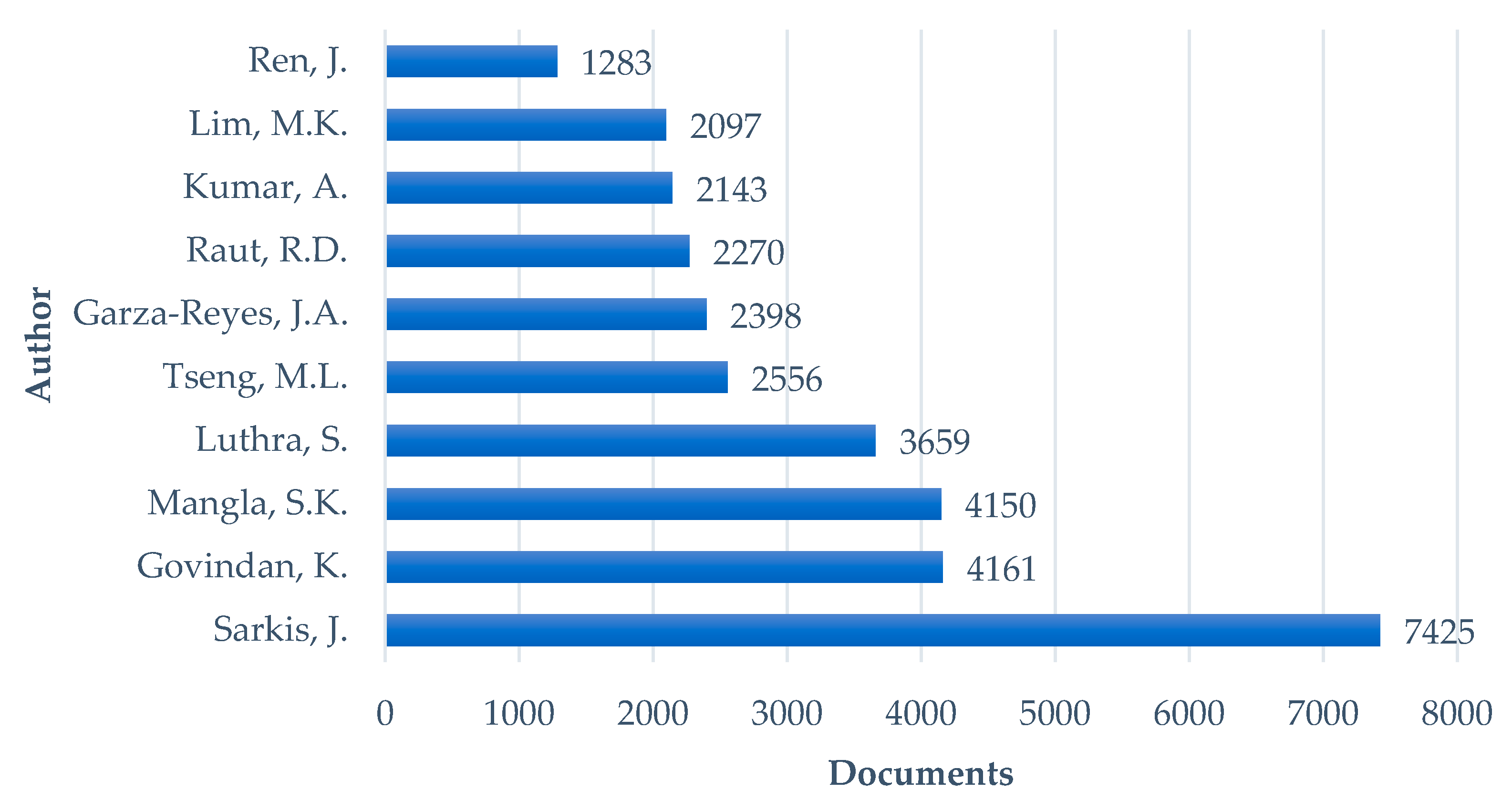
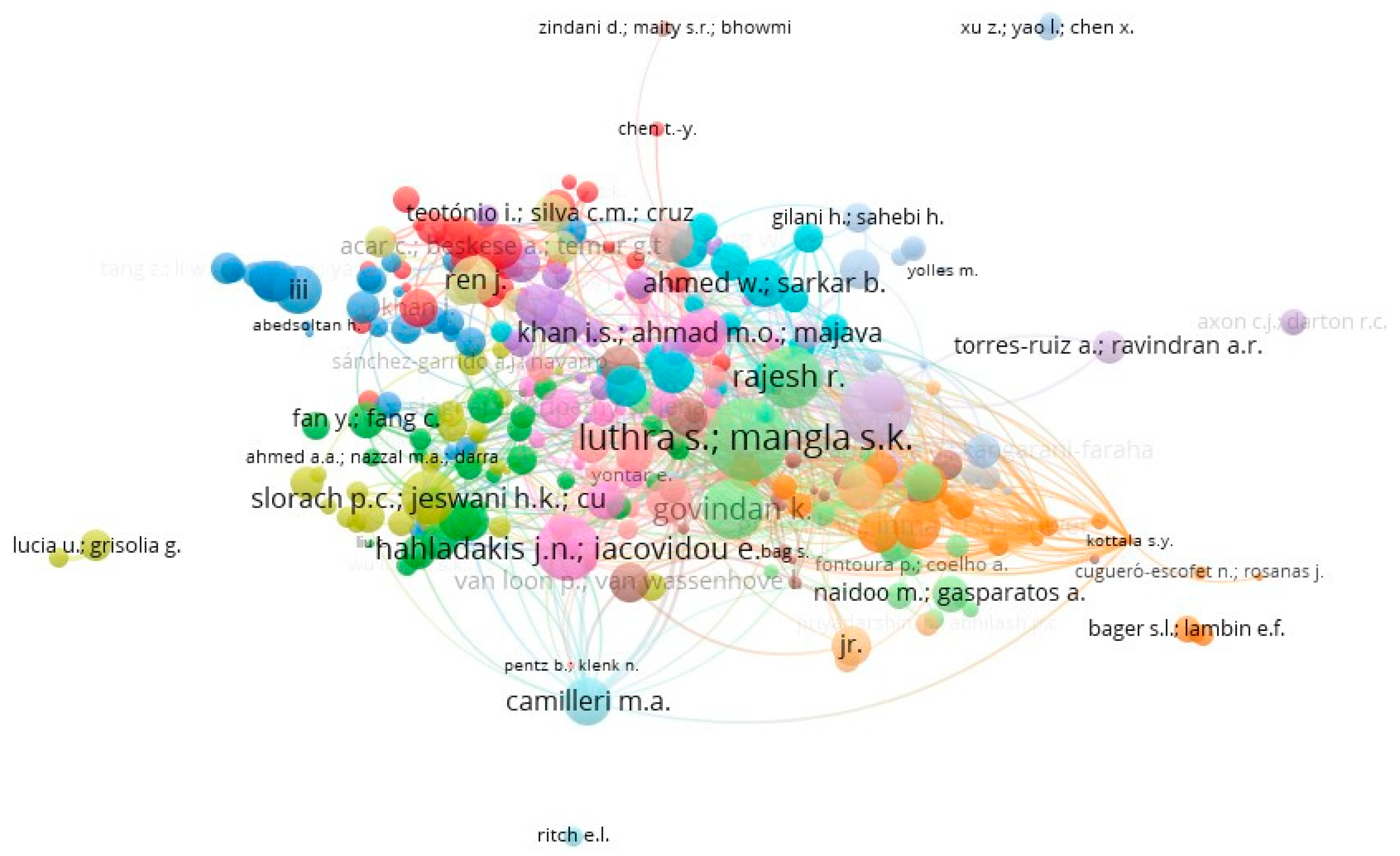
Figure 6 presents the ten authors with the most citations in their publications. Sarkis, J. is in first place with 7425 citations, followed by Govindan, K. with 4161, Mangla, S.K. with 4150, and Luthra, S. with 3659. The remaining six authors have less than 2600 citations in their publications. Furthermore, Figure 7 explores the relationship between authors and citations (minimum two articles), identifying 19 groups of authors with the most significant connection between authors and the number of citations. Authors Luthra, Sunil, Mangla, and Sachin Kumar have 702 citations. The first author belongs to the Department of Mechanical Engineering. They are located as directors in the All-India Council for Technical Education (AICTE), and the second belongs to the University of Plymouth, United Kingdom. They have collaborated with authors such as Sarkis, Joseph, Rajesh, Govindan, and Das D., who have generated several publications on reverse logistics and sustainability.
Figure 6.
The authors with the most citations.
Figure 7.
Co-citation analysis by authors.
Table 4 presents the ten publications with the most citations on reverse logistics and sustainability. The most notable articles are as follows:
Table 4.
The top 10 publications with the most citations on reverse logistics and sustainability.
- Blockchain technology and its relationships to sustainable supply chain management, with 1888 citations.
- Soil quality: A critical review with 1462 citations.
- Literature review of Industry 4.0 and related technologies, with 1192 citations.
In 2018, these topics began to evolve and gain relevance in this area. Five articles that had a significant impact were published. On the other hand, the journal that participated in the publication of two articles with the most significant impact was the International Journal of Production Research in quartile Q1.
3.3.3. Cooperations
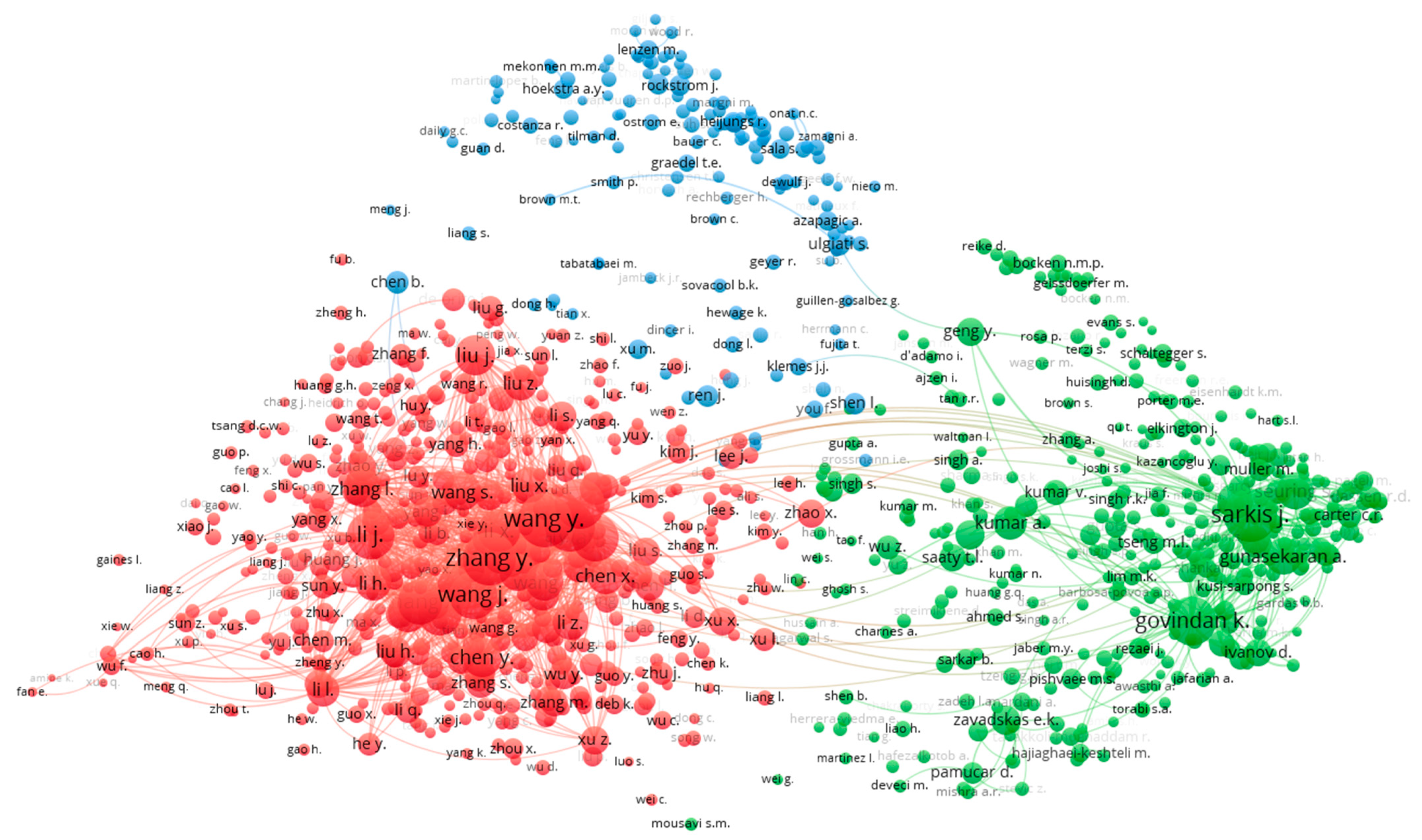
The cooperation of the authors in developing publications on reverse logistics and sustainability was analyzed with the VOSViewer version 1.6.18, which allows for the identification of the number of relationships between authors. Figure 8 displays three groups of authors identified by different colors, illustrating strong links and cooperation in their publications. The first group consists of Wang, Y., Li, J., Zhang, X., Liu, J., and Chen, W., highlighted by the red cluster. Their predominant research focuses on improving the properties of materials through resource reuse, reverse logistics, decision-making methods, sustainable development, environmental efficiency, and the analysis and evaluation of green innovation practices.
Figure 8.
Cooperation network of authors in reverse logistics and sustainability research.
In the second grouping identified by the green cluster, notable authors include Sarkis, J., Govindan, K., Gupta, S., Kumar, A., and Zavadskas, E.K. Their work focuses on topics such as performance measurements for resilient and sustainable supply chains, improving transparency, circular economy, Blockchain technology, corporate sustainability, elimination of products in the supply chain, and barriers to the adoption of a circular economy. Finally, the third grouping identified by the blue cluster features prominent authors such as Geng, Y., Ulgiati, S., Heijungs, R., Bocken, N.M.P., and Hoekstra, A.Y., who widely publish on sustainable resource use, environmental sustainability challenges, materials and energy recovery, sustainable planning, energy efficiency, and product life cycle analysis.
3.4. Geographical Distribution
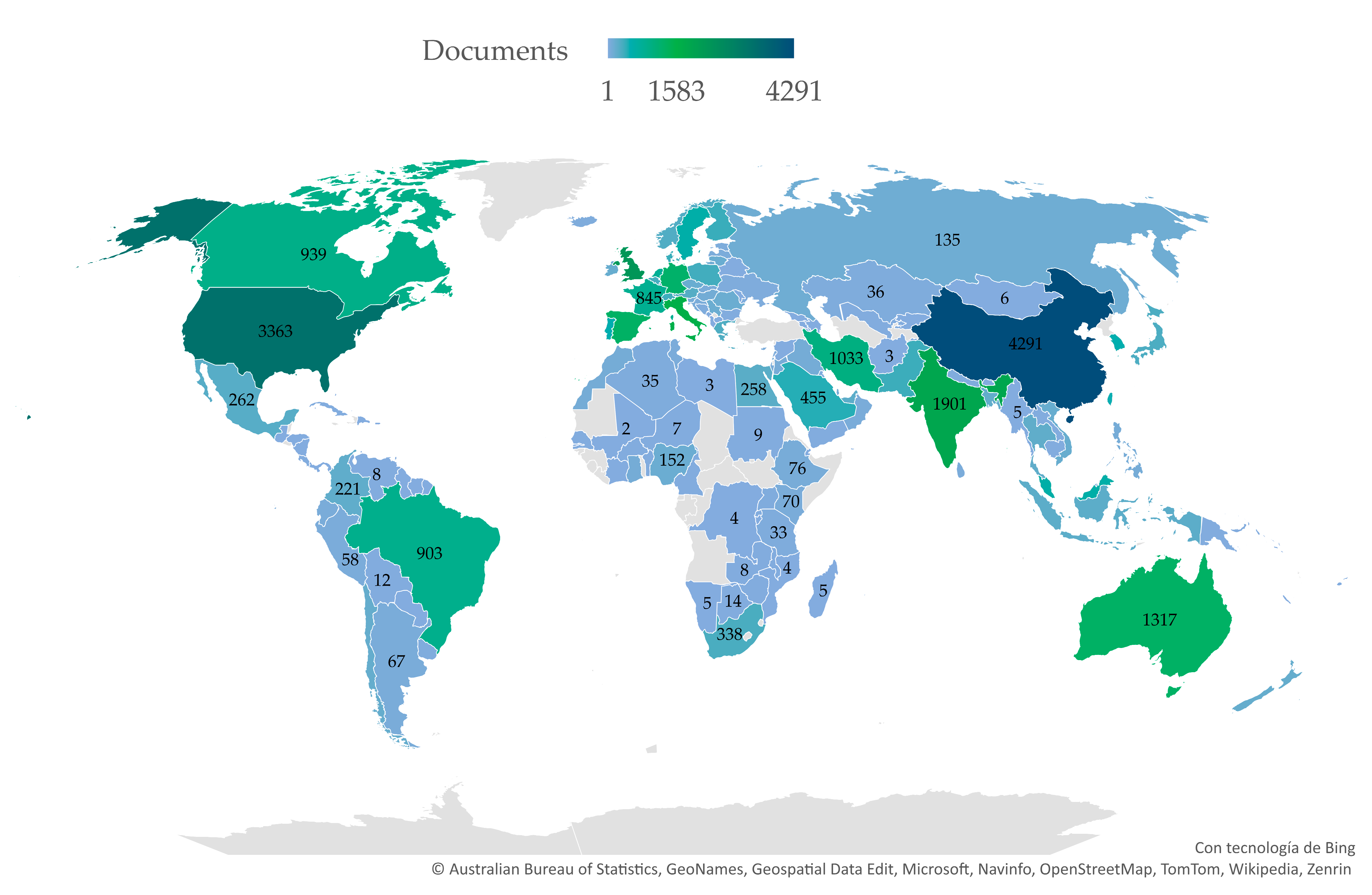
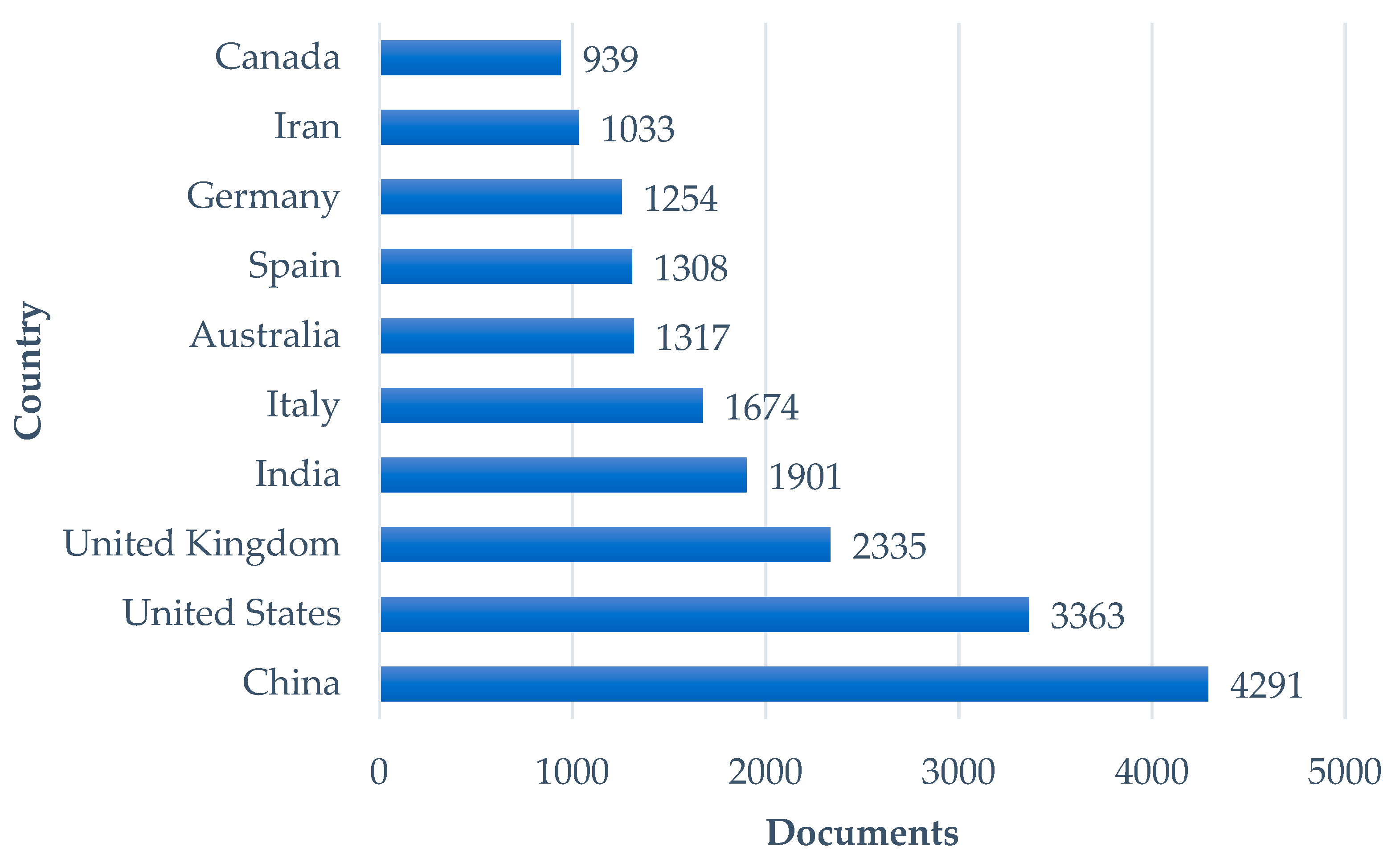
The distribution of reverse logistics and sustainability publications at a global level is presented in Figure 9. The publications come from 159 different countries. Europe ranks first with 14,325 publications, representing 40% of the total. Asia ranks second with 12,778 publications, corresponding to 35%. America ranks third with 6177 publications, around 17% of the total. Oceania follows with 1539 publications, representing 4%, and Africa with 1393 publications, also 4% of the total. China stands out as the country with the highest contribution of scientific publications, with 4291 articles.
Figure 9.
Countries with the most publications on reverse logistics and sustainability globally.
Figure 10 illustrates the countries that make the most significant scientific contributions and investments in reverse logistics and sustainability. Globalization also encourages the production of sustainable products with technological applications that offer a competitive advantage in the market. However, the rise in polluting agent emissions affects reverse logistics systems and requires an examination of their effects on the economy, the environment, and society [46].
Figure 10.
Top 10 most productive countries in reverse logistics and sustainability research.
It is essential to examine the contributions of the most prominent countries in reverse logistics and sustainability research. In China, significant efforts have been made in Logistic 4.0, which utilizes technologies to enhance company performance [47]. Specifically, research has focused on the benefits of recycling spent lithium batteries, many of which will be discarded in the coming years due to their limited lifespan. To encourage active participation from companies and the successful integration of reverse logistics, incentive models and policies such as OEM (original equipment manufacturer), minors, and subsidies based on the recycling threshold are proposed. These measures aim to maximize the residual value of products [48].
Another case involves recovering gold from e-waste, as gold possesses unparalleled properties such as corrosion resistance, conductivity, and reliability. Proper management of this process will help reduce environmentally harmful extractions. The life cycle assessment (LCA) is considered, which identifies critical points of the process and various approaches, including mechanical, hydrometallurgical, pyrometallurgical, electrochemical, and biotechnological methods, all of which contribute to the shift from linear models to a circular economy [49].
Blockchain technology is being analyzed in the United States for its potential to bring transparency, traceability, and security to the global supply chain. Adopting this disruptive technology, which is still in its early stages of evolution and development, could overcome many barriers [36].
Similarly, artificial intelligence (AI) has emerged as a promising tool for promoting sustainability in the fashion industry. The fashion industry consumes large amounts of resources and is responsible for high rates of metal pollution, health problems, labor exploitation, and greenhouse gas emissions due to transport. The resources can be optimized using machine learning systems with dimensional reduction techniques, k-means algorithms applied to 3D scans, and manufacturing to obtain significant environmental and economic benefits [50].
The supplier selection criteria in reverse logistics are analyzed in the United Kingdom, considering new legislation that protects the environment [51]. Due to the significant increase in returns on electronic products, a model has been designed to address problems of economic, ecological, and social sustainability. This solution can achieve significant economic and social impacts [52]. Furthermore, the model explores how emerging Industry 4.0 technologies can be combined with circular economy approaches to establish an industrial model to recycle and reuse products that have ended their life cycle [53].
Furthermore, the design of supply chains should focus on the distribution of essential daily products, such as food. Improved sustainability and resilience will enable responses to unpredictable shocks, such as the COVID-19 pandemic, and reduce catastrophic risks by integrating technologies such as artificial intelligence (AI) to predict growth volumes and optimize harvests to reduce food waste [54].
Similarly, optimization models have been developed in India to establish reverse logistics networks in organizations. For instance, a multi-objective model has been created for sustainable reverse logistics in e-commerce [55]. Organizational decisions regarding the placement of facilities for a reverse logistics network [56] have also been considered. Also, models have been developed to represent the reverse logistics system, considering different periods, collection centers, inspection centers, and product remanufacturing [28]. Also, simulation-based methodologies have been employed in Italy to plan efficient local collection assistance, and the impact of adopting electric vehicles has been evaluated. These options have been compared using economic and environmental indicators to assess sustainability [57].
Based on the routine use of plastic products in Spain, research has begun regarding their life cycle according to their categories. Adequate processing and management have been considered due to the adverse impacts on the environment after the product’s subsequent use, which is why these investigations focus on reducing climate change and facing current challenges [58]. In Australia, after the impact of the COVID-19 pandemic, analyses were developed regarding the supply chain, determining that resilience and sustainability are critical points along with the implementation of technology-assisted tools for the application of recovery strategies. Disruptive management is based on production, supply chain (SC) redesign, and government intervention [59].
In Germany, based on the execution of practices in search of compliance with sustainable development goals (SDGs), research and literature reviews are being developed to understand the relationship between circular economy practices and SDGs. These studies seek to create safe work environments to improve human health and waste recycling culture [43,60]. In Iran, the design of integrated multi-objective models has been considered to create sustainable supply chains considering timing, supplier selection, order allocation, transportation, and location [61]. Also, generic reverse logistics models in Canada are being developed for waste management with stochastic waste rates, considering aspects such as recycling and remanufacturing [62].
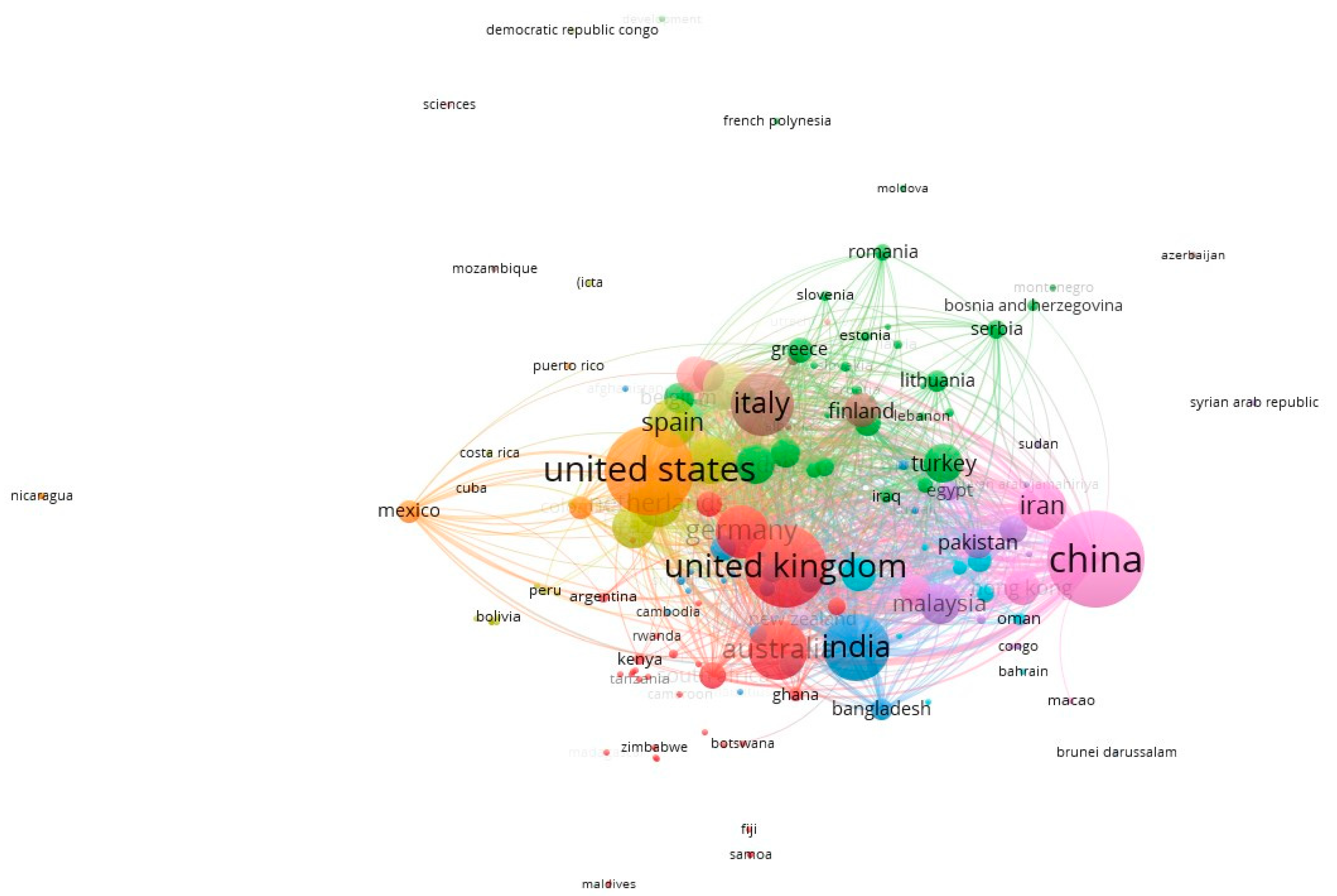
Figure 11 shows the relationship between countries vs. citations (minimum two articles) and 15 groups, with the most significant link between countries in the number of citations. China stands out with 114,831 citations, the United States with 97,281, the United Kingdom with 80,844, India with 54,966, and Italy with 47,651 citations. China collaborates with countries such as the United States, Italy, India, Australia, France, Iran, Spain, Brazil, and Hong Kong. The United States collaborates with countries such as Australia, the United Kingdom, Italy, Spain, India, Turkey, and Iran. The United Kingdom collaborates with countries such as Italy, Portugal, Malaysia, Nigeria, South Africa, Serbia, and Lithuania. This demonstrates the importance of sharing information for the creation of scientific knowledge.
Figure 11.
Countries with the highest number of citations.
3.5. Institutions
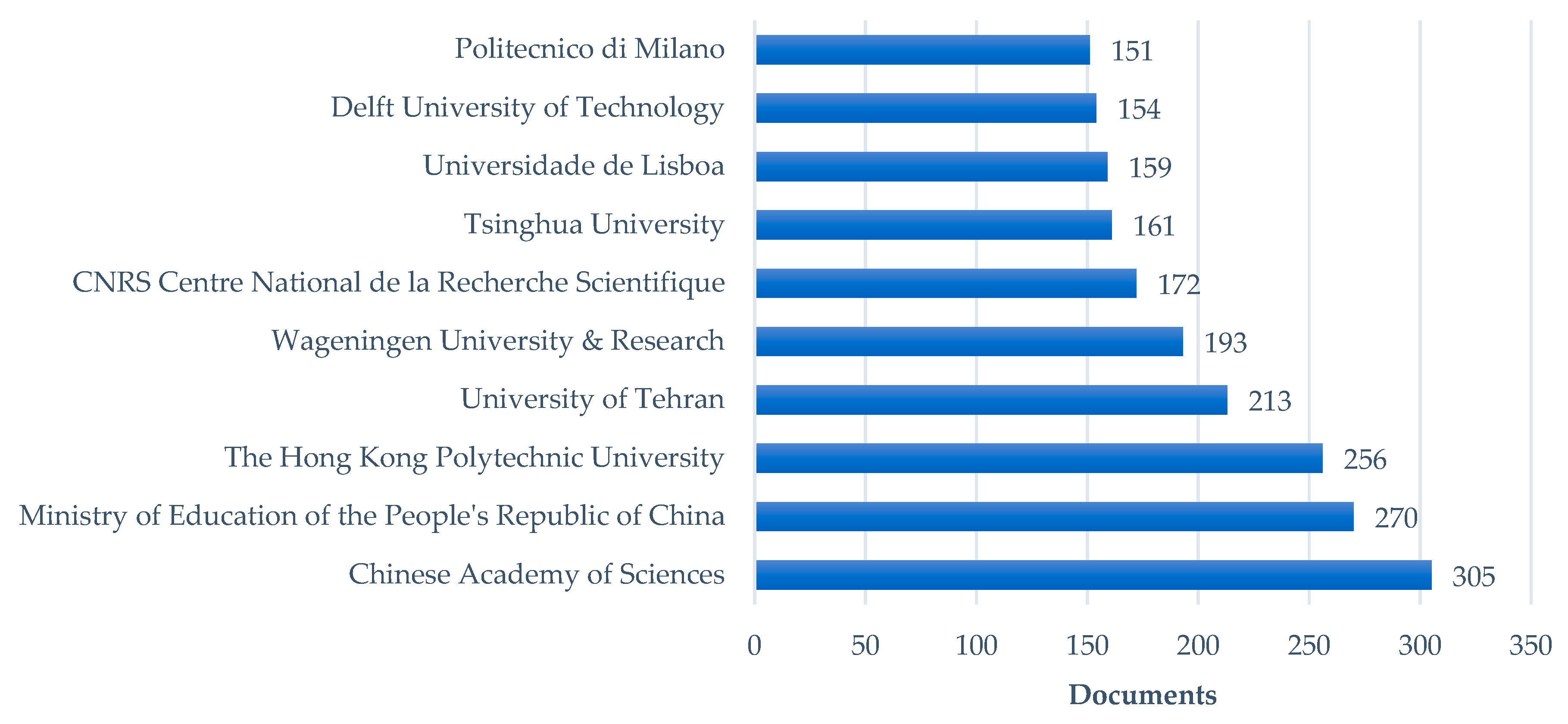
This section analyzes the performance of institutions that promote, and finance research related to reverse logistics and sustainability. The Chinese Academy of Sciences stands out for its participation in 305 publications. Additionally, it is observed that 80.52% of the institutions are universities, and 19.48% are study centers or institutes, such as the Indian Institute of Technology Kharagpur. These institutions also contribute to the generation of scientific information. Furthermore, among the ten most active institutions shown in Figure 12, Hong Kong Polytechnic University has the highest number of citations at 15.40%. The second institution is the Chinese Academy of Sciences, with 14.07%, followed by Wageningen University & Research at 10.90%, and Universidade de Lisboa at 6.19%.
Figure 12.
Top 10 list of the most productive institutions researching reverse logistics and sustainability.
Table 5 shows that three of the ten featured universities and institutes are from China, two are from the Netherlands, one is from Hong Kong, one is from Iran, one is from France, one is from Portugal, and one is from Italy. This information relates to the countries highlighted in the article posts. It is essential to highlight that the Chinese Academy of Sciences is the most active in publishing articles, and researcher Sun Mingxing has generated scientific contributions in industrial symbiosis, sustainable development, and circular economy, among others, with a citation impact of 2807 on the topic.
Table 5.
The most productive institutions in recent years in reverse logistics and sustainability.
3.6. Funding Sponsors
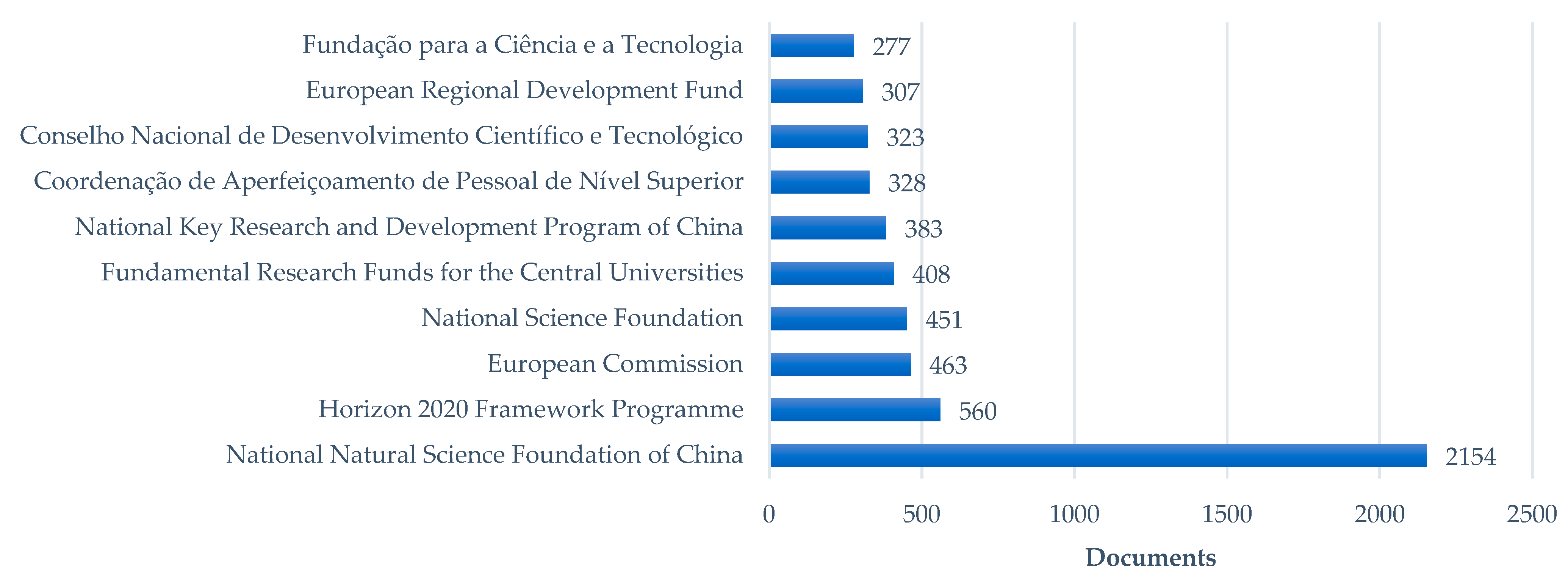
Figure 13 illustrates the primary funding sponsors involved in reverse logistics and sustainability research. The National Natural Science Foundation of China stands out by funding 2154 articles since its establishment. It supports basic research, promotes international cooperation, and adapts to new changes [63]. Table 6 indicates that three funding entities are from China, two are from the European Union, two are from Brazil, and one is from Belgium, the United States, and Portugal.
Figure 13.
The top 10 are the most active reverse logistics and sustainability research financing entities.
Table 6.
Distribution of articles by financing entities on reverse logistics and sustainability.
3.7. Subject Area
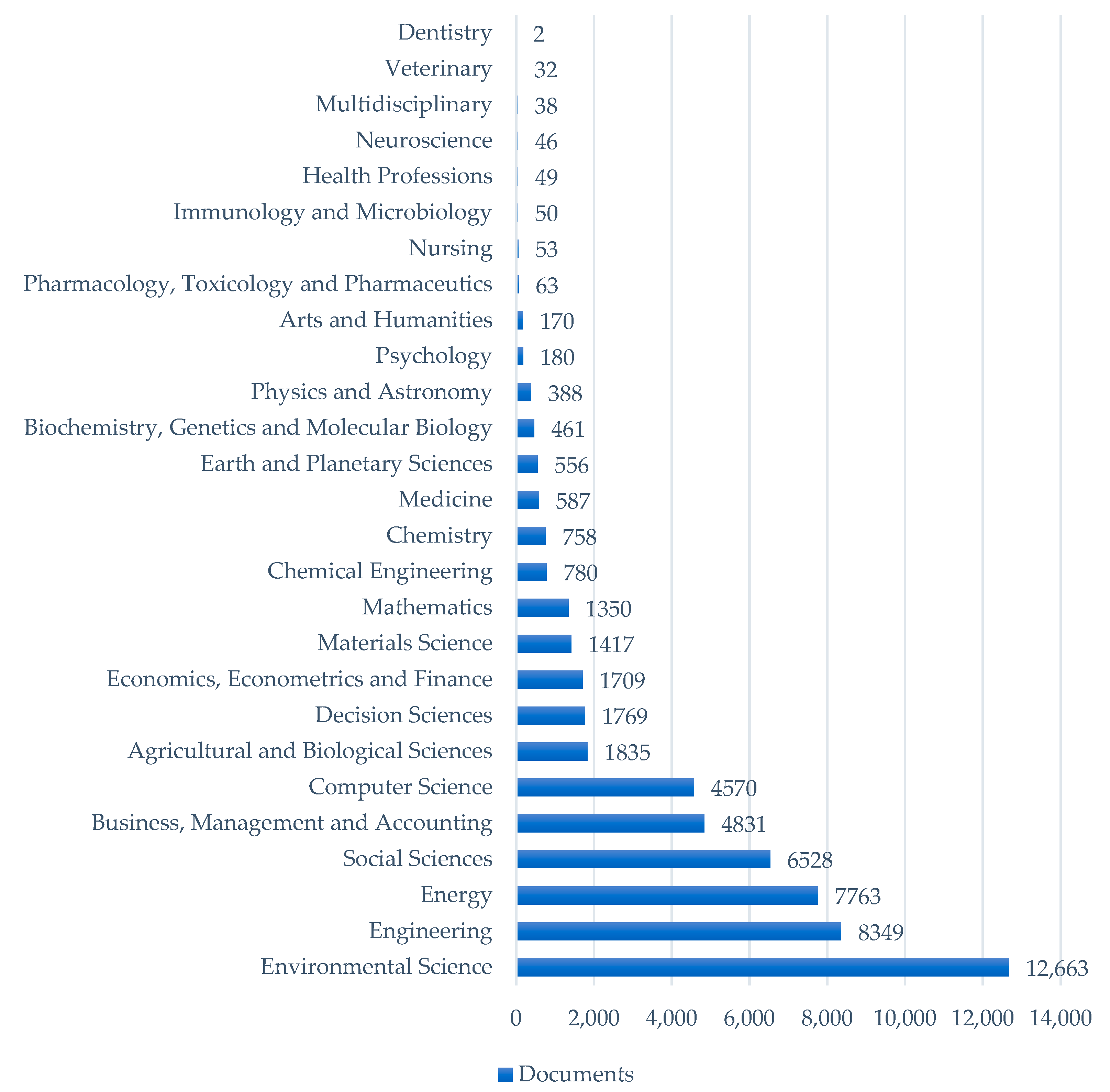
Figure 14 shows the 27 most representative areas in the research. Utilizing data from the Scopus database, it was determined that the Environmental Science category has the highest percentage, accounting for 22.2% of publications, followed by Engineering at 14.6%, Energy at 13.6%, Social Sciences at 11.5%, and Business, Management, and Accounting at 8.5%.
Figure 14.
Subject areas within reverse logistics and sustainability research.
According to the analysis, nine categories were identified concerning the study of reverse logistics and sustainability: (1) Environmental Science with a quartile of Q2, (2) Engineering with a quartile of Q1, (3) Energy with a quartile of Q2, (4) Social Sciences with a quartile of Q1, (5) Business, Management, and Accounting with quartile of Q1, (6) Decision Sciences with quartile of Q1, (7) Economics, Econometrics, and Finance with quartile of Q1, (8) Mathematics with quartile of Q2, and (9) Medicine with quartile of Q2.
3.8. Terms Analysis
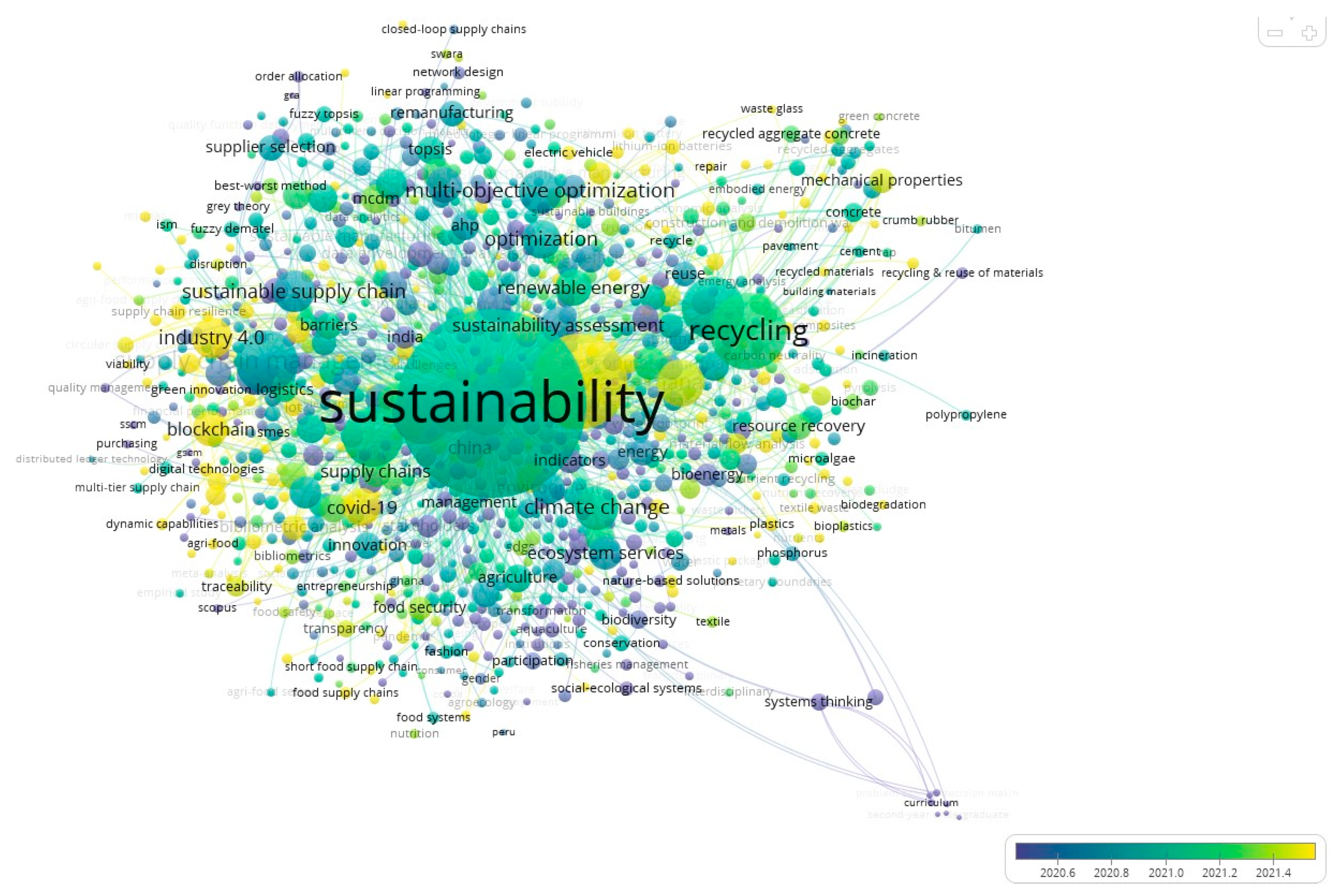
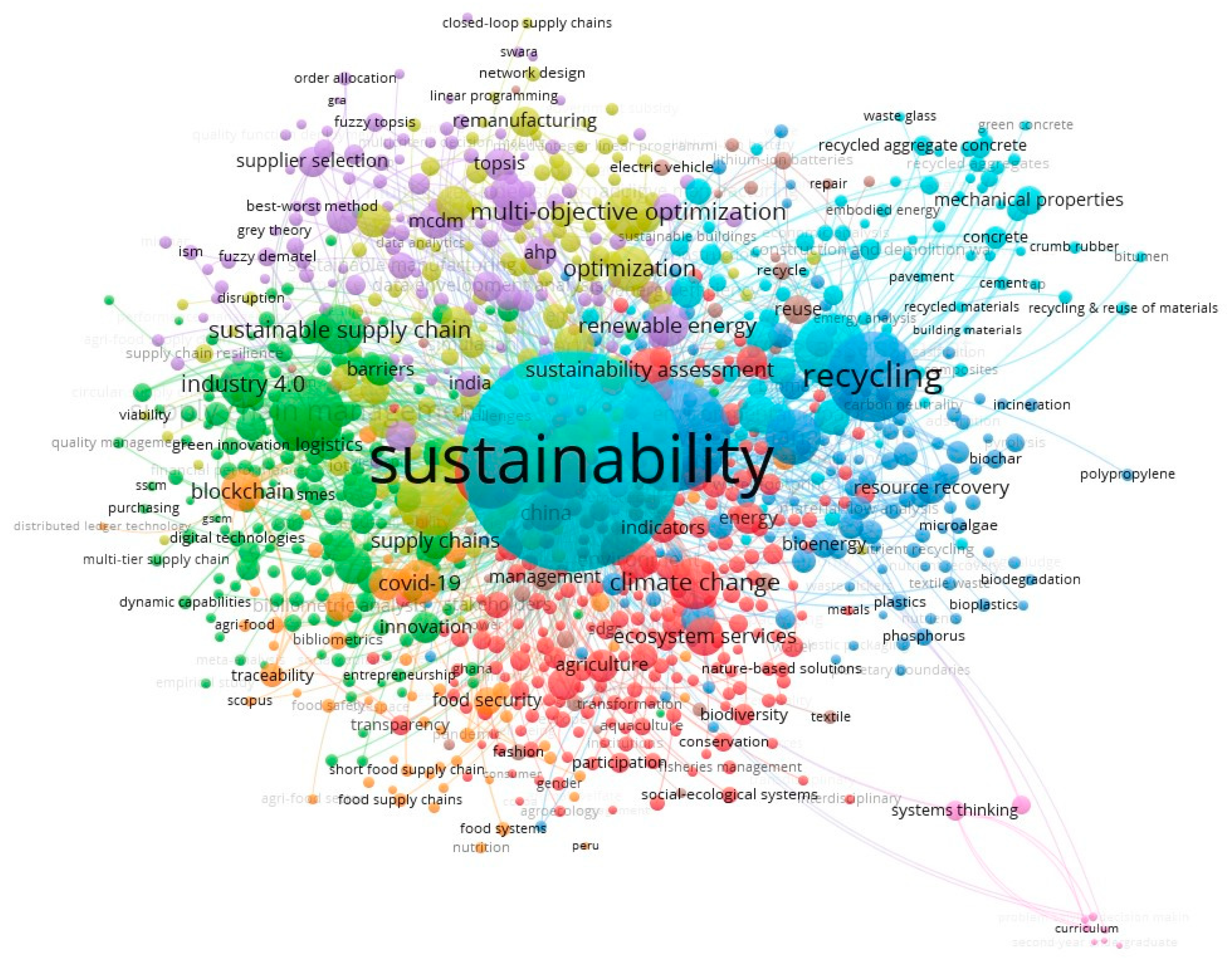
The bibliometric review involved an analysis of keywords from research on reverse logistics and sustainability in the Scopus database. Figure 15 shows a map with 48,332 identified keywords. A minimum of five keyword occurrences per grouping was assumed, resulting in 1000 words meeting this condition. Nine significant terms were identified: “Sustainability”, “Supply Chain Management”, “Sustainable Supply Chain”, “Circular Economy”, and “Recycling.” These terms are strongly linked with keywords such as optimization, sustainability assessment, energy, climate change, blockchain, closed-loop supply chain, reverse logistics, innovation, corporate social responsibility, life cycle assessment, renewable energy, and sustainable development goals. This emphasizes the importance of reverse logistics and sustainability in organizations and their implications for productivity and environmental, social, and economic impact.
Figure 15.
Terms analysis in reverse logistics and sustainability research.
In addition, the co-occurrence of author keywords resulting from the research and the evolution of these words over recent years can be identified. Figure 16 shows that the most recent articles on reverse logistics and sustainability were published around 2021 and can be identified in yellow. These new terms are Industry 4.0, Circular Supply Chain Management, IoT (Internet of Things), Green Innovation, Blockchain Technology and COVID-19.
Figure 16.
Terms analysis in reverse logistics and sustainability research over time.
4. Discussion
This research examines the integration of reverse logistics and sustainability practices within organizations and their impact on productivity, the environment, society, politics, and the economy. Specifically, it addresses the lack of comprehensive literature in this area over the past six years. By delving into the intricate interconnections that highlight the challenges in the relationships between the environment, organizations, and the production of sustainably designed products, this study aims to provide a solid foundation for future research in this field.
This study differs from previous research, such as “Integrating Explainable Artificial Intelligence and Blockchain to Smart Agriculture: Research Prospects for Decision Making and Improved Security” and “Adoption of Blockchain Technology in Supply Chain Operations: A Comprehensive Literature Study Analysis,” focusing on Industry 4.0 technologies. This study aims to investigate reverse logistics and sustainability, addressing various challenges, research gaps, and the contributions of other technologies. Table 7 presents these differences and highlights the specific research contributions to the current state of the art.
Table 7.
Comparison between studies.
This bibliometric analysis has several main contributions. First, it determines the essential sources of publication, articles, and authors most relevant to the topic, countries that contribute the most to publications, and authors with the most citations, among other things.
Secondly, it determines the impact of reverse logistics and sustainability. Currently, topics include globalization, market competitiveness, environmental regulations, technological advances, and climate change. They create a requirement to transform all organizational processes into sustainable ones, encompassing the three essential elements: economic, environmental, and social. Organizations propose new manufacturing policies, product and process design innovation, and the disposal and reuse of products that fulfill their life cycle, achieving environmentally friendly products or processes. Reverse logistics and sustainability have become a source of opportunities for companies to improve their management, profitability, and costs throughout the supply chain. These activities seek to create value and reduce environmental impacts.
Managerial Implications
Future research lines were identified for exploring and analyzing emerging sustainability and risk management trends. Other areas of interest include disruptions related to sustainability, such as the consequences of climate change and disasters. In practice, natural, geopolitical, and social changes that address the issue will allow for better application when reusing waste and improving the environment [63,66].
Secondly, compact technological innovations will be implemented from various fields and under different functionalities, such as Blockchain [67], the Internet of Things [68], and artificial intelligence. Big data analytics, robotics, automation [69], sensor-based systems, Radio Frequency Identification Technology, AI-based algorithms for real-time tracking, inventory visibility, and demand forecasting [70]. These can be effectively combined into supply chain operations to improve traceability, transparency, collaboration, and sustainability outcomes in resource classification, recovery, and disposal. These also investigate new challenges, benefits, and strategies [66]. Furthermore, their adoption would contribute to recycling and remanufacturing within the supply chain.
Big data analysis allows for identifying trends or patterns and recognizing and evaluating customers and preferences in the global market. It is an effective tool for decision-making [71,72]. This integration between advanced technologies and human values focuses on network strengthening and creating automated digital ecosystems to address post-pandemic challenges by better managing the interoperability of data and systems across the supply chain [73]. Similarly, evaluating the potential of these innovations and understanding the barriers in the implementation process could guide organizations in their green IT adoption strategies [74,75]. Also, developing new business models would ensure greater viability, scalability, and impact in circular economy approaches based on digitalization for solid waste management [68].
Furthermore, research in these areas could focus on evaluating the application of different energy recovery and waste treatment technologies, considering socioeconomic conditions and infrastructure [76]. Also, Industry 4.0 technologies can focus on circular product design and manufacturing processes [70], specifically using technologies such as additive manufacturing, digital twins, and collaborative robotics that can efficiently use resources, customization, and remanufacturing [72]. As for Industry 5.0, the worker is the center of the production process for constructing reconfigurable, situational, cyber-physical, and digital supply chains with the support of collaborative drones, ERP systems, advanced connectivity, and 5G [77].
Finally, other research lines include reverse logistics, circular economy, and closed-loop supply chains. Exploring sustainable supply chain management aligned with the circular economy concept impacts waste generation reduction [22]. The European Union, in the integration of the circular economy, is concerned with evaluating the results of policies, regulations, and incentives to understand the appropriation of circularity, the efficiency of resources, the reduction of waste, and general sustainability objectives. Long-term research could explore strategies to integrate circular principles into supply chain management, including sourcing recycled materials, reverse logistics, and product recovery. Also, the benefits these circular practices imply for subsequent evaluation would be job creation, economic growth, social inclusion, and regional development [68,78].
Also, investigating efficient and sustainable supply chain configurations that permit continuous materials and product flows in circular networks could be a valuable research direction [69]. This optimizes the location and capacity allocation of facilities, balancing the efficient use of resources and reducing environmental impact [79].
Therefore, circular economy initiatives have also been developed using Blockchain because it allows exploration in monitoring the product life cycle and application of reverse logistics [80,81]. Furthermore, big data analysis can support these initiatives and, through the analysis of large data sets, identify opportunities for the reuse, remanufacturing, and recycling of materials to contribute to sustainable manufacturing practices [82].
5. Conclusions
This article presents a bibliometric analysis of reverse logistics and sustainability literature. The analysis was conducted using data obtained from Scopus, which included 22,625 articles. The bibliometric analysis shows that the growth trend in publications on the subject began in 2018. Among the most significant journals are Sustainability Switzerland, where topics such as barriers to sustainable development, global change, and conservation of the environment are addressed. The environment, sustainable production systems, waste management, and ecological logistics are also addressed. Following this is the Journal of Cleaner Production, where the main trends in publications highlight efficiency in the use of resources, corporate social responsibility, design of sustainable supply chain networks, and implementation of cleaner technologies. The journal Science of the Total Environment covers topics such as the evaluation of bio-economy products and processes, technologies for the reuse of waste, eco-sustainability, and effects of climate and environmental variation. Resources Conservation and Recycling stands out for research trends about the transition towards sustainable production and consumption systems and the design scope for circularity, reuse, and recyclability.
Finally, the Journal of Environmental Management focuses on primary research trends such as energy consumption optimization, environmental management, life cycle, and material flow analysis. Sustainability Switzerland is an essential journal in green logistics and sustainability, with the most publications. The Journal of Cleaner Production stands out in terms of citations and readership. Switzerland and the Netherlands are the leading countries in published journals on this topic.
The author Tseng, Ming-Lang, is the most influential because he generates outstanding contributions to scientific information. Then, Sarkis, J. is the most cited for his publications. The article “Blockchain Technology and its Relationships to Sustainable Supply Chain Management” has 1888 citations, making it one of the top 10 publications with the most related citations. A high level of collaboration is evident between authors, highlighting Wang, Y. with trends in topics such as reuse, optimization, and analysis of resource properties. Sarkis, J. also stands out for developing research regarding resilient supply chains, green practices, sustainable technologies, industrial symbiosis, and sustainable development. Geng Y. predominates his focus on research lines based on sustainability challenges, waste management, and product life cycle.
China contributes the most in terms of articles published and citations. Thus, it collaborates on topics related to analyzing emerging technologies derived from Industry 4.0. Also, in countries like the United States, the most recurring topics are the evolution and development of efficient supply chain management and opportunities for Blockchain technology, followed by the United Kingdom with trends in the study of sustainable models and the incorporation of environmentally friendly practices.
In India, the line of research in developing optimization models in reverse logistics prevails, and Italy bases its contributions on evaluating environmental impact and global efficiency. Also, they stand out for having a more significant link between countries regarding the number of citations and publishing regarding topics from each area of interest. The Chinese Academy of Sciences stands out among the institutions, with more influence in publications. Concerning funding entities, the National Natural Science Foundation of China is the one that makes the most outstanding contribution to the development and publication of articles. Depending on the subareas of knowledge, the most representative in research are Environmental Science, Engineering, and Energy.
This research has several limitations. The information was only extracted from the Scopus database. This search may vary the number of articles because it is constantly updated. Journals, authors, or affiliations can sometimes present difficulties in organizing because they may be written differently. However, it can be published by the same person, journal, or organization. When information is exported, it must be organized manually. These limitations could be considered for future research, making it relevant to address new perspectives resulting from the study. Industry 4.0 technologies such as artificial intelligence, Blockchain in reverse logistics, and sustainability applications could be considered. Also, innovation initiatives in sustainable processes that promote reverse logistics, circular economy, and sustainable supply chain could be considered, influencing the efficiency of organization economic growth and exploring successful cases of reverse logistics application and sustainable processes in different industries.
Funding
This research received no external funding.
Institutional Review Board Statement
Not applicable.
Informed Consent Statement
Not applicable.
Data Availability Statement
Data are available upon request.
Conflicts of Interest
The authors declare no conflicts of interest.
Appendix A. Equation Search
| Database | Equation Search |
| Scopus * | (TITLE-ABS-KEY (“reverse logistic” OR “supply chain” OR “recycling” OR “decision making” OR “reverse logistic network” OR “green supply chain” OR “reverse supply chain” OR “closed-loop supply chain”) AND TITLE-ABS-KEY (“sustainability” OR “sustainable supply chain” OR “economic and social effects” OR “environmental impact” OR “environmental regulations”)) AND PUBYEAR > 2017 AND PUBYEAR < 2024 AND (LIMIT-TO (SRCTYPE, “j”)) AND (LIMIT-TO (DOCTYPE, “ar”) OR LIMIT-TO (DOCTYPE, “re”)) AND (LIMIT-TO (SUBJAREA, “ENVI”) OR LIMIT-TO (SUBJAREA, “ENGI”) OR LIMIT-TO (SUBJAREA, “ENER”) OR LIMIT-TO (SUBJAREA, “SOCI”) OR LIMIT-TO (SUBJAREA, “BUSI”) OR LIMIT-TO (SUBJAREA, “COMP”) OR LIMIT-TO (SUBJAREA, “AGRI”) OR LIMIT-TO (SUBJAREA, “DECI”) OR LIMIT-TO (SUBJAREA, “ECON”) OR LIMIT-TO (SUBJAREA, “MATE”) OR LIMIT-TO (SUBJAREA, “MATH”)) AND (LIMIT-TO (LANGUAGE, “English”)) AND (LIMIT-TO (EXACTKEYWORD, “Sustainability”) OR LIMIT-TO (EXACTKEYWORD, “Decision Making”) OR LIMIT-TO (EXACTKEYWORD, “Economic And Social Effects”) OR LIMIT-TO (EXACTKEYWORD, “Supply Chain Management”) OR LIMIT-TO (EXACTKEYWORD, “Supply Chains”) OR LIMIT-TO (EXACTKEYWORD, “Environmental Impact”) OR LIMIT-TO (EXACTKEYWORD, “Environmental Sustainability”) OR LIMIT-TO (EXACTKEYWORD, “Circular Economy”) OR LIMIT-TO (EXACTKEYWORD, “Recycling”) OR LIMIT-TO (EXACTKEYWORD, “Waste Management”)) |
| * Search strategies database. | |
References
- Govindan, K.; Soleimani, H.; Kannan, D. Reverse logistics and closed-loop supply chain: A comprehensive review to explore the future. Eur. J. Oper. Res. 2015, 240, 603–626. [Google Scholar] [CrossRef]
- Kroon, L.; Vrijens, G. Returnable containers: An example of reverse logistics. Int. J. Phys. Distrib. Logist. Manag. 1995, 25, 56–68. [Google Scholar] [CrossRef]
- Carter, C.R.; Ellram, L.M. Reverse Logistics: A Review of the Literature and Framework for Future Investigation. J. Bus. Logist. 1998, 19, 85–102. [Google Scholar]
- Fleischmann, M. Reverse Logistics Network Structures and Design. 2001. Available online: https://www.erim.eur.nl/ (accessed on 4 June 2023).
- Dekker, R.; Fleischmann, M.; Inderfurth, K.; Wassenhove, L.N. Reverse Logistics. Quantitative Models for Closed-Loop Supply Chains; Springer: Berlin/Heidelberg, Germany, 2013. [Google Scholar] [CrossRef]
- Abdissa, G.; Ayalew, A.; Dunay, A.; Illés, C.B. Role of Reverse Logistics Activities in the Recycling of Used Plastic Bottled Water Waste Management. Sustainability 2022, 14, 7650. [Google Scholar] [CrossRef]
- Krikke, H.R.; Le Blanc, H.M.; Van De Velde, S. Creating Value from Returns? The Impact of Product Life Cycle Management on Circular Supply Chains and Reverse. No. 2. 2003. Available online: https://research.tilburguniversity.edu/en/publications/creating-value-from-returns-the-impact-of-product-life-cycle-mana (accessed on 4 June 2023).
- Trevisan, A.H.; Lobo, A.; Guzzo, D.; de Vasconcelos Gomes, L.A.; Mascarenhas, J. Barriers to employing digital technologies for a circular economy: A multi-level perspective. J. Environ. Manag. 2023, 332, 117437. [Google Scholar] [CrossRef]
- Presley, A.; Meade, L.; Sarkis, J. A strategic sustainability justification methodology for organizational decisions: A reverse logistics illustration. Int. J. Prod. Res. 2007, 45, 4595–4620. [Google Scholar] [CrossRef]
- Sarkis, J.; Helms, M.M.; Hervani, A.A. Reverse logistics and social sustainability. Corp. Soc. Responsib. Environ. Manag. 2010, 17, 337–354. [Google Scholar] [CrossRef]
- Gladwin, T.N.; Kennelly, J.J.; Krause, T.-S. Shifting Paradigms for Sustainable Development: Implications for Management Theory and. Acad. Manag. Rev. 1995, 20, 874–907. [Google Scholar] [CrossRef]
- Hervani, A.A.; Sarkis, J.; Helms, M.M. Environmental goods valuations for social sustainability: A conceptual framework. Technol. Forecast. Soc. Change 2017, 125, 137–153. [Google Scholar] [CrossRef]
- Romano, A.L.; Ferreira, L.M.D.F.; Caeiro, S.S.F.S. Why companies adopt supply chain sustainability practices: A study of companies in Brazil. J. Clean. Prod. 2023, 433, 139725. [Google Scholar] [CrossRef]
- Faber, N.; Jorna, R.; Van Engelen, J. The sustainability of ‘sustainability’—A study into the conceptual foundations of the notion of ‘sustainability’. J. Environ. Assess. Policy Manag. 2005, 7, 337–370. [Google Scholar] [CrossRef]
- Marín, J.M.R.; Angulo, H.O.C.; Infantes, J.A.A. Environmental Strategies for Sustainability: Challenges in the Face of the Global Crisis. Rev. Filos. 2022, 39, 375–385. [Google Scholar] [CrossRef]
- Salas-Navarro, K.; Serrano-Pájaro, P.; Ospina-Mateus, H.; Zamora-Musa, R. Inventory Models in a Sustainable Supply Chain: A Bibliometric Analysis. Sustainability 2022, 14, 6003. [Google Scholar] [CrossRef]
- Pérez Matos, N.E. La bibliografía, bibliometría y las ciencias afines. ACIMED 2002, 10, 1–2. Available online: http://scielo.sld.cu/scielo.php?script=sci_arttext&pid=S1024-94352002000300001&lng=es&nrm=iso&tlng=es (accessed on 4 June 2023).
- Burnham, J.F. Scopus database: A review. Biomed. Digit. Libr. 2006, 3, 1. [Google Scholar] [CrossRef] [PubMed]
- Ospina-Mateus, H.; Jiménez, L.A.Q.; Lopez-Valdes, F.J.; Salas-Navarro, K. Bibliometric analysis in motorcycle accident research: A global overview. Scientometrics 2019, 121, 793–815. [Google Scholar] [CrossRef]
- Reyes, J.J.R.; Solano-Charris, E.L.; Montoya-Torres, J.R. The storage location assignment problem: A literature review. Int. J. Ind. Eng. Comput. 2019, 10, 199–224. [Google Scholar] [CrossRef]
- Meza-Peralta, K.; Gonzalez-Feliu, J.; Montoya-Torres, J.R.; Khodadad-Saryazdi, A. A unified typology of urban logistics spaces as interfaces for freight transport: A Systematic Literature Review. Supply Chain. Forum 2020, 21, 274–289. [Google Scholar] [CrossRef]
- Khan, S.A.R.; Yu, Z.; Golpira, H.; Sharif, A.; Mardani, A. A state-of-the-art review and meta-analysis on sustainable supply chain management: Future research directions. J. Clean. Prod. 2021, 278, 123357. [Google Scholar] [CrossRef]
- Mahmoudi, S.; Huda, N.; Alavi, Z.; Islam, M.T.; Behnia, M. End-of-life photovoltaic modules: A systematic quantitative literature review. Resour. Conserv. Recycl. 2019, 146, 1–16. [Google Scholar] [CrossRef]
- Belter, C.W. Bibliometric indicators: Opportunities and limits. J. Med. Libr. Assoc. 2015, 103, 219–221. [Google Scholar] [CrossRef] [PubMed]
- Van Eck, N.J.; Waltman, L. Software survey: VOSviewer, a computer program for bibliometric mapping. Scientometrics 2010, 84, 523–538. [Google Scholar] [CrossRef] [PubMed]
- Kolotzek, C.; Helbig, C.; Thorenz, A.; Reller, A.; Tuma, A. A company-oriented model for the assessment of raw material supply risks, environmental impact and social implications. J. Clean. Prod. 2018, 176, 566–580. [Google Scholar] [CrossRef]
- Hannouf, M.; Assefa, G. A life cycle sustainability assessment-based decision-analysis framework. Sustainability 2018, 10, 3863. [Google Scholar] [CrossRef]
- Reddy, K.N.; Kumar, A.; Ballantyne, E.E.F. A three-phase heuristic approach for reverse logistics network design incorporating carbon footprint. Int. J. Prod. Res. 2019, 57, 6090–6114. [Google Scholar] [CrossRef]
- Gupta, S.; Czinkota, M.; Ozdemir, S. Innovation in Sustainability Initiatives through Reverse Channels. J. Bus. Bus. Mark. 2019, 26, 233–243. [Google Scholar] [CrossRef]
- Borregan-Alvarado, J.; Alvarez-Meaza, I.; Cilleruelo-Carrasco, E.; Garechana-Anacabe, G. A bibliometric analysis in industry 4.0 and advanced manufacturing: What about the sustainable supply chain? Sustainability 2020, 12, 7840. [Google Scholar] [CrossRef]
- Tseng, M.L.; Bui, T.D.; Lim, M.K.; Lewi, S. A cause and effect model for digital sustainable supply chain competitiveness under uncertainties: Enhancing digital platform. Sustainability 2021, 13, 10150. [Google Scholar] [CrossRef]
- Hanczar, P.; Azadehranjbar, Z. A Bi-Objective Sustainable Supply Chain Redesign: What Effect Does Energy Availability Have on Redesign? Energies 2022, 15, 3642. [Google Scholar] [CrossRef]
- Perotti, S.; Colicchia, C. Greening warehouses through energy efficiency and environmental impact reduction: A conceptual framework based on a systematic literature review. Int. J. Logist. Manag. 2023, 34, 199–234. [Google Scholar] [CrossRef]
- Zhang, L.; Yu, J.; Shi, Q.; Kong, Q. An evaluation of the economic benefits of rooftop distributed photovoltaic projects in the whole county in China. J. Clean. Prod. 2023, 432, 139744. [Google Scholar] [CrossRef]
- Scimago. Scimago Journal & Country Rank. Available online: https://www.scimagojr.com/ (accessed on 12 June 2023).
- Saberi, S.; Kouhizadeh, M.; Sarkis, J.; Shen, L. Blockchain technology and its relationships to sustainable supply chain management. Int. J. Prod. Res. 2019, 57, 2117–2135. [Google Scholar] [CrossRef]
- Bünemann, E.K.; Bongiorno, G.; Bai, Z.; Creamer, R.E.; De Deyn, G.; de Goede, R.; Fleskens, L.; Geissen, V.; Kuyper, T.W.; Mäder, P.; et al. Soil quality—A critical review. Soil Biol. Biochem. 2018, 120, 105–125. [Google Scholar] [CrossRef]
- Oztemel, E.; Gursev, S. Literature review of Industry 4.0 and related technologies. J. Intell. Manuf. 2020, 31, 127–182. [Google Scholar] [CrossRef]
- Dwivedi, Y.K.; Hughes, L.; Ismagilova, E.; Aarts, G.; Coombs, C.; Crick, T.; Duan, Y.; Dwivedi, R.; Edwards, J.; Eirug, A.; et al. Artificial Intelligence (AI): Multidisciplinary perspectives on emerging challenges, opportunities, agenda for research, practice and policy. Int. J. Inf. Manag. 2021, 57, 101994. [Google Scholar] [CrossRef]
- Ferronato, N.; Torretta, V. Waste mismanagement in developing countries: A review of global issues. Int. J. Environ. Res. Public Health 2019, 16, 1060. [Google Scholar] [CrossRef] [PubMed]
- Kusiak, A. Smart manufacturing. Int. J. Prod. Res. 2018, 56, 508–517. [Google Scholar] [CrossRef]
- Kalmykova, Y.; Sadagopan, M.; Rosado, L. Circular economy—From review of theories and practices to development of implementation tools. Resour. Conserv. Recycl. 2018, 135, 190–201. [Google Scholar] [CrossRef]
- Schroeder, P.; Anggraeni, K.; Weber, U. The Relevance of Circular Economy Practices to the Sustainable Development Goals. J. Ind. Ecol. 2019, 23, 77–95. [Google Scholar] [CrossRef]
- Merli, R.; Preziosi, M.; Acampora, A. How do scholars approach the circular economy? A systematic literature review. J. Clean. Prod. 2018, 178, 703–722. [Google Scholar] [CrossRef]
- Tam, V.W.Y.; Soomro, M.; Evangelista, A.C.J. A review of recycled aggregate in concrete applications (2000–2017). Constr. Build. Mater. 2018, 172, 272–292. [Google Scholar] [CrossRef]
- Awan, M.A.; Ali, Y. Sustainable modeling in reverse logistics strategies using fuzzy MCDM: Case of China Pakistan Economic Corridor. Manag. Environ. Qual. Int. J. 2019, 30, 1132–1151. [Google Scholar] [CrossRef]
- Bag, S.; Gupta, S.; Luo, Z. Examining the role of logistics 4.0 enabled dynamic capabilities on firm performance. Int. J. Logist. Manag. 2020, 31, 607–628. [Google Scholar] [CrossRef]
- Zeng, J.; Liu, S. Research on recycling benefits of spent lithium batteries with parameter uncertain: Application to adjust incentive policy. J. Energy Storage 2023, 74, 109314. [Google Scholar] [CrossRef]
- He, Y.; Hosseinzadeh-Bandbafha, H.; Kiehbadroudinezhad, M.; Peng, W.; Tabatabaei, M.; Aghbashlo, M. Environmental footprint analysis of gold recycling from electronic waste: A comparative life cycle analysis. J. Clean. Prod. 2023, 432, 139675. [Google Scholar] [CrossRef]
- Ramos, L.; Rivas-Echeverría, F.; Pérez, A.G.; Casas, E. Artificial intelligence and sustainability in the fashion industry: A review from 2010 to 2022. SN Appl. Sci. 2023, 5, 387. [Google Scholar] [CrossRef]
- Zhang, X.; Li, Z.; Wang, Y. A review of the criteria and methods of reverse logistics supplier selection. Processes 2020, 8, 705. [Google Scholar] [CrossRef]
- Frei, R.; Jack, L.; Brown, S. Product returns: A growing problem for business, society and environment. Int. J. Oper. Prod. Manag. 2020, 40, 1613–1621. [Google Scholar] [CrossRef]
- Nascimento, D.L.M.; Alencastro, V.; Quelhas, O.L.G.; Caiado, R.G.G.; Garza-Reyes, J.A.; Rocha-Lona, L.; Tortorella, G. Exploring Industry 4.0 technologies to enable circular economy practices in a manufacturing context: A business model proposal. J. Manuf. Technol. Manag. 2019, 30, 607–627. [Google Scholar] [CrossRef]
- Su, I.H.; Wu, L.; Tan, K.H. The future of the food supply chain: A systematic literature review and research directions towards sustainability, resilience, and technology adoption. J. Digit. Econ. 2023, 2, 303–316. [Google Scholar] [CrossRef]
- Dutta, P.; Mishra, A.; Khandelwal, S.; Katthawala, I. A multiobjective optimization model for sustainable reverse logistics in Indian E-commerce market. J. Clean. Prod. 2020, 249, 119348. [Google Scholar] [CrossRef]
- Mishra, S.; Singh, S.P. A stochastic disaster-resilient and sustainable reverse logistics model in big data environment. Ann. Oper. Res. 2022, 319, 853–884. [Google Scholar] [CrossRef]
- Elia, V.; Gnoni, M.G.; Tornese, F. Designing a sustainable dynamic collection service for WEEE: An economic and environmental analysis through simulation. Waste Manag. Res. 2019, 37, 402–411. [Google Scholar] [CrossRef] [PubMed]
- Evode, N.; Qamar, S.A.; Bilal, M.; Barceló, D.; Iqbal, H.M.N. Plastic waste and its management strategies for environmental sustainability. Case Stud. Chem. Environ. Eng. 2021, 4, 100142. [Google Scholar] [CrossRef]
- Moosavi, J.; Fathollahi-Fard, A.M.; Dulebenets, M.A. Supply chain disruption during the COVID-19 pandemic: Recognizing potential disruption management strategies. Int. J. Disaster Risk Reduct. 2022, 75, 102983. [Google Scholar] [CrossRef] [PubMed]
- Kusch-Brandt, S. Websites informing the citizen in germany about the local recycling centre: A survey under a circular economy perspective. Int. Multidiscip. Sci. GeoConf. 2020, 20, 281–286. [Google Scholar] [CrossRef]
- Tavana, M.; Kian, H.; Nasr, A.K.; Govindan, K.; Mina, H. A comprehensive framework for sustainable closed-loop supply chain network design. J. Clean. Prod. 2022, 332, 129777. [Google Scholar] [CrossRef]
- Edalatpour, M.A.; Al-e-hashem, S.M.J.M.; Karimi, B.; Bahli, B. Investigation on a novel sustainable model for waste management in megacities: A case study in tehran municipality. Sustain. Cities Soc. 2018, 36, 286–301. [Google Scholar] [CrossRef]
- NSFC. About Us-NSFC at a Glance. Available online: https://www.nsfc.gov.cn/english/site_1/about/6.html (accessed on 13 July 2023).
- Chen, H.Y.; Sharma, K.; Sharma, C.; Sharma, S. Integrating explainable artificial intelligence and blockchain to smart agriculture: Research prospects for decision making and improved security. Smart Agric. Technol. 2023, 6, 100350. [Google Scholar] [CrossRef]
- Chakraborty, K.; Ghosh, A.; Pratap, S. Adoption of blockchain technology in supply chain operations: A comprehensive literature study analysis. Oper. Manag. Res. 2023, 16, 1989–2007. [Google Scholar] [CrossRef]
- Nobanee, H.; Al Hamadi, F.Y.; Abdulaziz, F.A.; Abukarsh, L.S.; Alqahtani, A.F.; AlSubaey, S.K.; Alqahtani, S.M.; Almansoori, H.A. A bibliometric analysis of sustainability and risk management. Sustainability 2021, 13, 3277. [Google Scholar] [CrossRef]
- Chiang, C.T.; Kou, T.C.; Koo, T.L. A systematic literature review of the it-based supply chain management system: Towards a sustainable supply chain management model. Sustainability 2021, 13, 2547. [Google Scholar] [CrossRef]
- Kurniawan, T.A.; Liang, X.; O’callaghan, E.; Goh, H.; Othman, M.H.D.; Avtar, R.; Kusworo, T.D. Transformation of Solid Waste Management in China: Moving towards Sustainability through Digitalization-Based Circular Economy. Sustainability 2022, 14, 2374. [Google Scholar] [CrossRef]
- Sinha, S.; Modak, N.M. A systematic review in recycling/reusing/re-manufacturing supply chain research: A tertiary study. Int. J. Sustain. Eng. 2021, 14, 1411–1432. [Google Scholar] [CrossRef]
- Sun, X.; Yu, H.; Solvang, W.D.; Wang, Y.; Wang, K. The application of Industry 4.0 technologies in sustainable logistics: A systematic literature review (2012–2020) to explore future research opportunities. Environ. Sci. Pollut. Res. 2022, 29, 9560–9591. [Google Scholar] [CrossRef] [PubMed]
- Chen, Q.; Feng, H.; de Soto, B.G. Revamping construction supply chain processes with circular economy strategies: A systematic literature review. J. Clean. Prod. 2022, 335, 130240. [Google Scholar] [CrossRef]
- Sahu, A.; Agrawal, S.; Kumar, G. Integrating Industry 4.0 and circular economy: A review. J. Enterp. Inf. Manag. 2022, 35, 885–917. [Google Scholar] [CrossRef]
- Karmaker, C.L.; Bari, A.M.; Anam, Z.; Ahmed, T.; Ali, S.M.; Pacheco, D.A.d.J.; Moktadir, A. Industry 5.0 challenges for post-pandemic supply chain sustainability in an emerging economy. Int. J. Prod. Econ. 2023, 258, 108806. [Google Scholar] [CrossRef]
- Ribeiro, M.P.L.; Tommasetti, R.; Gomes, M.Z.; Castro, A.; Ismail, A. Adoption phases of Green Information Technology in enhanced sustainability: A bibliometric study. Clean. Eng. Technol. 2021, 3, 100095. [Google Scholar] [CrossRef]
- Yu, Z.; Waqas, M.; Tabish, M.; Tanveer, M.; Haq, I.U.; Khan, S.A.R. Sustainable supply chain management and green technologies: A bibliometric review of literature. Environ. Sci. Pollut. Res. 2022, 29, 58454–58470. [Google Scholar] [CrossRef]
- Khan, A.H.; López-Maldonado, E.A.; Khan, N.A.; Villarreal-Gómez, L.J.; Munshi, F.M.; Alsabhan, A.H.; Perveen, K. Current solid waste management strategies and energy recovery in developing countries—State of art review. Chemosphere 2022, 291, 133088. [Google Scholar] [CrossRef] [PubMed]
- Ivanov, D. The Industry 5.0 framework: Viability-based integration of the resilience, sustainability, and human-centricity perspectives. Int. J. Prod. Res. 2023, 61, 1683–1695. [Google Scholar] [CrossRef]
- Mhatre, P.; Panchal, R.; Singh, A.; Bibyan, S. A systematic literature review on the circular economy initiatives in the European Union. Sustain. Prod. Consum. 2021, 26, 187–202. [Google Scholar] [CrossRef]
- Oliveira, L.S.; Machado, R.L. Application of optimization methods in the closed-loop supply chain: A literature review. J. Comb. Optim. 2021, 41, 357–400. [Google Scholar] [CrossRef]
- Khanfar, A.A.A.; Iranmanesh, M.; Ghobakhloo, M.; Senali, M.G.; Fathi, M. Applications of blockchain technology in sustainable manufacturing and supply chain management: A systematic review. Sustainability 2021, 13, 7870. [Google Scholar] [CrossRef]
- Böckel, A.; Nuzum, A.K.; Weissbrod, I. Blockchain for the Circular Economy: Analysis of the Research-Practice Gap. Sustain. Prod. Consum. 2021, 25, 525–539. [Google Scholar] [CrossRef]
- Mageto, J. Big data analytics in sustainable supply chain management: A focus on manufacturing supply chains. Sustainability 2021, 13, 7101. [Google Scholar] [CrossRef]
Disclaimer/Publisher’s Note: The statements, opinions and data contained in all publications are solely those of the individual author(s) and contributor(s) and not of MDPI and/or the editor(s). MDPI and/or the editor(s) disclaim responsibility for any injury to people or property resulting from any ideas, methods, instructions or products referred to in the content. |
© 2024 by the authors. Licensee MDPI, Basel, Switzerland. This article is an open access article distributed under the terms and conditions of the Creative Commons Attribution (CC BY) license (https://creativecommons.org/licenses/by/4.0/).