Article

Spatio-Temporal Trends in Precipitation, Temperature, and Extremes: A Study of Malawi and Zambia (1981–2021)


by
Teferi Demissie
1,2,* and
Solomon H. Gebrechorkos
3,4
1
International Livestock Research Institute (ILRI), Accelerating Impacts of CGIAR Climate Research for Africa (AICCRA), Addis Ababa P.O. Box 5689, Ethiopia
2
Norwegian Meteorological Institute, 0313 Oslo, Norway
3
School of Geography and the Environment, University of Oxford, Oxford OX1 3QY, UK
4
School of Geography and Environmental Science, University of Southampton, Southampton SO17 1BJ, UK
*
Author to whom correspondence should be addressed.
Sustainability 2024, 16(10), 3885; https://doi.org/10.3390/su16103885
Submission received: 22 March 2024 / Revised: 20 April 2024 / Accepted: 22 April 2024 / Published: 7 May 2024

Abstract

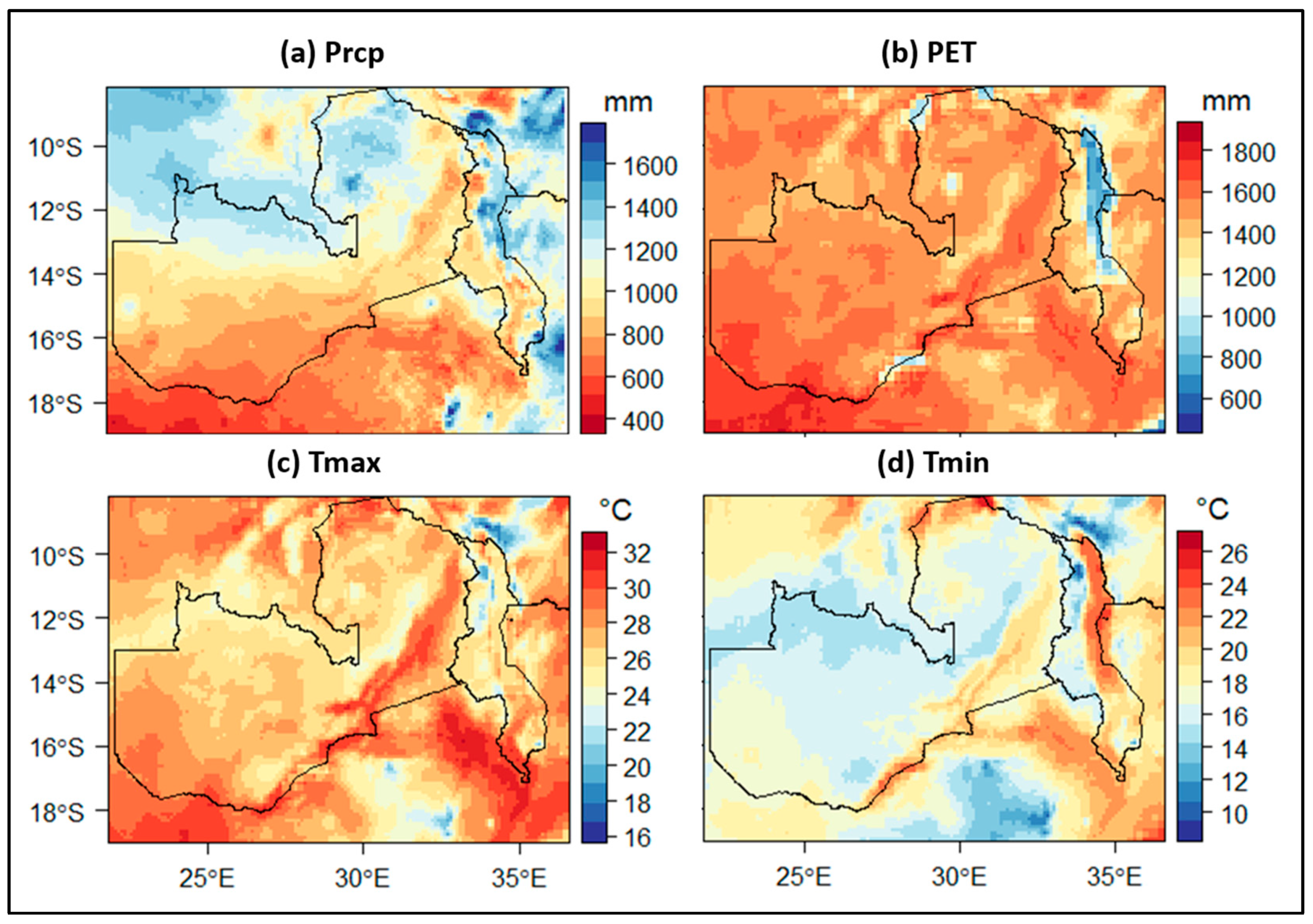
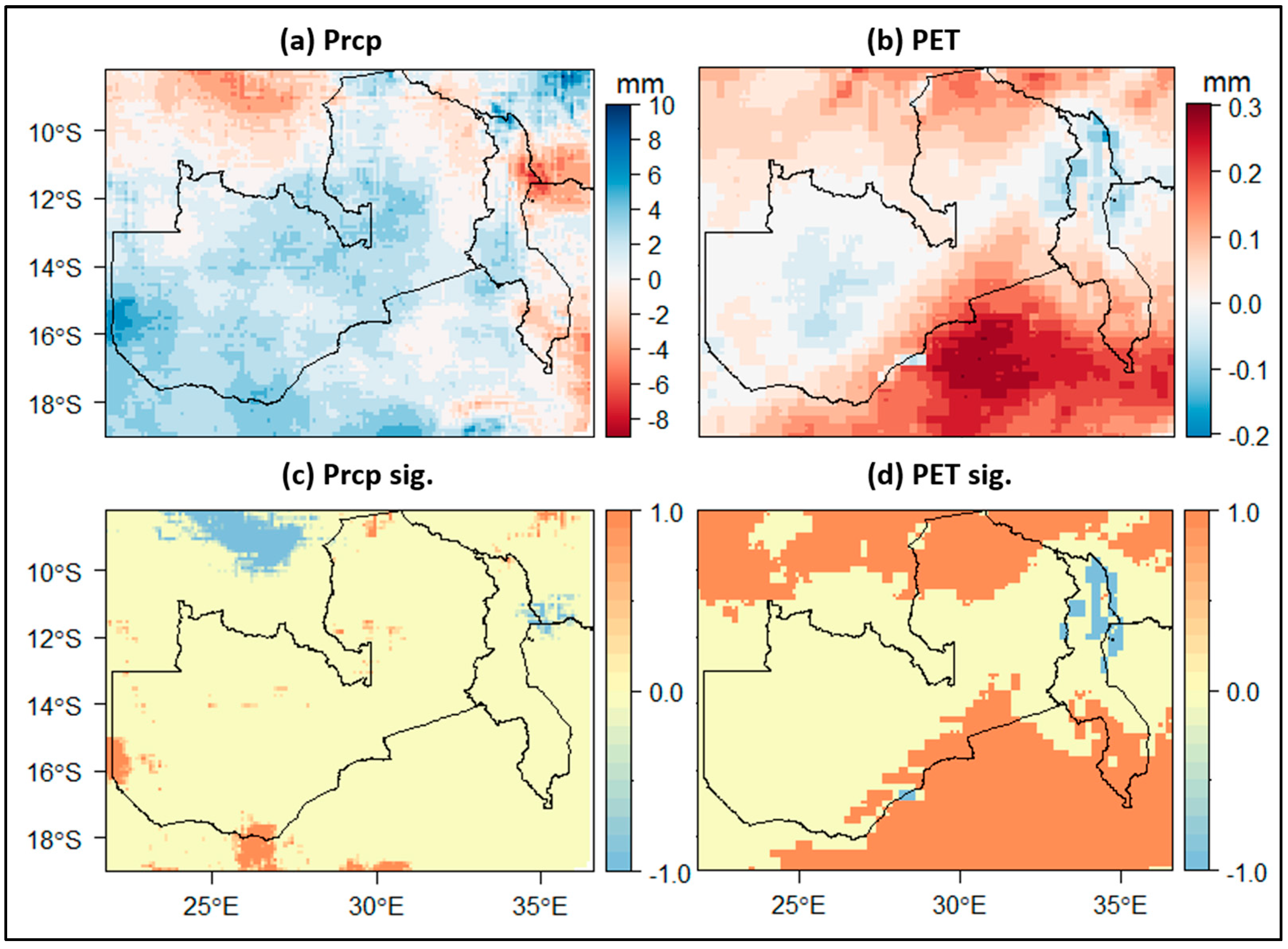
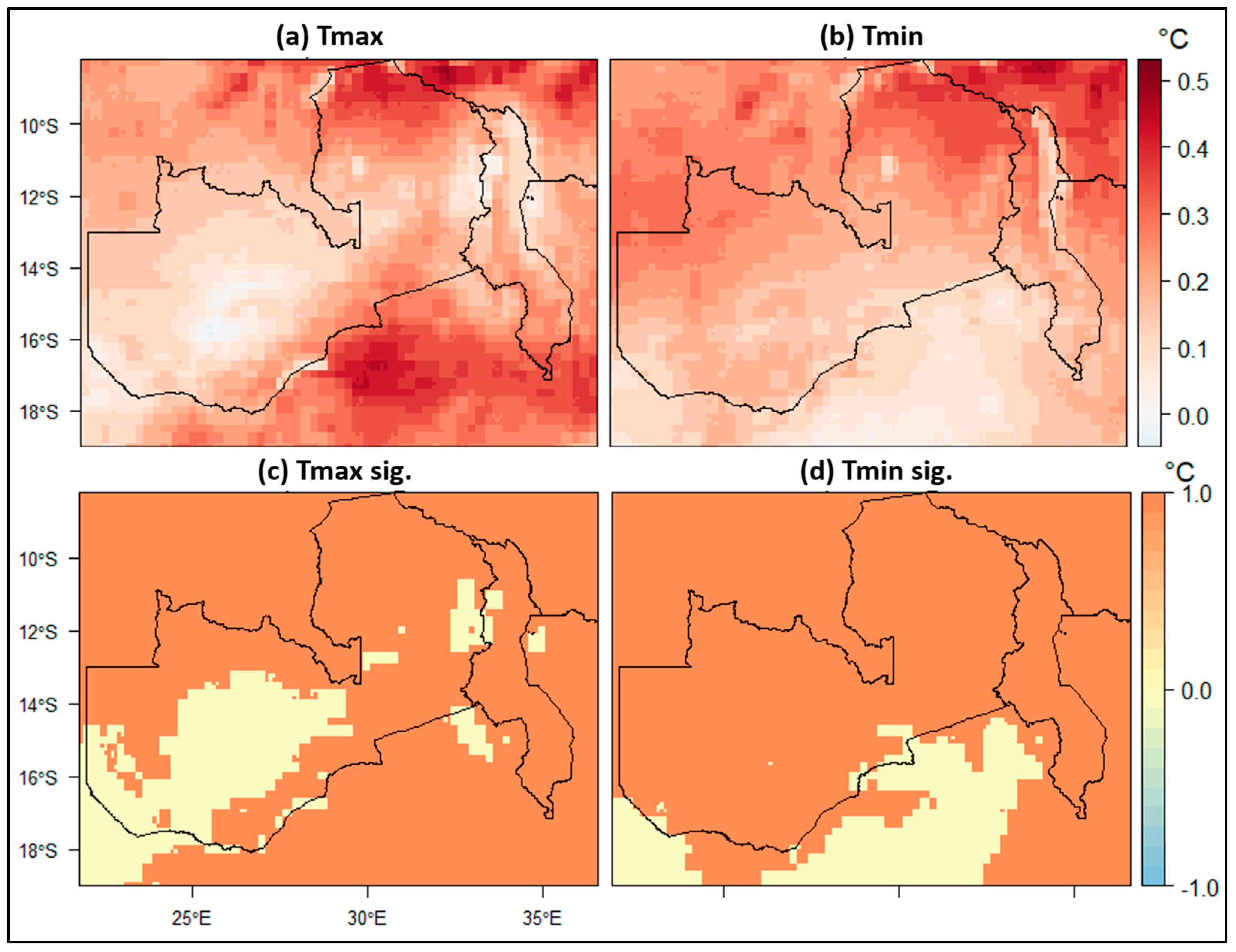
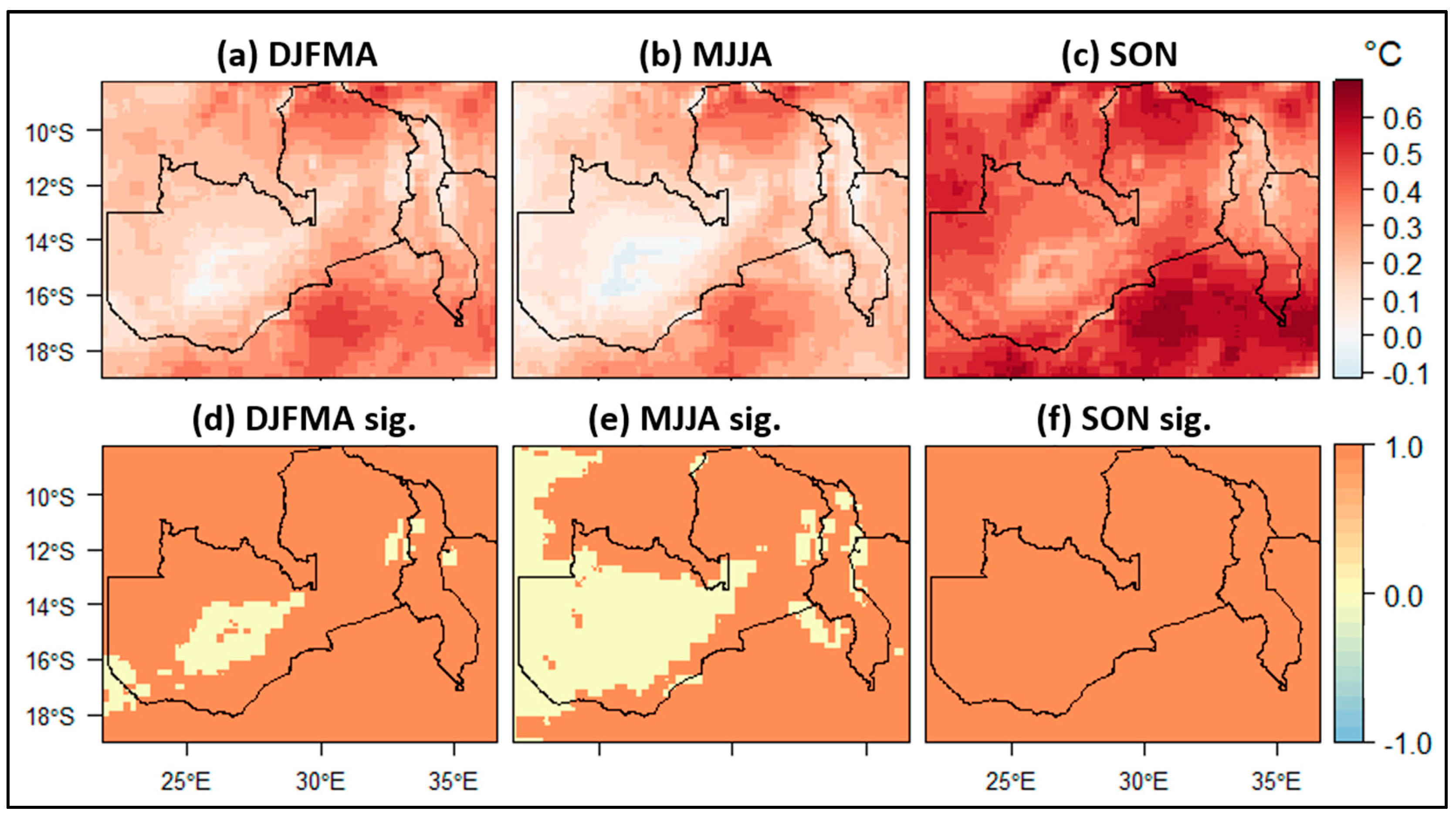
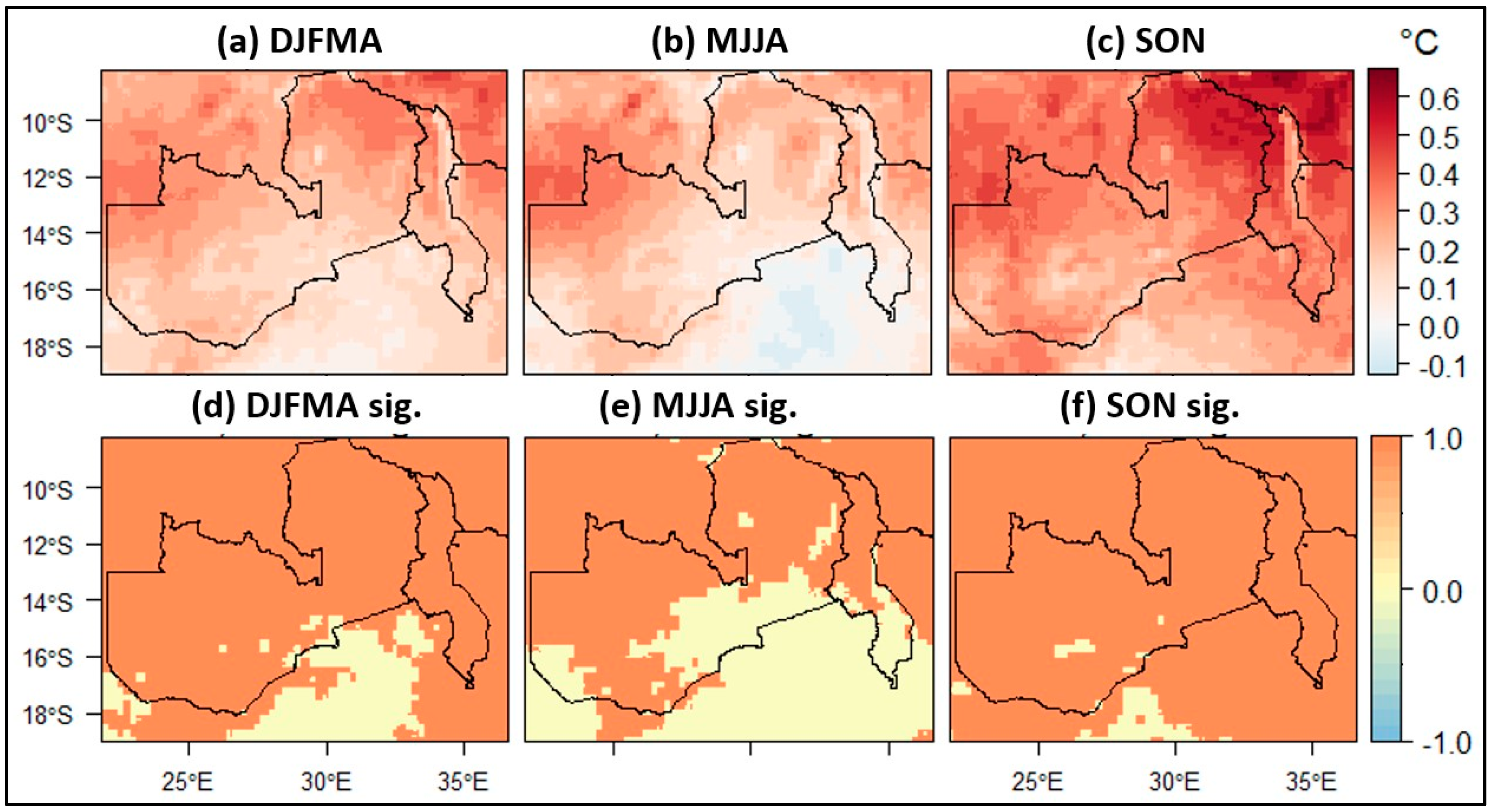
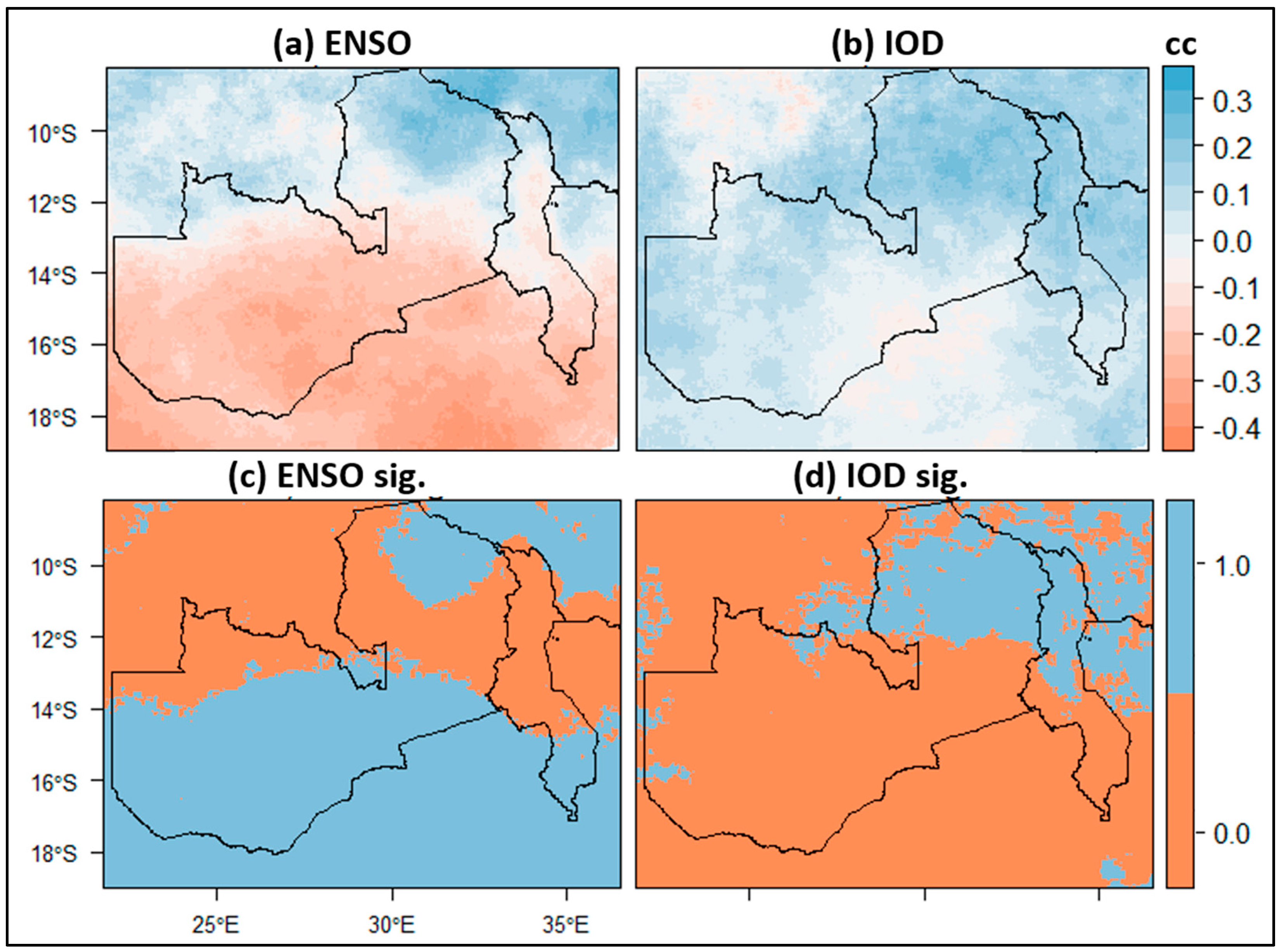
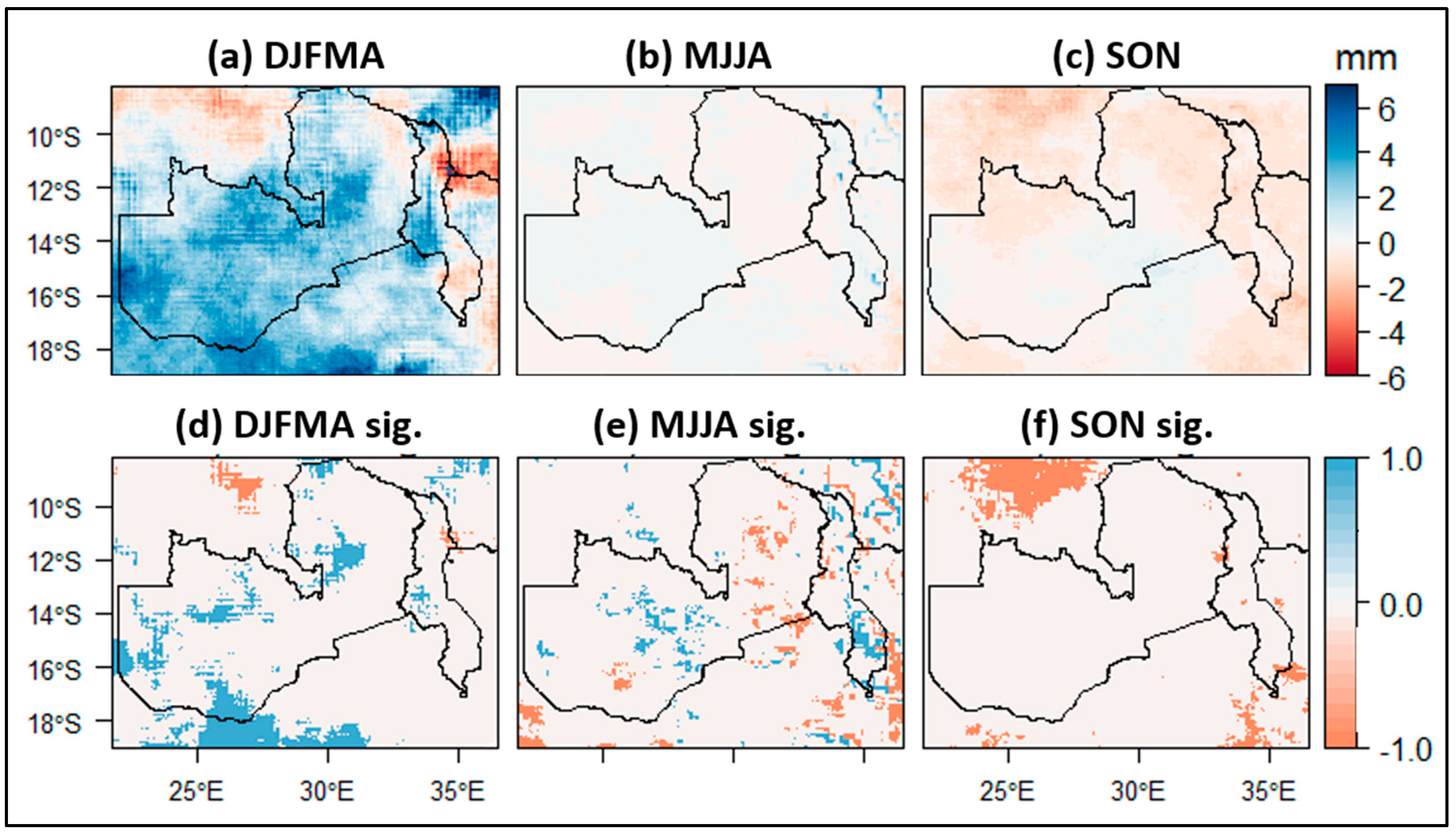
Analyzing long-term climate changes is a prerequisite for identifying hotspot areas and developing site-specific adaptation measures. The current study focuses on assessing changes in precipitation, maximum and minimum temperatures, and potential evapotranspiration in Zambia and Malawi from 1981 to 2021. High-resolution precipitation and temperature datasets are used, namely, Climate Hazards Group InfraRed Precipitation with Station data (0.05°) and Multi-Source Weather (0.1°). The Mann–Kendall trend test and Sen’s Slope methods are employed to assess the changes. The trend analysis shows a non-significant increase in annual precipitation in many parts of Zambia and Central Malawi. In Zambia and Malawi, the average annual and seasonal maximum and minimum temperatures show a statistically significant increasing trend (up to 0.6 °C/decade). The change in precipitation during the major rainy seasons (December–April) shows a non-significant increasing trend (up to 3 mm/year) in a large part of Zambia and Central Malawi. However, Malawi and Northern Zambia show a non-significant decreasing trend (up to −5 mm/year). The change in December–April precipitation significantly correlates with El Niño–Southern Oscillation (Indian Ocean Dipole) in Southern (Northern) Zambia and Malawi. To minimize the impact of the observed changes, it is imperative to develop adaptation measures to foster sustainability in the region.
Keywords: climate change; trend; sustainability; precipitation; temperature; water availability climate change; trend; sustainability; precipitation; temperature; water availability