Article

Effects of Paleosol on the Collapsibility of Loess Sites under Immersion Test Conditions

State Key Laboratory of Continental Dynamics, Department of Geology, Northwest University, Xi’an 710069, China
*
Author to whom correspondence should be addressed.
Sustainability 2024, 16(1), 447; https://doi.org/10.3390/su16010447
Submission received: 26 October 2023 / Revised: 14 December 2023 / Accepted: 16 December 2023 / Published: 4 January 2024

Abstract

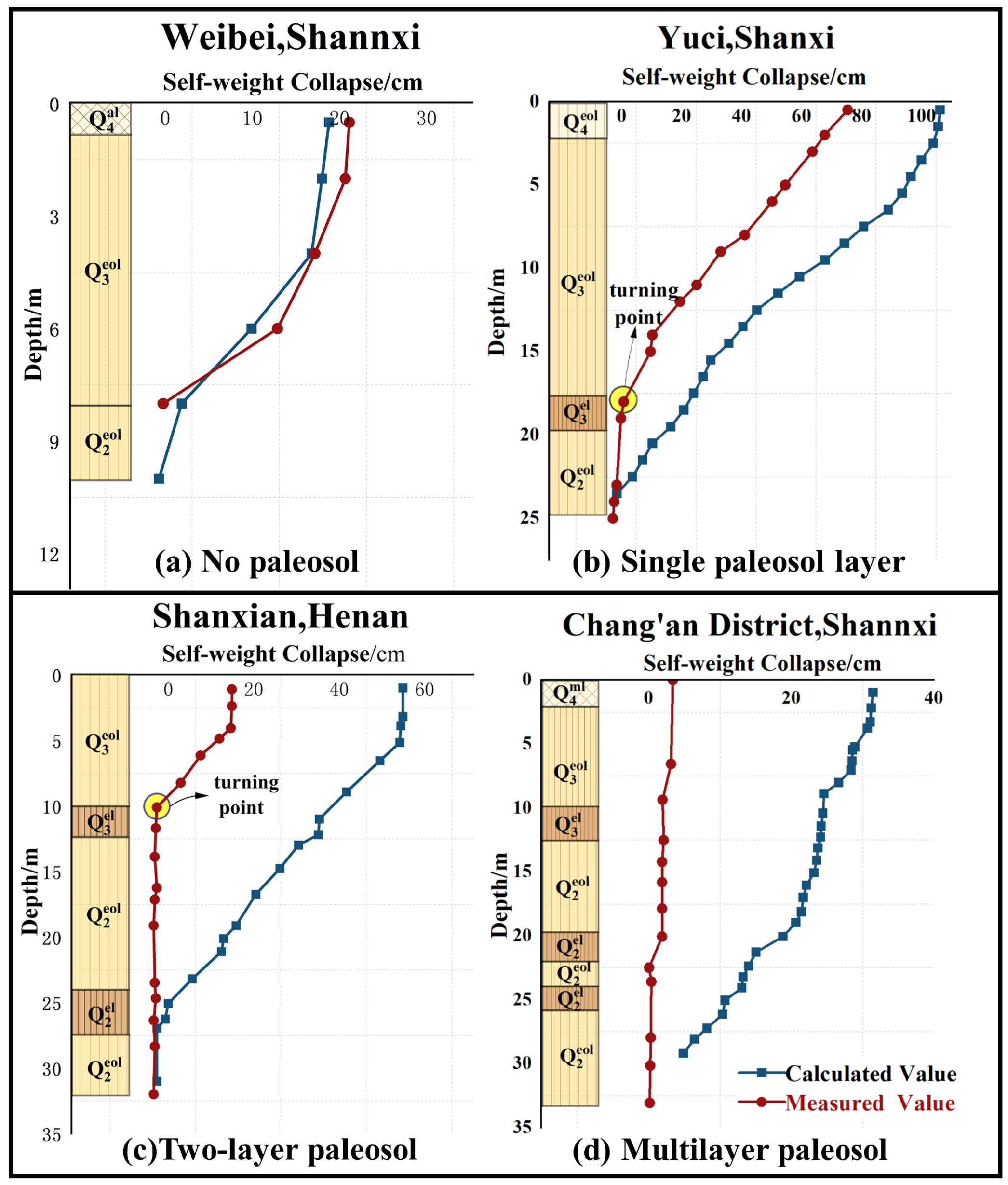
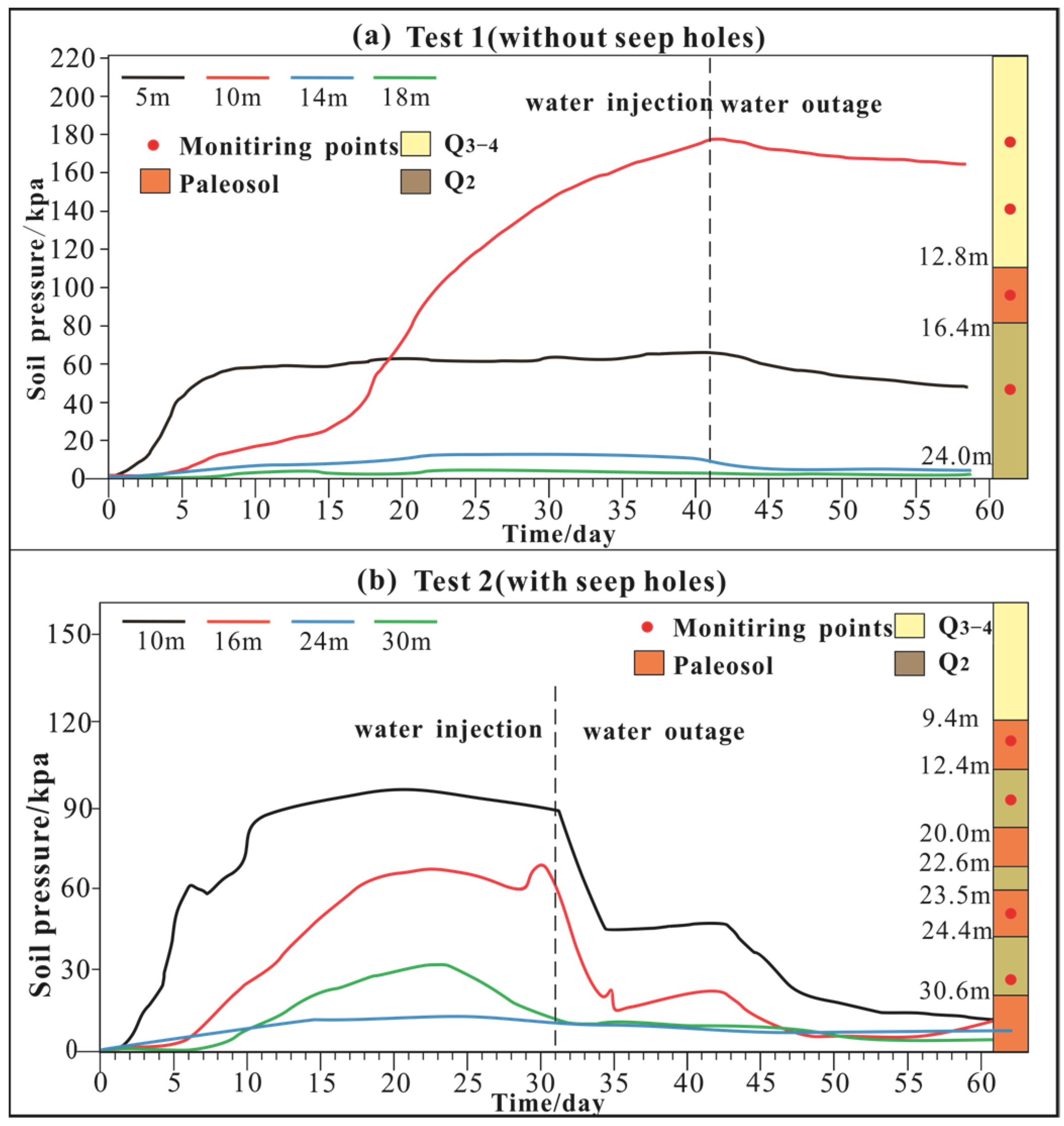
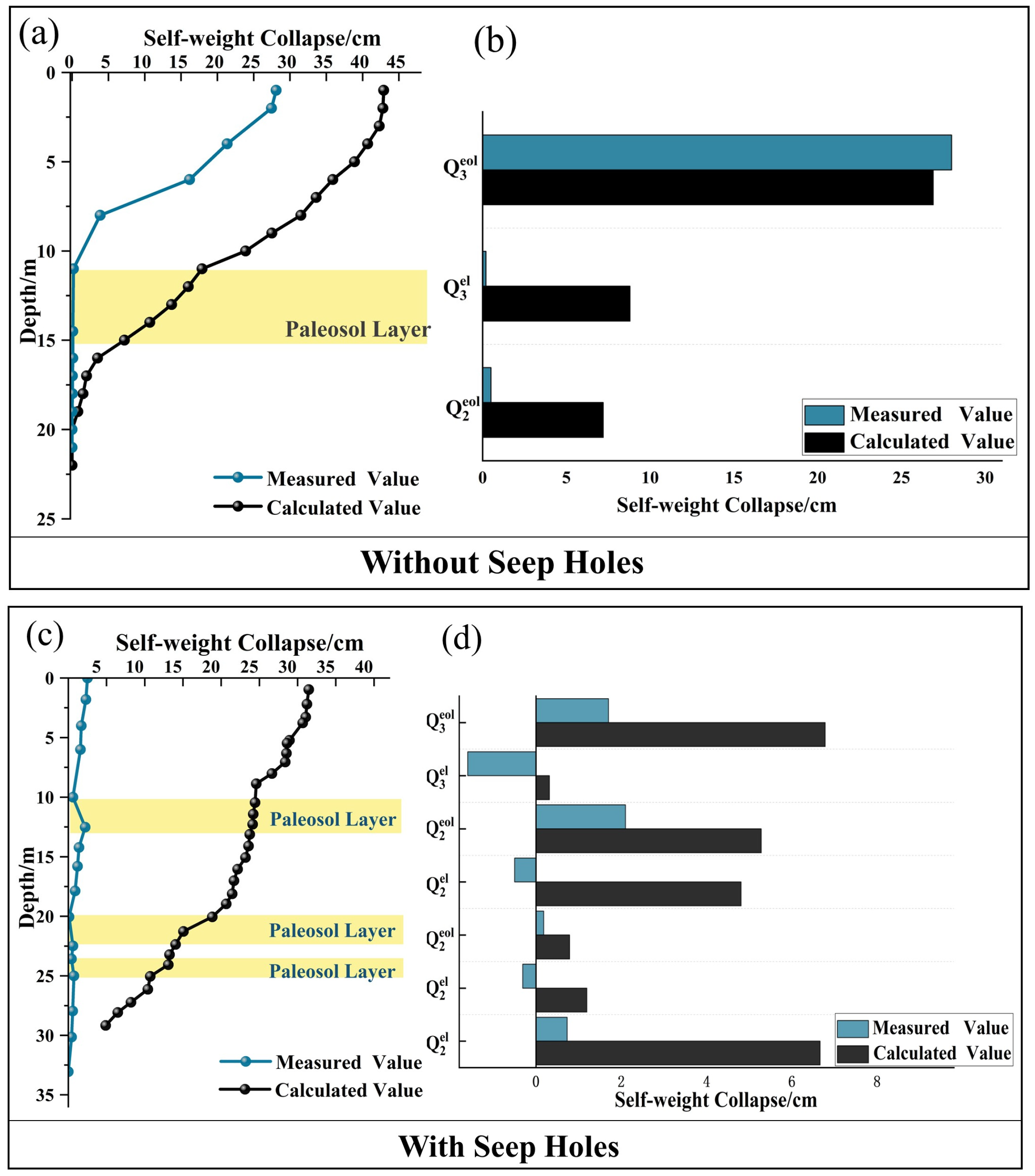
The existence of multiple layers of red paleosol within loess strata presents a unique challenge due to its high hardness, which resists settlement deformation upon exposure to water. This attribute significantly influences the subsidence measurements of the loess strata. Despite this, the current literature lacks reports on the control effect of paleosol on collapsibility, leading to a deficiency in the theoretical basis for scientifically selecting collapsibility in these strata. This paper seeks to bridge this gap by examining the differences in self-weight collapsibility under various conditions, both indoor and outdoor, across different paleosol layers and strata. The analysis is grounded on statistical results derived from immersion tests conducted in the Loess Plateau. Moreover, the research zeroes in on two test sites in Xi’an, conducting extensive immersion tests and considering measurements such as water diffusion, changes in water content, soil pressure, and cumulative collapsibility under different test conditions. The study probes into the influence of paleosol layers on water infiltration and their role in controlling total weight collapse. The final results suggest that the presence of a paleosol layer inhibits collapsibility transfer to the lower layer and restricts water infiltration, thereby reducing total collapsibility. Discrepancies between measured and calculated collapsibility values showed a positive correlation with the number of paleosol layers. This research offers valuable insights into the collapsibility mechanism of paleosol-loess strata.
Keywords: immersion test; field monitoring; soil; collapsibility coefficient immersion test; field monitoring; soil; collapsibility coefficient