Article

Assessing the Importance of the Marine Chokepoint: Evidence from Tracking the Global Marine Traffic

1
Center for World Geography and Geostrategic Studies, East China Normal University, Shanghai 200062, China
2
Institute for Global Innovation & Development, East China Normal University, Shanghai 200062, China
*
Author to whom correspondence should be addressed.
Sustainability 2024, 16(1), 384; https://doi.org/10.3390/su16010384
Submission received: 10 November 2023 / Revised: 28 December 2023 / Accepted: 29 December 2023 / Published: 31 December 2023

Abstract

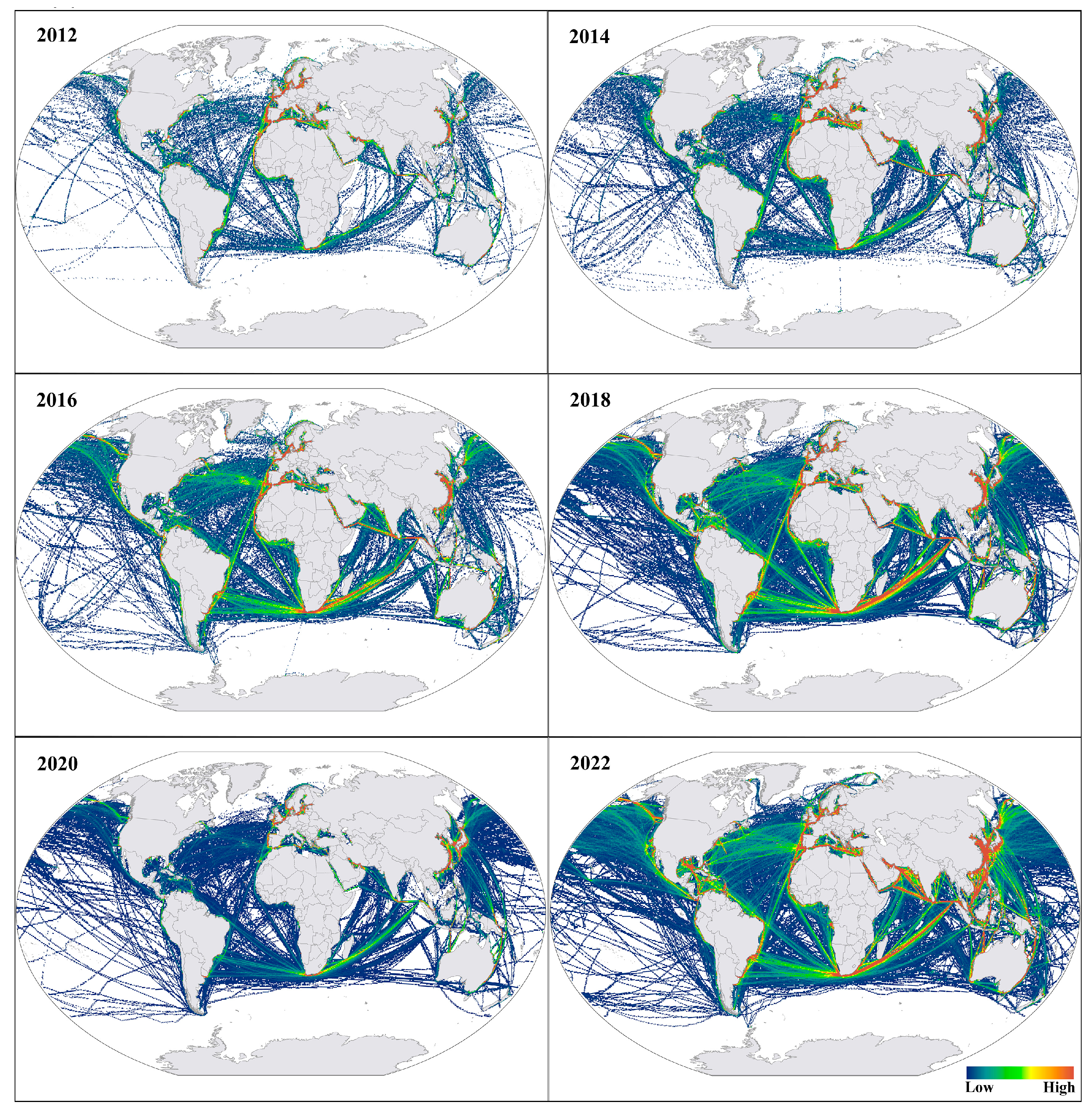
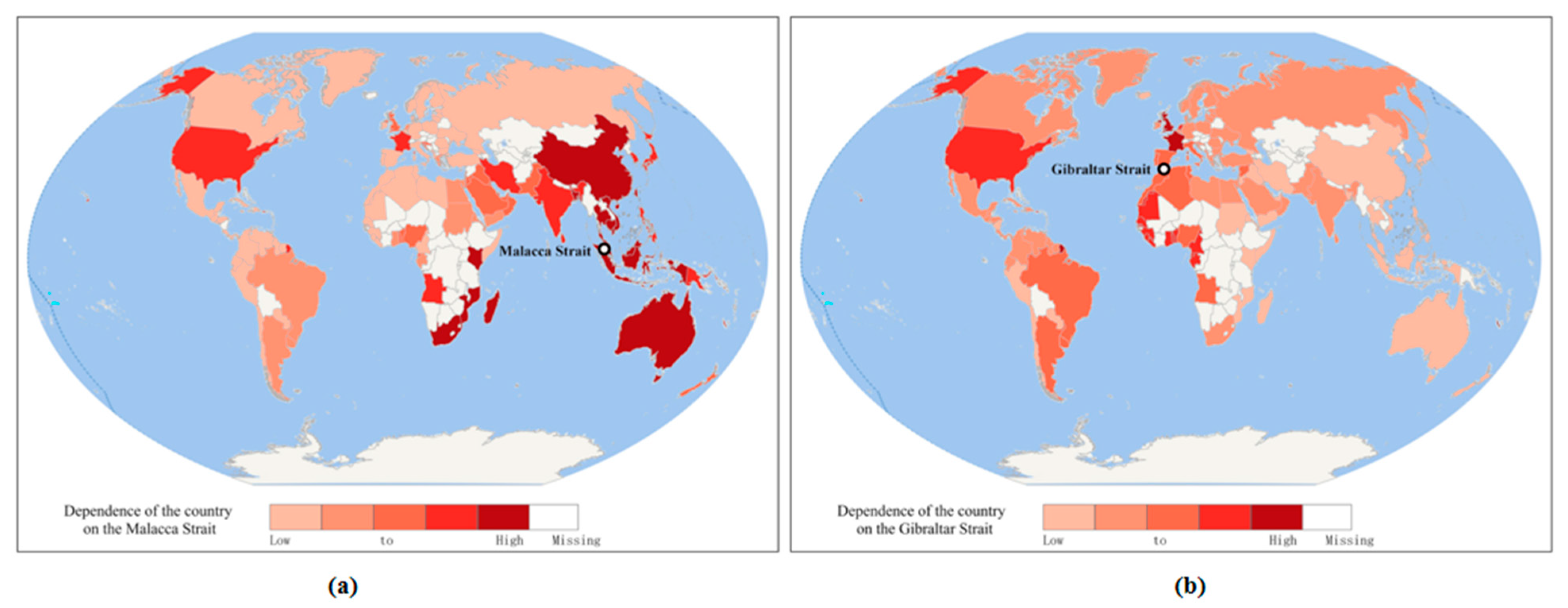
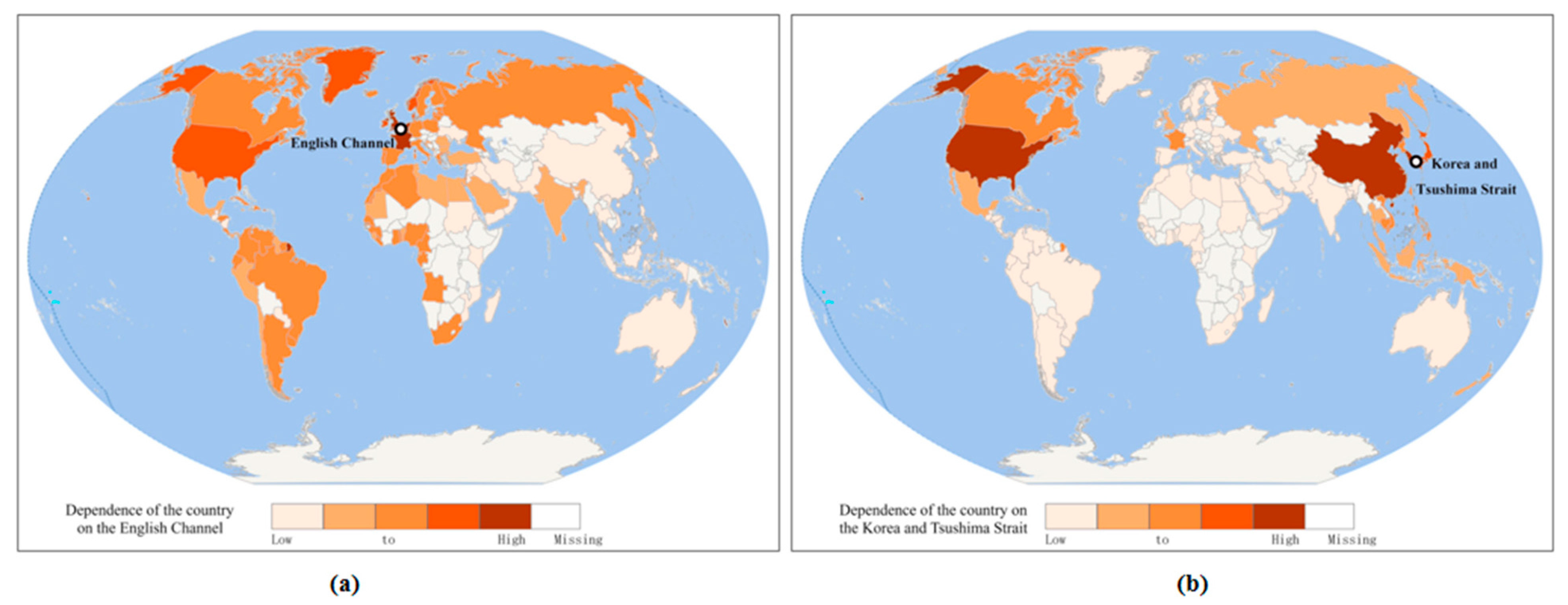
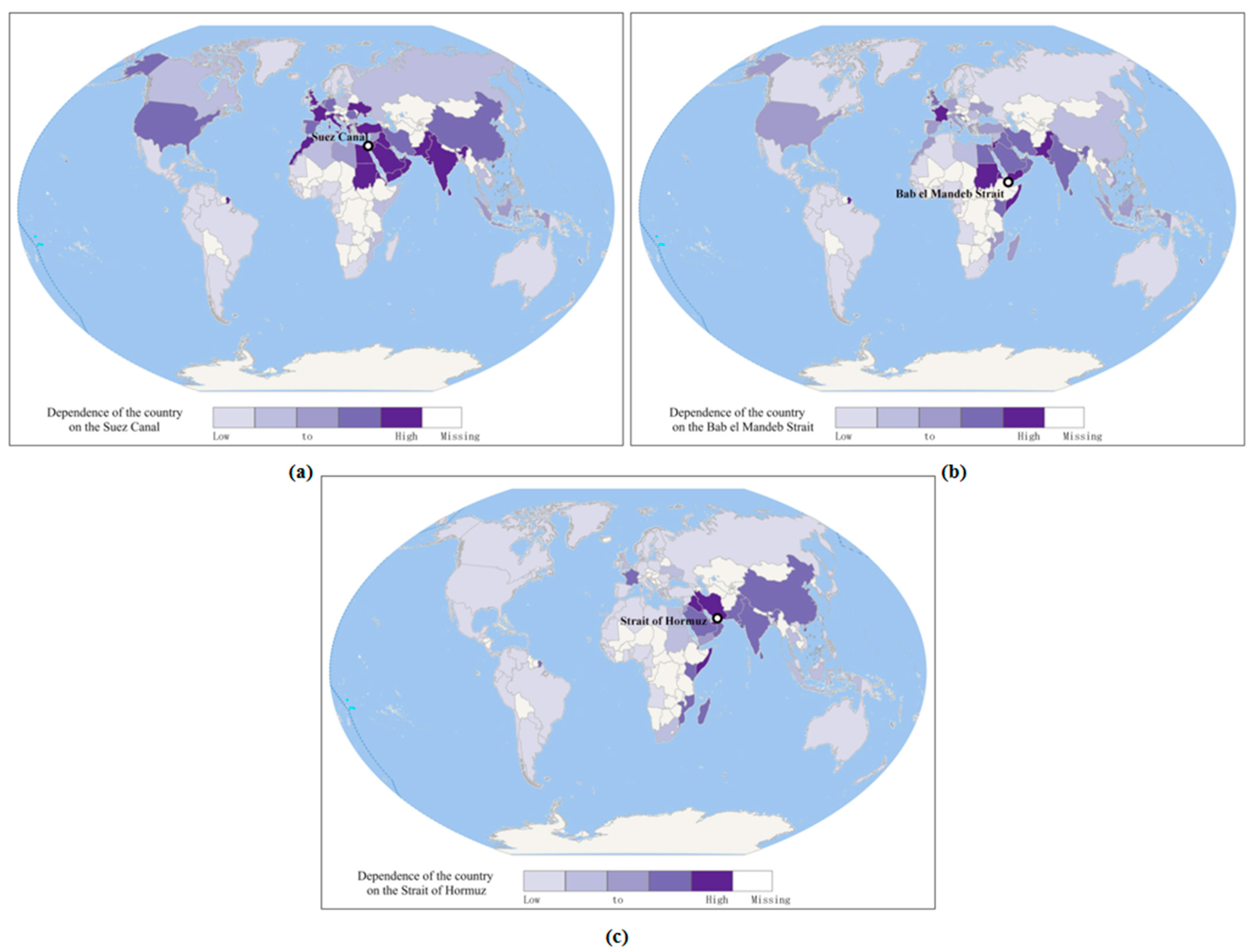
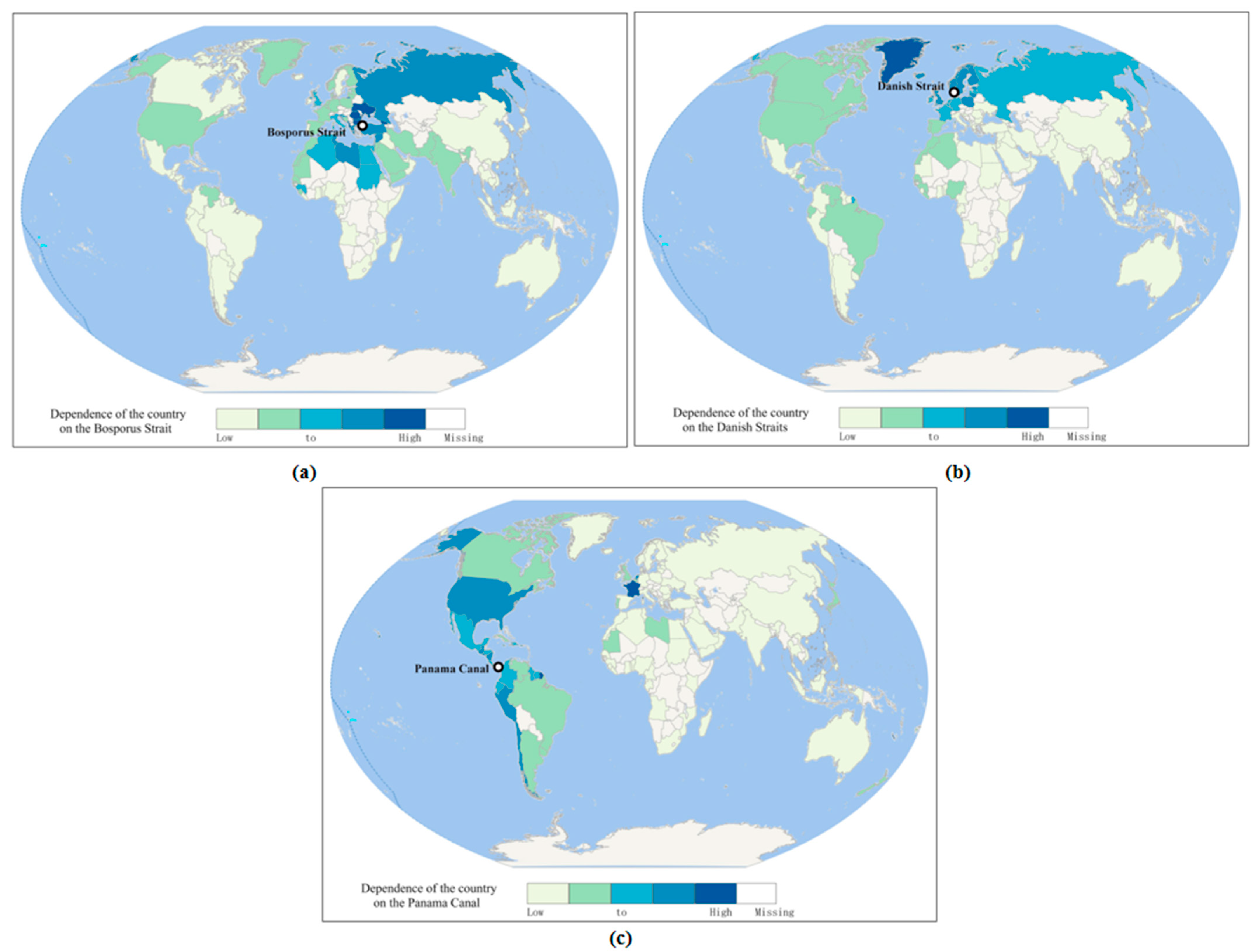
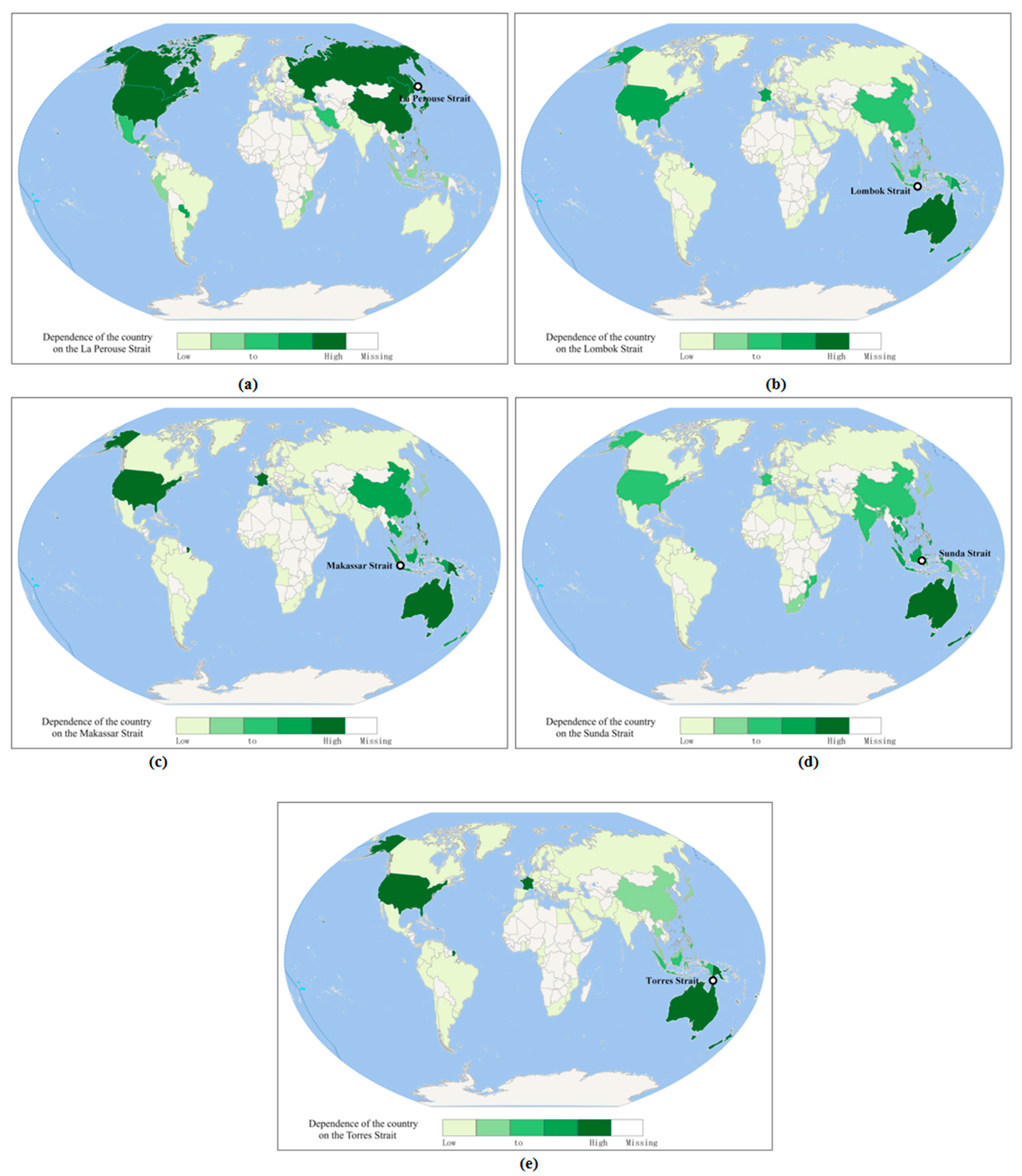
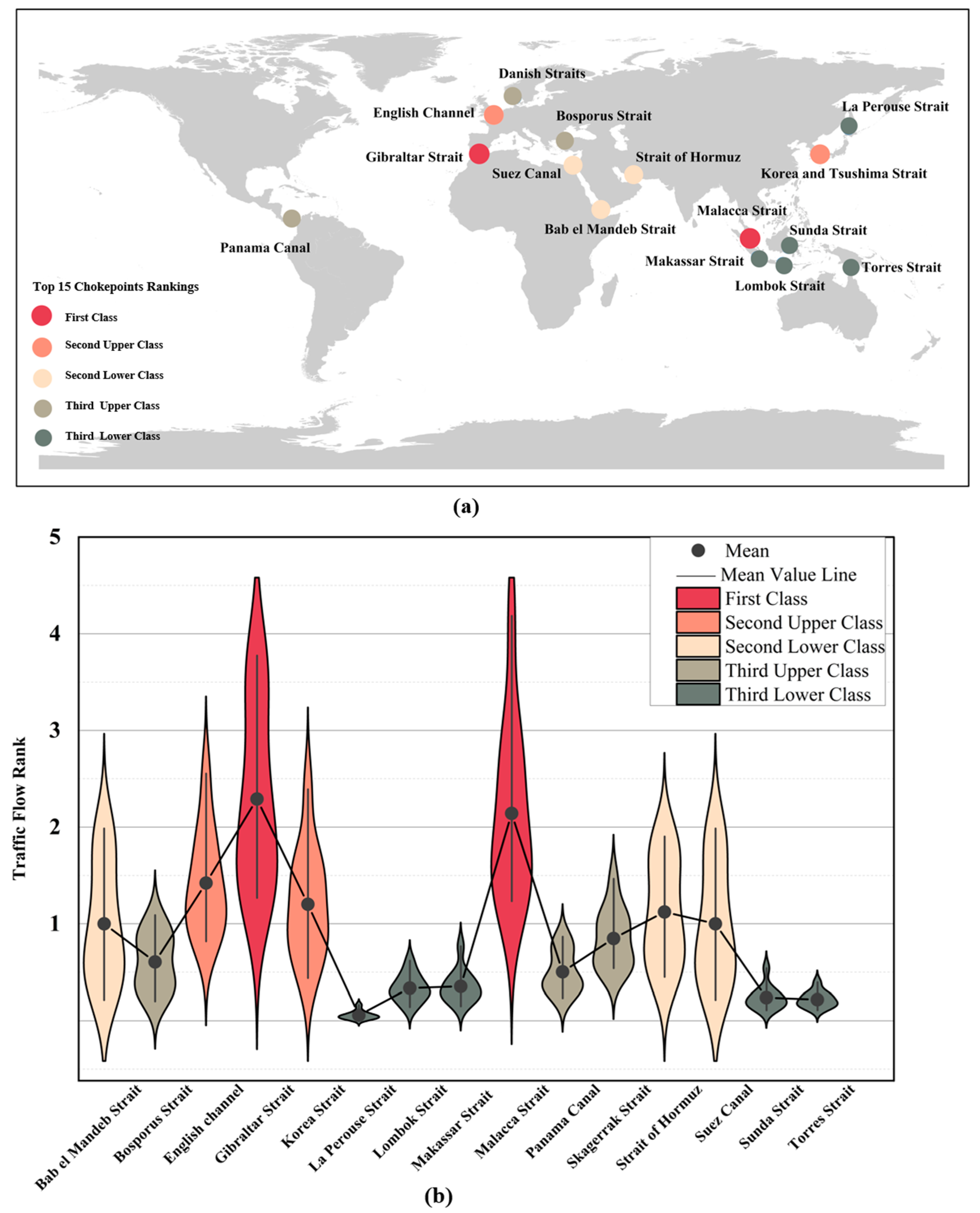
The significance of international maritime chokepoints and the exploration of their safety and security are intricately linked to the expansion of the maritime economy, the maintenance of political and social stability, and the safeguarding of state interests. Limited efforts have been dedicated to comprehensively assessing the extent of chokepoints’ influence or establishing a global ranking of their importance using dependable maritime data. In light of the growing significance of oceans and seas in the realms of economy and society, there is a pressing need to afford heightened attention to the importance of chokepoints. In this paper, 15 critical chokepoints from around the world are studied, and the method of Location Quotient is used to calculate the influence of their radiation range utilizing the Automatic Identification System (AIS); this study charts the worldwide spatial and temporal dimensions of maritime transport spanning from 2012 to 2022. The conclusion of this study reveals the following key findings: (1) Maritime shipping trajectories exhibit fluctuating growth over time, with traffic hotspots predominantly located in continental border zones, gradually decreasing from the equator toward the poles; (2) The regions with active maritime traffic do not exhibit a positive correlation with the hotspots; instead, there is a pattern of “strong in the north, weak in the south, strong in the east, weak in the west”; (3) The Strait of Gibraltar and the Strait of Malacca are identified as the globally most strategically valuable straits for maritime shipping; (4) There is significant variation in the influence range of strategic passages, and countries with mutual dependencies may have competitive relationships.
Keywords: marine chokepoints; global marine traffic; Automatic Identification System (AIS); maritime security; geopolitics marine chokepoints; global marine traffic; Automatic Identification System (AIS); maritime security; geopolitics