1. Introduction
Nowadays, the European and World situation in terms of climate and environmental challenges requires particular attention to reduce energy consumption and improve energy efficiency in the main driven sectors, such as industries, transport, and buildings.
The objectives of the European Union (EU) are becoming more and more ambitious so that the European Commission has recently proposed to raise the target of greenhouse gas emissions reduction from 40% to at least 55% by 2030 with respect to 1990 levels to achieve climate neutrality by 2050 [
1]. According to [
2], among the major emitting countries, the EU together with the United Kingdom, has significantly reduced fossil CO
2 emissions that were 25.1% lower in 2019 with respect to 1990. On the other hand, the other polluting countries have increased them: United States and Japan by 0.8 and 0.4%, respectively; and China and India, respectively, by 3.8 and 3.3 times more in 2019 than in 1990, due to industry and economic development. Focused strategies aimed at reducing the emissions in the most energy-intensive sectors were put in place to achieve this important target; in particular, the building sector is one of the main energy consumers in Europe [
3], mainly due to the obsolescence of the buildings. The operation of buildings in 2021 accounted for 30% of the global final energy consumption, and buildings were responsible for 27% of the total energy sector emissions [
4]. To achieve Net Zero Emissions by 2050, carbon emissions need to halve by 2030 through the wide use of more energy measures and clean technologies, such as highly insulated building envelopes, heat pumps, district energy, and so on [
4]. However, despite the transition to other energy and renewable sources, fossil fuels still accounted for 35% of the total building demand in 2021.
The EU has promoted many initiatives to reach the objective of the decarbonization of the whole building stock by 2050 and the European Commission has launched “A Renovation Wave for Europe” [
5] within the European Green Deal [
6]. This program aims to double annual energy renovation rates in the next ten years, reducing consumption and emissions, improving people’s living conditions, and creating new job opportunities. Moreover, the National Long-Term Strategies [
7] have the main function of helping the economic transformation and to achieve the sustainable development goals, with a perspective of at least 30 years, highlighting the objective of renovation in the building sector. Finally, the revised buildings energy performance directive (EPBD) [
8] focuses on the energy renovation of existing buildings and upgrading the existing regulatory framework, and aims at more resilient, modern, and accessible building stock. Among the new proposals, one of the main measures is to increase the reliability, quality, and digitalization of the Energy Performance Certificates (EPCs).
EPCs are the most useful tools to evaluate the energy performance of buildings in standard conditions and to have energy information on national building stocks [
9,
10,
11].
They are fundamental both for the quantification and monitoring of the energy consumption of building stock and the forecasting of energy savings derived by retrofitting and renovation in future energy planning. As Pasichnyi et al. [
11] stated from the recognition of the scientific literature, the most common application of the EPC is mapping building energy performance (43%), whilst the issue of building retrofitting covers 22% of the papers analyzed.
Each member state has developed different approaches, but one of the main objectives is to promote improvements in building energy performance and to reduce carbon emissions. The EPC determines the decision to make building renovation interventions, as confirmed by a survey carried out in twelve European countries where 73% of respondents consider EPC to be an important driver for building renovation [
10,
12]. Different methods exist for the assessment of building energy performance. On the one hand, the asset rating is based on the characteristics of the building fabric and its services (such as heating, DHW, etc.), starting from standard climate and operational conditions. It requires knowledge of building characteristics and considers the primary energy needs for different services (space heating, cooling, lighting, etc.) starting from local climate data for net energy needs assessment [
13,
14]. However, it does not provide information on how the buildings are used and work. On the other hand, the operational rating method [
14] focuses on the actual energy consumption, based on the energy delivered to the buildings, and considers the actual user habits and the functioning profiles of plant systems and equipment [
14], resulting in a detailed energy audit of the building.
In this regard, Semple and Jenkins [
13] demonstrated that significant variations exist in the methods used to assess the energy consumption in residential buildings in the six largest European Countries (UK, France, Germany, Spain, Italy, and Poland). Firstly, energy consumption and thermal properties of the residential building stock vary across the countries; secondly, the method of actual consumption guarantees the best match of the result with the actual situation, but it is used only in three countries (France, Germany, and Poland).
Many studies have found out that the gap between the standard method and the actual one could reach up to 30% [
13]. For example, in Germany, Sunikka-Blank and Galvin [
15] demonstrated that the measured consumption tends to be on average 30% below the calculated energy performance ratings (EPR) due to assumptions in energy rating algorithms and diversity in heating patterns. This difference increases from 17 to 60% as the EPR increases from 150 kWh/m
2y to 500 kWh/m
2y. For EPR below 100 kWh/m
2y, the result goes into reverse and the buildings consume more than the calculated EPR, in the so-called “rebound effect”. It follows that the potential for energy and economic savings could be less than the estimated one.
The uncertainty in the estimation of energy performance could lead, in the case of the estimation of the energy retrofitting results, to uncertainty in the assessment of the achievable energy savings. The overestimation of the consumption before renovation leads to the consequent overvaluation of the potential energy and economic savings after renovation. However, the study carried out by Cozza et al. [
16] established that despite a negative average thermal performance gap of 23% between theoretical and actual energy consumption (smaller than the first one) in the pre-retrofit buildings, after the intervention, the prediction of EPC becomes more reliable with a positive gap of only 2%. In addition, if it is considered as the Energy Savings Deficit Regulatory (ESDr), defined as the difference between theoretical savings and actual savings, divided by the theoretical savings, then it rises with the improvement in label, and the energy savings are about half of the theoretical ones. This indicator overestimates the savings by 37% with respect to the actual situation. The Energy Savings Deficit Anticipated (ESDa), defined as the difference between theoretical savings and anticipated savings, divided by the theoretical savings, has an opposite trend with label improvement and decreases with a difference of 3.6% with respect to the actual savings. According to the authors, it reveals that a deep retrofit causes lower energy savings than the expected theoretical ones, but higher energy savings than shallow interventions of renovation. It could also be an indicator of renovation quality.
Nevertheless, the asset rating remains in many countries, such as Italy, the adopted calculation approach for EPC and the most useful method in the case of a lack of information and data related to the buildings. The issue of overestimation could be overcome using a tailored approach that assumes more realistic profiles for representing users’ behavior and the functioning of plant systems and equipment. Many studies consider occupant behavior as an influential factor for the uncertainty of energy building performance [
17] further remarked upon after the COVID-19 pandemic [
18]. According to Gram-Hassend and Georg [
19] the occupants’ behavior in the different types of residential buildings affects energy consumption, depending also on the building characteristics. Even Menezes et al. [
20] affirm that the problem of discrepancy in the energy performance of the current modelling methods could be their inability to represent realistic building operation and use. It could depend on the inadequate hypothesis about occupant behavior and the control of plant systems and appliances. In fact, people affect the energy and thermal performance of buildings not only in terms of internal gains but also with their actions (operation of the air conditioning and control devices for heating, domestic hot water (DHW) consumption, ventilation, and so on) [
21]. Evaluating accurate scenarios could enhance the assessment of building energy performance before and after retrofitting [
22,
23].
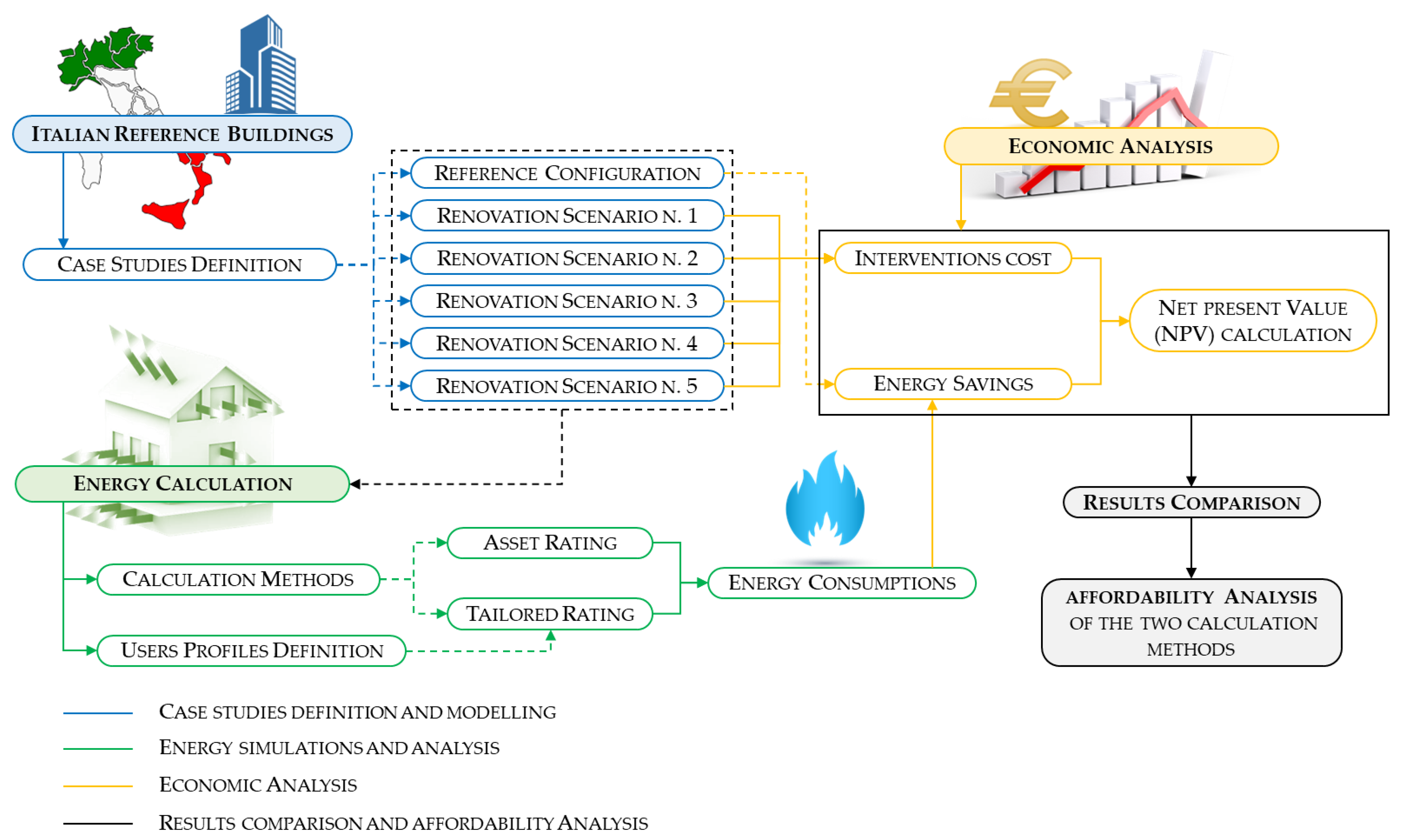
In this framework, the present paper aims at evaluating the impact of asset rating and tailored rating approaches on energy measures’ assessment used to renovate national building stock. As demonstrated above, asset rating tends to overestimate the heating consumption of existing buildings, so the work arises with the aim to quantify the energy savings and economic impact derived by energy retrofitting measures and understand if they can be affected by the calculation method. In fact, based on the literature review, it was highlighted that the main issue of the asset rating is the low accuracy of energy outcomes, whilst the tailored rating is generally applied only for energy audits allowing the return of reliable energy results. Nevertheless, no applications of this method as an alternative tool to the asset one, using standardized but more reliable user profiles, can be found. Therefore, the present paper is a first attempt to fill this gap; in particular, more reliable user profiles were defined and used in order to check the possibility of substituting the standard calculation (asset rating) with the tailored approach, i.e., by adopting conventional but more reliable user profiles. Hence, this work could be a first step to reducing the gap between EPC outcomes and actual consumption.
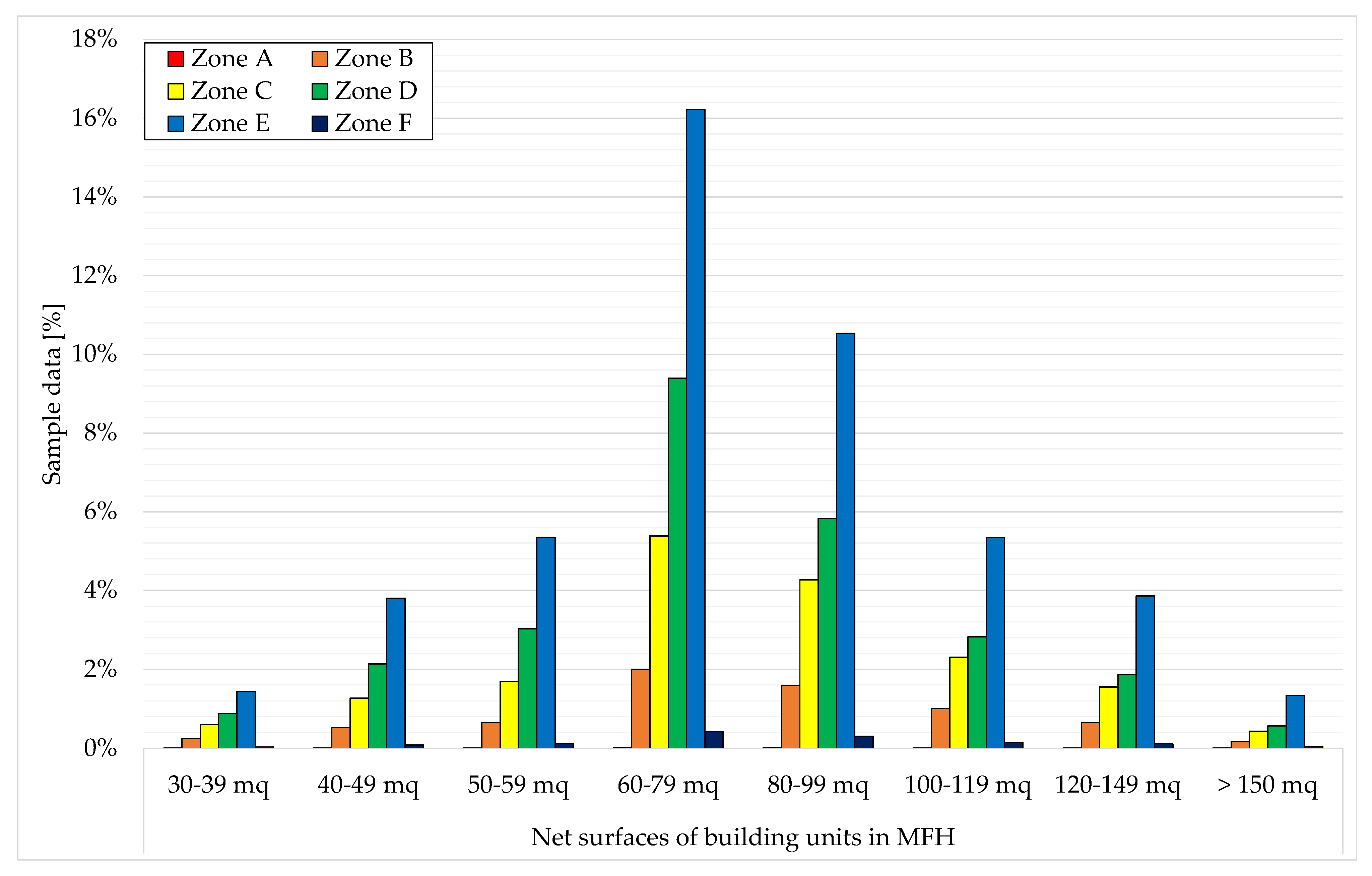
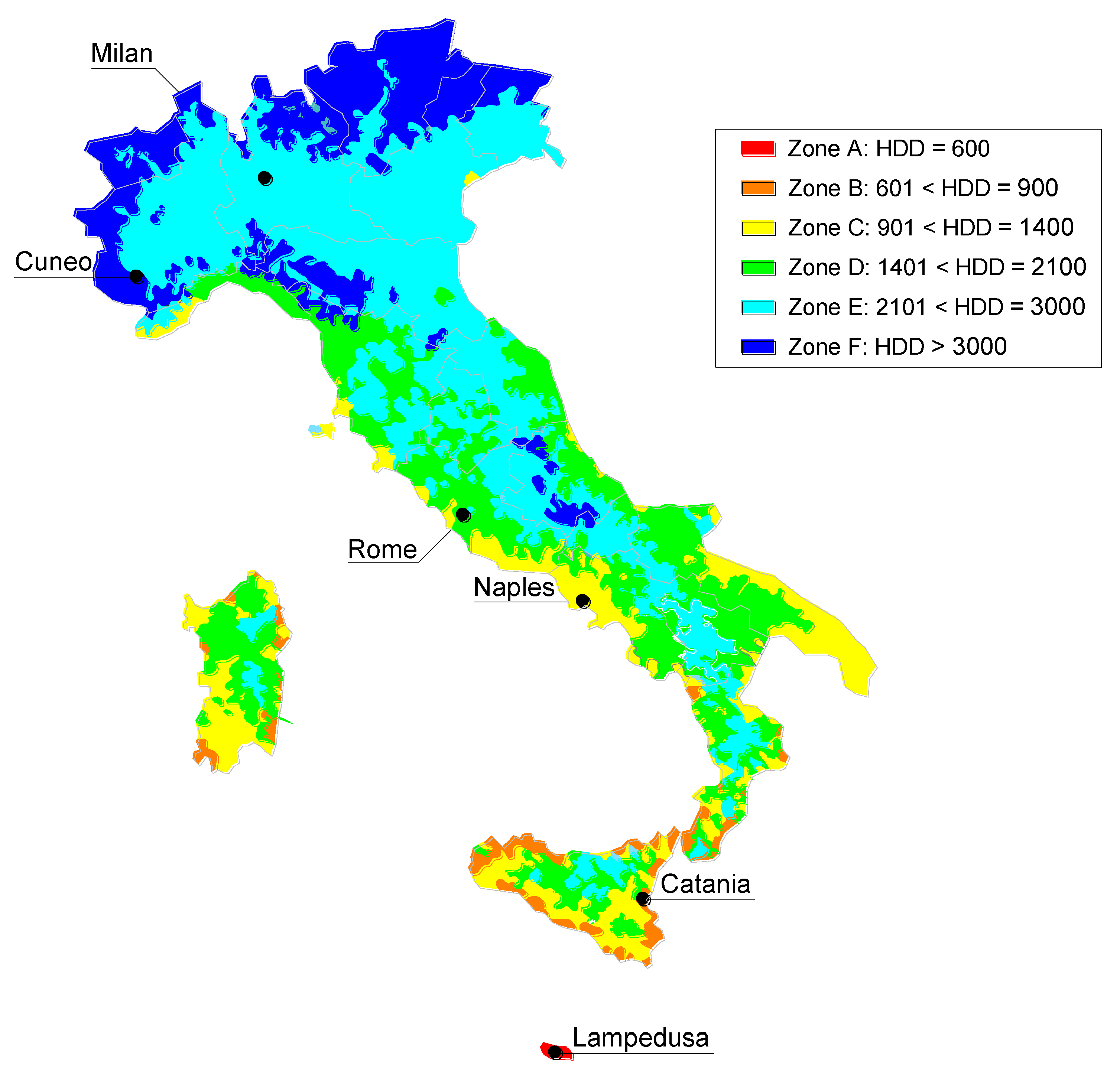
This goal was reached introducing several reference multi-family houses on the basis of national buildings’ background and representative of common national buildings built before the 90s, i.e., buildings that should be renovated due to their poor energy performance. The analysis was performed in six selected cities representative of the national climatic zones, and the primary energy need was assessed with both calculation method approaches. In particular, standard evaluation (asset rating), i.e., the one adopted in EPCs, and tailored assessment based on real user profiles were performed. The most common scenarios of retrofitting actions were evaluated and the comparison between the different results were carried out for different solutions. Finally, the economic evaluation based on energy saving was obtained in order to assess the affordability of the interventions depending on the used calculation methods and to check if it is possible to improve the accuracy of the energy and economic evaluation using standard but more reliable user profiles.
3. Results and Discussion
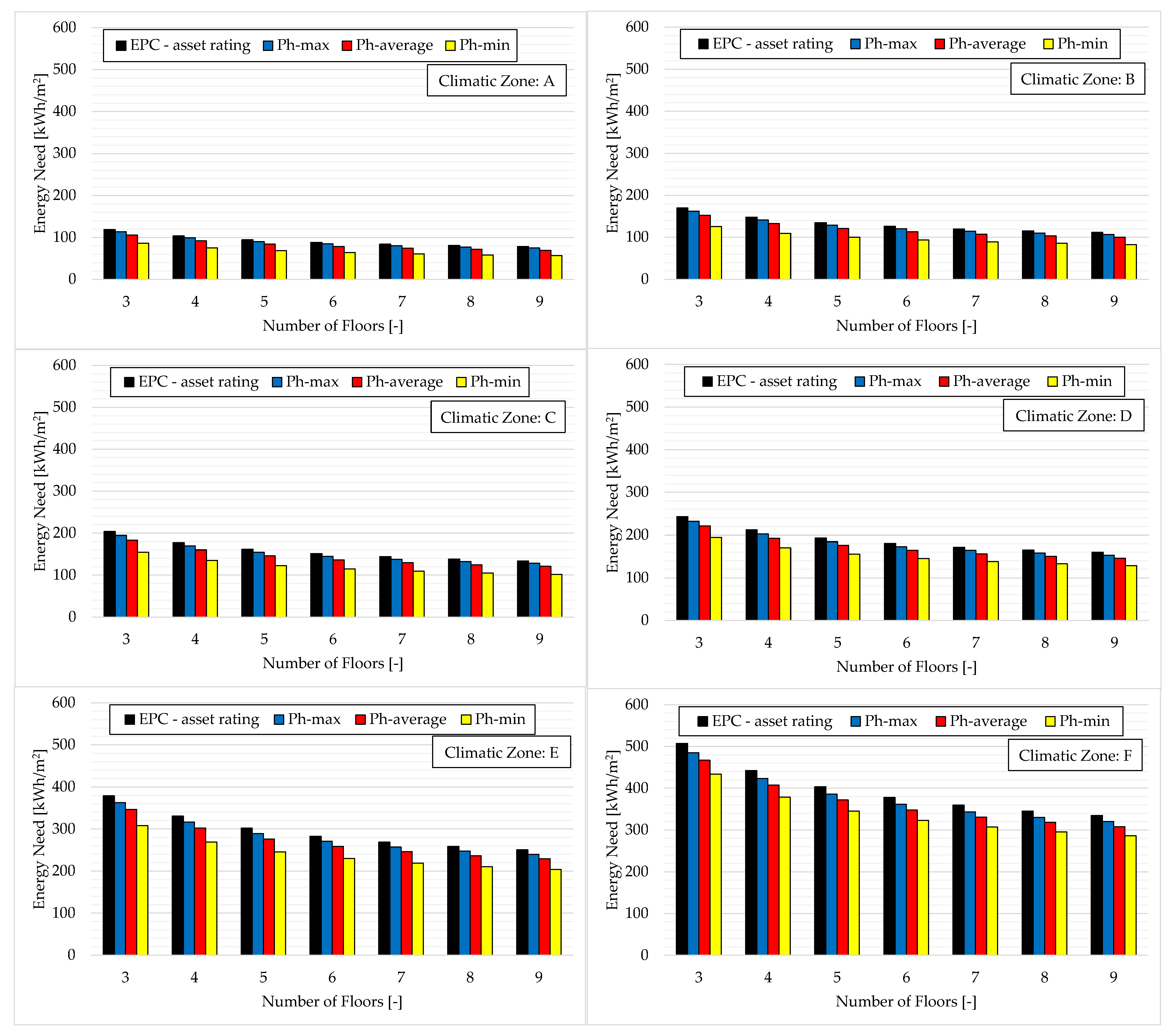
Energy consumptions related to reference buildings (namely with poor thermal and energy performance) are shown in
Figure 4; specifically, the comparison of primary energy needs between standard outcomes (EPC—asset rating) and tailored ones (P
h-min, P
h-average, P
h-max) was reported. The greatest difference with the standard calculation was obviously obtained when the lowest heating operating profile (P
h-min indicated with yellow bars) was used. It was +37.6 kWh/m
2 on average (around +24.4 kWh/m
2 on average for the warmest climatic zone A and around +52.6 kWh/m
2 on average for the coldest zone F). Furthermore, considering a step of 20 kWh/m
2, the differences found in each climatic zone can be grouped in three ranges: A and B fall into the first one ranged around 15–35 kWh/m
2, C and D fall into the second one (around 30–50 kWh/m
2), whilst the coldest zones fall into 45–65 kWh/m
2 on average. On the other hand, the maximum profile provided by national regulation (P
h-max indicated with blue bars) returned a mean difference with EPC of about 8.4 kwh/m
2 on average with greatest values in zone F (20 kWh/m
2) and the smallest in A and B zones (about 3.0 kWh/m
2). In this case, if a step of 20 kWh/m
2 is considered, the differences found in all climatic zones fall into the same range around 3–23 kWh/m
2. Nevertheless, also for P
h-max, the differences depend, in a smaller way, on the climatic zone and number of floors of buildings; in fact, they are up to +2–3 kWh/m
2 in all the climatic zones except for the coldest one (F) for which twice the difference can be found. Considering the most probable heating operating profile (P
h-average), the mean difference is around +17.1 kWh/m
2, and it tends to significantly increase with the severity of climatic conditions (around 28.8 kWh/m
2 in the F zone). Considering a step of 20 kWh/m
2, the differences found in each climatic zone can be grouped into two ranges: A, B, C, and D fall into around the 8–28 kWh/m
2 range, whilst E and F into around 28–48 kWh/m
2.
These results highlight that the energy need estimated with the standard procedure (asset rating) is always greater than the tailored one, even when the highest heating operating profile is considered, under the same climatic conditions and indoor air temperature.
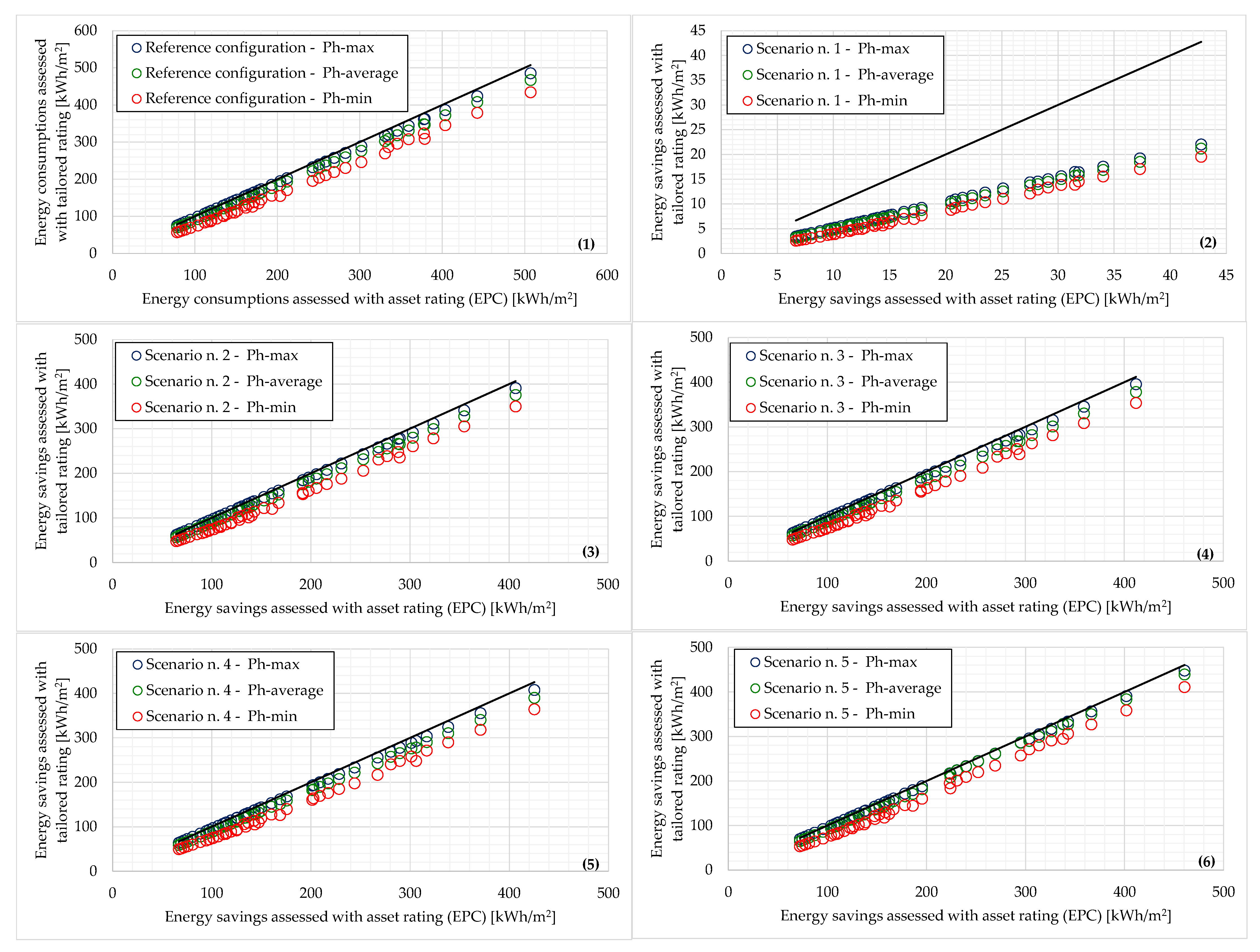
Going on with the analysis of the reference buildings and the proposed energy refurbishment scenarios, the results become more and more interesting. In particular, the comparison of energy consumptions (related to reference configuration) and of energy savings obtained with each energy retrofitting scenario assessed with both asset and tailored ratings, is highlighted in
Figure 5. Specifically,
Figure 5(1) shows the same comparison of the energy consumptions already described in
Figure 4 but without distinguishing for the climatic zone and the number of floors; it allows highlighting that the lower the energy consumption, the lower the difference between the asset (indicated with black line) and tailored ratings. The comparisons of the energy savings returned with retrofitting scenarios are reported from
Figure 5(2–6); the red symbols represent the results obtained with P
h-min, the blue one the P
h-max, whilst the green symbols are related to P
h-average. Results related to the standard evaluation are highlighted both in abscissa and with black lines.
Apparently, a great divergence between asset and tailored ratings seems to be easily found for the scenario n. 1 but the order of magnitude of the absolute differences (Δabs) found for both Ph-max and Ph-average is the same for all the scenarios (around 3–20 kWh/m2); only for scenario n. 5 a lower Δabs was found (around 3–12 kWh/m2) probably due to a different kind of heating generation system (heat pump). On the other hand, Δabs obviously tends to increase for Ph-min; the lowest values were found for scenario n. 1 (around 3–12 kWh/m2), whilst for all the other retrofitting scenarios it falls into the 18–56 kWh/m2 range.
The figures highlighted that the more energy consumption of buildings, the more the Δabs, but the difference in relative terms (Δrel) is lower. When implementing energy retrofitting scenarios capable of significantly reducing the energy need of buildings (from scenario n. 2 to scenario n. 5), the energy savings returned by the tailored assessment are lower but close to the standard one (black line), indicating that the error returned by applying this calculation approach could be neglected in these energy configurations. On the other hand, when implementing energy retrofitting scenarios with fewer energy saving impacts, such as the replacement of an existing boiler (scenario n. 1), a significant divergence between asset and tailored ratings can be found, emphasizing the lower accuracy of the standard approach for this kind of scenario.
The trend found for the maximum operating heating profile (Ph-max) provided interesting findings; on the one hand, it fits the existing buildings since it allows the perfect coverage of their monthly energy need. On the other one, it is generally too high for buildings with small energy needs since the new constructions commonly require lower energy needs than older buildings. The consequence could be a slight overestimation of the energy savings related to scenario n. 1 but a great convergence of results related to the other scenarios between the asset and tailored ratings for insulated buildings.
Finally, according to
Figure 5, the standard evaluation seems able to lead to reliable outcomes when the energy need of a building is small or when the user profile tends to P
h-max; nevertheless, it could also be considered reliable when the user profile tends to P
h-min but only in the coldest climatic zones. In fact, in this case, the relative error falls into around the 10–18% range.
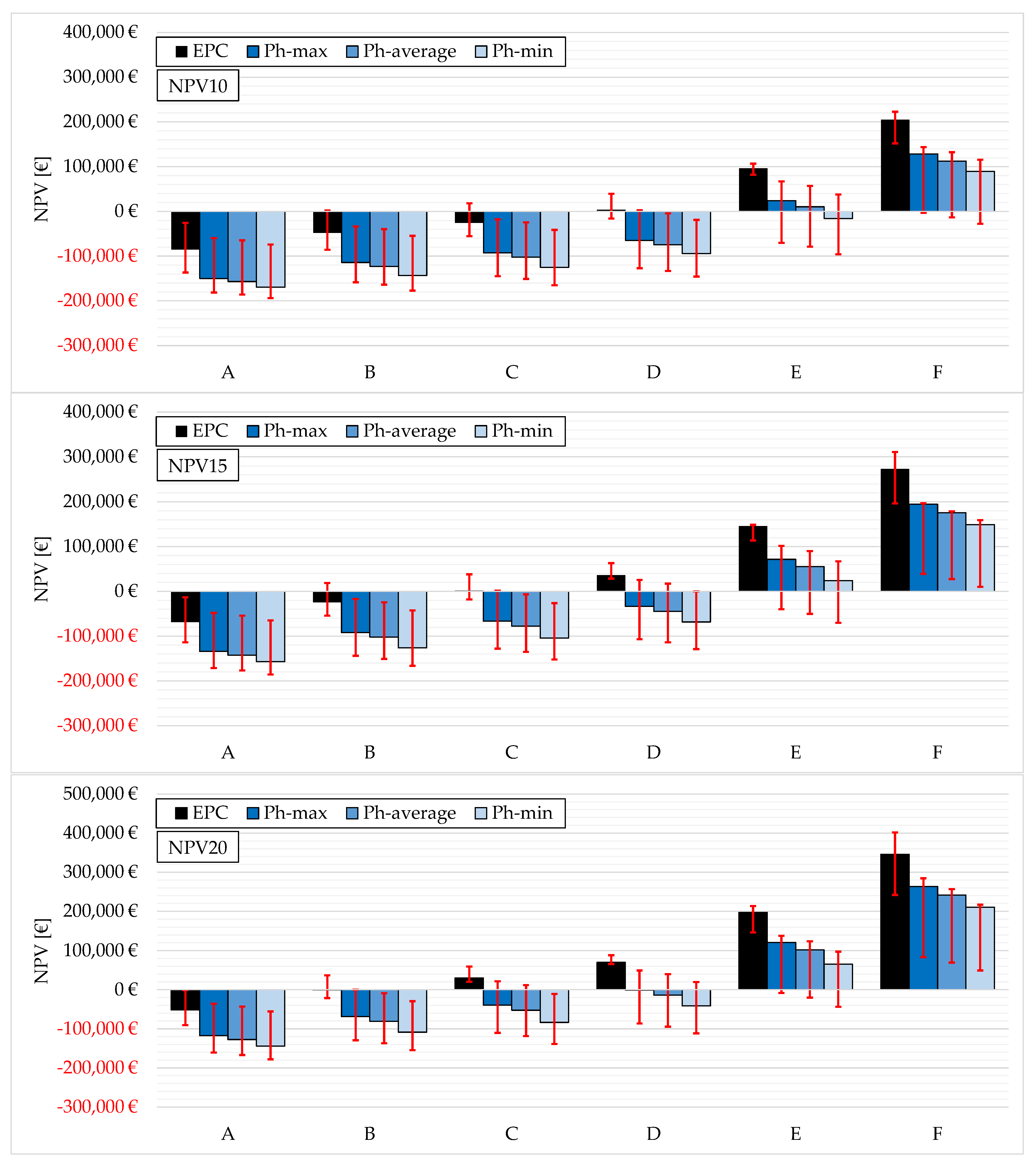
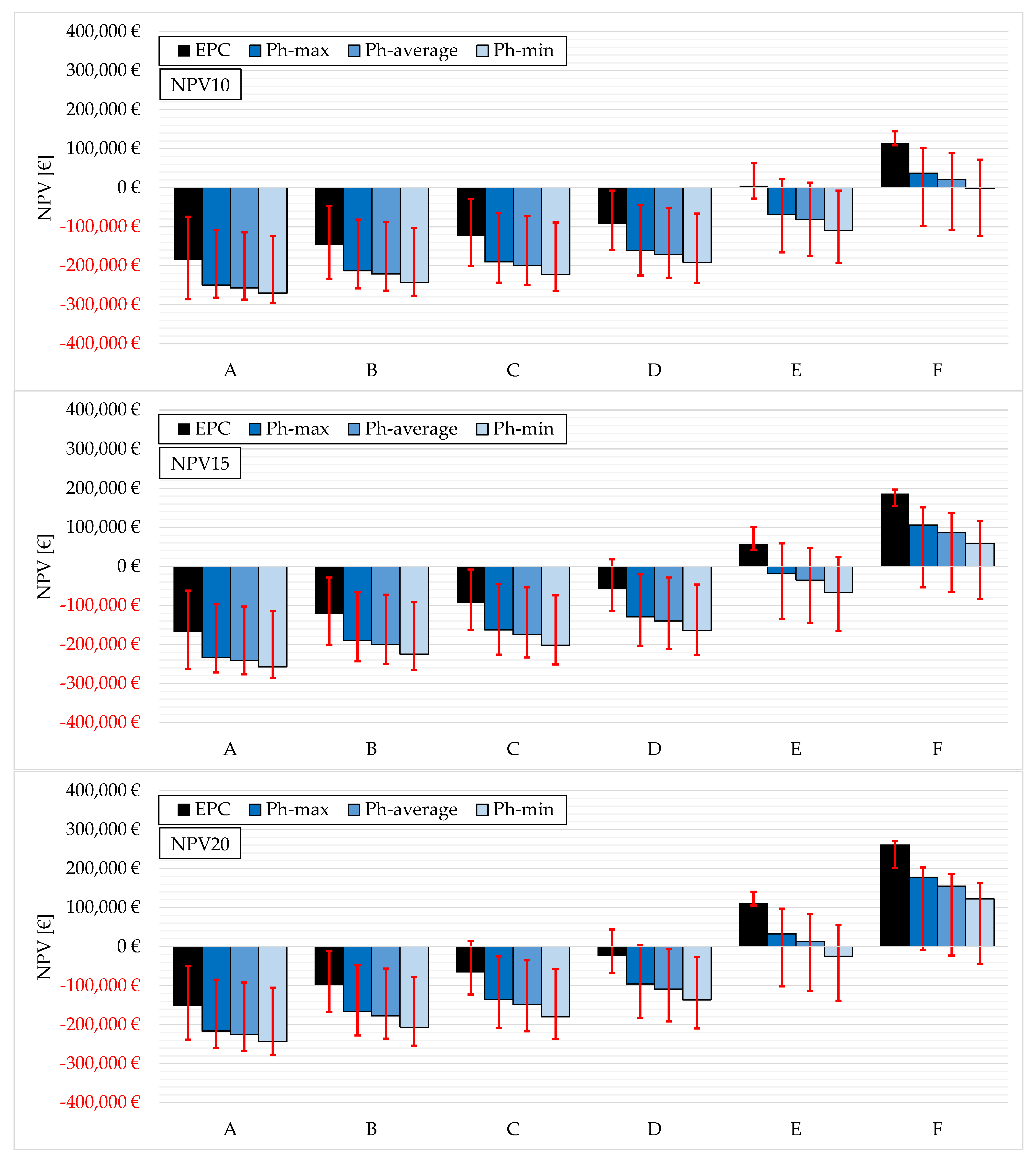
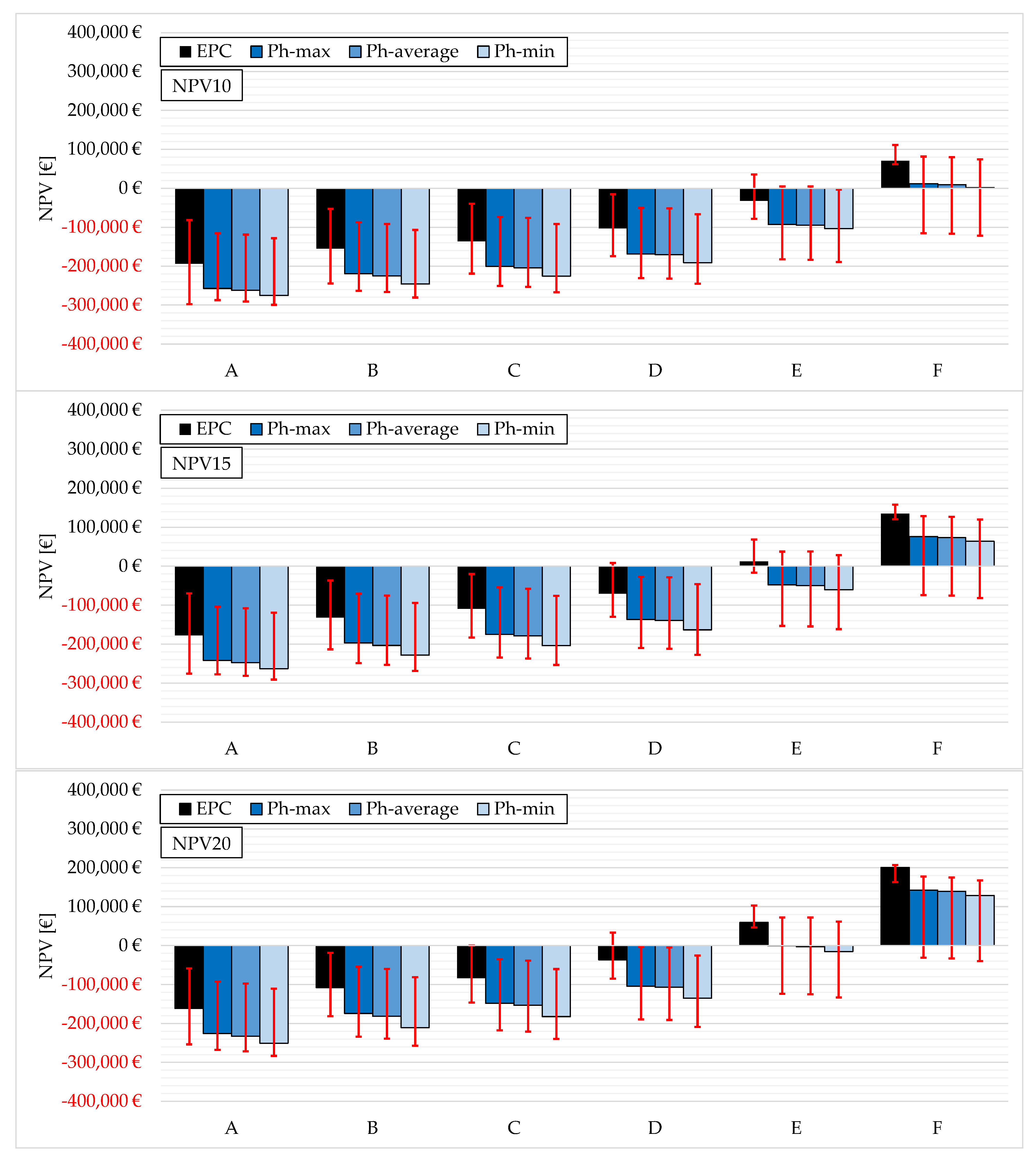
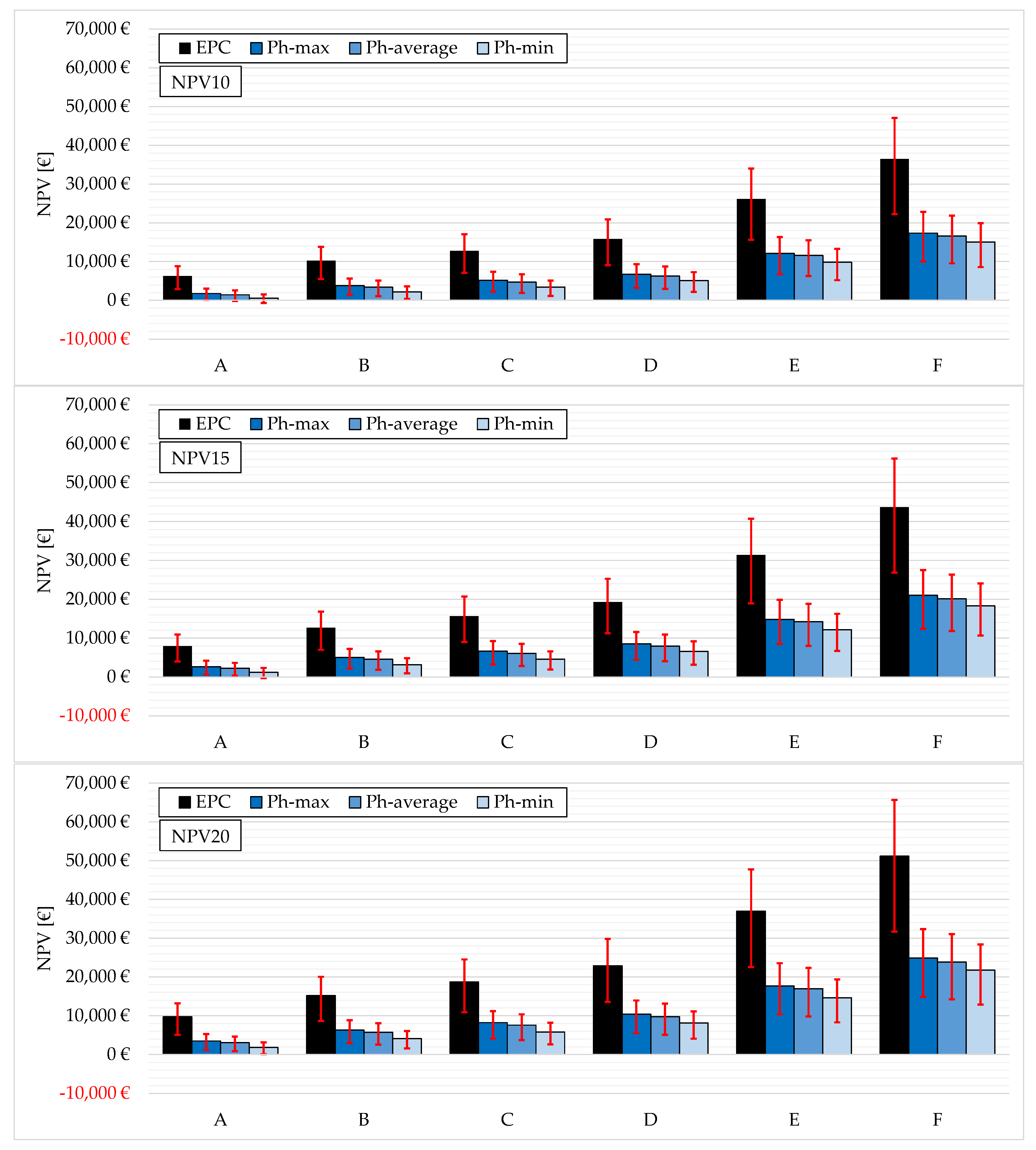
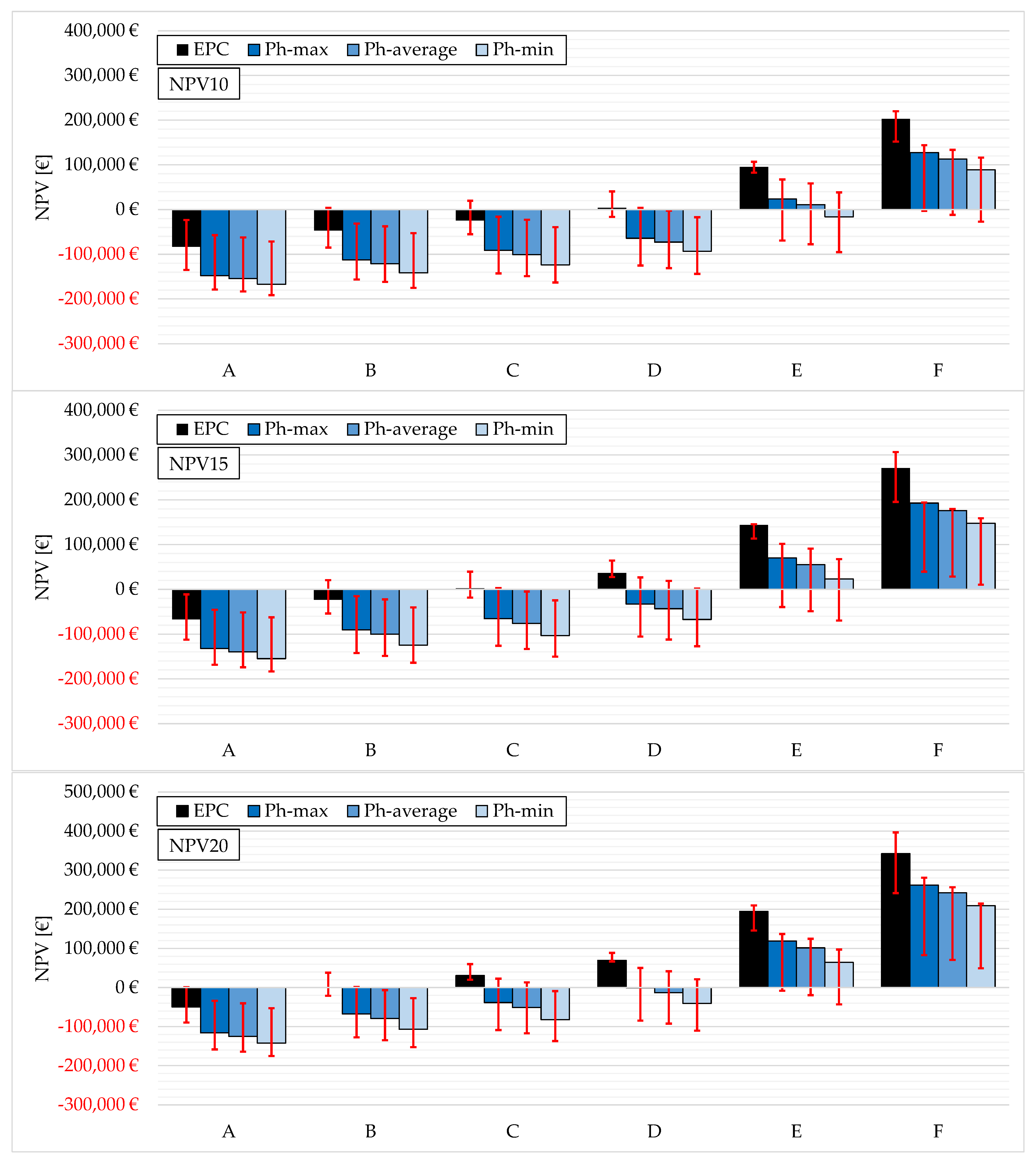
Based on the energy assessment, an economic analysis was finally performed calculating the NPV for each scenario, after 10 (NPV-10), 15 (NPV-15), and 20 (NPV-20) years. The results are reported for each scenario in
Figure 6,
Figure 7,
Figure 8,
Figure 9 and
Figure 10 highlighting negative NPV values in red, whilst the positive ones are in black. The NPV was calculated for each reference building, also considering the number of floors; for the clarity of discussion, the bars represent the mean NPVs obtained for all the configurations, whilst the red lines represent the minimum (related to building with 3 floors) and the maximum (related to 9 floors) NPVs.
All these figures show a very interesting comparison between the asset and tailored approaches for each energy retrofitting scenario, and specifically:
Scenario n. 1: The replacement of an existing boiler evaluated with asset rating led to a significant overestimation of the NPV. After 10 years, the standard approach overestimates NPV-10 values of Ph-max by around twice up to triple depending on the climatic zone. Similar overestimation can be found for the average profile (Ph-average), whilst the Δrel ranges around 59% and 93% for the lowest one (Ph-min). It is worth noting that the greatest Δrel are always found for the warmer climatic zones. These discrepancies tend to slightly decrease with an increase in the NPV calculation years, up to 65% after 20 years in zone A and 52% in F compared with Ph-max. Furthermore, the same order of magnitude of Δrel is found for all the tailored profiles in the coldest climatic zone (around 55% ± 3%), whilst it tends to slightly increase in the warmest (around 73% ± 9%). All the calculation approaches led to mean positive NPVs, pointing out the good affordability of this scenario on average, although the overestimation was obtained with the standard approach. Nevertheless, if small buildings, namely on three floors, and Ph-min are considered, this action can lead to negative NPVs in the warmest climatic zone (A), indicating its reduced affordability;
Scenario n. 2: Thermal insulation of external walls led to bigger NPVs than scenario n. 1 confirming its greater impact. Relevant food for thought can be highlighted: firstly, the affordability of this action within 20 years was reached only in a few climatic zones with both of the approaches, emphasizing the need for a longer period of time. Moreover, D zone represents the breaking point between the two calculation methods. In fact, whilst the standard approach already led to positive NPVs after just 10 years (around EUR +18300 on average), negative NPVs were always found with the tailored approach. Anyway, negative NVPs could also be possible with the standard method if small buildings were investigated. Moreover, it is worth noting that the lower the operating heating profile, the lower the NPVs and, consequently, the affordability of the intervention. Furthermore, all the approaches allowed highlighting of the lower affordability of these kinds of actions in the warmer climatic zones because of the lower energy needs of buildings;
Scenario n. 3: A similar trend was found to that for scenario n. 2 for this action because of the smaller influence of heating system replacement on NPV calculation than the thermal insulation of external walls. Nevertheless, the affordability found in all the climatic zones with both calculation approaches is slightly higher than scenario n. 2, but zone D remains the breaking point between the asset and tailored ratings, as explained for scenario n. 2;
Scenario n. 4: The convenience significantly decreases with respect to the previous scenarios because of the greater initial investment cost. In this case, the breaking point between the two calculation methods can be represented by zone E, although the standard method also provides negative NPVs after 10 years. All the approaches allowed emphasizing the lower affordability of this kind of action in the warmer climatic zones because of the lower energy needs of buildings at the same intervention cost. It is worth noting that for small condominiums, the affordability of this action can also fail even after 20 years in zone F because of the smallest energy savings;
Scenario n. 5: This represents the best energy efficiency solutions to implement for building refurbishment, but it requires the greatest intervention cost. The results allowed asserting the same considerations in place for previous scenarios implementing thermal insulation on external walls. In fact, its affordability by 20 years can be reached only in the coldest climatic zone (F), whilst in the other ones, only the standard assessment allowed obtaining positive NVPs. Nevertheless, the breaking point shifted, resulting in it being between E and F zones. As in previous scenarios, it is worth noting that: (i) the lower the operating heating profile, the lower the NPVs, namely, the affordability of the interventions, and (ii) the affordability is lower in the warmer climatic zones because of the smaller energy needs of buildings.
According to these results, the standard assessment seems to overestimate the affordability of each energy scenario, especially when thermal insulation of external walls is implemented within the energy actions.