Article

Influence of Cooling Water Flow Rate on Start and Heat Transfer Performance of Pulsating Heat Pipe at Different Inclination Angles


1
Beijing Engineering Research Center of Sustainable Energy and Buildings, Beijing University of Civil Engineering and Architecture, Beijing 100044, China
2
School of Environment and Energy Engineering, Beijing University of Civil Engineering and Architecture, Beijing 100044, China
3
State Key Laboratory of High Temperature Gas Dynamics, Institute of Mechanics, Chinese Academy of Sciences, Beijing 100190, China
*
Author to whom correspondence should be addressed.
Sustainability 2023, 15(3), 1921; https://doi.org/10.3390/su15031921
Submission received: 18 December 2022 / Revised: 30 December 2022 / Accepted: 17 January 2023 / Published: 19 January 2023
(This article belongs to the Special Issue Waste Heat Recovery and Utilization)

Abstract

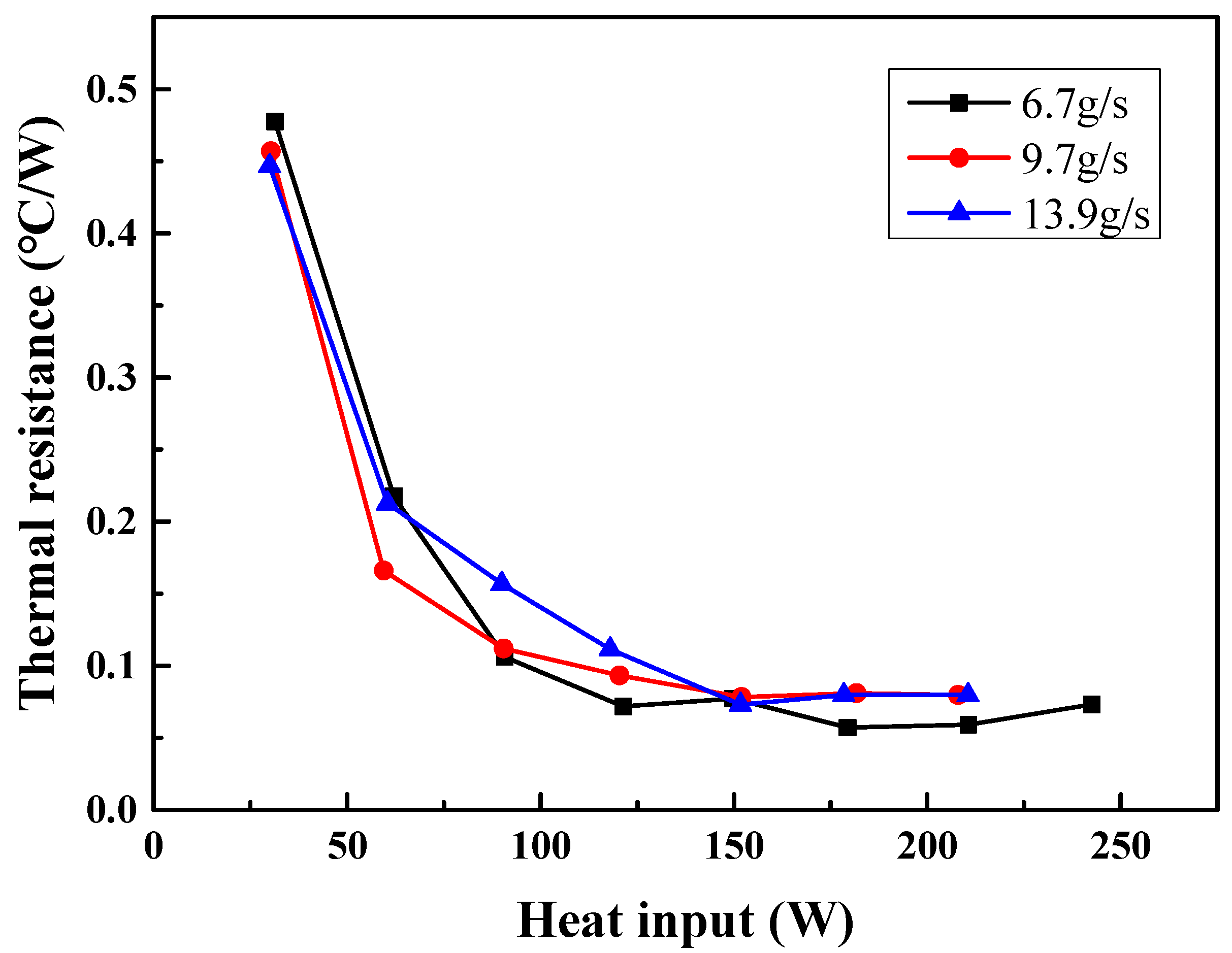
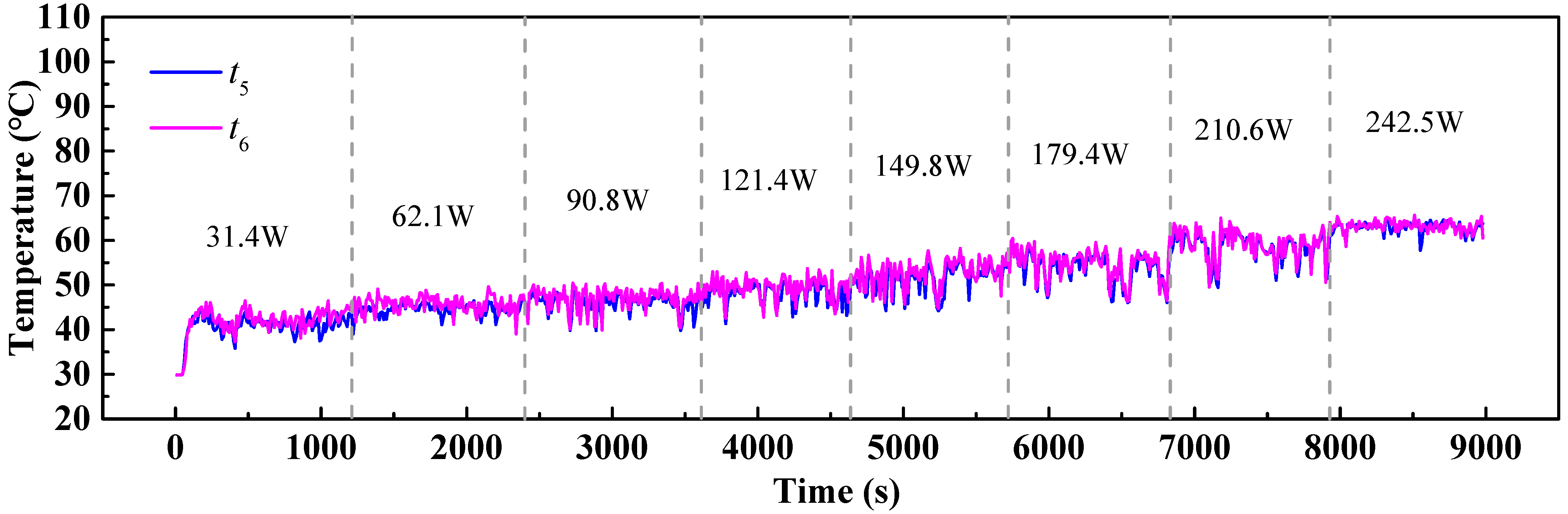
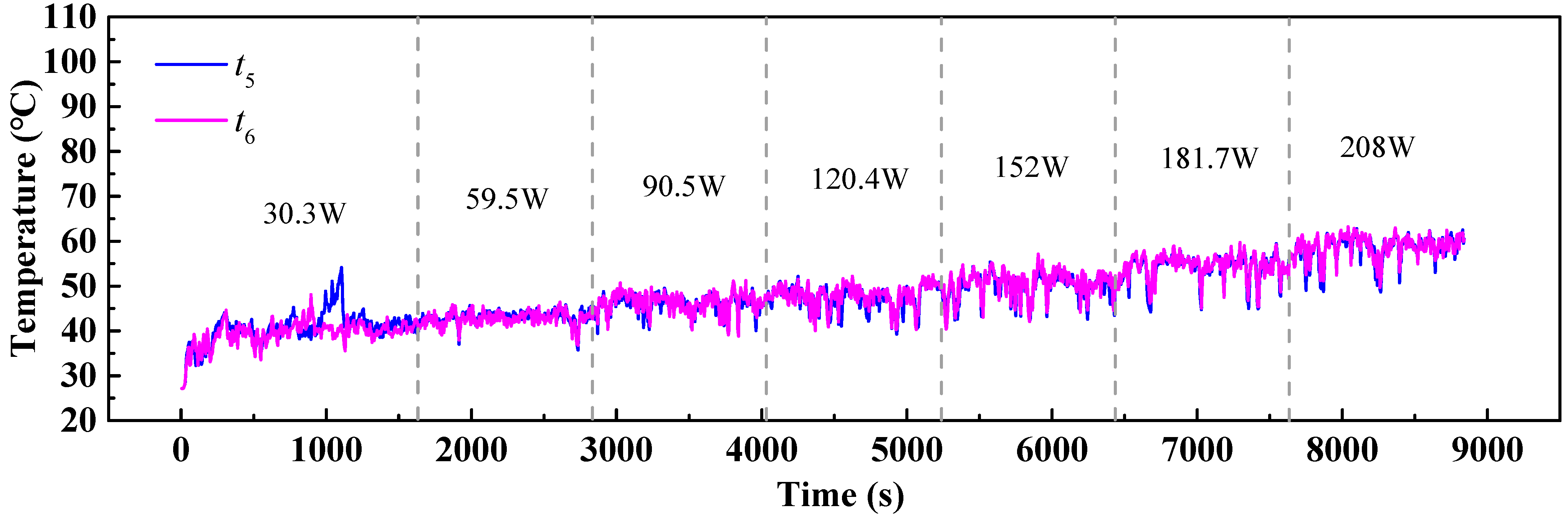
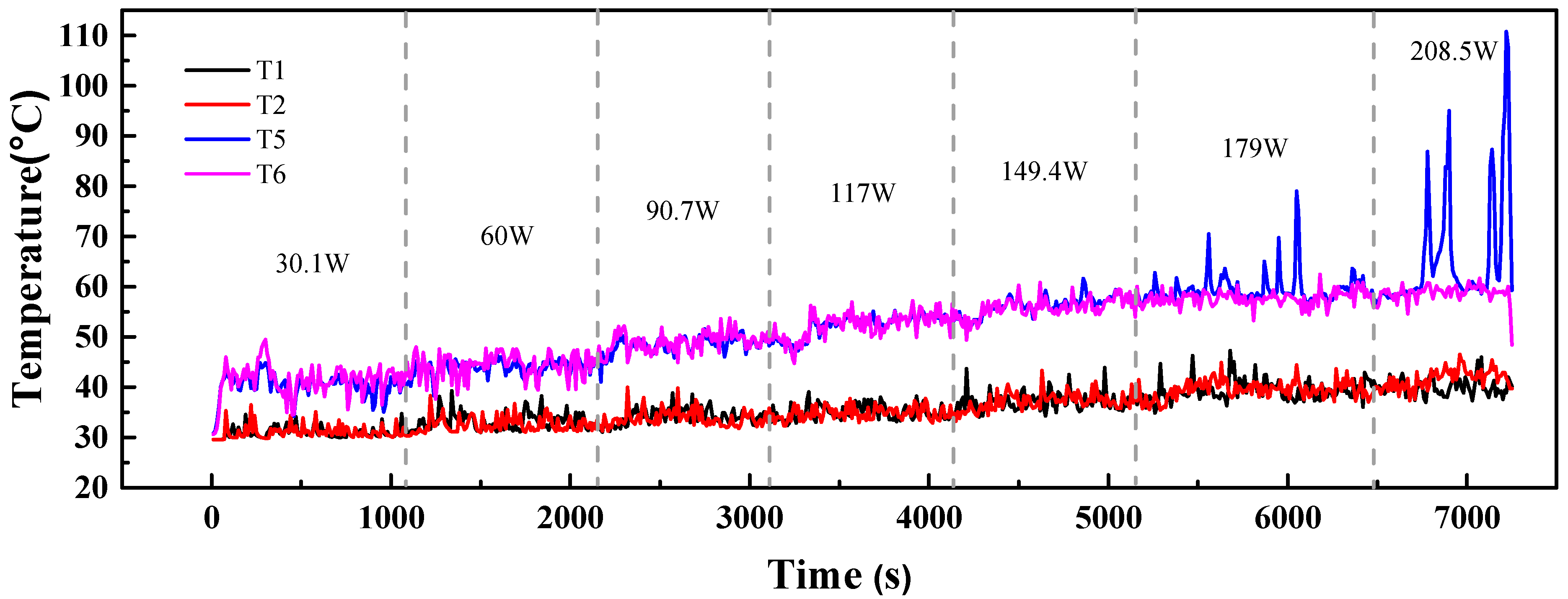
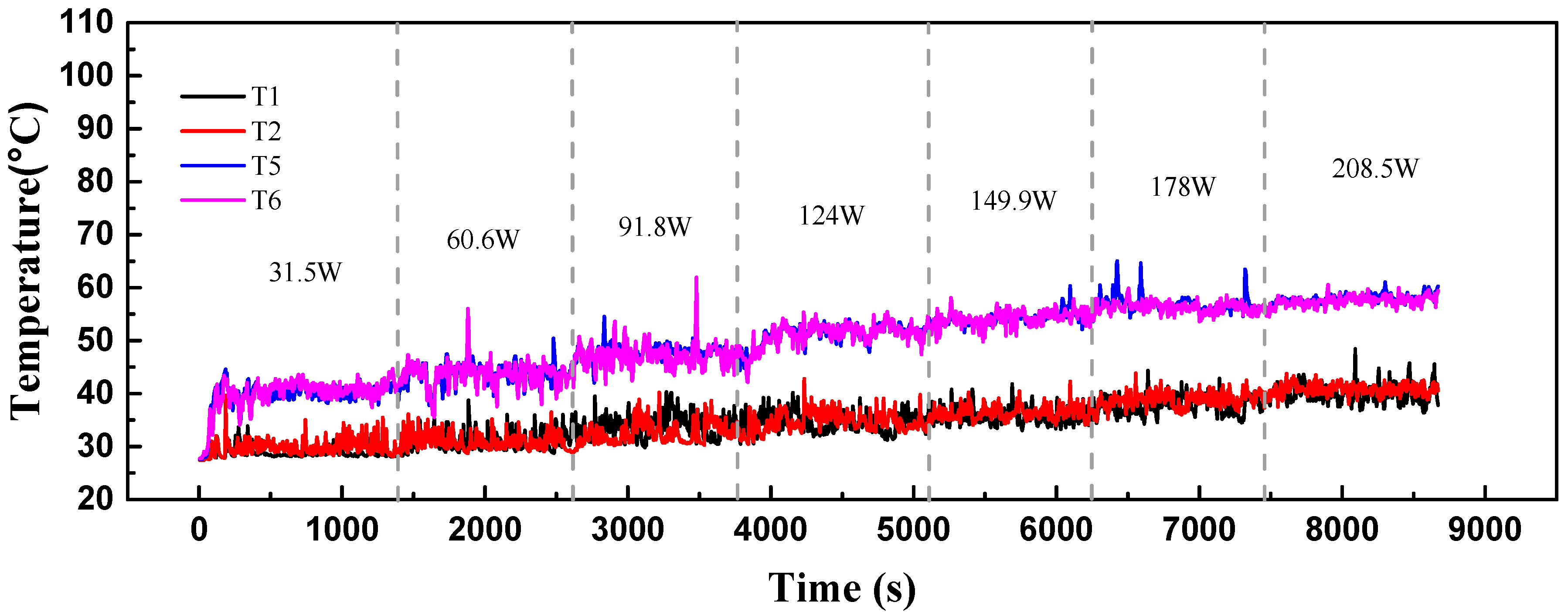
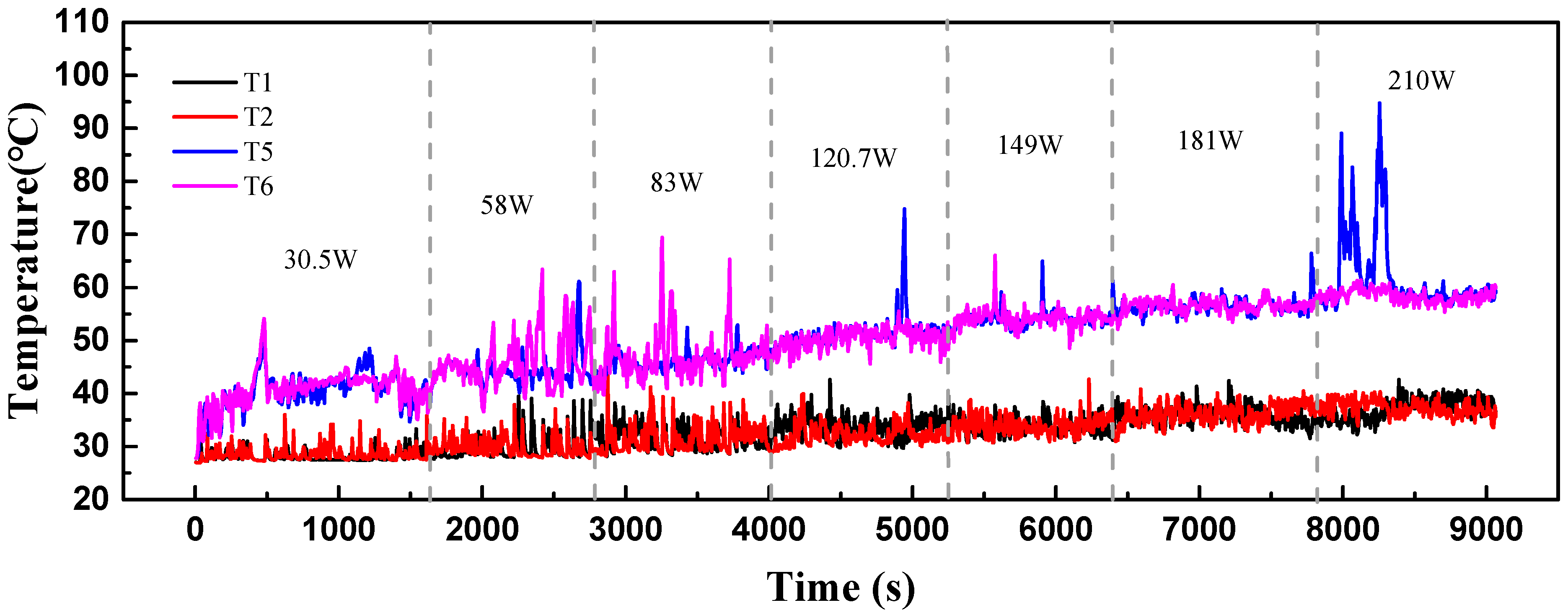
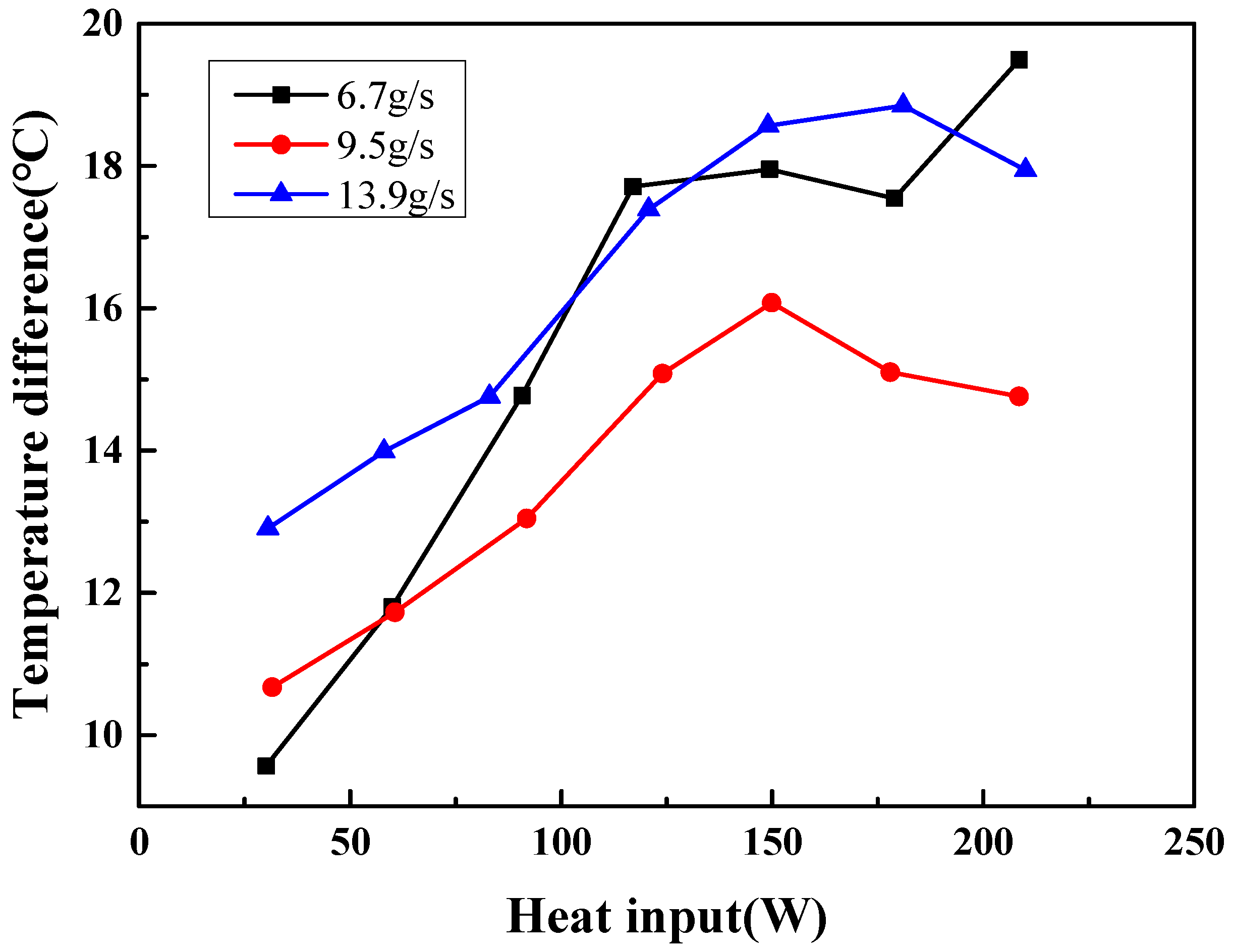
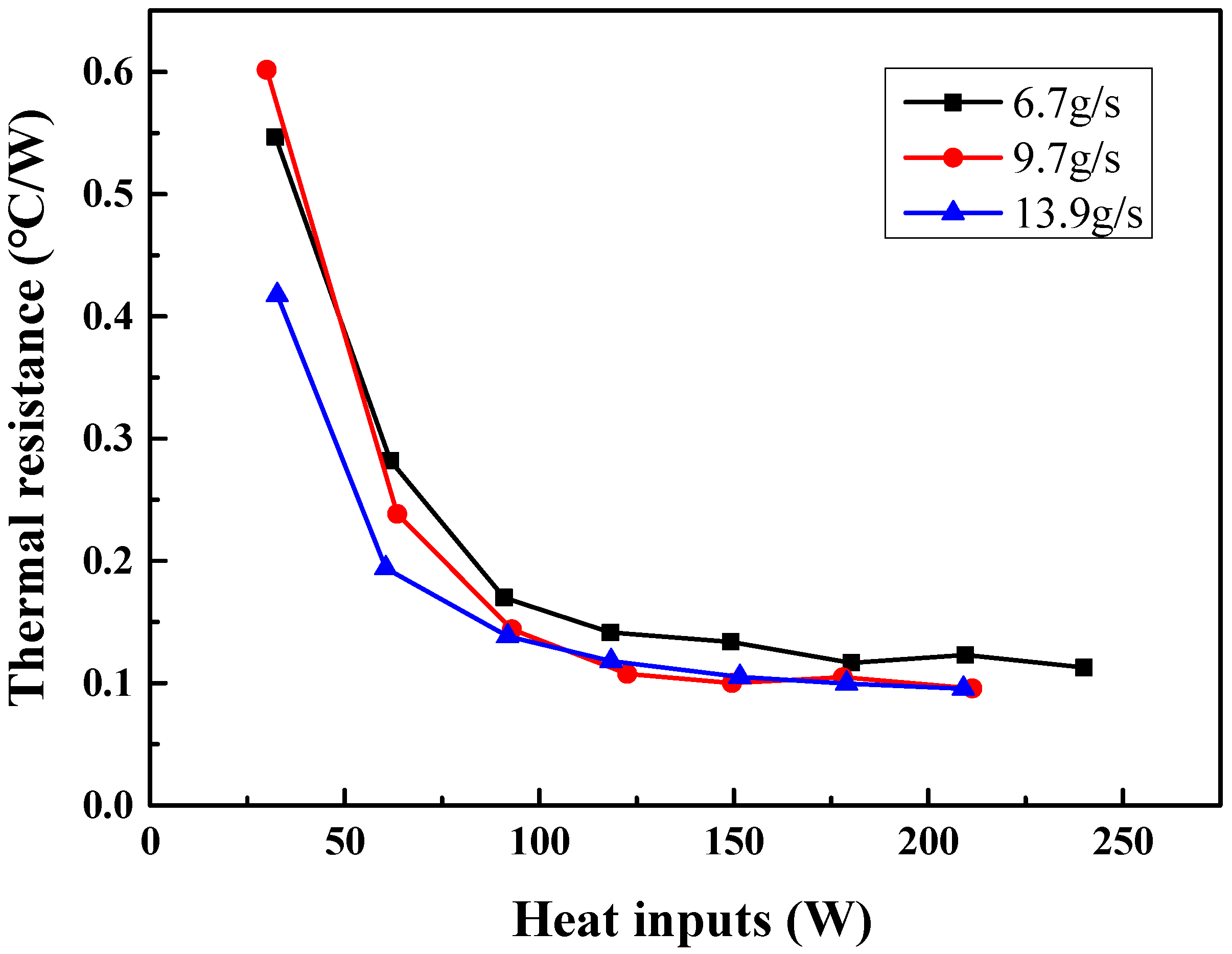
Pulsating heat pipe (PHP) is an efficient heat transfer technology applied in the fields of heat dissipation and energy utilization. There are many factors affecting the heat transfer of PHP, including working fluid, filling ratio, inclination angle, etc. The cooling capacity of the cooling water system at the condensing section to the working fluid is also an important factor affecting the starting and operating of PHP. The research on PHP at different cooling water flow rates is of great significance for enhancing the operating performance. An experimental investigation of starting and running performance is carried out on a closed loop PHP with ultrapure water under different inclination angles of 90°, 60° and 30°. The starting and heat transfer performance of PHP with a filling ratio of 50% is obtained by adjusting the heat input in the range of 30–210 W at different cooling water flow rates of 6.7 g/s, 9.7 g/s and 13.9 g/s. The temperature and heat transfer resistance are used for analyzing the heat transfer performance. The results show that the starting mode, initial pulsating temperature and different heat transfer effects are brought about by different cooling water flow rates. It is observed that the cooling water flow rate has no obvious influence on the starting mode of PHP and that the starting mode of PHP is temperature progressive, starting with the increase in cooling water flow rates at a heating input of about 30 W. The influence of cooling water flow rates on the heat transfer performance of PHP is affected in a different way by inclination angles. The heat transfer performance of PHP with an inclination angle of 90° is similar at 6.7 g/s, 9.7 g/s and 13.9 g/s but, under the condition of 60° and 30°, the heat transfer resistance drops within a certain range effectively with an increasing cooling water flow rate from 6.7 g/s to 9.7 g/s and the heat transfer performance does not change significantly with the cooling water flow rate increasing to 13.9 g/s. Thus, there is an optimal value for the cooling water flow rate during the operating of PHP. The inclination angle also has an important effect on the temperature pulsating, and the temperature of PHP affected by gravity is stable with an inclination angle of 90°. However, the reduced influence of gravity on the backflow of the working fluid drops when the inclination angle decreases from 90° to 30°, and the wall temperature increases due to local overheating when the high heat input occurs.
Keywords: pulsating heat pipe; cooling water flow rate; start; inclination angle; heat transfer performance pulsating heat pipe; cooling water flow rate; start; inclination angle; heat transfer performance