Article

A Bibliometric Analysis on Cooperatives in Circular Economy and Eco-Innovation Studies

by
Asia Guerreschi
1,2,3,* and
Fernando J. Díaz López
3,4,5
1
Department of Economics & Management, University of Ferrara, 44121 Ferrara, Italy
2
Department of Humanities, University of Ferrara, 44121 Ferrara, Italy
3
SEEDS, University of Ferrara, 44121 Ferrara, Italy
4
Transitions Hub, EIT Climate KIC, 75013 Paris, France
5
Department of Industrial Engineering, Stellenbosch University, Stellenbosch 7602, South Africa
*
Author to whom correspondence should be addressed.
Sustainability 2023, 15(21), 15595; https://doi.org/10.3390/su152115595
Submission received: 30 June 2023 / Revised: 25 October 2023 / Accepted: 30 October 2023 / Published: 3 November 2023

Abstract

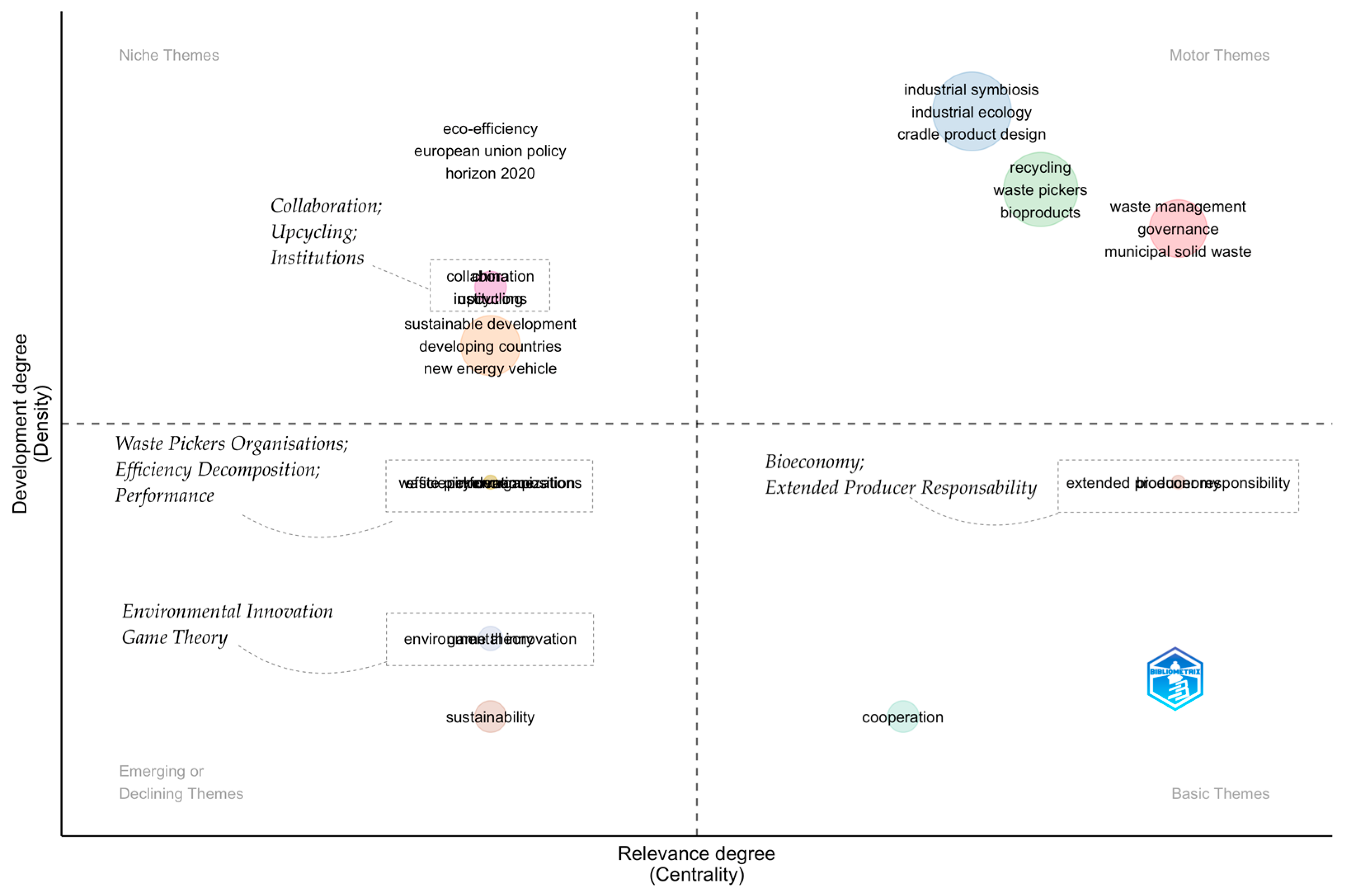
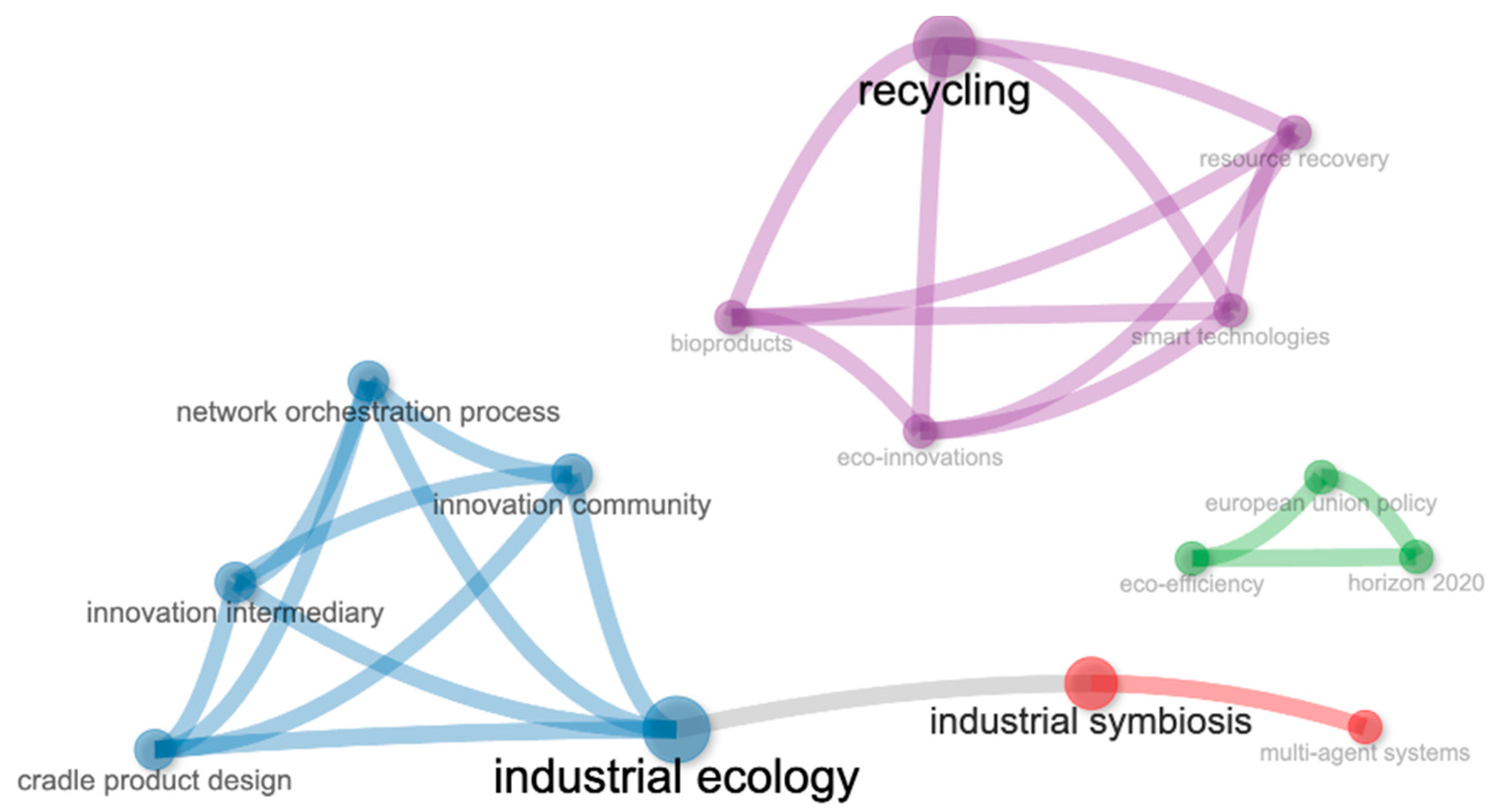
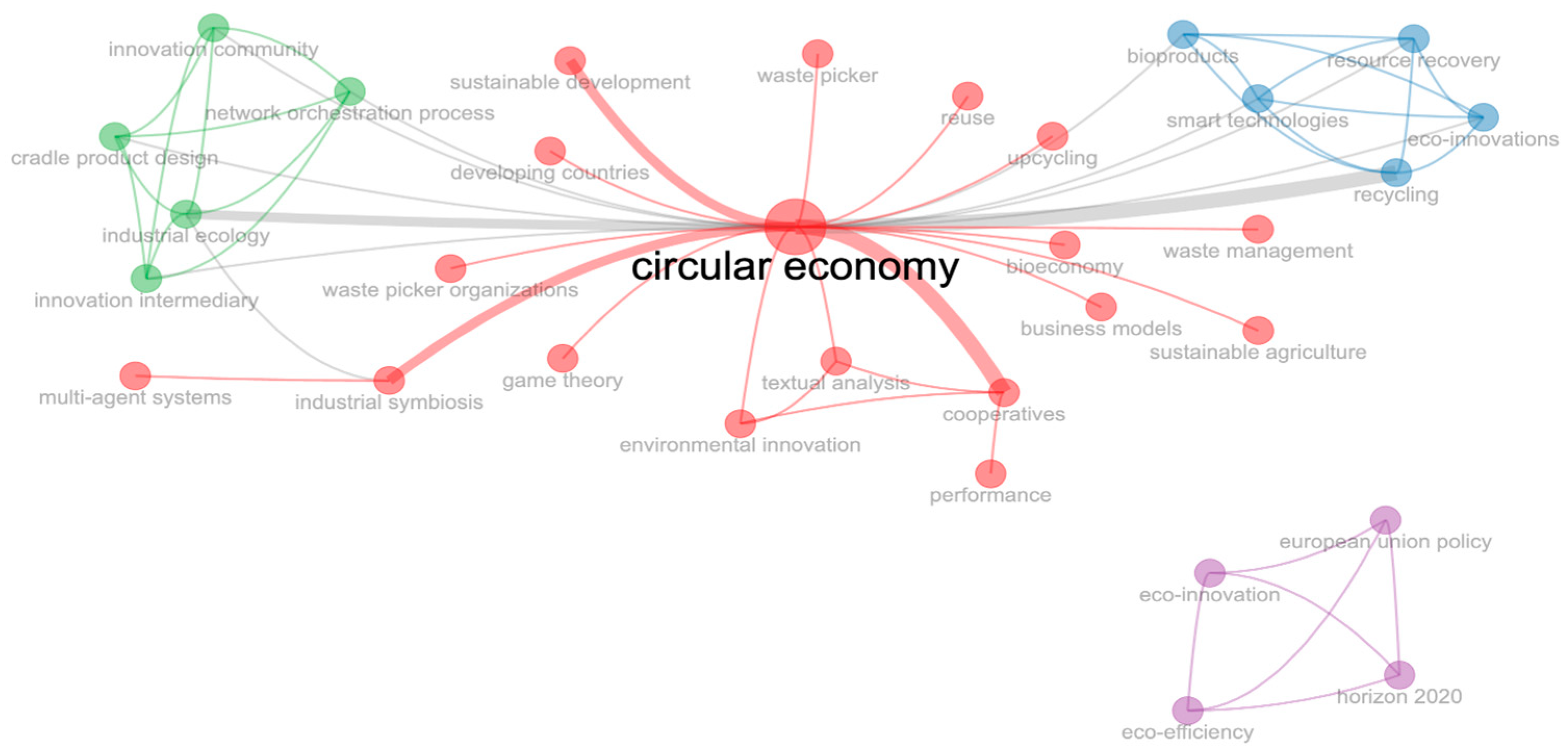
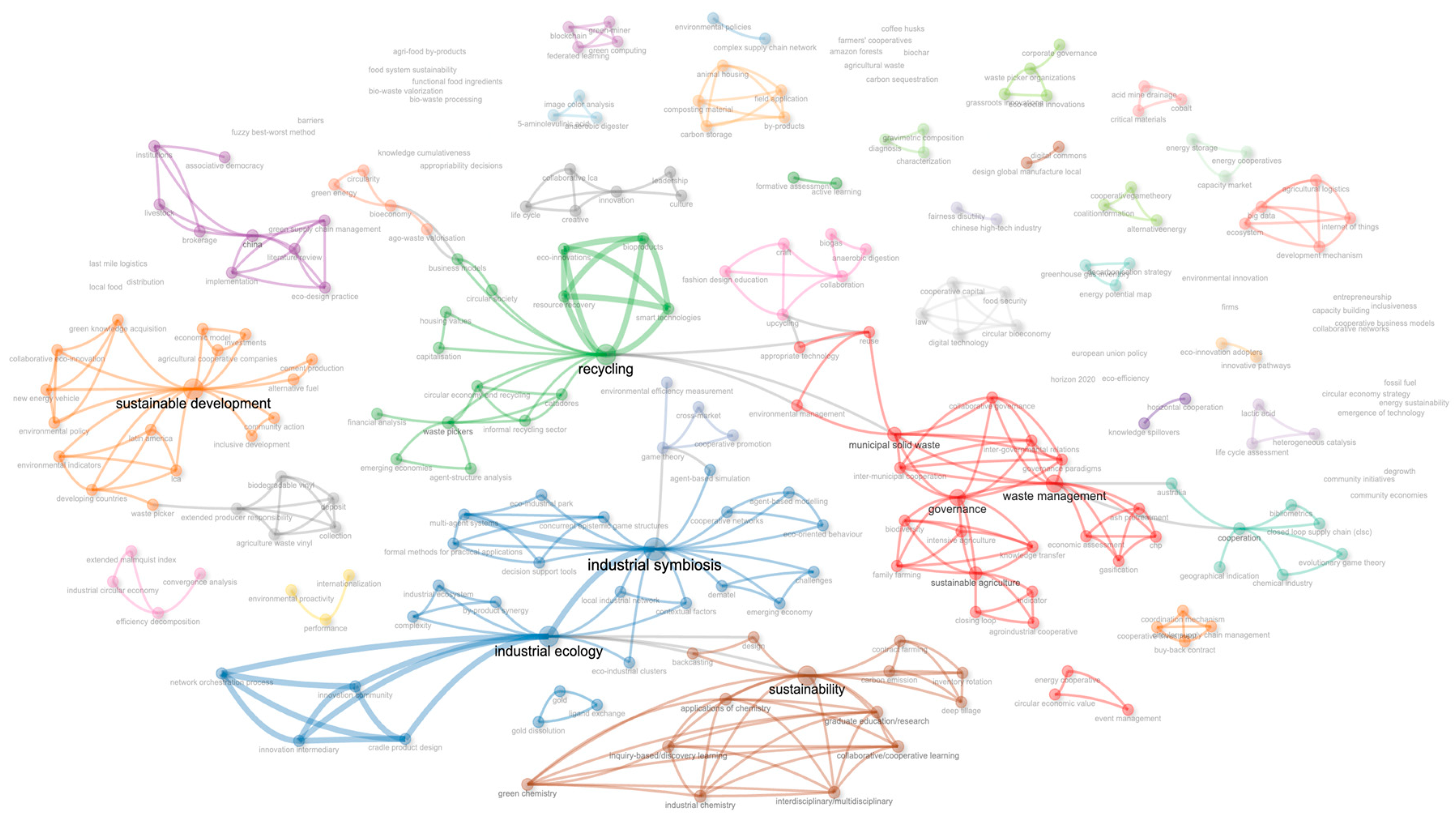
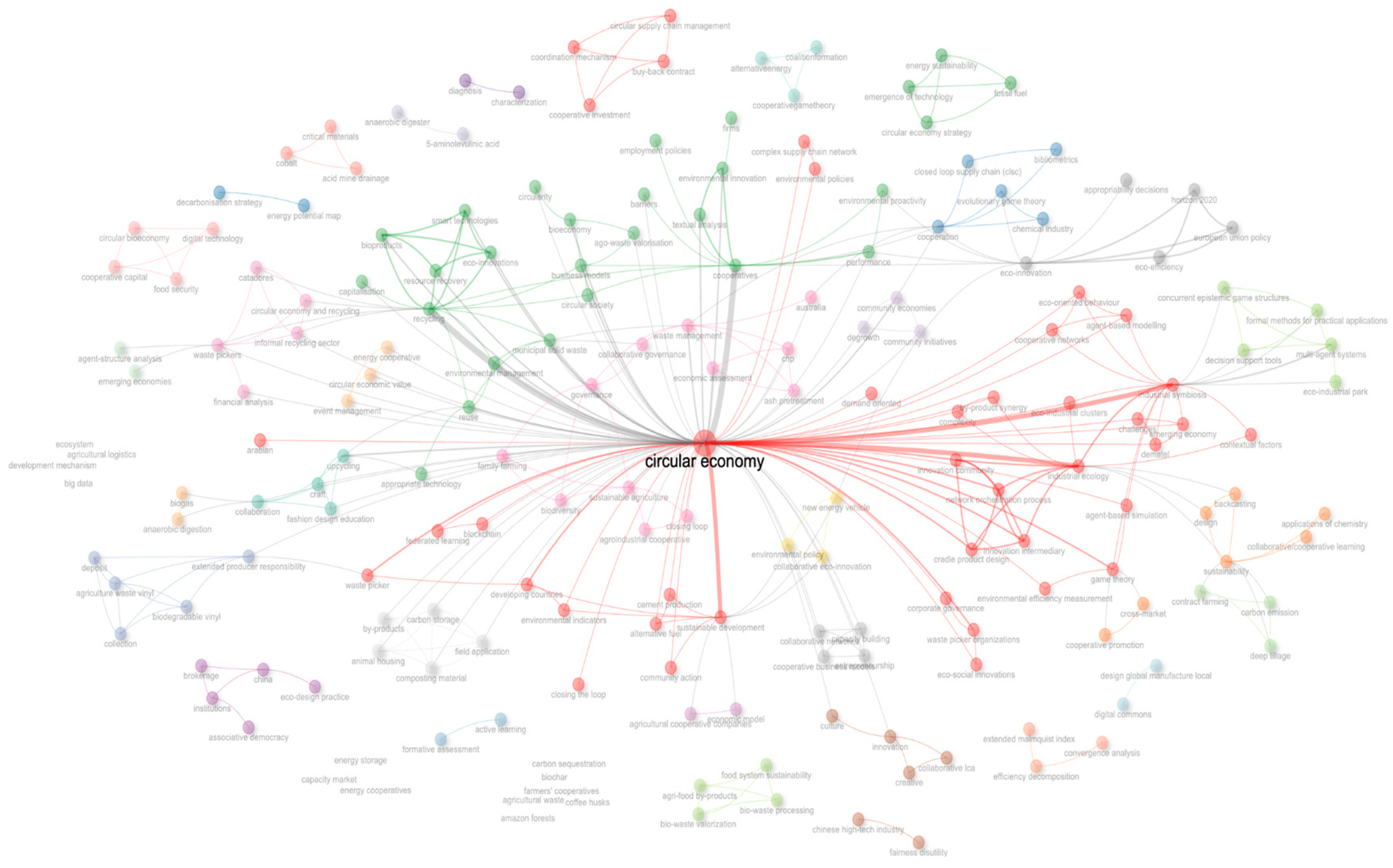
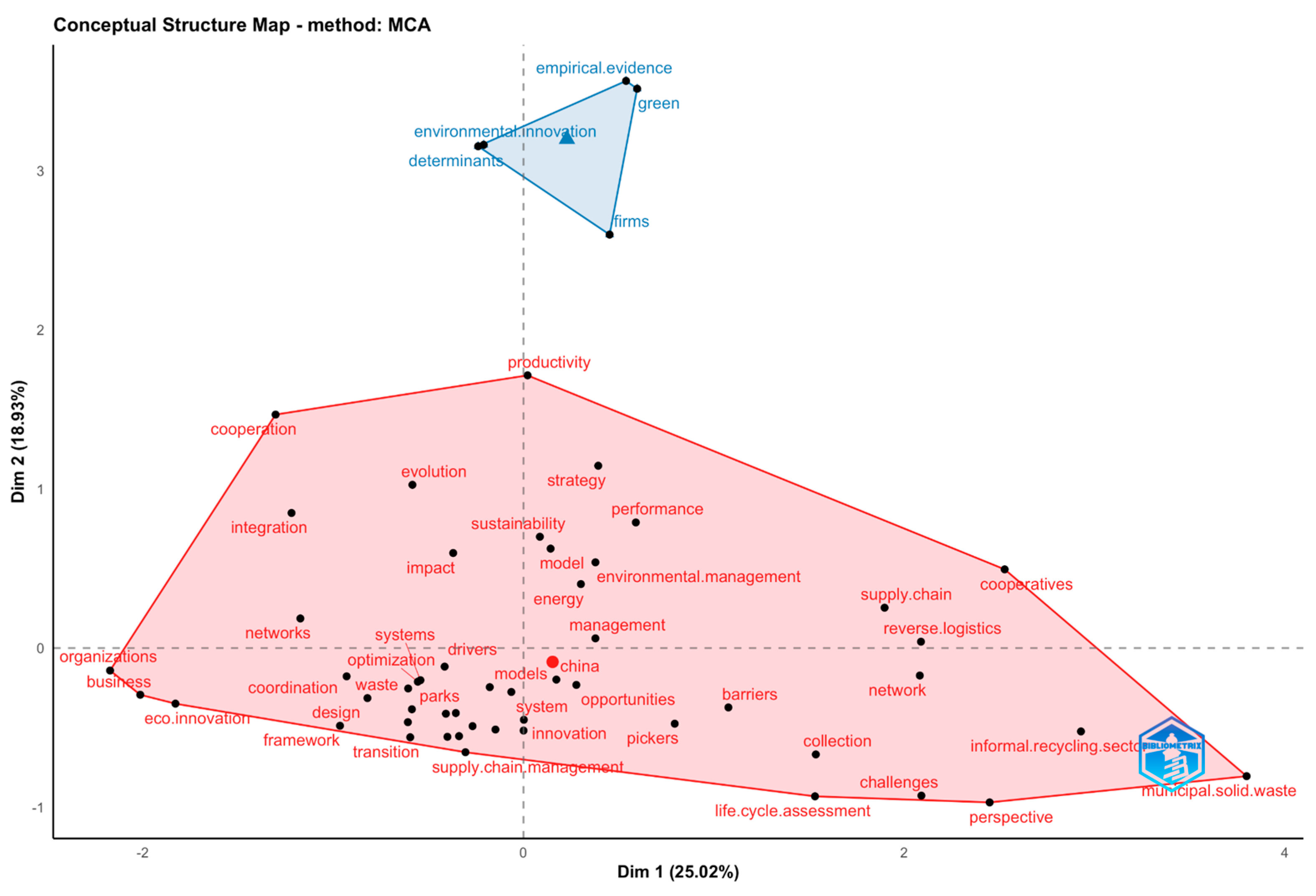
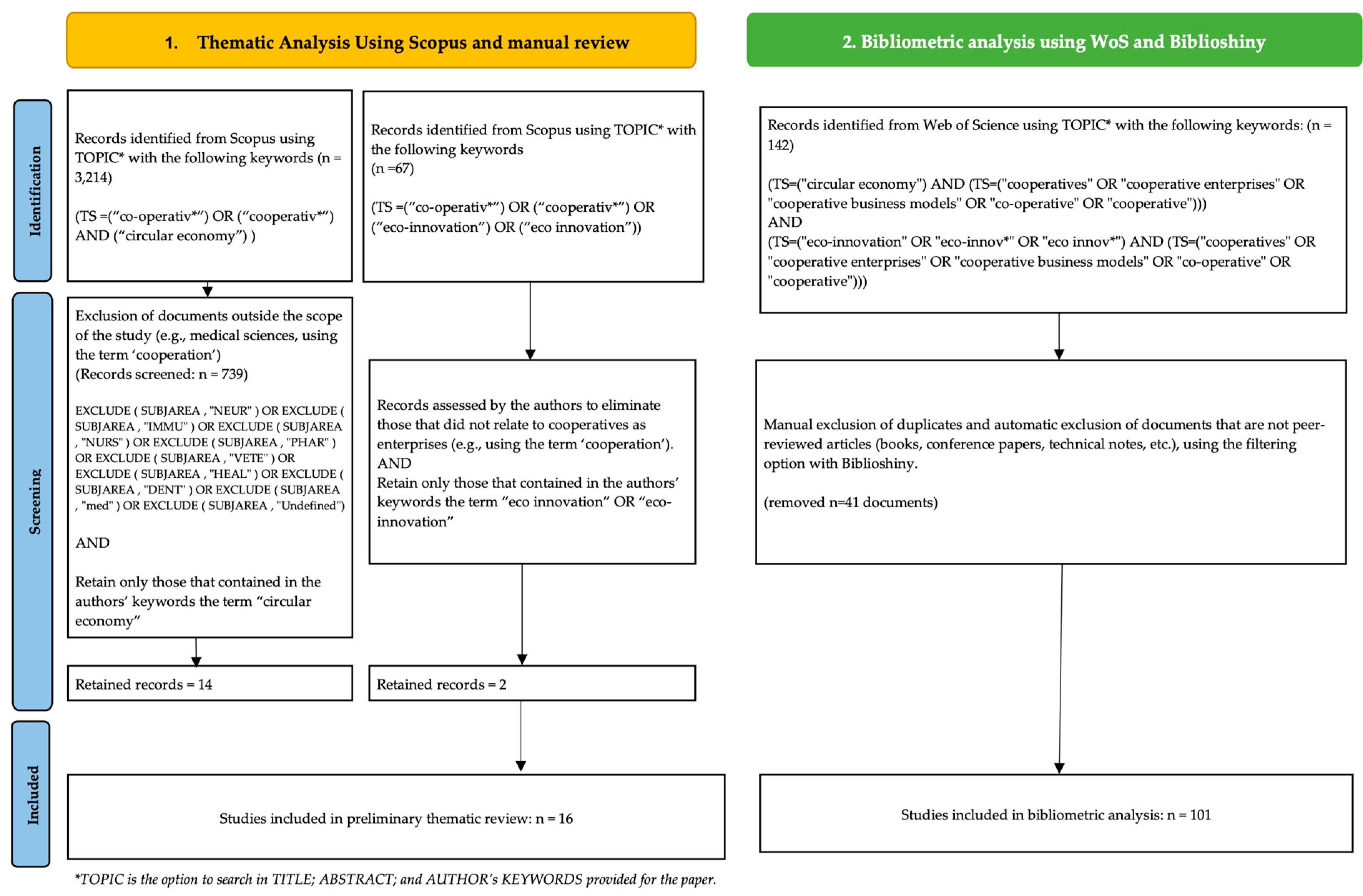
Cooperatives address societal challenges embracing values beyond mere profit-oriented production. Considering the ongoing shift to achieve efficient use of resources and increased circularity, cooperatives should be better equipped to incorporate circular economy (CE) and eco-innovation (EI) into their strategies (compared to regular enterprises). This paper reviews the scholarly literature focusing on the application of CE and EI within cooperative studies with the aim to understand the relationships between these topics, identify the existing scholarly communities, and to observe salient research themes. This study refined the method of van den Hoven and Rubalcaba (2016) to conduct a two-step bibliographic review of documents: a thematic analysis of citation data from Scopus (including a manual review of 16 papers) was followed by a bibliometric analysis of 101 documents from Web of Science (using R-Studio’s Biblioshiny). Our results identified three intellectual clusters of cooperative studies focusing on the downstream of CE: (1) industrial ecology; (2) recycling; and (3) waste management. Our study also revealed an emerging scholarly field focused on cooperatives and CE, and with little attention to EI. These findings aim at catalyzing the integration of cooperatives more effectively into scholarly discussions, suggesting that environmental sustainability should be recognized as an additional principle of the cooperative identity—providing a wider perspective that enhances interest in the research of these topics and their interconnections.
Keywords: cooperatives; cooperative enterprise; circular economy; eco-innovation; environmental sustainability; new economy; social and solidarity economy cooperatives; cooperative enterprise; circular economy; eco-innovation; environmental sustainability; new economy; social and solidarity economy