Abstract
In cold mountainous regions of China, the construction of highways is challenging, owing to frost damage of weak subgrade soils and the difficulties posed from dealing with waste materials derived from tunnel excavation. In order to address these issues, Wu et al. proposed a new approach of using coarse gravel reclaimed from tunnel excavation as an antifrost structural fill replacing the top layer of frost-susceptible subgrade soils. This approach was validated against the results of field investigations on the highway between Tanchang county and Diebu county (the TDH) in south Gansu Province, northwest China, but only studied the results of the first year. As an environmentally friendly and sustainable ground-treatment method, this strategy merits extensive research and widespread implementation. In this study, the frost-heave deformation of a two-year monitoring period is investigated through a field trial, and a frost-heave model is applied to explore the growth of the ice lens and accomplish the quantitative prediction of frost heave based on experimental measurements. The fine particles of reclaimed gravel sediments from the Lazikou tunnel are found to be resistant to frost. The measured values of the maximum frost heave are significantly lower than the permissible limit of 50 mm specified in the Chinese standards. The reclaimed gravel could significantly reduce frost heave. With a 2 m thick gravel fill, frost heave could be reduced by more than 70% when the groundwater table is located at a depth greater than 3 m. An empirical relationship to predict the frost heave in terms of the gravel fill thickness is proposed. This study presents a safe and sustainable approach focusing on the construction of highways in cold mountainous regions.
1. Introduction
Frozen ground is widely distributed in the world; for example, seasonally frozen ground and permafrost cover over 70% of China’s landmass, and the distribution of frozen soil is in cold regions [1,2]. Frost heave refers to volume expansion when a soil freezes, and it is mainly due to ice-lens formation associated with water migration. The development of ice lenses and frost heave is responsible for the failure of roads, tunnels, and other engineering projects in seasonally frozen areas [3,4]. The occurrence of discrete ice lenses within subgrade and pavement strata can result in differential frost heave, thereby inducing road-surface swelling and cracking during winter, followed by thawing deformation during spring [5]. This kind of road disease is defined as frost damage in cold regions. The frost heave of subgrade soil significantly influences the stability of transportation infrastructure in cold areas [6,7,8].
Frost heave is not an intrinsic soil property, but rather the result of the combined thermal, hydrologic, and stress conditions in the soil. The soil type, water supply, and suitable freezing temperature are the essential conditions to cause the frost heave of roads in seasonally frozen-ground areas. To limit the frost heave of seasonally frozen soils, studies focus mainly on control methods, such as by controlling the fine-particle content of subgrade soils, controlling the soil moisture content, lowering the groundwater table [9,10], and controlling the soil temperature [11]. In particular, the type of subgrade soil plays a major role in the formation of frost heave [2], and it is crucial to reduce the frost susceptibility of soils for mitigating the frost heave. Thus, the soil-replacing method is widely used to control and prevent road-frost damage as an effective method in China [12,13,14,15]. The effect of crushed rocks or coarse soils as nonfrost-susceptibility material to control frost heave has been well proven [16].
Along with frozen soils, China is also a country that has mountains, which accounts for 68% of the country’s land area [17]. In cold mountainous regions, where complex geological and climate conditions prevail, a significant number of road-construction projects are being completed and planned due to the mammoth development in northwest China.
The major issues affecting highways in cold mountainous regions include extremely low temperatures, soft saturated fine-grained subgrade soils, and limited precipitation, resulting in significant frost heave in the subgrade. Despite numerous studies exploring measures for preventing subgrade frost heave, the comprehensive assessment of frost damage remains elusive, particularly in these regions. While the replacing method is an effective means of controlling road-frost damage, it is advisable to use locally sourced materials to reduce project costs [12]. However, the availability of locally sourced road-fill materials in cold mountainous regions is a critical issue, particularly given the significant amount of debris generated from tunnel excavation that requires safe and effective treatment. China has tens of thousands of kilometers of mountain tunnels either under construction or ready for construction, and the improper disposal of tunnel debris could result in the depletion of valuable land resources, soil erosion, and geological disasters [18]. The construction of highways in cold mountainous regions is further complicated by the susceptibility of weak subgrade to frost damage and the challenges associated with managing waste materials from tunnel excavation. To address these issues, Wu et al. [19] proposed a novel approach based on the concept of green ground, which involves using coarse gravel reclaimed from tunnel excavation as an antifrost structural fill to replace the top layer of frost-susceptible subgrade soils. This approach was validated through field investigations conducted on the highway between Tanchang county and Diebu county (the TDH) in south Gansu Province, northwest China, although the study only examined the results of the first year [19]. As an environmentally friendly and sustainable ground-treatment method, this strategy warrants further research and widespread implementation.
Frost heave is attributed to water migration to the freezing front, whereby ice lens develops (Ming et al. [20]). Various theoretical and numerical frost-heave models have been presented to explain the complicated phenomena of frozen soil [21,22,23,24,25,26,27], and some models of pavement-material-damage-induced temperature change have been proposed [28,29]. But most of these models’ parameters are difficult to directly implement through the indoor test, and none of them have been widely accepted as a reliable and effective tool in engineering applications [20]. In engineering practices, the frost heave is required to predict in a simple and convenient way [27]. The program PCHeave has been systematically validated against laboratory data and field measurements by Sheng et al. [3,30,31]. The frost-heave model in PCHeave is based on the rigid ice concept, and it can deal with the problems in specific site conditions. A distinct advantage of PCHeave is that it can simulate the formation of discrete ice lenses in soil and predict frost heave in engineering practice. And as only a small number of soil parameters are involved in the program PCHeave, such as the initial water content, unfrozen water content, dry density, and so on, these parameters can be obtained directly by laboratory tests. This model has also been successfully applied to analyze the frost-heave mechanism of the high-speed railway between Harbin and Dalian in northern China by Sheng et al. [3].
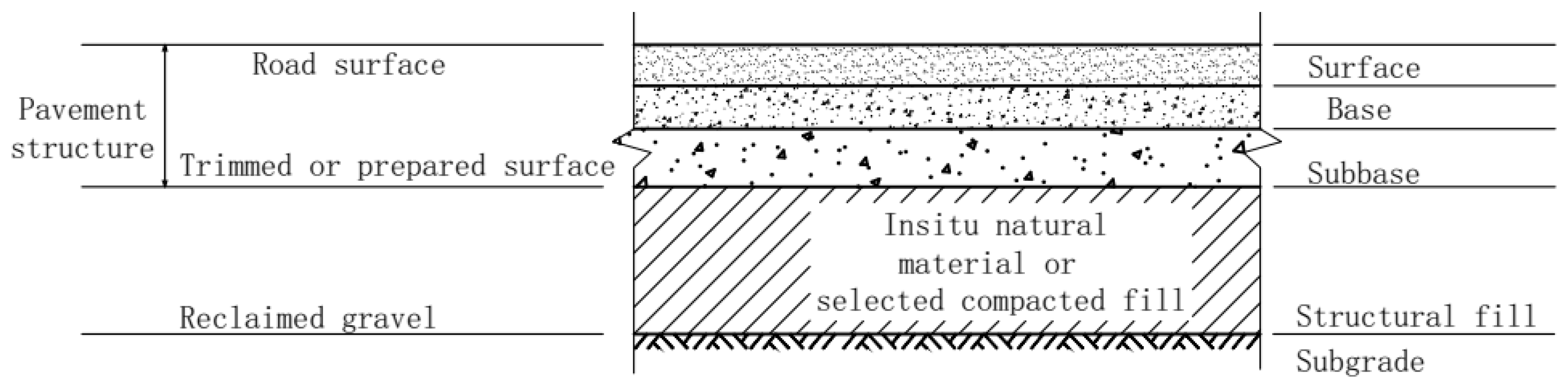
The composition of a typical road structure comprises a surface layer, base, and subbase, which are installed over in situ natural material or selected compacted fill, commonly referred to as the structural-fill layer (Figure 1). This paper aims to present a further study on the new approach of using coarse gravel reclaimed from tunnel excavation as an antifrost structural fill for the construction of highways located in cold mountainous regions of China, and it focuses on experimental–numerical investigations into the frost-heave deformation of the antifrost structural-fill layer. The study investigates the frost-heave deformation over a two-year monitoring period through a field trial. And, in this paper, the original frost heave model in PCHeave has been further developed to explore the growth of the ice lens; moreover, for the consideration of different filling depths and groundwater tables, the relationship between the frost heave, frost-heave ratio, and replacement-fill thickness are identified and could be represented by the exponential function expression. Finally, the reasonable replacement depth of tunnel mucks as an antifrost structural-fill layer has been proposed based on numerical simulation and experimental data.
Figure 1.
Different layers used in a typical road structure.
2. Climatic and Geological Conditions of the Study Area
2.1. Climatic Conditions
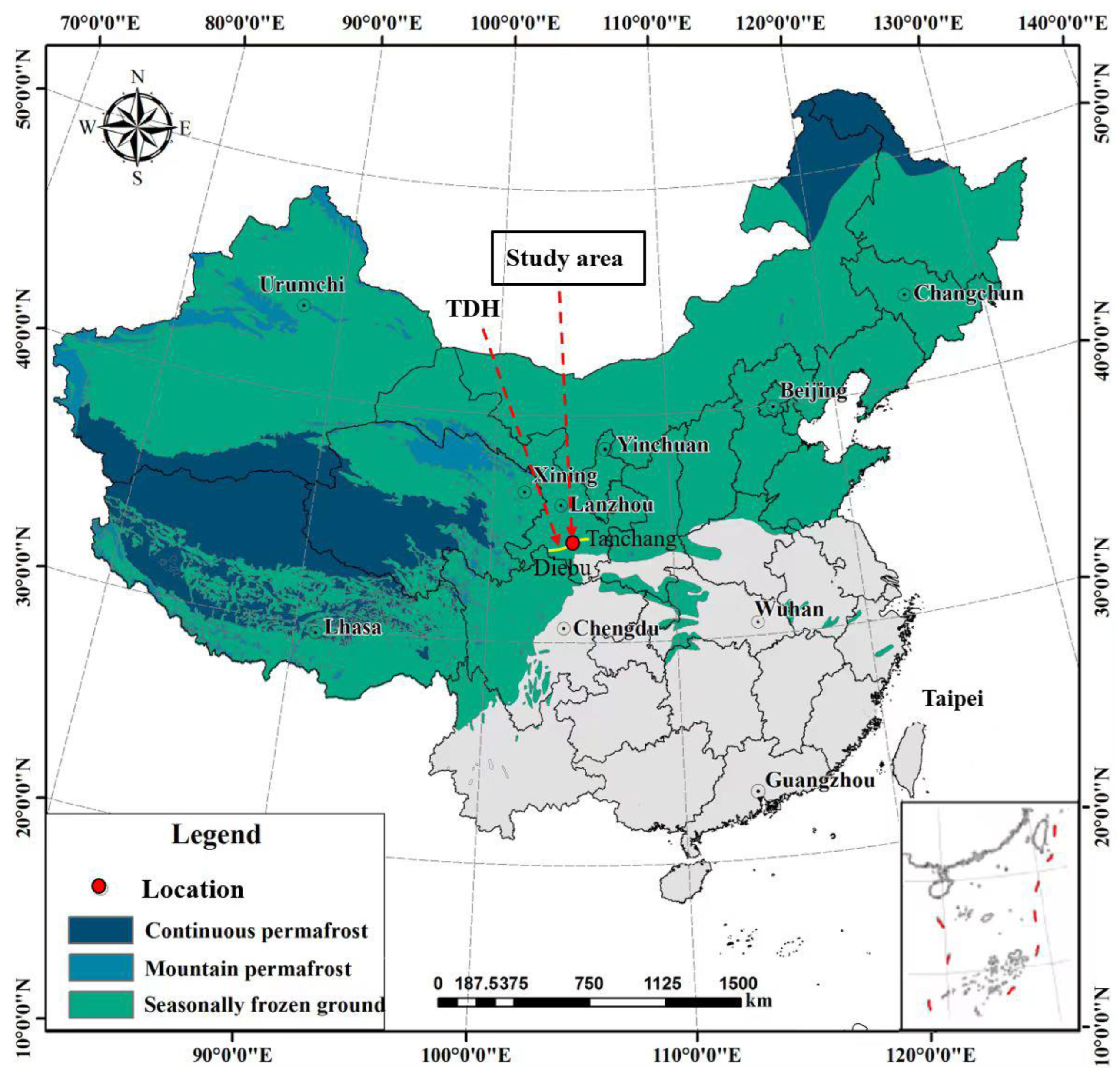
Tanchang county is situated in the southern region of Gansu Province in West China. The experimental sections are situated at coordinates 34°10′ N and 104°22′ E, covering a distance of K18 + 100–K18 + 400 along the TDH, with an average elevation of 2460 m. The location of the TDH is depicted in Figure 2. The climate in the study area is characterized as cold and moist, with climatic parameters presented in Table 1. The region experiences significant seasonal temperature fluctuations, and based on its climatic characteristics, it is classified as a region with seasonal freezing-cold weather.
Figure 2.
The location of study area along Tanchang–Diebu Highway (TDH) in south Gansu province, China. Distribution of frozen soil in China is shown in the base map [19]. Reprinted with permission from Ref. [19]. 2019, Wu, L.B.; Niu, F.J.; Lin, Z.J.; et al.
Table 1.
Climatic conditions of study area.
2.2. Geological Conditions
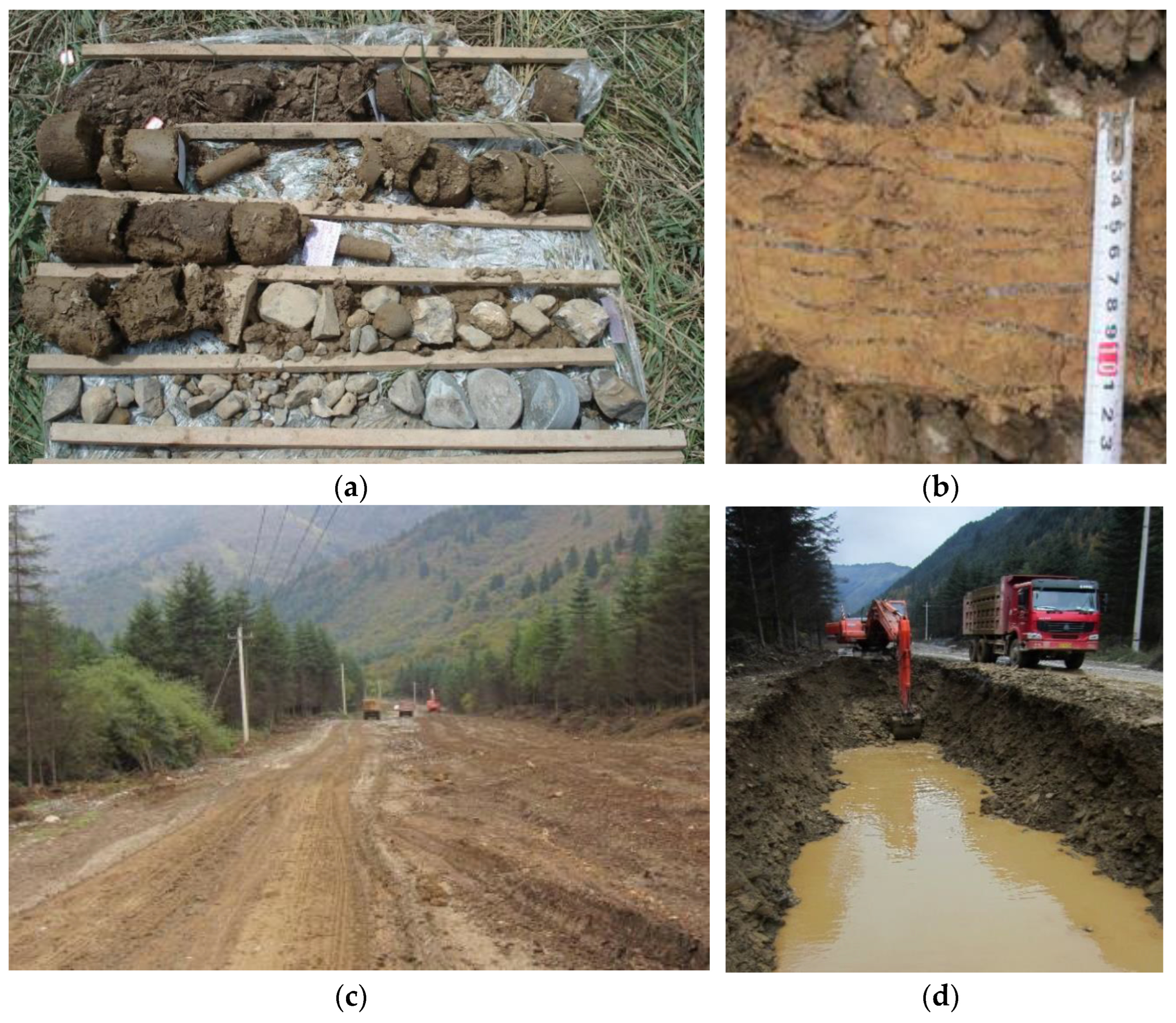
In mid-November, the surface of the ground begins to freeze, and thawing typically commences in early March. In 2014, the maximum depth of seasonal freezing in the sur-rounding natural ground was recorded as 89 cm. Geological drilling conducted at the site revealed the presence of three distinct soil layers within a depth of 10 m. These layers included a surface layer of soft black humus with grassroots (0–0.5 m), a silty clay layer with a higher water content ranging from 35 to 45% (0.5–3.5 m), and a lower layer consisting of gravel and rubble (below 3.5 m). Further geological investigations indicated the presence of soft soils containing layers of segregated ice (Figure 3b). The original road at the site was found to have suffered from frost heaving, thawing settlement, and deep muddy ruts (Figure 3c). Additionally, the groundwater table (GWT) was found to be shallower, typically located at a depth of 1.1–3 m below the ground surface (Figure 3d).
Figure 3.
The geological conditions of the original road in the study area. (a) Borehole samples; (b) Segregated ice in soil under the road in spring; (c) Deep ruts and frost boiling of the original road; (d) The shallow groundwater of the original road.
3. Materials and Methods
3.1. Laboratory Test
3.1.1. Basic Physical, Mechanical, and Thermal Properties of Soils
All test methods followed the “Geotechnical test method standard (GB/T 50123-2019)” [32]. The measured properties of the silty clay in the study site are shown in Table 2.
Table 2.
Physical properties of silty clay in the study site.
The gravel samples were recovered from mucking debris from the Lazikou tunnel adjacent to the study site. The measured properties include: the maximum dry unit weight of 2.25 g/cm3 and the optimum moisture content of 5.8%. The permeability coefficient is 1.4 × 10⁻¹ cm/s. The thermal conductivities are 1.73 W/m·K and 2.06 W/m·K when the test temperatures are 23 °C and −10 °C, respectively. The coefficient of uniformity Cu is 77 and the coefficient of curvature Cc is 1.3, indicating that the gravel soil is well-graded soil.
3.1.2. Laboratory Frost-Heave Experiment
As a carrier of frost-heave generation, the frost susceptibility of subgrade soils has a remarkable influence on the frost-heaving deformation in the subgrade. Thus, the frost susceptibility of soft soils and gravels from a tunnel excavation in the study area should first be studied. The frost susceptibility of soils was tested by the laboratory frost-heave experiment, and test methods followed the “Geotechnical test method standard (GB/T 50123-2019)” [32].
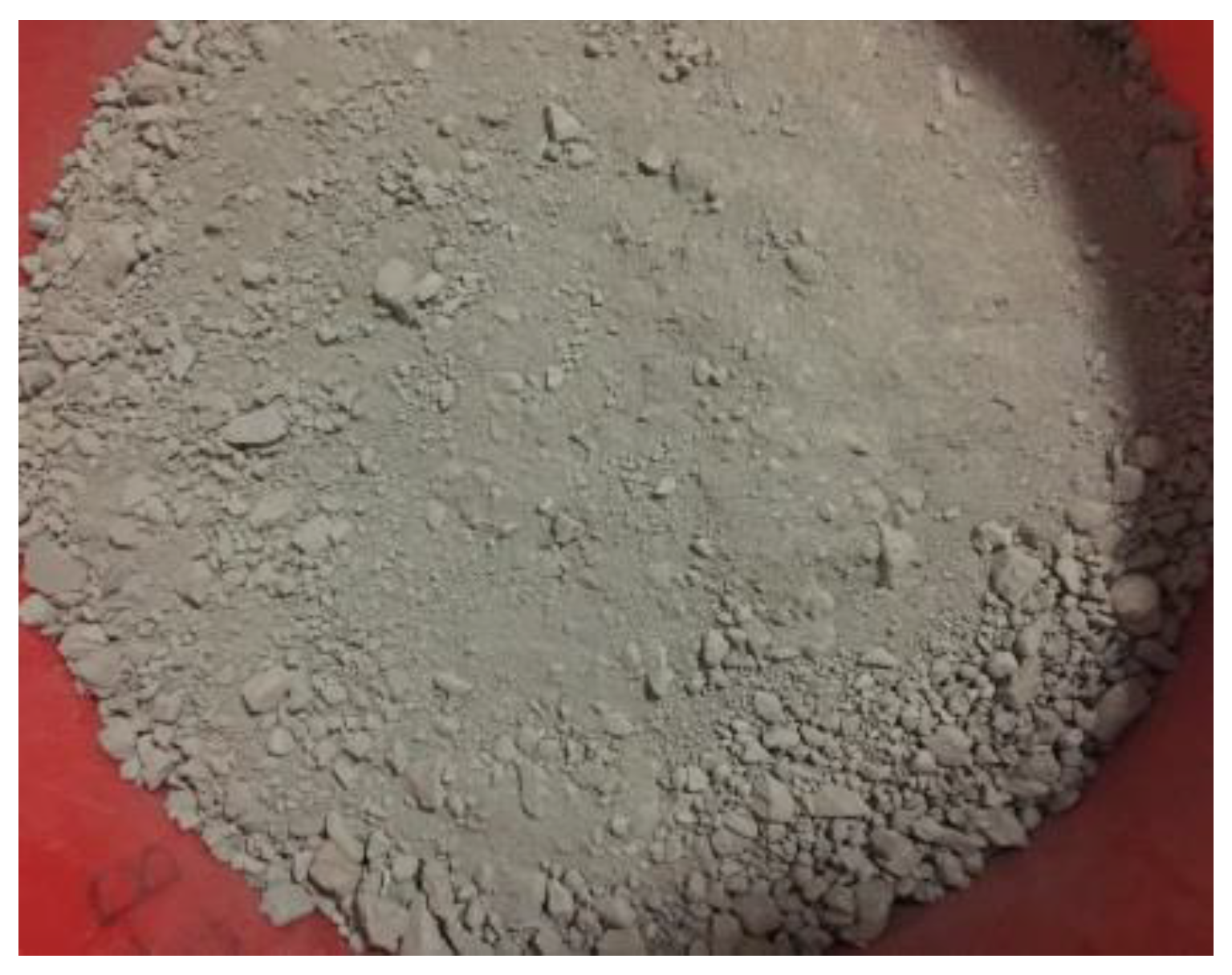
Frost-heave experiments were conducted within the freezing and thawing test chamber of the State Key Laboratory of Frozen Soil Engineering. This facility is equipped with a temperature-control system, a water-supply system, and a data-acquisition system. In accordance with laboratory standards, the maximum grain diameter for testing the frost heave is 20 mm. Therefore, gravel soil samples collected from the field were subjected to sieving. The results of this process revealed that the content of fine particles (≤0.075 mm) in the gravel soils obtained from the Lazikou tunnel was 14.2%, as depicted in Figure 4. The experimental conditions for the frost-heave tests are presented in detail in Table 3.
Figure 4.
Tunnel muck gravel soils after the sieving.
Table 3.
Experiment conditions of the frost heave in the laboratory.
3.1.3. Frost Susceptibility of Silty Clay and Gravel Soils
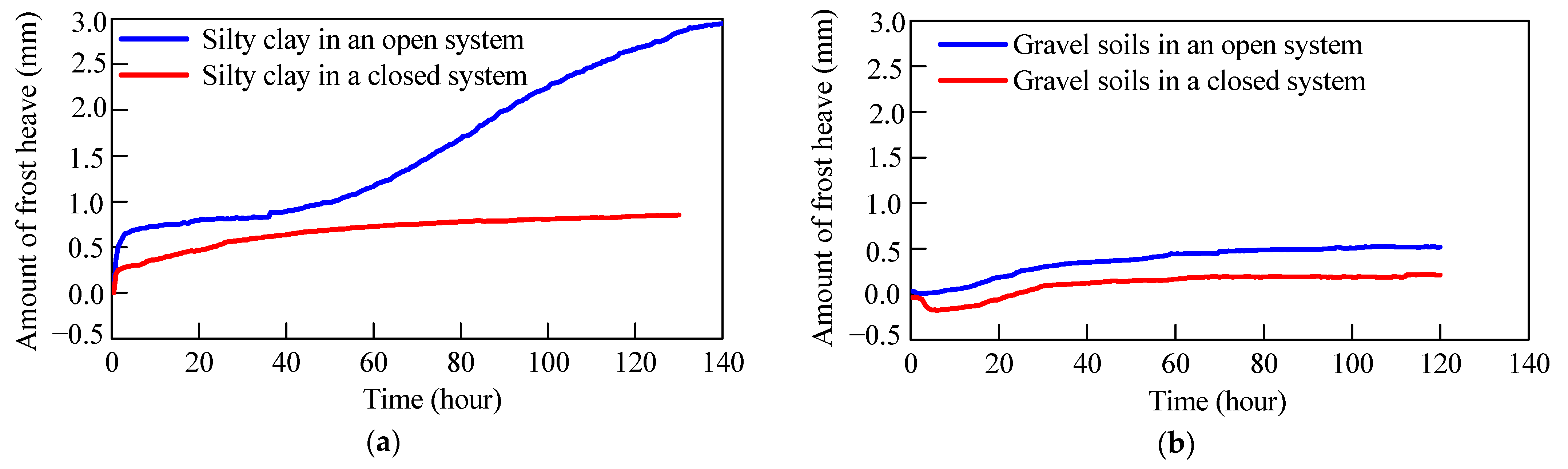
The experimental results of the frost heave are presented in Figure 5. Figure 5a displays the frost heaving of silty clay in an open and closed system, which were 2.8 mm and 0.75 mm, respectively, after being frozen for 120 h at an initial water content of 28%. The frost-heave ratios of the silty clay in an open and closed system were calculated to be 4.1% and 1.1%, respectively, indicating that the former was almost four times greater than the latter. These findings suggest that the external water-supply conditions have a significant impact on the frost susceptibility of silty clay. Figure 5b illustrates the frost heaving of gravel soils in an open and closed system, which were 0.52 mm and 0.21 mm, respectively, after being frozen for 120 h at an initial water content of 12%. The former was two-and-a-half times greater than the latter. Additionally, the corresponding frost-heave ratios of the gravel soils in an open system at initial water content of 5.8% and 12% were 0.28% and 0.46%, respectively, which were negligible. The observed insignificant frost heave in the gravel soils can be attributed to their high porosity and good permeability, as excavated from the tunnel. According to the current frost-susceptibility classifications for seasonally frozen soils in the Chinese Standard of Specifications for Design of Highway Subgrade [33], gravel soils with a water content < 12% and an average frost-heave ratio < 1% are considered not susceptible to frost heave. These results are consistent with frost-susceptibility reports of the grading macadam by Wang et al. [34] and the coarse-grained replacement material in the Lanzhou–Xinjiang high-speed railway [3].
Figure 5.
Frost-heave-deformation process. (a) Silty clay; (b) Gravel soils.
Therefore, based on the grade and frost-susceptibility specification, the gravel soils from the Lazikou tunnel can be used as an effective structural-fill material.
3.2. Field Trial—Field Layout and Instrumentation
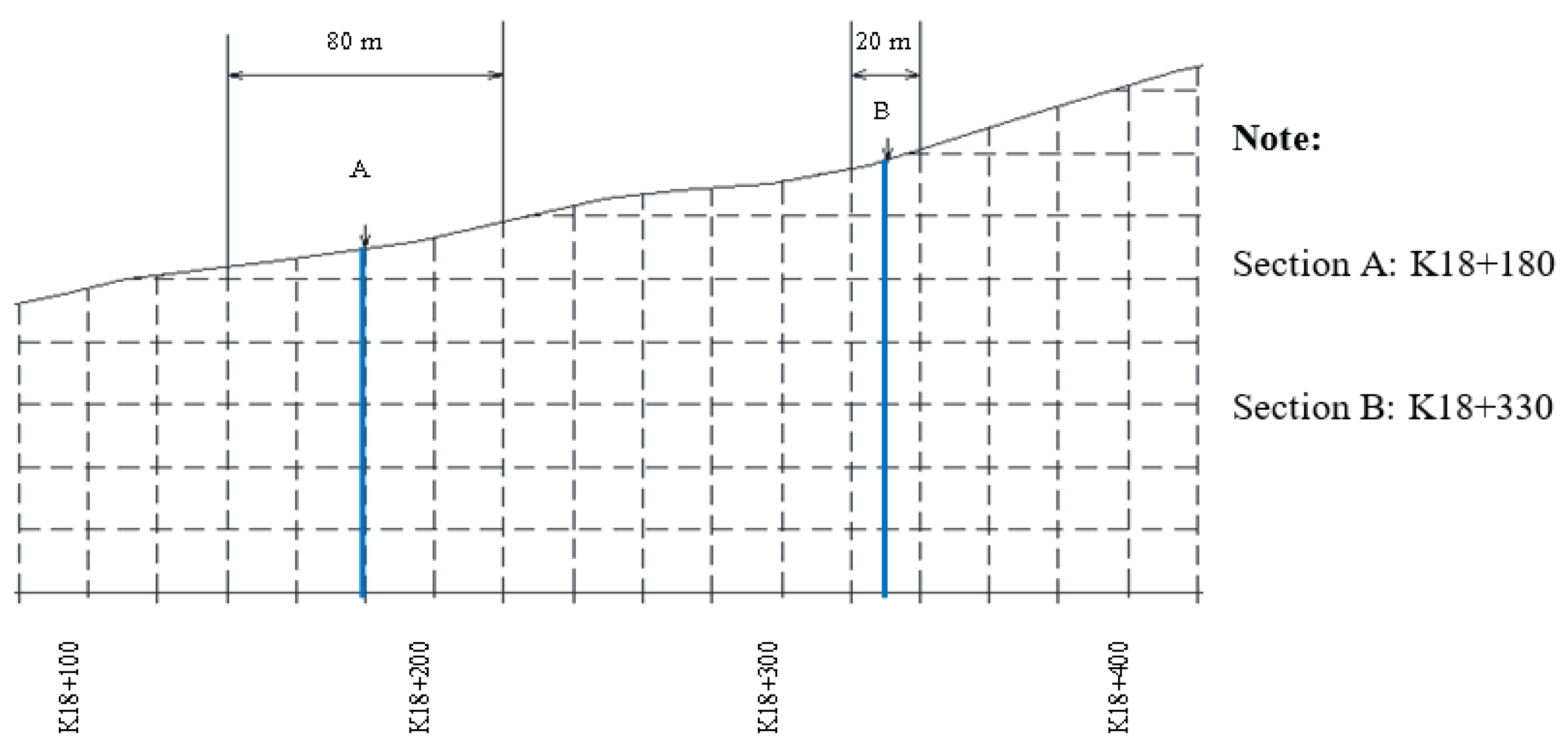
In order to assess the efficacy of gravels obtained from a tunnel excavation as a structural-fill layer for mitigating frost damage, a laboratory investigation was conducted. Subsequently, a field experiment was carried out to examine the impact of gravels reclaimed from the Lazikou tunnel on the prevention of subgrade frost heave in cold mountainous regions. Two highway test sections, namely section A (K18 + 180, with a 2 m thick replacement) and section B (K18 + 330, with a 1 m thick replacement), were constructed along the TDH. The site layout is depicted in Figure 6, with the road top surface measuring 12 m in width.
Figure 6.
Site layout: longitudinal profile (from east to west).
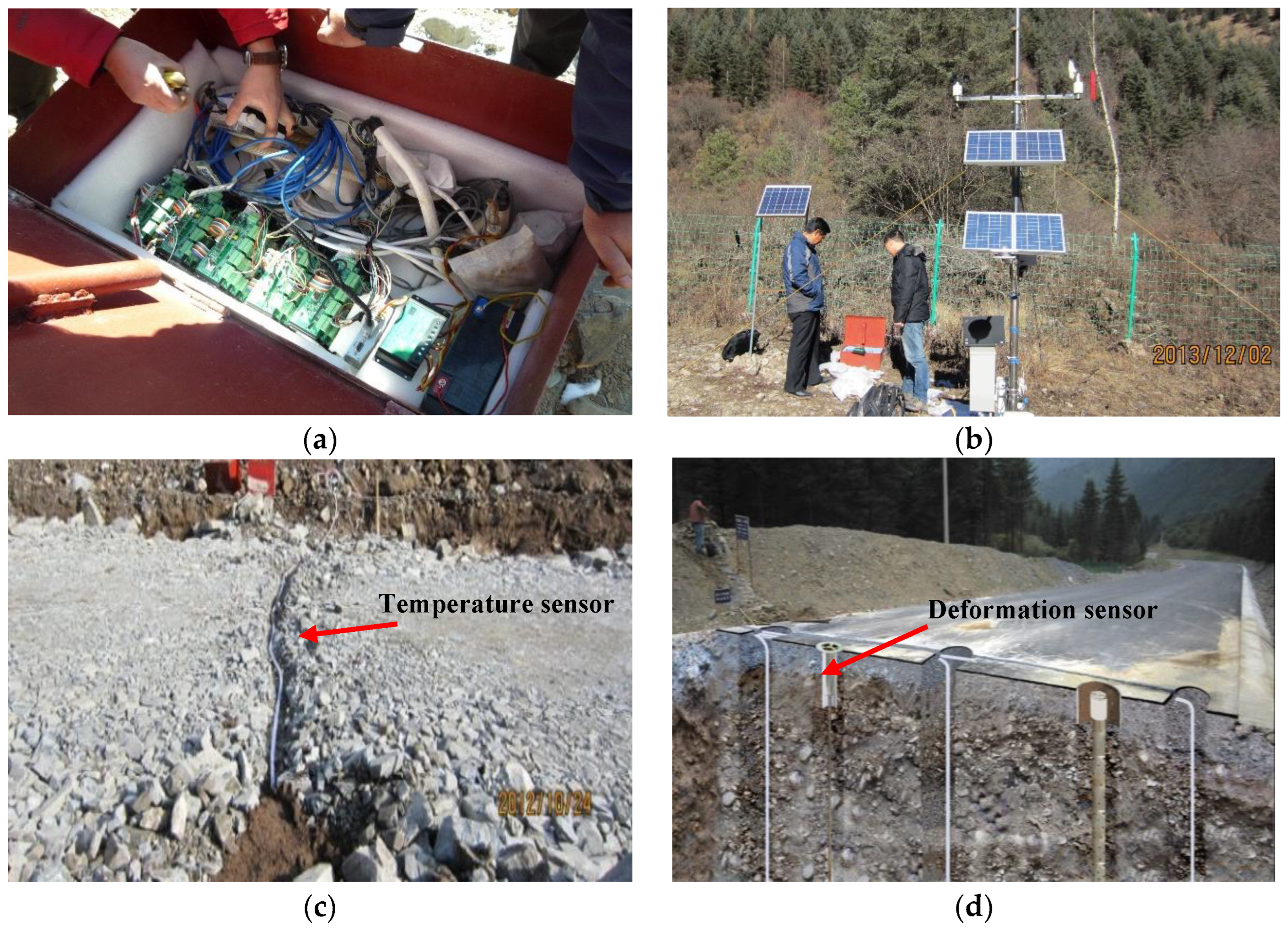
The monitoring system utilized in this study was primarily comprised of ground-temperature and deformation sensors, which were linked to data loggers (CR3000) that were powered by solar panels (Figure 7a,b). The deformation sensors were single-point telescoping tube-settlement gauges that possessed an accuracy of 0.01 mm. At each section, three deformation sensors were installed in the north shoulder, road center, and south shoulder boreholes to investigate the stratigraphic deformation of the replaced material layer. The sensors had a maximum measurement range of 200 mm (−100 to +100 mm), with measurements recorded every 4 h. The focus of this paper is primarily on the deformations recorded between October 2013 and October 2015. The analysis of deformations was limited to the north shoulders and road centers, as some sensors in the south shoulders of the test sections were destroyed during the construction process.
Figure 7.
The monitoring system installed at the test sections. (a) Data logger; (b) Data-collecting device; (c) The fill layer of gravels reclaimed from a tunnel excavation; (d) Monitoring borehole.
3.3. Numerical Simulation
3.3.1. Frost-Heave Model
The constraints of engineering limitations and high costs render it impractical to conduct all experiments in situ. In order to comprehensively examine the impact of various replacement depths on the frost heave and the formation of discrete ice lenses in the filling layer, a sequence of numerical simulations was executed. As the mechanism of PCHeave has been exhaustively expounded upon by Sheng et al. [3,31], this paper refrains from reiterating the mechanism and instead focuses on presenting the simulation outcomes derived from the frost-heave model in PCHeave.
3.3.2. Computational Model and Soil Parameters
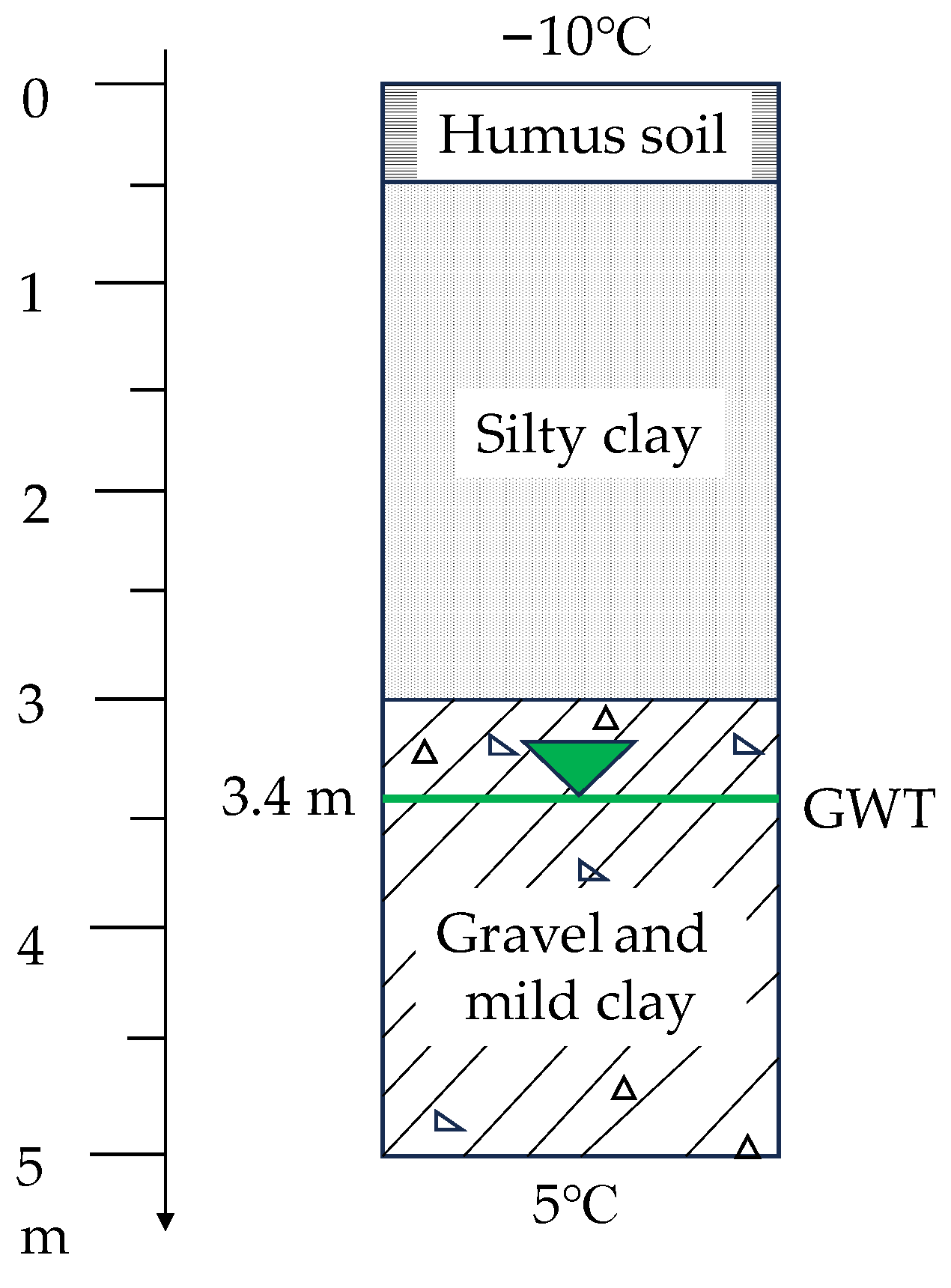
The model depicts a three-layered soil profile for highway embankments. The upper layer is composed of humus soil with a thickness of 50 cm, the middle layer is silty clay with a thickness of 250 cm, and the lower layer is a combination of gravel and mild clay with a thickness of 200 cm. In the PCHeave software, the upper and middle layers have been designated as frost-susceptible. The original groundwater table (GWT) was found to be at a depth of 3.4 m, which is consistent with the GWT of section K18 + 330 in the field site. The boundary conditions for the model are also presented in Figure 8. Based on the field data, the temperature boundaries for the top and bottom were set at −10 °C and 5 °C, respectively. The top boundary temperature was determined using the monthly mean near-surface-air temperature during the coldest months, while the bottom boundary temperature was determined using the mean annual ground temperature at a depth of 5 m in the study area.
Figure 8.
The physical model of the soil profile.
Because the freezing period in the study area is usually from 20 November of one year to 10 March of next year or so, the freezing period is determined to be 100 days (2400 h), and it represents the freezing index of 100 days in the frost-heave computation. Generally, soils below the GWT are regarded as saturated or oversaturated soil, and soils above the GWT are usually supposed to unsaturated soil. Combined with the laboratory data and field measurements, the soil parameters are listed in Table 4. Based on the experience, S0 = 50%, the saturated permeability Ksat and unsaturated permeability are calculated according to the formula follow:
Table 4.
Physical properties of the silty clay in the study site.
4. Results and Analysis
4.1. Deformations of Field Investgation
4.1.1. Deformations
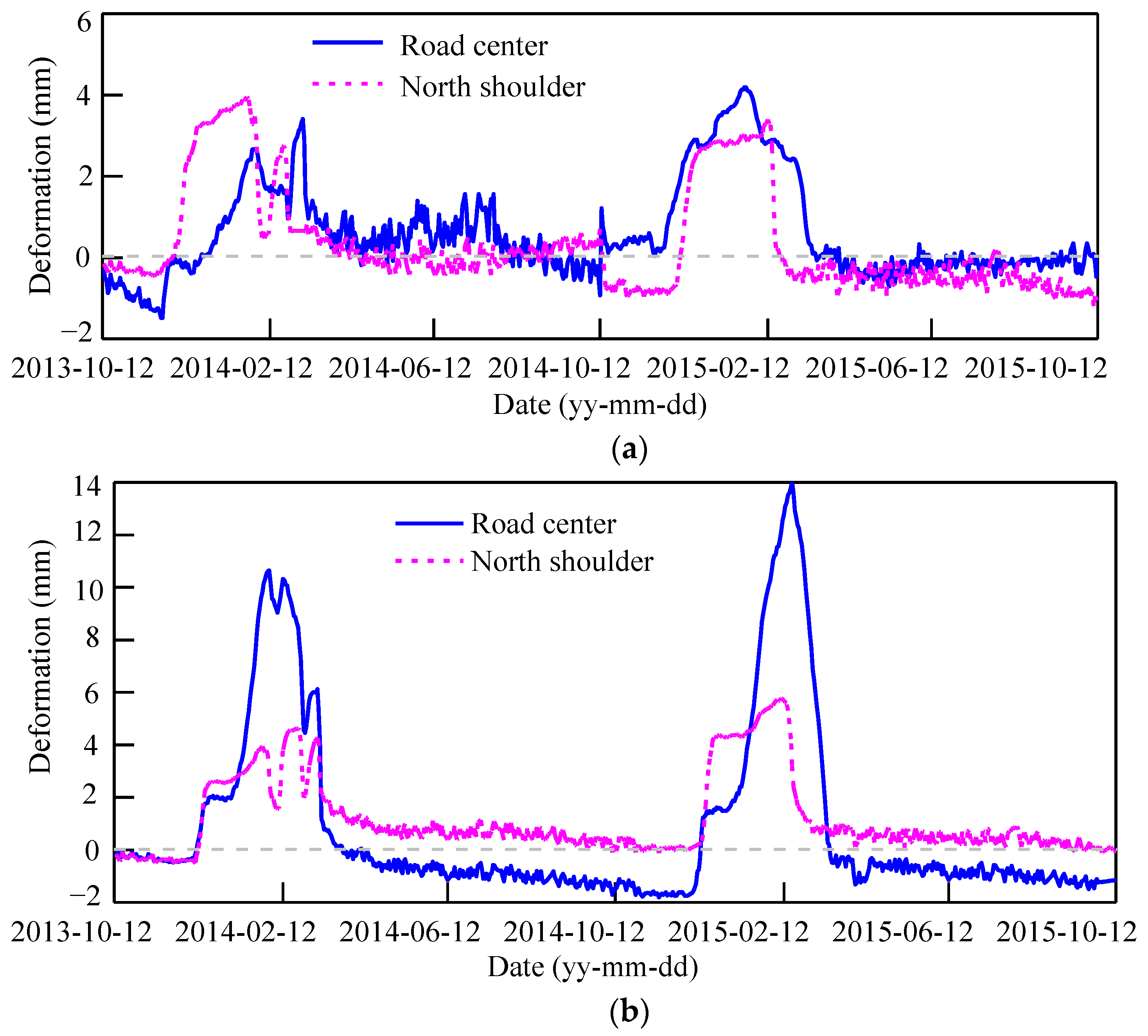
Table 5 presents the maximum monitoring values of two sections, while Figure 9 illustrates the temporal developments of deformations over a two-year monitoring period. The results obtained from Figure 9 and Table 5 indicate that the frost heave and settlements in the subgrade of the test sections remained relatively constant throughout two natural freeze–thaw cycles. Specifically, the maximum frost-heave deformations were observed to be 4.2 mm and 14 mm at the center of sections A and B, respectively, over the two-year period from 2013 to 2015. Additionally, the maximum values of the frost heave were recorded to be 4 mm and 5.8 mm at the north shoulders of the two sections, respectively. Notably, the measured maximum frost-heave values were significantly lower than the admissible amount (50 mm) of the secondary highway in the Chinese standards [33]. Consequently, the two sections experienced limited deformations from frost heaving. The greater replacement-fill thickness was caused a smaller frost heave due to the high thermal conductivity, permeability, and weak capillary effects of the coarse fill of tunnel muck gravel, which are similar to conventional crushed-rock-fill materials [13,35]. The results of the study were in line with prior research that has demonstrated a reduction in the frost heave in coarse soils as the thickness of the replacement underlayer increases [15]. Furthermore, following the completion of construction, both sections exhibited postconstruction settlements, with the highest values recorded at 1.5 mm and 1.8 mm. These maximum postconstruction settlements were significantly lower than the maximum allowable limit for weak subgrades in China, which is set at 500 mm.
Table 5.
The maximum monitoring values of two sections.
Figure 9.
Measured deformation at: (a) Section A; (b) Section B.
4.1.2. Differential Frost-Heave Deformations between the Two Sections
In general, the absence of significant frost heaves in the two sections can be attributed to the use of gravel fill. The coarse fill of tunnel muck gravel effectively restricted the overall frost heave. This can be attributed to two main factors. Firstly, gravel fill is not susceptible to frost and can drain freely under gravity, thereby preventing the upward movement of capillary moisture [7]. Secondly, due to its high permeability and weak capillary effects, similar to conventional crushed-rock-fill materials, it has been confirmed by several reports that it can effectively control frost heave [6].
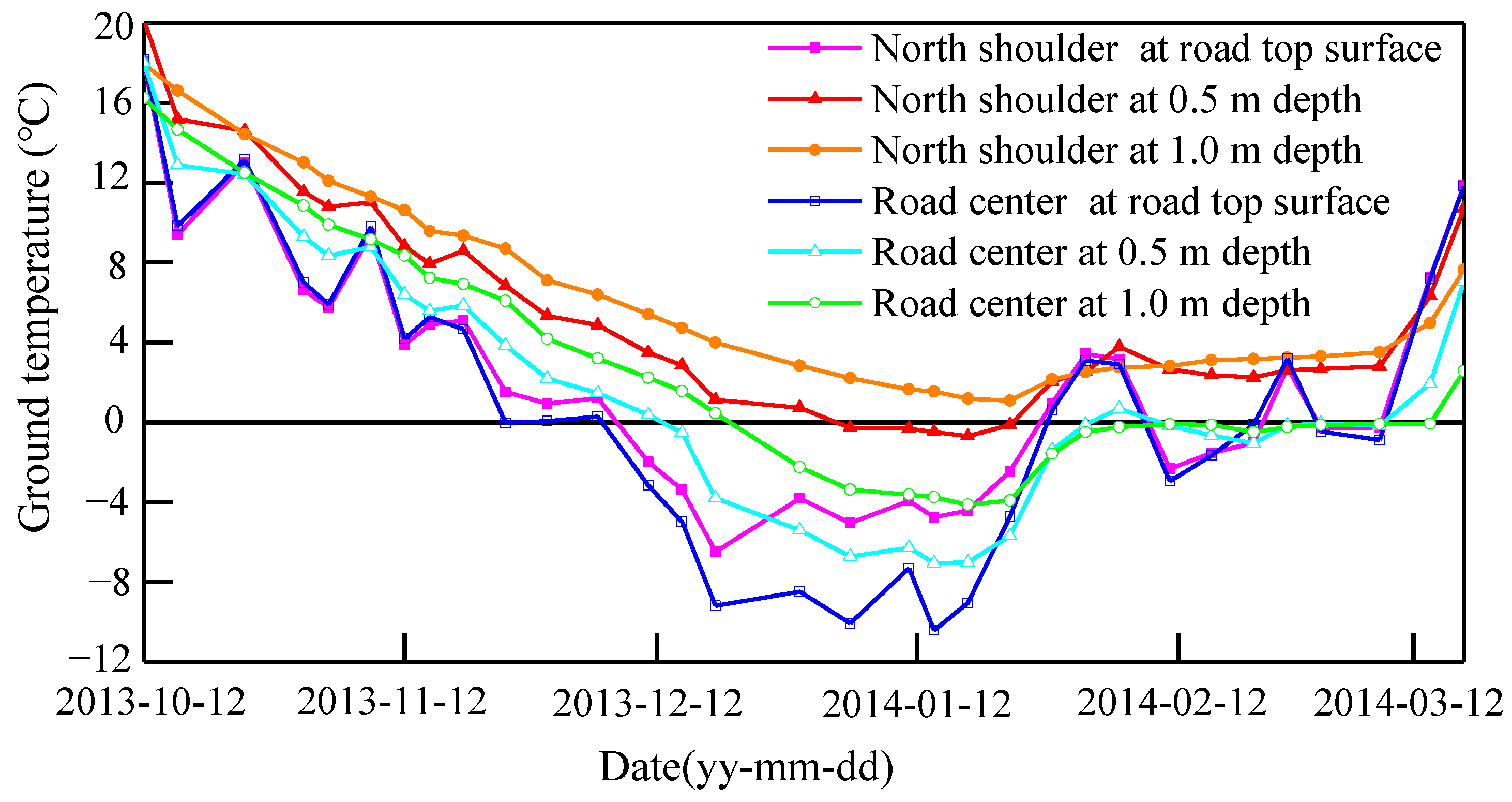
Comparison of Figure 9a with Figure 9b and Table 5 reveals that there are differences in frost-heave deformations between the two sections. In section A, there is minimal difference in frost-heave deformation between the center and the north shoulder, with deformation-difference values of 0.20 mm and 0.80 mm between the road center and north shoulder during the first and second natural freezing periods, respectively. However, in section B, the frost-heave values at the center were higher than those at the north shoulders, with deformation-difference values of 6.10 mm and 8.20 mm between the road center and north shoulder during the first and second natural freezing periods, respectively. The primary reason for this is that the ground temperature at the road center was significantly lower than that at the road north shoulder during the freezing period and at a shallow depth of 1.0 m (Figure 10). Additionally, the maximum frost heave at the road center of section B was approximately three times that of section A, and the 2 m thick fill replacement layer in section A limited frost heave to only 4.2 mm. Therefore, this indicates that thicker application more effectively controlled frost heave, but the most effective and economical replacement thickness needs to be studied, and the formation of discrete ice lenses in the antifrost structural-fill layer should be explored further.
Figure 10.
Variations of ground temperature at shallow depths at section B.
4.1.3. Performance of the TDH after It Enters into Service
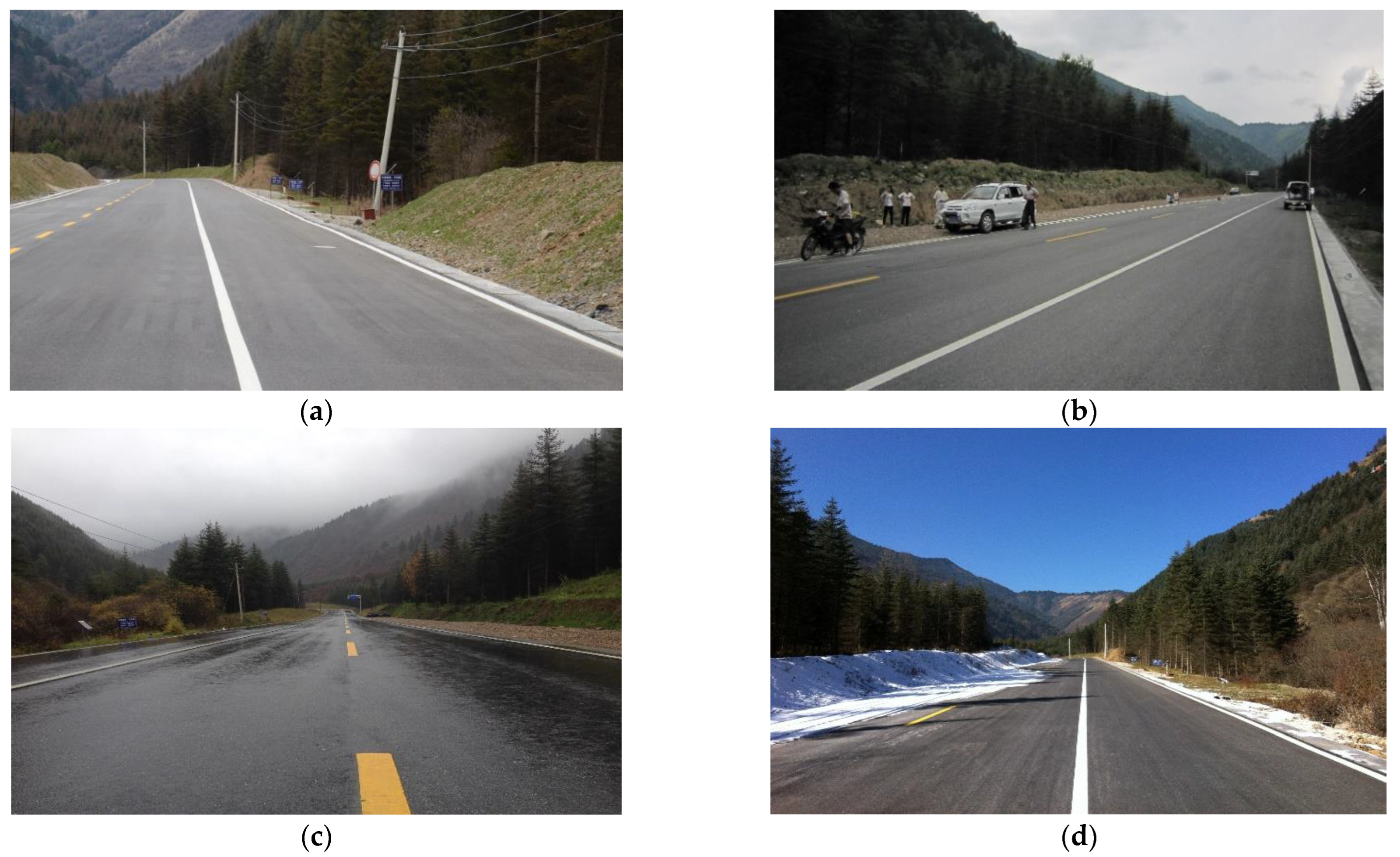
The new TDH was put into operation in mid-January in 2015, and the road conditions of the new TDH are shown in Figure 11 after it entered into service. The field test sections demonstrated exceptional performance, as evidenced by a two-year monitoring period and two years of service.
Figure 11.
The road conditions of the new TDH after it entered into service: (a) In spring (mid-April in 2016); (b) In summer (mid-July in 2016); (c) In autumn (mid-October in 2016); (d) In winter (mid-January in 2017).
4.2. Results and Analyses of Numerical Simulation
4.2.1. Computational Model Validation
The present study investigates the applicability of the frost-heave model in the new TDH engineering practice based on the field-deformation results presented earlier. Specifically, the simulated frost-heave-deformation values are compared with the measured frost-heave data, which includes the measured frost-heave value in the original road without the structural fill and the measured maximum frost heave at the center of section K18 + 330 with the 1 m thick structural fill. The original groundwater table (GWT) was consistently at a depth of 3.4 m (Table 6).
Table 6.
Simulated and experimental values of frost-heave deformation.
As shown in Table 6, under the conditions specified in Figure 8, the computed maximum frost-heave values at the 2400th hour are 58.4 mm and 18.8 mm, while the measured frost-heave values during a freezing period are 62 mm and 14 mm, respectively. The differences between the maximum frost heave for the observed data and the simulated data are 3.6 mm and 4.8 mm, respectively, which are relatively small. These differences are primarily attributed to the simplified geography and boundary conditions in the numerical simulation. However, the weather conditions and geography in the field are more complex, including the actual freezing time, boundary conditions, irregular pounding of the road, solar radiation, and other factors. Despite the differences between the simulated and observed frost heaves, the differences are less than 5 mm. Therefore, the frost-heave model and simplified conditions are deemed acceptable in the field simulation, and the simulated result can be utilized in engineering design.
4.2.2. Effect of Fill Replacement Thickness on Ice-Lens Formation
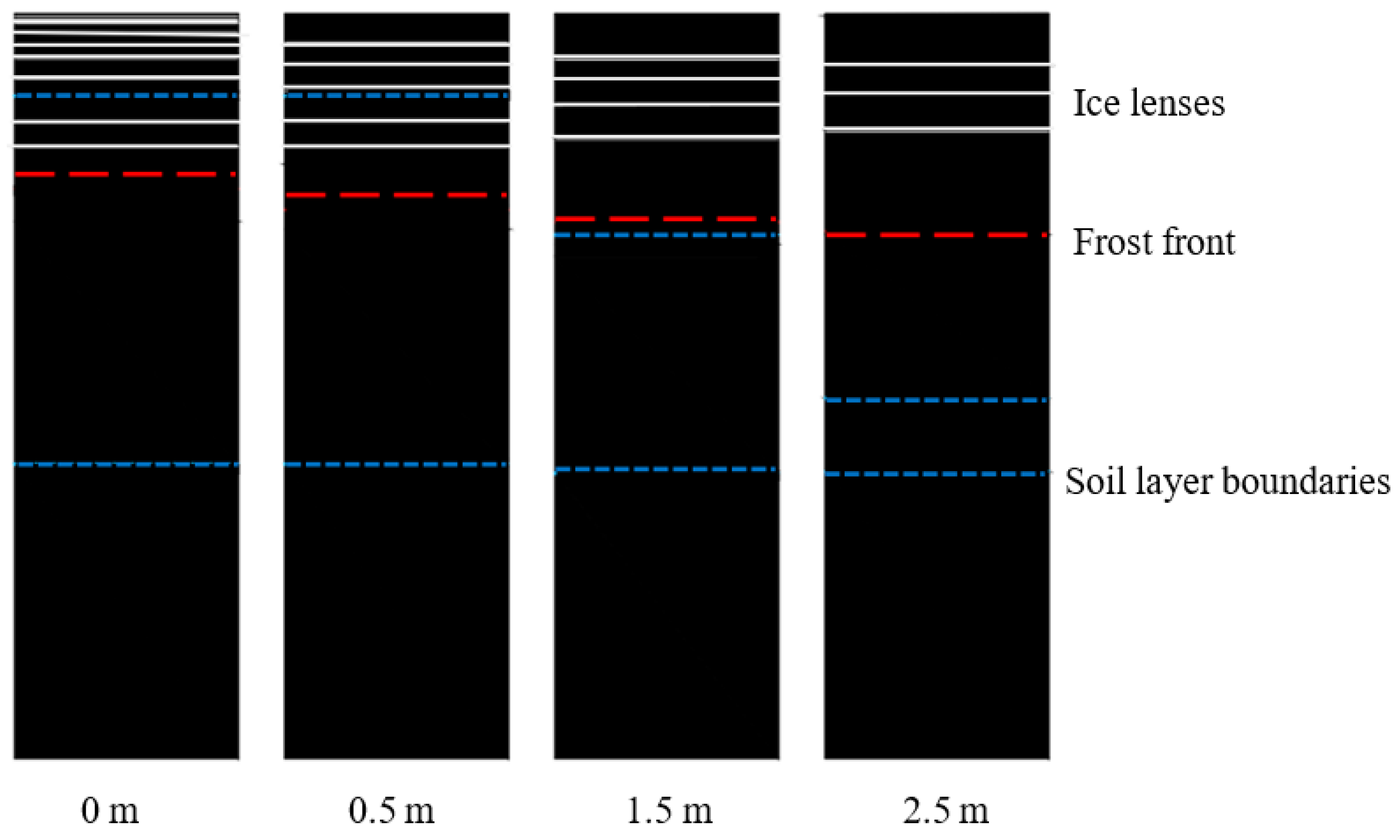
In the subsequent analyses, the original groundwater table (GWT) is situated at a depth of 3.4 m, and the overburden pressure is disregarded in PCHeave. Figure 12 depicts the distribution of ice lenses in soil columns following 2400 h of freezing at varying filling depths, and it demonstrates the impact of the fill-replacement thickness on ice lensing and the frozen fringe. A substantial ice lens is formed when a fill-replacement thickness of 0 m is assumed, indicating the production of significant frost heaves. The distributions of ice lenses in soil columns in Figure 12 appear to corroborate this perspective: as the fill-replacement thickness increases, signifying a decrease in the thickness of the silty clay layer, the growth of new ice lenses becomes more challenging, resulting in a thicker frozen fringe and fewer ice lenses. Therefore, a greater increase in the thickness of the structural-fill layer of reclaimed gravels suggests less ice-lens growth, which is consistent with observed field tests indicating that greater replacement fill thickness caused less frost heave.
Figure 12.
The distribution of ice lenses in soil column at the 2400th hour at different filling depths. (Note: white solid lines, ice lenses; red long-dashed lines, frost front; blue short-dashed lines, soil-layer boundaries.)
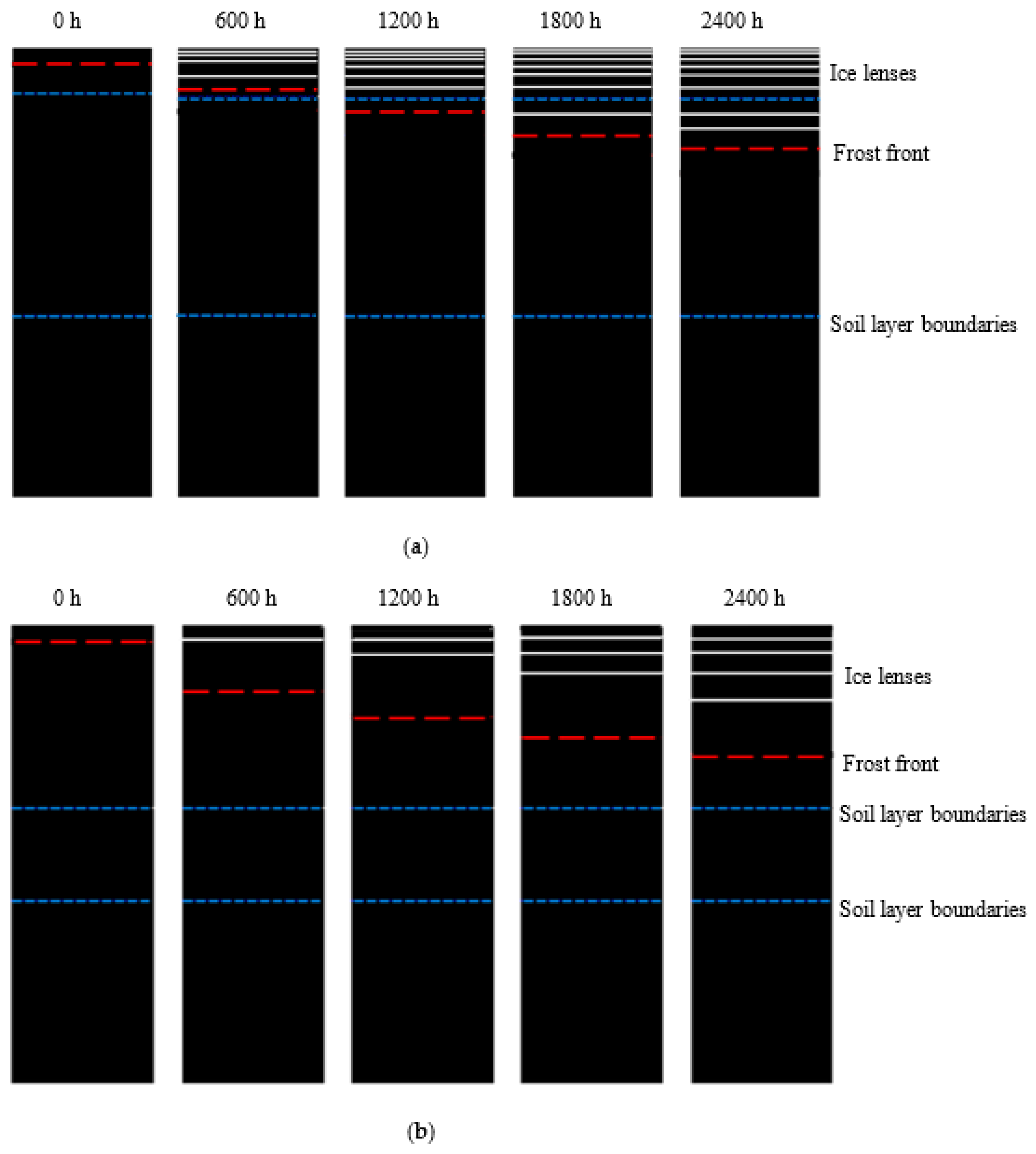
Figure 13 depicts the distribution of ice lenses within a soil column at varying freezing times. Owing to spatial constraints, the 0 m and 2 m thick replacement depth segments have been emphasized, while other depth segments have not been expounded upon in detail. A comparison between Figure 13a and Figure 13b reveals that the ice-lensing characteristics with and without structural fill differ from each other. As the freezing time increases, more ice lenses are formed, and the final freezing front becomes much deeper. This finding is consistent with the observations of other scholars, such as Zheng et al. [36], who have noted an increase in the rate of ice-lens formation with time. Notably, the replacement of the soil with coarse fill made of reclaimed gravels leads to a significant reduction in the number of ice lenses. The results are consistent with the findings that soil type is a very important factor for the distribution of ice lenses [31].
Figure 13.
The distribution of ice lenses in soil column at different freezing time. (a) Without structural fill; (b) With 2.0 m thick structural fill.
4.2.3. Effect of Fill-Replacement Thickness on Frost Heave
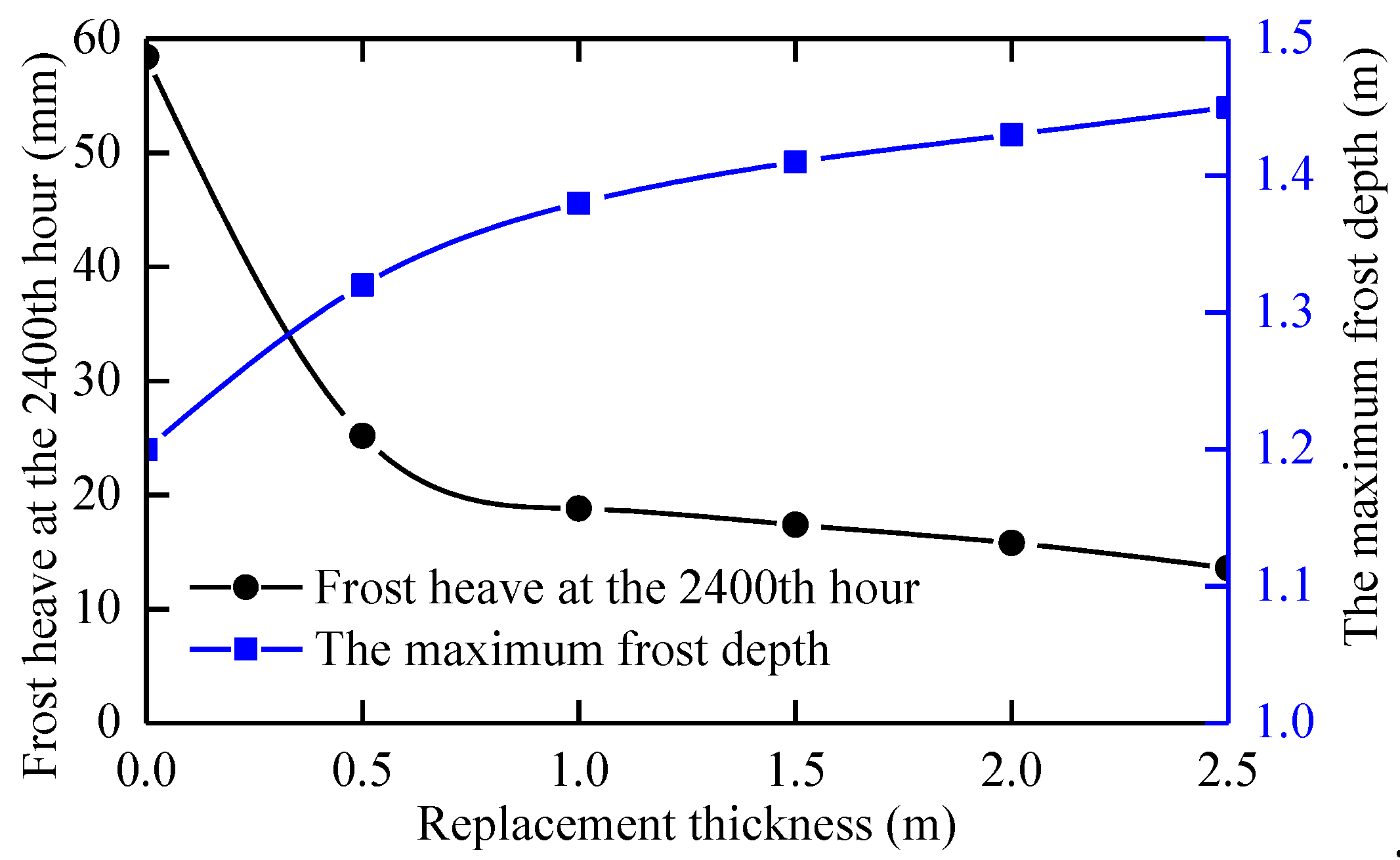
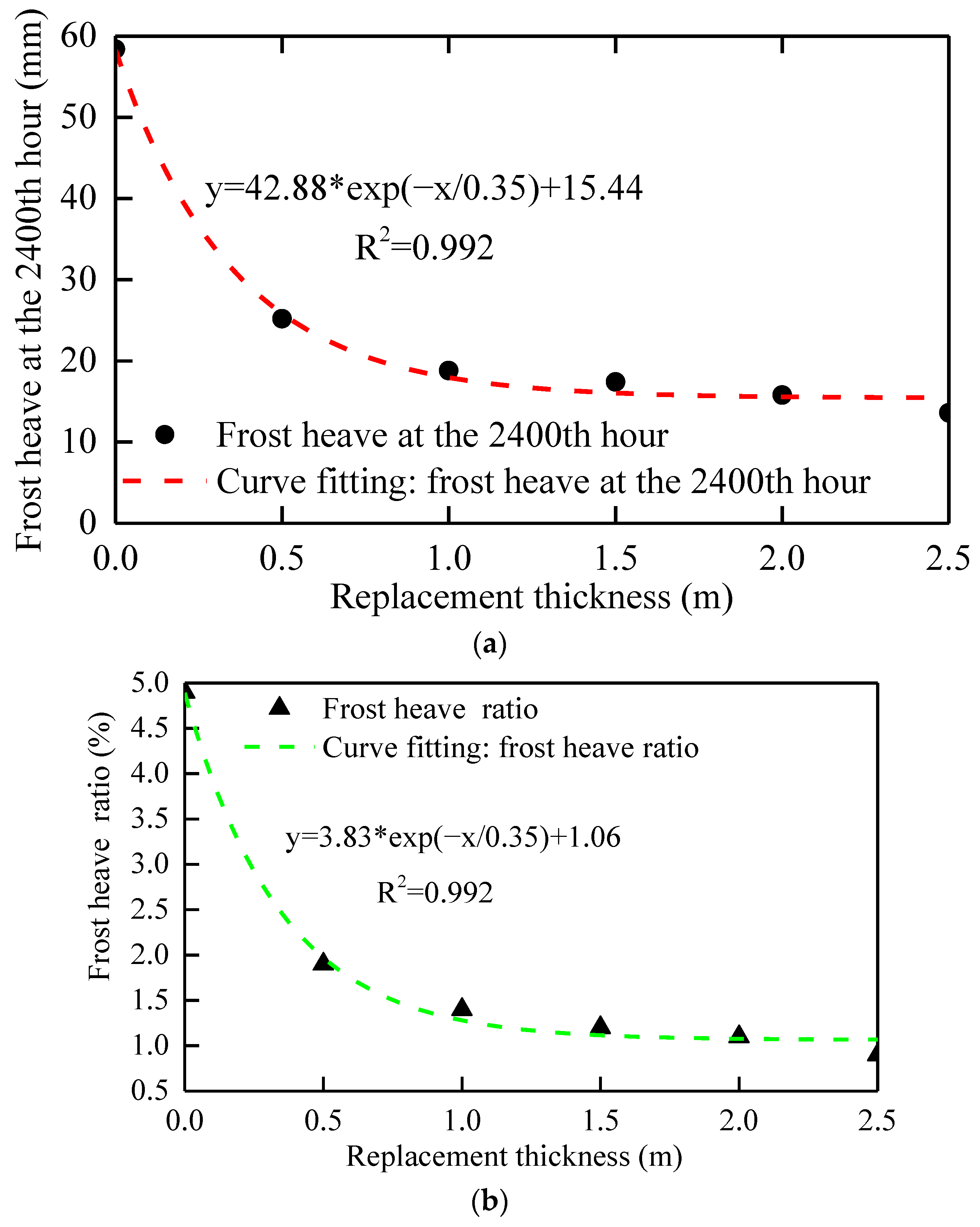
The present study investigates the impact of the fill-replacement thickness on frost-heave response, specifically the effect of soil properties within a certain depth range on frost heave. The results are presented in Figure 14 and Table 7, where the computed frost heave and frost depth are plotted against the replacement thickness. The findings indicate that as the fill-replacement thickness increases, the computed frost heave and frost-heave ratio decrease accordingly. For instance, at a filling depth of 0 m, the computed frost heave at the 2400th hour reaches 58.4 mm, with a computed frost-heave ratio of 4.9%. However, as the fill-replacement thickness increases to 1.0 m, the computed frost heave and frost-heave ratio decrease to 18.8 mm and 1.4%, respectively, representing a reduction of 68% and 67%, respectively. Moreover, at filling depths of 2.0 m and 2.5 m, the computed frost heave at the 2400th hour decreases to 15.8 mm and 13.6 mm, respectively, with corresponding reductions in the heave amount of 73% and 77%, respectively. Additionally, the frost-heave ratio decreases to 1.1% and 0.9%. These results suggest that as the fill-replacement thickness exceeds 1.0 m, the computed frost heaves at the 2400th hour fall below the admissible amount of highway in the Chinese standards.
Figure 14.
Effect of replacement thickness on frost heave and frost depth.
Table 7.
Computed frost heave, frost-heave ratio, and maximum frozen depth at different replacement thicknesses.
5. Discussion
5.1. Relationships between Frost Heave and Replacement Thickness
Field results showed that the maximum frost heave at the road center of section B was approximately three times that of section A (Figure 9b). This clearly indicates that the bigger the replacement-fill thickness, the smaller the frost heave of the subgrade is; therefore, one of the key factors for controlling the frost heave of the soft subgrade is to utilize a sufficient thickness of the replacement-fill layer.
The effects of the fill-replacement thickness on the computed frost heave and frost-heave ratio are also further explored, and the quantitative relationships between computed frost heave, computed frost-heave ratio, and replacement thickness are identified, as shown in Figure 15. According to the relation curves, it can be noted that the fitted lines in the figure are exponential-function curves. These relationships are useful for determining the appropriate replacement-depth amount.
Figure 15.
Relation curves. (a) Relationship between computed frost heave and replacement thickness; (b) Relationship between computed frost heave ratio and replacement thickness.
5.2. Ice-Lensing Characteristics in Soil Column with a Shallower GWT
Research has demonstrated that the water table has a direct impact on the soil frost heave, particularly in cold mountainous regions. Sheng et al. [31] have indicated that, when the freezing front in soils is in close proximity to the groundwater table (GWT), external water can flow in to facilitate the formation and growth of ice lenses, resulting in frost heave even in coarse fills. Conversely, when the freezing front is well above the water table, it becomes more challenging for water to migrate to the frozen fringe and form additional lenses, particularly in coarse soils [36]. Therefore, it is imperative to investigate the effect of a shallower GWT on the frost heave in gravels reclaimed from tunnel excavation.
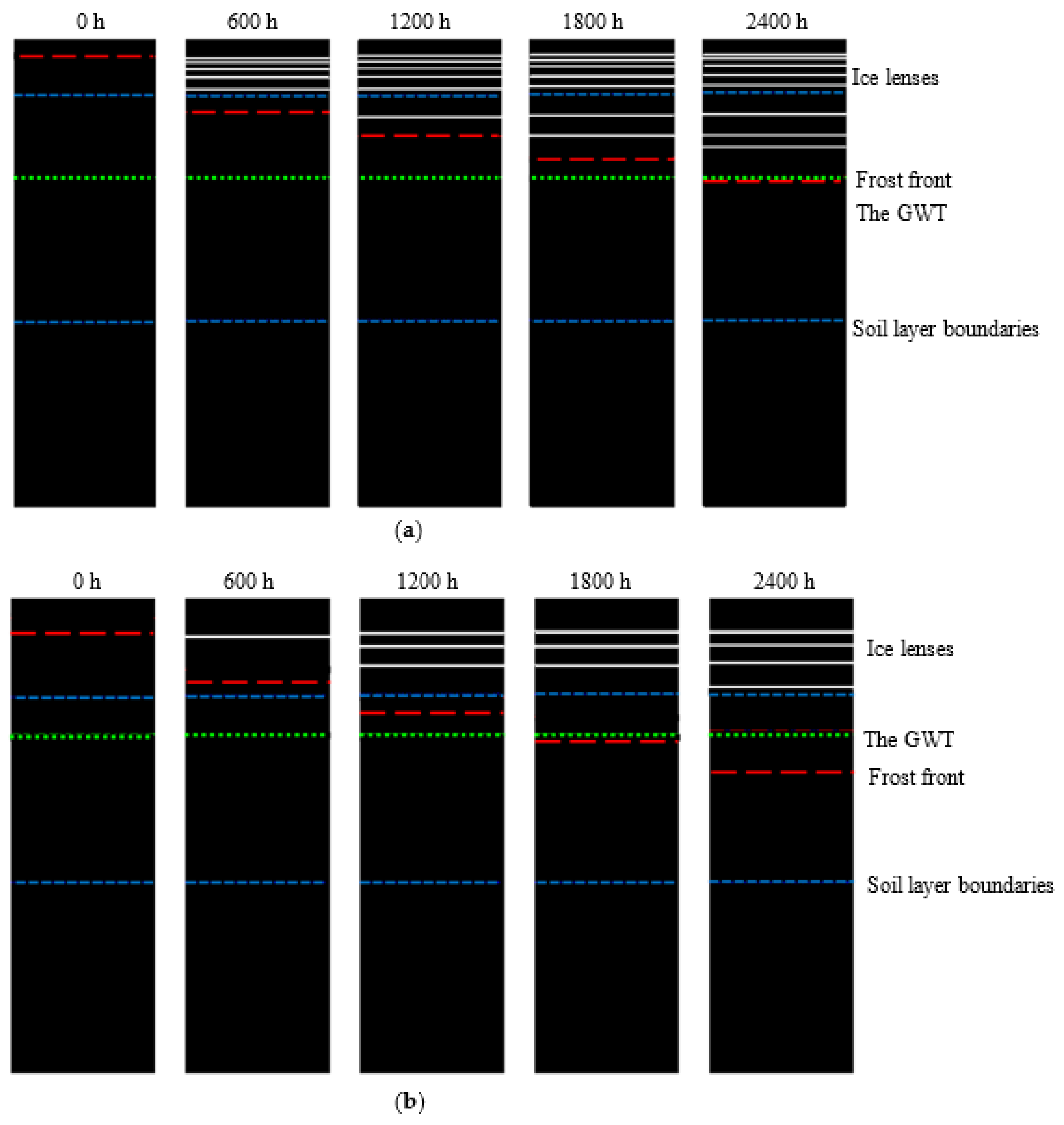
To further examine the impact of a shallower GWT on frost heave, Figure 16 was utilized under conditions where the GWT was raised to a depth of 1.4 m. The study focused on the structural-fill thicknesses of 0 m and 1 m. The comparison of Figure 16a with Figure 16b revealed that, when the GWT is shallower, the ice lenses with a replacement depth of 1 m are less than those without fill. However, after 2400 h of freezing, the frost front with a replacement depth of 1 m had reached below the GWT, and a thick ice lens had formed above the frost front in the soil column. This indicates that the 1 m thick replacement depth was insufficient and allowed for potential frost heaving when the water level remained at approximately 1.4 m. Therefore, it is essential to increase the filling depth or utilize dewatering measures to effectively control frost heave in shallower GWT conditions.
Figure 16.
Ice-lensing characteristics in soil column with GWT = −1.4 m. (a) Without structural fill; (b) With 1 m thick structural fill.
5.3. Reasonable Replacement Depth
Field investigations and numerical simulations have demonstrated that the use of gravels reclaimed from tunnel excavations as a structural-fill layer can effectively restrict the frost heave of the subgrade in cold mountain regions. The results of field investigations have indicated that thicker replacement depths are more effective in controlling the frost heave. Specifically, the maximum frost heave at the road center of section B, which had a replacement depth of 1 m, was approximately three times higher than that of section A, which had a replacement depth of 2 m. Computed frost-heave results were consistent with field measurements, indicating that thicker coarse-gravel fill can reduce the frost heave. Moreover, when the groundwater level is deeply located (depth larger than 3.0 m), the frost heaving and frost-heave ratio can be reduced by more than 70% with a 2 m fill layer. For instance, when the replacement depth is 2 m and 2.5 m, the computed frost-heave amount was reduced by 73% and 77%, respectively. The effects of the fill-replacement thickness on the computed frost heave and frost-heave ratio have been further explored, and the quantitative relationships between the computed frost heave, computed frost-heave ratio, and replacement thickness have been identified. These relationships are shown in Figure 15, and it can be noted that the fitted lines in the figure are exponential-function curves. These relationships are useful for determining the appropriate replacement-depth amount.
In summary, increasing the replacement depth results in a reduced frost heave and frost-heave ratio. However, larger replacement-fill thicknesses imply higher project costs and longer construction times. If the thickness of coarse-gravel fill can be reasonably de-signed, the desired control of frost heave can be achieved while reducing construction costs. Based on field tests and computed frost-heave results, it is suggested that the rea-sonable replacement depth is about 2 m, considering various factors such as the control of frost heave, the groundwater table, project cost, and construction time.
6. Conclusions
The new approach has been further studied by the experimental–numerical investigations, which is to utilize coarse gravel, reclaimed from tunnel excavation, as an antifrost structural-fill layer. In order to investigate the performance of reclaimed gravel and the formation of discrete ice lenses in soils, a laboratory frost-heave experiment, a field trial, and a series of numerical simulations were performed to analyze the mechanism of frost-heave control by using the replacement-fill method with gravelly soils. The following conclusions are obtained:
- (1)
- The laboratory analysis conducted on the gravel obtained from the Lazikou tunnel has indicated that it is well-graded, with a coefficient of uniformity (Cu) of 77 and a coefficient of curvature (Cc) of 1.3. Furthermore, the corresponding frost-heave ratios of the gravel soils in an open system were found to be 0.28% and 0.46% when the initial water content was 5.8% and 12%, respectively. Based on these findings, it can be concluded that the gravel soils are not susceptible to frost heave. Consequently, this material can be utilized as an effective structural-fill material in cold mountainous regions.
- (2)
- Field trial findings show that the bigger the replacement thickness of structural-fill layer, the smaller the frost heaves. And the maximum values of frost heave in the two sections with 2 m and 1 m thick replacement fill were much lower than the maximum allowable amount in China. In addition, the test sections of the new TDH performed very well after it entered into service. Note that, because some sensors in test sections incurred damage during construction, the data results are obtained during the monitoring period from 2013 to 2015.
- (3)
- Computed frost-heave results indicated that the frost-heave model in PCHeave could accurately predict the subgrade frost heave in the study area. It was found that the frost heaving and the frost-heave ratio could be reduced by more than 70% by placing 2 m thick fill when the groundwater level was deeply situated (depth > 3 m), and it is essential to increase the filling depth or to use dewatering measures to control frost heave effectively in the shallower water table conditions. The relationships between the computed frost heave, computed frost-heave ratio, and replacement-fill thickness are identified and could be represented by the exponential-function expression. Note that, while this model is developed for highway subgrade materials subjected to different filling depths and groundwater tables, it can be modified to consider more environmental factors, such as loadings, freezing–thawing cycles, and so on, in further studies.
- (4)
- Based on field-trial and numerical simulations results, the increased thickness of gravel fill can result in a smaller frost heave and frost-heave ratio. A reasonable replacement depth is about 2 m for cold mountainous regions, taking into account the control of frost heave, the groundwater table, project costs, as well as the construction time.
Author Contributions
Conceptualization, L.W. and F.N.; funding acquisition, investigation, formal analysis, data curation, writing—original draft and validation, L.W.; methodology, data curation, formal analysis, Z.L.; data curation, investigation, validation Y.S.; writing—review and editing, resources, S.N.; supervision, resources, D.S. All authors have read and agreed to the published version of the manuscript.
Funding
This research was funded by the National Natural Science Foundation of China (grant no. 41961011) and the Ningxia Key Research and Development Program (Special Talents) (grant no. 2019BEB04010).
Institutional Review Board Statement
Not applicable.
Informed Consent Statement
Not applicable.
Data Availability Statement
The data presented in this study are available on per request to the corresponding author.
Acknowledgments
The work was finished in the School of Civil and Environmental Engineering, University of Technology Sydney, Sydney, Australia, and we would like to thank the administrative staff for facilitating the visit by Libo Wu. The authors want to express their deep thanks to the anonymous reviewers for their constructive comments.
Conflicts of Interest
The authors declare no conflict of interest.
References
- Zhou, Y.W.; Guo, D.X.; Qiu, G.Q.; Cheng, G.D.; Li, S.D. Geocryology in China; Science Press: Beijing, China, 2000; pp. 5–6. (In Chinese) [Google Scholar]
- Lai, Y.M.; Zhang, M.Y.; Li, S.Y. Theory and Application of Cold Regions Engineering; Science Press: Beijing, China, 2009; pp. 178–179. (In Chinese) [Google Scholar]
- Sheng, D.C.; Zhang, S.; Niu, F.J.; Cheng, G.D. A potential new frost heave mechanism in high-speed railway embankments. Géotechnique 2014, 64, 144–154. [Google Scholar] [CrossRef]
- Pei, W.S.; Zhang, M.Y.; Lai, Y.M.; Yan, Z.R.; Li, S.Y. Evaluation of the ground heat control capacity of a novel air-L-shaped TPCT-ground (ALTG) cooling system in cold regions. Energy 2019, 179, 655–668. [Google Scholar] [CrossRef]
- Lai, Y.M.; Zhang, S.M.; Yu, W.B. A new structure to control frost boiling and frost heave of embankments in cold regions. Cold Reg. Sci. Technol. 2012, 79–80, 53–66. [Google Scholar] [CrossRef]
- Akagawa, S.; Hori, M.; Sugawara, J. Frost Heaving in Ballast Railway Tracks. Procedia Eng. 2017, 189, 547–553. [Google Scholar] [CrossRef]
- Zhang, X.Y.; Zhang, M.Y.; Lu, J.G.; Pei, W.S.; Yan, Z.R. Effect of hydro-thermal behavior on the frost heave of a saturated silty clay under different applied pressures. Appl. Therm. Eng. 2017, 117, 462–467. [Google Scholar] [CrossRef]
- Shen, Y.P.; Tang, T.X.; Zuo, R.F.; Tian, Y.H.; Zhang, Z.Q.; Wang, Y. The effect and parameter analysis of stress release holes on decreasing frost heaves in seasonal frost areas. Cold Reg. Sci. Technol. 2020, 169, 102898. [Google Scholar] [CrossRef]
- Yan, Z.Y.; Zhang, M.Y.; Lai, Y.M.; Pei, W.S.; Luo, T.; Yu, F.; Yang, S. Countermeasures combined with thermosyphons against the thermal instability of high-grade highways in permafrost regions. Int. J. Heat Mass Tran. 2020, 153, 119047. [Google Scholar] [CrossRef]
- Tai, B.W.; Liu, J.K.; Wang, T.F.; Shen, Y.P.; Li, X. Numerical modelling of anti-frost heave measures of high-speed railway subgrade in cold regions. Cold Reg. Sci. Technol. 2017, 141, 28–35. [Google Scholar] [CrossRef]
- Ma, J.J.; Chen, J.J.; Chen, W.X.; Liu, C.; Chen, W. A bounding surface plasticity model for expanded polystyrene-sand mixture. Transport. Geotech. 2022, 32, 100702. [Google Scholar] [CrossRef]
- Xu, X.Z.; Wang, J.C.; Zhang, L.X. Frozen Soil Physics, 2nd ed.; Science Press: Beijing, China, 2010; pp. 266–270. (In Chinese) [Google Scholar]
- Tai, B.W.; Yue, Z.R.; Sun, T.C.; Qi, S.C.; Li, L.; Yang, Z.H. Novel anti-frost subgrade bed structures a high speed railways in deep seasonally frozen ground regions: Experimental and numerical studies. Constr. Build. Mater. 2021, 269, 121266. [Google Scholar] [CrossRef]
- Zhu, R.; Guo, W.L. Experimental study on mechanical properties of silty sand as a filling material for canals in cold regions. J. Cent. South Univ. (Sci. Technol.) 2022, 53, 1461–1471. (In Chinese) [Google Scholar]
- Zhao, W.; Liu, Y.X.; Ji, A.N.; Gao, W.J.; Wang, G.S. Experimental study on prevention measures of extruded ice on highway subgrade slope in Sichuan-Tibet cold region. Hydrogeol. Eng. Geol. 2023, 50, 122–131. (In Chinese) [Google Scholar]
- Wang, T.L.; Zhang, Y.Z.; Wei, M.; Cheng, B.Y.; Wen, A. Investigation of liquid andvapor migration in coarse-grained soil during open-system step-freezing test. Cold Reg. Sci. Technol. 2019, 165, 102816. [Google Scholar] [CrossRef]
- Cheng, W.M.; Zhou, C.H.; Li, B.Y.; Shen, Y.C. Research on geomorphological regionalization and zoning system of China. Acta Geogr. Sin. 2019, 74, 839–856. [Google Scholar]
- Mei, H.; Wang, X.G.; Wang, F.C. Harm and counter-measures of handling of highway tunnel muck. Energy Conserv. Environ. Protec. Transport. 2013, 12, 85–88. [Google Scholar]
- Wu, L.B.; Niu, F.J.; Lin, Z.J.; Luo, J. Field-testing study on settlement and frost heave prevention for soft subgrades in cold mountain regions in the North-west China. Arab. J. Geosci. 2019, 12, 652–664. [Google Scholar] [CrossRef]
- Ming, F.; Li, D.Q. A model of migration potential for moisture migration during soil freezing. Cold Reg. Sci. Technol. 2016, 124, 87–94. [Google Scholar] [CrossRef]
- Liu, H.L. Study on green ground improvement technique. Chin. Civ. Eng. J. 2018, 51, 121–128. (In Chinese) [Google Scholar]
- Gilpin, R.R. A model for the prediction of ice lensing and frost heave in soils. Water Resour. Res. 1980, 16, 918–930. [Google Scholar] [CrossRef]
- O’Neill, K.; Miller, R.D. Exploration of a rigid ice model of frost heave. Water Resour. Res. 1985, 21, 281–296. [Google Scholar] [CrossRef]
- Nixon, J.F. Discrete ice lens theory for frost heave in soils. Can. Geotech. J. 1991, 28, 843–859. [Google Scholar] [CrossRef]
- Konrad, J.M.; Morgenstern, N.R. Effects of applied pressure on freezing soils. Can. Geotech. J. 2011, 19, 494–505. [Google Scholar] [CrossRef]
- Lai, Y.M.; Pei, W.S.; Zhang, M.Y.; Zhou, J.Z. Study on theory model of hydro -thermal-mechanical interaction process Gs in saturated freezing silty soil. Int. J. Heat Mass Transf. 2014, 78, 805–819. [Google Scholar] [CrossRef]
- Konrad, J.M.; Morgenstern, N.R. Frost heave prediction of chilled pipelines buried in unfrozen soils. Can. Geotech. J. 1984, 21, 100–115. [Google Scholar] [CrossRef]
- Ma, J.J.; Chen, J.J.; Chen, W.X.; Huang, L.C. A coupled thermal-elastic-plastic-damage model for concrete subjected to dynamic loading. Int. J. Plast. 2022, 153, 103279. [Google Scholar] [CrossRef]
- Ma, J.J.; Chen, J.J.; Guan, J.W.; Lin, Y.X.; Chen, W.X. Implementation of Johnson-Holmquist-Beissel model in four-dimensional lattice spring model and its application in projectile penetration. Int. J. Impact Eng. 2022, 170, 104340. [Google Scholar] [CrossRef]
- Sheng, D.C.; Axelsson, K.; Knutsson, S. Frost heave due to ice lens formation in freezing soils 2. Field application. Nordic. Hydrol. 1995, 26, 147–168. [Google Scholar] [CrossRef]
- Sheng, D.C.; Zhang, S.; Yu, Z.W.; Zhang, J.S. Assessing frost susceptibility of soils using PC-Heave. Cold Reg. Sci. Technol. 2013, 95, 27–38. [Google Scholar] [CrossRef]
- GB/T 50123–2019; Ministry of Housing and Urban Rural Development of the People’s Republic of China (MHURD-PRC) “Chinese Standard for Geotechnical Testing Method”. China Planning Press: Beijing, China, 2019.
- JTG D30–2015; Ministry of Transport of the People’s Republic of China. “Specifications for Design of Highway Subgrades in China”. China Communications Press: Beijing, China, 2015.
- Wang, Q.Z.; Liu, J.K.; Tian, Y.H.; Fang, J.H.; Zhu, X.X. A study of orthogonal design tests on frost-heaving characteristics of graded crushed rock. Rock. Soil Mech. 2015, 36, 2825–2832. (In Chinese) [Google Scholar]
- Li, D.Q.; Chang, F.; Zhang, K.; Fang, J.H.; Xu, A.H. Preliminary analysis of engineering effect of crushed rocks mat embankment in Heimahe section of Qinghai-Tibet highway. J. Glaciol. Geocryol. 2011, 35, 1081–1087. (In Chinese) [Google Scholar]
- Zheng, H.; Sasaki, Y.; Kanie, S.J. Image processing method for observing ice lenses produced by the frost heave process. Cold Reg. Sci. Technol. 2020, 171, 102977. [Google Scholar] [CrossRef]
Disclaimer/Publisher’s Note: The statements, opinions and data contained in all publications are solely those of the individual author(s) and contributor(s) and not of MDPI and/or the editor(s). MDPI and/or the editor(s) disclaim responsibility for any injury to people or property resulting from any ideas, methods, instructions or products referred to in the content. |
© 2023 by the authors. Licensee MDPI, Basel, Switzerland. This article is an open access article distributed under the terms and conditions of the Creative Commons Attribution (CC BY) license (https://creativecommons.org/licenses/by/4.0/).