Article

Multi-Risk Assessment in the Veneto Region: An Approach to Rank Seismic and Flood Risk

1
Department of Structures for Engineering and Architecture, University of Naples Federico II, Via Claudio 21, 80125 Naples, Italy
2
CIMA Research Foundation, Via A. Magliotto 2, 17100 Savona, Italy
*
Author to whom correspondence should be addressed.
Sustainability 2023, 15(16), 12458; https://doi.org/10.3390/su151612458
Submission received: 26 June 2023 / Revised: 28 July 2023 / Accepted: 7 August 2023 / Published: 16 August 2023

Abstract

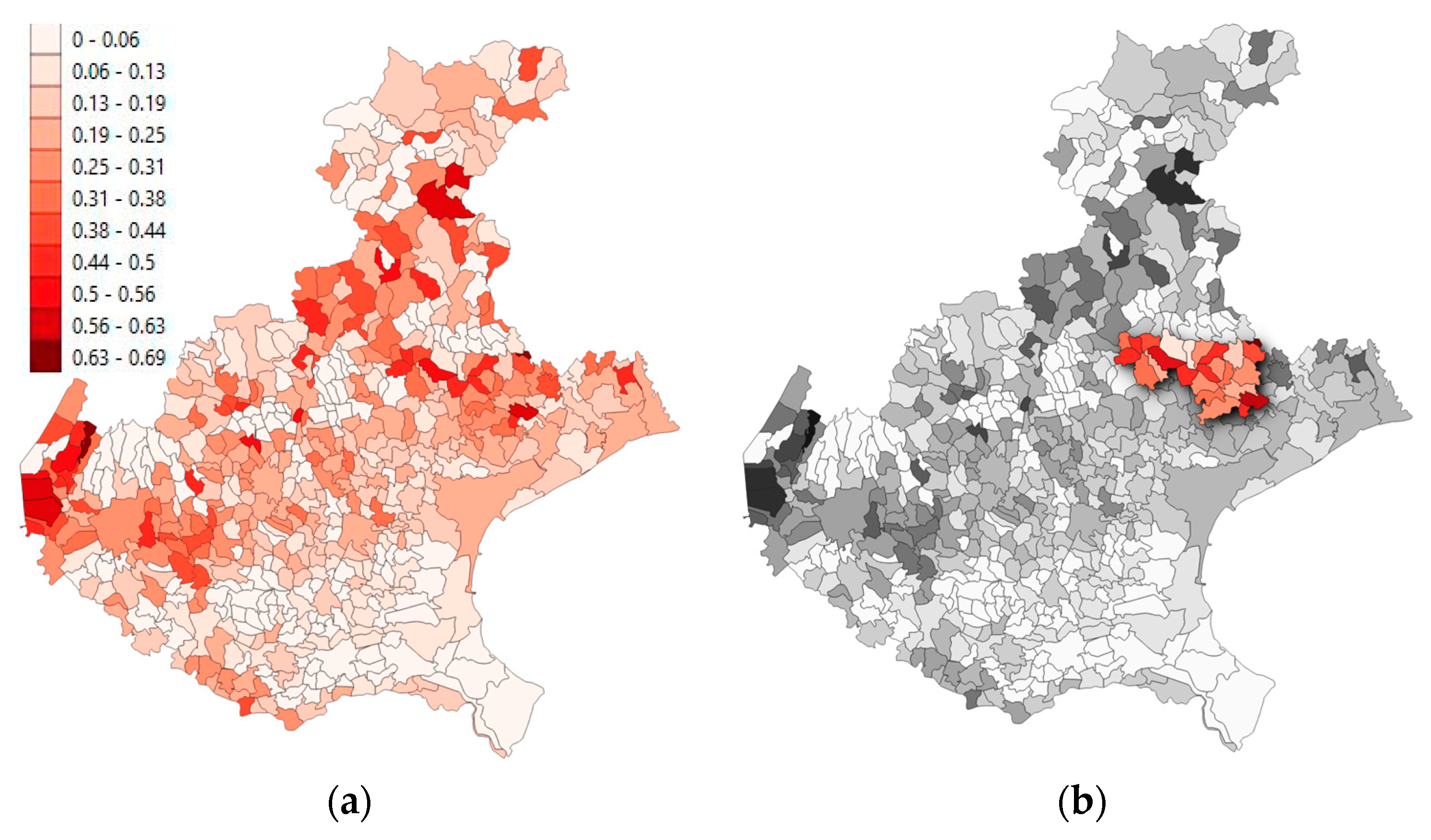
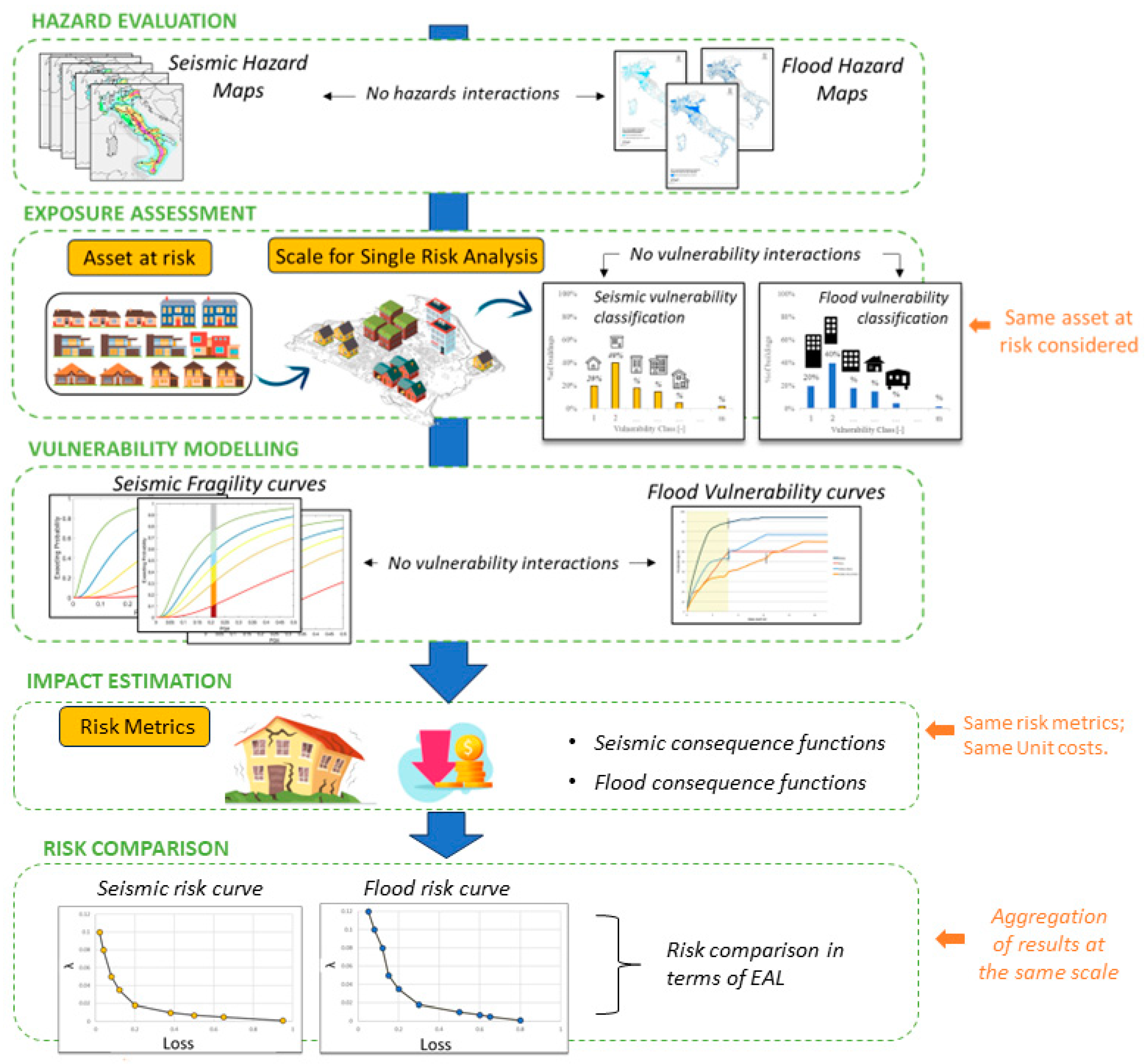
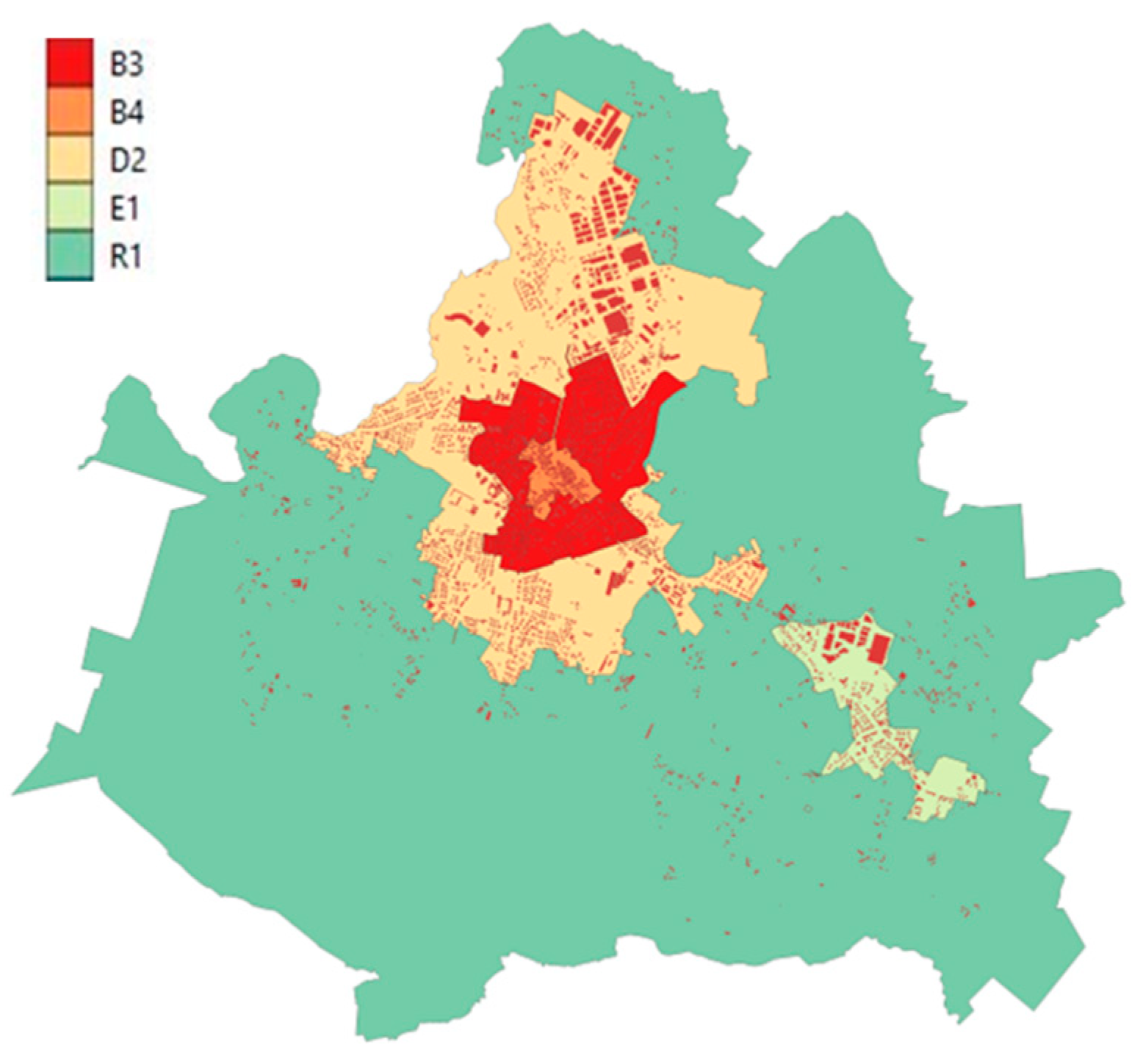
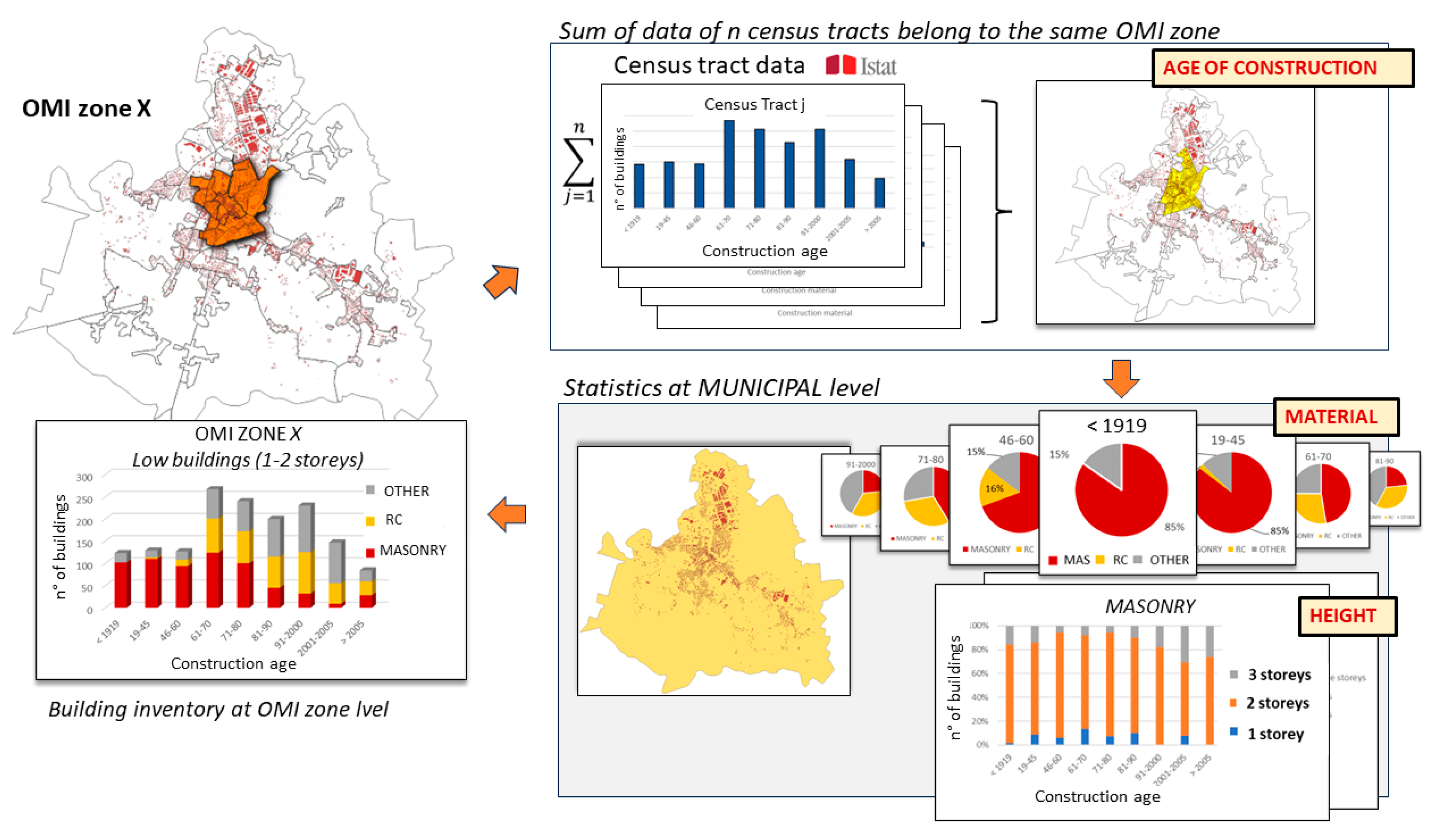
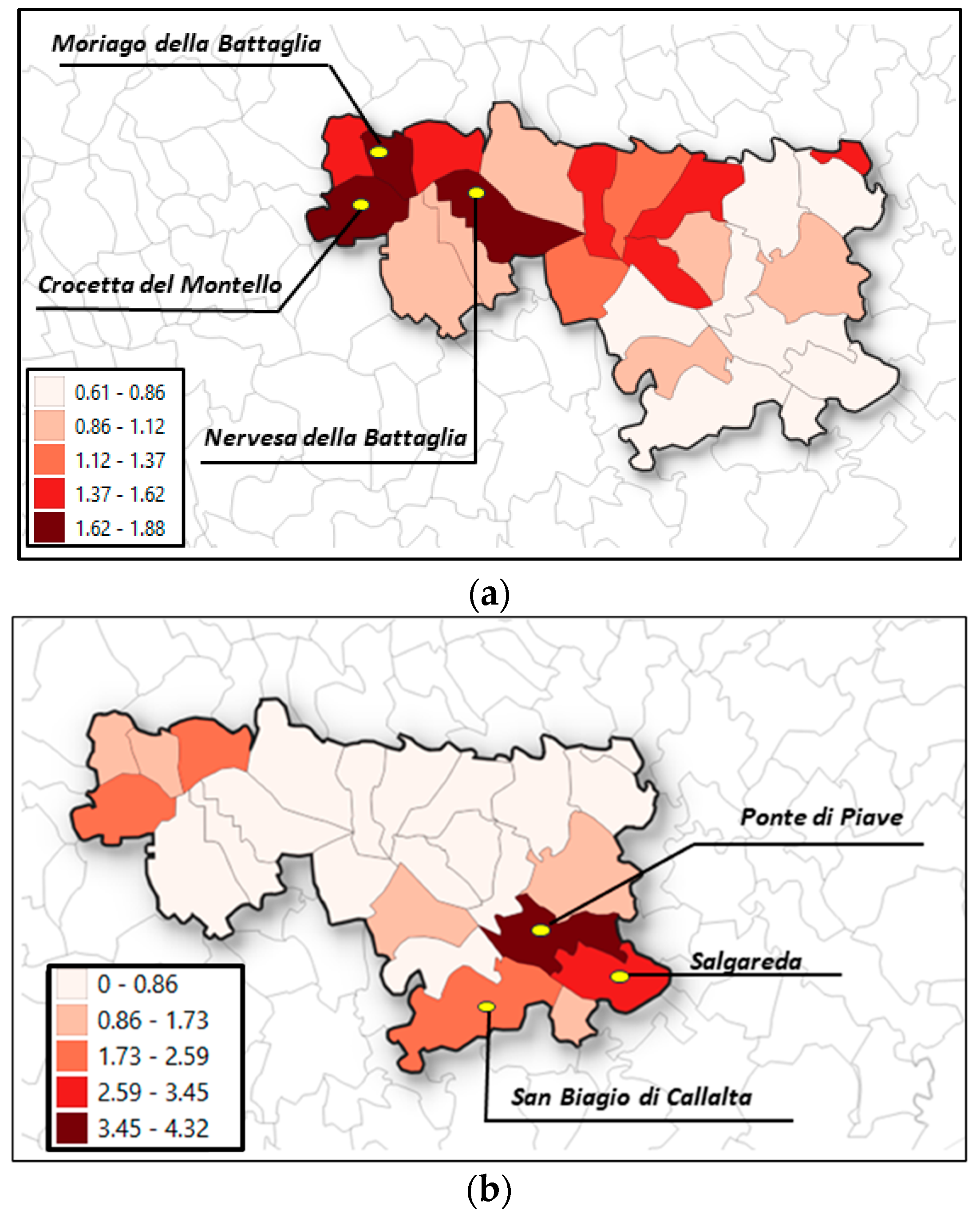
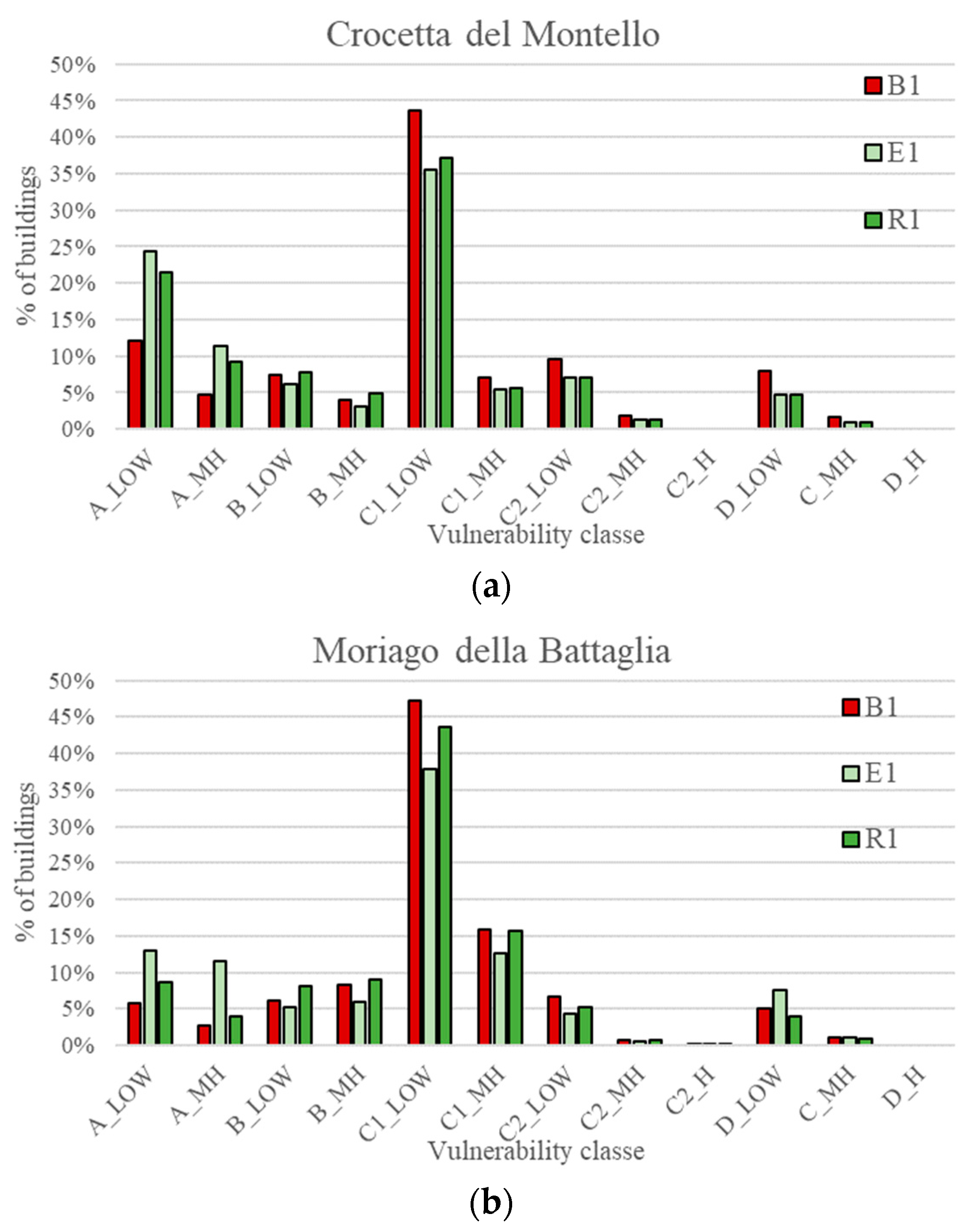
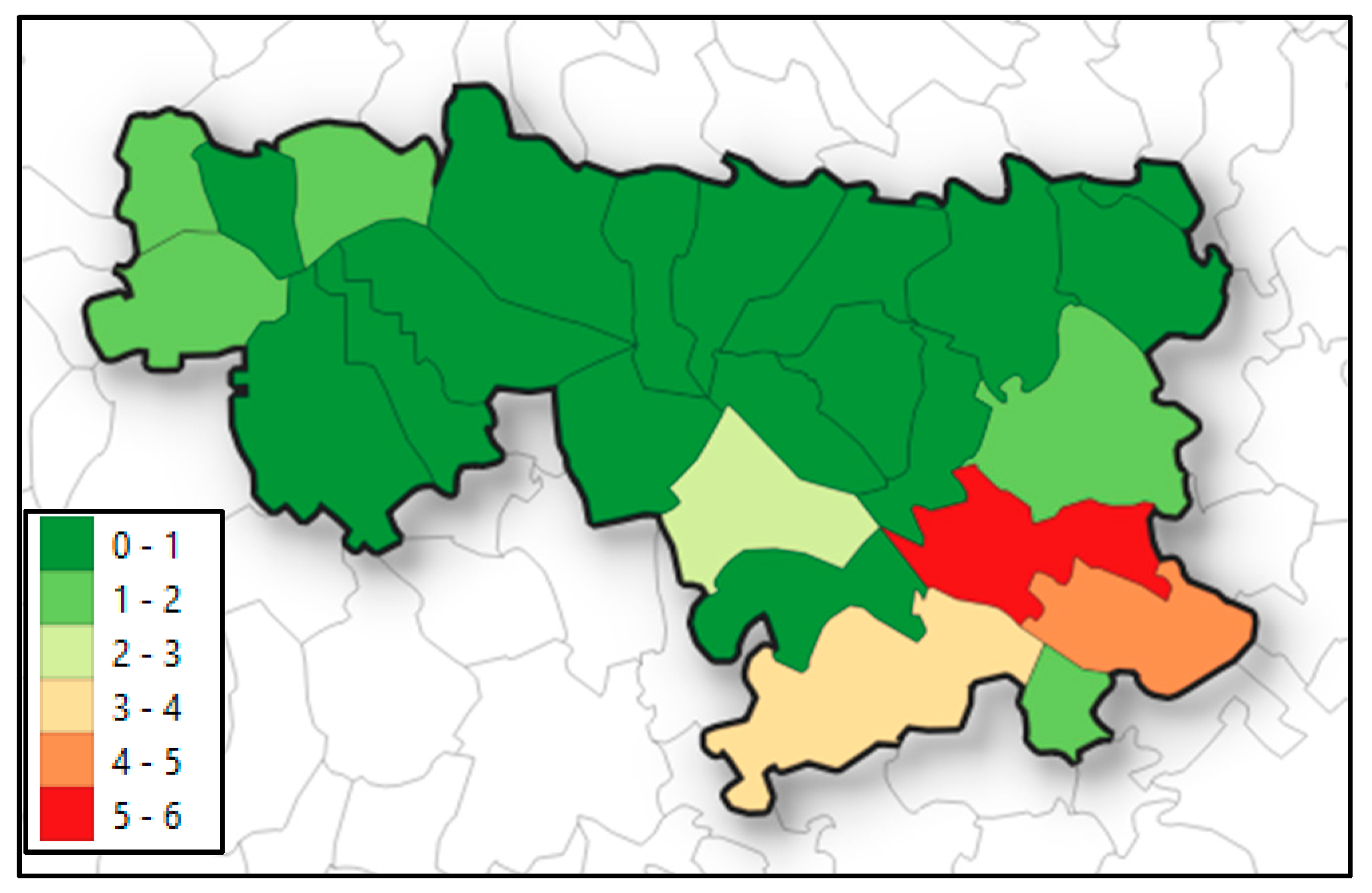
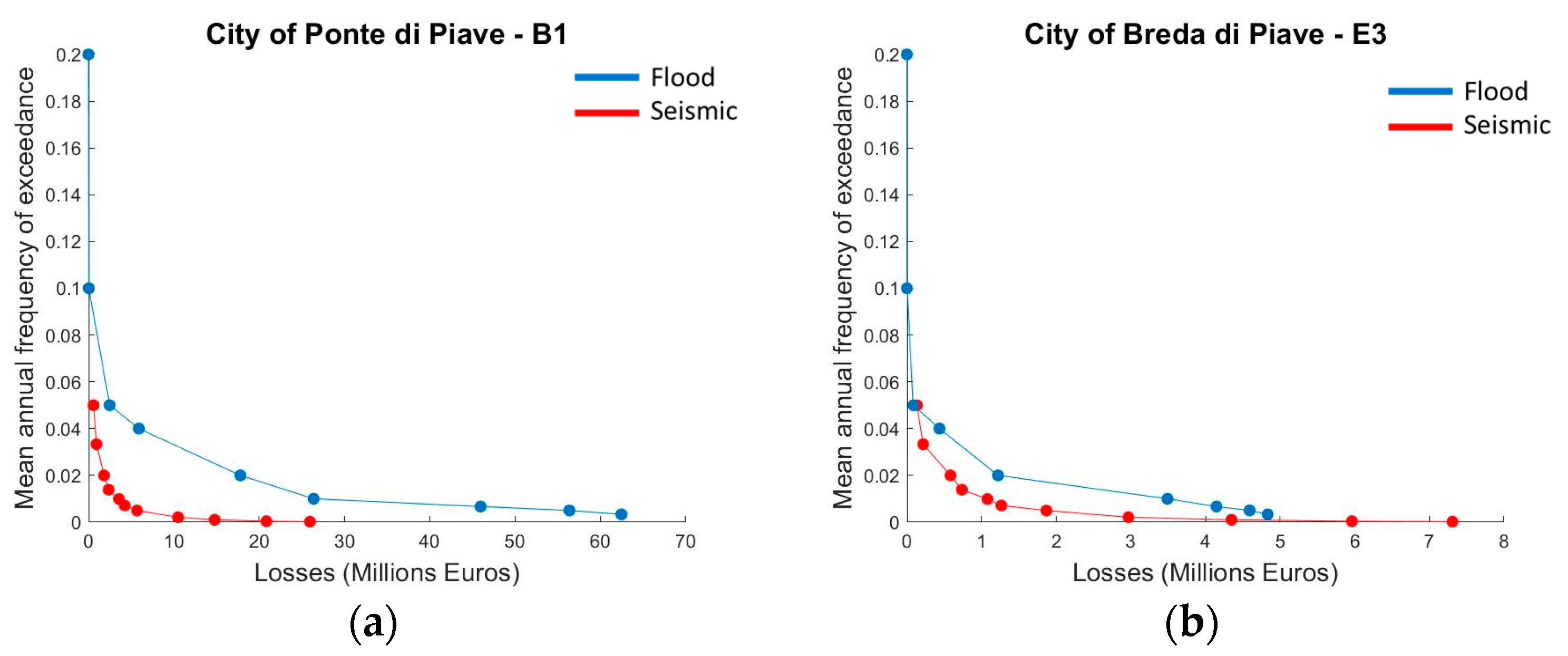
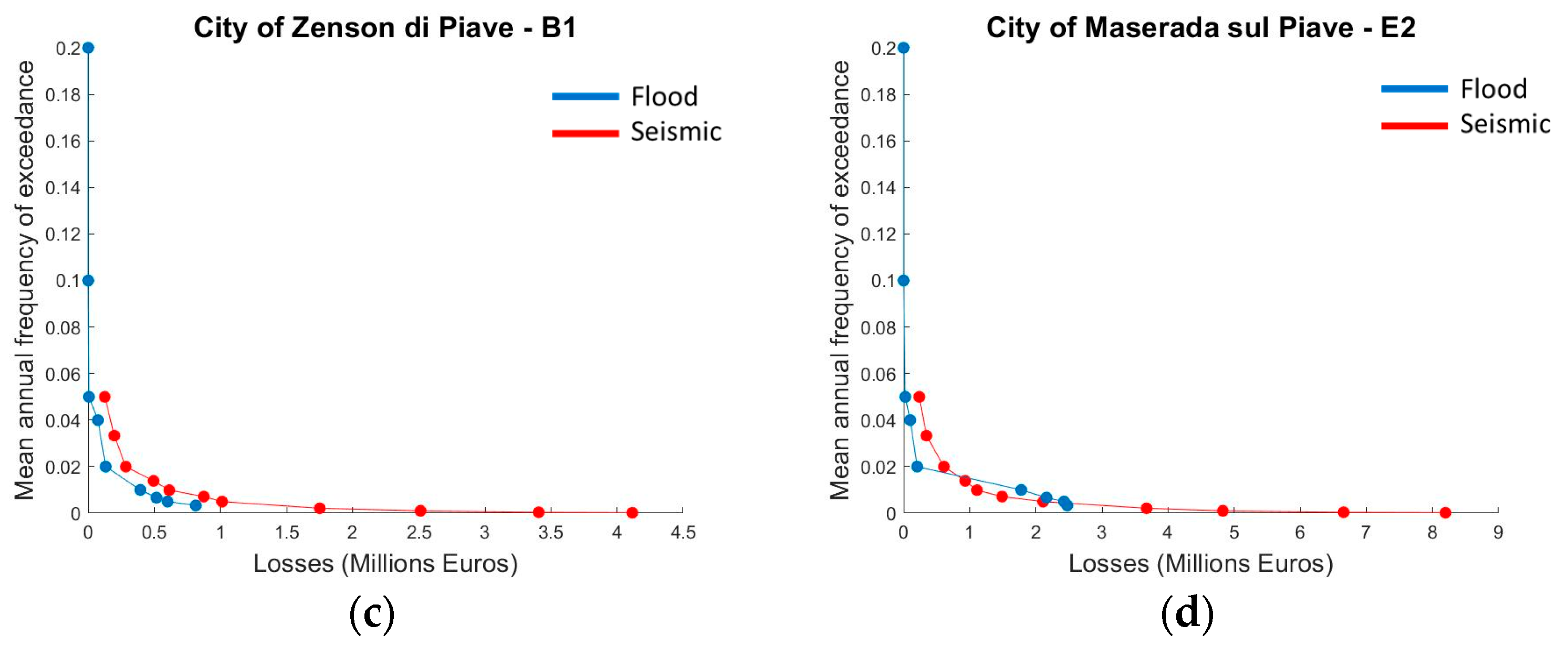
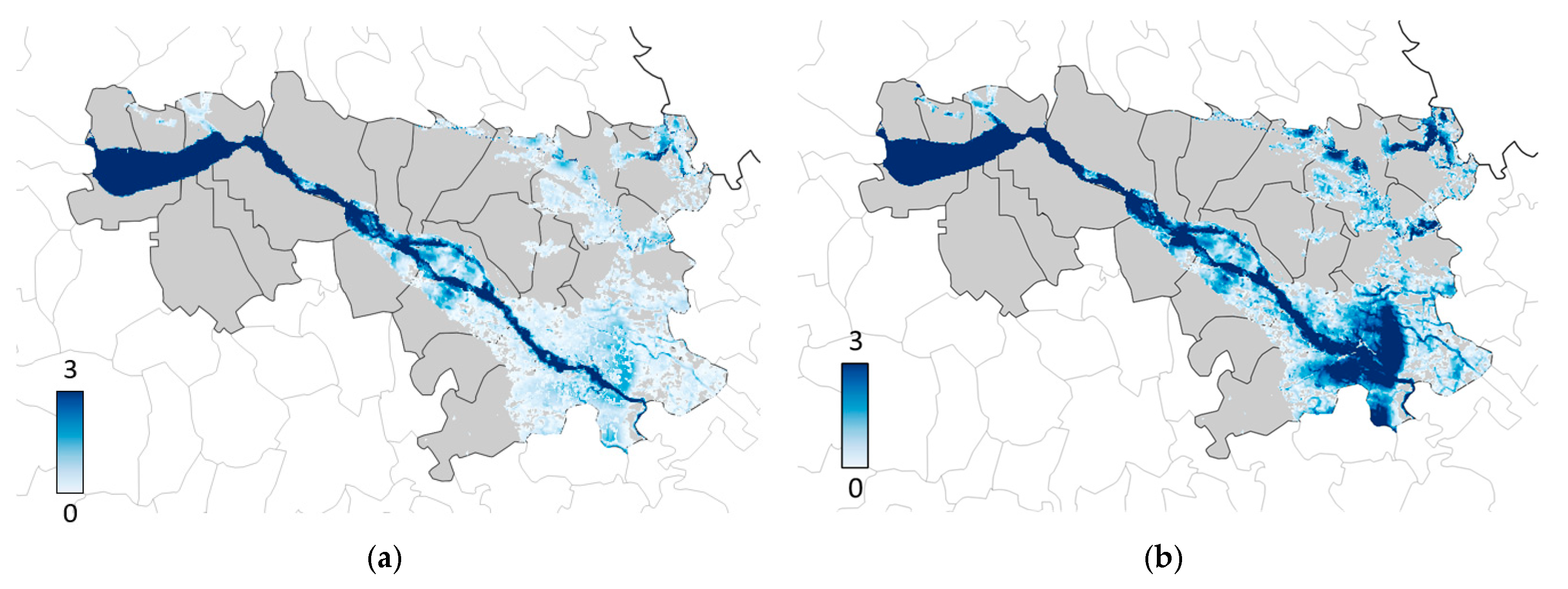
Effective disaster risk management in a given area relies on the analysis of all relevant risks potentially affecting it. A proper multi-risk evaluation requires the ranking of analyzed risks and the estimation of overall expected impacts, considering possible hazards (and vulnerabilities) interactions as well. Due to their complex and challenging modelling, such interactions are usually neglected, and the analysis of risks derived from different sources are commonly performed through independent analysis. However, often the assessment procedures adopted for the analysis as well as the metrics used to express various risks are different, making results of single risk analyses hardly comparable. To overcome this issue, an approach that allows for comparing and ranking risks is presented in this study. The approach is demonstrated through an application for an Italian region. Earthquakes and floods are the investigated hazards. First, in order to select the case study area, the municipalities within the Veneto region where both risks could be highest are identified by adopting an index-based approach. Then, the harmonization of seismic and flood risk assessment procedure is performed. Sub-municipal areas are selected as scale of analysis and direct economic losses are chosen as common impact metrics. The results of the single risk analyses are compared using risk curves as standardization tool. The EAL (expected annual losses) are estimated through risk curves and the ratios between EAL due to floods and earthquakes are mapped, showing in which area risk is significantly higher than the other.
Keywords: seismic risk; flood risk; multi-risk assessment; losses comparison seismic risk; flood risk; multi-risk assessment; losses comparison