Article

Optimized Design of Skylight Arrangement to Enhance the Uniformity of Indoor Sunlight Illumination

1
School of Information Engineering, Wuhan University of Technology, Wuhan 430070, China
2
School of Information and Communication Engineering, University of Electronic Science and Technology of China, Chengdu 611731, China
*
Author to whom correspondence should be addressed.
Sustainability 2023, 15(14), 11257; https://doi.org/10.3390/su151411257
Submission received: 20 April 2023 / Revised: 1 July 2023 / Accepted: 10 July 2023 / Published: 19 July 2023
(This article belongs to the Special Issue Illumination Design for Sustainable Building Environments)

Abstract

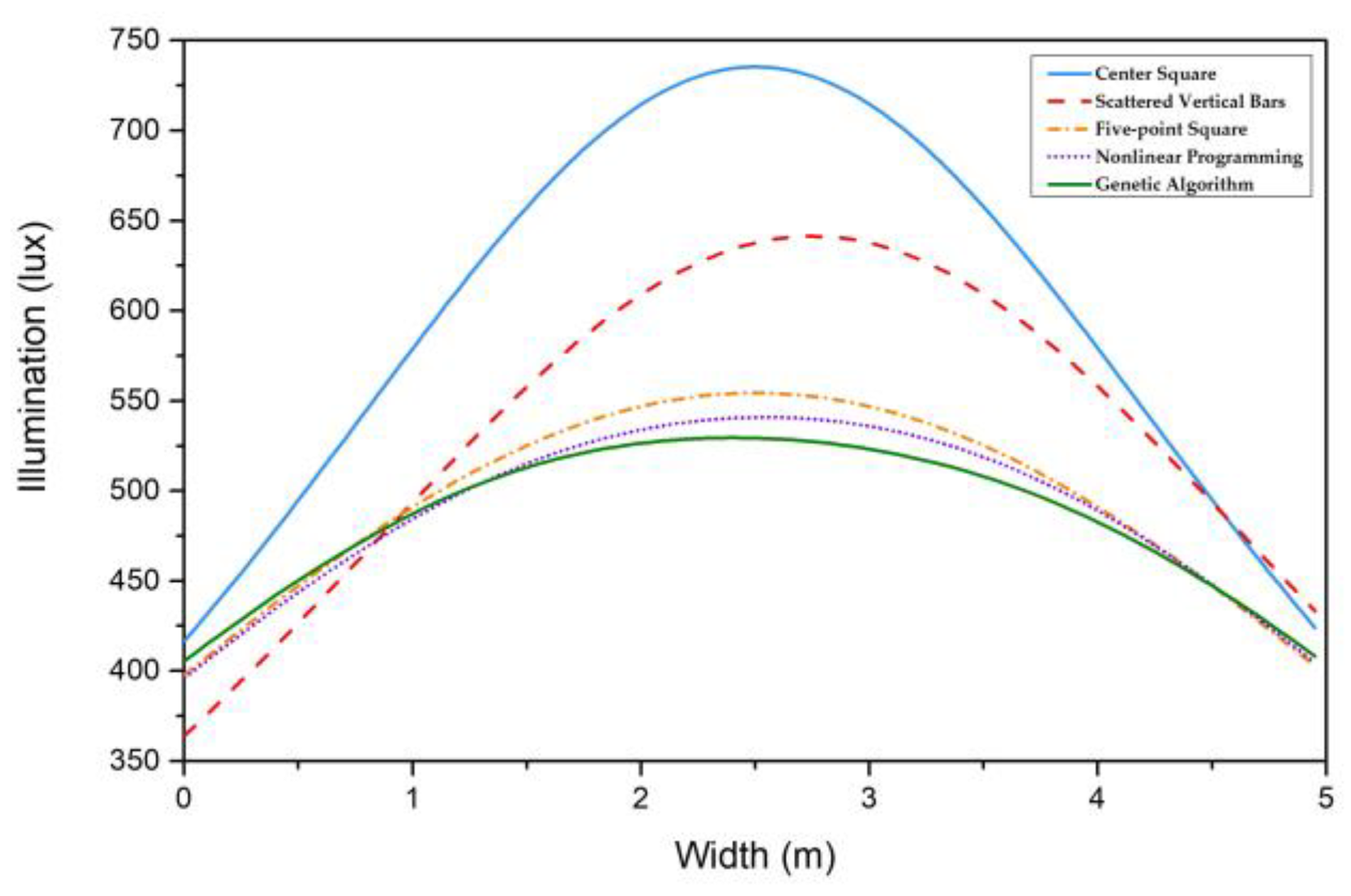
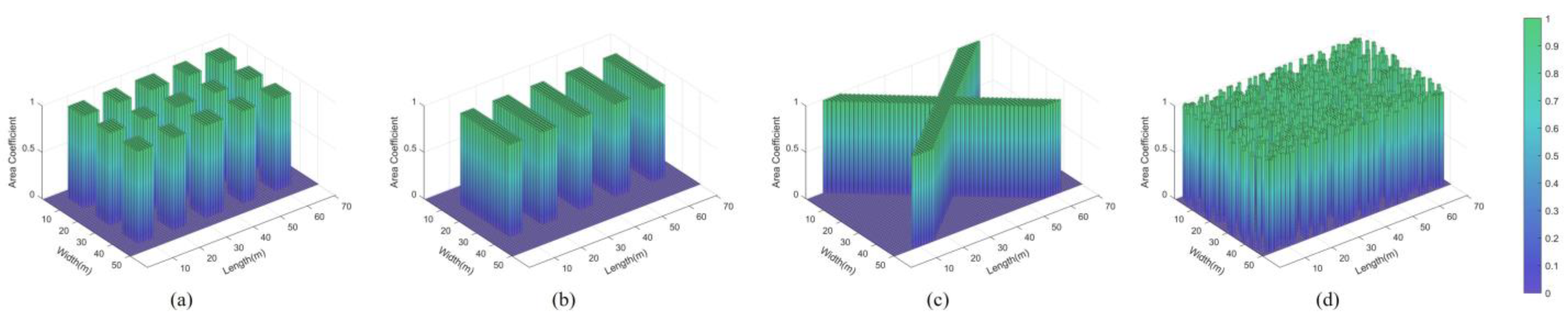
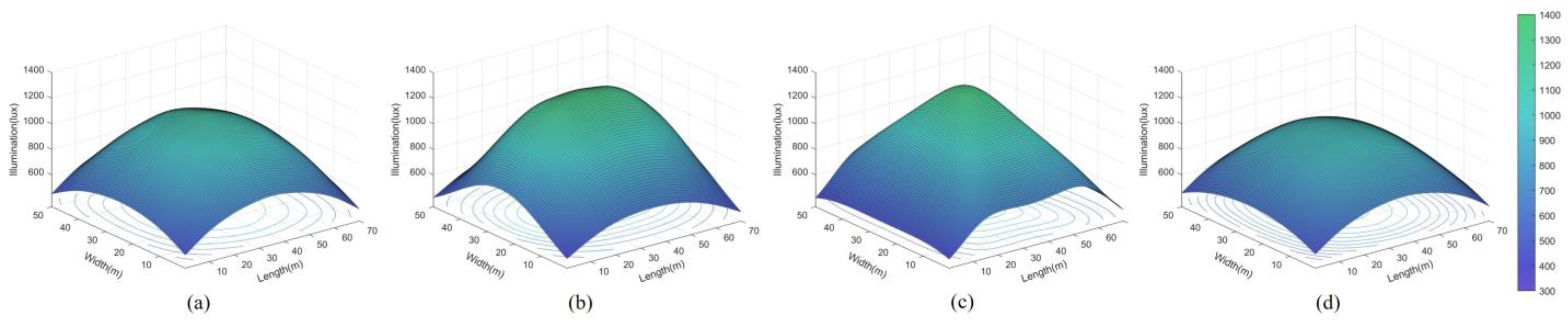
The use of skylights in buildings introduces natural light into the interior space, thereby reducing the reliance on artificial lighting and aligning with the principles of low carbon and environmental sustainability. To ensure optimal indoor lighting quality, it is essential to optimize the arrangement of skylights to strike a balance between high average illumination and uniformity of illumination. Recent initiatives by the Chinese government have emphasized the construction and renovation of numerous gymnasiums. In this research, a novel approach based on optimized algorithms was employed to design skylights and improve the uniformity of indoor illuminance. Simulation results demonstrated that the skylight arrangements derived from the optimization algorithms exhibited significantly higher levels of illumination uniformity, while maintaining comparable average illumination and skylight areas, when compared to conventional designs. Additionally, the study employed genetic algorithms to optimize the skylight arrangement for a specific gymnasium, resulting in a remarkable 32% increase in illumination uniformity. The study also accounted for obstacles and seating in the skylight design, and the genetic algorithm generated desirable skylight arrangements with respective increases of 32% and 21% in illumination uniformity for scenarios involving obstacles and seating. Overall, this study underscores the potential of optimized algorithms in the design of skylights for green buildings, offering valuable insights for future research endeavors in this field.
Keywords: skylight design; solar energy; uniform illumination; non-linear programming; genetic algorithm skylight design; solar energy; uniform illumination; non-linear programming; genetic algorithm