Article

Optimal Parking Path Planning and Parking Space Selection Based on the Entropy Power Method and Bayesian Network: A Case Study in an Indoor Parking Lot

College of Civil Engineering, Nanjing Forestry University, Nanjing 210037, China
*
Authors to whom correspondence should be addressed.
Sustainability 2023, 15(11), 8450; https://doi.org/10.3390/su15118450
Submission received: 20 April 2023 / Revised: 16 May 2023 / Accepted: 19 May 2023 / Published: 23 May 2023
(This article belongs to the Special Issue Sustainable City Planning and Development: Transport and Land Use)

Abstract

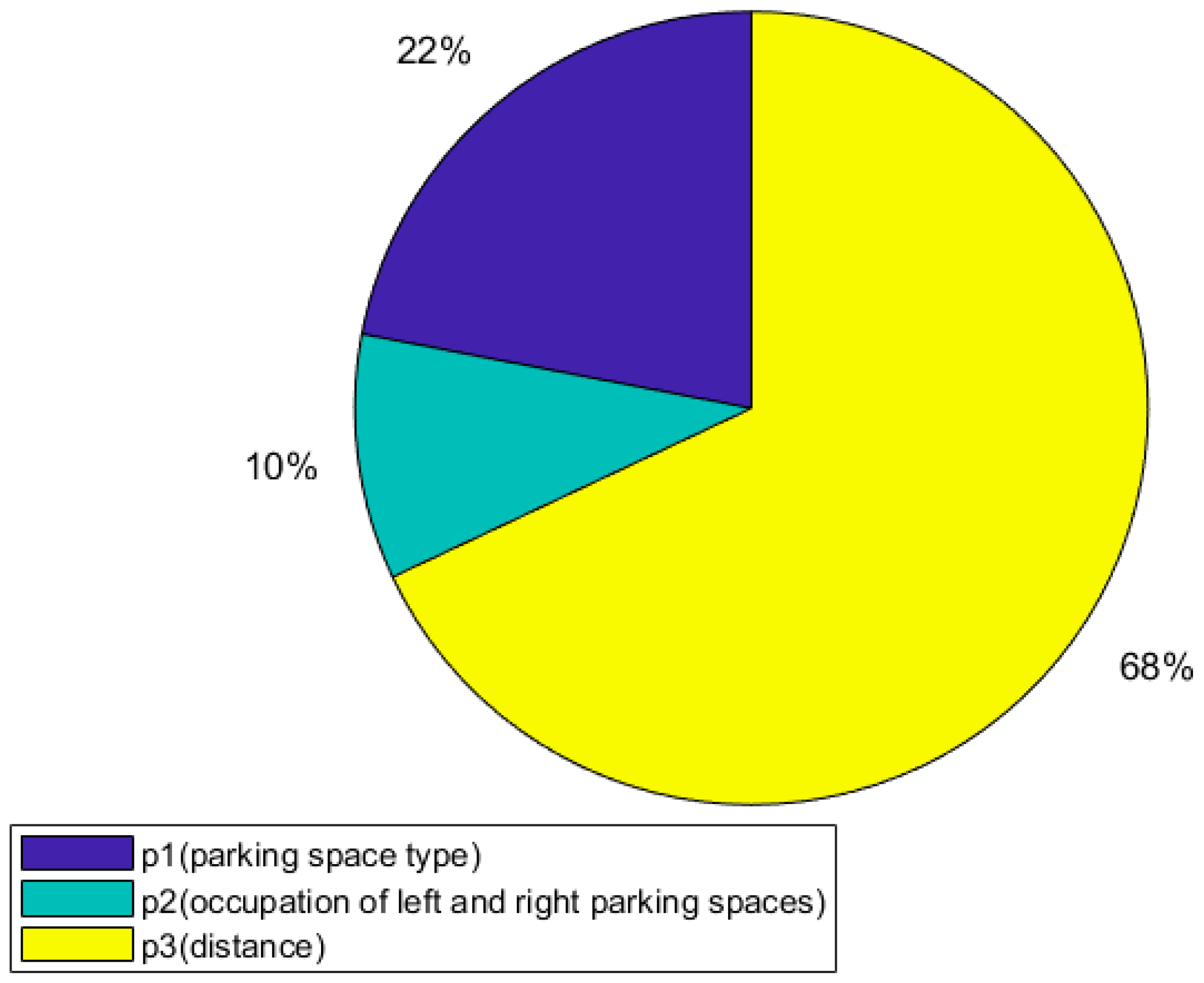
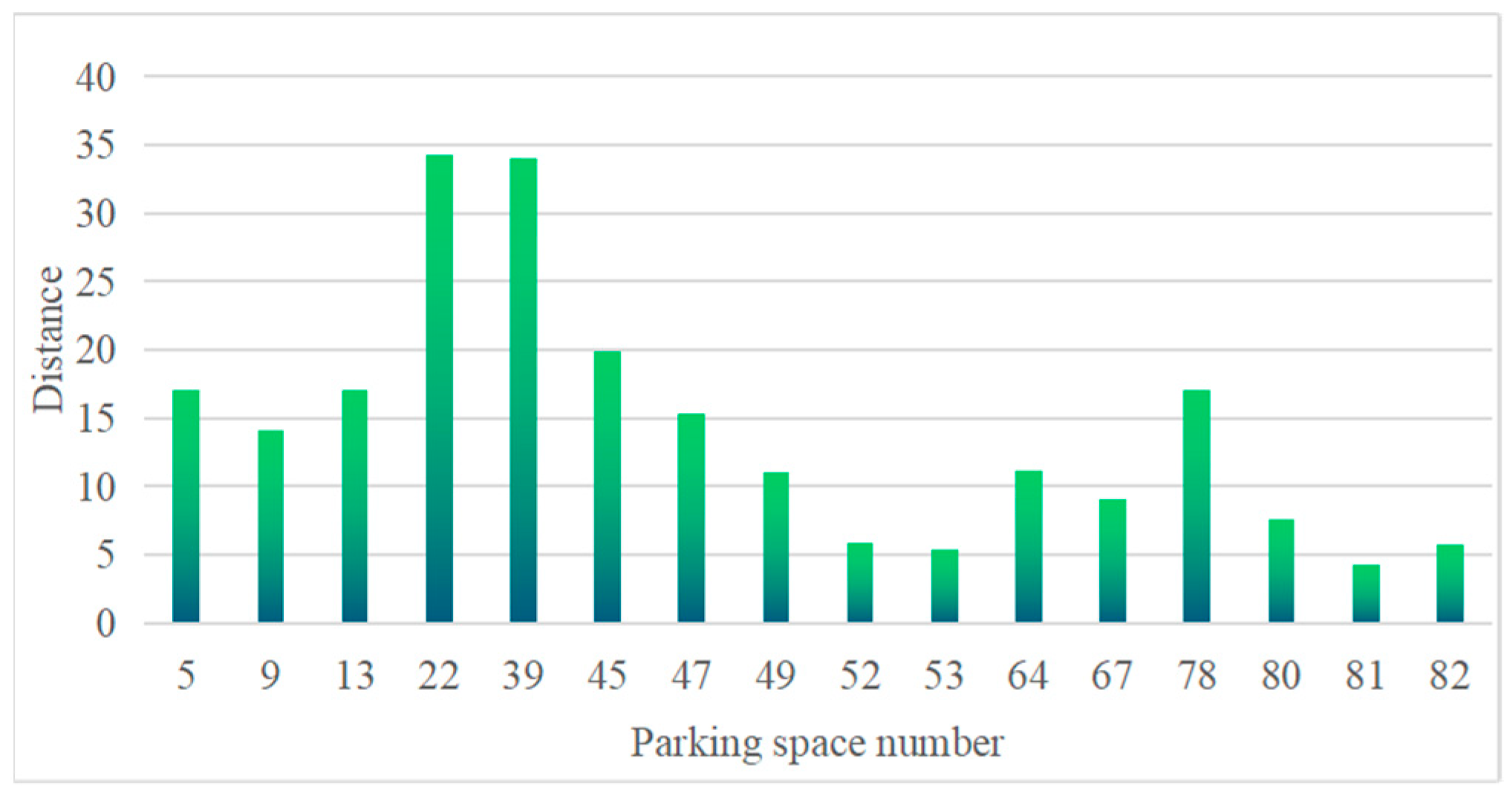
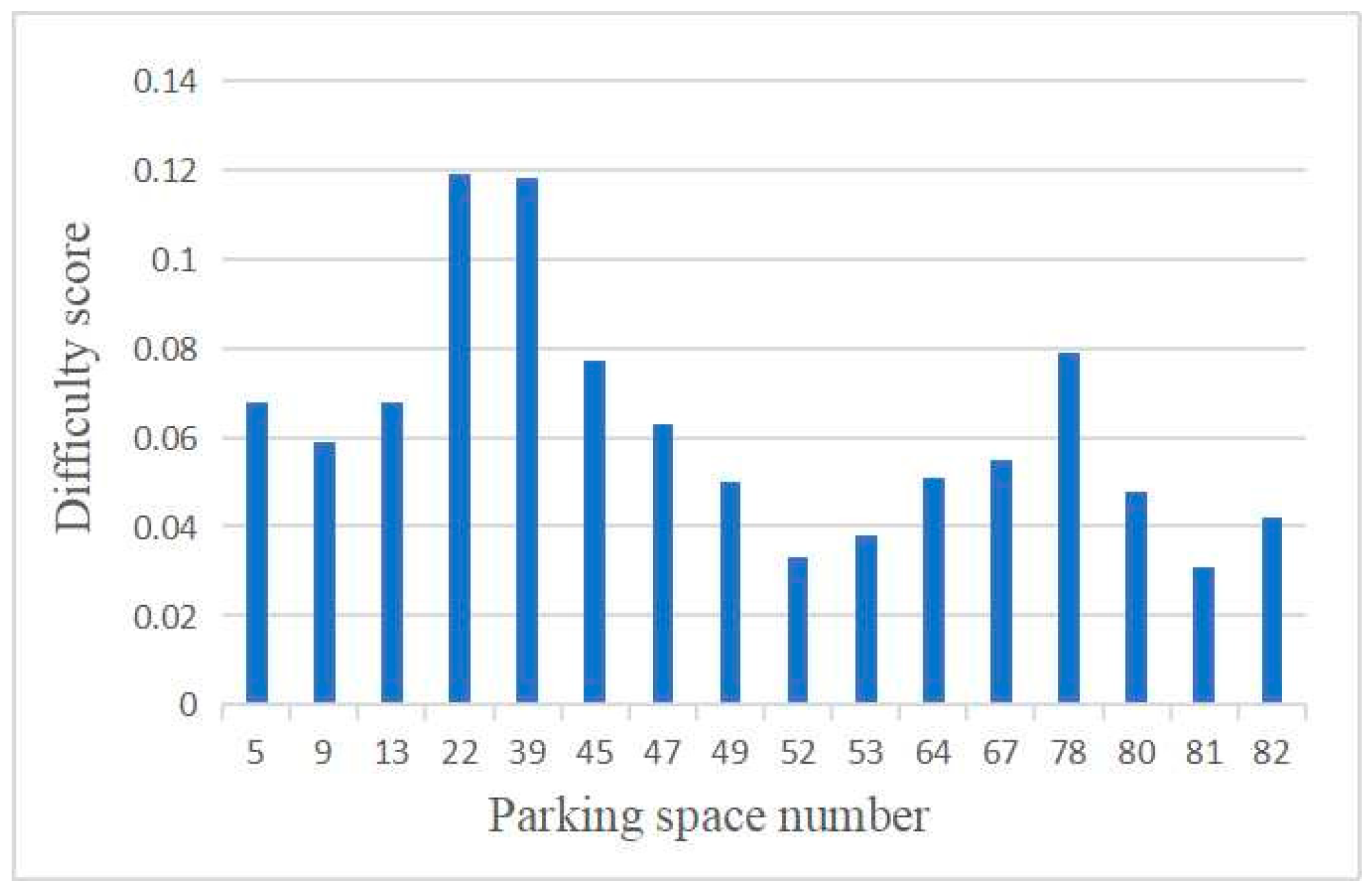
According to the vehicle dynamics model and the requirements of reliable safety and minimal time, the path planning problem of parking in different types of parking spaces is solved by obstacle avoidance analysis and motion analysis in the case of the optimal solution, and the parking trajectory from the initial position to the designated parking space is obtained. In the static situation, different parking spaces in the parking space are occupied; analyze the parking space type, parking space left and right occupancy situation, and the distance between the vacant parking space and the starting point location of unoccupied cars; and establish the attribute information matrix R0 of the vacant parking space and calculate the KMO value of the matrix R0. This is completed to determine the weak correlation between the attributes of the vacant parking space and use the matrix R0 as the original evaluation matrix of the entropy weight method, using the entropy weight method to calculate the three attributes of parking space type, parking space left and right occupancy situation, and distance between starting point and parking space. These results are weighted in the optimal parking space selection process, the difficulty score of the vacant parking space is determined, and the optimal parking space is determined through the ranking of the scores. In the dynamic case, the number of parking spaces and parking space usage will change over time, with the help of the Bayesian network, the existing parking spaces and number of spaces in the parking lot at the previous moment are learned according to the computer clock, which can be used to reason about the number of parking spaces and parking space availability in the parking lot at the next moment. The weights of the three attributes of parking space type, parking space left and right situation, and distance between the starting point and parking space are updated in the case of a dynamic change of parking space, and then the parking difficulty score of a new vacant parking space using the entropy weight method is used to select the optimal parking space in the dynamic situation. The optimized parking path planning and parking space selection method could contribute to enhancing parking efficiency for the sustainable management of indoor parking lots.
Keywords: parking management; indoor parking lot; parking path planning; parking area selection; Bayesian network parking management; indoor parking lot; parking path planning; parking area selection; Bayesian network