Article

Evaluation of Agronomic Performance and Genetic Diversity Analysis Using Simple Sequence Repeats Markers in Selected Wheat Lines


1
Institute of Biotechnology and Genetic Engineering, The University of Agriculture, Peshawar 25130, Pakistan
2
Department of Business Administration, College of Business Administration, Princess Nourah bint Abdulrahman University, P.O. Box 84428, Riyadh 11671, Saudi Arabia
3
Department of Botany, Islamia College Peshawar, Peshawar 25120, Pakistan
4
Biology Laboratory, Agriculture University Public School and College for Boys (AUPS & C), The University of Agriculture Peshawar, Peshawar 25130, Pakistan
5
Department of Plant Sciences, Quaid-i-Azam University, Islamabad 45320, Pakistan
6
Department of Biological Sciences, Faculty of Science, King Abdulaziz University (KAU), P.O. Box 80141, Jeddah 21589, Saudi Arabia
7
King Fahd Medical Research Center, Yousef Abdullatif Jameel Chair of Prophetic Medicine Application, Faculty of Medicine, King Abdulaziz University, Jeddah 21589, Saudi Arabia
*
Authors to whom correspondence should be addressed.
Sustainability 2023, 15(1), 293; https://doi.org/10.3390/su15010293
Submission received: 19 October 2022 / Revised: 24 November 2022 / Accepted: 8 December 2022 / Published: 24 December 2022

Abstract

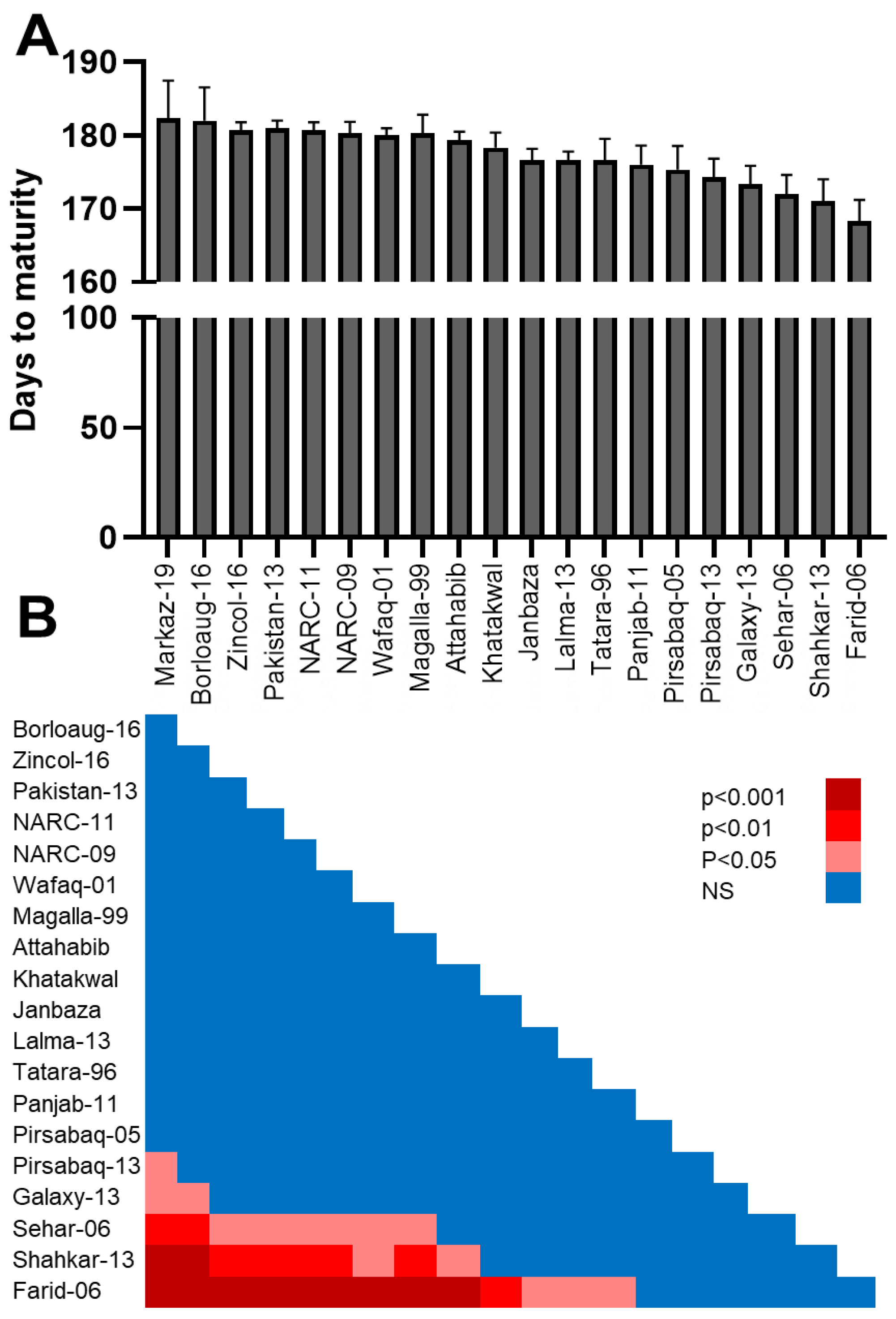
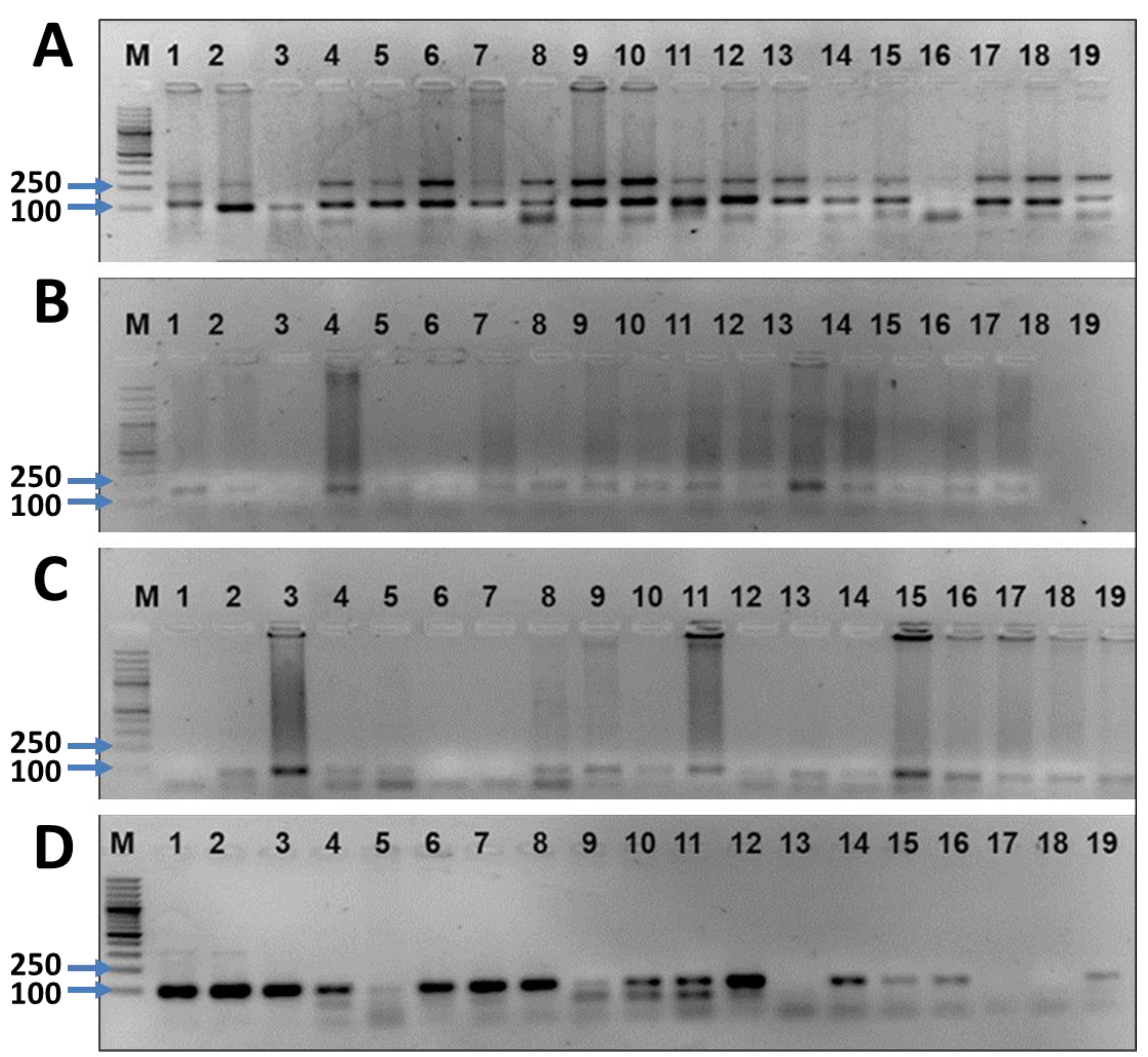
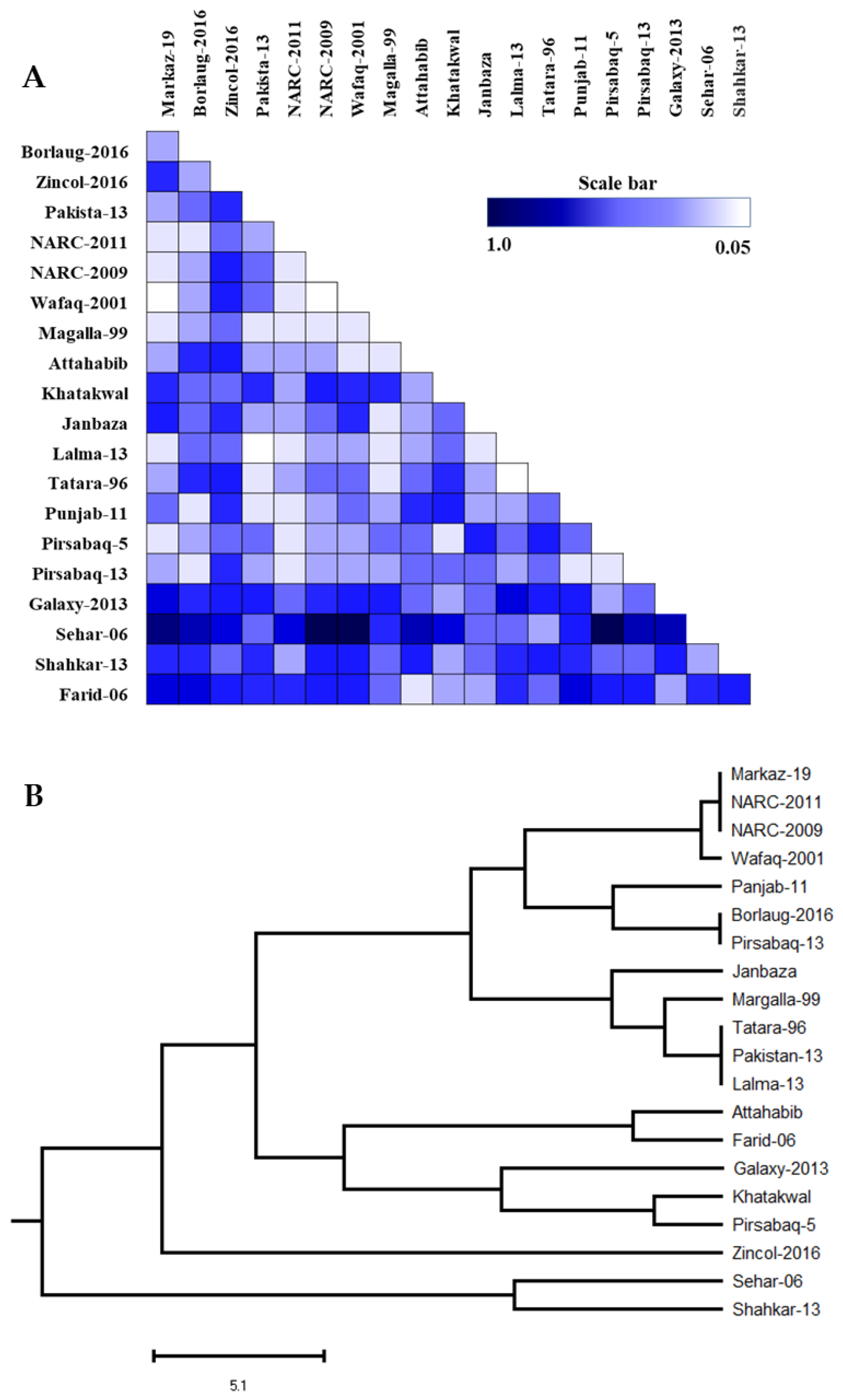
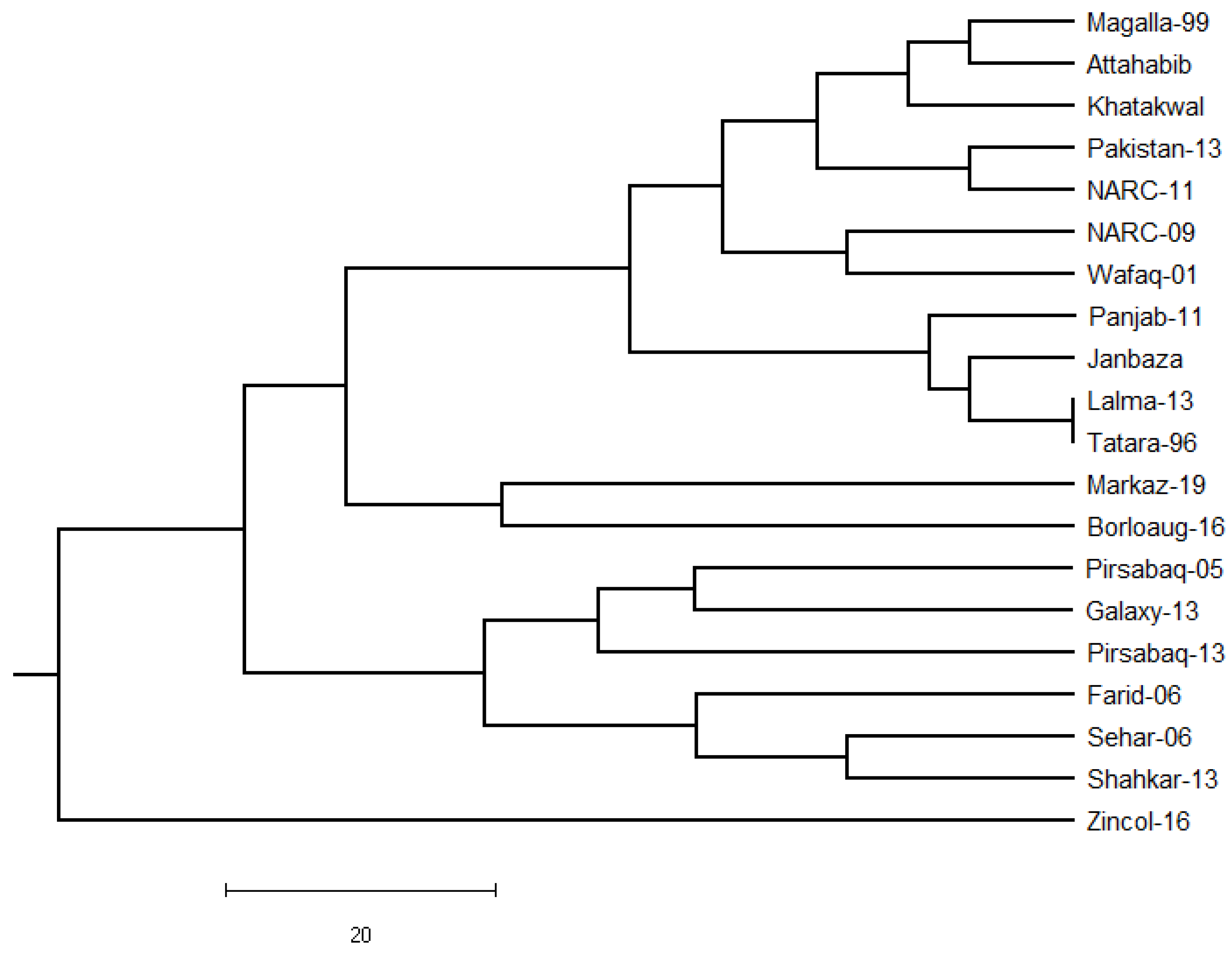
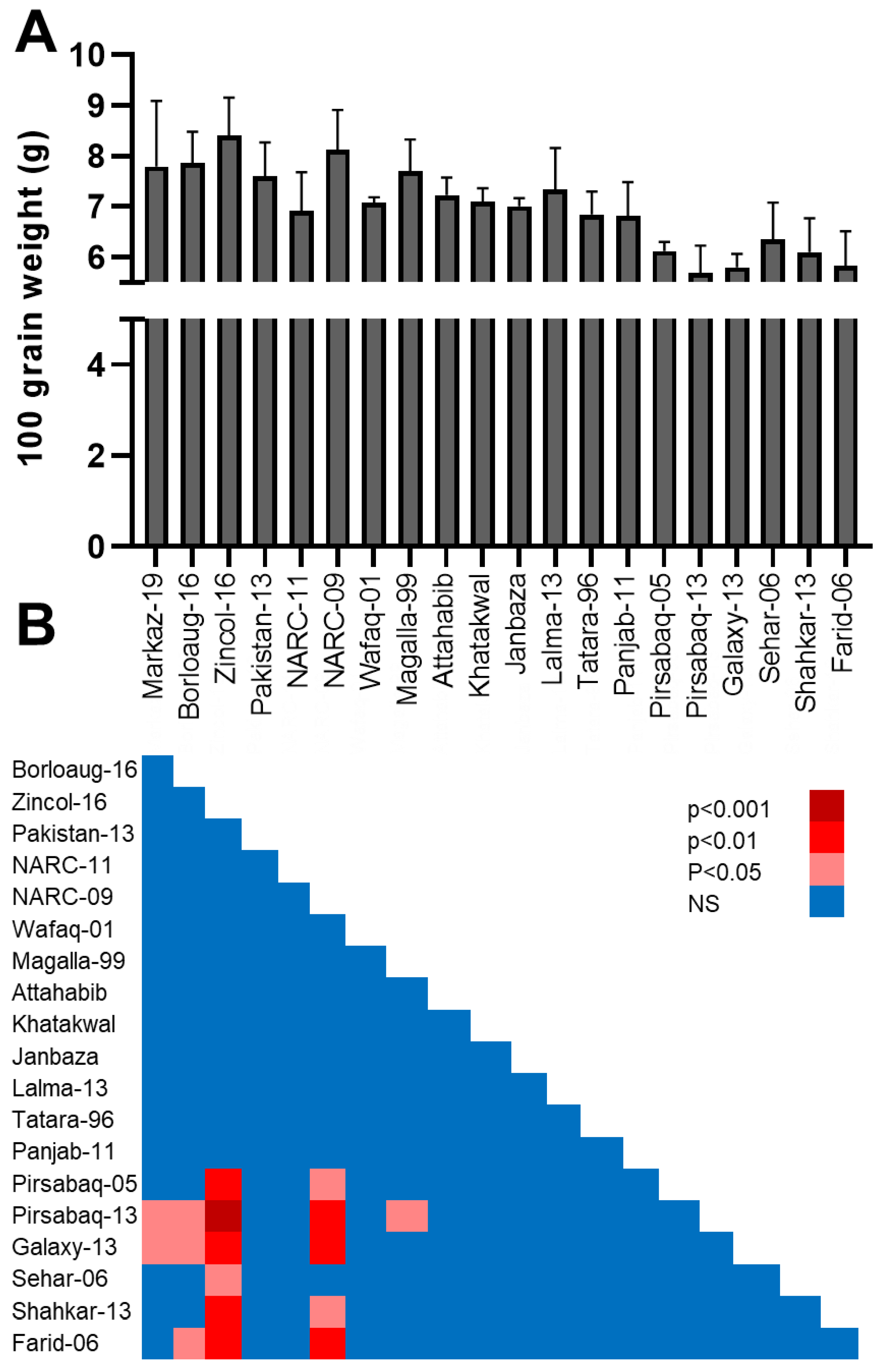
Crop improvement is the fundamental goal of plant biologists, and genetic diversity is the base for the survival of plants in nature. In this study, we evaluated 20 wheat lines for morphological and genetic diversity using eight simple sequence repeats markers from Wheat Microsatellite Consortium (WMC). Morphologically, variations were observed among all of the different wheat lines for the studied trait except for single spike weight. The highest values for different agronomic traits were recorded for the different wheat lines. The maximum days to heading were recorded for Borlaug-16 (128.3 ± 2.52 days). Similarly, days to maturity were recorded and were highest in Markaz-19 (182.3 ± 5.13 days), followed by Borlaug-16 (182.0 ± 4.58 days). The highest plant height was observed for Zincol-16 (122.3 ± 2.51 cm), followed by Markaz-19 (120.0 ± 14.79 cm) and Borlaug-16 (119.7 ± 6.8 cm). The productivity measured by 100-grain weight was highest in the case of Zincol-16 (84.0 ± 7.5 g). In contrast, wheat lines Shahkar, Sehar, and Farid-6 showed the lowest values for the traits tested. The results of genetic diversity revealed a total number of 16 alleles at eight SSR markers with an average of 2.00 ± 0.534 alleles per locus. Out of eight SSR markers, one marker (WMC105) was monomorphic, and six were dimorphic, showing two alleles at each locus. The maximum number of alleles (3) was observed for marker WMC78, in which genotypes AC and AA were predominantly found in high-yielding lines Borlaug-2016 and Zincol-2016 that were distantly related to other varieties. Zincol-2016 was also agronomically distinct from the rest of the 19 wheat lines. The results obtained from this study may be of importance for the scientific community to further explore the underlying genetic polymorphism associated high yielding varieties using marker-assisted selection for sustainable agriculture.
Keywords: genotyping; polymorphism; genetic diversity; SSR markers; sustainable agriculture genotyping; polymorphism; genetic diversity; SSR markers; sustainable agriculture