Article

A Consideration of Wildlife in the Benefit-Costs of Hydraulic Fracturing: Expanding to an E3 Analysis

by
Jennifer A. Caldwell
1,*,
Christopher K. Williams
1,*,
Margaret C. Brittingham
2 and
Thomas J. Maier
3
1
Department of Entomology and Wildlife Ecology, University of Delaware, 531 South College Ave., 261 Townsend Hall, Newark, DE 19716, USA
2
Department of Ecosystem Science and Management, Pennsylvania State University, 204 Forest Resources Building, University Park, PA 16802, USA
3
U.S. Army Corps of Engineers (Ret.), Pittsburgh District, Planning & Environmental Branch, Pittsburgh, PA 15222, USA
*
Authors to whom correspondence should be addressed.
Sustainability 2022, 14(8), 4811; https://doi.org/10.3390/su14084811
Submission received: 28 February 2022 / Revised: 12 April 2022 / Accepted: 13 April 2022 / Published: 17 April 2022
(This article belongs to the Special Issue Sustainable Conservation Planning and Wildlife Management)

Abstract

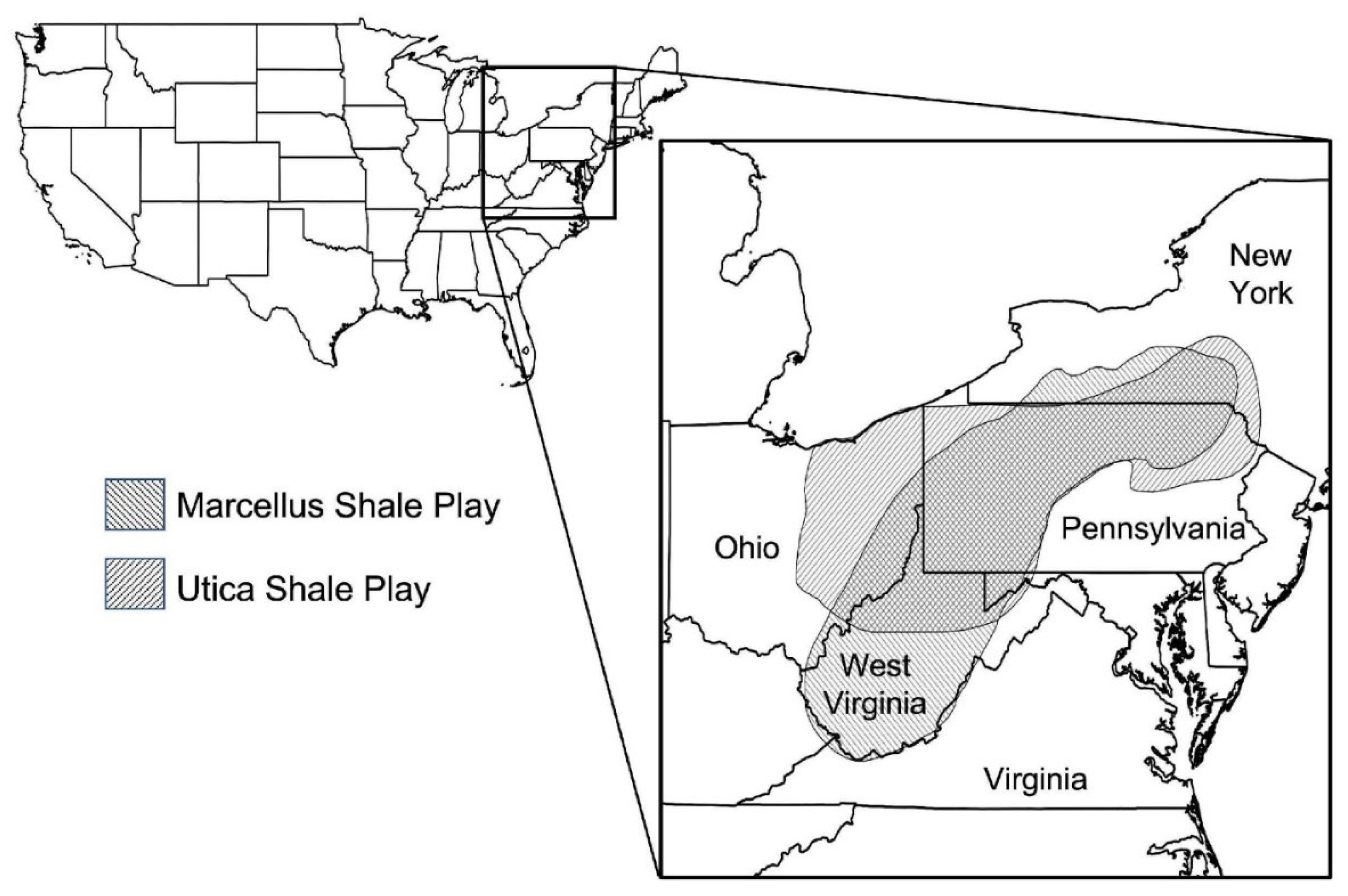
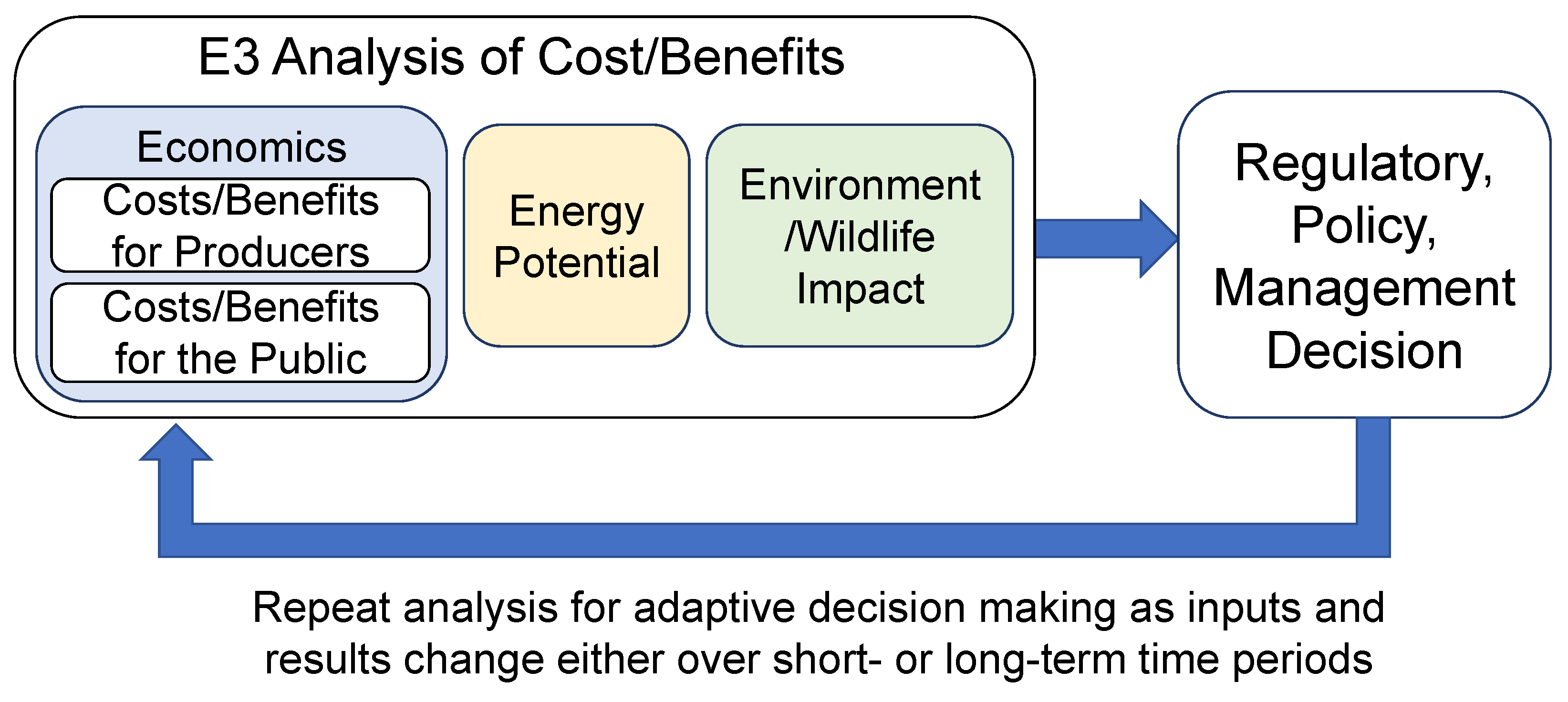
High-volume hydraulic fracturing (“fracking”) for natural gas in the Marcellus Shale (underlying about 24 mil ha in New York, Pennsylvania, Maryland, West Virginia, Ohio, and Virginia) has become a politically charged issue, primarily because of concerns about drinking water safety and human health. This paper examines fracking in the Marcellus region, and the tradeoffs between the energy and economic potential of natural gas extraction and the environmental impacts on wildlife. Therefore, we introduce a new E3 analysis that combines the costs and benefits as regards energy, economics, and the environment. The Marcellus Shale has the most proven reserves of natural gas of any basin in the United States, at 129 trillion cubic feet. Income from natural gas development comes primarily from direct and indirect jobs, and induced jobs (those created when direct workers spend their earnings in a community), taxes and fees, and royalty and lease payments to rights holders. Fracking, however, has detrimental effects on wildlife and wildlife habitats. Terrestrial habitat effects are primarily due to landscape fragmentation from the clearing of land for pipeline and well pad development, which often removes mature forest and creates open corridors and edge habitats. An increase in forest edge and open corridors is associated with shifts in the bird community, as generalist species that do well around people increase in abundance, while forest specialists decline. Invasive plants associated with disturbance further degrade forest habitats. Aquatic habitats are also affected, both directly and indirectly. Hydraulic fracturing requires up to 20 mil L of water per well fracture, most of which comes from surface water sources in the Marcellus region. The removal of water, especially in smaller headwaters, can increase sedimentation, alter water temperature and change its chemistry, resulting in reductions in aquatic biodiversity. Given the reality that hydraulic fracturing will continue, there is a need to develop practices that best minimize negative impacts on terrestrial and aquatic habitats, as well as policies and the resolve to enforce these practices. To achieve a more sustainable balance between economic, energy, and environmental costs and benefits, we recommend that industry, scientists, non-governmental organizations, mineral rights holders, landowners, and regulators work together to develop a set of best management practices that represent the best knowledge available.
Keywords: best management practices; economics; energy; environment; habitat; hydraulic fracturing; Marcellus; policy; shale; wildlife best management practices; economics; energy; environment; habitat; hydraulic fracturing; Marcellus; policy; shale; wildlife