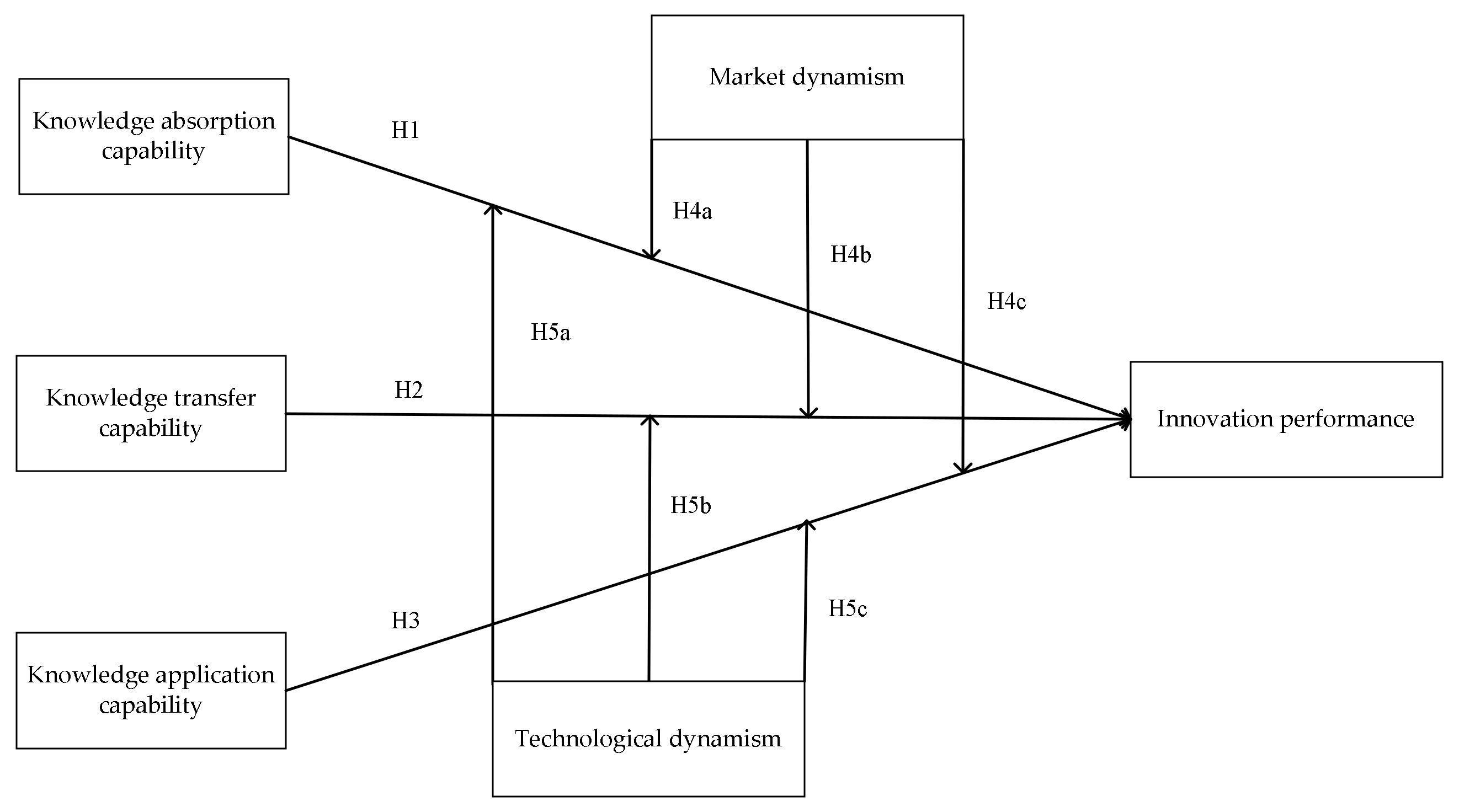
The Impact of Knowledge Management Capabilities on Innovation Performance from Dynamic Capabilities Perspective: Moderating the Role of Environmental Dynamism


Abstract
Share and Cite
Feng, L.; Zhao, Z.; Wang, J.; Zhang, K. The Impact of Knowledge Management Capabilities on Innovation Performance from Dynamic Capabilities Perspective: Moderating the Role of Environmental Dynamism. Sustainability 2022, 14, 4577. https://doi.org/10.3390/su14084577
Feng L, Zhao Z, Wang J, Zhang K. The Impact of Knowledge Management Capabilities on Innovation Performance from Dynamic Capabilities Perspective: Moderating the Role of Environmental Dynamism. Sustainability. 2022; 14(8):4577. https://doi.org/10.3390/su14084577
Chicago/Turabian StyleFeng, Lijie, Zhenzhen Zhao, Jinfeng Wang, and Ke Zhang. 2022. "The Impact of Knowledge Management Capabilities on Innovation Performance from Dynamic Capabilities Perspective: Moderating the Role of Environmental Dynamism" Sustainability 14, no. 8: 4577. https://doi.org/10.3390/su14084577
APA StyleFeng, L., Zhao, Z., Wang, J., & Zhang, K. (2022). The Impact of Knowledge Management Capabilities on Innovation Performance from Dynamic Capabilities Perspective: Moderating the Role of Environmental Dynamism. Sustainability, 14(8), 4577. https://doi.org/10.3390/su14084577