Article

Analyzing Safety Concerns of (e-) Bikes and Cycling Behaviors at Intersections in Urban Area
1
China Design Group Co., Ltd., Nanjing 210004, China
2
School of Transportation, Southeast University, Nanjing 210096, China
*
Authors to whom correspondence should be addressed.
Sustainability 2022, 14(7), 4231; https://doi.org/10.3390/su14074231
Submission received: 9 February 2022 / Revised: 24 March 2022 / Accepted: 31 March 2022 / Published: 2 April 2022
(This article belongs to the Special Issue Sustainable Public Transport and Logistics Network Optimization)

Abstract

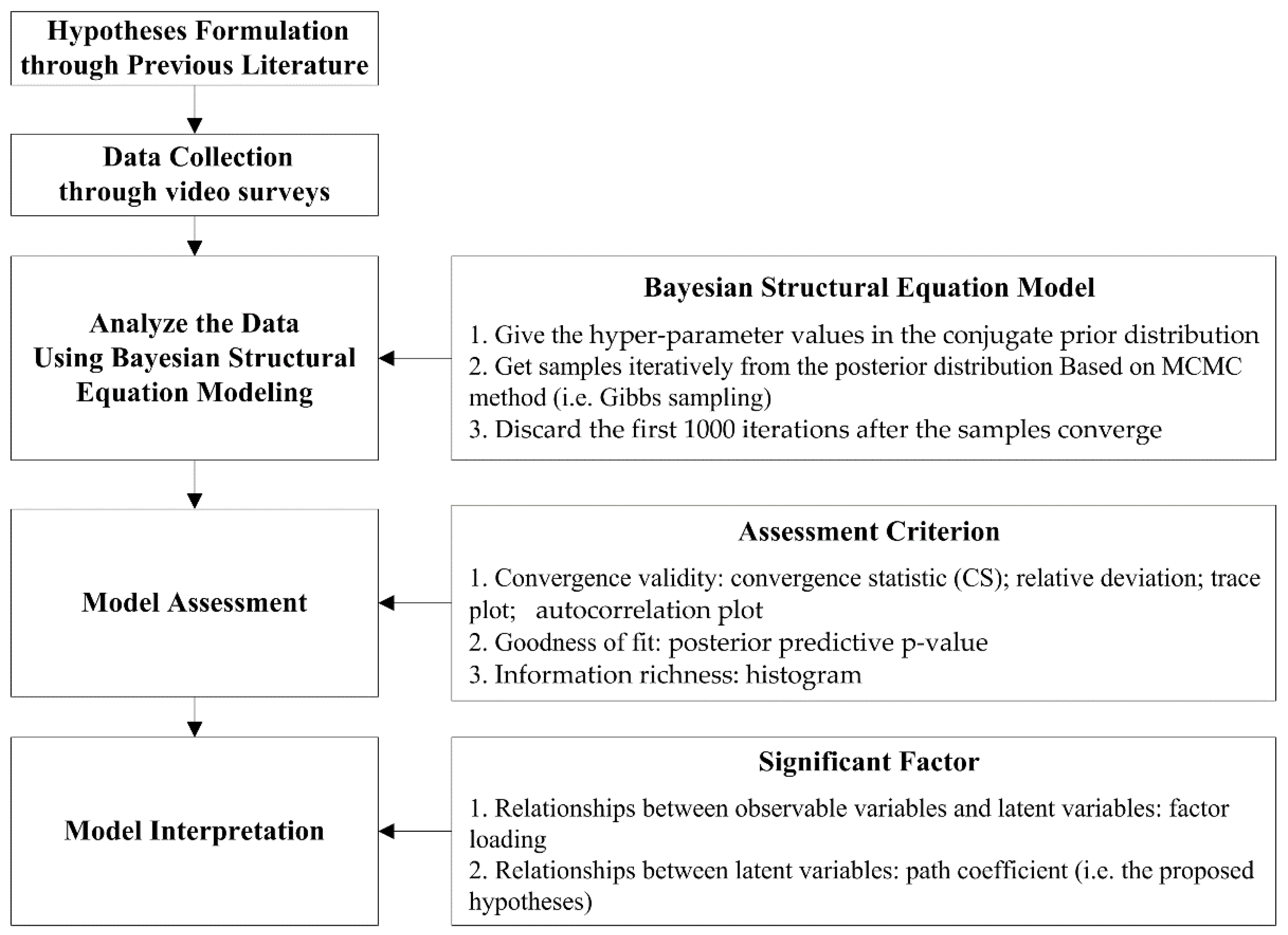
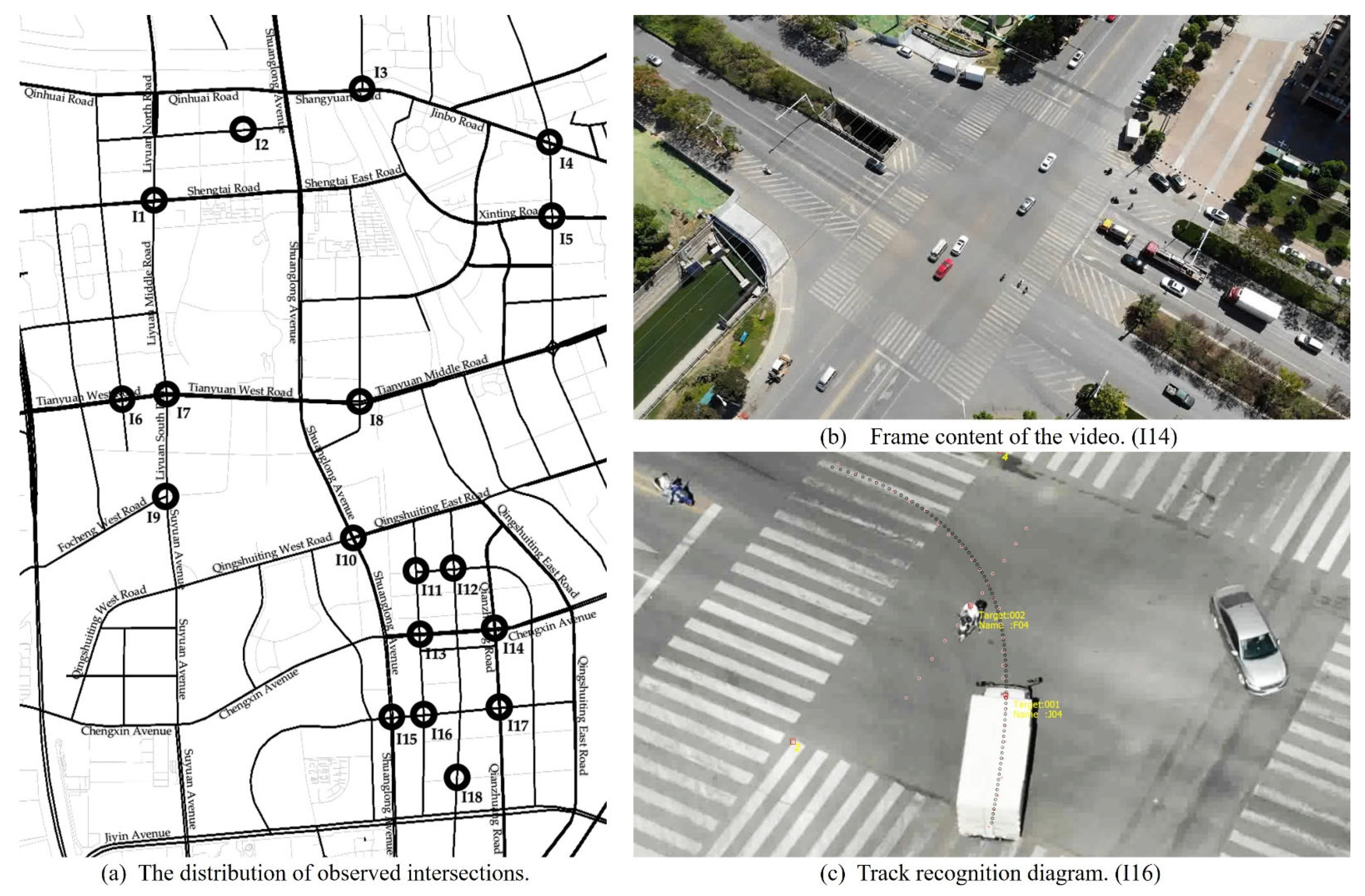
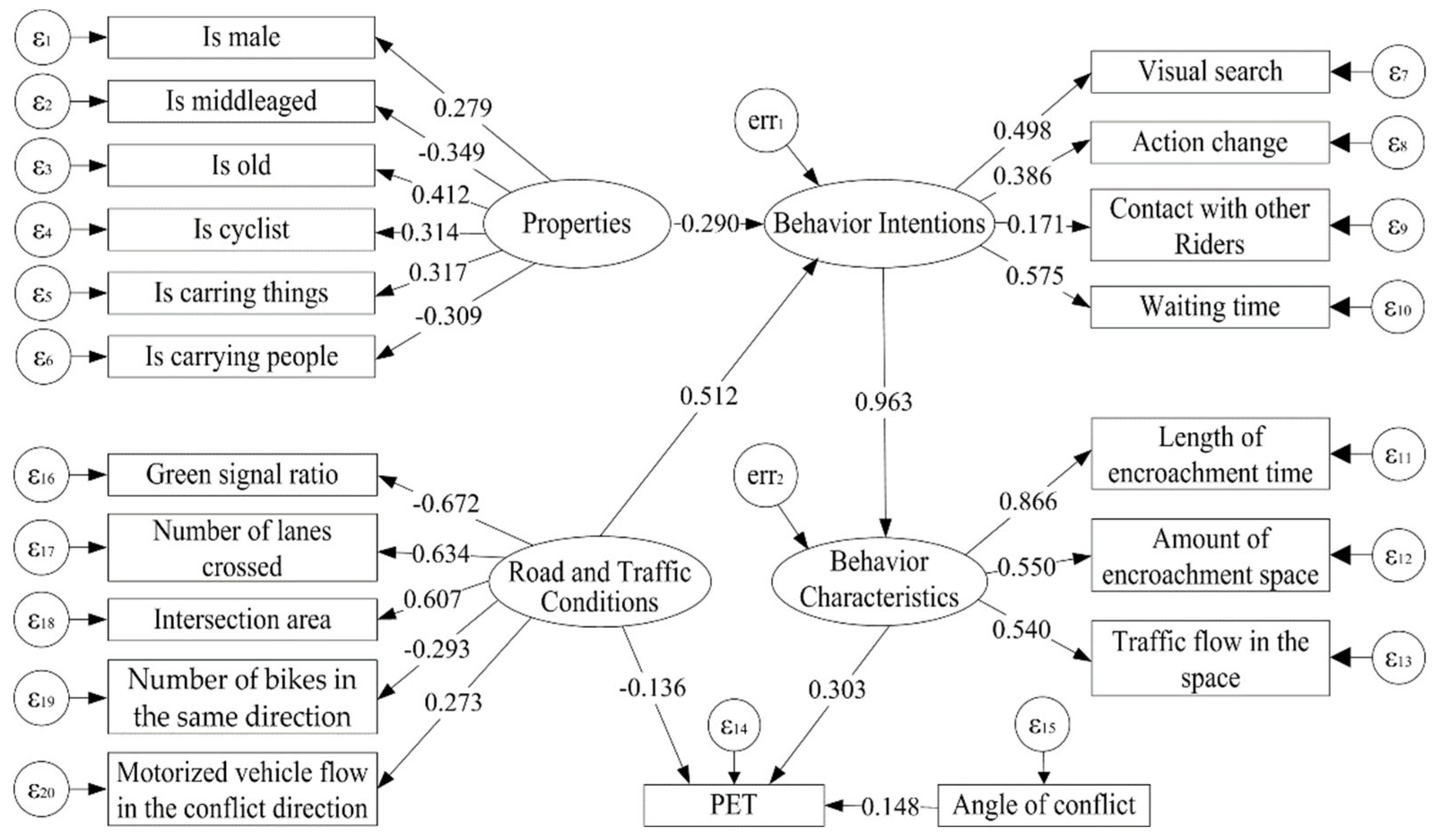
Extensive effort has been devoted to examining the causal relationship between contributing factors and injury severities. Given the important role of riders’ behaviors in traffic conflicts, this paper aims to analyze the causal effects of traffic conflicts resulting from riders’ behaviors at intersections. The authors collected video data on 152 traffic conflicts caused by riders’ dangerous behaviors in Jiangning District, China. This paper proposes a Bayesian-structural equation modeling (BSEM) approach. Based on the obtained BSEM path coefficient diagram, the factor loadings and path coefficients are analyzed to unveil the potential influence of factors, including personal features, dangerous behavior tendency, temporal and spatial characteristics of dangerous behavior, and the external environment. The results show that compared to human factors, environmental factors have a less direct impact on the severity of traffic conflicts; instead, they have an indirect positive impact on traffic conflicts by affecting behaviors. That is, if riders judge that road conditions are not suitable to conduct dangerous behaviors, they become more cautious in view of current road conditions and time revenue. Furthermore, dangerous cycling behaviors that continue to encroach on the time and space of motorized vehicles are prone to be more dangerous. The dangerous behaviors that continuously encroach on the time and space of motor vehicles (e.g., disobeying traffic signals and riding in a motorway) are significant predictors of serious conflicts. Considering the heterogeneity of riding behavior, these findings could be applied to develop effective education and intervention programs for preventing riders’ high-risk behaviors and improving the traffic environment.
Keywords: urban transport; safety concerns of (e-) bikes; Bayesian structural equation modeling; cycling behaviors urban transport; safety concerns of (e-) bikes; Bayesian structural equation modeling; cycling behaviors