Next Article in Journal
Adolescents’ Emotions in Spanish Education: Development and Validation of the Social and Emotional Learning Scale
Next Article in Special Issue
The Potential of GIS Tools for Diagnosing the SFS of Multi-Family Housing towards Friendly Cities—A Case Study of the EU Member State of Poland
Previous Article in Journal
Impact of Self-Perceived Employability on Sustainable Career Development in Times of COVID-19: Two Mediating Paths
Previous Article in Special Issue
Performance Evaluation of Hospital Site Suitability Using Multilayer Perceptron (MLP) and Analytical Hierarchy Process (AHP) Models in Malacca, Malaysia
 
 
Correction published on 18 July 2022, see Sustainability 2022, 14(14), 8750.
Article

Estimating the Total Volume of Running Water Bodies Using Geographic Information System (GIS): A Case Study of Peshawar Basin (Pakistan)


1
Department of Earth and Environmental Sciences, Bahria University, Islamabad 44000, Pakistan
2
Department of Mechanical Engineering, King Fahd University of Petroleum and Minerals, Dhahran 31261, Saudi Arabia
3
Department of Geophysics, Bacha Khan University, Charsadda 24631, Pakistan
4
Department of Geosciences, King Fahd University of Petroleum and Minerals, Dhahran 31261, Saudi Arabia
*
Author to whom correspondence should be addressed.
Sustainability 2022, 14(7), 3754; https://doi.org/10.3390/su14073754
Submission received: 5 January 2022 / Revised: 16 March 2022 / Accepted: 17 March 2022 / Published: 22 March 2022 / Corrected: 18 July 2022

Abstract

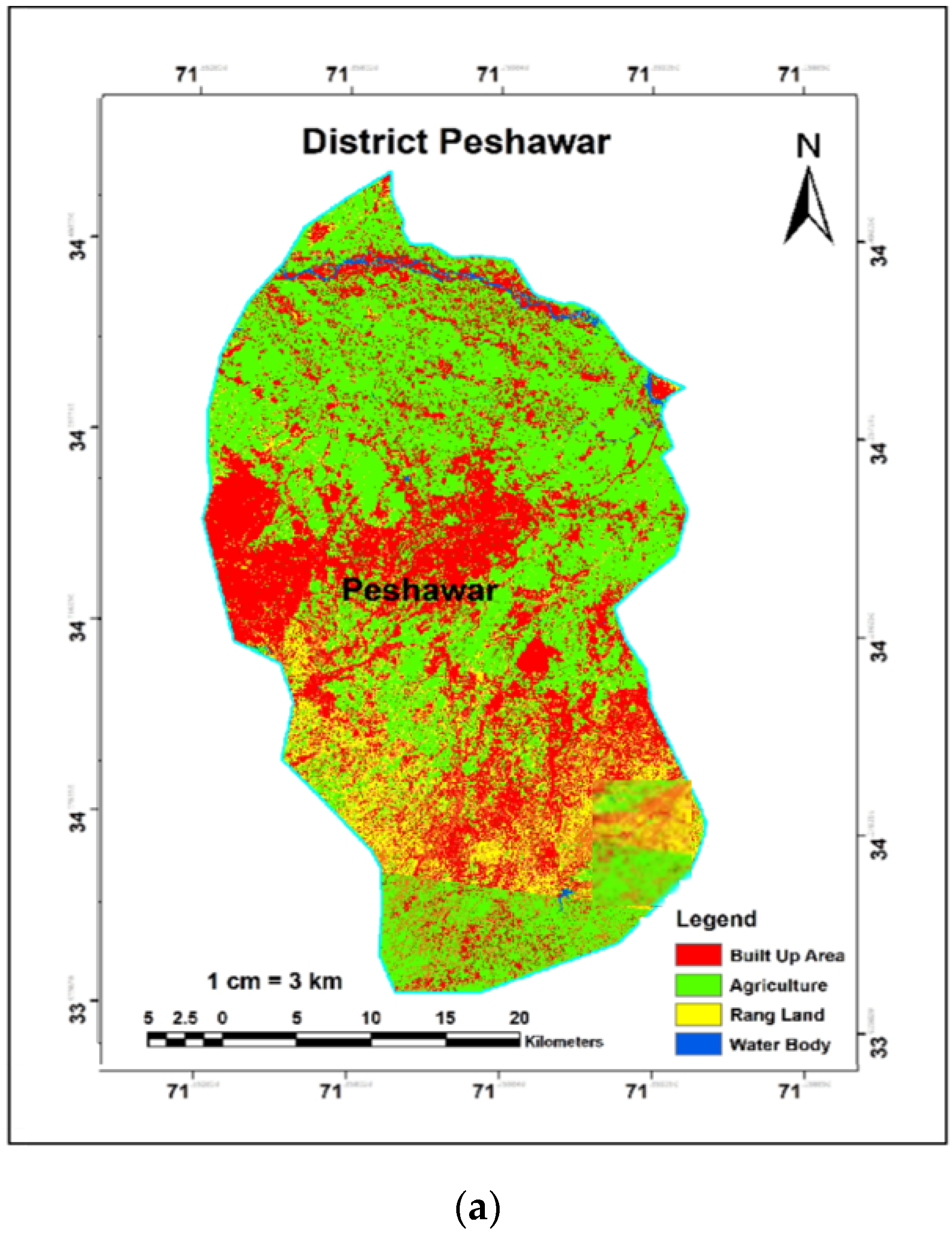
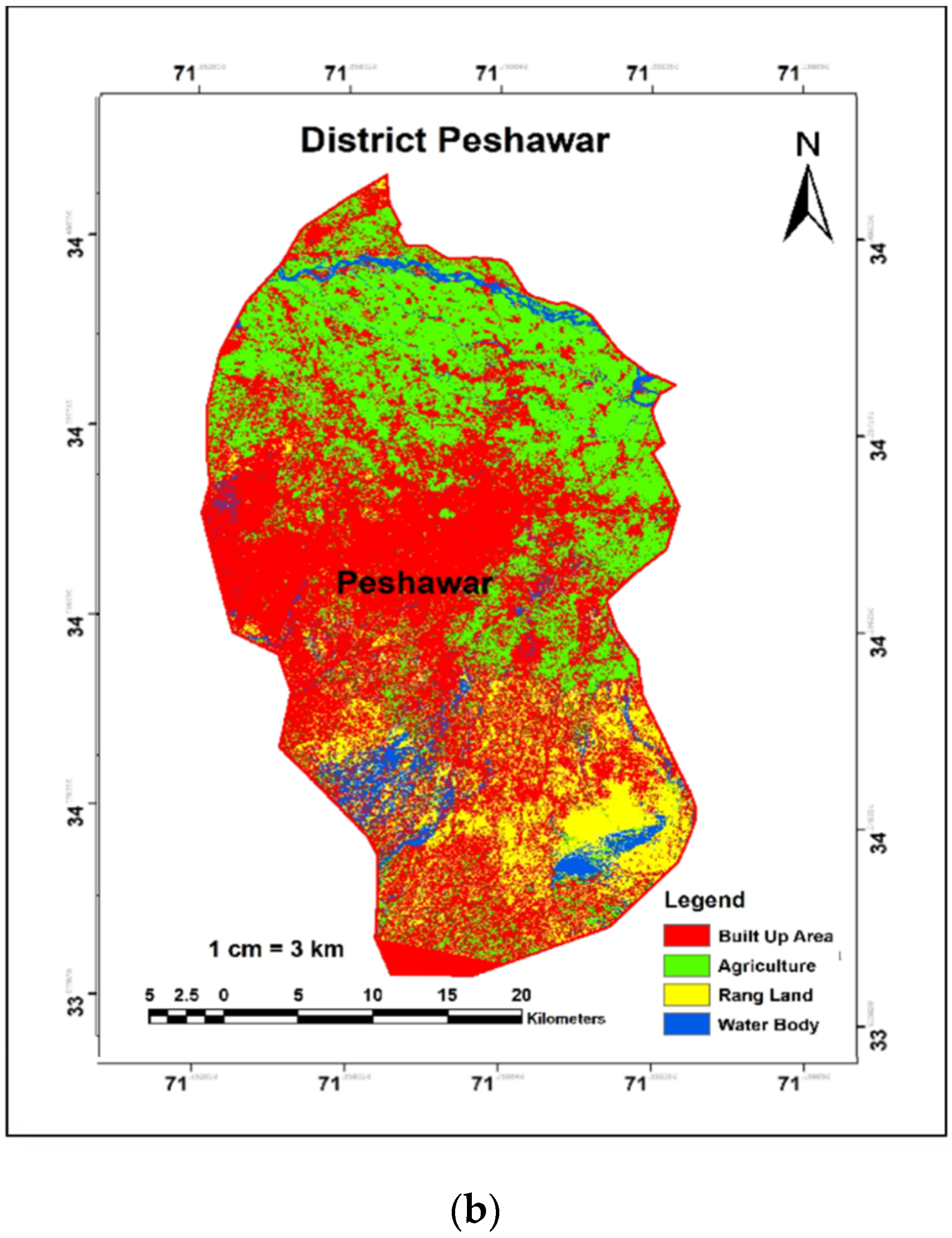
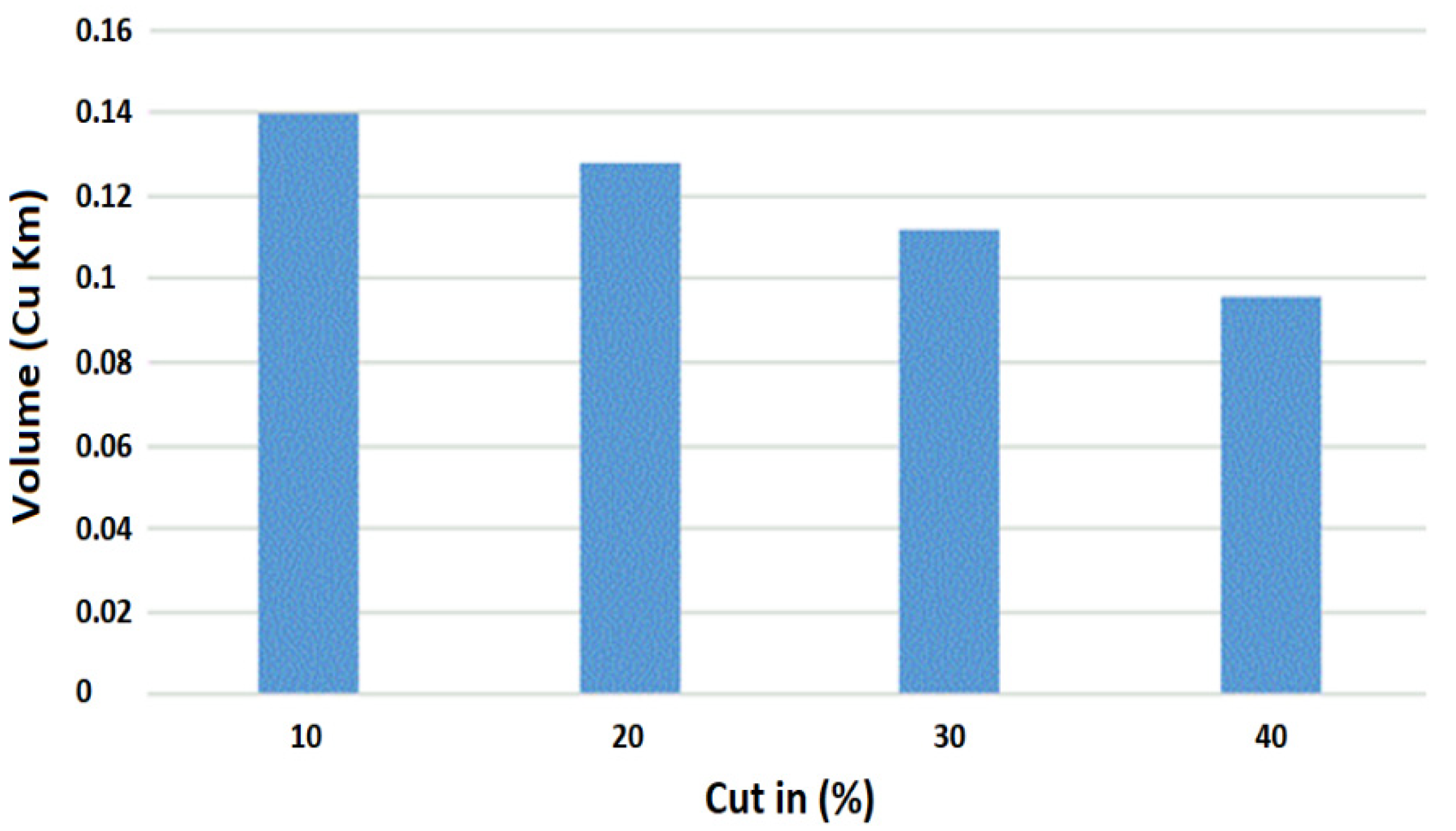
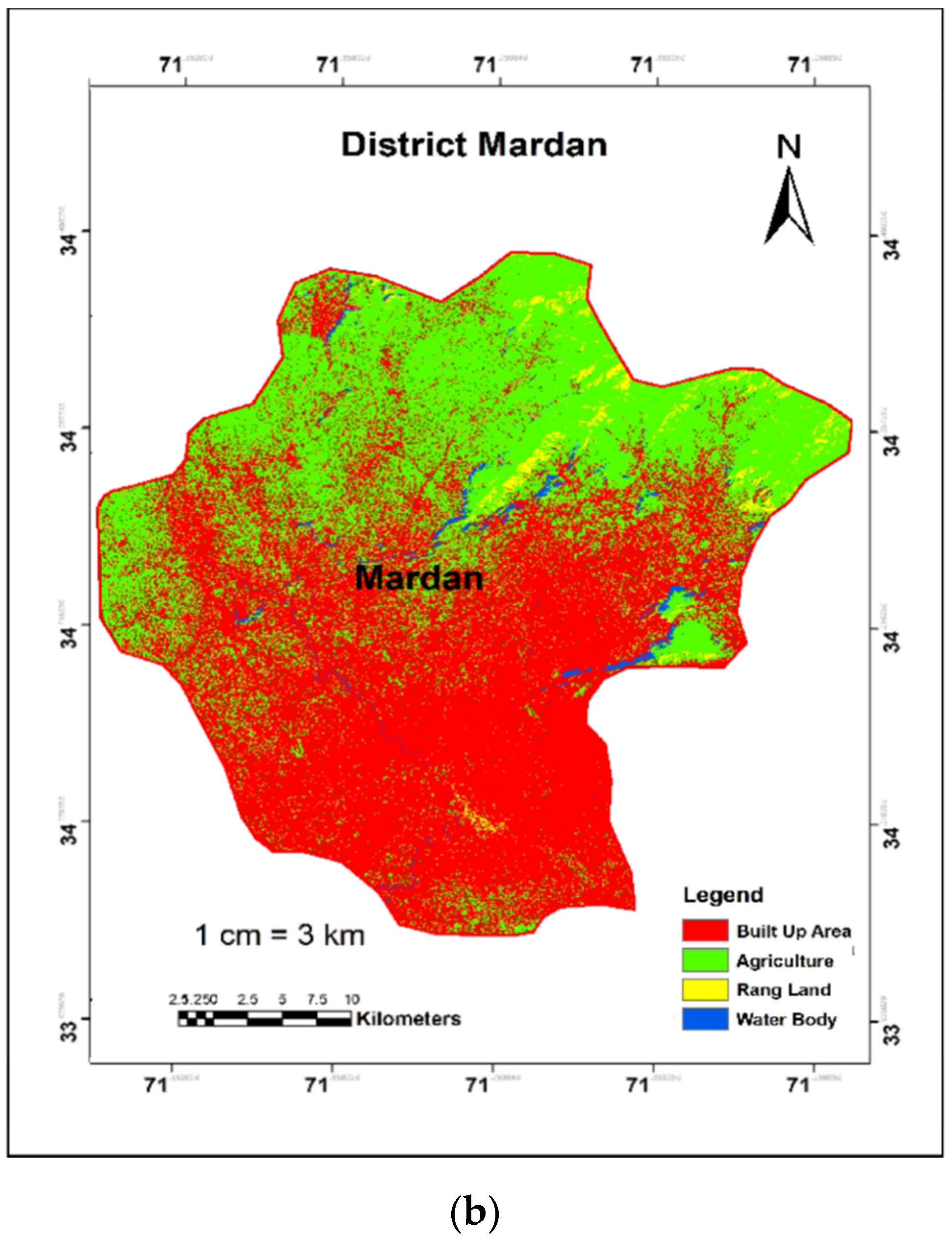
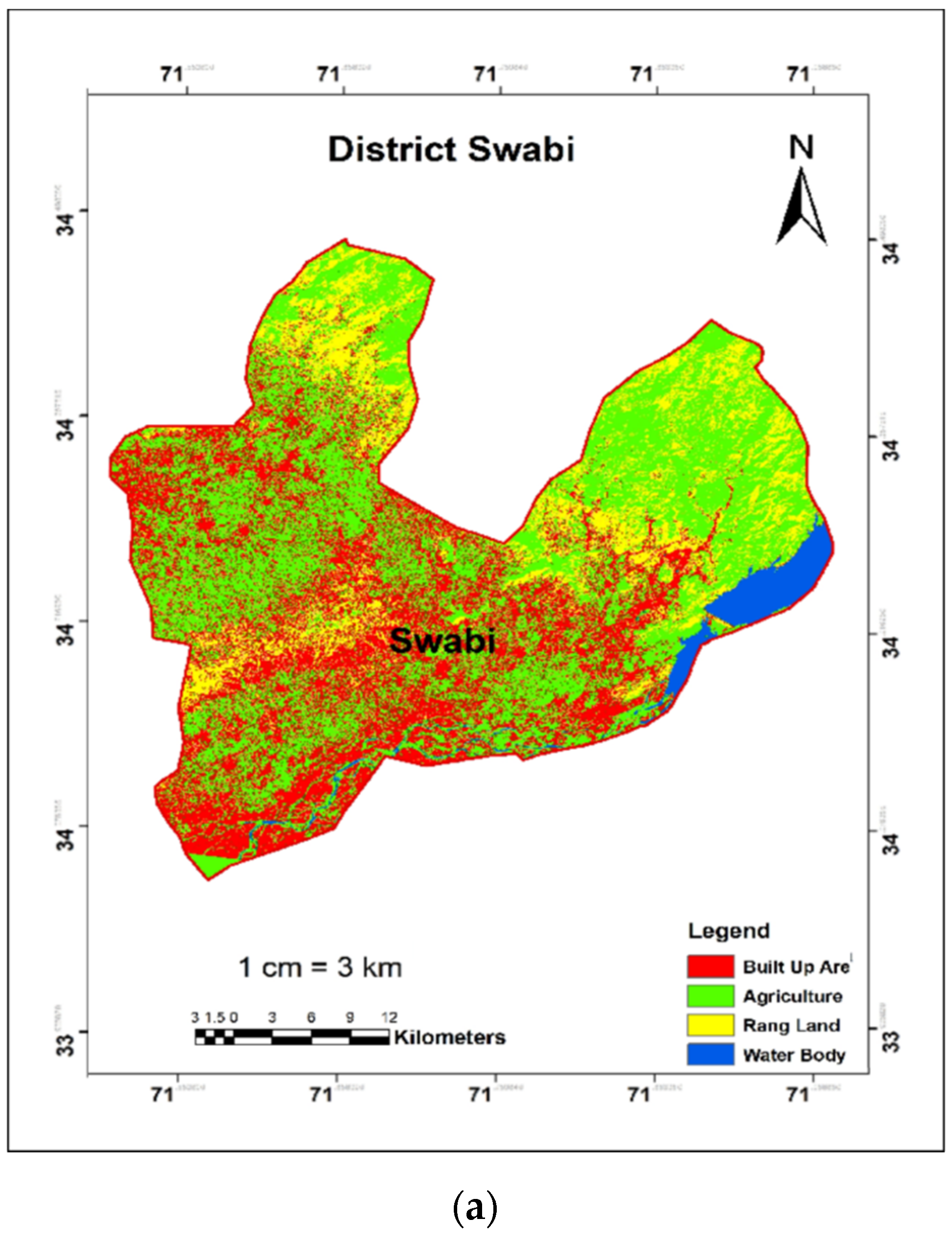
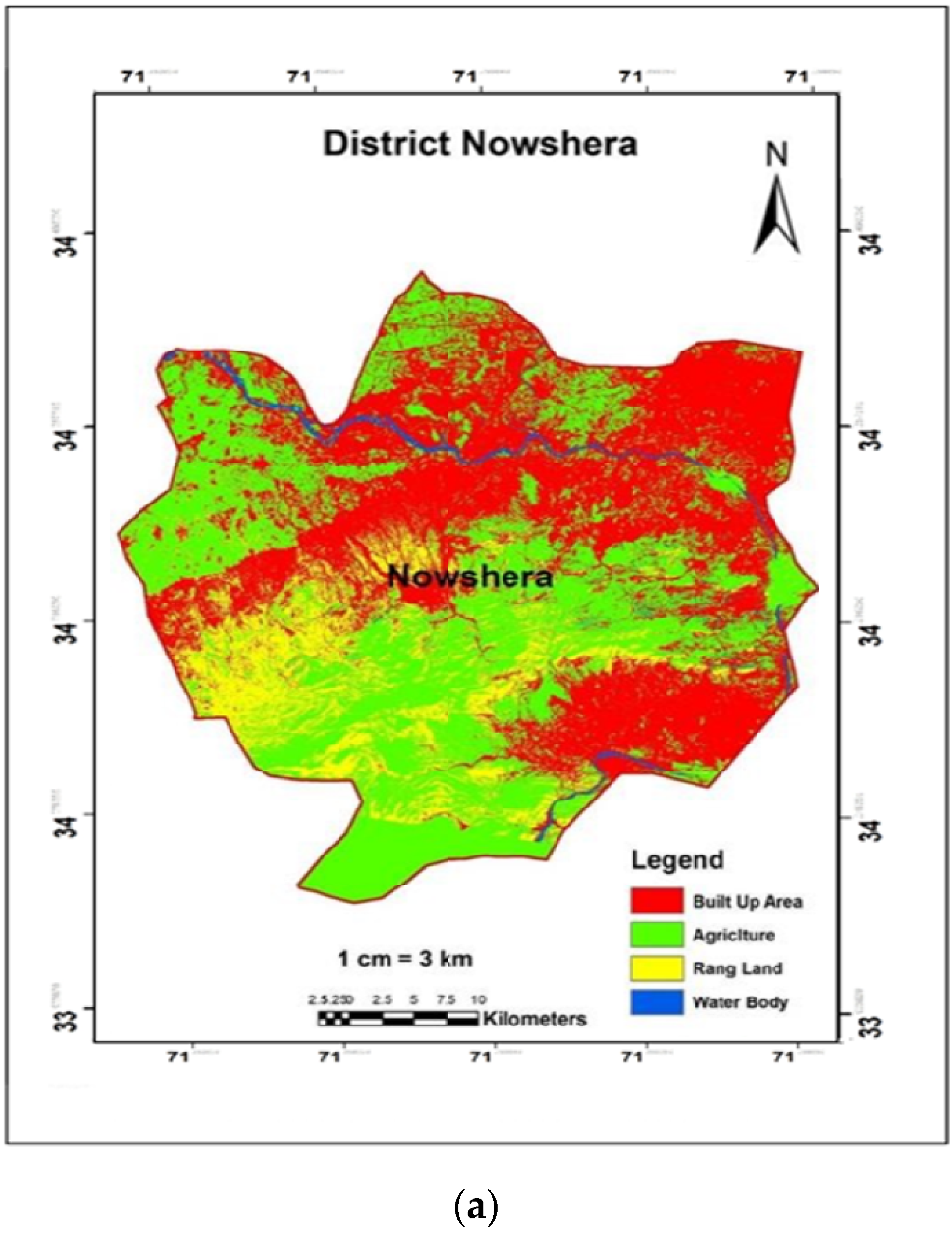
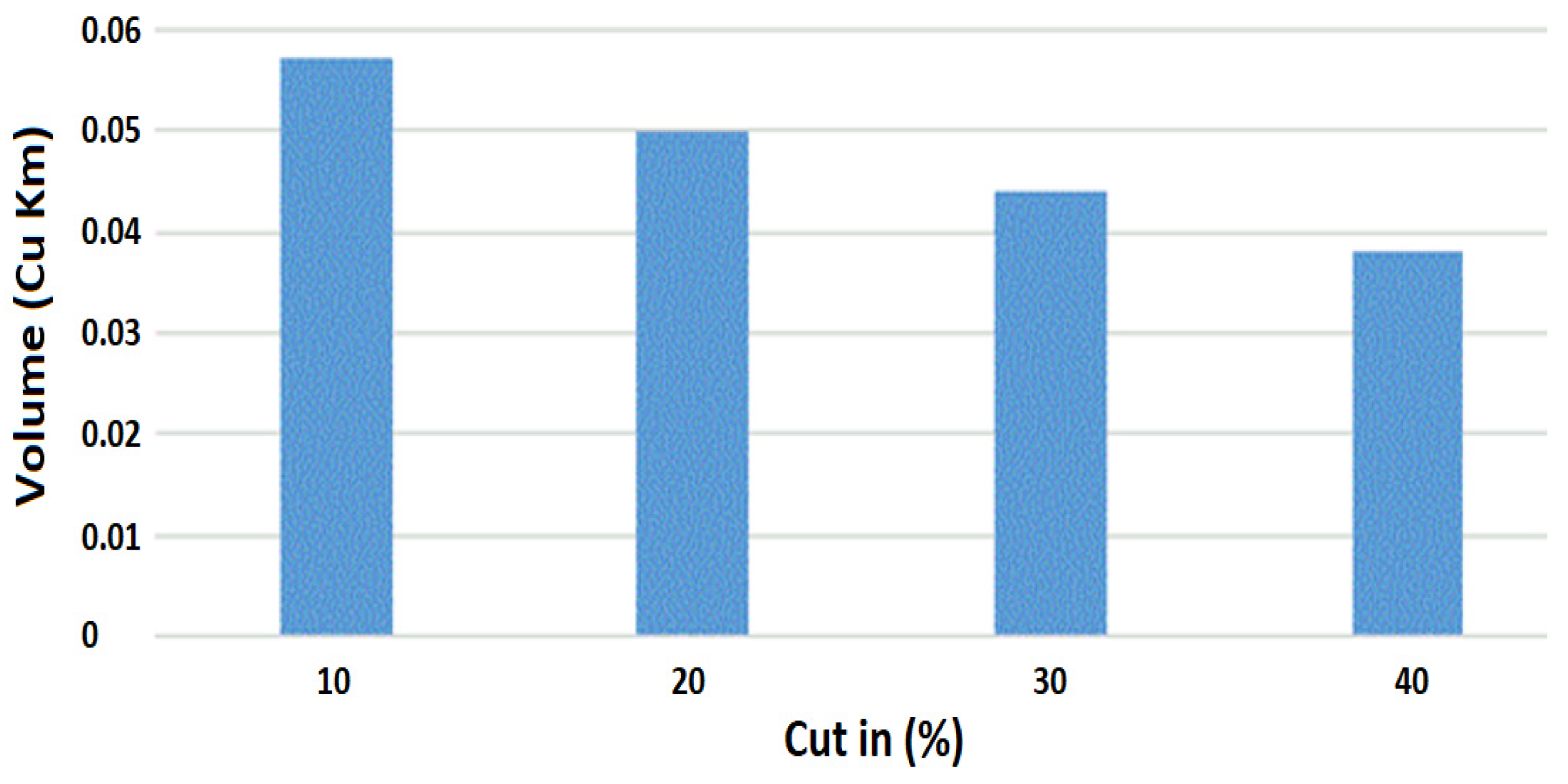
The main objective of this study is to estimate the changes in land use and land cover in the Peshawar basin, Pakistan, from 2000 to 2020. This will greatly improve the selection of areas designated as the agricultural, industrial, and/or urban sectors of the region and will help in overcoming future problems. With the help of an advanced geographic information system (GIS), land-use and topographic changes were identified. Based on data of the 20 years from 2000 to 2020, the total runoff volume in the Peshawar basin from 2000 to 2010 was calculated to be 13.9 km3 and from 2010 to 2020 was 19.4 km3. This volume estimation will assist in quantifying the total infiltration rate. We inferred that the built-up area increased the most from 2010 to 2020 as compared to other classes. Results showed that from 2000 to 2020, there was a significant increase in urbanization and a significant decrease in vegetation. This study will help the farmer community and environmentalists to manage range land, agricultural land, populations, and water bodies.
Keywords: geographic information system (GIS); Peshawar basin; land use and land cover; running water estimation geographic information system (GIS); Peshawar basin; land use and land cover; running water estimation