Article

Machine Learning for the Estimation of Diameter Increment in Mixed and Uneven-Aged Forests
by
Abotaleb Salehnasab
1,
Mahmoud Bayat
2,*,
Manouchehr Namiranian
1,
Bagher Khaleghi
1,
Mahmoud Omid
3,
Hafiz Umair Masood Awan
4,
Nadir Al-Ansari
5,* and
Abolfazl Jaafari
2
1
Department of Forestry, Faculty of Natural Resources, University of Tehran, Karaj 7787131587, Iran
2
Research Institute of Forests and Rangelands, Agricultural Research, Education and Extension Organization (AREEO), Tehran 1496813111, Iran
3
Department of Agricultural Engineering and Technology, Faculty of Agriculture, University of Tehran, Karaj 7787131587, Iran
4
Department of Forest Sciences, Faculty of Agriculture and Forestry, University of Helsinki, Latokartanonkaari 7, 00014 Helsinki, Finland
5
Civil, Environmental and Natural Resources Engineering, Lulea University of Technology, 97187 Lulea, Sweden
*
Authors to whom correspondence should be addressed.
Sustainability 2022, 14(6), 3386; https://doi.org/10.3390/su14063386
Submission received: 14 January 2022 / Revised: 4 March 2022 / Accepted: 9 March 2022 / Published: 14 March 2022
(This article belongs to the Special Issue Sustainable Forest Management and Natural Hazards Prevention)

Abstract

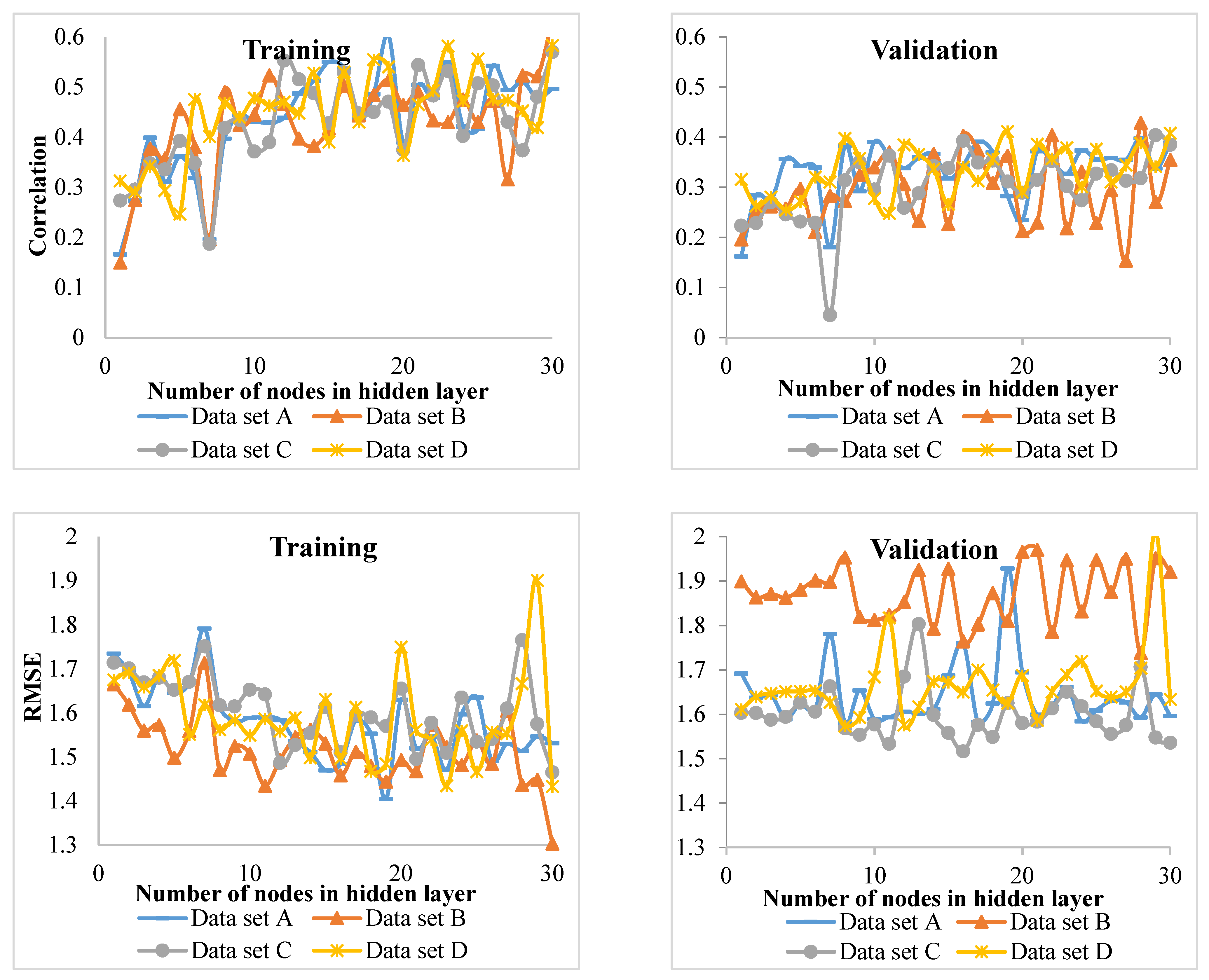
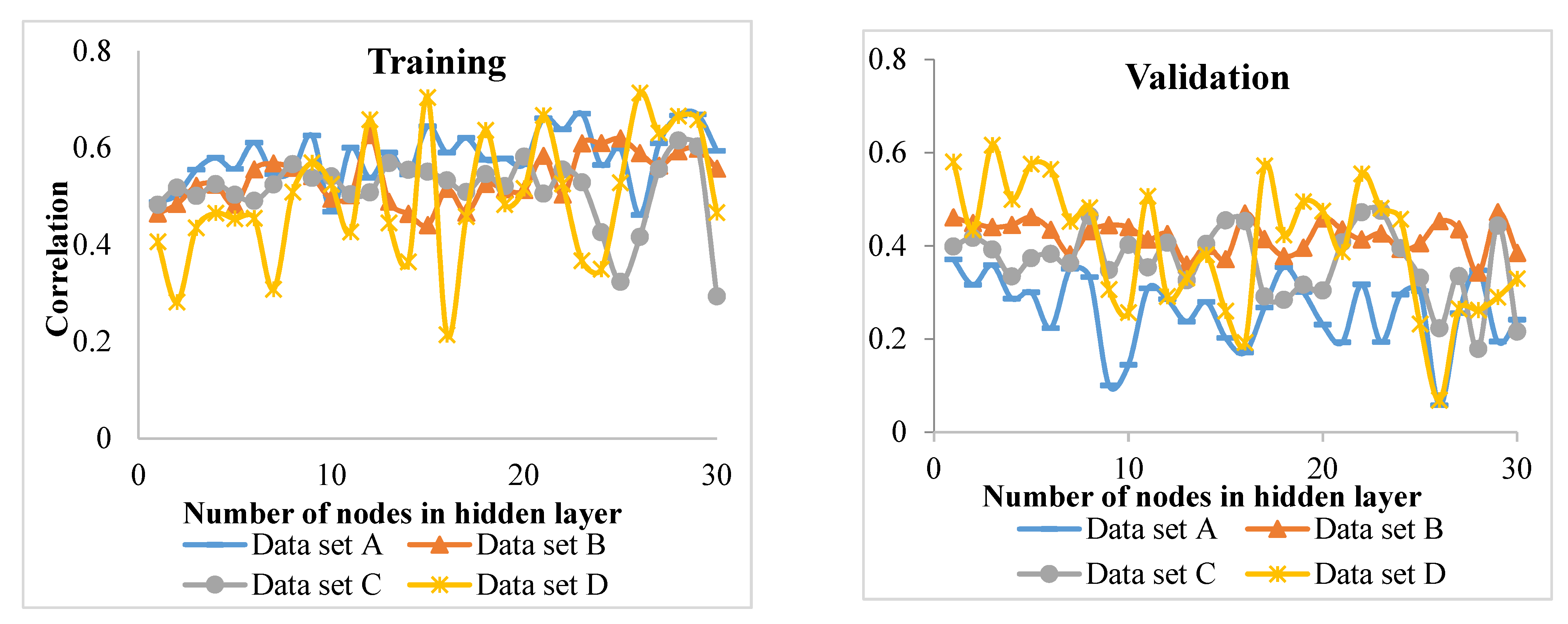
Estimating the diameter increment of forests is one of the most important relationships in forest management and planning. The aim of this study was to provide insight into the application of two machine learning methods, i.e., the multilayer perceptron artificial neural network (MLP) and adaptive neuro-fuzzy inference system (ANFIS), for developing diameter increment models for the Hyrcanian forests. For this purpose, the diameters at breast height (DBH) of seven tree species were recorded during two inventory periods. The trees were divided into four broad species groups, including beech (Fagus orientalis), chestnut-leaved oak (Quercus castaneifolia), hornbeam (Carpinus betulus), and other species. For each group, a separate model was developed. The k-fold strategy was used to evaluate these models. The Pearson correlation coefficient (r), coefficient of determination (R2), root mean square error (RMSE), Akaike information criterion (AIC), and Bayesian information criterion (BIC) were utilized to evaluate the models. RMSE and R2 of the MLP and ANFIS models were estimated for the four groups of beech ((1.61 and 0.23) and (1.57 and 0.26)), hornbeam ((1.42 and 0.13) and (1.49 and 0.10)), chestnut-leaved oak ((1.55 and 0.28) and (1.47 and 0.39)), and other species ((1.44 and 0.32) and (1.5 and 0.24)), respectively. Despite the low coefficient of determination, the correlation test in both techniques was significant at a 0.01 level for all four groups. In this study, we also determined optimal network parameters such as number of nodes of one or multiple hidden layers and the type of membership functions for modeling the diameter increment in the Hyrcanian forests. Comparison of the results of the two techniques showed that for the groups of beech and chestnut-leaved oak, the ANFIS technique performed better and that the modeling techniques have a deep relationship with the nature of the tree species.
Keywords: ANFIS; beech; chestnut-leaved oak; Hyrcanian forests; MLP ANFIS; beech; chestnut-leaved oak; Hyrcanian forests; MLP