Article

Experiencing a Food Production Site Using Wearable Devices: The Indirect Impact of Immersion and Presence in VR Tours

by
Francesca De Canio
1,*,
Elisa Martinelli
1,
Margherita Peruzzini
2 and
Sara Cavallaro
2
1
Department of Economics Marco Biagi, University of Modena and Reggio Emilia, 41121 Modena, Italy
2
Department of Engineering Enzo Ferrari, University of Modena and Reggio Emilia, 41123 Modena, Italy
*
Author to whom correspondence should be addressed.
Sustainability 2022, 14(5), 3064; https://doi.org/10.3390/su14053064
Submission received: 24 January 2022 / Revised: 3 March 2022 / Accepted: 4 March 2022 / Published: 6 March 2022

Abstract

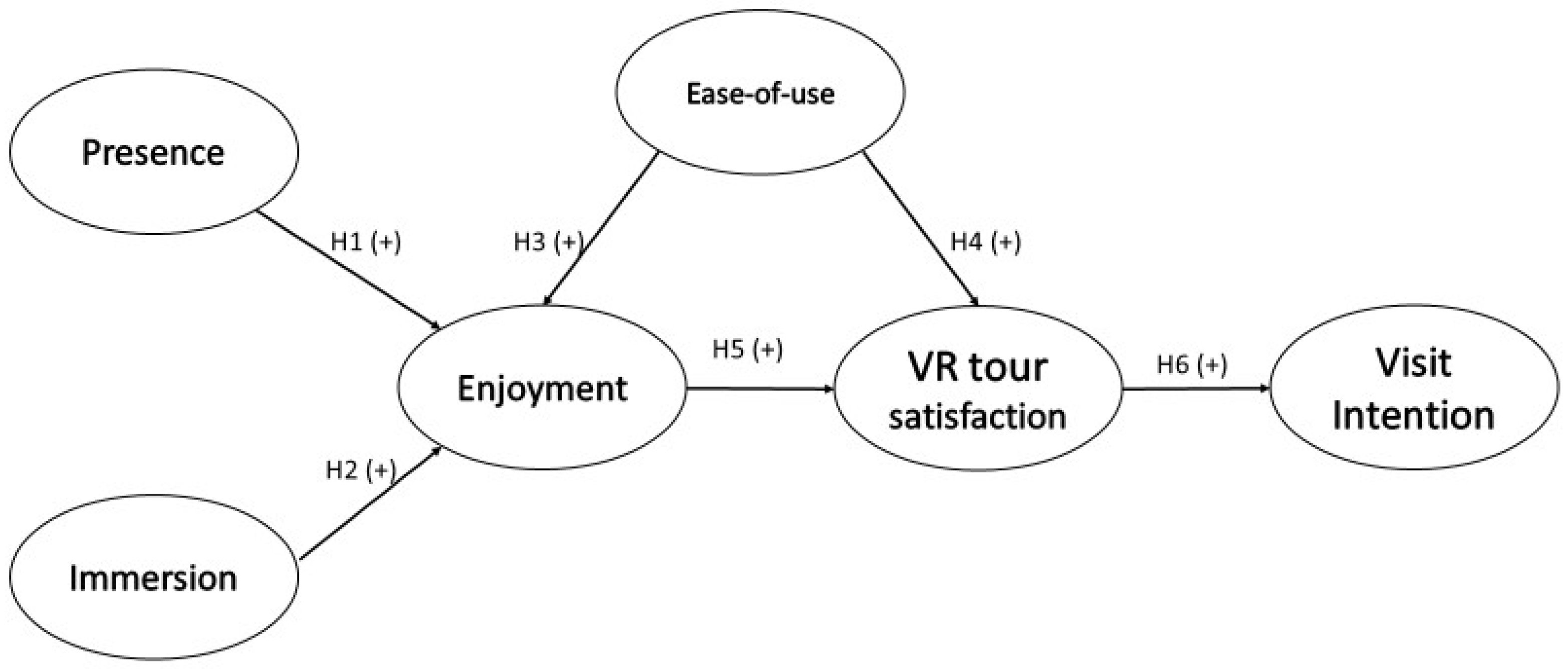
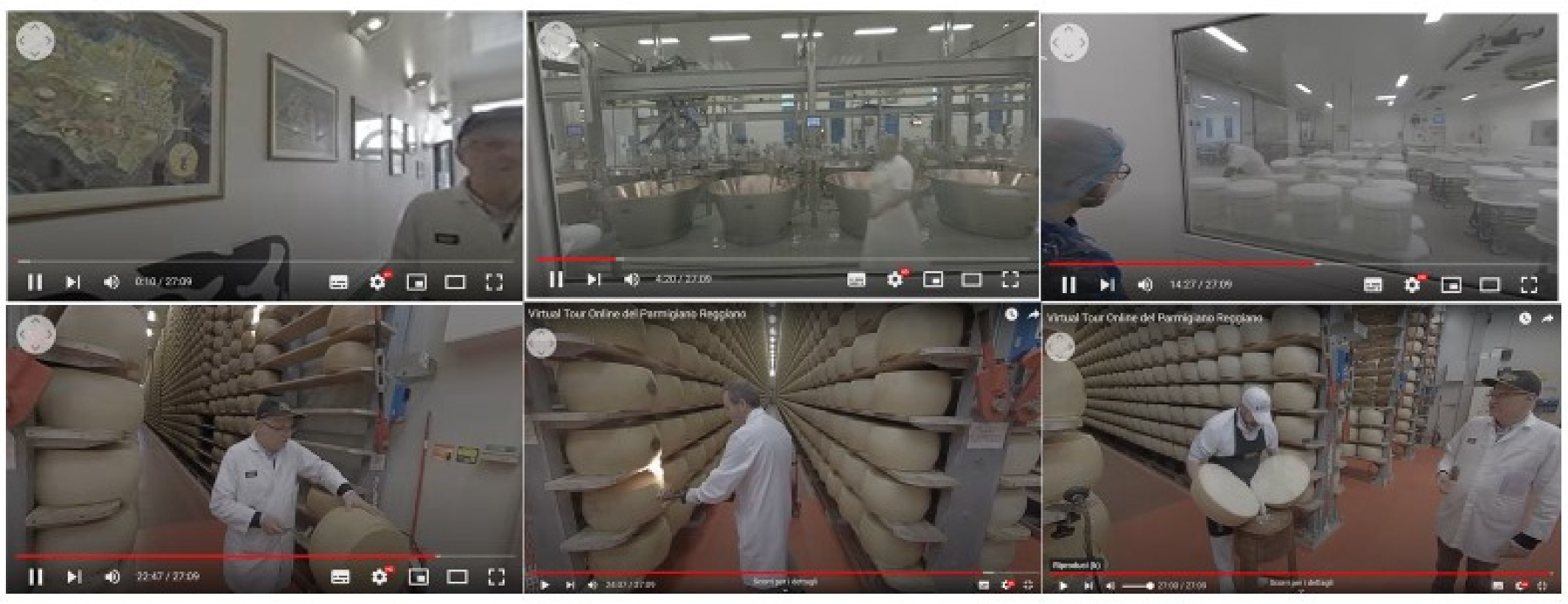
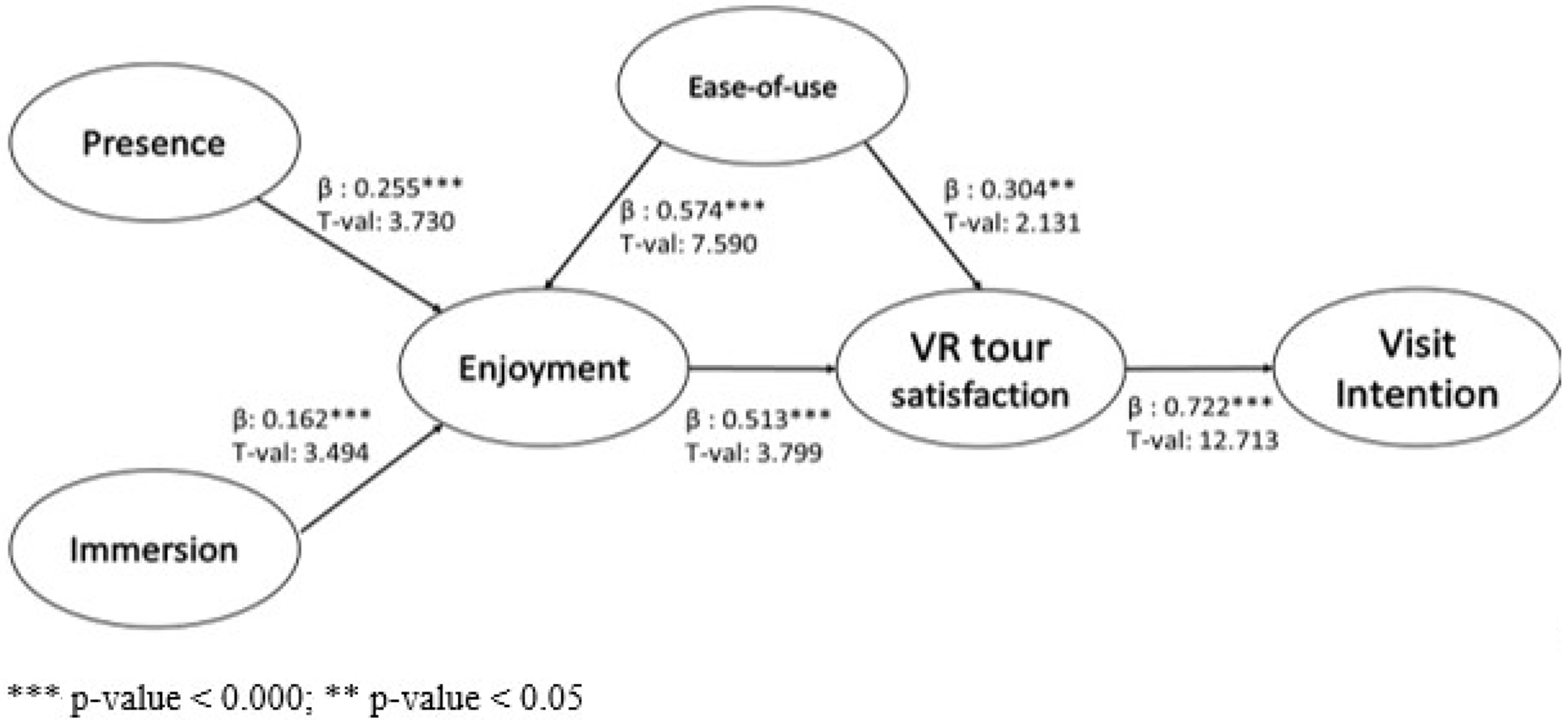
Virtual reality (VR) is among the main technologies revolutionizing numerous sectors, including tourism. In the latter context, virtual tours (VTs) are finding increasing application. Providing an immersive and realistic human–machine interaction, VR tours can bring visitors to virtually experience destination areas. The proposed research presents a theoretical and empirical investigation of the role played by some technical VR features (i.e., presence, immersion, ease-of-use) on VR visitors’ enjoyment, satisfaction, and, accordingly, on the physical visit intention of the production site and neighboring areas. After having experienced a 360-degree VR tour of a food production site, created specifically for this study, 140 visitors were surveyed online. Results—emerging from a PLS structural equation model—show that immersion and presence both directly impact the enjoyment and indirectly the user’s VR tour satisfaction and visit intention. Further, if the VR tour is perceived as easy to use, it influences visitors’ satisfaction and physical visit intention. This study contributes to the novel VR literature, applied in the tourism sector, evidencing how immersive and enjoyable scenarios, experienced via widespread devices such as smartphones, may impact tourists’ choices. In food tourism, VR technologies can be fundamental in attracting new visitors to the production sites and neighboring areas.
Keywords: virtual reality; virtual tours; human–machine interaction; immersion; presence; enjoyment; ease-of-use; VR tour satisfaction; tourism; intention to visit a food production site virtual reality; virtual tours; human–machine interaction; immersion; presence; enjoyment; ease-of-use; VR tour satisfaction; tourism; intention to visit a food production site