Article

Sustainable Diet Optimization Targeting Dietary Water Footprint Reduction—A Country-Specific Study

1
Department of Agricultural Business and Economics, Institute of Agricultural and Food Economics, Hungarian University of Agriculture and Life Sciences, 1118 Budapest, Hungary
2
Faculty of Education and Psychology, ELTE Eötvös Loránd University, 1075 Budapest, Hungary
3
Department of Science Policy and Scientometrics, Library and Information Centre of the Hungarian Academy of Sciences, 1051 Budapest, Hungary
4
MS-Nutrition, 13005 Marseille, France
5
Division of Nutritional Epidemiology, National Institute of Pharmacy and Nutrition, 1051 Budapest, Hungary
*
Author to whom correspondence should be addressed.
Sustainability 2022, 14(4), 2309; https://doi.org/10.3390/su14042309
Submission received: 6 January 2022 / Revised: 13 February 2022 / Accepted: 15 February 2022 / Published: 17 February 2022

Abstract

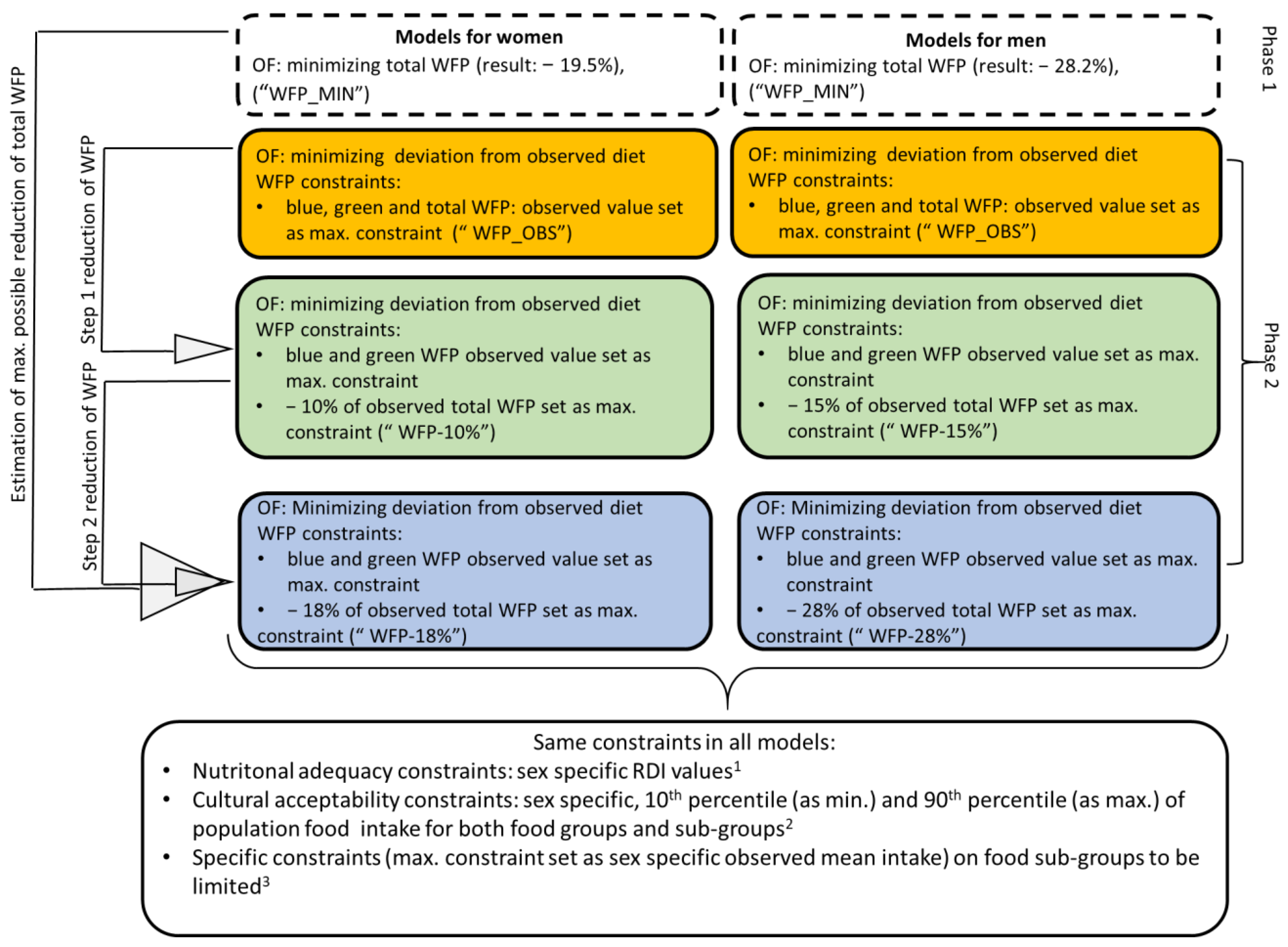
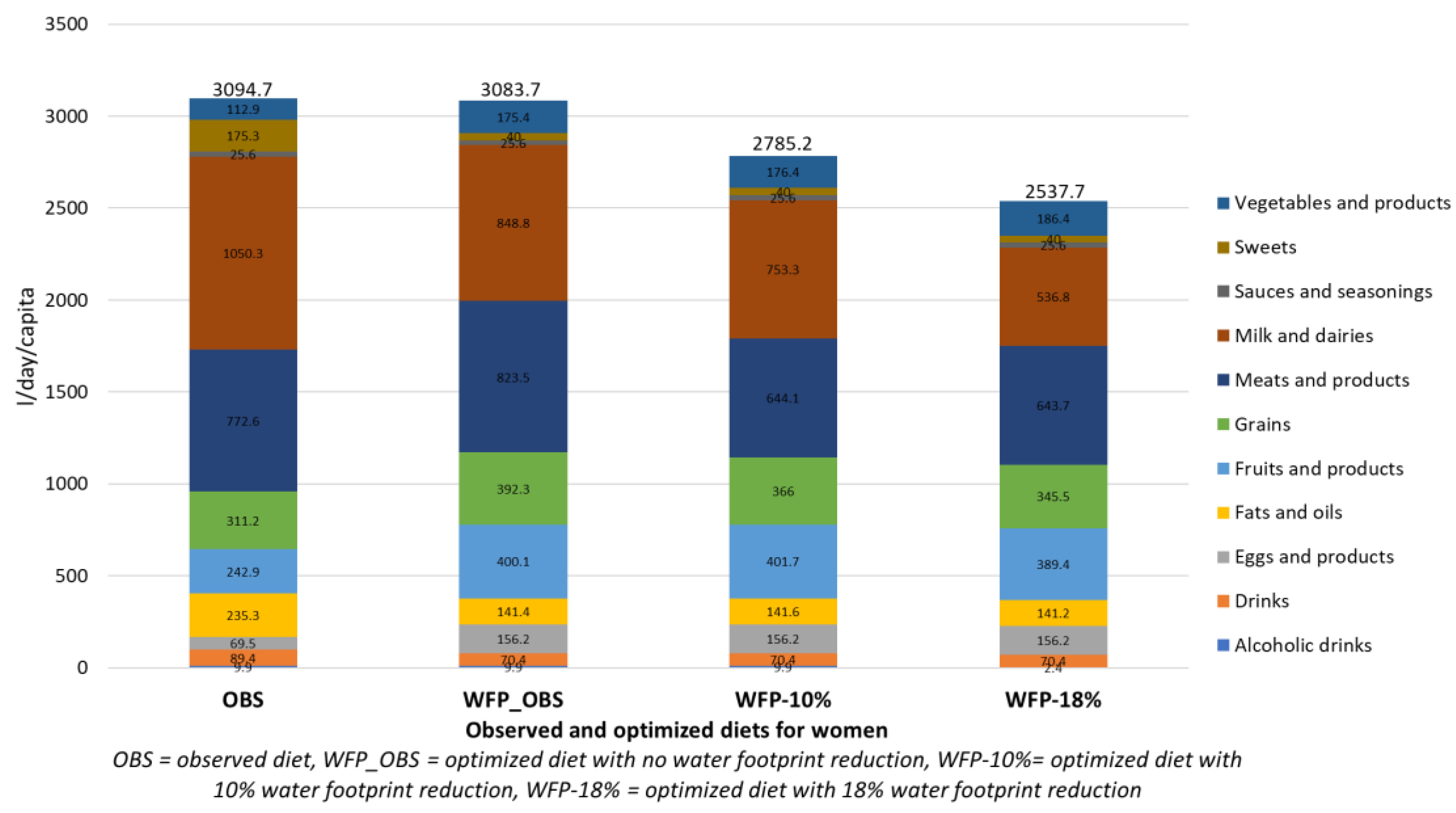
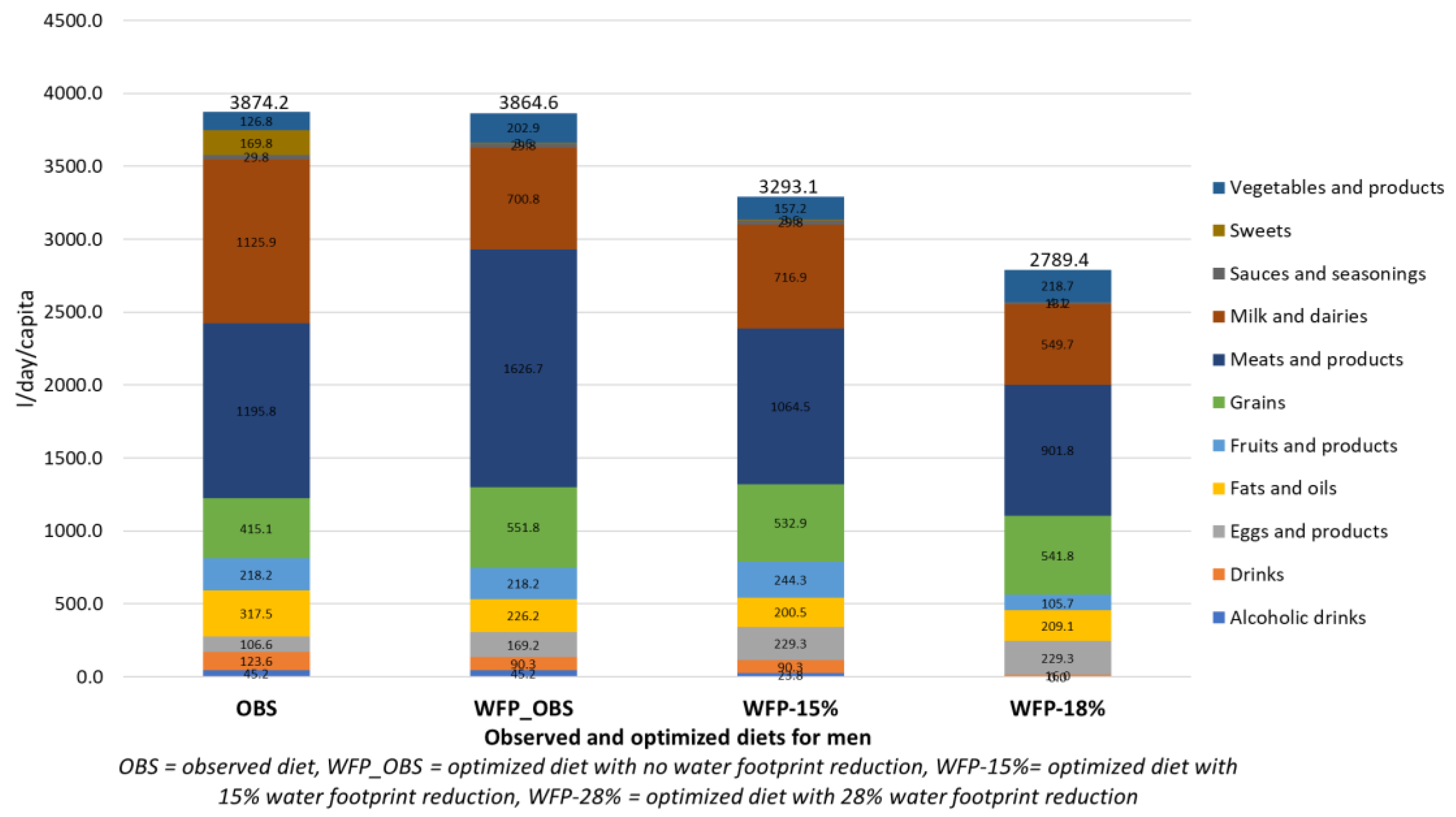
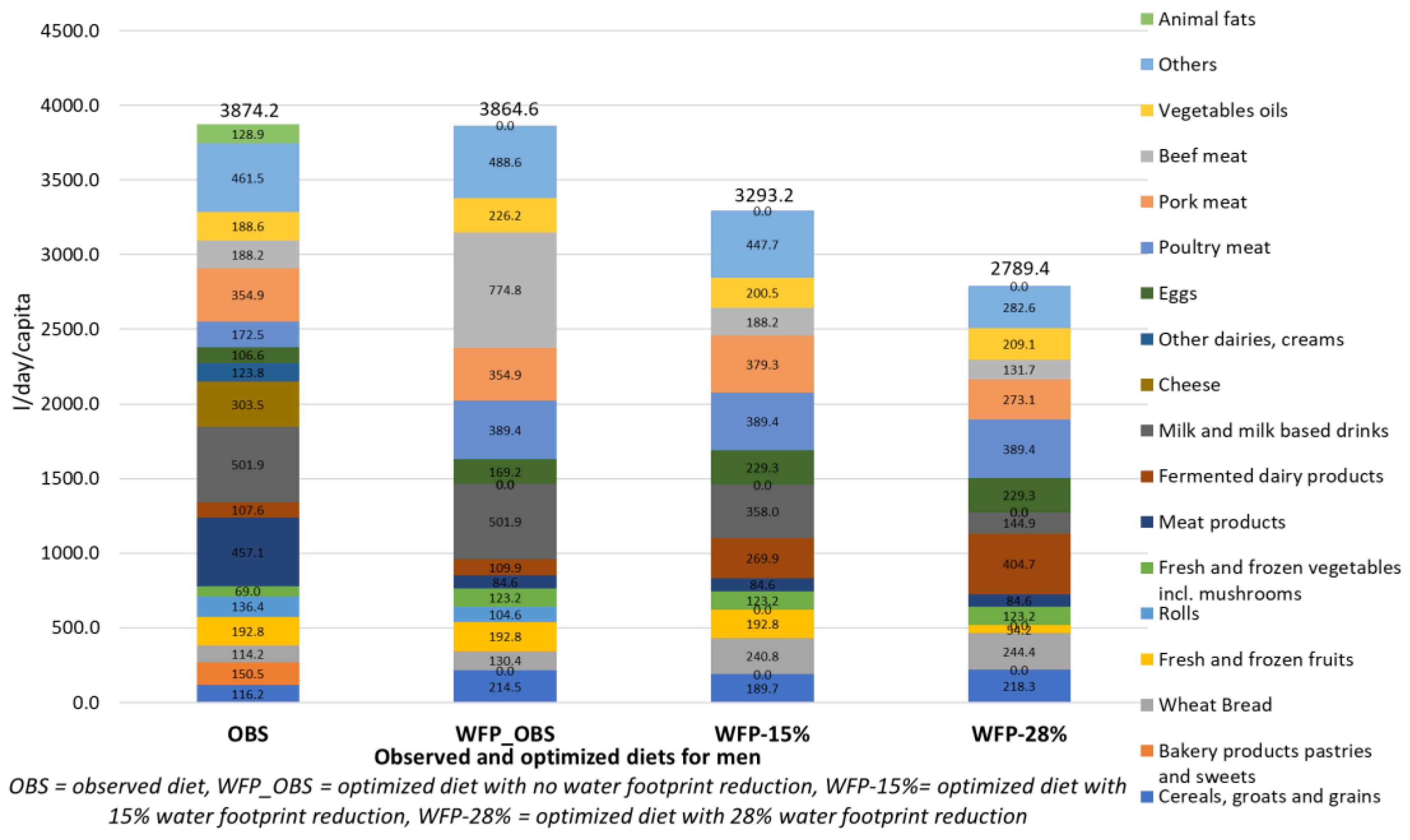
Food production creates 70% of the total anthropogenic water footprint, and it is the main cause of water pollution. Thus, more sustainable diets could contribute to the achievement of the Sustainable Development Goals. A linear programming-based stepwise optimization was designed to create dietary water footprint-reduced, culturally acceptable, and healthier diets in the case of Hungary based on a representative dietary survey. Optimization resulted in a considerable total dietary water footprint reduction (women: 18%; men: 28%) with a moderate dietary shift (~32%). Milk and dairies (observed: ~31.5%, optimized: ~20.5%) and meats and meat products (observed: ~28.0%, optimized: 28.9%) contributed the most to the dietary water footprint. In the water footprint–healthiness synergy, the vegetables, eggs, poultries, and fermented dairies were the most beneficial, increasing in amount, while fatty dairies, foods high in added sugar, and meat products were the most non-beneficial food sub-groups, decreasing in amount in the optimized diets. The problematic nutrients to fulfill in the optimized diets were energy, dietary fibers, sodium, vitamin D, zinc, vitamin B12, calcium, iron, and potassium at the maximum water footprint reduction. The study provides supporting evidence about the dietary water footprint–healthiness synergy for the further improvement of the national food-based dietary guideline.
Keywords: cultural acceptability; diet optimization; linear programming; sustainable nutrition; water footprint cultural acceptability; diet optimization; linear programming; sustainable nutrition; water footprint