Article

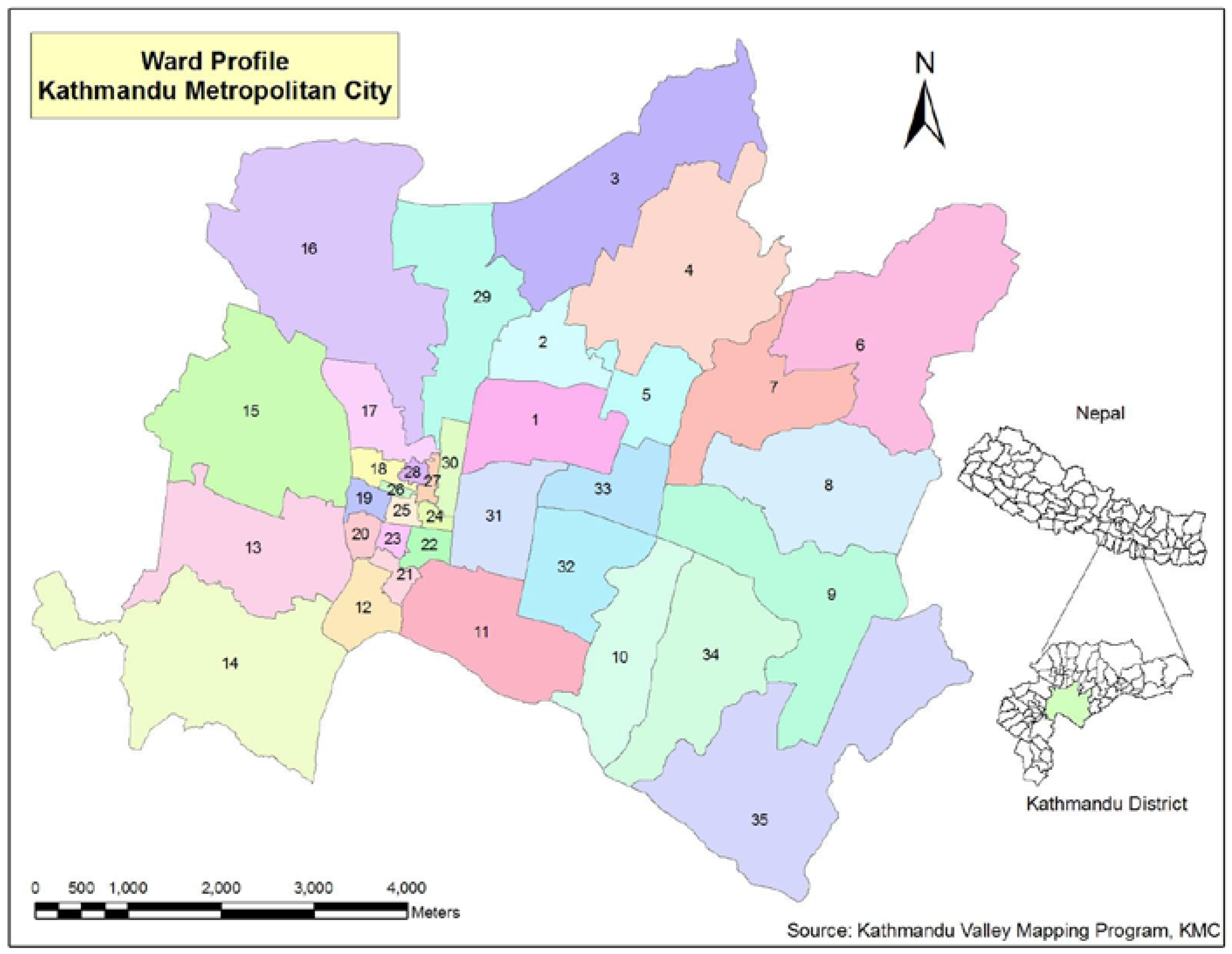
Household Preferences for Improved Solid Waste Management (SWM) Services: A Randomized Conjoint Analysis in Kathmandu Metropolitan Ward No. 10

by
Bohara Bikash
1,2 and
Masaru Ichihashi
3,4,5,*
1
Ministry of Economic Affairs and Planning, Dhangadhi 10900, Nepal
2
Graduate School for International Development and Cooperation, Hiroshima University, Higashihiroshima 739-8529, Japan
3
Graduate School of Humanities and Social Sciences, Hiroshima University, Higashihiroshima 739-8529, Japan
4
The IDEC Institute, Hiroshima University, Higashihiroshima 739-8529, Japan
5
Network for Education and Research on Peace and Sustainability (NERPS), Hiroshima University, Higashihiroshima 739-8529, Japan
*
Author to whom correspondence should be addressed.
Sustainability 2022, 14(4), 2251; https://doi.org/10.3390/su14042251
Submission received: 20 December 2021 / Revised: 8 February 2022 / Accepted: 10 February 2022 / Published: 16 February 2022
(This article belongs to the Section Waste and Recycling)

Abstract

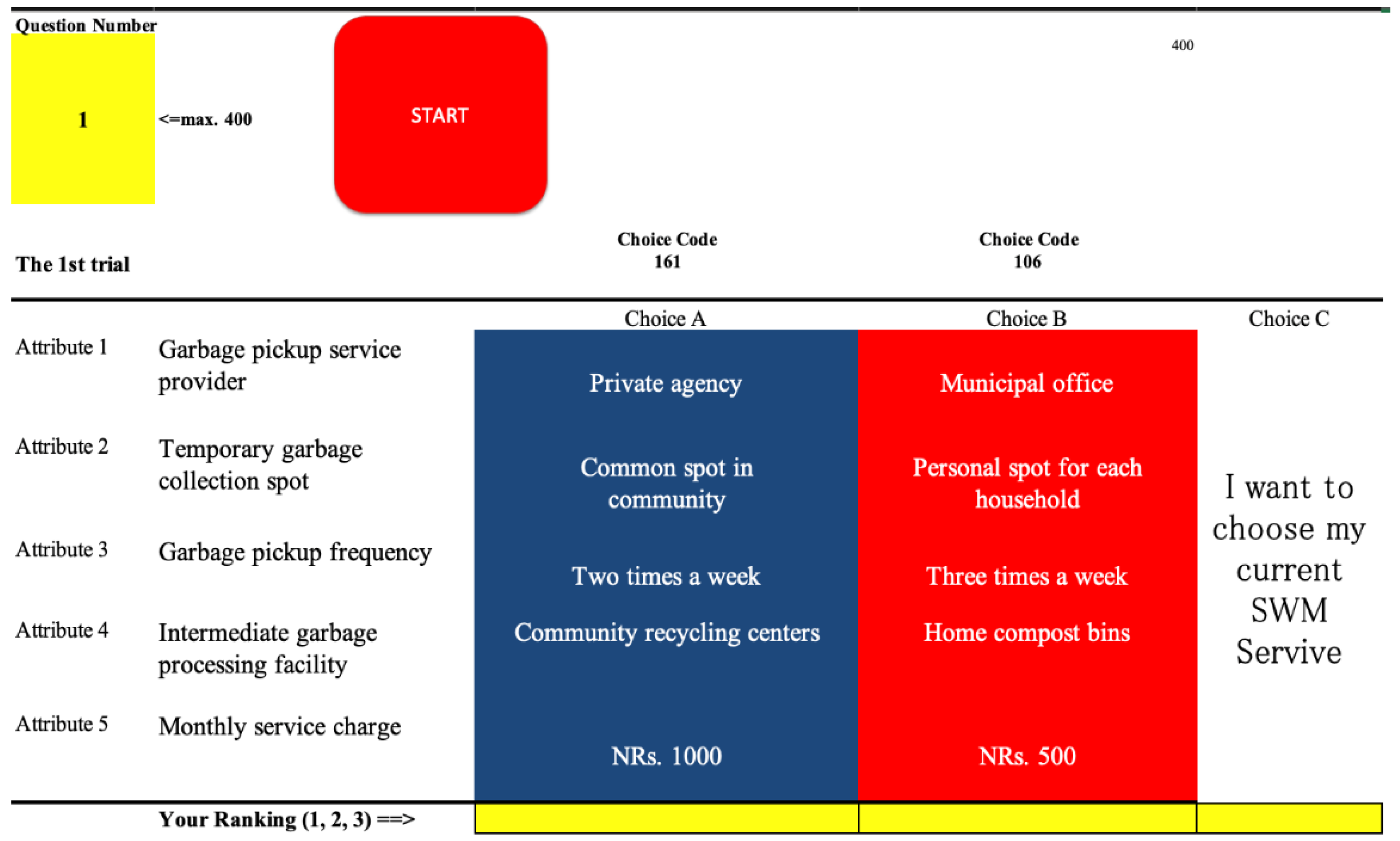
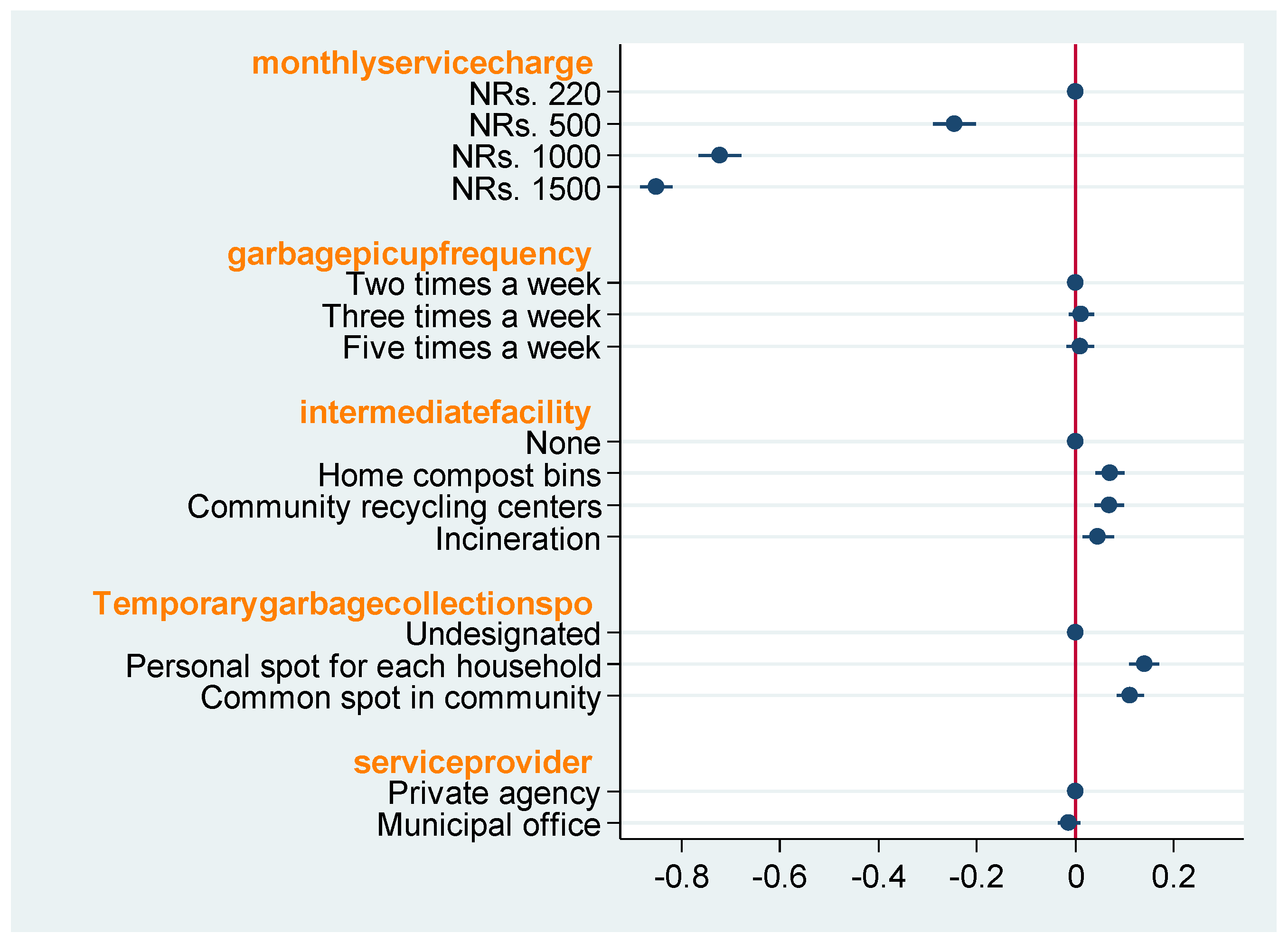
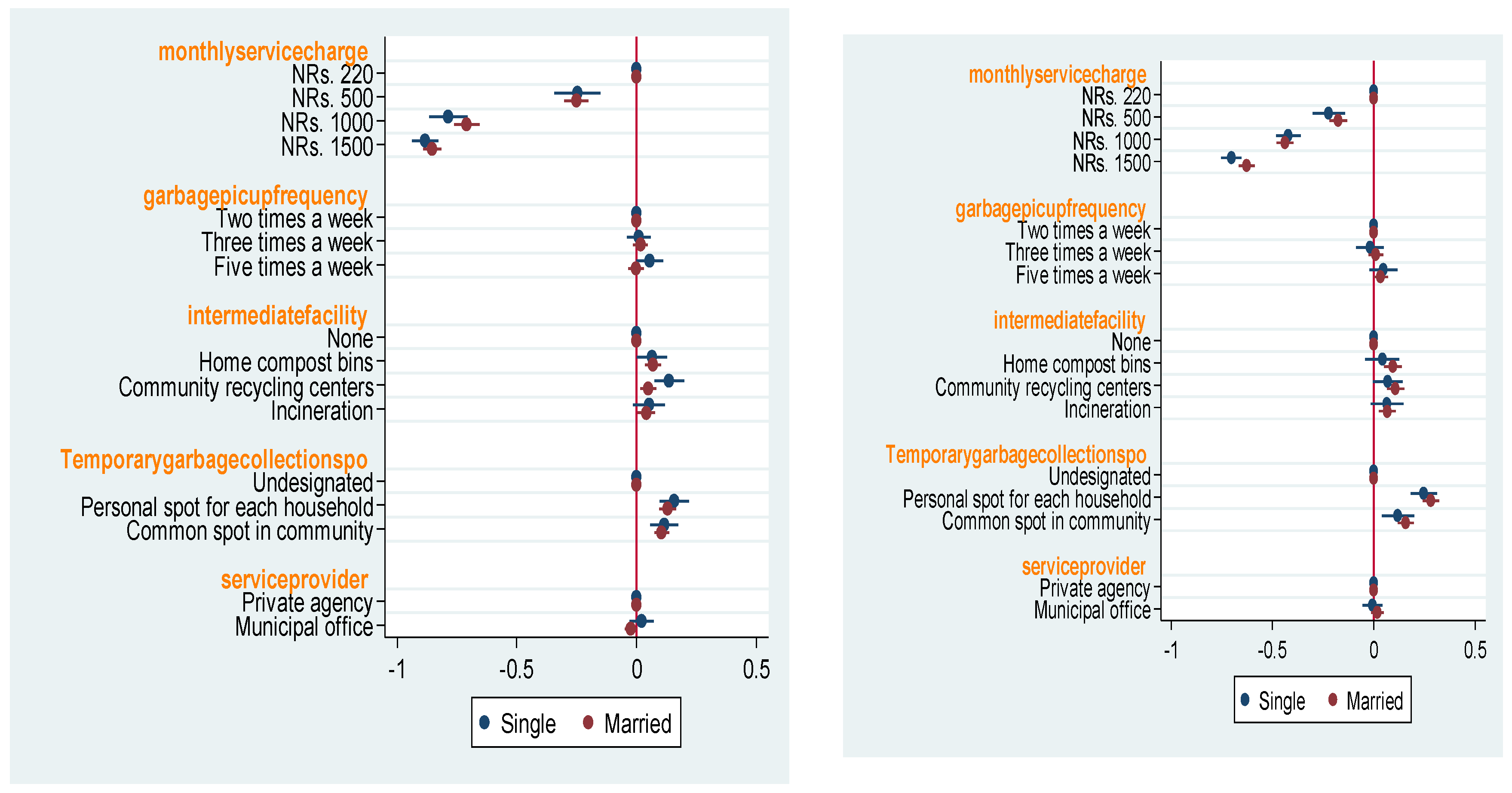
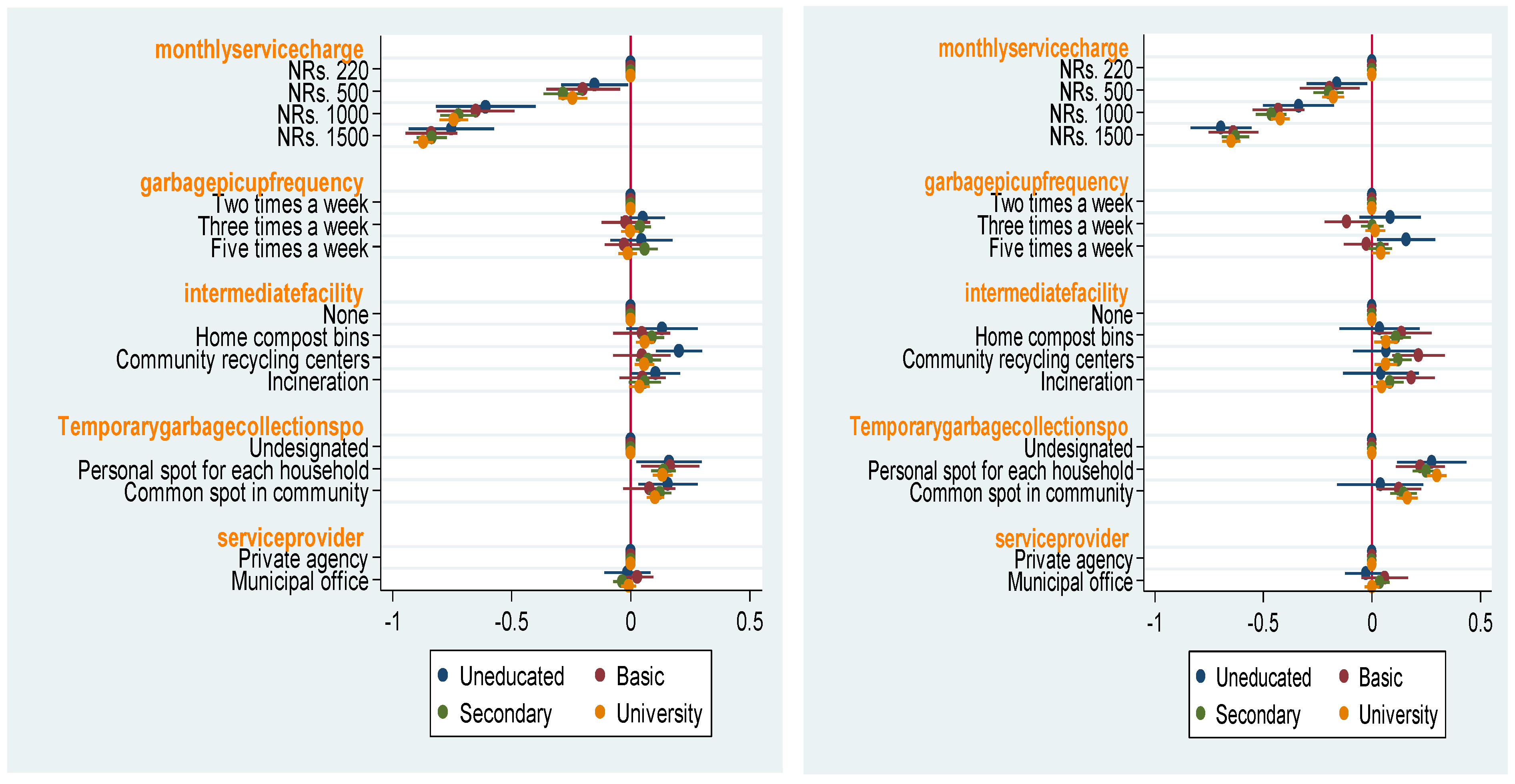
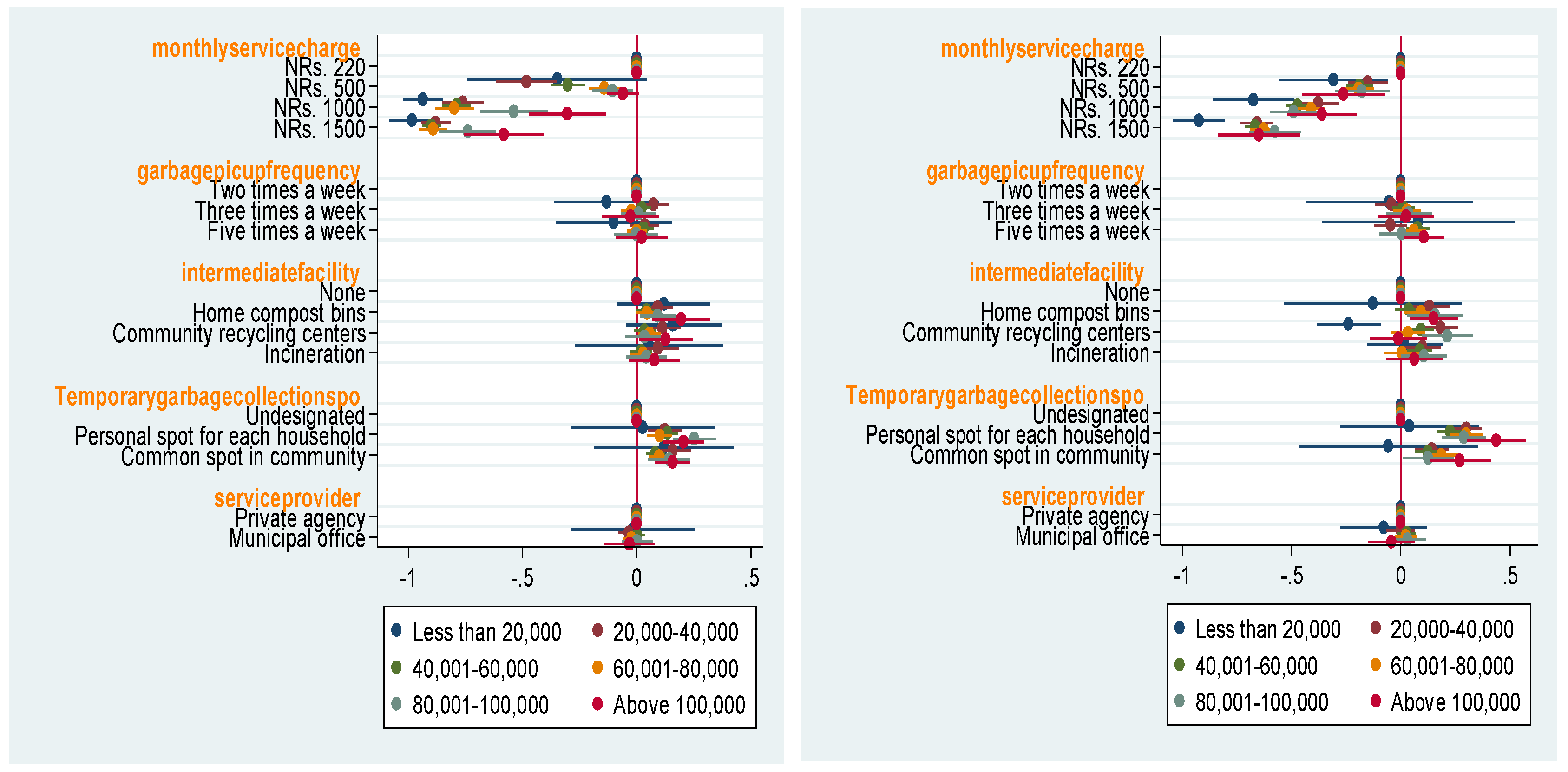
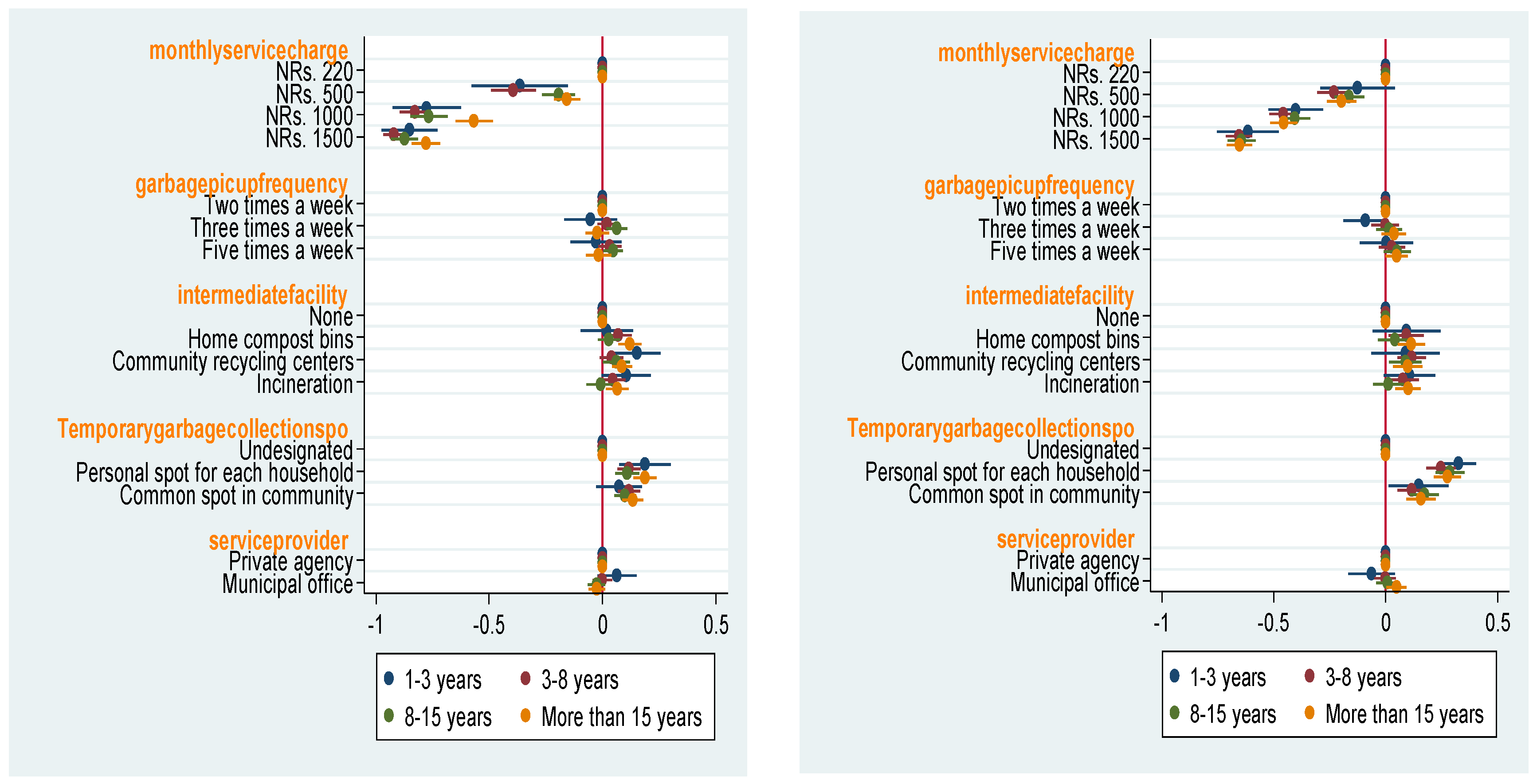
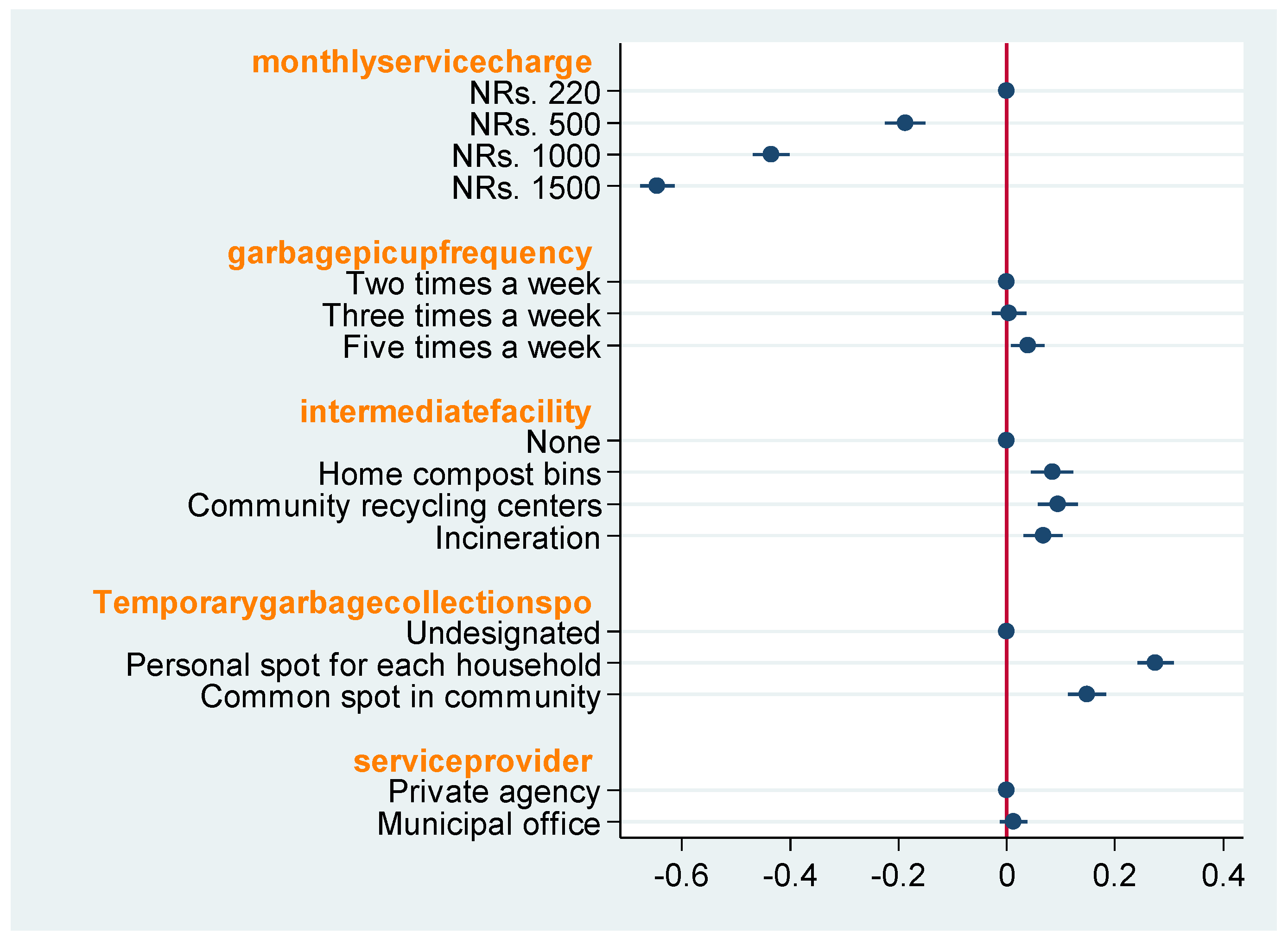
Solid waste management (SWM) is a severe environmental concern in many developing countries. The rapid pace of urban population growth and economic development worldwide has led to the increasing generation of municipal solid waste. A large amount of solid waste remains uncollected in metropolitan cities daily due to collection inefficiency. Kathmandu in Nepal also faces the same situation. Due to the lack of relevant studies, this study contributes to research based on quantitative evidence from households’ preference to think about the priority of making effective waste management policies. Prior studies have been less concerned with actual households’ preference or tendencies to improve current SWM (although most of them have pointed out existing waste problems such as the increasing presence of garbage and its composition). This study examines which factors have a causal effect on household decisions to choose improved SWM facilities in Kathmandu, Nepal by using a randomized conjoint experiment useful for effectively identifying respondents’ preference for SWM. Data were collected from 400 randomly selected households using paper questionnaires and face-to-face interviews. Since those households answered choice-card selection five times (and for two kinds of types), the observation number totaled 4000. Our results show that attributes such as monthly service charges, intermediate facilities, and temporary garbage collection spots have a significant effect on respondents’ preferences, while most households still tend to prefer current SWM services. The findings will aid SWM planners in developing and implementing an effective SWM policy that takes household preferences into account.
Keywords: solid waste management; Kathmandu; attribute for preference; causal inference; conjoint analysis solid waste management; Kathmandu; attribute for preference; causal inference; conjoint analysis