Article

The Places–People Exercise: Understanding Spatial Patterns and the Formation Mechanism for Urban Commercial Fitness Space in Changchun City, China

1
School of Geographical Sciences, Northeast Normal University, Changchun 130024, China
2
School of Architecture and Urban Planning, Beijing University of Civil Engineering and Architecture, Beijing 100044, China
3
College of Geographic Sciences, Changchun Normal University, Changchun 130032, China
4
Northeast Institute of Geography and Agroecology, Chinese Academy of Sciences, Changchun 130102, China
*
Author to whom correspondence should be addressed.
Sustainability 2022, 14(3), 1358; https://doi.org/10.3390/su14031358
Submission received: 26 October 2021 / Revised: 18 January 2022 / Accepted: 18 January 2022 / Published: 25 January 2022

Abstract

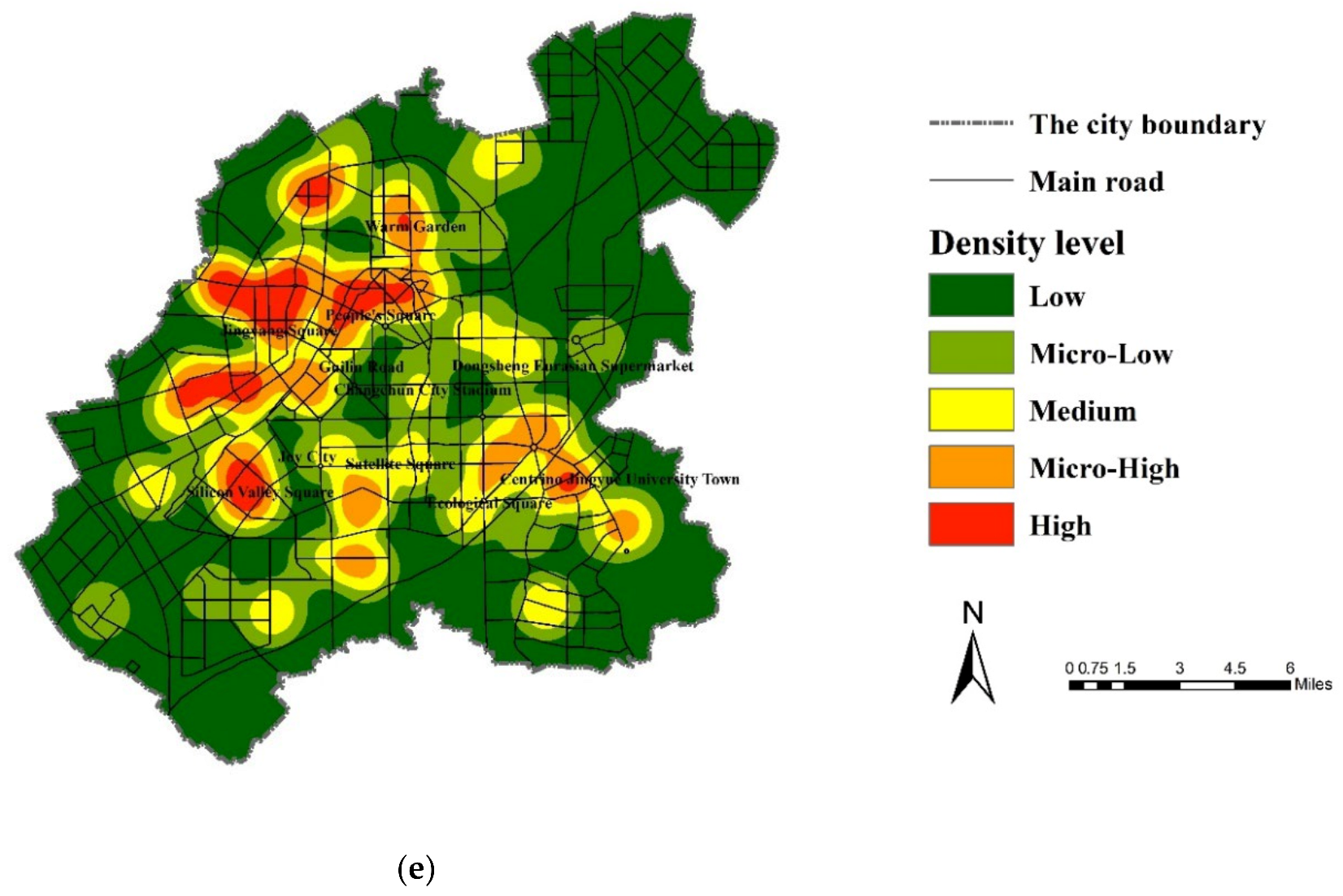
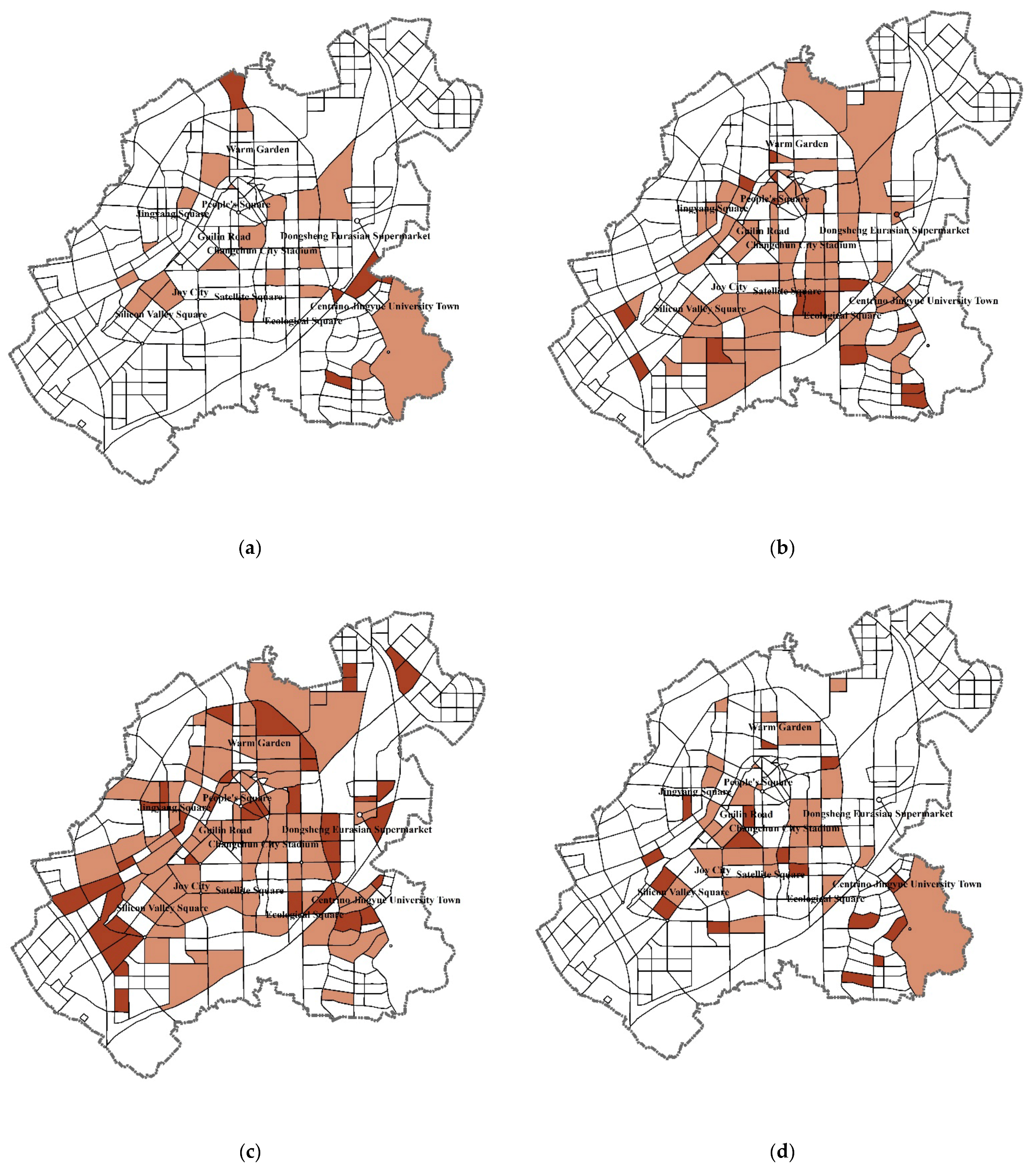
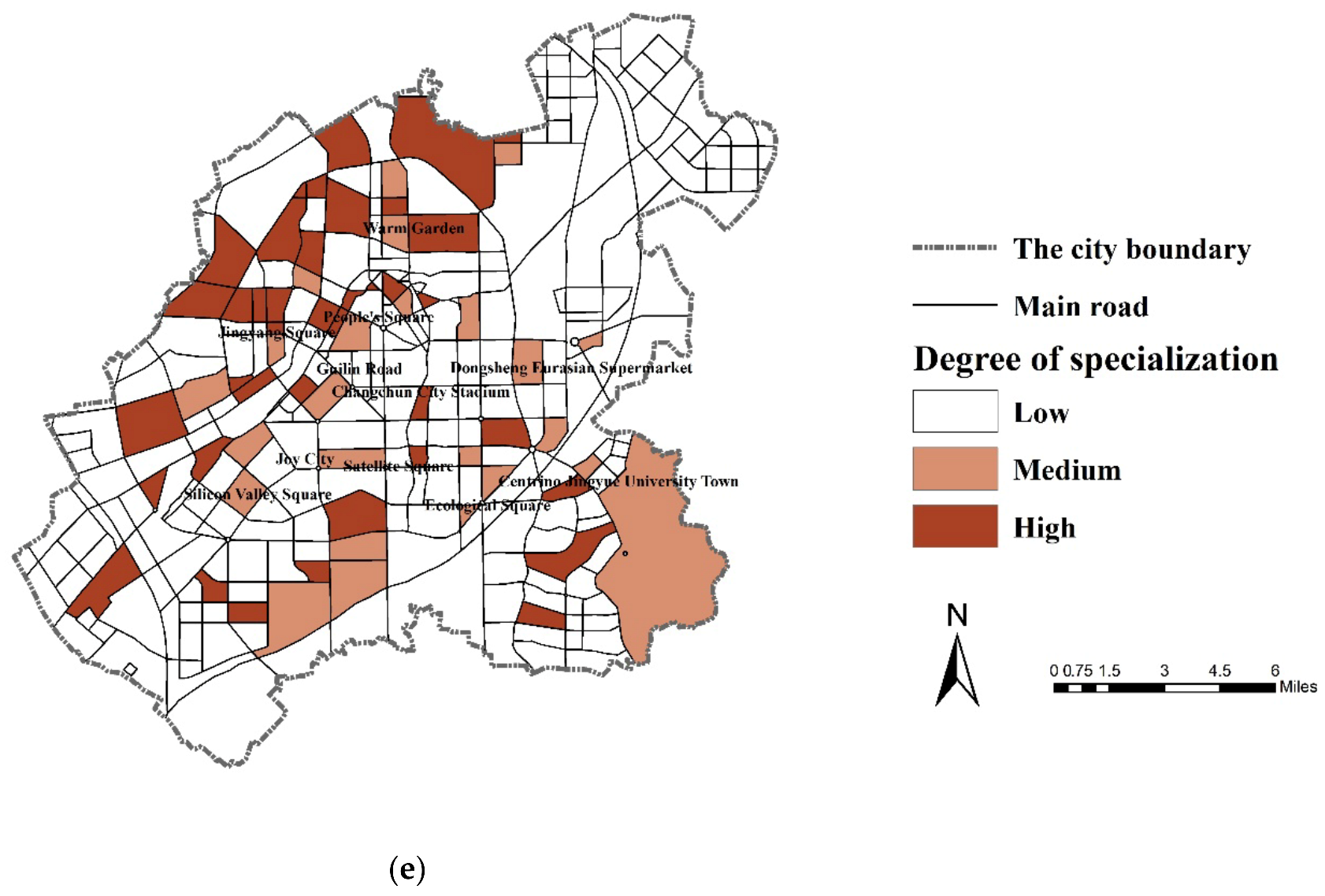
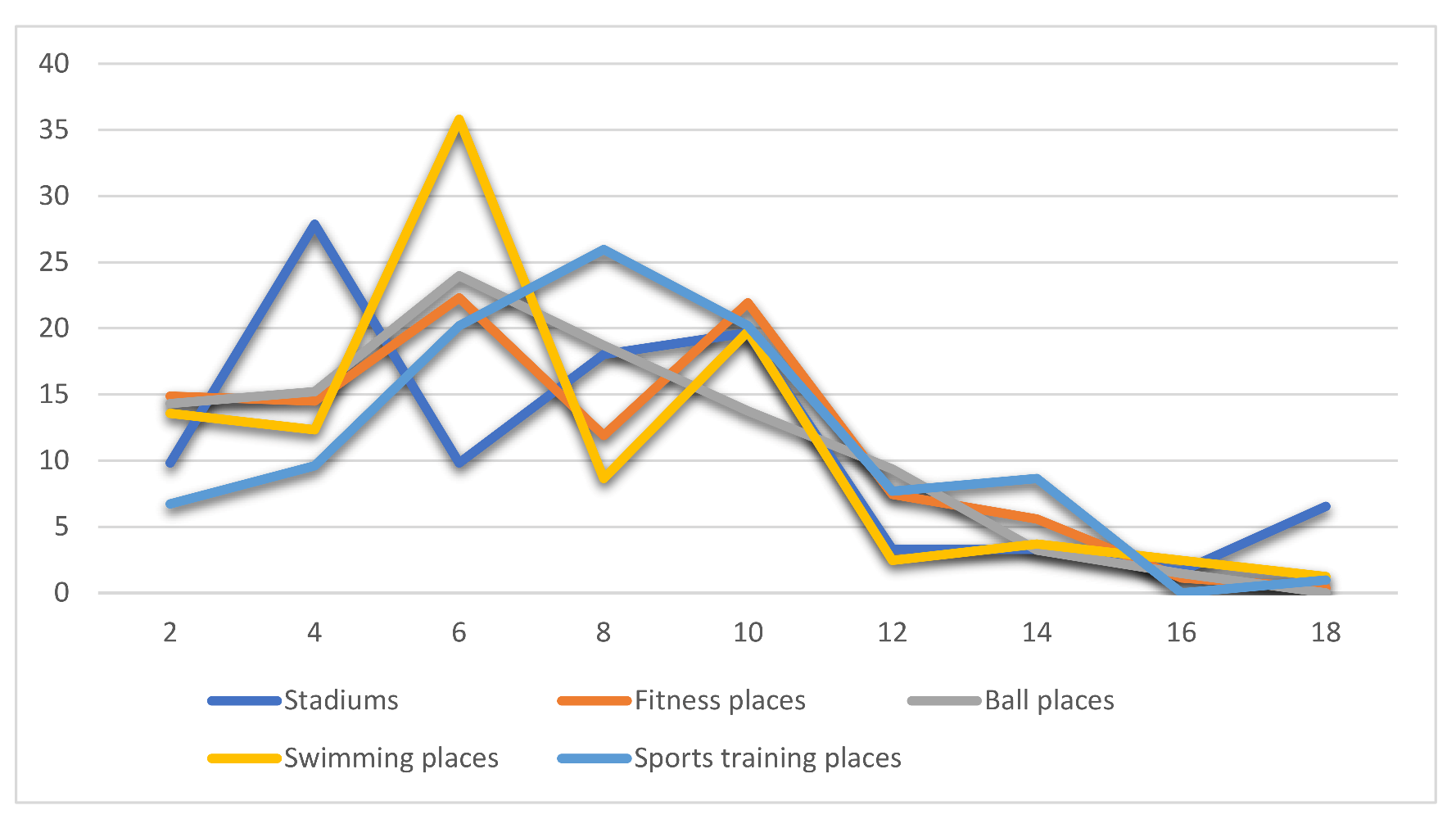
The fitness industry is rapidly developing due to the demand for fitness activities, and a large number of commercial fitness spaces have emerged in Changchun city. The distribution of commercial fitness spaces in the city is not chaotic; different types of fitness spaces should have different spaces to choose from. The purpose of this article is to summarize the spatial distribution characteristics and laws of urban commercial fitness spaces, to help better develop commercial fitness spaces. Using Changchun (a central city in northeastern China) as an example, the article divides commercial fitness spaces into five categories. Then, GIS tools are used to analyze the distribution patterns, level distributions, and agglomeration characteristics of commercial fitness spaces. The city’s commercial fitness space distribution patterns are subjected to further study, along with the influencing factors and forming mechanisms of the pattern. Moreover, based on the research results, this study provides targeted suggestions for the development of fitness spaces. The study found that the commercial fitness space in Changchun city has formed a multi-core spatial pattern. Various types of fitness spaces show significant spatial differentiation in many aspects, such as “center-periphery” characteristics, the spatial distribution form, and the specialized characteristics of each block unit. Fitness needs, national policies, transportation accessibility, spatial agglomeration, land rent, urban population distribution, etc., are the main factors affecting the spatial distributions of fitness spaces.
Keywords: commercial fitness space; spatial characteristics; formation mechanism; POI data; Changchun city commercial fitness space; spatial characteristics; formation mechanism; POI data; Changchun city