Article

Empirical Research on the Metaverse User Experience of Digital Natives

1
Department of Digital Management, Korea University, Sejong 30019, Korea
2
Department of Service Design, Graduate School of Hongik University, Seoul 04066, Korea
*
Author to whom correspondence should be addressed.
Sustainability 2022, 14(22), 14747; https://doi.org/10.3390/su142214747
Submission received: 8 October 2022 / Revised: 5 November 2022 / Accepted: 6 November 2022 / Published: 9 November 2022
(This article belongs to the Special Issue Digital Technologies for Sustainable Education)

Abstract

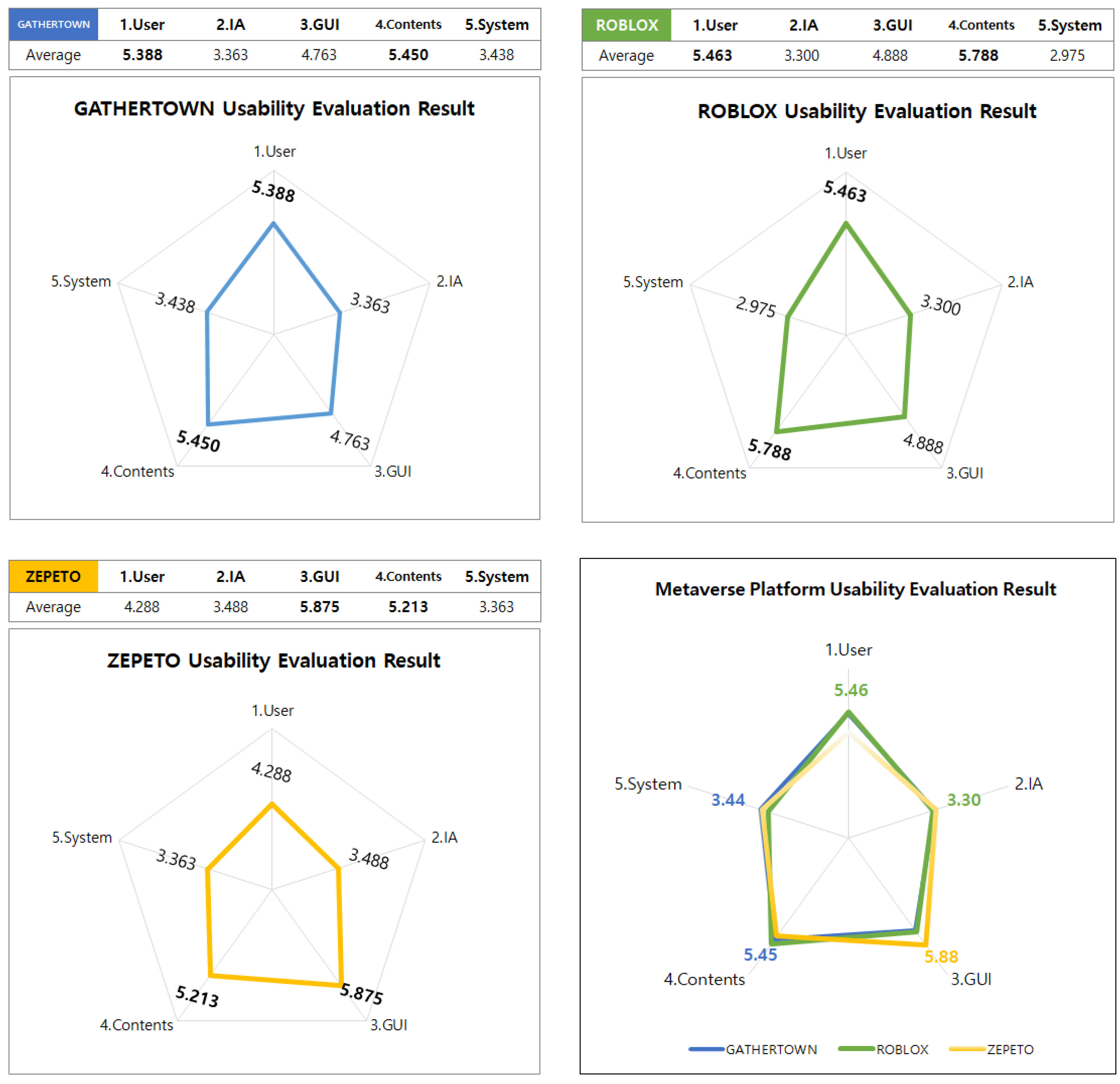
The metaverse has been settled as a platform that is widely beloved by digital natives that are familiar with mobile devices and immersive contents. Thanks to the protocol enabling hedonic interaction, the user experience provides significant value from its communication, enabling learning experiences anytime and anywhere. However, the research topics are focused on the promotions of technology development, marketing effects, and relevant investment consensus. Surprisingly, the biggest problem was the lack of research from the perspective of the young generation, who mainly use the metaverse. This paper intends to examine the usability of digital native participants in detail and suggest how immersive contents, usage environment, and interface aspects should be designed from their point of view. As a result, the significant engagement factors and improvements, through heuristic usability evaluation considering content and user control, were discovered from individual interviews. Conversely, the elements to be supplemented in user experience were derived from information architecture and usage environment categories. In conclusion, the theoretical basis of the empirical usability evaluation on metaverse platforms and following recommendations with practical implications could gain more importance from this research.
Keywords: metaverse; heuristic usability; user control; immersive contents; extended reality; engagement metaverse; heuristic usability; user control; immersive contents; extended reality; engagement