Article

Evaluating the Eligibility of Abandoned Agricultural Land for the Development of Wind Energy in Lithuania

by
Eglė Tumelienė
1,2,
Jūratė Sužiedelytė Visockienė
1 and
Vida Maliene
2,*
1
Department of Geodesy and Cadastre, Vilnius Gediminas Technical University, Saulėtekio Av. 11, LT-10223 Vilnius, Lithuania
2
Department of Land Use Planning and Geomatics, Faculty of Engineering, Vytautas Magnus University Agriculture Academy, Studentu Str. 11, Akademija, LT-52261 Kaunas, Lithuania
*
Author to whom correspondence should be addressed.
Sustainability 2022, 14(21), 14569; https://doi.org/10.3390/su142114569
Submission received: 22 September 2022 / Revised: 20 October 2022 / Accepted: 3 November 2022 / Published: 5 November 2022

Abstract

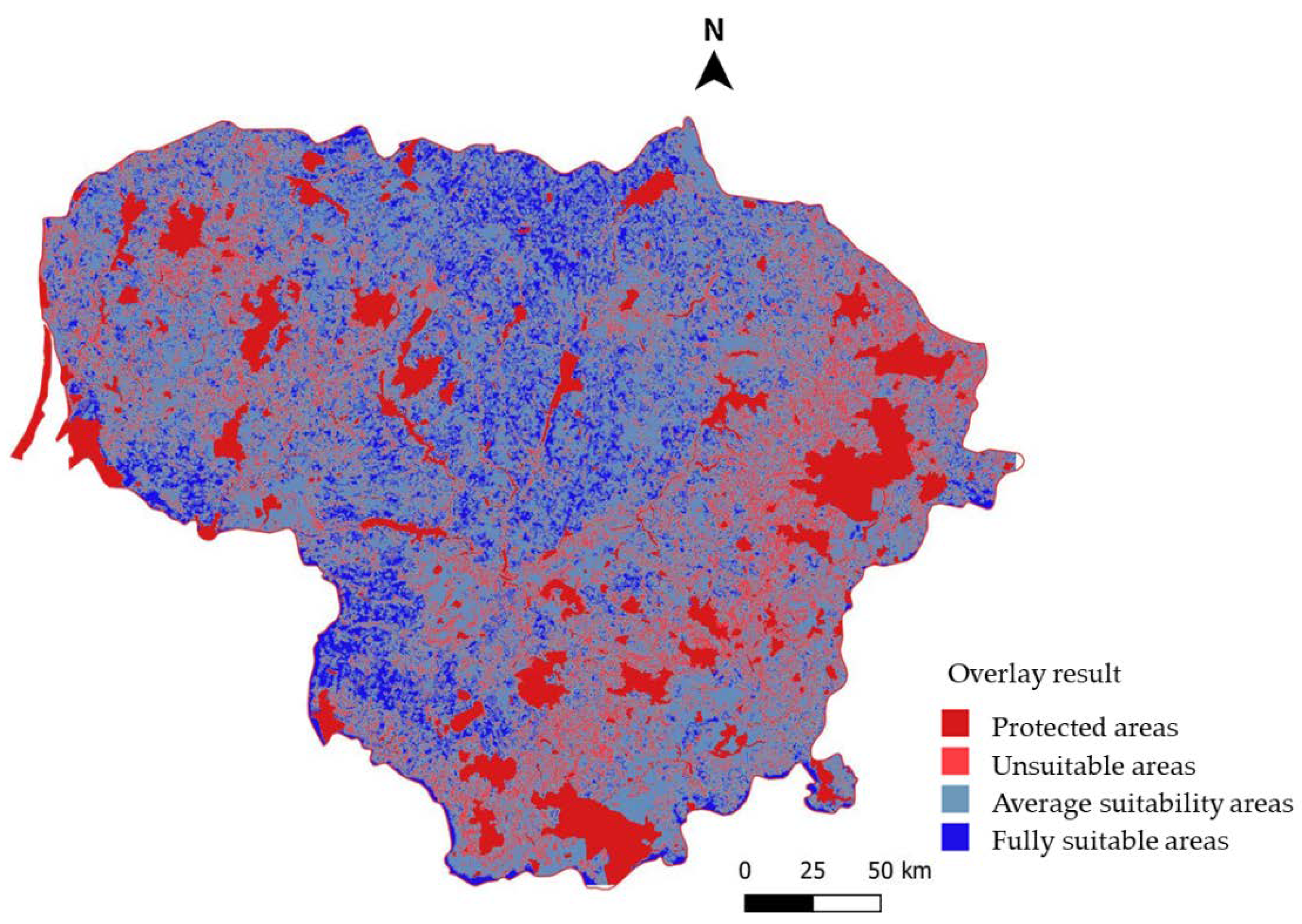
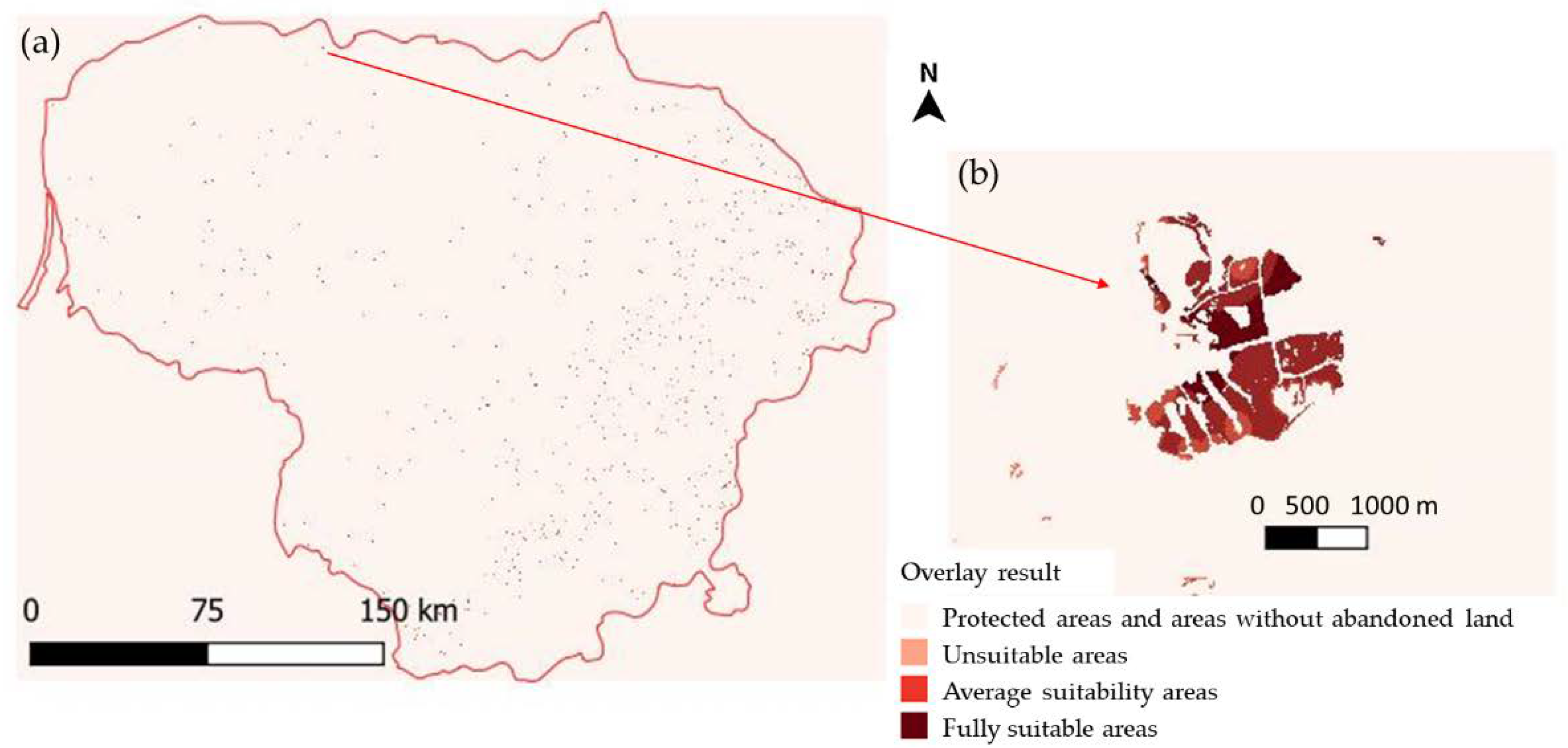
Land requirements of wind power (WP) are often seen as a constraint to future broad-scale deployment. The aim of the study is to evaluate the eligibility of abandoned agricultural land (AAL) areas, covered with woody plants, for the development of wind energy (WE) in Lithuania. Agricultural land abandonment (ALA) has numerous negative aspects and its use for WE must be a profitable choice for the landowner, as for the energy developers also. A newly developed methodological approach, a multi-criteria decision-making (MCDM) method known as TOPSIS (the Technique for Order Preference by Similarity to Ideal Solution) was applied to select suitable areas for wind power plants (WPP). The authors have used various data sets, as follows: protected areas (reserves, parks) combined into one common geographic information system (GIS) layer, forest cadaster data, water (lakes, rivers) area layer; abandoned land area layer; buildings layer, taken from the Lithuania Georeferenced Data Base. The results were generated for the entire territory of Lithuania and separately for AAL using the algorithms of the open source QGIS program. The results showed that the central part of Lithuania is most suitable for the development of WE. However, ALA in this part is low, because of the high soil yield potential and suitable conditions for farming. According to the selection criteria, about 7% of AAL are suitable for WE, and more than 18% of AAL have an average suitability.
Keywords: wind energy; abandoned agricultural land; MCDA method; renewable energy wind energy; abandoned agricultural land; MCDA method; renewable energy