Skip to Content
SustainabilitySustainability
  • Article
  • Open Access

4 November 2022

A Fuzzy-Logic Approach for Optimized and Cost-Effective Early Warning System for Tsunami Detection

,
,
and
1
Department of Computer Science & Information Technology, University of Balochistan, Quetta 08770, Pakistan
2
School of Computing and Digital Technology, Birmingham City University, Birmingham B4 7XG, UK
*
Author to whom correspondence should be addressed.

Abstract

With the economic crisis going around the world, a new approach, “build back better”, has been adopted as a recovery package for various systems. The tsunami detection and warning system is one such system, crucial for saving human lives and infrastructure. While designing a tsunami detection system, the social, economic, and geographical circumstances are considered to be vital. This research is focused on designing a low-cost early warning system mainly for underdeveloped countries, which are more prone to tsunami damage due to a lack of any reliable early warning and detection systems. Such countries require proper cost-effective solutions to address these issues. Previous research has shown that the existing systems are either very costly or hard to implement and manage. In this study, we present a wireless sensor networking model, which is an optimized model in terms of cost, delay, and energy consumption. This research contemplates the techniques and advantages of the intelligence of marine animals. We propose a fuzzy logic-based approach for early tsunami detection, using electromagnetic and pressure sensors, based on the behavioral attributes of turtles and real-time values of earthquakes and water levels.

1. Introduction

A tsunami is created by gigantic waves caused by a disturbance or seismic activities, such as earthquakes, volcanic eruptions, landslides, or rock falls. Most recent tsunamis around the world have been the result of earthquakes. Tsunamis can lead to massive destruction and fatalities. The destruction of life and property they cause is huge, thus the need for early detection systems. Table 1 shows an account of recent tsunamis and early warning systems used in some underdeveloped countries. The comparison is merely to highlight the reason/primary cause of the tsunami and the distance of the affected area from the tsunami’s source, in addition to other related important issues.
Table 1. Comparison of tsunamis over recent years.
In this technological era, it is possible to detect tsunamis and generate timely tsunami updates. This tsunami management process can be facilitated by different techniques, such as event-based sensor networks which are well-known for their strong link to disaster management techniques. This IoT-based data collection technique backed by state-of-the-art analysis can provide insights that can effectively reduce the potential damage and loss of lives caused by natural disasters, such as volcanic eruptions, earthquakes, tornados, and tsunamis [1]. IoT data sensing is an advanced technology that enables taking measurements remotely from sensors distributed amongst areas of interest by incorporating new technologies, such as machine learning, the Internet of Things, and big data analytics [2]. Other techniques mainly depend on satellites to collect and analyze data from remote sensors to give enough warning to mitigate the effect of a tsunami [3].
Though early detection systems have been made possible with technological advancements, such as sensor networks and machine learning, the data presented in Table 1 emphasizes the need for more research and state-of-the-art development of an early tsunami warning and detection system, especially for low-income countries. This is because the current advanced systems are either very expensive or require advanced management for both developed and undeveloped countries. For instance, an earthquake of 7.5 triggered by an underwater landslide caused a tsunami on 28 September 2018 in Indonesia; 22 buoys connected to the seafloor had not been functioning for 6 years due to a lack of funding [4]. On the other hand, New Zealand has a DART sensor system of 12 sensors, which is further connected to other global partners for the real transmission of data [5]. Although using satellites is one of the commonly used technologies for tsunami detection, it can take up to five minutes to issue an early warning after tsunami detection [6].
A tsunami warning system is broadly divided into two stages: upstream and downstream. The former is the detection of the earthquake and the prediction of a tsunami, and the latter stage is the warning and evacuation of people [2]. A tsunami system does require both technical and socio-economic factors for development [7]. Therefore, the economic capacity of any country and/or region is an important factor when designing and building a tsunami system considering all the requirements and countermeasures [8]. This calls for a potential need for collaboration and contribution among researchers and hardware industries for innovation in the warning and detection model of Tsunami and scalable devices since the devices are often imported from developed countries, which renders the projects extremely expensive. We suggest that low-income countries design and manufacture low-cost hardware based on new technologies such as fuzzy logic, machine learning, and artificial intelligence.
We present an economical, optimized integrated system of wireless sensor network and fuzzy logic to detect tsunamis and generate singles for a quick alert. Our alert and no-alert system also takes advantage of partial aggregation and no aggregation for less delay and low energy consumption.
The major contributions of this paper include:
(1)
Presenting a comprehensive survey of existing tsunami systems and identifying the reasons for the lack of proper deployment of these systems in underdeveloped countries.
(2)
The paper presents a fuzzy logic approach that utilizes the effect of tsunamis on sea turtles and the angle of their deviation or navigation direction, in addition to real-time inputs, such as water level and earthquakes from a tsunami database.
(3)
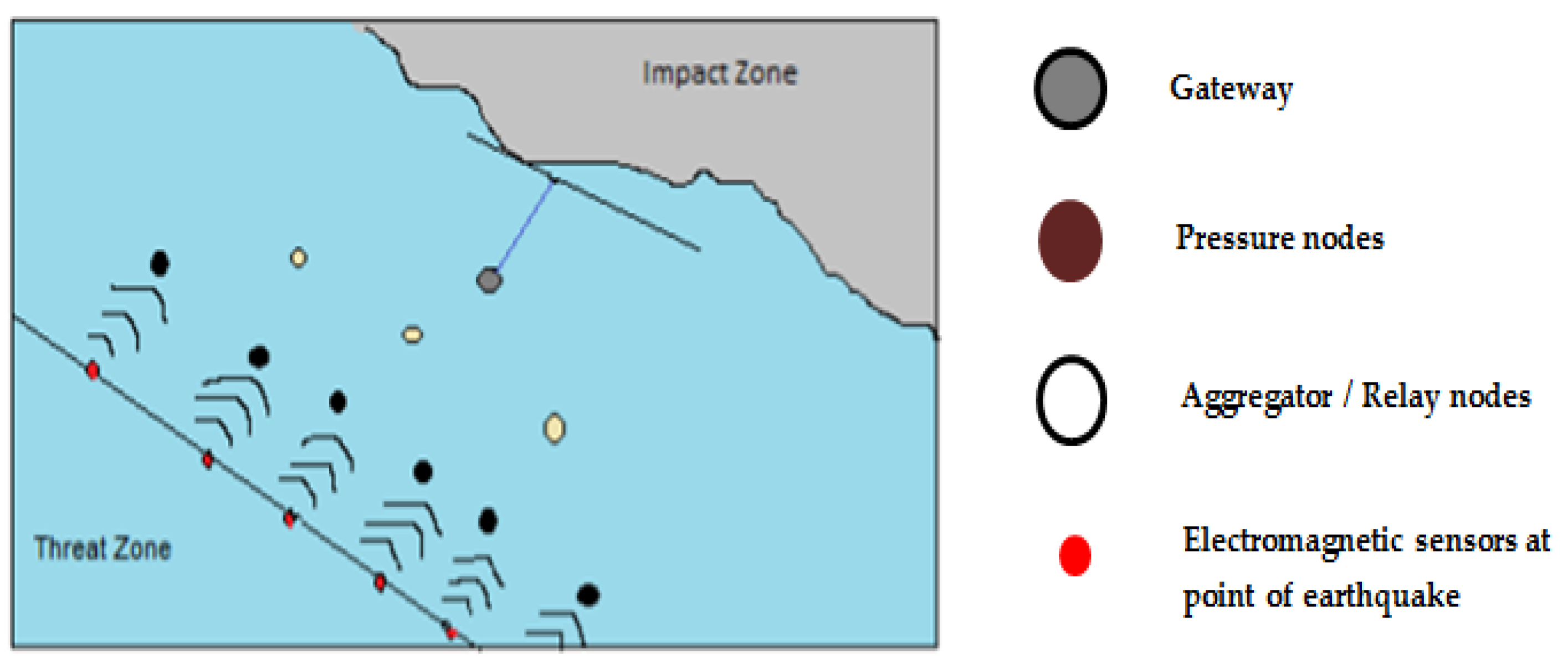
A cost-effective and optimized concept of fuzzy logic and a WSN-based model for tsunami resiliency is proposed. The proposed concept offers a network of interlinked pressure and electromagnetic sensors, and the fuzzy logic system has the potential to facilitate the real-time processing of data streams to reveal new information, patterns, and insights for effective tsunami management. Figure 1 illustrates the overall workflow of the concept of the proposed model.
Figure 1. Deployment illustration of the proposed model.
(4)
The system is evaluated regarding cost, delay, and energy consumption. The results demonstrate the comparison of different parameters and the efficiency of the system.
The remainder of this paper is organized as follows. Section 2 describes the related research work in detail. Section 3 thoroughly describes the proposed model and its main functions, i.e., data collection for the fuzzy logic system to detect a tsunami, energy saving through partial data aggregation mode, and the early warning of a tsunami through the no aggregation mode. Section 4 presents the results and discussion along with the graphs of delay and energy for both modes of aggregation, i.e., no aggregation and partial aggregation, co-efficient tables, and comparisons of delay and energy during a tsunami and No Tsunami state. Finally, Section 5 presents the conclusions of this research.

3. The Proposed Model

We define the complexity of our proposed system in terms of types and connecting media. The proposed early warning system is designed using electromagnetic sensors, pressure sensors, relay/aggregated sensors, and a gateway connected to the coastal area using fiber optics cable as illustrated in Figure 1. We used these sensors because they are easy to buy and maintain and can be purchased locally. The model used fiber optic cable for connectivity which is the fastest for data transmission and is easily available. The hardware and software specifications for the proposed model are given in Table 2.
Table 2. Hardware and software specifications.
Sensor nodes are linked in a tree-based structure and a query-driven-based approach is used for data collection. In this approach, data are generated on the occurrence of an event. In our proposed model, the electromagnetic sensors are used at the point of the earthquake, and data are further hopped from these nodes towards gateway node using pressure sensors and aggregator sensors [23].
The proposed system takes advantage of “no aggregation” and “partial aggregation” concepts. The model is divided into three parts: data collection for the fuzzy logic system to detect a tsunami or No Tsunami state, energy saving through partial data aggregation mode, and the early warning of tsunami through no aggregation.

3.1. Data Collections for Fuzzy Logic System to Detect Tsunami or No Tsunami State

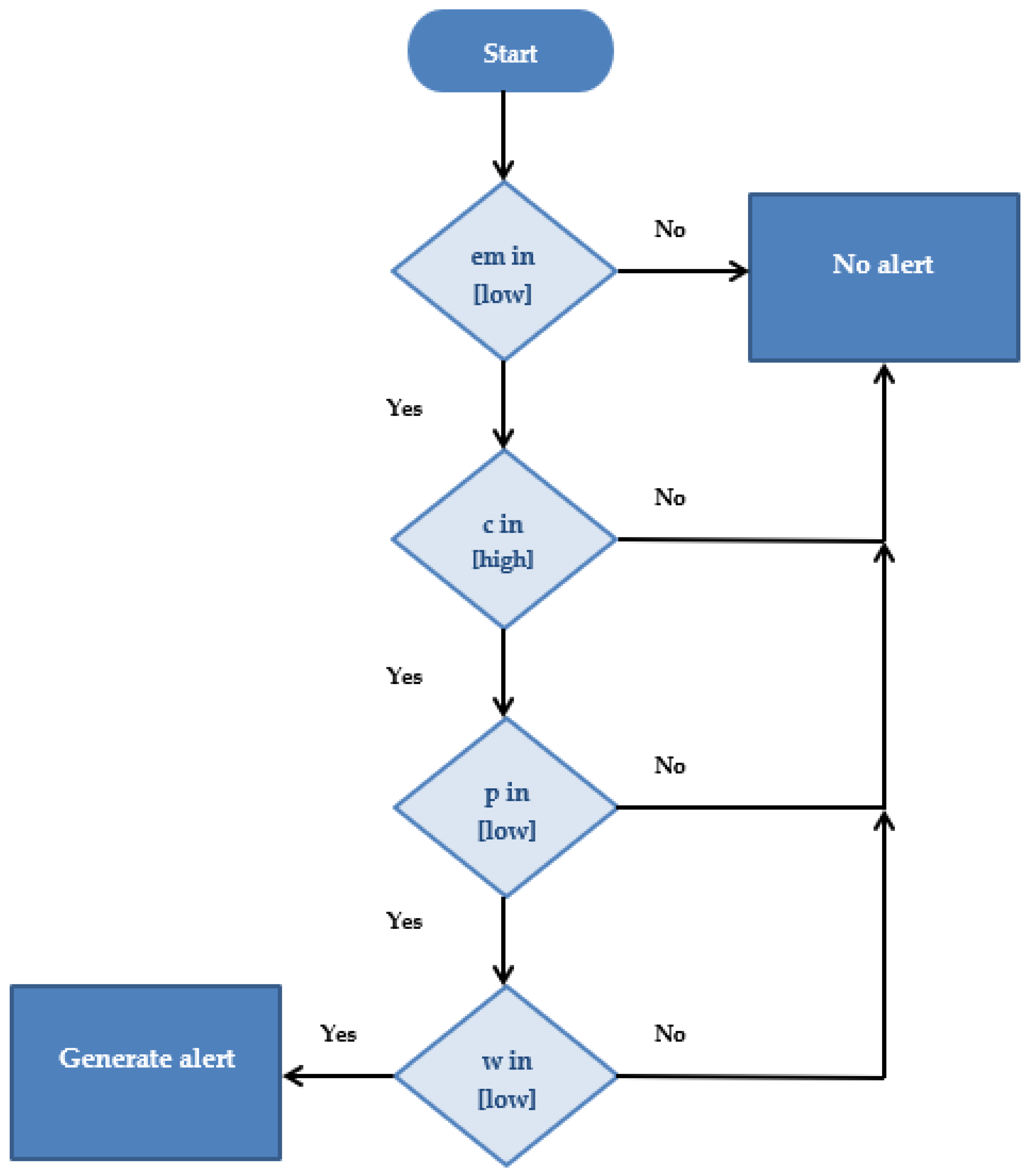
The electromagnetic and pressure sensors are installed on the seabed. The distance between pressure sensors and the coastal area is 15 km. The reason for choosing this distance is based on the fact observed from previous incidents that showed that the minimum earthquake distance was 15–17 km [24]. The model is based on measuring the effects of electromagnetic fields generated by tsunamis on the behavior of aquatic species, such as turtles. The electromagnetic sensors detect the changes in the electromagnetic field and the effect on the turtle’s count. The values of the turtle’s count and magnetic field are further transmitted to the pressure sensors. Pressure sensors detect the values, such as earthquake magnitude and water level, and feed all these values into the fuzzy logic system for decision making for changing modes of partial aggregation indicating a No Tsunami alert and no aggregation indicating a tsunami alert. For fuzzy input, we considered values of the electromagnetic field and turtle count given in [20] and real-time values, such as earthquake magnitude and water level from the Global Historical Tsunami database [25]. Moreover, streaming datasets from IoT devices can also be incorporated in the proposed model with the inclusion of Apache Spark in the proposed framework [26]. Table 3 explains the selected inputs for our fuzzy system. Table 4 shows the rules for fuzzy logic and outcome generation. Figure 2 presents a graphical representation of one of the rules to provide a general understanding. The pseudo-code of the proposed system is presented in Algorithm 1.
Table 3. Inputs for fuzzy logic.
Table 4. Rules for fuzzy logic and outcome.
Figure 2. Graphical representation of Rule 1.
Algorithm 1: The pseudo-code of the proposed system
Input c, em, p, w
If em ≤ 1 and (c in range 3,8) and p < 3.5 and w < 1
X = “Partial aggregation/No alert”
return X;
Else if em ≤ 1 and c < 3 and p ≥ 3.5 and w ≥ 1
X = “No aggregation/Tsunami alert”
return X;
Else if (em ≥ 1 and em ≤ 4) and c < 3 and p ≥ 3.5 and w ≥ 1
X = “No aggregation / Tsunami alert”
return X;
Else if em ≤ 1 and (c in range 3,8) and p ≥ 3.5 and w ≥ 1
X = “No aggregation/Tsunami alert”
return X;
Else em ≤ 1 and c < 3 and p ≥ 3.5 and w ≤ 1
X = “Partial aggregation/No alert”
return X;
End

3.2. Energy Saving through Partial Data Aggregation Mode

In case of a No Tsunami detection, low seismic activity, or earthquake with low magnitude, the relay nodes will be in full aggregation mode and hence will save the energy of the sensor nodes. For this purpose, the magnitude should be less than 3.5. Data are sent to relay/aggregators, which can relay and aggregate the information. Aggregated data are forwarded to the gateway sensor connected to the coast area with fiber optic cable. It is worth noting that partial aggregation is an effective scheme for minimizing energy consumption and delay compared to other aggregation schemes, such as no aggregation and full aggregation [27]. The time division multiple access (TDMA) method is used to allocate the time slot for data transmission of each node. Time division multiple access is a well-known technology used in many wired and wireless transmission media. It effectively allocates time to different nodes to send data using the link’s bandwidth.

3.3. Early Warning of Tsunami through No Aggregation

Once the earthquake magnitude increases over the threshold, i.e., 3.5, the relay nodes will change their mode to no aggregation because a tsunami was detected, and they will pass the data immediately to the gateway. The proposed approach will minimize the delay without affecting the efficiency of the early warning system.

3.4. Analysis of the Proposed Model

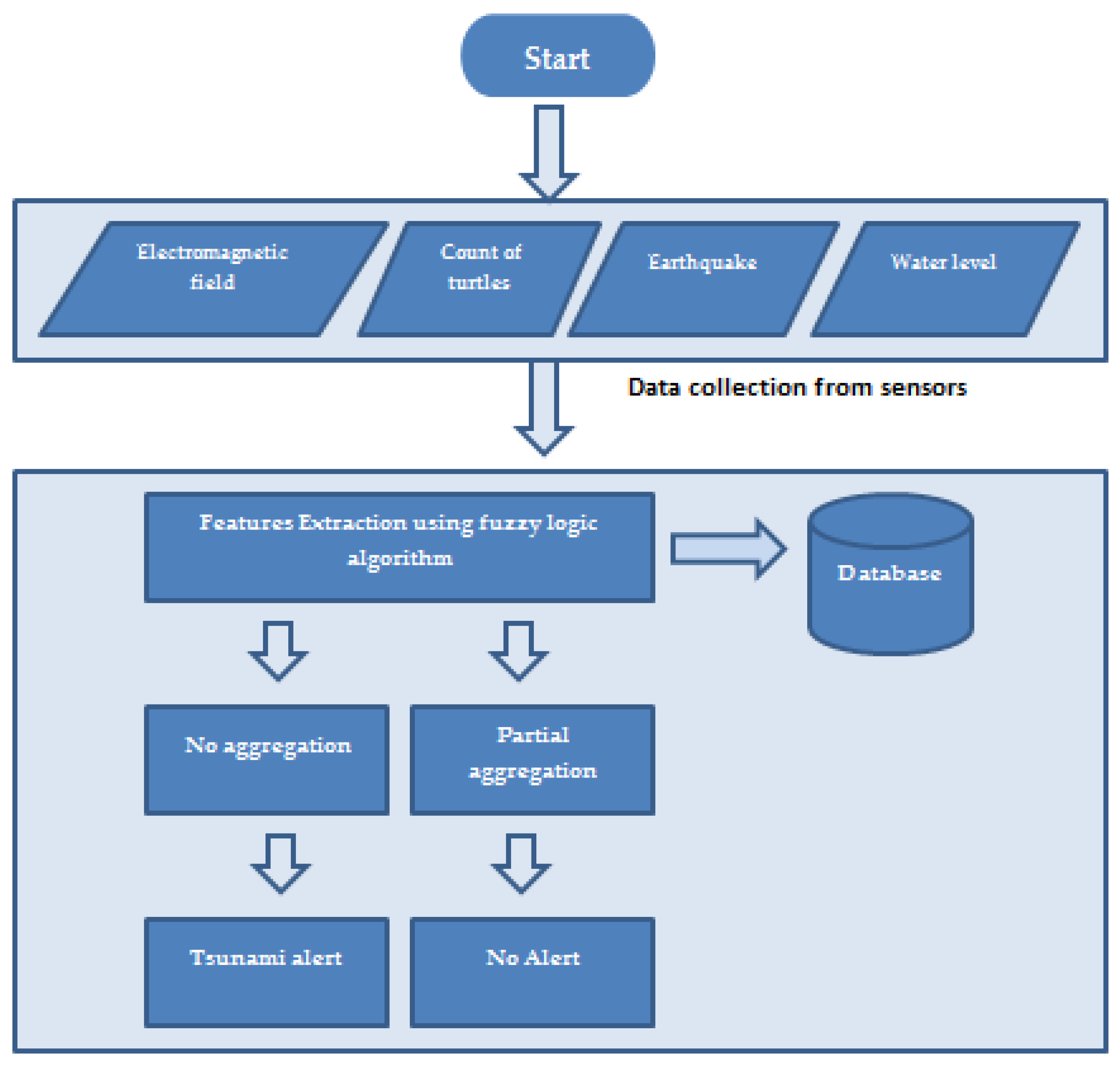
Figure 3 presents the implementation framework of the proposed model. The proposed model is a revised version of the work presented in an early study [28], where the researchers presented a rather less expensive model compared to the currently available systems employing underwater buoys, which usually require high maintenance costs [13]. We revised their work with more focus on the control of energy and delay, the two important factors of event-based sensor networks. The benchmarked model controlled the energy-using relay nodes and focused on an early warning system. However, after analyzing that model, it can be concluded that the sensor will still receive the data in case of no warning detection, hence consuming energy. On the other hand, if energy is controlled, it can increase the chance of delay, which cannot be tolerated in case of an early warning system for a tsunami. The estimated cost of our proposed system is approximately USD 800, which low-income countries can easily afford. Our design also used instruments that can be built within the country itself instead of importing them from developed countries. Our proposed model offers a more optimal solution compared to the benchmarked model due to optimized features and hardware. A detailed comparison of our model with the benchmarked one is given in Table 5.
Figure 3. Implementation framework for the proposed system.
Table 5. Comparison of benchmarked and proposed model.

4. Results

This section presents the evaluation and comparison of our proposed model. We used MATLAB for implementation and SPSS to evaluate our proposed model. The simulation of the model was performed using the following parameters as shown in Table 6.
Table 6. Parameters for evaluation.
We plotted graphs for the data generated to compare the output of energy and delay and calculated the Pearson coefficient to analyze the results. For each graph, the X-axis shows the number of rounds, which is the complete cycle of our algorithm. We have a total of 50 rounds, so 50 rounds mean it ran 50 times. The Y-axis represents either energy consumption in Joules or the delay measured in milliseconds.
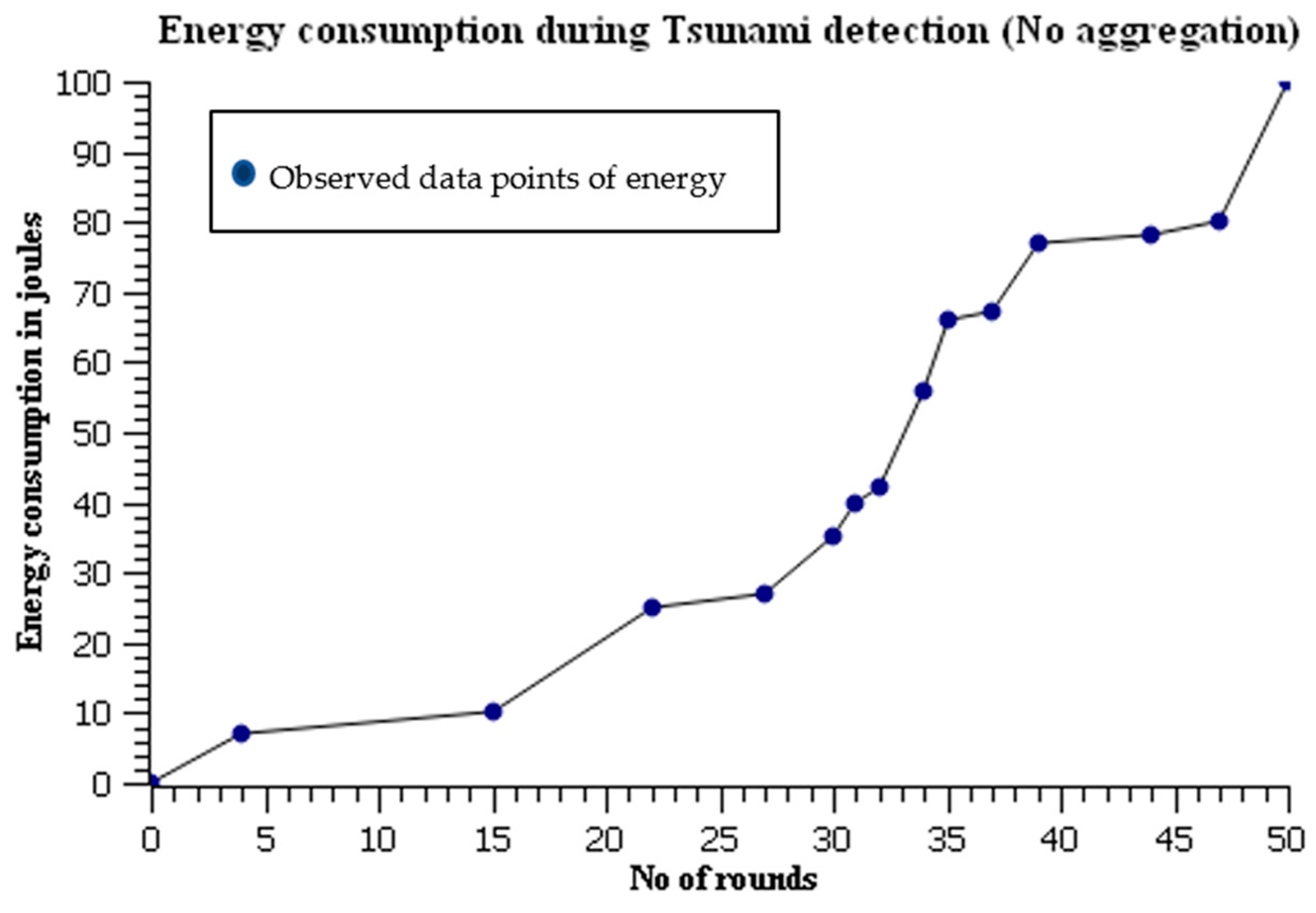
Figure 4 depicts energy consumption during tsunami detection. The diagram indicates a strong positive correlation between the two variables where the increase in the number of rounds increases energy consumption during tsunami detection.
Figure 4. Energy consumption during tsunami detection.
Table 7 contains the results of the Pearson correlation, which indicates the high positive correlation (r = 0.764) between the number of rounds and energy consumption in joules, and the p-value (p < 0.01) is evidence of the significant association between the two variables. The criterion for statistical significance is that the result will be significant if the p-value is less than the level of significance (0.01 or 1%) in this study. So, we can see that the p-value is (0.001), less than (0.01); hence, there is sufficient evidence of the significant association between the two variables. Figure 4 portrays the positive correlation between the two variables, the delay in observations during tsunami detection and the number of rounds that increase proportionally during tsunami detection.
Table 7. Correlation for energy consumption during no aggregation.
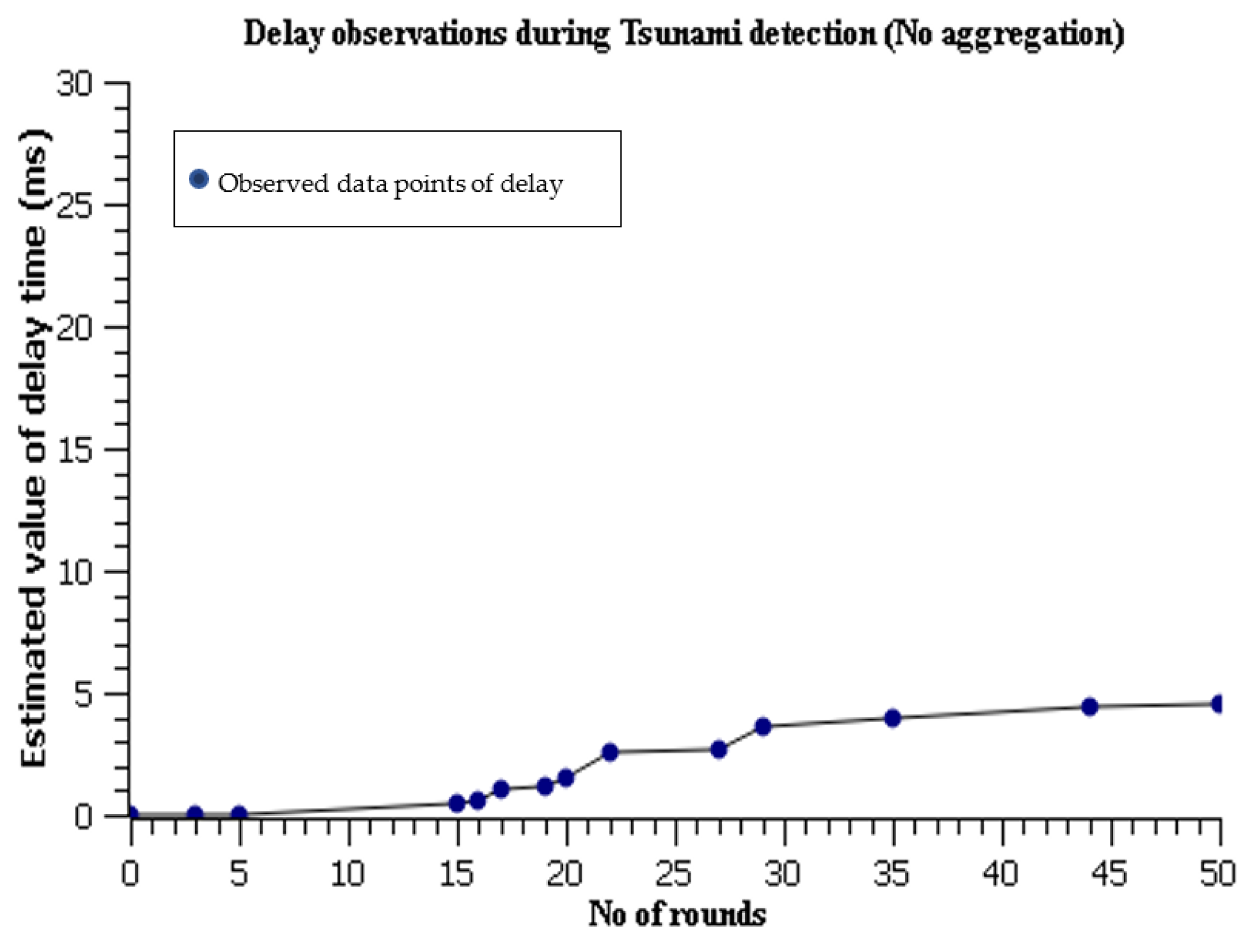
Figure 5 shows the positive correlation between the two variables. When the number of rounds increases, the estimated value of delay time also increases during tsunami detection.
Figure 5. Delay observations during tsunami detection.
In Table 8, the value of the Pearson correlation (r = 0.951) indicates a strong positive correlation between the two variables, which means that with the increase in the number of rounds, the estimated value of delay also increases, and the p-value (p < 0.01) shows a significant association between the two variables. Figure 5 shows the positive correlation between the two variables: the energy consumption during the No Tsunami alert and the number of rounds.
Table 8. Correlation for delay observations during no aggregation.
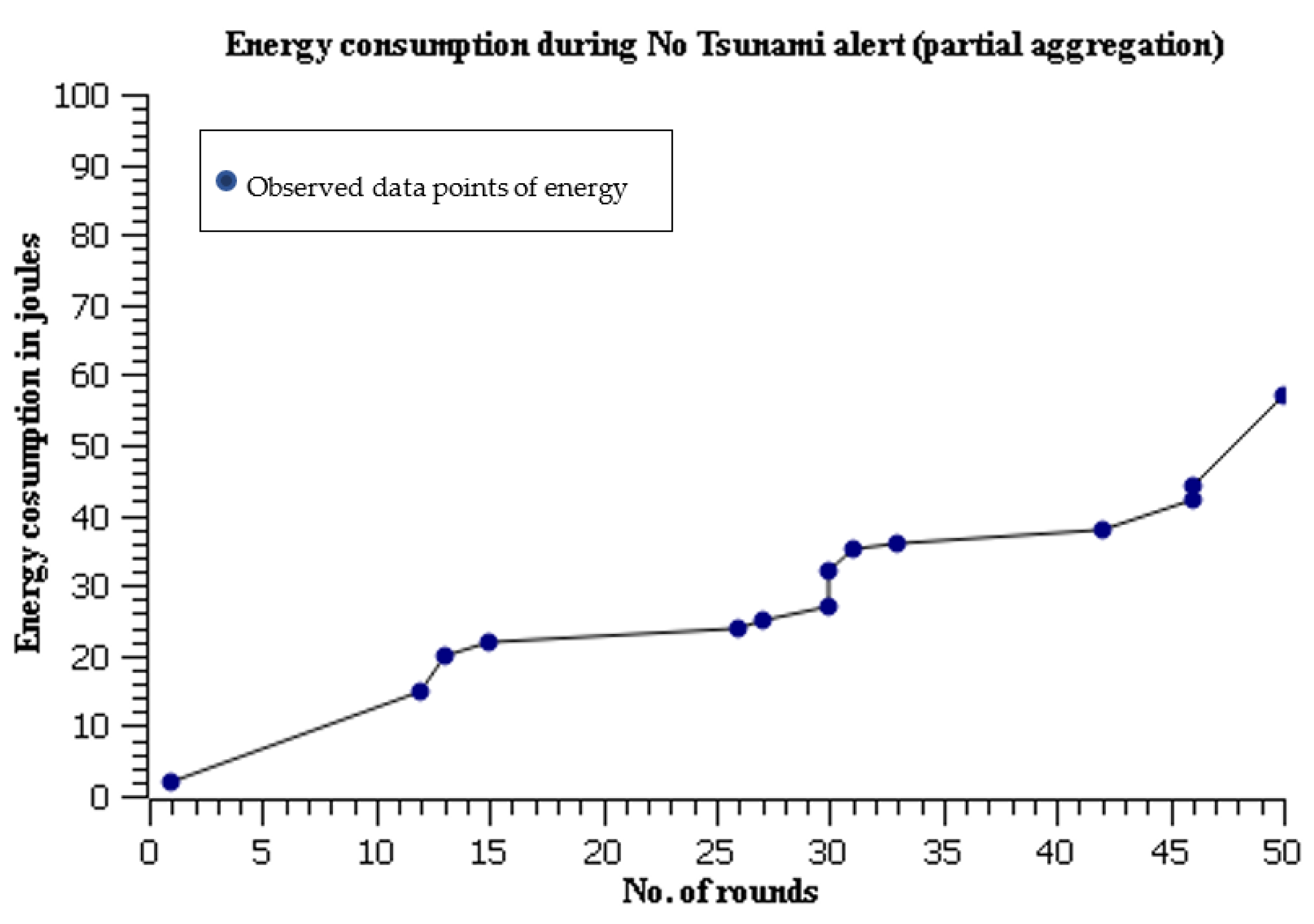
Figure 6 shows the positive correlation between the two variables. When the number of rounds increases, then the energy consumption also increases during the No Tsunami alert. In Table 9, the value of the Pearson correlation (r = 0.960) indicates a strong positive correlation between the two variables, which means that with the increase in the number of rounds, the energy consumption in joules also increases, and the p-value (p < 0.01) shows a significant association between the two variables. The criterion for statistical significance is that the result will be significant if the p-value is less than the level of significance (0.01 or 1%) in this study. So, we can see that the p-value is (0.000), less than (0.01); hence there is sufficient evidence of the significant association between the two variables.
Figure 6. Energy consumption during No Tsunami detection.
Table 9. Correlation for energy consumption during partial aggregation.
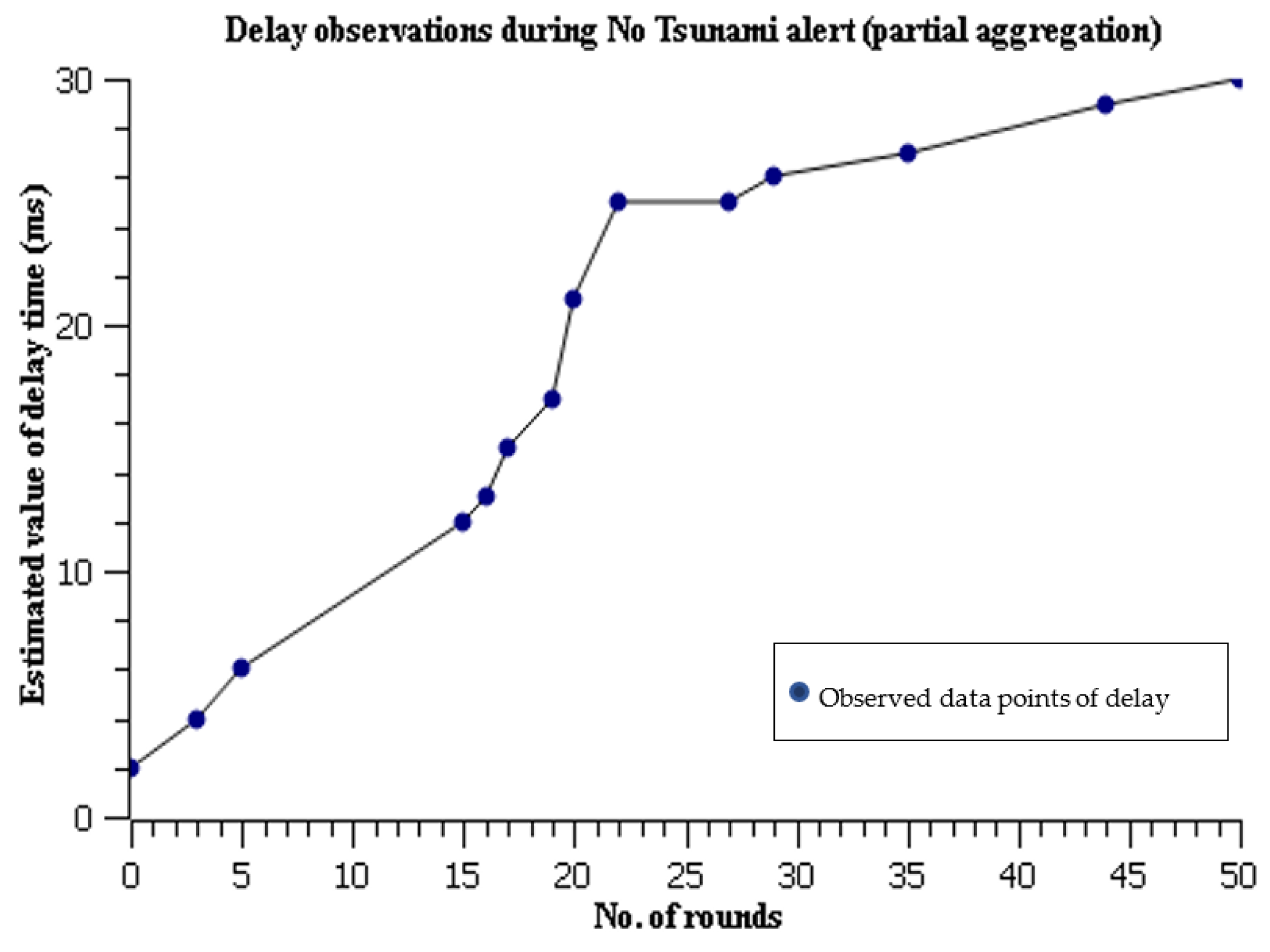
Figure 7 indicates another high positive correlation between two variables: the delay in observations during the No Tsunami alert and the number of rounds increasing proportionally.
Figure 7. Delay observations during No Tsunami alert.
In Table 10, the value of the Pearson correlation (r = 0.935) tells that a strong positive correlation between the two variables exists, which means that with the increase in the number of rounds, the estimated value of delay time during a No Tsunami alert also increases, and the p-value (p < 0.01) shows a significant association between the two variables.
Table 10. Correlation for delay observations during partial aggregations.

4.1. Comparisons of Energies during Tsunami Detection and No Alert

The pattern in Figure 4 and Figure 6 indicates that when the number of rounds increases, the energy consumption increases rapidly in case of no aggregation. On the other hand, in the case of partial aggregation, the increase in energy consumption increases with the increase in the number of rounds, but the increasing trend in the case of partial aggregation is less than that of no aggregation.

4.2. Comparisons of Delay during Tsunami Detection and No Alert

The pattern of Figure 5 and Figure 7 indicates the upward trend, but for the sake of comparison, if we see the graphs critically, in the case of partial aggregation, when the number of rounds increases, the estimated value of delay time increases rapidly. Moreover, in the case of no aggregation, the estimated value of delay time increases very slowly with the increase of the number of rounds. Hence, an increasing trend is high in the case of partial aggregation compared to no aggregation.

4.3. Comparison of Correlations for Energies

Table 7 and Table 9 show the values of the Pearson correlation in energy consumption during tsunami detection when there is no aggregation and when there is partial aggregation. The Pearson value is r = 0.764 when there is no aggregation and r = 0.960 when there is partial aggregation, which indicates that the correlation between the number of rounds and energy consumption with no aggregation is highly positive but not very close to a perfect positive correlation. On the other hand, the correlation between the number of rounds and energy consumption with partial aggregation is again highly positive but very close to a perfect positive correlation. Hence, we can say that the correlation between the two variables is higher when there is partial aggregation than the correlation when there is no aggregation.

4.4. Comparison of Correlations for Delay

Table 8 and Table 10 show the Pearson correlation values of several rounds vs. estimated values of delay time when no aggregation and partial aggregation are r = 0.951 and r = 0.935, respectively. The Pearson value (r = 0.951) shows a strong positive correlation and close to perfect positive correlation between the number of rounds and delay time when there is no aggregation. Similarly, the Pearson value (r = 0.935) indicates a strong positive correlation between two variables with partial aggregation but not as close to a perfect positive correlation as in the no aggregation case. So, we can say that the correlation between two variables is stronger when there is no aggregation compared to partial aggregation.

4.5. Limitation of the Model

The proposed scheme can work for early warning detection of tsunamis because of an earthquake with a specified low and high magnitude. However, the recent Tsunami in Tonga resulted from the erupted volcano, and it presents a new challenge for Tsunami alert and opened many questions in the research world to tackle. The proposed model does not cover any Tsunami which is not a result of an earthquake. Further, due to a lack of permission and the unavailability of deployed sensors and datasets, the impact of the Tsunami on the behavior analysis of marines is still an open area of research.

5. Conclusions

The paper proposed and simulated an economical sensor network fuzzy-based model with capabilities of low energy consumption, early tsunami detection, and data collection. The cost of our model can be further reduced by designing multifunction sensors, thus eliminating the need for different types of sensors, resulting in the most needed economic impact for underdeveloped countries. We also incorporated no aggregation and partial aggregation for optimizing two important factors, i.e., delay and energy. Our fuzzy-logic-based algorithm takes input values, such as electromagnetic field, turtle count, earthquake, and water level, and based on these values, real-time alerts of a tsunami are released, while real-time data are stored in a database for future research.

Author Contributions

Resources, A.A.; Supervision, I.U.; Writing—original draft, B.Q.; Writing—review & editing, S.A.S. All authors have read and agreed to the published version of the manuscript.

Funding

The authors received no specific funding for this study.

Institutional Review Board Statement

Not applicable.

Data Availability Statement

Not applicable.

Conflicts of Interest

The authors declare they have no conflict of interest to report regarding the present study.

References

  1. Shah, S.A.; Seker, D.Z.; Rathore, M.M.; Hameed, S.; Yahia, S.B.; Draheim, D. Towards Disaster Resilient Smart Cities: Can Internet of Things and Big Data Analytics Be the Game Changers? IEEE Access 2019, 7, 91885–91903. [Google Scholar] [CrossRef]
  2. Shah, S.A.; Seker, D.Z.; Hameed, S.; Draheim, D. The Rising Role of Big Data Analytics and IoT in Disaster Management: Recent Advances, Taxonomy and Prospects. IEEE Access 2019, 7, 54595–54614. [Google Scholar] [CrossRef]
  3. Teodoro, A.C.; Duarte, L. The role of satellite remote sensing in natural disaster management. In Nanotechnology-Based Smart Remote Sensing Networks for Disaster Prevention; Elsevier: Amsterdam, The Netherlands, 2022; pp. 189–216. [Google Scholar] [CrossRef]
  4. Sassa, S.; Takagawa, T. Liquefied gravity flow-induced tsunami: First evidence and comparison from the 2018 Indonesia Sulawesi earthquake and tsunami disasters. Landslides 2019, 16, 195–200. [Google Scholar] [CrossRef]
  5. Lo, Y.-C.; Zhao, L.; Xu, X.; Chen, J.; Hung, S.-H. The 13 November 2016 Kaikoura, New Zealand Earthquake: Rupture process and seismotectonic implications. Earth Planet. Phys. 2018, 2, 139–149. [Google Scholar] [CrossRef]
  6. Nurendyastuti, A.K.; Dinata, M.M.M.; Mitayani, A.; Purnama, M.R.; Adityawan, M.B.; Farid, M.; Kuntoro, A.A.; Widyaningtias. Tsunami Early Warning System Based on Maritime Wireless Communication. J. Civ. Eng. Forum 2022, 8, 115–124. [Google Scholar] [CrossRef]
  7. Sakalasuriya, M.M.; Rahayu, H.; Haigh, R.; Amaratunga, D.; Wahdiny, I.I. Post-tsunami Indonesia: An Enquiry into the Success of Interface in Indonesian Tsunami Early Warning System. In Post-Disaster Governance in Southeast Asia; Mardiah, A.N., Olshansky, R.B., Bisri, M.B., Eds.; Springer: Berlin/Heidelberg, Germany, 2022; pp. 175–200. [Google Scholar] [CrossRef]
  8. Oetjen, J.; Sundar, V.; Venkatachalam, S.; Reicherter, K.; Engel, M.; Schuttrumpf, H.; Sannasiraj, S.A. A comprehensive review on structural tsunami countermeasures. Nat. Hazards 2022, 113, 1419–1449. [Google Scholar] [CrossRef]
  9. Chaturvedi, S.K. A case study of tsunami detection system and ocean wave imaging mechanism using radar. J. Ocean Eng. Sci. 2019, 4, 203–210. [Google Scholar] [CrossRef]
  10. LaBrecque, J.; Rundle, J.B.; Bawden, G.W. Earth Surface, and Interior Focus Area. In Global Navigation Satellite System Enhancement for Tsunami Early Warning Systems; Global Assessment Report on Disaster Risk Reduction; University of Texas Austin: Austin, TX, USA, 2019. [Google Scholar]
  11. Ferrolino, A.; Mendoza, R.; Magdalena, I.; Lope, J.E. Application of particle swarm optimization in optimal placement of tsunami sensors. PeerJ Comput. Sci. 2020, 6, e333. [Google Scholar] [CrossRef] [PubMed]
  12. Acharya, R. Evolution of DART Technology and Development of Fourth Generation Bouy System for Deep Ocean Assessment and Reporting of Tsunami-(DART 4G), NISCAIR-CSIR, India. Volume 47, pp. 519–521. Available online: http://nopr.niscpr.res.in/handle/123456789/44133 (accessed on 20 July 2022).
  13. Mulia, I.E.; Satake, K. Developments of Tsunami Observing Systems in Japan. Front. Earth Sci. 2020, 8, 145. [Google Scholar] [CrossRef]
  14. Naeem, G. Dealing with Local Tsunami on Pakistan Coast. In Tsunami-Damage Assessment and Medical Triage; IntechOpen: London, UK, 2020. [Google Scholar] [CrossRef]
  15. Pakistan Meteorological Department (PMD). National Seismic and Tsunami Monitoring Center. Available online: https://seismic.pmd.gov.pk/seismicnew/index.html# (accessed on 20 July 2022).
  16. Privadi, A.; Damara, D.R.; Widati, P.L.; Triputra, F.R. Indonesia’s Cable Based Tsunameter (CBT) System as an Earthquake Disaster Mitigation System in East Nusa Tenggara. In Proceedings of the 2021 IEEE Ocean Engineering Technology and Innovation Conference: Ocean Observation, Technology and Innovation in Support of Ocean Decade of Science (OETIC), Jakarta, Indonesia, 8–9 November 2021; pp. 63–67. [Google Scholar] [CrossRef]
  17. Gardner-Stephen, P.; Wallace, A.; Hawtin, K.; Al-Nuaimi, G.; Tran, A.; Le Mozo, T.; Lloyd, M. Reducing cost while increasing the resilience & effectiveness of tsunami early warning systems. In Proceedings of the 2019 IEEE Global Humanitarian Technology Conference (GHTC), Seattle, WA, USA, 17–20 October 2019; pp. 1–8. [Google Scholar] [CrossRef]
  18. Neo, J.P.S.; Tan, B.H. The use of animals as a surveillance tool for monitoring environmental health hazards, human health hazards and bioterrorism. Vet. Microbiol. 2017, 203, 40–48. [Google Scholar] [CrossRef] [PubMed]
  19. Jain, N.; Virmani, D.; Abraham, A.; Salas-Morera, L.; Garcia-Hernandez, L. Did They Sense it Coming? A Pipelined Approach for Tsunami Prediction Based on Aquatic Behavior Using Ensemble Clustering and Fuzzy Rule-Based Classification. IEEE Access 2020, 8, 166922–166939. [Google Scholar] [CrossRef]
  20. Jain, N.; Virmani, D.; Abraham, A. Overlap Function Based Fuzzified Aquatic Behaviour Information Extracted Tsunami Prediction Model. Int. J. Distrib. Syst. Technol. 2019, 10, 56–81. [Google Scholar] [CrossRef]
  21. Minami, T.; Schnepf, N.R.; Toh, H. Tsunami-generated magnetic fields have primary and secondary arrivals like seismic waves. Sci. Rep. 2021, 11, 2287. [Google Scholar] [CrossRef] [PubMed]
  22. Freas, C.A.; Cheng, K. The Basis of Navigation Across Species. Annu. Rev. Psychol. 2022, 73, 217–241. [Google Scholar] [CrossRef] [PubMed]
  23. Laghari, M.B.; Shahwani, H.; Shah, S.A.; Wagan, R.A.; Rauf, Z.; Ali, I.; Alshamrani, S.S.; Frnda, J. Towards Enabling Multihop Wireless Local Area Networks for Disaster Communications. Wirel. Commun. Mob. Comput. 2021, 2021, 5540480. [Google Scholar] [CrossRef]
  24. Duputel, Z.; Rivera, L. Long-period analysis of the 2016 Kaikoura earthquake. Phys. Earth Planet. Inter. 2017, 265, 62–66. [Google Scholar] [CrossRef]
  25. National Geophysical Data Center/World Data Service. NGDC/WDS Global Historical Tsunami Database; National Oceanic and Atmospheric Administration, National Centers for Environmental Information: Asheville, NC, USA, 2017. [CrossRef]
  26. Shah, S.A.; Yahia, S.B.; McBride, K.; Jamil, A.; Draheim, D. Twitter Streaming Data Analytics for Disaster Alerts. In Proceedings of the 2021 2nd International Informatics and Software Engineering Conference (IISEC), Ankara, Turkey, 16–17 December 2021; pp. 1–6. [Google Scholar] [CrossRef]
  27. Qayyum, B.; Li, G.; Kasil, M.; Haque, B.; Ali, K.; Lasebae, A.; Raza, M.; Errahmadi, B. Evaluation of Energy Consumption and Delay in Different Modes of Data Aggregation for Wireless Sensor Networks. In Proceedings of the 2020 International Conference on UK-China Emerging Technologies (UCET), Glasgow, UK, 20–21 August 2020; pp. 1–4. [Google Scholar] [CrossRef]
  28. Comfort, X.L.K.; Znati, T.; Voortman, M. Early detection of near-field tsunamis using underwater sensor networks. Sci. Tsunami Hazards 2012, 31, 231–243. [Google Scholar]
Publisher’s Note: MDPI stays neutral with regard to jurisdictional claims in published maps and institutional affiliations.

Article Metrics

Citations

Article Access Statistics

Multiple requests from the same IP address are counted as one view.