Article

Buffer Capacity of Steel Shed with Two Layer Absorbing System against the Impact of Rockfall Based on Coupled SPH-FEM Method


1
Guangdong Heli Civil Engineering Co., Ltd., Guangzhou 511400, China
2
Guangdong Communication Planning and Design Institute Group Co., Ltd., Guangzhou 510507, China
*
Author to whom correspondence should be addressed.
Sustainability 2022, 14(20), 13680; https://doi.org/10.3390/su142013680
Submission received: 14 September 2022 / Revised: 10 October 2022 / Accepted: 20 October 2022 / Published: 21 October 2022
(This article belongs to the Topic Natural Hazards and Disaster Risks Reduction)

Abstract

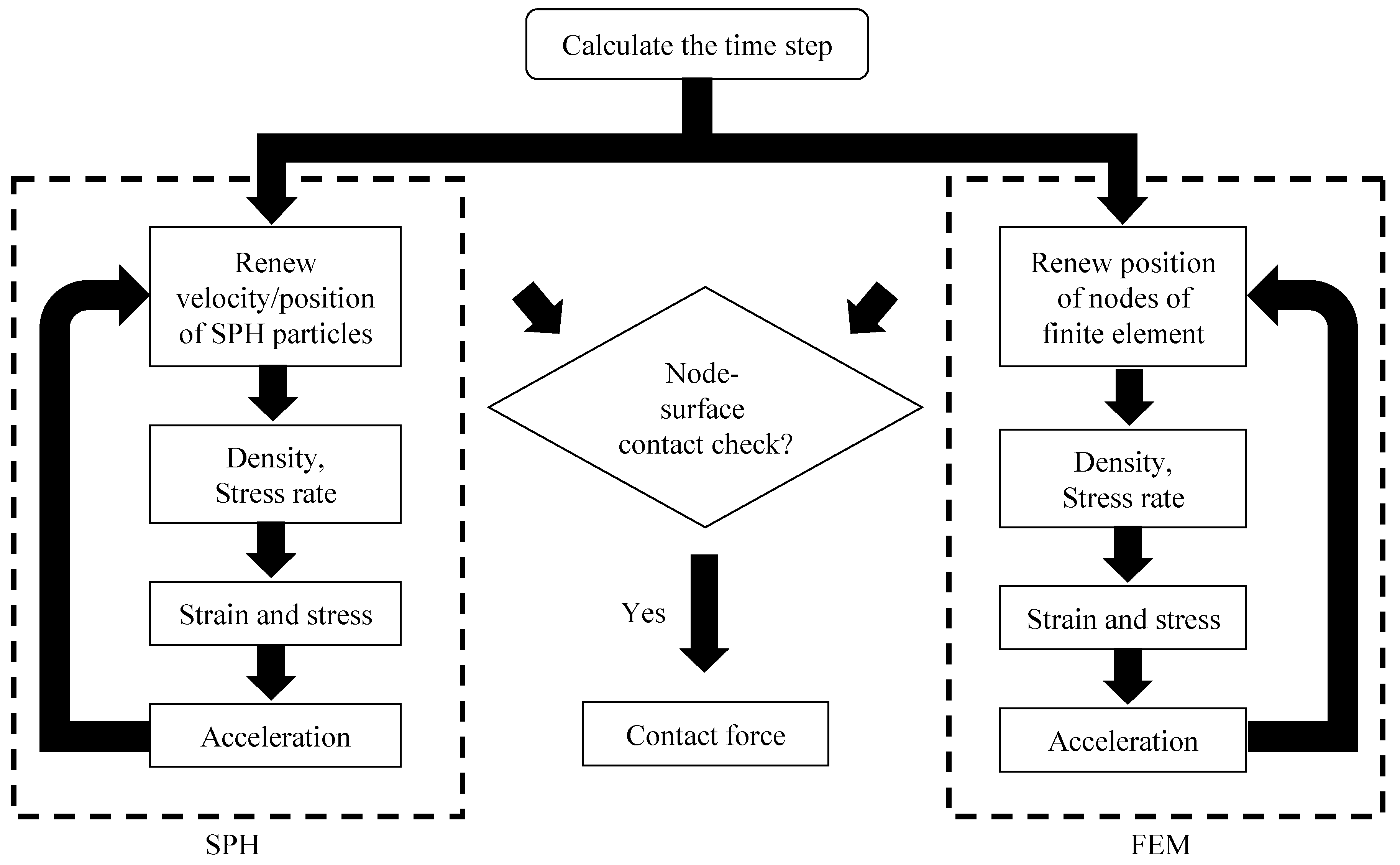
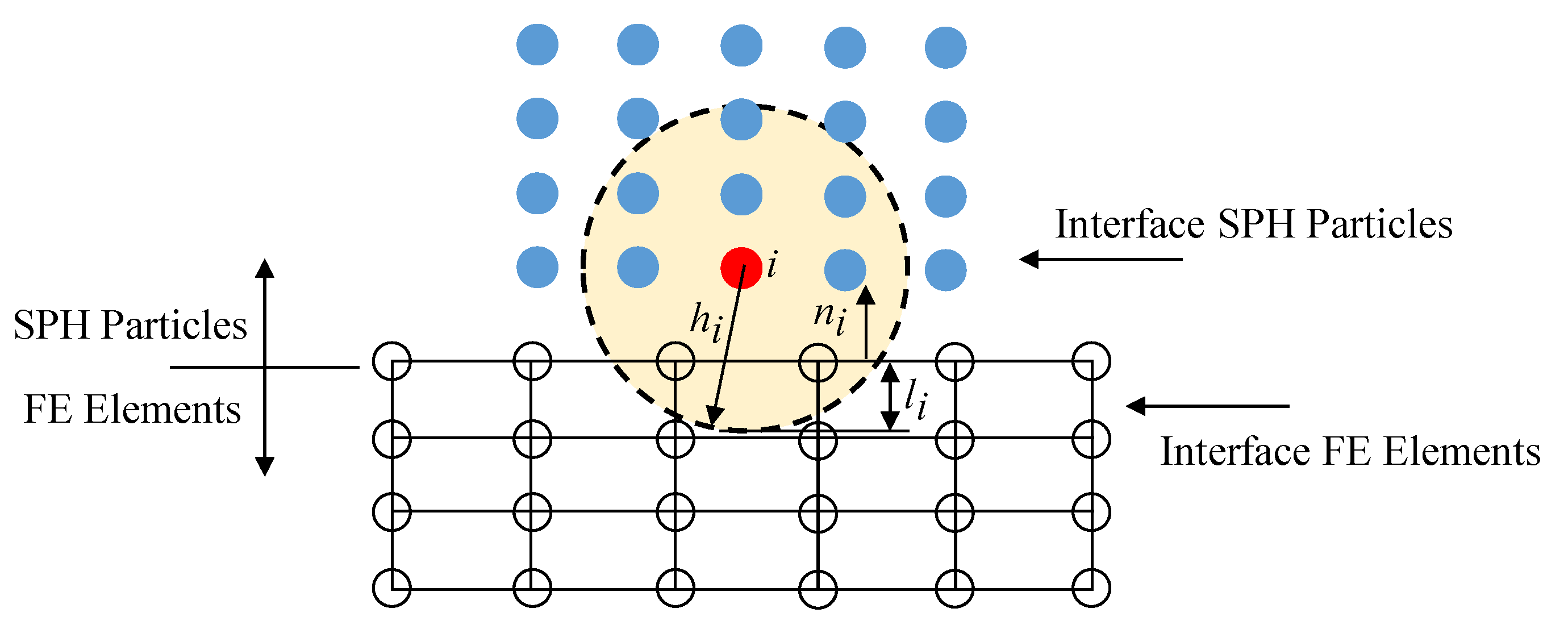
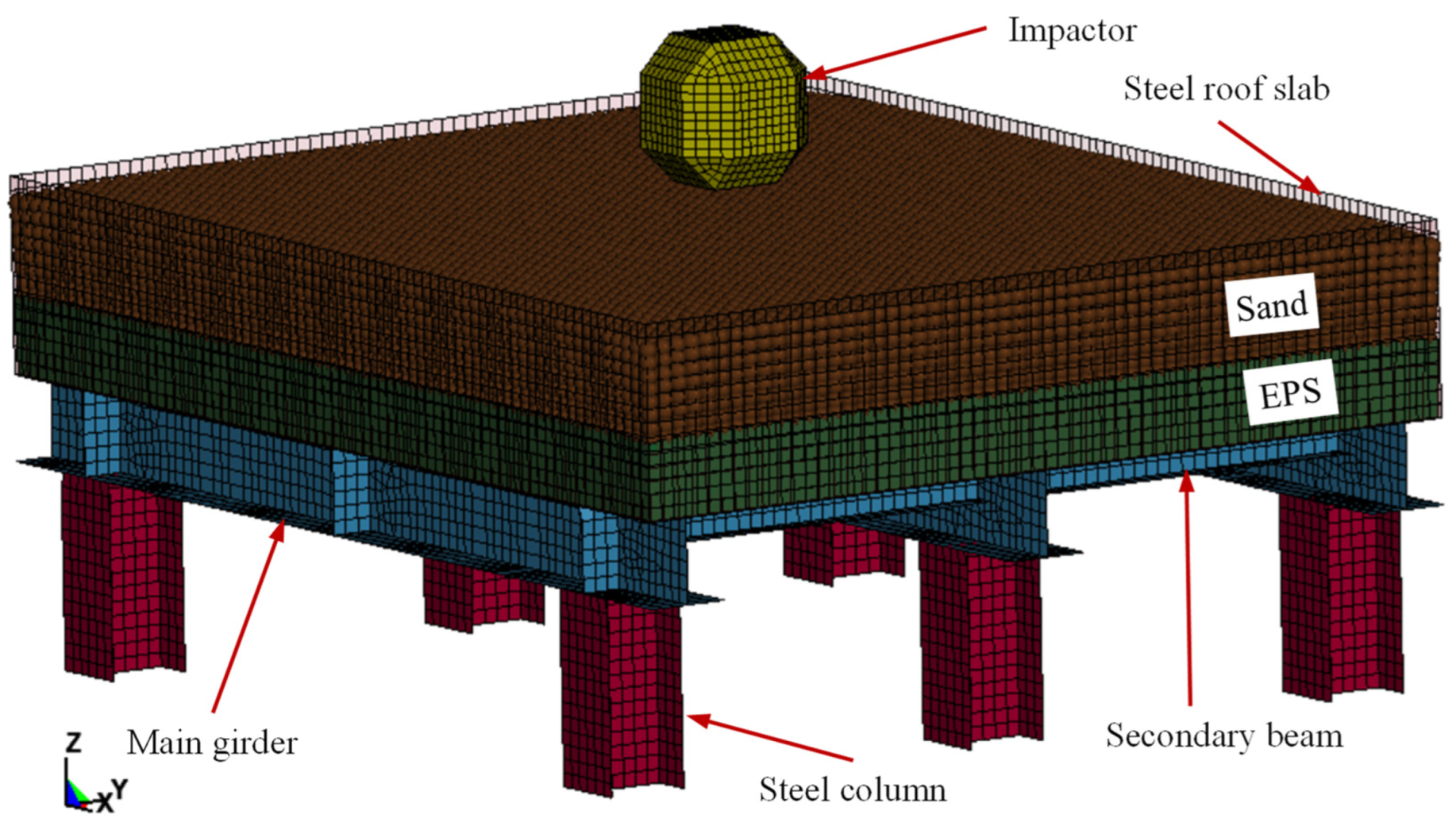
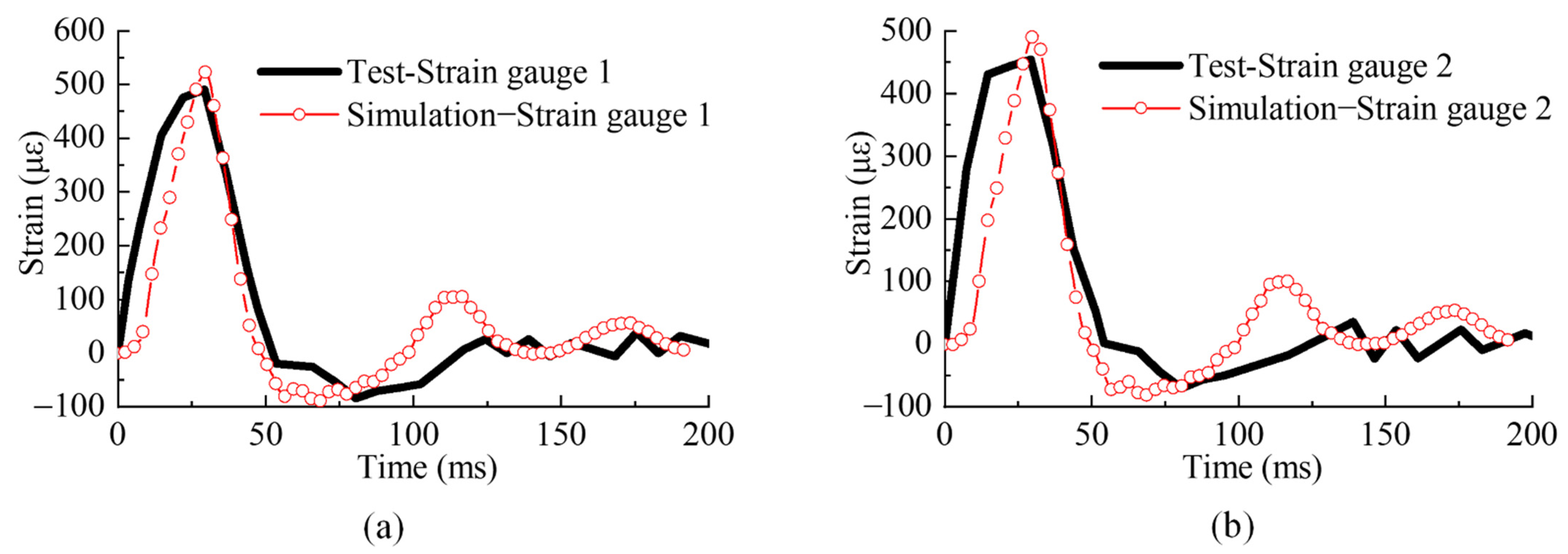
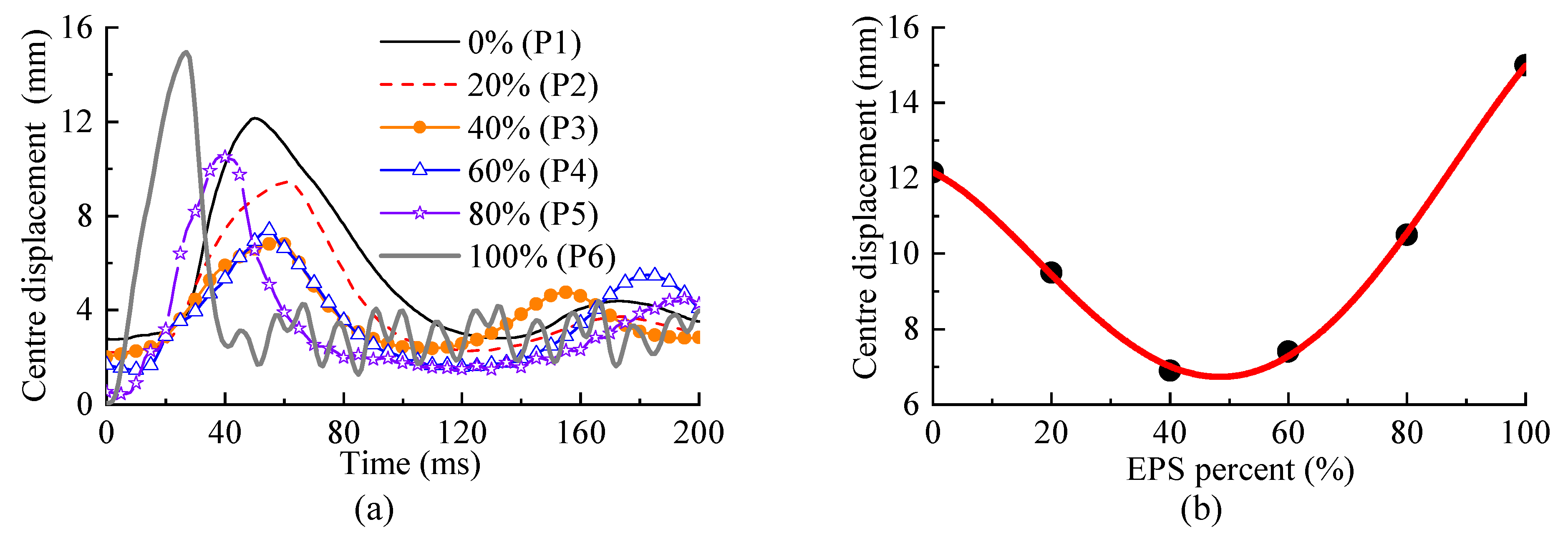
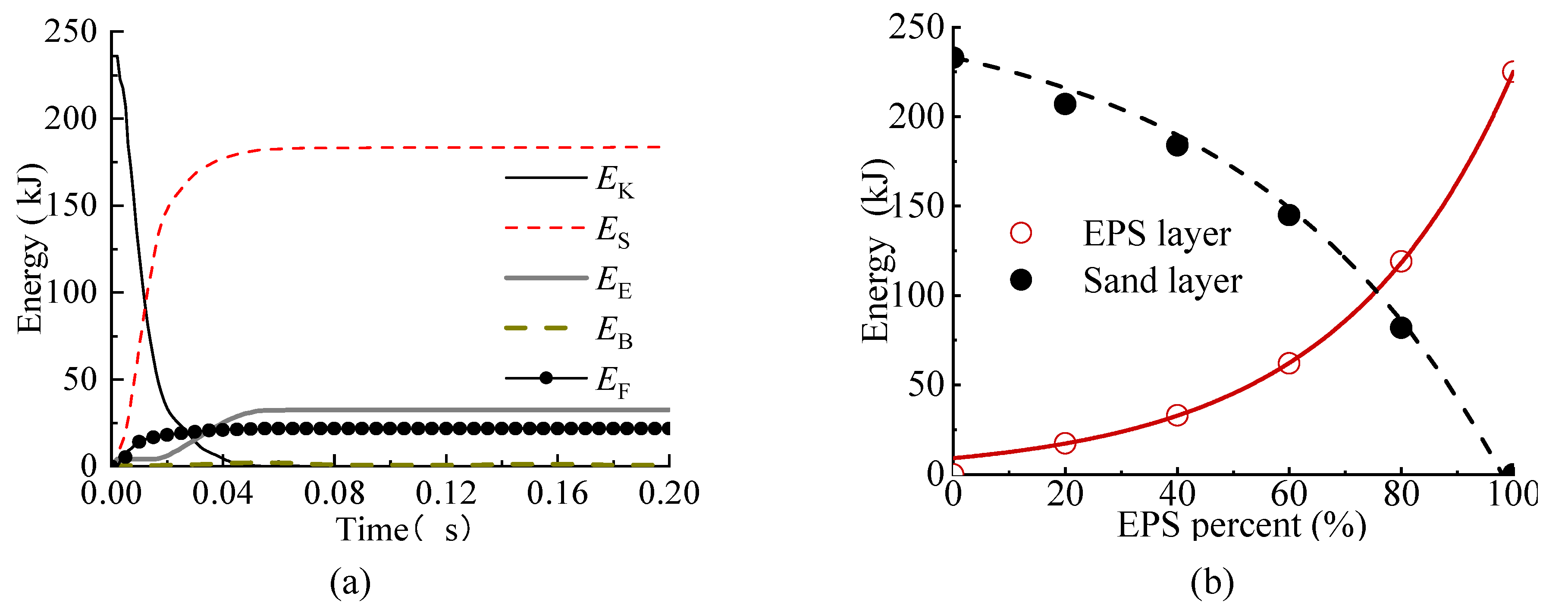
This study aimed to find the optimal thickness combination of the two-layered absorbing system combinated with an expanded polystyrene (EPS) cushion and a soil layer in a steel shed under dynamic loadings. The coupled Smooth Particle Hydrodynamic method (SPH) and Finite Element Method (FEM) were introduced to simulate the impact of the rockfall against the steel shed with a two-layer absorbing system. By comparing the numerical results with test data, the coupled numerical model was well validated. Through the verified numerical model, a series of numerical experiments were carried out to find the optimal combination for the two-layered absorbing system. The values of the EPS layer thickness as a percentage of the total thickness were set as 0% (P1), 20% (P2), 40% (P3), 60% (P4), 80% (P5), and 100% (P6). The results show that the coupled FEM–SPH method was an effective method to simulate rockfall impacting the steel rock shed; P4 (0.6 m thickness EPS cushion and 0.9 m thickness soil layer) was the most efficient combination, which can significantly reduce the structural displacement response by 43%. A two-layered absorbing system can effectively absorb about 90% of the total energy. The obtained results yield scientifically sound guidelines for further research on the design of steel sheds against rockfall.
Keywords: buffer capacity; rockfall; two-layered absorbing system; coupled SPH–FEM model; optimal combination buffer capacity; rockfall; two-layered absorbing system; coupled SPH–FEM model; optimal combination