Article

Quality of Forecasts as the Factor Determining the Coordination of Logistics Processes by Logistic Operator

Department of Organizational and Management, Logistics Institute, Silesian University of Technology, 41-800 Zabrze, Poland
*
Authors to whom correspondence should be addressed.
Sustainability 2022, 14(2), 1013; https://doi.org/10.3390/su14021013
Submission received: 30 November 2021 / Revised: 10 January 2022 / Accepted: 13 January 2022 / Published: 17 January 2022

Abstract

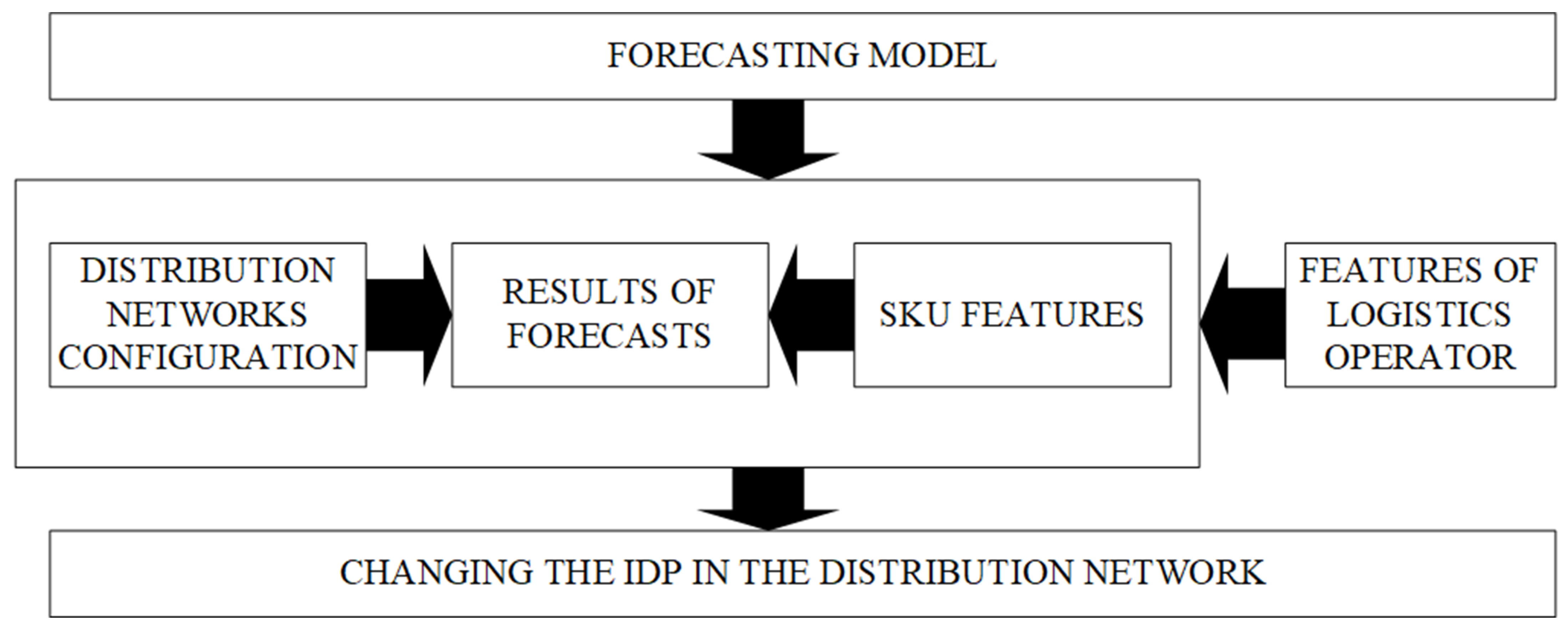
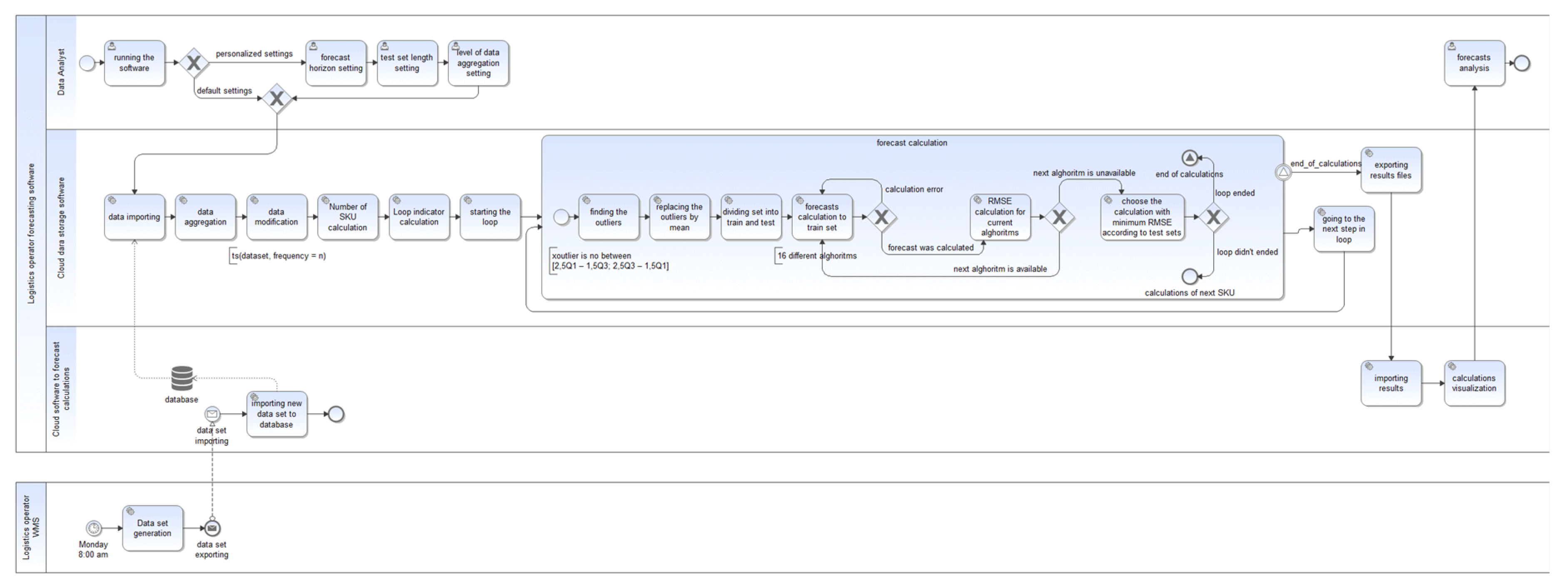
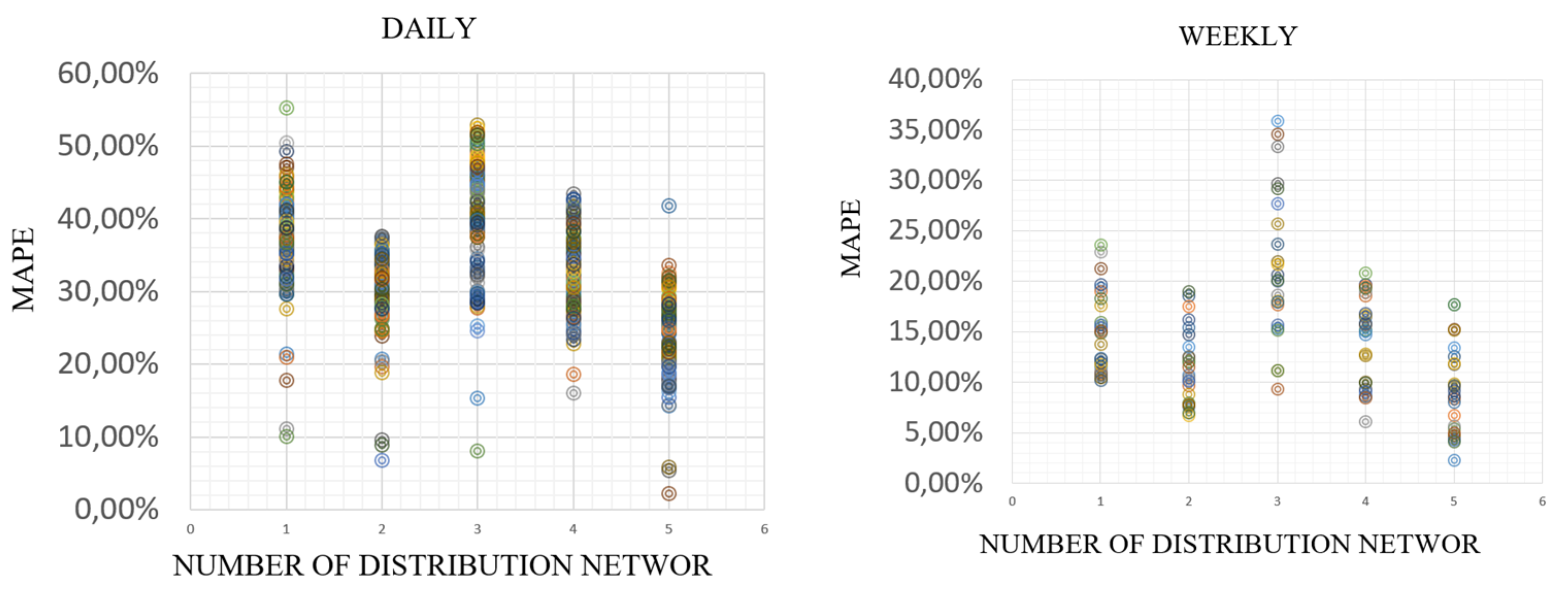
(1) Background: Currently, logistics operators are struggling with the problem of acquiring new areas to create added value. One of such challenges is acquiring a new function in the form of demand forecasting and coordination skills. The increase in the need to forecast demand is related to the increasing complexity of the distribution network, omnichannel systems and turbulent environment. It is necessary to have a comprehensive approach to the distribution network and to develop competences related to coordination. For the authors, one of the most important coordination factors is the quality of forecasts, especially in relation to modern logistics operators. (2) Methods: In literature studies, the authors combine prognostic abilities with a predisposition to coordinate logistic processes in distribution networks. The aim of the research is to develop a forecasting model that will allow a logistic operator who aspires to coordinate logistics processes to create forecasts in the distribution system. The tool was developed in the R programming language and allows for forecasting based on data from the Warehouse Management System; (3) Results: The quality of forecasts is correlated with the characteristics of the products, the relationship between the manufacturing company and the logistics operator, and the configuration of the distribution network in individual chains. The results of the forecasts were compared with selected features of each of the 5 distribution networks that were tested. In parallel, the attributes of a company capable of forecasting in the distribution network were analyzed. These attributes were also compared to those of the logistics operator. (4) Conclusions: The authors proved that a logistic operator with a set of defined features is capable of generating demand in the entire distribution network.
Keywords: coordination; distribution network; forecasting; logistics; logistics operator; third-party logistics coordination; distribution network; forecasting; logistics; logistics operator; third-party logistics