Rice Husk Ash Incorporation in Calcium Aluminate Cement Concrete: Life Cycle Assessment, Hydration and Strength Development


Abstract
1. Introduction
2. Materials and Methods
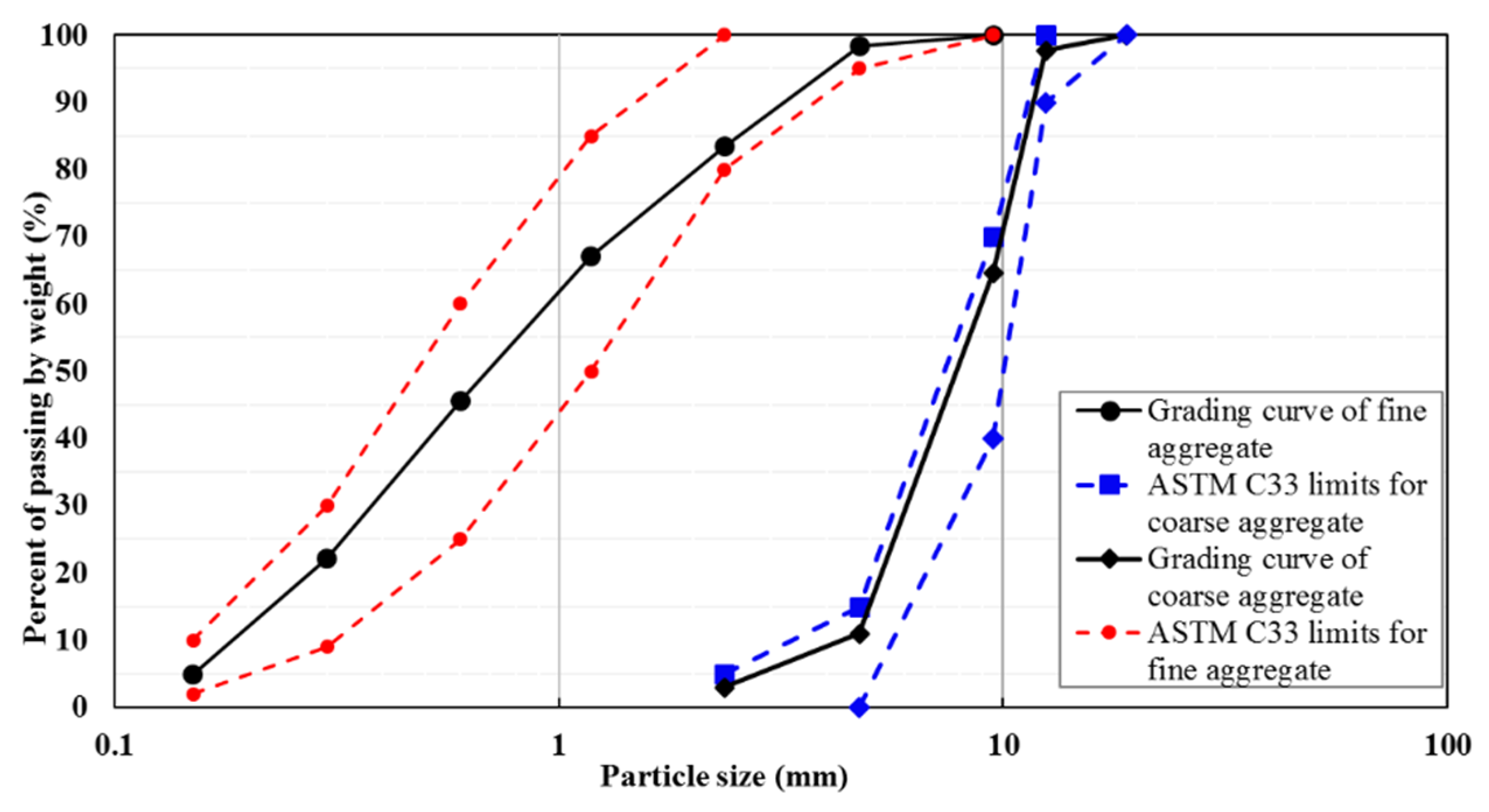
2.1. Materials and Mixture Proportions
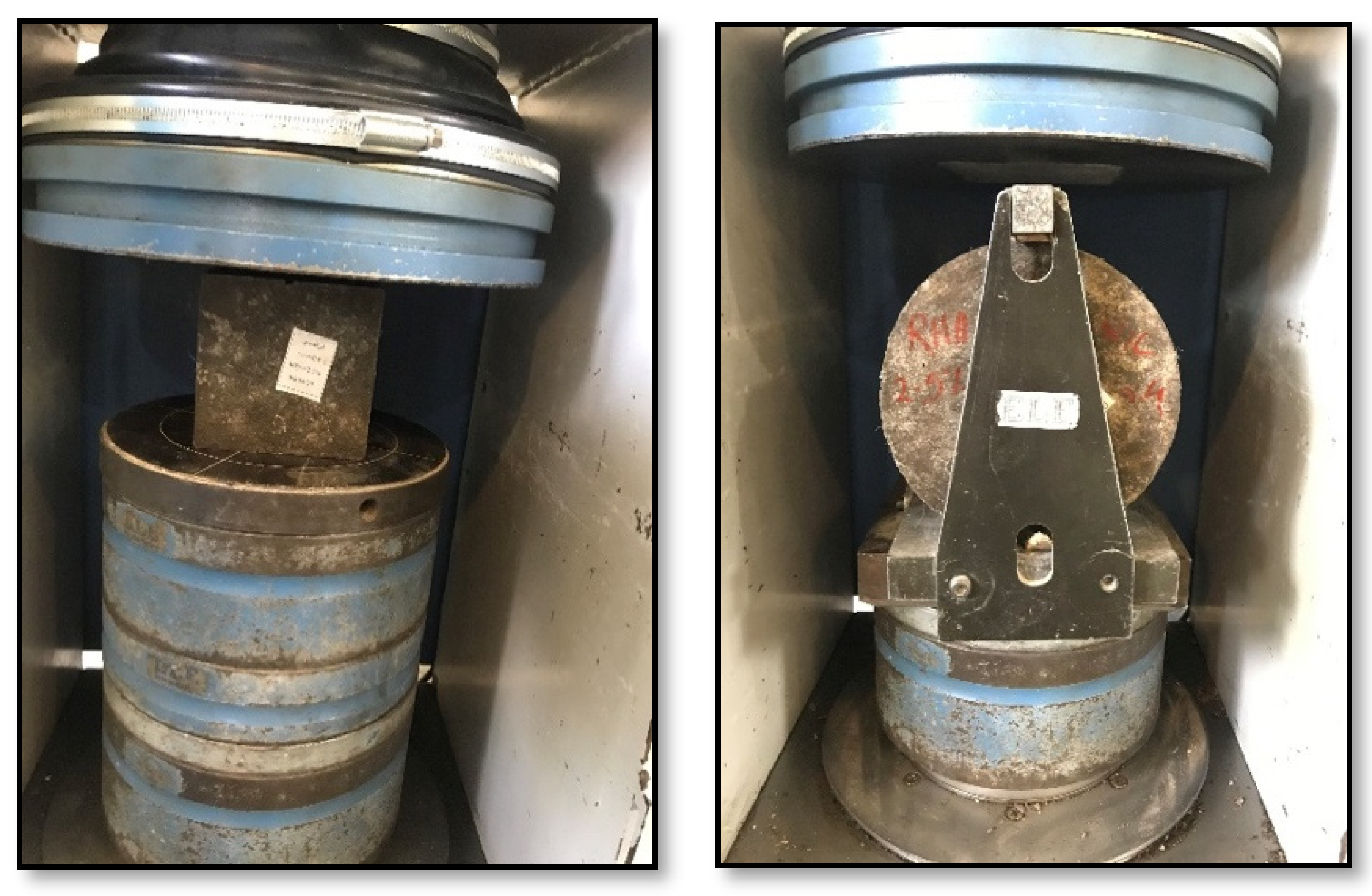
2.2. Manufacturing and Testing Specimens
Mechanical and Microstructural Tests
2.3. LCA Methodology
2.3.1. Environmental Impact Assessment
- (a)
- Goal and scope definition
- (b)
- Inventory analysis
- (c)
- Environmental impact assessment and interpretation phase
2.3.2. Goal and Scope
2.3.3. Inventory Analysis
3. Results
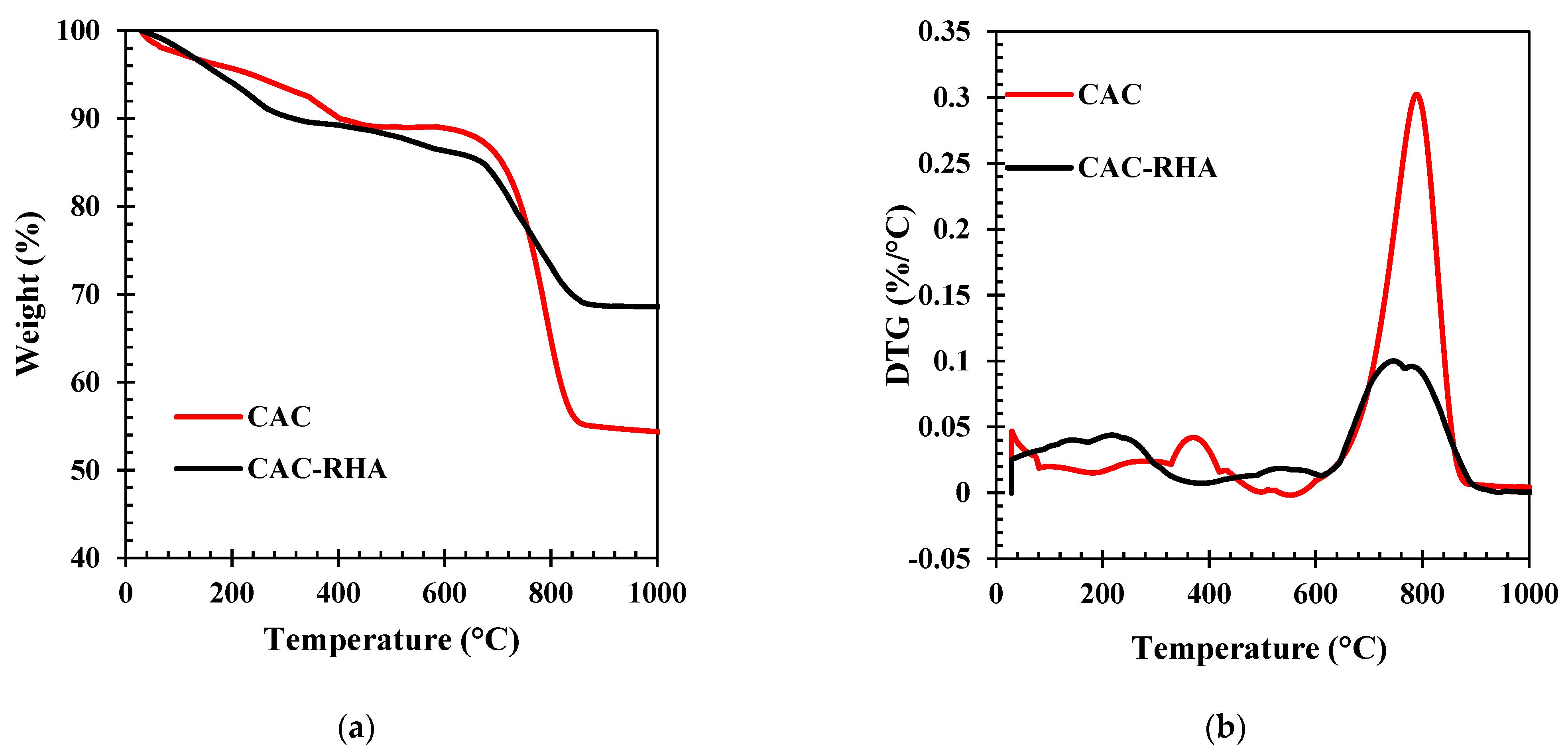
3.1. Hydration Process of 90-Day Paste
3.2. Hardened CACC Features
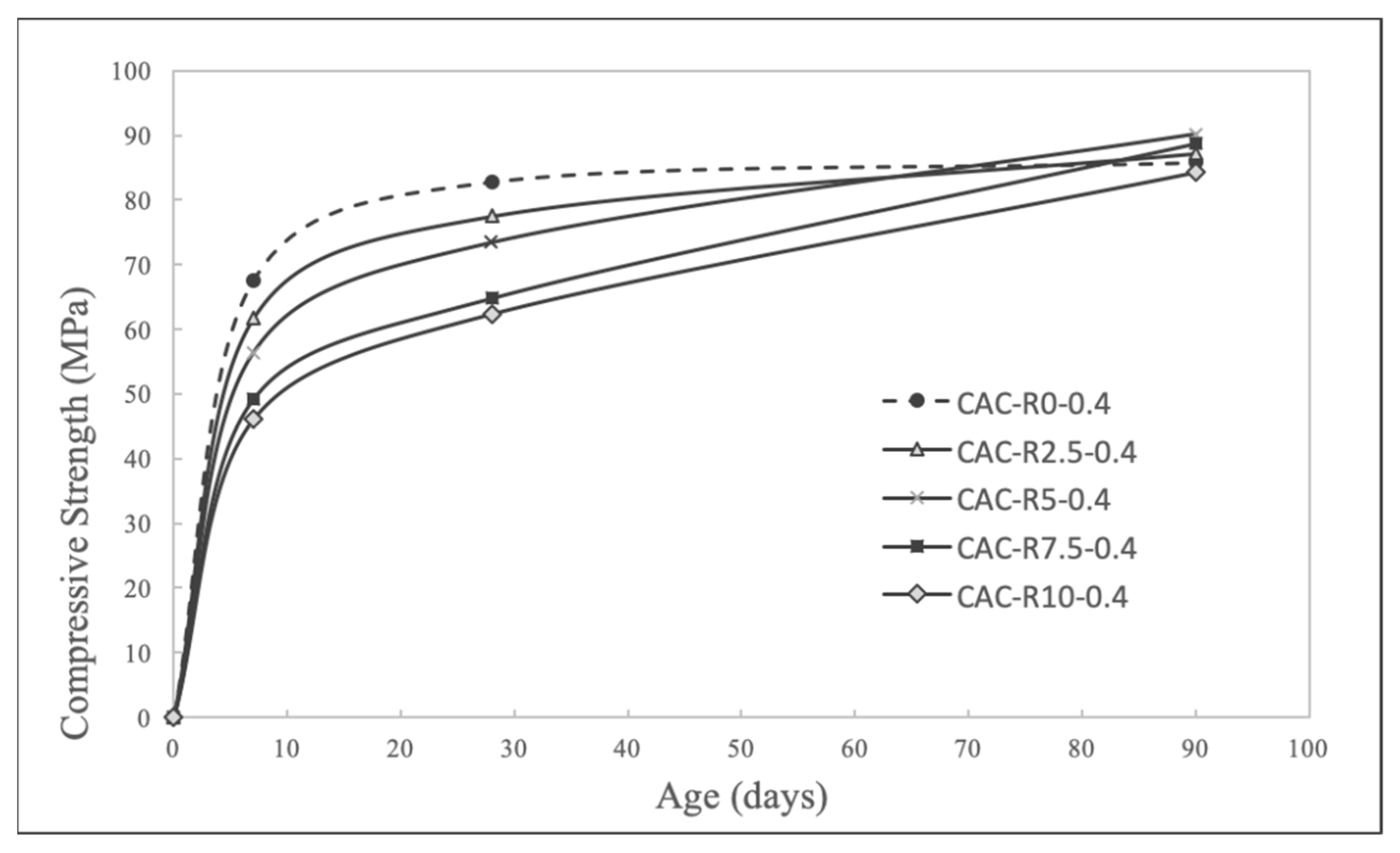
3.2.1. Compressive Strength
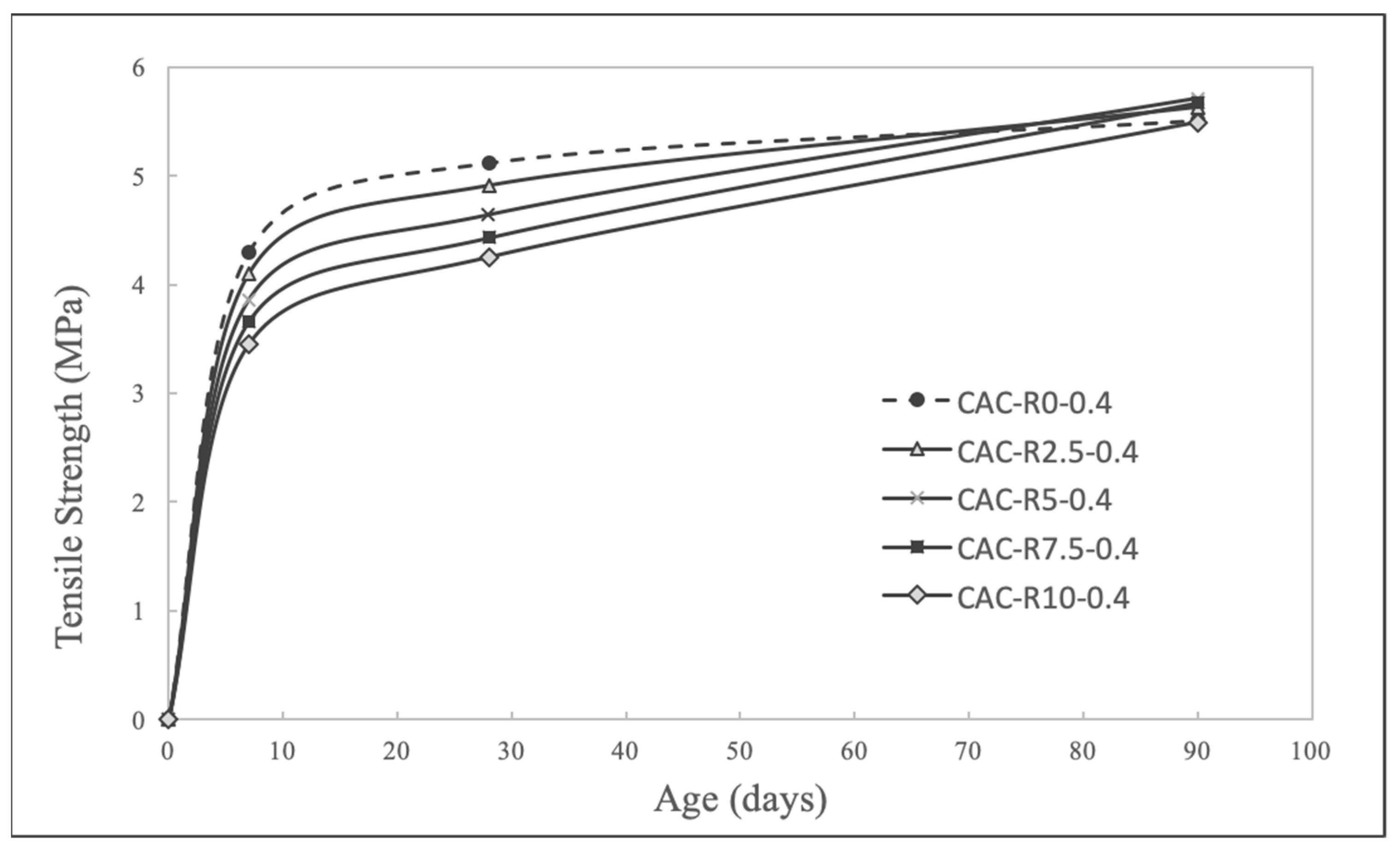
3.2.2. Tensile Strength
4. LCA Findings
4.1. Impact Assessment
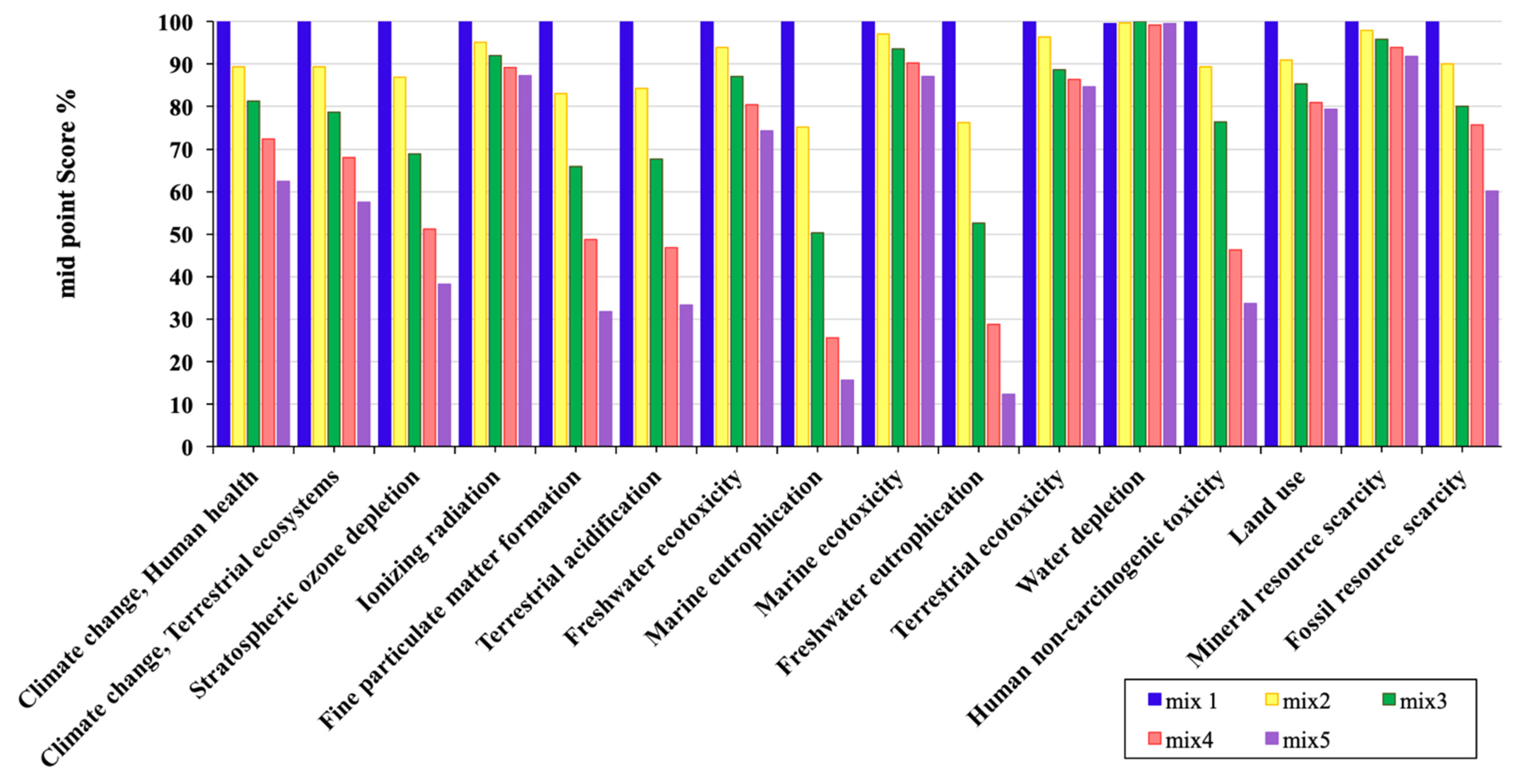
4.2. Midpoint Assessment
4.3. Endpoint Assessment
5. Conclusions
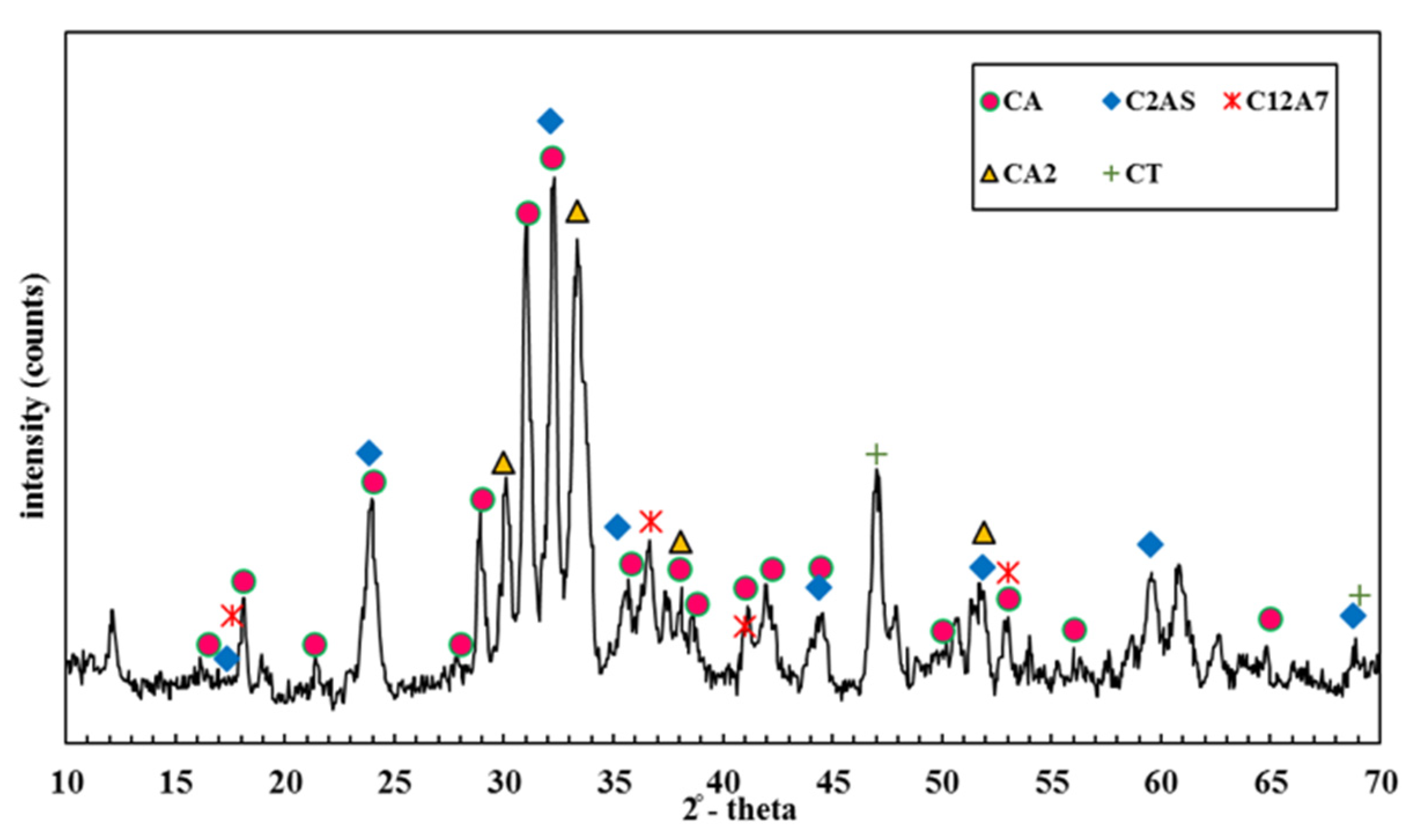
- Based on the TGA results, the concretes with RHA experienced a greater mass drop than those without RHA at temperatures from 200 to 300. This can be attributed to the fact that incorporating 5% RHA in CACC increases the hydration level and in turn improves the mechanical features compared with the concrete without RHA at an age of 90 days.
- All the mechanical features of the 90-day specimens were higher than those of the 7- and 28-day specimens. Furthermore, at 90 days, the specimens with RHA had higher mechanical features than the control specimens, and the specimen with 5% RHA had the maximum improvement. The reason for this is a higher hydration level in concrete containing RHA, which led to a larger loss of mass in the 200–300 °C range in the TGA test, as a result of the C-S-H gel degradation.
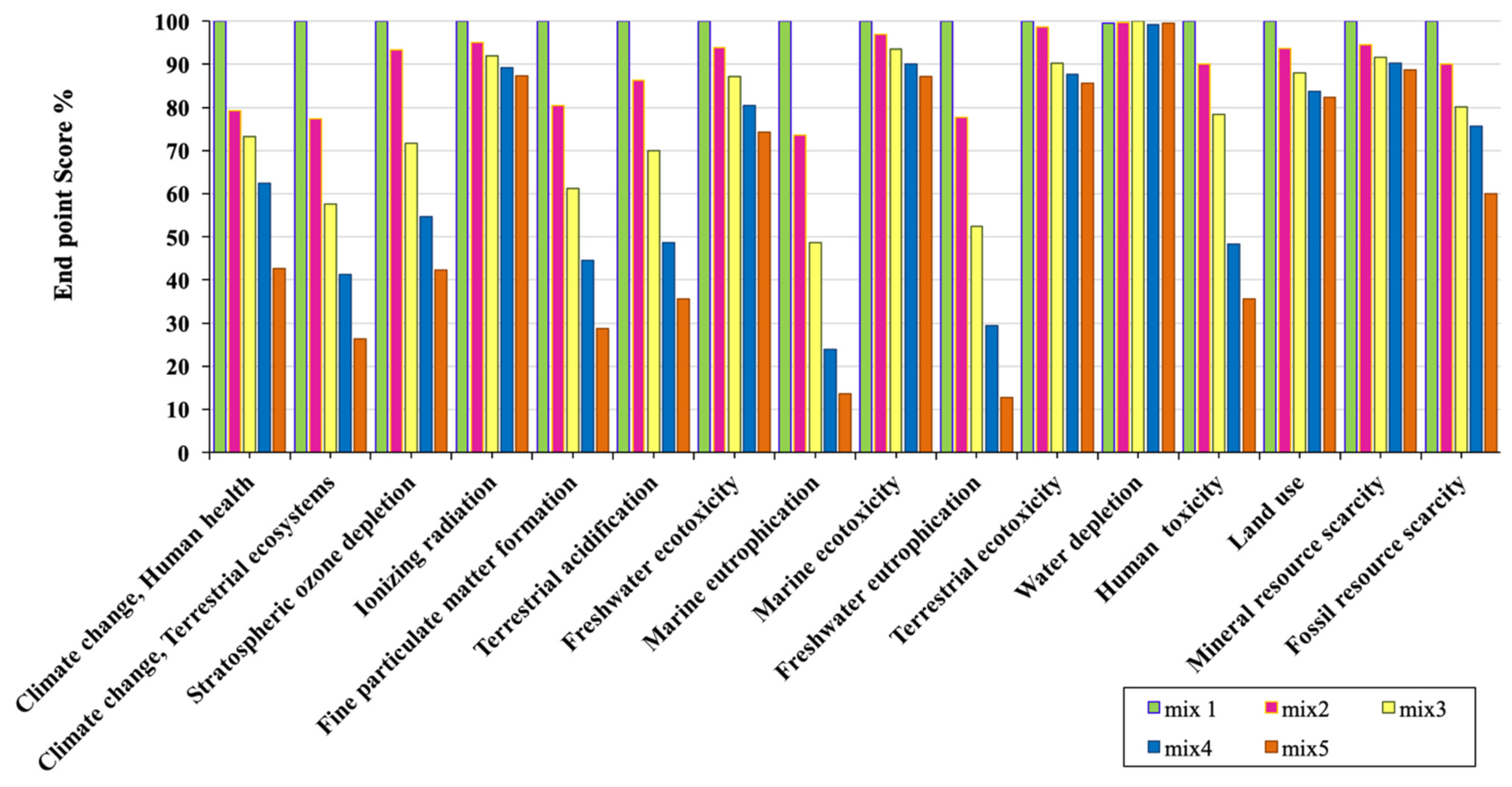
- The recipe midpoint and endpoint methods were used to assess the environmental impacts and the results showed the positive environmental impacts of using RHA in concrete. In this regard, adding 5 and 10% RHA in concrete decreased CO2 emissions by 18.75% and 38%, fine particulate matter release by 34% and 68%, and ozone depletion level by 31% and 60%, respectively. Critical environmental aspects including CO2 emissions, fine particulate matter release, ozone depletion, and land use notably decreased by replacing cement with RHA.
Author Contributions
Funding
Conflicts of Interest
References
- Jefferis, S.A.; Mangabhai, R.J. Effect of temperature rise on properties of high alumina cement grout. In Calcium Aluminate Cements; Chapman and Hall: London, UK, 1990; p. 363. [Google Scholar]
- Scrivener, K.L.; Cabiron, J.-L.; Letourneux, R. High-performance concretes from calcium aluminate cements. Cem. Concr. Res. 1999, 29, 1215–1223. [Google Scholar] [CrossRef] [Scilit]
- Bensted, J. Calcium aluminate cements. Struct. Perform. Cem. 2002, 2, 114–138. [Google Scholar]
- Parr, C.; Wöhrmeyer, C.; Veyrat, D. High purity calcium aluminate binders for demanding high temperature applications. In Proceedings of the centenary conference “Calcium Aluminate Cements”, Avignon, France, 30 June–2 July 2008; pp. 417–428. [Google Scholar]
- Williams, C.M.; Garrott, F. Recycling/Reclaiming a savings spree: Chicago reuses to the max on famous shopping mile. Ill. Interchang. Ill. Dep. Transp. Springf. 2012. Available online: https://www.roadsbridges.com/recyclingreclaiming-savings-spree (accessed on 5 January 2022).
- Abolhasani, A.; Nazarpour, H.; Dehestani, M. The fracture behavior and microstructure of calcium aluminate cement concrete with various water-cement ratios. Theor. Appl. Fract. Mech. 2020, 109, 102690. [Google Scholar] [CrossRef] [Scilit]
- Scrivener, K.L.; Taylor, H.F.W. Microstructural development in pastes of a calcium aluminate cement. In Calcium Aluminate Cements; Mangabhai, R.J., Ed.; 1990; Available online: https://www.researchgate.net/publication/40754958_Microstructural_development_of_calcium_aluminate_cement_based_systems_with_and_without_supplementary_cementitious_materials (accessed on 5 January 2022).
- Abolhasani, A.; Samali, B.; Aslani, F. Physicochemical, Mineralogical, and Mechanical Properties of Calcium Aluminate Cement Concrete Exposed to Elevated Temperatures. Materials 2021, 14, 3855. [Google Scholar] [CrossRef] [Scilit] [PubMed]
- Khaliq, W.; Khan, H.A. High temperature material properties of calcium aluminate cement concrete. Constr. Build. Mater. 2015, 94, 475–487. [Google Scholar] [CrossRef] [Scilit]
- Antonovič, V.; Kerienė, J.; Boris, R.; Aleknevičius, M. The Effect of Temperature on the Formation of the Hydrated Calcium Aluminate Cement Structure. Procedia Eng. 2013, 57, 99–106. [Google Scholar] [CrossRef] [Scilit]
- Newman, J.; Choo, B.S. Advanced Concrete Technology Set; Elsevier: Amsterdam, The Netherlands, 2003. [Google Scholar]
- Bronzeoak Ltd. Rice Husk Ash Market Study. Available online: www.berr.gov.uk/files/file15138.pdf (accessed on 5 January 2022).
- Rizwan, S.A. High-Performance Mortars and Concretes Using Secondary Raw Materials. Ph.D. Thesis, Technischen Universistat Bergakademie, Freiberg, Germany, 2006. [Google Scholar]
- Kamiya, K.; Oka, A.; Nasu, H.; Hashimoto, T. Comparative Study of Structure of Silica Gels from Different Sources. J. Sol-Gel Sci. Technol. 2000, 19, 495–499. [Google Scholar] [CrossRef] [Scilit]
- Mehta, P.K. Rice husk ash—A unique supplementary cementing material. In Proceeding International Symposium on Advances in Concrete Technology; Malhotra, V.M., Ed.; Symposium Paper: Athens, Greece, 1992; pp. 407–430. [Google Scholar]
- Della, V.P.; Kühn, I.; Hotza, D. Rice husk ash as an alternate source for active silica production. Mater. Lett. 2002, 57, 818–821. [Google Scholar] [CrossRef] [Scilit]
- Henry, C.S.; Lynam, J.G. Embodied energy of rice husk ash for sustainable cement production. Case Stud. Chem. Environ. Eng. 2020, 2, 100004. [Google Scholar] [CrossRef] [Scilit]
- Mehta, P.K. Role of pozzolanic and cementitious material in sustainable development of the concrete industry. Int. Concr. Abstr. Portal 1998, 178, 1–20. [Google Scholar]
- Ganesan, K.; Rajagopal, K.; Thangavel, K. Rice husk ash blended cement: Assessment of optimal level of replacement for strength and permeability properties of concrete. Constr. Build. Mater. 2008, 22, 1675–1683. [Google Scholar] [CrossRef] [Scilit]
- El-Dakroury, A.; Gasser, M.S. Rice husk ash (RHA) as cement admixture for immobilization of liquid radioactive waste at different temperatures. J. Nucl. Mater. 2008, 381, 271–277. [Google Scholar] [CrossRef] [Scilit]
- Feng, Q.; Yamamichi, H.; Shoya, M.; Sugita, S. Study on the pozzolanic properties of rice husk ash by hydrochloric acid pre-treatment. Cem. Concr. Res. 2004, 34, 521–526. [Google Scholar] [CrossRef] [Scilit]
- Burritt, R.L.; Herzig, C.; Tadeo, B.D. Environmental management accounting for cleaner production: The case of a Philippine rice mill. J. Clean. Prod. 2009, 17, 431–439. [Google Scholar] [CrossRef] [Scilit]
- Alnahhal, M.F.; Alengaram, U.J.; Jumaat, M.Z.; Alqedra, M.A.; Mo, K.H.; Sumesh, M. Evaluation of Industrial By-Products as Sustainable Pozzolanic Materials in Recycled Aggregate Concrete. Sustainability 2017, 9, 767. [Google Scholar] [CrossRef] [Scilit]
- Limbachiya, M.; Meddah, M.S.; Ouchagour, Y. Use of recycled concrete aggregate in fly-ash concrete. Constr. Build. Mater. 2012, 14, 13–18. [Google Scholar] [CrossRef] [Scilit]
- Abolhasani, A.; Aslani, F.; Samali, B.; Ghaffar, S.H.; Fallahnejad, H.; Banihashemi, S. Silicate impurities incorporation in calcium aluminate cement concrete: Mechanical and microstructural assessment. Adv. Appl. Ceram. 2021, 120, 104–116. [Google Scholar] [CrossRef] [Scilit]
- Abolhasani, A.; Shakouri, M.; Dehestani, M.; Samali, B.; Banihashemi, S. A comprehensive evaluation of fracture toughness, fracture energy, flexural strength and microstructure of calcium aluminate cement concrete exposed to high temperatures. Eng. Fract. Mech. 2022, 261, 108221. [Google Scholar] [CrossRef] [Scilit]
- Abolhasani, A.; Nazarpour, H.; Dehestani, M. Effects of silicate impurities on fracture behavior and microstructure of calcium aluminate cement concrete. Eng. Fract. Mech. 2020, 242, 107446. [Google Scholar] [CrossRef] [Scilit]
- Abolhasani, A.; Samali, B.; Dehestani, M.; Libre, N.A. Effect of rice husk ash on mechanical properties, fracture energy, brittleness and aging of calcium aluminate cement concrete. Structures 2021, 36, 140–152. [Google Scholar] [CrossRef] [Scilit]
- Kurda, R.; Silvestre, J.D.; de Brito, J. Life cycle assessment of concrete made with high volume of recycled concrete aggregates and fly ash. Resour. Conserv. Recycl. 2018, 139, 407–417. [Google Scholar] [CrossRef] [Scilit]
- Jiang, M.; Chen, X.; Rajabipour, F.; Hendrickson, C.T. Comparative Life Cycle Assessment of Conventional, Glass Powder, and Alkali-Activated Slag Concrete and Mortar. J. Infrastruct. Syst. 2014, 20, 04014020. [Google Scholar] [CrossRef] [Scilit]
- Robayo-Salazar, R.; Mejía-Arcila, J.; de Gutiérrez, R.M.; Martínez, E. Life cycle assessment (LCA) of an alkali-activated binary concrete based on natural volcanic pozzolan: A comparative analysis to OPC concrete. Constr. Build. Mater. 2018, 176, 103–111. [Google Scholar] [CrossRef] [Scilit]
- Vayghan, A.G.; Khaloo, A.R.; Nasiri, S.; Rajabipour, F. Studies on the Effect of Retention Time of Rice Husk Combustion on the Ash’s Chemo-Physical Properties and Performance in Cement Mixtures. J. Mater. Civ. Eng. 2012, 24, 691–697. [Google Scholar] [CrossRef] [Scilit]
- Chao-Lung, H.; Tuan, B.L.A.; Chun-Tsun, C. Effect of rice husk ash on the strength and durability characteristics of concrete. Constr. Build. Mater. 2011, 25, 3768–3772. [Google Scholar] [CrossRef] [Scilit]
- Madandoust, R.; Ranjbar, M.M.; Moghadam, H.A.; Mousavi, S.Y. Mechanical properties and durability assessment of rice husk ash concrete. Biosyst. Eng. 2011, 110, 144–152. [Google Scholar] [CrossRef] [Scilit]
- American Standard Testing and Material. Standard Specification for Concrete Aggregates. 2003. Available online: https://www.studocu.com/row/document/rajanagarindra-rajabhat-university/marketing-communication/c-33-03-standard-speci%EF%AC%81cation-for-concrete-aggregates/8672282 (accessed on 5 January 2022).
- BS EN 12390-3. Testing Hardened Concrete. Method of Determination of Compressive Strength of Concrete Cubes. 2000. Available online: http://www.engr.hk/T06/BS%20EN%2012390-3(2002).pdf (accessed on 5 January 2022).
- ASTM. Standard Test Method for Splitting Tensile Strength of Cylindrical Concrete Specimens. C496/C496M-11. 2011. Available online: https://pdfcoffee.com/standard-test-method-for-splitting-tensile-strength-of-cylindrical-concrete-specimens-1-pdf-free.html (accessed on 5 January 2022).
- Zobel, T.; Almroth, C.; Bresky, J.; Burman, J.-O. Identification and assessment of environmental aspects in an EMS context: An approach to a new reproducible method based on LCA methodology. J. Clean. Prod. 2002, 10, 381–396. [Google Scholar] [CrossRef] [Scilit]
- ISO. Environmental Management: Life Cycle Assessment. In Principles and Framework; ISO: Geneva, Switzerland, 2006; Volume 14044. [Google Scholar]
- Schneider, L.; Berger, M.; Finkbeiner, M. The anthropogenic stock extended abiotic depletion potential (AADP) as a new parameterisation to model the depletion of abiotic resources. Int. J. Life Cycle Assess. 2011, 16, 929–936. [Google Scholar] [CrossRef] [Scilit]
- Junnila, S.; Horvath, A.; Guggemos, A.A. Life-Cycle Assessment of Office Buildings in Europe and the United States. J. Infrastruct. Syst. 2006, 12, 10–17. [Google Scholar] [CrossRef] [Scilit]
- Khasreen, M.M.; Banfill, P.F.G.; Menzies, G.F. Life-Cycle Assessment and the Environmental Impact of Buildings: A Review. Sustainability 2009, 1, 674–701. [Google Scholar] [CrossRef] [Scilit]
- ISO. Internationale de Normalisation, Sustainability in Building Construction: Environmental Declaration of Building Products; ISO: Geneva, Switzerland, 2007. [Google Scholar]
- AzariJafari, H.; Amiri, M.J.T.; Ashrafian, A.; Rasekh, H.; Barforooshi, M.J.; Berenjian, J. Ternary blended cement: An eco-friendly alternative to improve resistivity of high-performance self-consolidating concrete against elevated temperature. J. Clean. Prod. 2019, 223, 575–586. [Google Scholar] [CrossRef] [Scilit]
- Chungsangunsit, T. Environmental Assessment of Electricity Production from Rice Husk: A Case Study in Thailand, Electricity Supply Industry in Transition: Issues and Prospect for Asia. EU-ASEAN COGEN 3 Program. 2004. Available online: https://books.google.com/books?id=eHENDgAAQBAJ&pg=PA184&lpg=PA184&dq=Environmental+Assessment+of+Electricity+Production+from+Rice+Husk:+A+Case+Study+in+Thailand,+Electricity+Supply+Industry+in+Transition:+Issues+and+Prospect+for+Asia&source=bl&ots=naLV5av-ud&sig=ACfU3U0R3EeUbkr1BPq7slm01Tk0khqEZQ&hl=id&sa=X&ved=2ahUKEwiWie3vj7j1AhVKZt4KHUo1AooQ6AF6BAgCEAM#v=onepage&q=Environmental%20Assessment%20of%20Electricity%20Production%20from%20Rice%20Husk%3A%20A%20Case%20Study%20in%20Thailand%2C%20Electricity%20Supply%20Industry%20in%20Transition%3A%20Issues%20and%20Prospect%20for%20Asia&f=false (accessed on 5 January 2022).
- Wang, Q.; Maezono, T.; Apaer, P.; Chen, Q.; Gui, L.; Itoh, K.; Kurokawa, H.; Sekiguchi, K.; Sugiyama, K.; Niida, H.; et al. Characterization of suspended particulate matter emitted from waste rice husk as biomass fuel under different combustion conditions. WIT Trans. Ecol. Environ. 2012, 157, 365–376. [Google Scholar] [CrossRef] [Scilit]
- Mehta, P.K.; Monteiro, P.J.M. Microstructure and properties of hardened concrete. Concr. Microstruct. Prop. Mater. 2006, 41–80. [Google Scholar]
- Padhi, R.S.; Patra, R.K.; Mukharjee, B.B.; Dey, T. Influence of incorporation of rice husk ash and coarse recycled concrete aggregates on properties of concrete. Constr. Build. Mater. 2018, 173, 289–297. [Google Scholar] [CrossRef] [Scilit]
- Chindaprasirt, P.; Homwuttiwong, S.; Jaturapitakkul, C. Strength and water permeability of concrete containing palm oil fuel ash and rice husk–bark ash. Constr. Build. Mater. 2007, 21, 1492–1499. [Google Scholar] [CrossRef] [Scilit]
- Le, H.T.; Nguyen, S.T.; Ludwig, H.-M. A Study on High Performance Fine-Grained Concrete Containing Rice Husk Ash. Int. J. Concr. Struct. Mater. 2014, 8, 301–307. [Google Scholar] [CrossRef] [Scilit]
- Thomas, B.S.; Gupta, R.C.; Kalla, P.; Cseteneyi, L. Strength, abrasion and permeation characteristics of cement concrete containing discarded rubber fine aggregates. Constr. Build. Mater. 2014, 59, 204–212. [Google Scholar] [CrossRef] [Scilit]
- Noaman, M.A.; Islam, M.N.; Islam, M.R.; Karim, M.R. Mechanical properties of brick aggregate concrete containing rice husk ash as a partial replacement of cement. J. Mater. Civ. Eng. 2018, 30, 4018086. [Google Scholar] [CrossRef] [Scilit]
- Salas, A.; Delvasto, S.; DE Gutierrez, R.M.; Lange, D. Comparison of two processes for treating rice husk ash for use in high performance concrete. Cem. Concr. Res. 2009, 39, 773–778. [Google Scholar] [CrossRef] [Scilit]
- Van Tuan, N.; Ye, G.; van Breugel, K.; Fraaij, A.L.; Bui, D.D. The study of using rice husk ash to produce ultra high performance concrete. Constr. Build. Mater. 2011, 25, 2030–2035. [Google Scholar] [CrossRef] [Scilit]
- Fapohunda, A.C.; Akinbile, B.; Shittu, A. Structure and properties of mortar and concrete with rice husk ash as partial replacement of ordinary Portland cement—A review. Int. J. Sustain. Built Environ. 2017, 6, 675–692. [Google Scholar] [CrossRef] [Scilit]
- Nazari, A.; Riahi, S. RETRACTED: Splitting tensile strength of concrete using ground granulated blast furnace slag and SiO2 nanoparticles as binder. Energy Build. 2011, 43, 864–872. [Google Scholar] [CrossRef] [Scilit]



| Oxide Composition (%) | Ig. Loss | Blaine Surface Area | Specific Gravity | |||||||||
|---|---|---|---|---|---|---|---|---|---|---|---|---|
| RHA | 90.11 | 1.19 | 0.848 | 0.897 | 0.89 | 0.861 | - | 3.84 | 0.099 | 4.05 | 3600 | 2.32 |
| CAC | 5.25 | 38.22 | 13.87 | 0.97 | 37.49 | 0.089 | 0.311 | 0.072 | 0.078 | 1.04 | 2900 | 2.98 |
| Mix Number | Mix Name | Coarse Aggregate | Fine Aggregate | , (SP/Binder) | Slump (mm) | |||
|---|---|---|---|---|---|---|---|---|
| Mix1 | CAC-RHA0-0.4 | - | 450 | 180 | 840 | 905 | 0.378 (0.08%) | 100 |
| Mix2 | CAC-RHA2.5-0.4 | 11.25 | 438.75 | 180 | 840 | 905 | 0.756 (0.16%) | 95 |
| Mix3 | CAC-RHA5-0.4 | 22.5 | 427.5 | 180 | 840 | 905 | 1.512 (0.33%) | 80 |
| Mix4 | CAC-RHA7.5-0.4 | 33.75 | 416.25 | 180 | 840 | 905 | 2.646 (0.58%) | 60 |
| Mix5 | CAC-RHA10-0.4 | 45 | 405 | 180 | 840 | 905 | 2.989 (0.66%) | 60 |
| Input/output | Unit | Value |
|---|---|---|
| Cement | kg | Based on mix designs |
| Sand | kg | 840 |
| Crushed Gravel | kg | 905 |
| Water | kg | 180 |
| Superplasticizer | kg | Based on mix designs |
| Materials and Energy used for processing of Rice husk ash | ||
| Electricity | MJ | 6.30 × 101 |
| Rice husk | kg | 2.43 × 10² |
| Carbon dioxide | kg | 3.36 × 10² |
| Carbon monoxide | kg | 5.90 × 100 |
| Nitrogen dioxide | kg | 6.39 × 10⁻¹ |
| Methane | kg | 1.94 × 100 |
| Dust (PM 2.5) | kg | 1.94 × 100 |
| Rice Husk Ash | kg | 4.92 × 101 |
| RHA transportation | kJ/kg | 3.8 (distance 32 km) |
| Mix Design | Average Compressive Strength-7 Days (COV) | Average Compressive Strength-28 Days (COV) | Average Compressive Strength-90 Days (COV) |
|---|---|---|---|
| CAC-R0-0.4 | 67.6 MPa (±2.31%) | 82.5 MPa (±2.86%) | 85.8 MPa (±2.49%) |
| CAC-R2.5-0.4 | 61.73 MPa (±3.96%) | 77.47 MPa (±4.05%) | 87.24 MPa (±3.8%) |
| CAC-R5-0.4 | 56.4 MPa (±2.05%) | 73.38 MPa (±2.33%) | 90.13 MPa (±2.88%) |
| CAC-R7.5-0.4 | 49.21 MPa (±2.38%) | 64.82 MPa (±1.45%) | 88.65 MPa (±5.41%) |
| CAC-R10-0.4 | 46.1 MPa (±2.67%) | 62.43 MPa (±1.49%) | 84.32 MPa (±3.15%) |
| Mix Design | Average Tensile Strength-7 Days (COV) | Average Tensile Strength-28 Days (COV) | Average Tensile Strength-90 Days (COV) |
|---|---|---|---|
| CAC-R0-0.4 | 4.3 MPa (±2.86%) | 5.12 MPa (±3.71%) | 5.51 MPa (±2.65%) |
| CAC-R2.5-0.4 | 4.1 MPa (±1.84%) | 4.91 Mpa (±1.01%) | 5.63 Mpa (±3.86%) |
| CAC-R5-0.4 | 3.86 Mpa (±2.86%) | 4.64 MPa (±3.13%) | 5.71 Mpa (±3.11%) |
| CAC-R7.5-0.4 | 3.66 Mpa (±3.18%) | 4.43 Mpa (±2.9%) | 5.67 Mpa (±3.9%) |
| CAC-R10-0.4 | 3.45 Mpa (±2.49%) | 4.25 Mpa (±1.20%) | 5.49 Mpa (±2.64%) |
Publisher’s Note: MDPI stays neutral with regard to jurisdictional claims in published maps and institutional affiliations. |
© 2022 by the authors. Licensee MDPI, Basel, Switzerland. This article is an open access article distributed under the terms and conditions of the Creative Commons Attribution (CC BY) license (https://creativecommons.org/licenses/by/4.0/).
Share and Cite
Abolhasani, A.; Samali, B.; Aslani, F. Rice Husk Ash Incorporation in Calcium Aluminate Cement Concrete: Life Cycle Assessment, Hydration and Strength Development. Sustainability 2022, 14, 1012. https://doi.org/10.3390/su14021012
Abolhasani A, Samali B, Aslani F. Rice Husk Ash Incorporation in Calcium Aluminate Cement Concrete: Life Cycle Assessment, Hydration and Strength Development. Sustainability. 2022; 14(2):1012. https://doi.org/10.3390/su14021012
Chicago/Turabian StyleAbolhasani, Amirmohamad, Bijan Samali, and Fatemeh Aslani. 2022. "Rice Husk Ash Incorporation in Calcium Aluminate Cement Concrete: Life Cycle Assessment, Hydration and Strength Development" Sustainability 14, no. 2: 1012. https://doi.org/10.3390/su14021012
APA StyleAbolhasani, A., Samali, B., & Aslani, F. (2022). Rice Husk Ash Incorporation in Calcium Aluminate Cement Concrete: Life Cycle Assessment, Hydration and Strength Development. Sustainability, 14(2), 1012. https://doi.org/10.3390/su14021012