Article

Digital Finance and Collaborative Innovation: Case Study of the Yangtze River Delta, China

The Glorious Sun School of Business and Management, Donghua University, Shanghai 200051, China
*
Author to whom correspondence should be addressed.
Sustainability 2022, 14(17), 10784; https://doi.org/10.3390/su141710784
Submission received: 13 July 2022 / Revised: 16 August 2022 / Accepted: 26 August 2022 / Published: 30 August 2022

Abstract

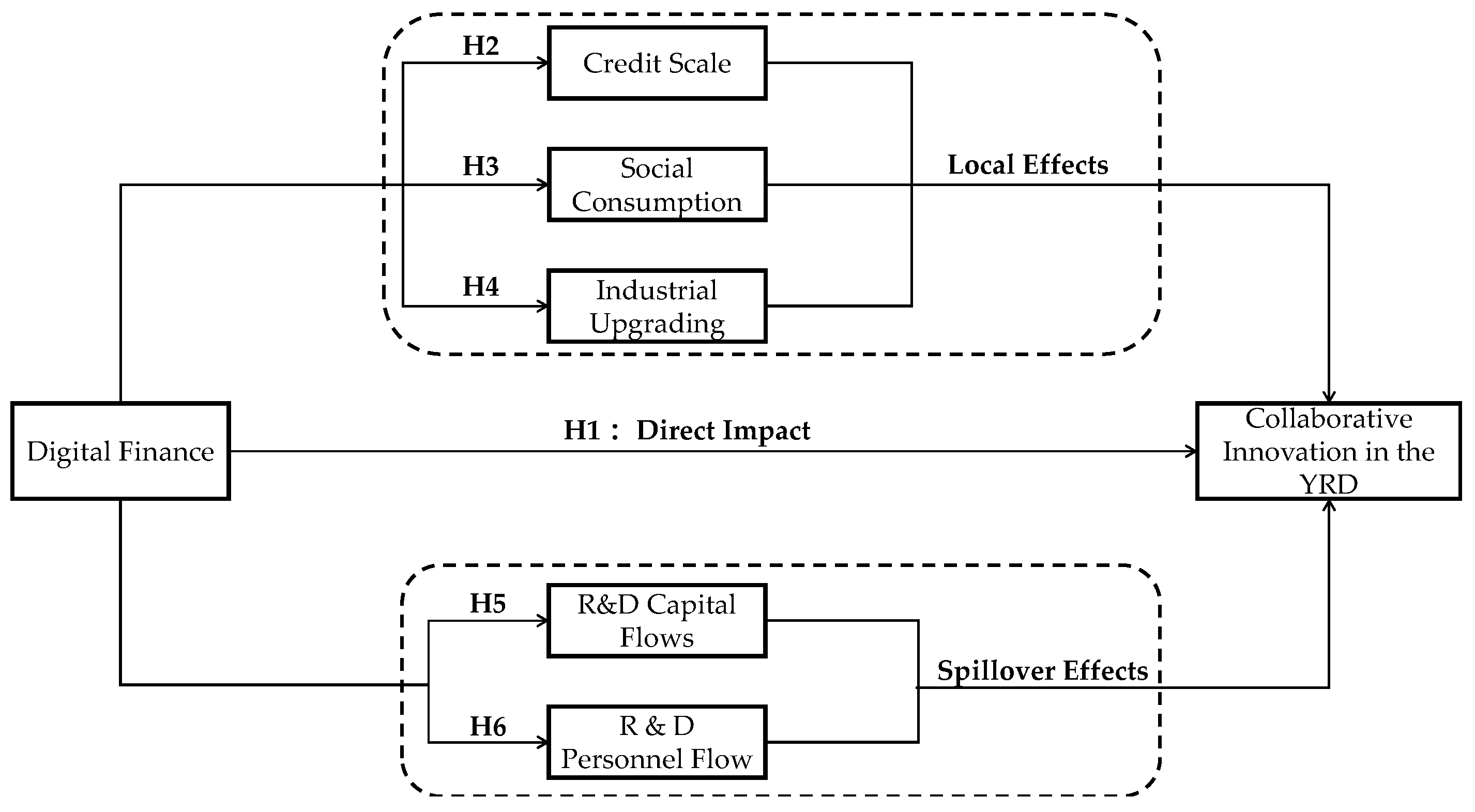
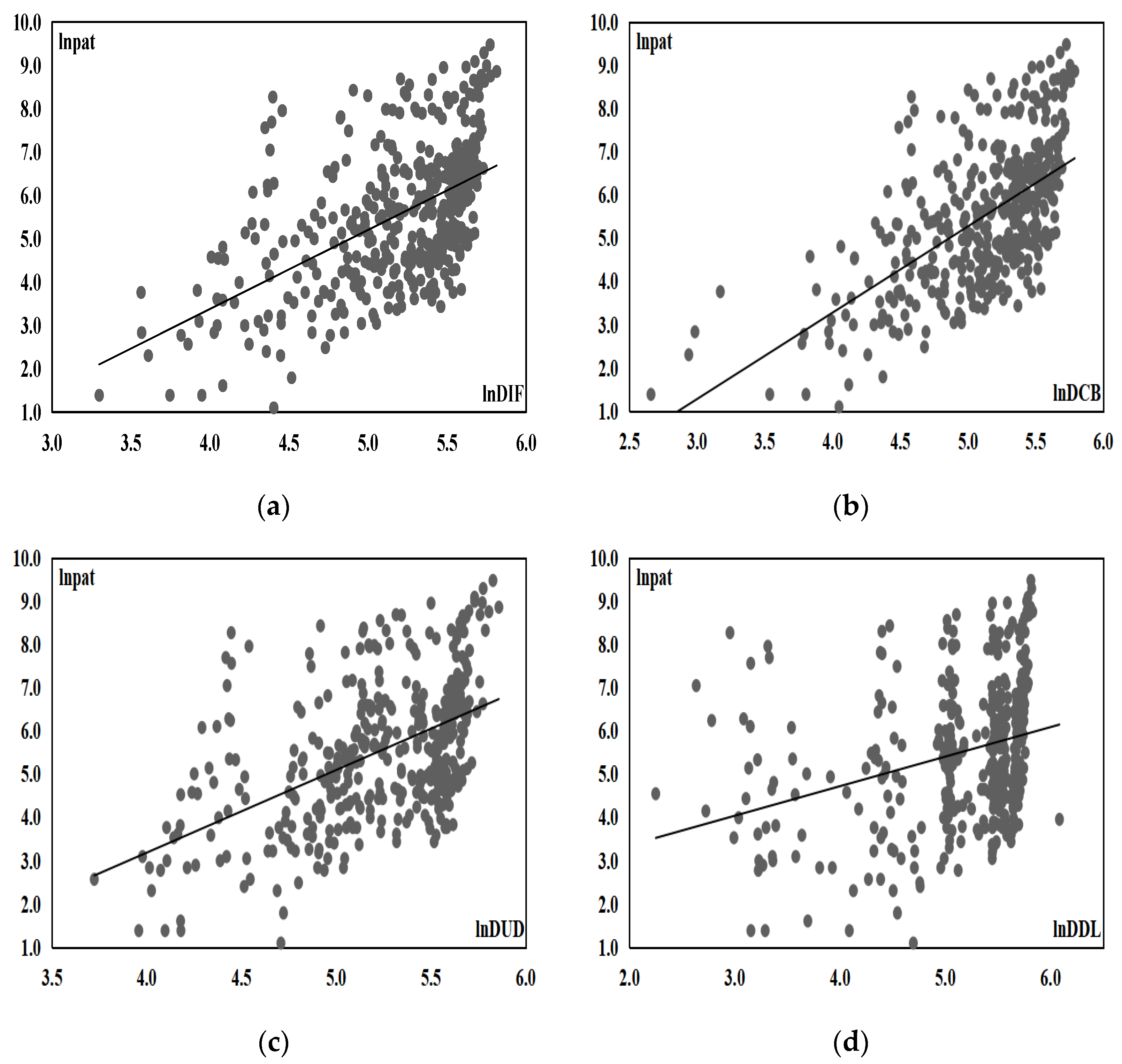
The development of China’s digital finance provides new ideas for solving the financial constraints faced by some collaborative innovation activities in the Yangtze River Delta (YRD). Therefore, based on the panel data of 41 cities in the YRD from 2011 to 2020, this study empirically tests the impact and transmission mechanisms of digital finance on collaborative innovation through GMM and a dynamic mediation model. The results show that in the YRD region, digital finance significantly stimulates collaborative innovation, but the effect of the decomposition index varies. The effect of depth of use is the strongest, followed by breadth of coverage and degree of digitization. In terms of the transmission mechanism, digital finance can increase the scale of credit, social consumption, and industrial upgrading to form a positive local effect. It can also improve the development of collaborative innovation, and lead to a spillover effect through the flow of R&D capital and R&D personnel. The conclusion indicates that it is necessary to stimulate the digital transformation in the financial field, giving full play to liquidity, facilitating the upgrading of credits, consumption, and industries. This study enriches the theoretical framework of digital finance and collaborative innovation. Moreover, the empirical test provides data and evidence for the construction of a world-class science and technology innovation center in the YRD. The paper also presents limitations, including the influence of factors such as urban heterogeneity and financial supervision, worthy of further research.
Keywords: digital finance; collaborative innovation; YRD; local effect; spillover effect digital finance; collaborative innovation; YRD; local effect; spillover effect