Abstract
Sustainable development education is a dynamic and developing process. In recent years, the rapid development of international courses has made great contributions to sustainable development education. The effectiveness of international courses is influenced by many factors. To promote the sustainable development of education and to improve the effectiveness of international courses, this paper studied the influencing factors on international courses by using literature analysis, system dynamics analysis, questionnaire survey, and correlation analysis methods. First, based on the literature analysis, 27 factors affecting course effectiveness were initially obtained. Second, using system dynamics to study the relationship between each factor, five additional factors were added, namely, learning motivation, social focus, lesson planning, class time, and class location. A total of 32 factors influencing course effectiveness were obtained and classified into three categories, namely, students, teachers, and external factors, and a relationship model of the 32 factors influencing course effectiveness was constructed. Finally, a questionnaire survey was conducted to quantify the 32 influencing factors, and a correlation analysis was performed on all undergraduates majoring in safety engineering enrolled in 2018 and 2019 in a university in 2019 and 2020. The results show that among the 32 influencing factors in the three categories of students, teachers, and external factors proposed, there were 7 strong correlations, 22 moderate correlations, and 3 weak correlations. All of the strong correlations belonged to the student dimension, thereby indicating that the effectiveness of international online courses is mainly influenced by student factors. In addition, these influencing factors can not only impact course effectiveness directly, but also indirectly through the interaction between factors. The relationship model of the influencing factors can provide a reference for improving the effectiveness of international programs and realizing the sustainable development research for international courses.
1. Introduction
International courses have grown rapidly in China’s education sector and have made a significant contribution to education for sustainable development [1]. Because of the epidemic, online teaching has become an alternative teaching method and is an important supplement to traditional teaching [2]. Online courses allow students to be more flexible in their choice of class time and location and provide a platform for sharing quality resources, which greatly improves course effectiveness [3,4]. However, online courses also make it difficult for teachers to know student learning efficacy, which can also create barriers to learning [5]. This paper aims to further explore the methods to realize the sustainable development of international courses on the basis of studying the influencing factors of the effect of online international courses.
In terms of the influencing factors regarding courses effectiveness, in addition to the influence of teaching methods, international courses are also influenced by many factors, including teacher abilities, lesson content, teaching attitude, student abilities, and interests [6]. No research was found on how these factors are related to each other and how they contribute to course effectiveness. The novelty of this study is to clarify the influencing factors of international course effectiveness and to establish the relationship model of the influencing factors in order to improve the effectiveness and development of international courses.
The authors analyzed the research topics and development trends in international courses, and analyzed the international course from three aspects: teachers, lesson content, and course effectiveness [7]. It was concluded that students can have more efficient learning by adding appropriate instruction from Chinese teachers before class, and the influence of teachers and course contents on course effectiveness were proposed. The purpose of this paper is to further explore the factors that influence the effectiveness of international courses on the basis of reference [7]. It contributes both to the study of international course sustainability and the factors influencing course effectiveness.
Based on the above reasons, this research includes three sections. Firstly, the literature on the influencing factors of international course effectiveness is analyzed, and the factors affecting course effectiveness are obtained. Secondly, using the system dynamics model to analyze the relationship between the influencing factors of course effectiveness, we find the factors that may be omitted in the first part, and then construct the relationship model of course effectiveness influencing factors. Finally, we verified the relevant influencing factors and their relationships.
2. Bibliometric Analysis on the Influencing Factors of International Courses
This paper studies the influencing factors of international course effectiveness and their relationship, using a bibliometric analysis to obtain the influencing factors of international course effectiveness more quickly and comprehensively. The influencing factors of international course effectiveness extracted using bibliometric analysis have been researched by scholars, so the factors obtained are well documented. Based on the above three partial reasons, VOSviewer was used to extract the influencing factors of international course effectiveness in the paper.
To comprehensively obtain the influencing factors of international courses effectiveness, this research used Chinese search strings including (“国际课程 (international course)” or “课程效果 (course effectiveness)” or ”教学效果 (teaching efficiency)”) and “影响因素 (influence factor)”. English search strings including (“international course” or “course effectiveness”or “teaching efficiency”) and ”influence factor” to explore the databases. The databases included Chinese as well as other countries’ databases. The former included the CNKI, Wanfang Data, Chaoxing Database, and Chinese Social Science citation databases. The latter consisted of Web of Science, Engineering Village, Science Direct, and IET Electronic Library. Journal papers, dissertations, books, and conference papers in Chinese and English were all included in the search scope. Given the study’s timeliness, in China, international courses have developed in the past five years; to better focus on the problem, this study only selected the literature of the last five years, from 2016 to 2021, for analysis. In total, 2157 Chinese studies were selected and analyzed, and 728 English articles were analyzed.
VOSviewer, a text mining and visualization software developed by Eck, N. and Waltman, L. from Leiden University in the Netherlands [8], can be used to perform co-occurrence analysis, citation analysis, literature coupling analysis, and co-citation analysis on literature from databases such as CNKI, Wanfang Data, Chaoxing Database, Web of Science, Engineering Village, and Science Direct. It can also analyze data processed by literature management tools such as Endnote. There are also other methods to perform literature analysis work, such as CiteSpace [9], Mate analysis [10], and Nvivo [11]. These methods are very helpful for literature analysis, but it is difficult to obtain specific keyword entries. Based on the above reasons, this paper chose VOSviewer to extract keywords from the literature.
This paper mainly uses the text extract function of VOSviewer; firstly, the keyword entries are obtained by importing the literature into VOSviewer software and keyword co-occurrence analysis was selected. Then, keywords that were not related to the factors influencing course effectiveness were eliminated, and, finally, all keywords related to course effectiveness and the number of occurrences of keywords were summarized, and the results are shown in Table 1 and Table 2. “Quantity” refers to the number of times a keyword reoccurred.
Table 1.
Influencing factor keywords in the Chinese literature.
Table 2.
Influencing factors keywords in the English literature.
To obtain more specific factors influencing course effectiveness, the factors collected in Table 1 and Table 2 will be organized in the following steps.
- (1)
- (2)
- Course effectiveness influencing factors with similar meanings were combined based on definitions in the literature. For example, mobile teaching means using wireless internet and mobile devices to deliver learning to students anytime, anywhere [12]. Online teaching is a web-based learning method [13]. With similar meanings, mobile teaching and online teaching are grouped together as online teaching.
- (3)
- Teaching terms are categorized by content. For example, bilingual teaching symbolizes the factors of teaching languages [14], and layered teaching, multimedia teaching, and online teaching are all teaching modes [15].
It should be noted that international courses are taught online in English, such that “English ability” represents the student’s ability to speak English, and “learning ability” represents the ability to learn new knowledge—so both are retained.
After the above steps, the final 27 influencing factors were obtained, as shown in Table 3.
Table 3.
Course effectiveness influencing factors.
To make it easier to study the influencing factors of course effectiveness, it is necessary to classify the influencing factors. However, there is no unified view on the classification of the categories of the influencing factors of course effectiveness [16,17,18]. Chen, R., who believed that teachers, as organizers of online teaching, should be valued for their influence on course effectiveness, researched the correlation between teacher abilities, teaching attitude, and course effectiveness, and concluded that there was a positive correlation between all three [19]. Hu, L.F. and Chen, Y.Q. stated that students, as participants in course learning, also have an important influence on course effectiveness and affirm the important role of students’ English ability in bilingual learning [20]. Based on the above literature co-occurrence analysis, it was also found that in addition to teachers and students, some external factors have an impact on course effectiveness, such as social focus, social support, and publicity methods. Teachers, students, and external factors all have an important influence on course effectiveness, thus this paper divides the factors influencing course effectiveness into three aspects: students, teachers, and external factors.
Based on the bibliometric analysis, 27 course effectiveness influencing factors were obtained. To avoid publication bias and sampling bias when using VOSviewer for bibliometric analysis [21], keywords that were not relevant to the influencing factors of international course effectiveness were removed manually, and to avoid sampling bias, all available databases in the author affiliations were used for the literature search, including CNKI, Wanfang Database, Chaoxing Database, Chinese Social Science citation database, Web of Science, Engineering Village, Science Direct, and IET Electronic Library.
The next step was to further investigate the relationship between these factors and to construct a model of the course effectiveness influencing factors. The impact of course effectiveness is made more complex by the fact that some factors are interrelated and interact with each other. Therefore, the paper integrated these factors into a system and considered the relationship between these factors from a system perspective using system dynamics [22]. In addition, using systems thinking, it was possible to discover factors that were not retrieved when constructing relationships between course effectiveness influencing factors, making it possible to link course effectiveness influencing factors together more comprehensively.
3. System Dynamics Model of Student Aspect
As this paper only searched the literature for the last five years and the search scope of the databases was limited, some influencing factors may be missing. This section uses the system dynamics method to build an influencing factors relationship model of the courses’ effectiveness, which has the following two purposes:
- (1)
- Establish the relationship model between course effectiveness influencing factors.
- (2)
- Find out the missing course effectiveness influencing factors. Through establishing the relationship model, some influencing factors may not be linked, which means that the relevant factors may be missing. In this way, the corresponding missing factors can be studied and supplemented.
The steps for establishing a relationship model of the influencing factors using the system dynamics method are as follows: First, draw a causality diagram for each influence factor using Vensim software, where the role of each factor is considered during the drawing. Then, add the missing factors to better construct the influence factor system. Finally, the constructed system model is sorted out to obtain the final model.
3.1. System Dynamics Analysis of Student Abilities
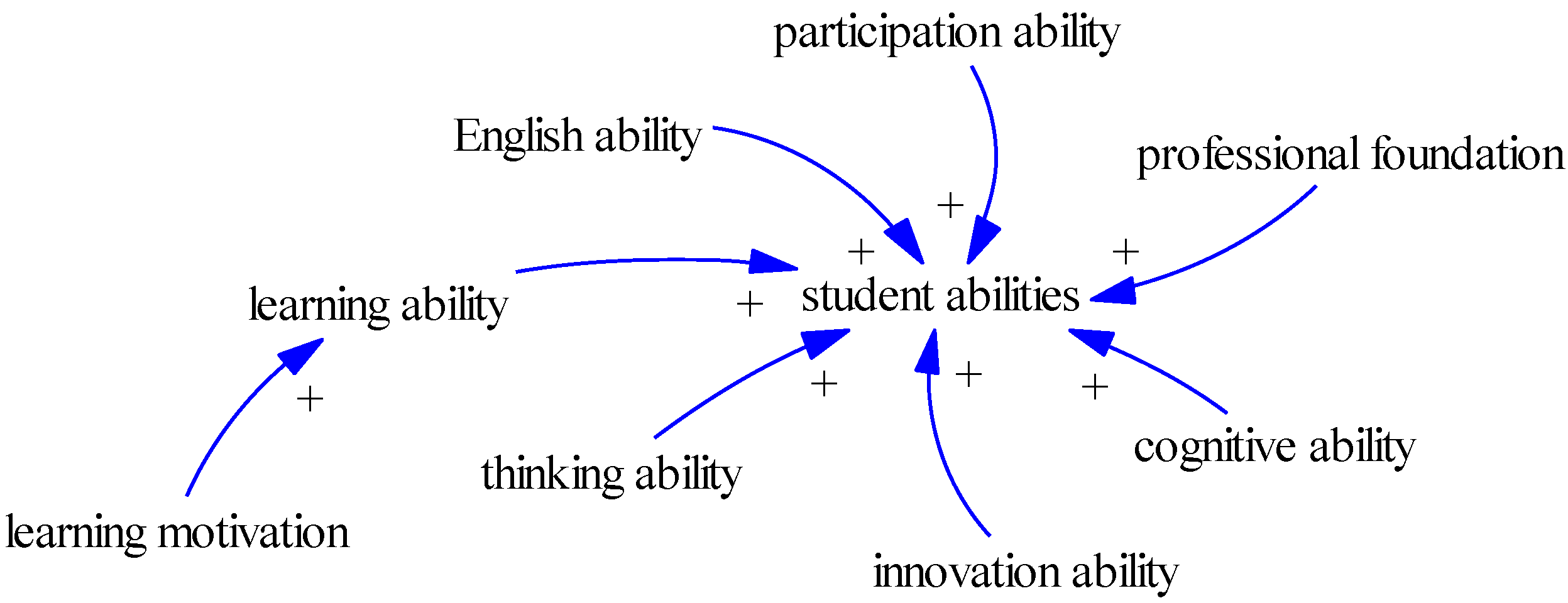
Donovan, K. and Herrington, C. concluded that student abilities have a significant impact on academic rates of completion [23]. The factors related to student abilities in Table 3 are English ability, participation ability, professional foundation, cognitive ability, innovation ability, thinking ability, and learning ability. Students with high measures of ability are more confident and learn more efficiently, and they can achieve higher results at the same time [24]. In addition, students with a high level of learning motivation are more willing to learn new knowledge, and they also have a high learning ability [25], so learning motivation was added to this part. The influencing factors and their connections in terms of student abilities are shown in Figure 1.
Figure 1.
Student abilities relationship model.
3.2. System Dynamics Analysis of Learning Attitudes
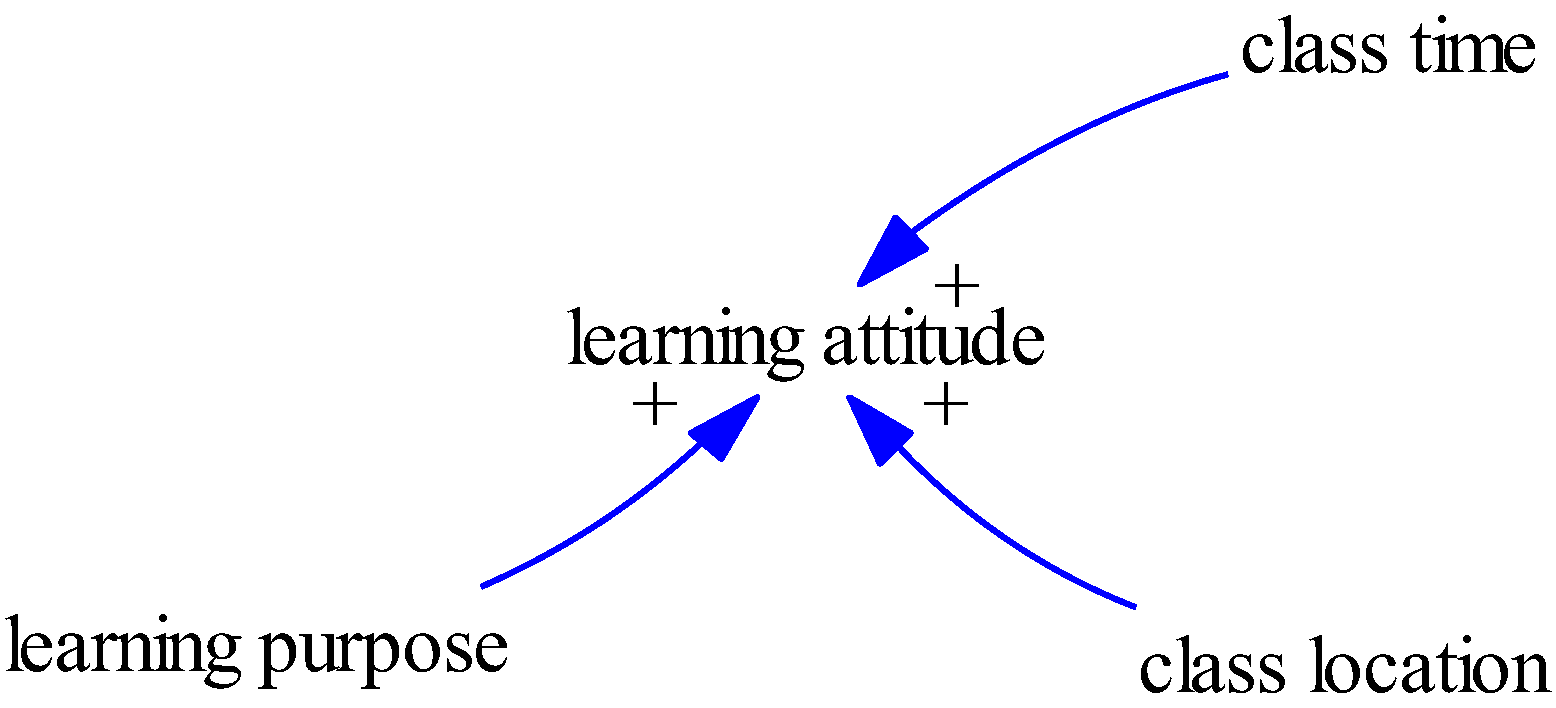
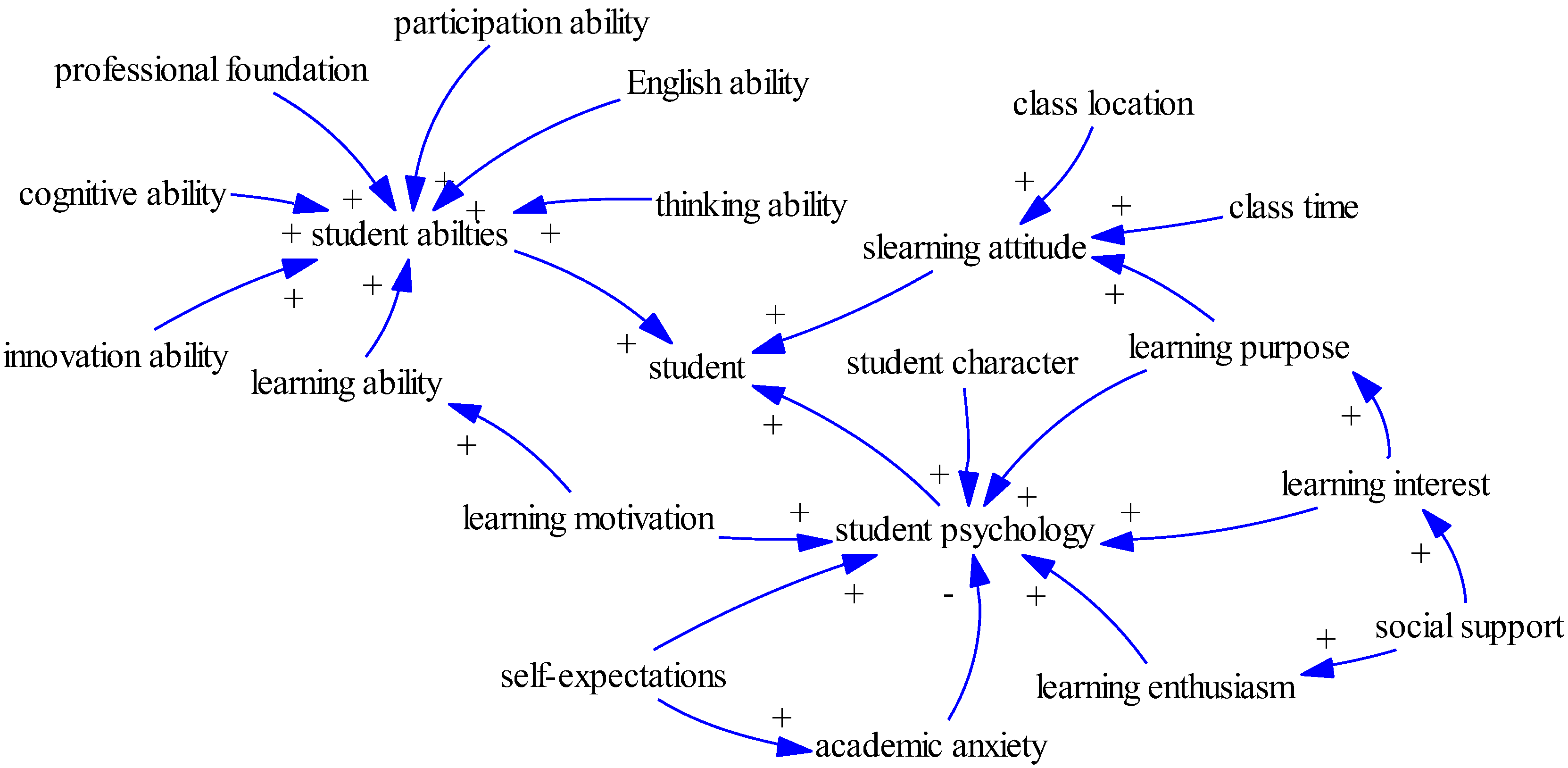
The factors related to learning attitude are learning purpose, class time, and class location [26]. Students who are attentive and positive in class can follow the teacher’s ideas closely and will be proactive in solving problems [27,28]. In addition, the preliminary questionnaire found that international courses are held during the summer, which affects students’ motivation. The influencing factors and their relationships in terms of students’ learning attitudes are shown in Figure 2.
Figure 2.
Learning attitude relationship model.
3.3. System Dynamics Analysis of the Student Psychology
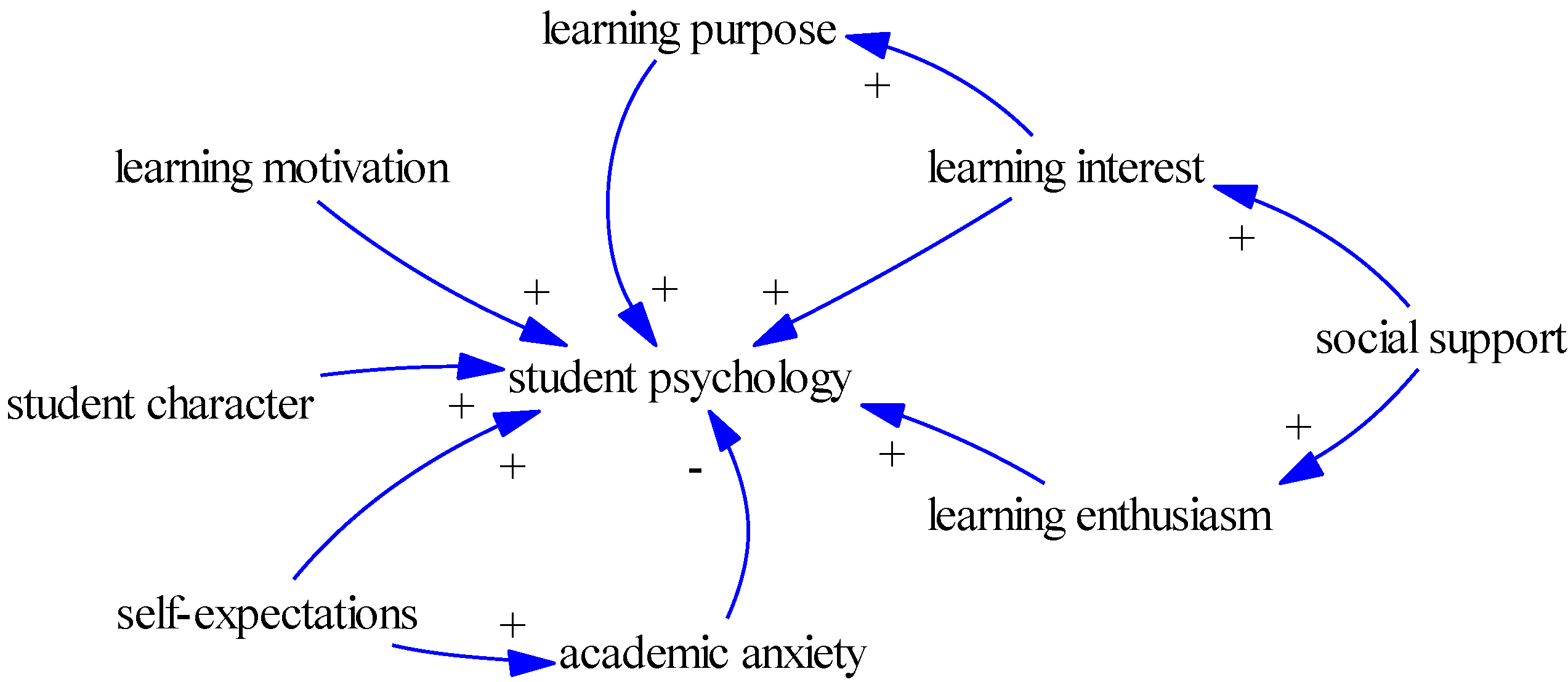
Khatimah, H. and Antonius, A. considered that a positive mindset in student psychology is able to respond constructively to the environment and is an important factor in achieving academic success [29,30]. The factors related to student psychology in Table 3 include self-expectations, learning purpose, student character, learning motivation, academic anxiety, learning interest, and learning enthusiasm. Appropriate self-expectations have a positive effect on course effectiveness [31], but student self-expectations that are too high can cause students anxiety and thus have a negative effect on course effectiveness. In addition, among the external factors, social support and course promotion stimulate student interest and enthusiasm to learn, which enhance the learning purpose and improve course effectiveness. The factors influencing the psychological aspects of students and their relationships are shown in Figure 3.
Figure 3.
Student psychology relationship model.
3.4. System Dynamics Model of the Student Aspect
By analyzing the relationship between student abilities, student attitude, and student psychology, the model of the influencing factors on the student aspect was constructed, as shown in Figure 4. This clarifies the relationship between the influencing factors in the student dimension and provides the basis for a system dynamics model of course effectiveness.
Figure 4.
Student aspect relationship model.
4. System Dynamics Model of the Teacher Aspect
4.1. System Dynamics Analysis of Teacher Abilities
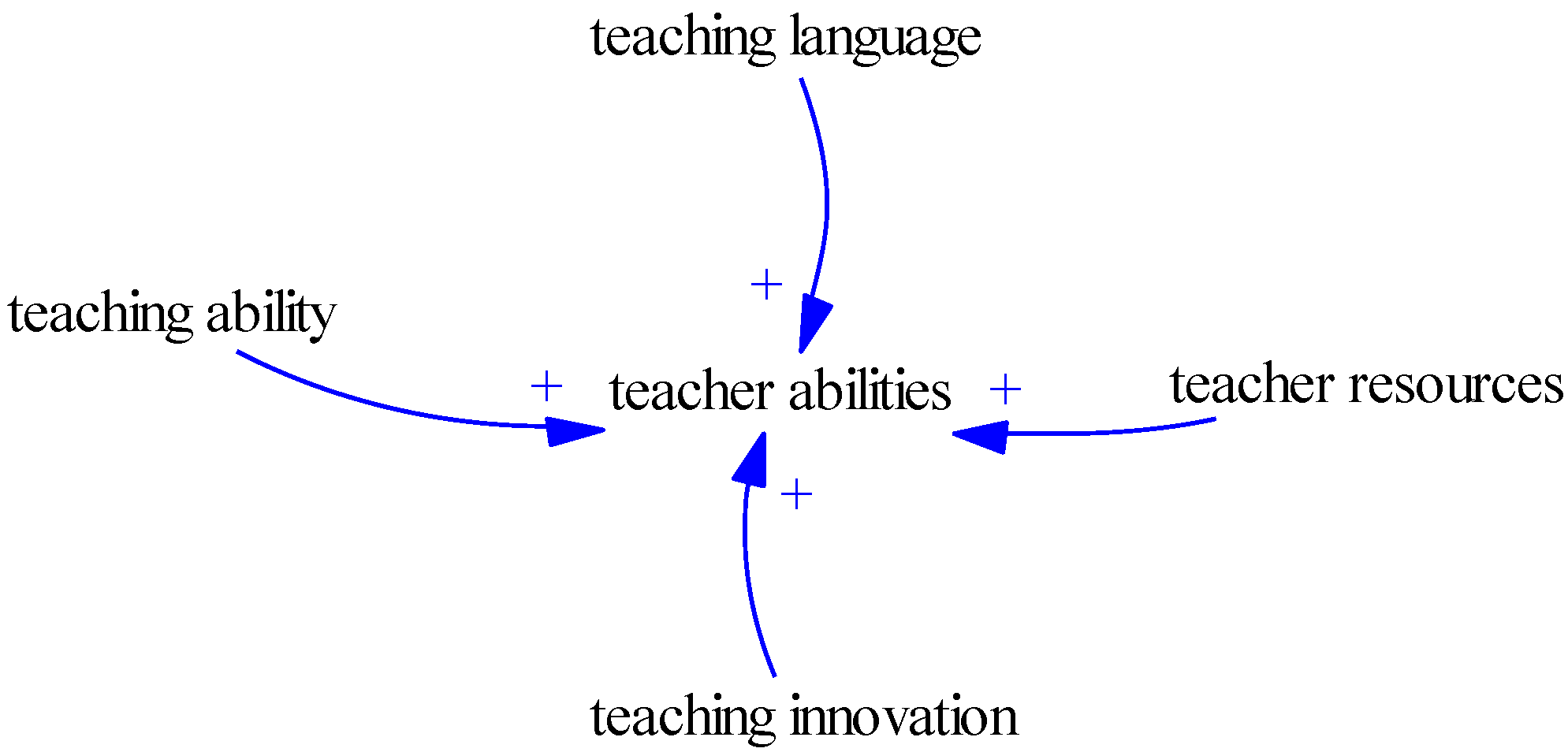
Ganyaupfu, E.M. argues that teacher abilities are the main factor influencing course effectiveness and they have a significant positive impact on course effectiveness [32]. On the one hand, teacher abilities are a comprehensive reflection of teachers’ professionalism, which can contribute to the enrichment and improvement of lesson contents and the use of innovative teaching methods [33]. Teaching ability, teaching language, teacher resources, and teaching innovation also influence overall teacher abilities [34]; on the other hand, teacher abilities also have an impact on student performance [35]. The factors influencing the aspects of teacher abilities and their relationships are shown in Figure 5.
Figure 5.
Teacher abilities relationship model.
4.2. System Dynamics Analysis of Classroom Environment
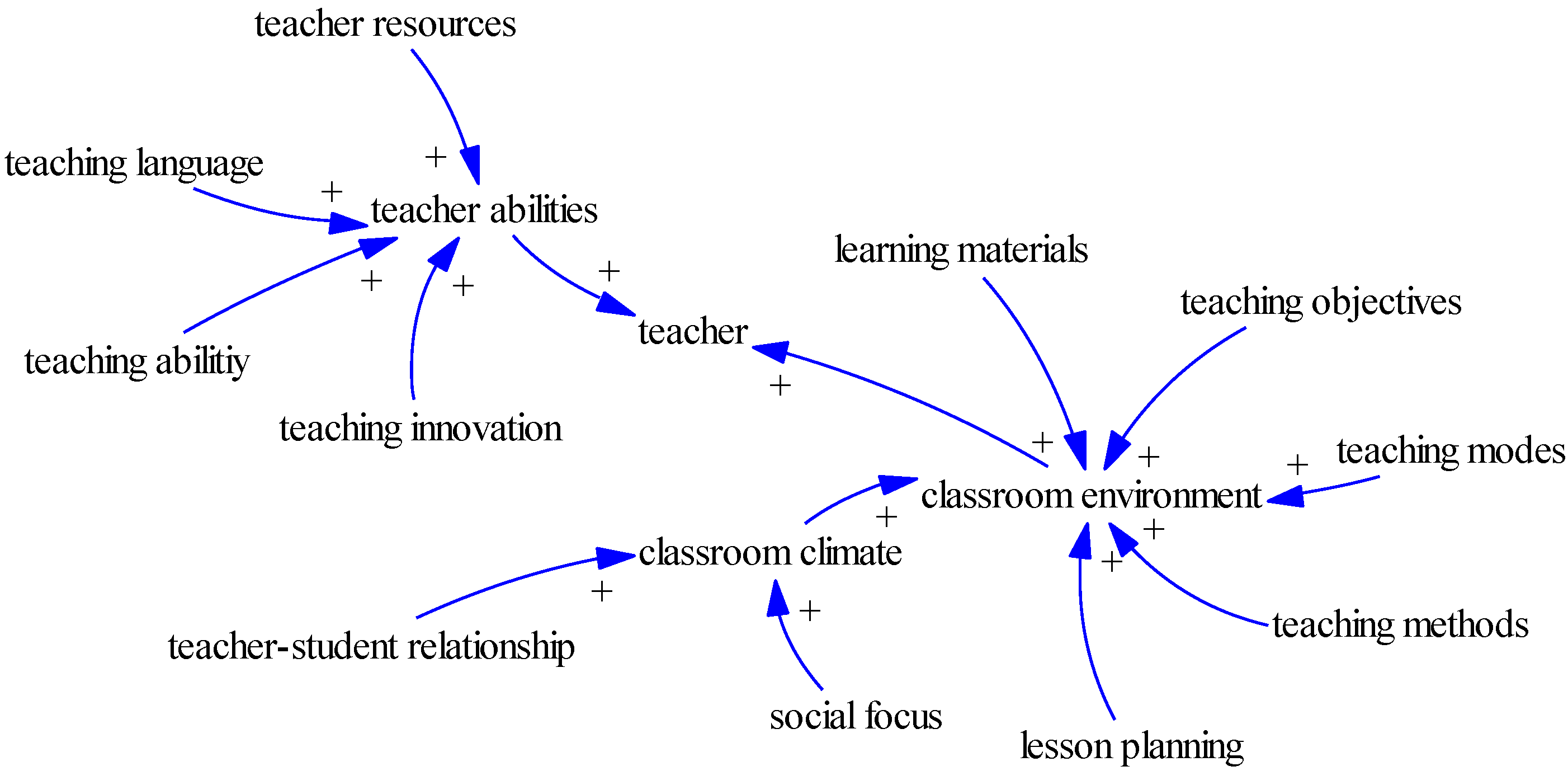
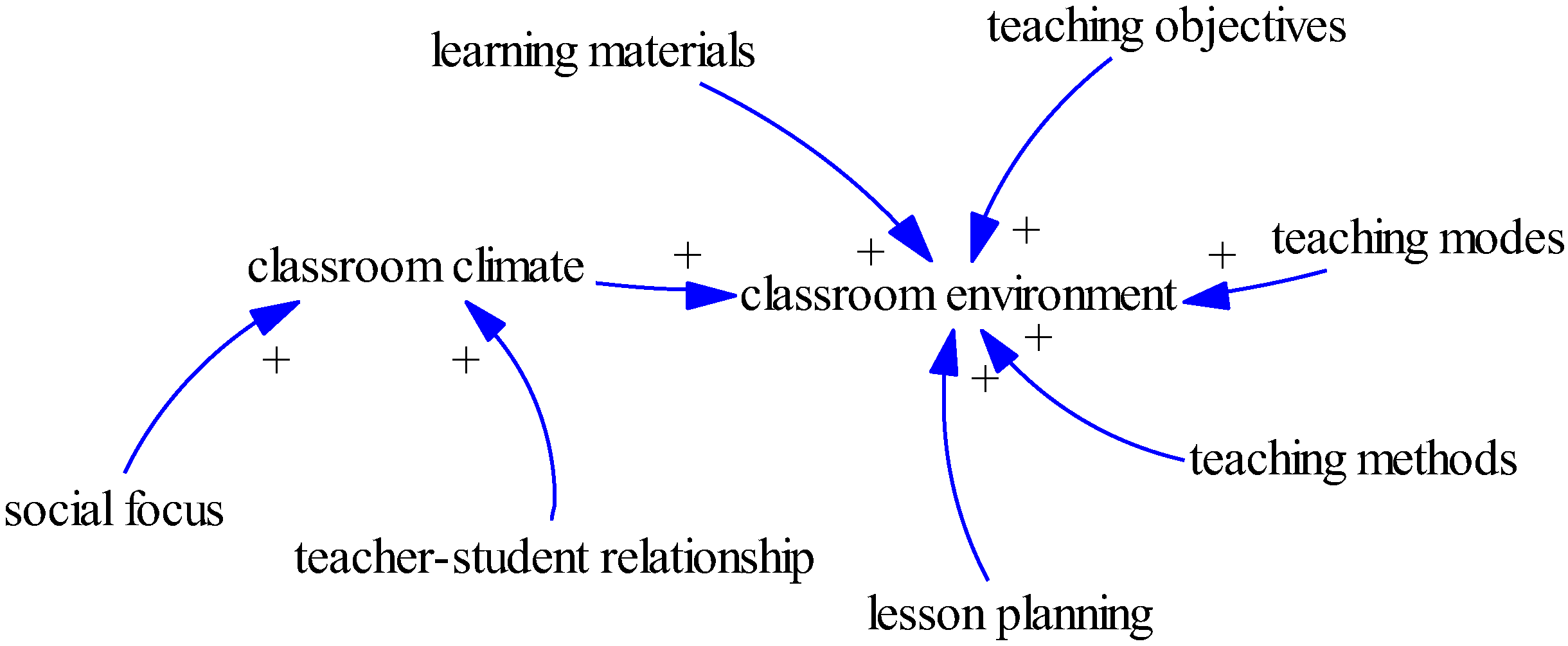
The factors related to the classroom environment in Table 3 include learning materials, teaching objectives, teaching modes, teaching methods, and classroom climate. The better the classroom climate, the better the teaching content, the higher the diversity, and the higher the level of individual student acceptance [36]. In addition, creating harmonious relationships between teachers and students, improving lesson planning, and adding a social focus can make the teaching content easier to understand, thus mobilizing the classroom climate and improving course effectiveness; hence, lesson planning was added in this section. The influencing factors and their relationships in terms of classroom environment are shown in Figure 6.
Figure 6.
Classroom environment relationship model.
4.3. System Dynamics Model of the Teacher Aspect
After analyzing the influencing factors of teacher abilities and the classroom environment, the model of the influencing factors on the teacher aspect was constructed, as shown in Figure 7, which provided a theoretical basis for the study of the relationship between teacher influencing factors.
Figure 7.
Teacher aspect relationship model.
5. System Dynamics Model of External Factors
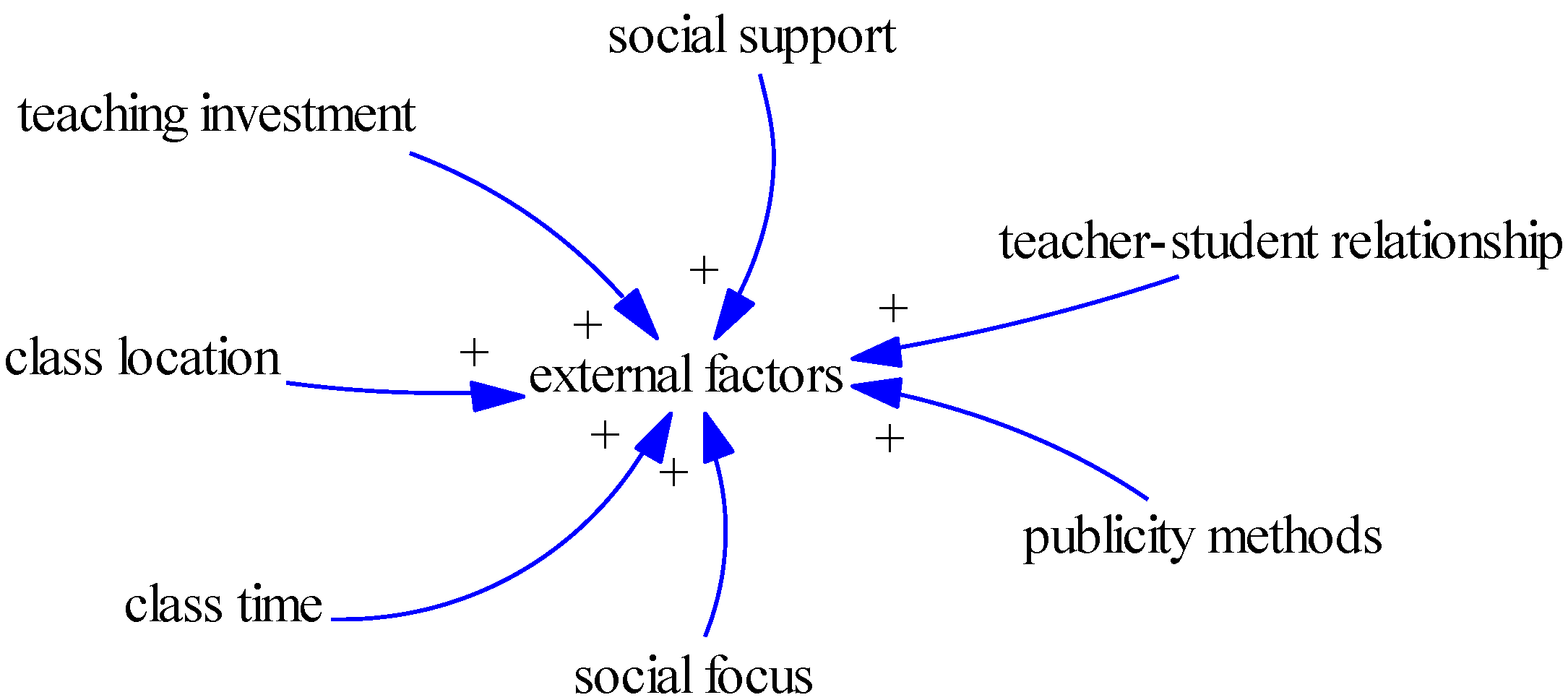
In addition to the influencing factors of students and teachers, there are also external factors, including teaching investment, social support, teacher–student relationships, publicity methods, and so on [37,38,39]. The external factors and their relationships are shown in Figure 8.
Figure 8.
External factors relationship model.
6. System Dynamics Model of Course Effectiveness Influencing Factors
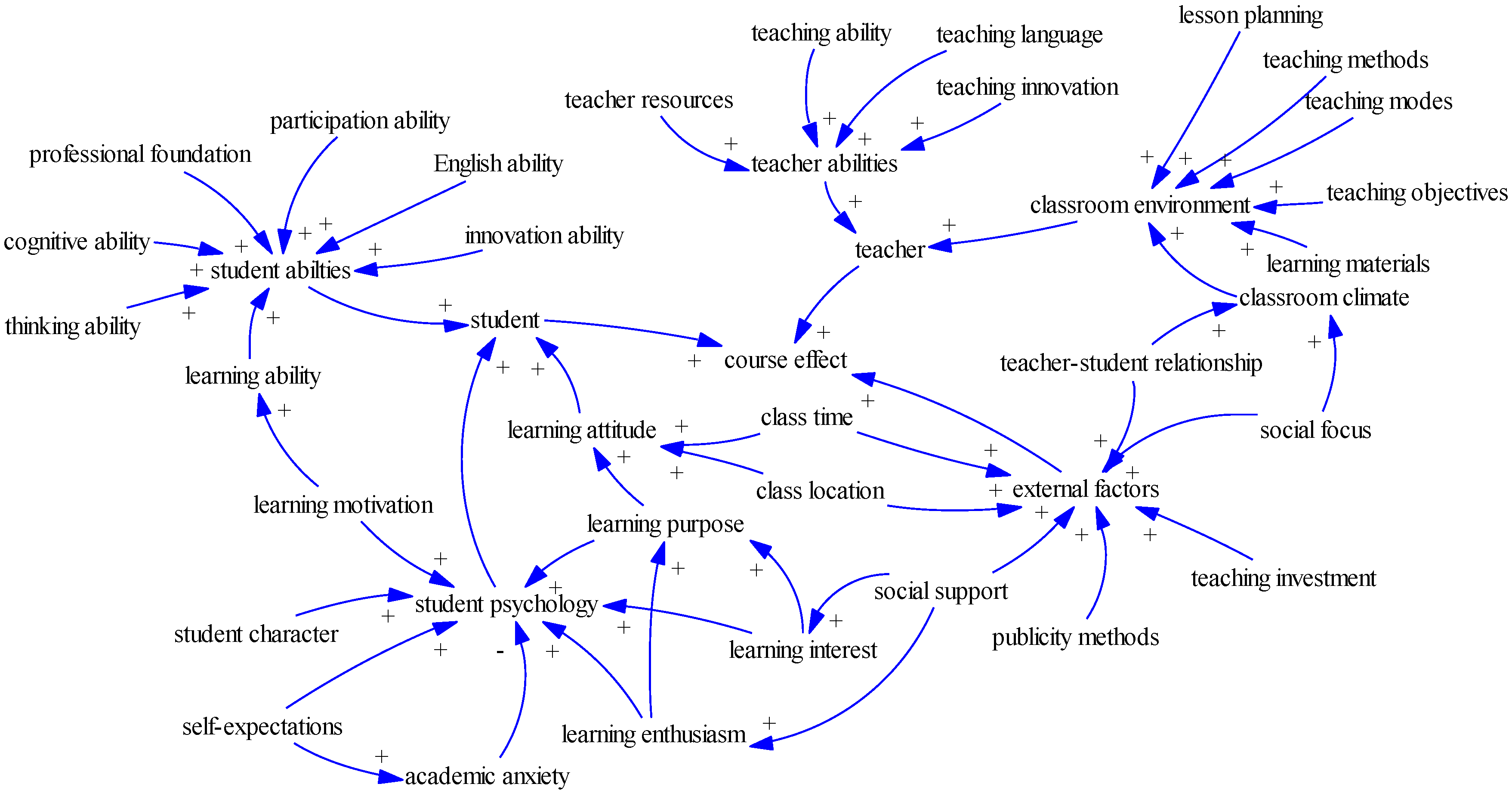
By analyzing the influencing factors of students, teachers, and external factors, the influencing factors model of course effectiveness was constructed, as shown in Figure 9.
Figure 9.
Relationship model of influencing factors on course effectiveness.
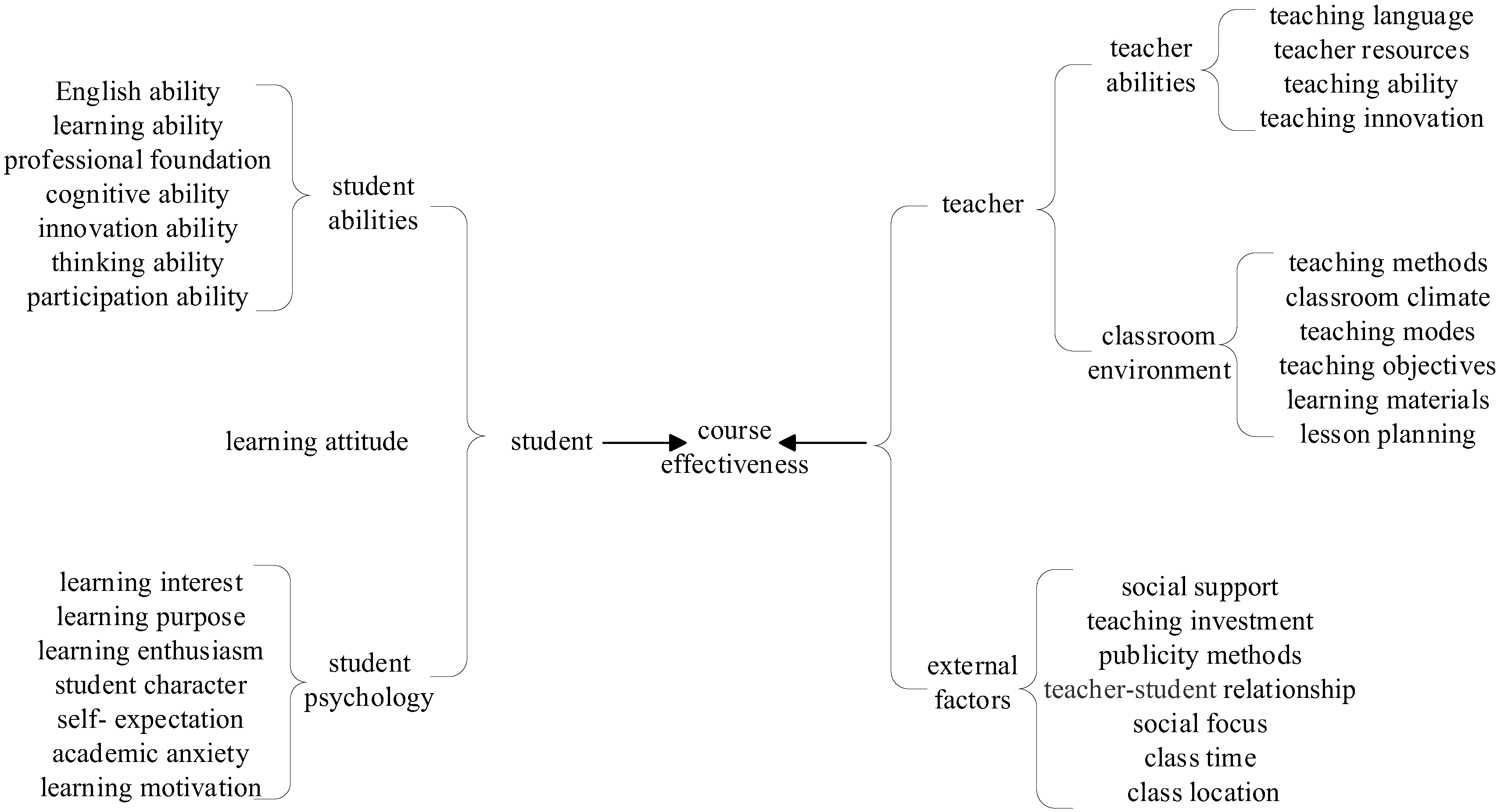
According to the system dynamics analysis, 32 factors affecting course effectiveness were obtained, as shown in Figure 10. Compared with Table 3, Figure 10 adds student learning motivation, social focus, teaching planning, class time, and class location to make it more comprehensive on the basis of system dynamics analysis.
Figure 10.
Course effectiveness influencing factors.
While constructing the course effectiveness model, it was found that after adding the learning motivation, two factors—student psychology and student abilities—were connected to social focus and teaching planning. Through the preliminary questionnaire survey, it was found that some students thought that class time in the summer holiday would have an impact on the motivation of the classes, so two factors—class time and class location—were added, and these two factors also connected the external factors with learning attitude. After adding the above five factors, the influencing factors model of the international course effectiveness was obtained. According to the model constructed in Figure 9, it can be seen that after adding these five factors, the whole system of course effectiveness influencing factors was more complete and the connection between the systems was also enhanced.
7. Analysis of Factors Influencing Course Effectiveness
7.1. Questionnaire Design
To validate the relationship of course effectiveness influencing factors model constructed in Figure 9, and to obtain the main influencing factors of course effectiveness, the questionnaire was designed based on 32 factors influencing course effectiveness (see in Supplementary Materials). The questionnaire data came from a survey of all undergraduates majoring in safety engineering enrolled in 2018 and 2019 in a university in 2019 and 2020. The total number of undergraduates majoring in safety engineering enrolled in 2018 and 2019 was 129 and 124, respectively. A total of 253 questionnaires were distributed, and 227 questionnaires were returned. The questionnaire return rate was 89.72%. The correlation analysis of 32 influencing factors in the questionnaire data was conducted using IBM SPSS Statistics 22 (Statistical Product and Service Solutions) to validate the relationship model of the influencing factors established in Figure 9.
7.2. Reliability Analysis
The reliability coefficient is an indicator of the truthfulness of the surveyed respondents; a higher reliability coefficient means that the measurement data are more consistent, stable, and reliable [40]. The reliability analysis of this measurement used Cronbach’s α as an indicator, and SPSS was used to analyze the questionnaire measurement data for α. In addition, “Cronbach’s α based on standardized items” is a correction coefficient. It eliminates the errors based on the Cronbach’s α value and makes the results more realistic. In general, if the value of the α coefficient does not exceed 0.6, it is generally considered that the internal reliability is insufficient; a value between 0.7 and 0.8 means the scale has considerable reliability; and a value between 0.8–0.9 means a high degree of internal consistency. The reliability of the questionnaire was analyzed, and the results are shown in Table 4.
Table 4.
Reliability analysis of the questionnaire.
According to Table 4, the Cronbach’s α values of the two questionnaires were 0.944 and 0.948, respectively, and the Cronbach’s α values based on standardization were 0.943 and 0.946, respectively, which were both higher than 0.9, indicating that the consistency and stability between the questionnaire items were high and the reliability was good.
7.3. Validity Analysis
The validity coefficient is an index used to measure whether the measurement items can accurately reflect the purpose and requirements of measurement. The higher the validity, the greater the measurement results can show the characteristics they want to measure. In contrast, the lower the validity, the less the measurement results can show the characteristics they want to measure [40].
Content validity and structural validity are two common methods of validity analysis (see in Supplementary Materials). Structural validity is a statistical indicator that describes whether the items of a scale can be condensed into several abstract concepts and distinguished into several definite theoretical dimensions, which is usually determined by factor analysis. In this paper, the influence of each course effect factor on the course effectiveness needed to be verified, so the content validity for the validity test was chosen.
Content validity was tested mainly by using theoretical exploration, expert consultation, or seminars. In this paper, a questionnaire was administered to all undergraduates majoring in safety engineering enrolled in 2018 and 2019 in a university in 2019 and 2020, and the validity of the questionnaire was demonstrated by cross-validating the results of the analysis of the two grades.
7.4. Correlation Analysis between Influencing Factors and Course Effectiveness
The Pearson coefficient was used as a test for this correlation analysis, and the closer it is to 1 or −1, the better the correlation is. Generally, a Pearson coefficient between 0.8–1.0 is a very strong correlation, 0.6–0.8 is a strong correlation, 0.4–0.6 is a moderate correlation, 0.2–0.4 is a weak correlation, and 0–0.2 is a very weak correlation or no correlation [41]. The results of the correlation between the 32 influencing factors and course effectiveness are shown in Table 5.
Table 5.
Correlation between 32 influencing factors and course effectiveness.
The analysis results in Table 5 show that:
- (1)
- All 32 factors have an impact on course effectiveness.
- (2)
- There are 7 strongly related factors. They are English ability, participation ability, cognitive ability, innovation ability, thinking ability, learning attitude and learning motivation.
- (3)
- There are 22 moderately related factors. They are professional foundation, learning ability, learning attitude, learning interest, learning purpose, learning enthusiasm, academic anxiety, student character, teaching language, teacher resources, teaching innovation, teaching objectives, teaching modes, lesson planning, classroom climate, learning materials, teacher–student relationship, publicity methods, social support, teaching investment, class time and class location.
- (4)
- There are 3 weakly related factors: self-expectation, teaching ability and social focus.
Although some factors are weakly correlated, they are still correlated. To obtain the relevant factors as comprehensively as possible, the weakly correlated factors are retained.
7.5. Correlation Analysis between Influencing Factors
To examine the way the influencing factors play a role in the effectiveness of the course, a correlation analysis of the factors that have interrelationships in Figure 9 was conducted. And the results are shown in Table 6. What needs to be noted is that Table 6 are only for the validation of the influencing factors with interrelationships involved in Figure 9, so not all of the correlations between the 32 factors were verified.
Table 6.
Correlation between Influencing Factors.
The analysis results for Table 6 show that:
- (1)
- There is a relationship between the influencing factors, which indirectly affects course effectiveness.
- (2)
- Except for the weak correlation between self-expectation and academic anxiety, the other factors are moderately and positively correlated. Although the correlation between self-expectation and academic anxiety is weak, there is still a correlation. To comprehensively consider the relationship between the influencing factors, the relationship between self-expectation and academic anxiety is retained.
8. Results
The following four results are obtained in this paper:
- (1)
- The 27 influencing factors of the international course effectiveness were extracted through bibliometric analysis.
- (2)
- The five influencing factors of international course effectiveness were added using the system dynamics method. Adding the 27 elements obtained from the content (1), a total of 32 factors affecting the effectiveness of international courses were obtained, which is shown in Figure 10.
- (3)
- The 32 influencing factors of international course effectiveness were divided into three categories and a relationship model of the international course effectiveness influencing factors was established, which is shown in Figure 9.
- (4)
- The 32 influencing factors of international course effectiveness were validated using the questionnaire method, and strong and weak relationships between the influencing factors of international course effectiveness were found.
9. Discussion
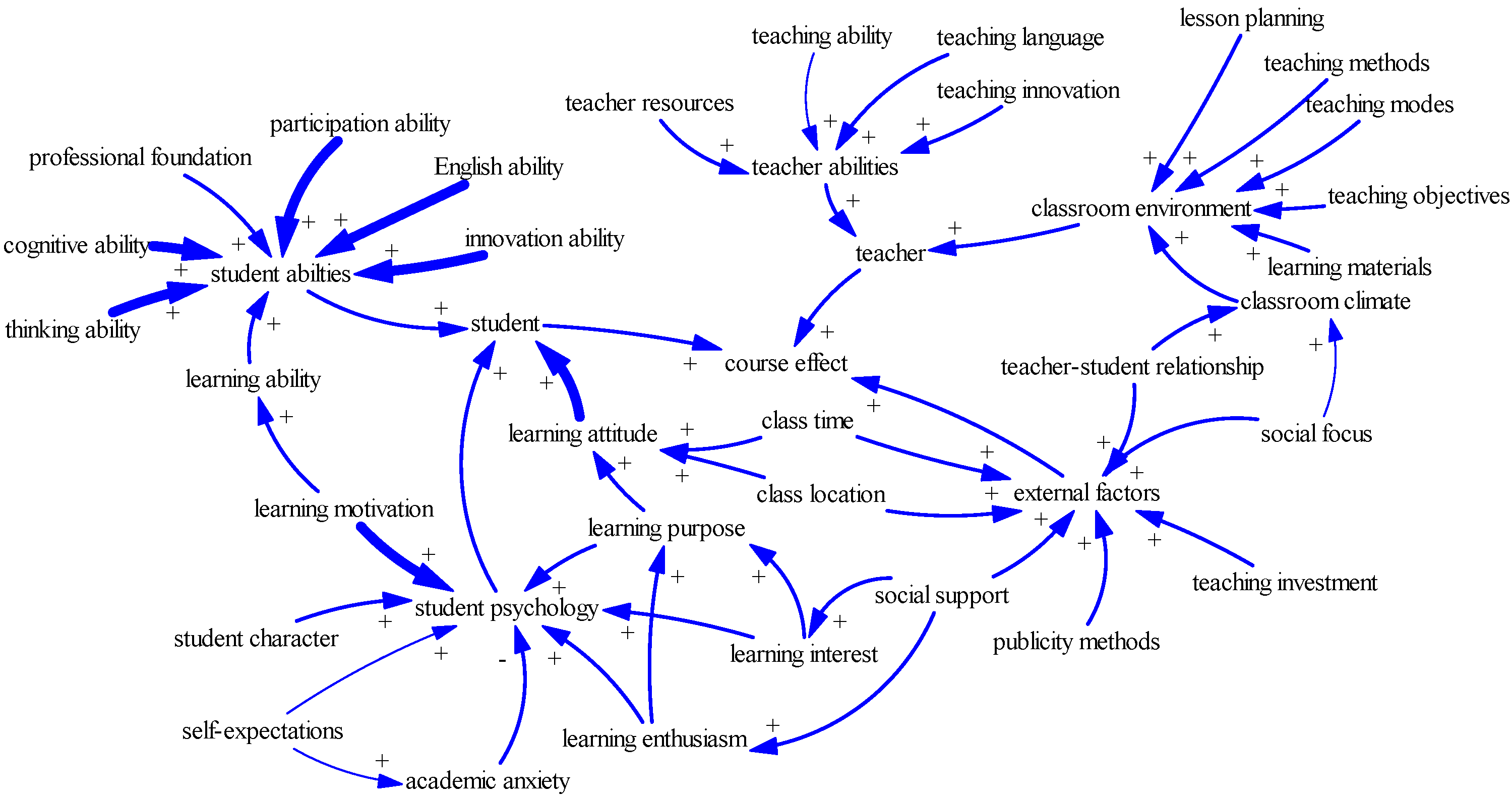
According to Table 5, the influence of 32 factors on course effectiveness was verified through correlation analysis. Table 6 illustrates the 32 influencing factors, not only acting directly on the course effectiveness, but also acting indirectly on course effectiveness through the interaction between the factors. In addition, Table 5 and Table 6 validate the relationship model of the international course effectiveness influencing factors developed in Figure 9, and provide a further description of the model, as shown in Figure 11, in which the thicker the line, the better the correlation between the influencing factor and the course effectiveness.
Figure 11.
Course effectiveness influencing factors relationship model.
Figure 11 shows that student abilities, learning attitude, and student psychology occupy the main influence, while the teacher aspect is less influential. This finding suggests that the student aspect has a greater influence on the course effectiveness when the course is taught online. In order to improve the effectiveness of international courses, we need to pay more attention to the student aspects, such as adding guidance courses to help students correct their motivation, encouraging them to preview and correct their learning attitude.
10. Conclusions
This research draws the following main conclusions to improve the effectiveness and realize the sustainable development of international courses.
Through literature analysis and a system dynamics method, 32 factors influencing course effectiveness were obtained and classified into three categories, namely, students, teachers, and external factors, and a relationship model of the 32 factors influencing course effectiveness was constructed. Through questionnaire survey and correlation analysis, 7 strongly correlated factors, 22 moderately correlated factors, and 3 weakly correlated factors were obtained, and the relationship model of the influencing factors of the courses’ effectiveness was verified.
The final model also shows that the student aspect had the main influence on the course effectiveness, which is related to online classes. From the perspective of sustainability, more attention should be paid to the student aspect before class, such as adding guidance courses to help students correct their motivation, encouraging them to preview and correct their learning attitude to improve the effectiveness of international courses.
Because of the limited reference literature and technical means, the collection of course effectiveness factors was not complete. From the perspective of sustainable development, regarding future research, we will continue to strengthen the research on the content and structure of the relationship model of the influencing factors of international courses’ effectiveness, so as to further improve the research on international courses’ effectiveness and sustainable development.
For some materials/information see more in Supplementary Materials.
Supplementary Materials
The following supporting information can be downloaded at: https://www.mdpi.com/article/10.3390/su14159542/s1, File S1: Questionnaire data processing process. File S2: International Course Questionnaire of Undergraduates Majoring in Safety Engineering enrolled in 2018 and 2019 in a University in 2019 and 2020. File S3: Questionnaire Results for the Undergraduate Students in 2020. File S4: Questionnaire Results for the Undergraduate Students in 2019. File S5: Quantitative Results for the Questionnaire of Undergraduate Students in 2020. File S6: Quantitative Results for the Questionnaire of Undergraduate Students in 2019.
Author Contributions
All of the authors have contributed to this manuscript. W.J.: conceptualization, methodology, funding acquisition, project administration, writing—original draft. Z.W.: data curation, formal analysis, writing—original draft. H.S.: writing—review and editing. X.Z.: writing—review and editing. X.C.: writing—review and editing. All authors have read and agreed to the published version of the manuscript.
Funding
This work was supported by the Fundamental Research Funds for the Central Universities (project number: 2022SKAQ01) and the National Natural Science Foundation of China (project number: 51504260).
Institutional Review Board Statement
Not applicable.
Informed Consent Statement
Not applicable.
Data Availability Statement
This study has provided all data in the text.
Acknowledgments
We would like to thank all teachers and students who participated in this study.
Conflicts of Interest
The authors declare no conflict of interest.
References
- Teng, J.; Hu, J.Y.; Li, M. International Curriculum in China: Status, Reflection, and Value. Int. Comp. Educ. 2016, 38, 54–60. [Google Scholar]
- Tallent-Runnels, M.K.; Thomas, J.A.; Lan, W.Y.; Cooper, S.; Ahern, T.C.; Shaw, S.M.; Liu, X. Teaching Courses Online: A Review of the Research. Rev. Educ. Res. 2006, 76, 93–135. [Google Scholar] [CrossRef] [Green Version]
- Guest, R.N.; Selvanathan, S.; Cooper, S.; Ahern, T.C.; Shaw, S.M.; Liu, X. Student Satisfaction and Online Teaching. Assess. Eval. High. Educ. 2018, 43, 1084–1093. [Google Scholar] [CrossRef]
- Lee, J.X.; Ahmad Azman, A.H.; Ng, J.Y.; Ismail, N.A.S. Deciphering Learning Motivation in Open Distance Learning towards Sustainable Medical Education. Sustainability 2022, 14, 4497. [Google Scholar] [CrossRef]
- Lange, C.; Costley, J. Improving Online Video Lectures: Learning Challenges Created by Media. Int. J. Educ. Technol. High. Educ. 2020, 17, 1–18. [Google Scholar] [CrossRef]
- Lim, D.H.; Morris, M.L. Learner and Instructional Factors Influencing Learning Outcomes within a Blended Learning Environment. J. Educ. Technol. Soc. 2009, 12, 282–293. [Google Scholar]
- Jiang, W.; Zhou, J.; Gao, Y.; Wang, Y. Exploring Methods of the Sustainable Development for Safety Engineering International Course. Sustainability 2021, 13, 5291. [Google Scholar] [CrossRef]
- Eck, N.; Waltman, L. Software survey: VOSviewer, a computer program for bibliometric mapping. Scientometrics 2010, 84, 523–538. [Google Scholar]
- Chen, C. CiteSpace II: Detecting and Visualizing Emerging Trends. J. Am. Soc. Inf. Sci. Technol. 2006, 57, 359–377. [Google Scholar] [CrossRef] [Green Version]
- Moher, D.; Cook, D.J.; Eastwood, S.; Olkin, I.; Rennie, D.; Stroup, D.F. Improving the quality of reports of meta-analyses of randomised controlled trials: The QUOROM statement. Lancet 1999, 354, 1896–1990. [Google Scholar] [CrossRef]
- Bergeron, D.A.; Gaboury, I. Challenges related to the analytical process in realist evaluation and latest developments on the use of NVivo from a realist perspective. Int. J. Soc. Res. Methodol. 2019, 23, 1–11. [Google Scholar] [CrossRef]
- Wang, Y.; Wu, M.; Wang, H. Investigating the determinants and age and gender differences in the acceptance of mobile learning. Br. J. Educ. Technol. 2009, 40, 92–118. [Google Scholar] [CrossRef]
- Baran, E.; Correia, A.P.; Thompson, A. Transforming online teaching practice: Critical analysis of the literature on the roles and competencies of online teachers. Distance Educ. 2011, 32, 421–439. [Google Scholar] [CrossRef]
- Kern, R. Perspectives on technology in learning and teaching languages. Tesol Q. 2006, 40, 183–210. [Google Scholar] [CrossRef] [Green Version]
- Chengjie, Y.U. Challenges and changes of MOOC to traditional classroom teaching mode. Can. Soc. Sci. 2015, 11, 135–139. [Google Scholar]
- Jia, Z.X. Research on College English Teachers’ Effective Teaching Behaviors in Blended Learning. Ph.D. Thesis, Shanghai International Studies University, Shanghai, China, 2019. [Google Scholar]
- Wang, L. Research on Influence Factors of Students’ Deep Learning in Universities Blending Courses. Master’s Thesis, Central China Normal University, Wuhan, China, 2018. [Google Scholar]
- Zhu, Z.D.; Li, H.B. Analysis of Factors Influencing the Learning Participation of Secondary Vocational Students in the Context of Blended Learning. Educ. Forum 2019, 8, 231–232. [Google Scholar]
- Chen, R. Study on the Influencing Factors of Teaching Effect of University Teachers during the Period of the Epidemic. Open Access Libr. J. 2020, 7, 1–7. [Google Scholar] [CrossRef]
- Hu, L.F.; Chen, Y.Q. Factors on Bilingual Teaching Effect on the Course of “Introduction to E-commerce”. Eurasia J. Math. Sci. Technol. Educ. 2017, 13, 5273–5280. [Google Scholar]
- Huang, Y.J.; Cheng, S.; Yang, F.Q.; Chen, C. Analysis and Visualization of Research on Resilient Cities and Communities Based on VOSviewer. Int. J. Environ. Res. Public Health 2022, 19, 7068. [Google Scholar] [CrossRef]
- Forrester, J.W. System Dynamics, Systems Thinking, and Soft OR. Syst. Dyn. Rev. 1994, 10, 245–256. [Google Scholar] [CrossRef]
- Donovan, K.; Herrington, C. Factors Affecting College Attainment and Student Ability in the us Since 1900. Rev. Econ. Dyn. 2019, 31, 224–244. [Google Scholar] [CrossRef]
- Klein, J.D.; Keller, J.M. Influence of Student Ability, Locus of Control, and Type of Instructional Control on Performance and Confidence. Routledge 1990, 83, 140–146. [Google Scholar] [CrossRef]
- Darban, M.; Polites, G.L. Do Emotions Matter in Technology Training? Exploring Their Effects on Individual Perceptions and Willingness to Learn. Comput. Hum. Behav. 2016, 62, 644–657. [Google Scholar] [CrossRef]
- Dybowski, C.; Sehner, S.; Harendza, S. Influence of Motivation, Self-efficacy and Situational Factors on the Teaching Quality of Clinical Educators. BMC Med. Educ. 2017, 17, 1–8. [Google Scholar] [CrossRef] [PubMed]
- Oroujlou, N.; Vahedi, M. Motivation Attitude, and Language Learning. Procedia-Soc. Behav. Sci. 2011, 29, 994–1000. [Google Scholar] [CrossRef] [Green Version]
- Sattayanuwat, W. Determinants of Student Performance in International Trade Course. Am. J. Educ. Res. 2015, 3, 1433–1437. [Google Scholar]
- Khatimah, H.; Antonius, A. The Significance of Teacher Mastery of Student Psychology in Teaching and Learning Process. J. La Edusci 2020, 1, 19–23. [Google Scholar] [CrossRef]
- Dunlosky, J.; Rawson, K.A.; Marsh, E.J.; Nathan, M.J.; Willingham, D.T. Improving Students’ Learning with Effective Learning Techniques: Promising Directions from Cognitive and Educational Psychology. Psychol. Sci. Public Interest 2013, 14, 4–58. [Google Scholar] [CrossRef] [Green Version]
- Shakir, M. Academic Anxiety as a Correlate of Academic Achievement. J. Educ. Pract. 2014, 5, 29–36. [Google Scholar]
- Ganyaupfu, E.M. Factors Influencing Academic Achievement in Quantitative Courses between Business Students of Private Higher Education Institutions. J. Educ. Pract. 2013, 4, 57–65. [Google Scholar]
- Chen, J.X.; Li, L.B.; Zheng, X.Y. The Construction of Structural Equations for Evaluation Indexes of Classroom Teaching Quality in College and University. China Contin. Med Educ. 2020, 12, 58–61. [Google Scholar]
- Vizeshfar, F.; Torabizadeh, C. The Effect of Teaching Based on Dominant Learning Style on Nursing Students’ Academic Achievement. Nurse Educ. Pract. 2018, 28, 103–108. [Google Scholar] [CrossRef] [PubMed]
- Barnhart, T.; van Es, E. Studying Teacher Noticing: Examining the Relationship between Pre-service Science Teachers’ Ability to Attend, Analyze and Respond to Student Thinking. Teach. Teach. Educ. 2015, 45, 83–93. [Google Scholar] [CrossRef]
- Prieto, L.R. Incorporating Diversity Content into Courses and Concerns about Teaching Culturally Diverse Students. Teach. Psychol. 2018, 45, 146–153. [Google Scholar] [CrossRef]
- Jiang, L.L. A Two-factor Analysis of the Influence of Teaching Effectiveness of Bilingual Courses-a Questionnaire Survey based on the Bilingual Course. Int. Econ. 2011, 8, 104–106. [Google Scholar]
- Oravecz, L.M.; Koblinsky, S.A.; Randolph, S.M. Community Violence, Interpartner Conflict, Parenting, and Social Support as Predictors of the Social Competence of African American Preschool Children. J. Black Psychol. 2008, 34, 192–216. [Google Scholar] [CrossRef]
- Lee, J.S. The Effects of the Teacher–Student Relationship and Academic Press on Student Engagement and Academic Performance. Int. J. Educ. Res. 2012, 53, 330–340. [Google Scholar] [CrossRef] [Green Version]
- Nie, N.H.; Bent, D.H.; Hull, C.H. SPSS: Statistical Package for the Social Sciences; McGraw-Hill: New York, NY, USA, 1975; pp. 468–473. [Google Scholar]
- Weaver, B.; Wuensch, K.L. SPSS and SAS Programs for Comparing Pearson Correlations and OLS Regression Coefficients. Behav. Res. Methods 2013, 45, 880–895. [Google Scholar] [CrossRef] [PubMed]
Publisher’s Note: MDPI stays neutral with regard to jurisdictional claims in published maps and institutional affiliations. |
© 2022 by the authors. Licensee MDPI, Basel, Switzerland. This article is an open access article distributed under the terms and conditions of the Creative Commons Attribution (CC BY) license (https://creativecommons.org/licenses/by/4.0/).