Article

Using Regression Model to Develop Green Building Energy Simulation by BIM Tools

1
School of Civil Engineering, The University of Sydney, Sydney, NSW 2006, Australia
2
School of Built Environment, University of New South Wales, Sydney, NSW 2052, Australia
*
Author to whom correspondence should be addressed.
Sustainability 2022, 14(10), 6262; https://doi.org/10.3390/su14106262
Submission received: 29 March 2022 / Revised: 10 May 2022 / Accepted: 14 May 2022 / Published: 20 May 2022

Abstract

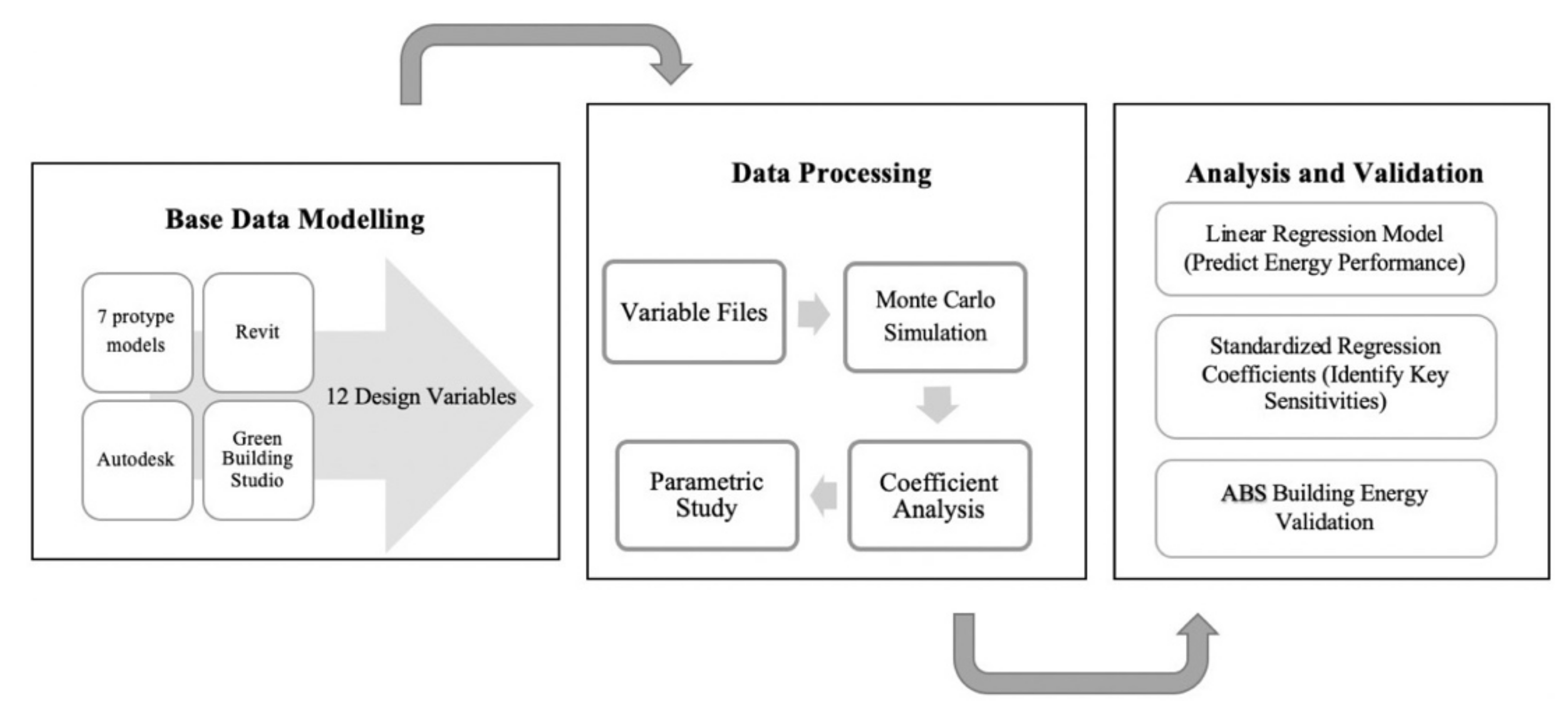
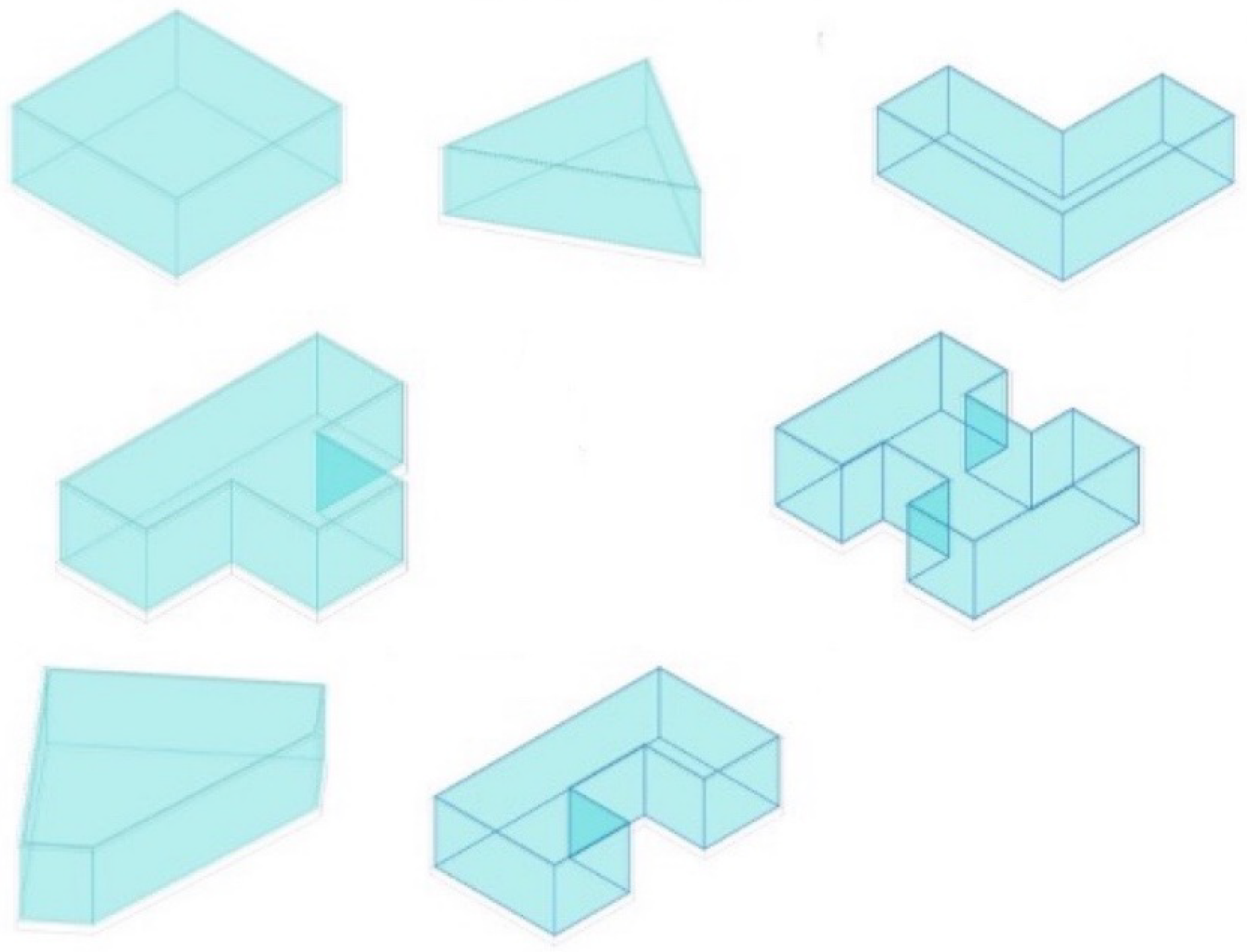
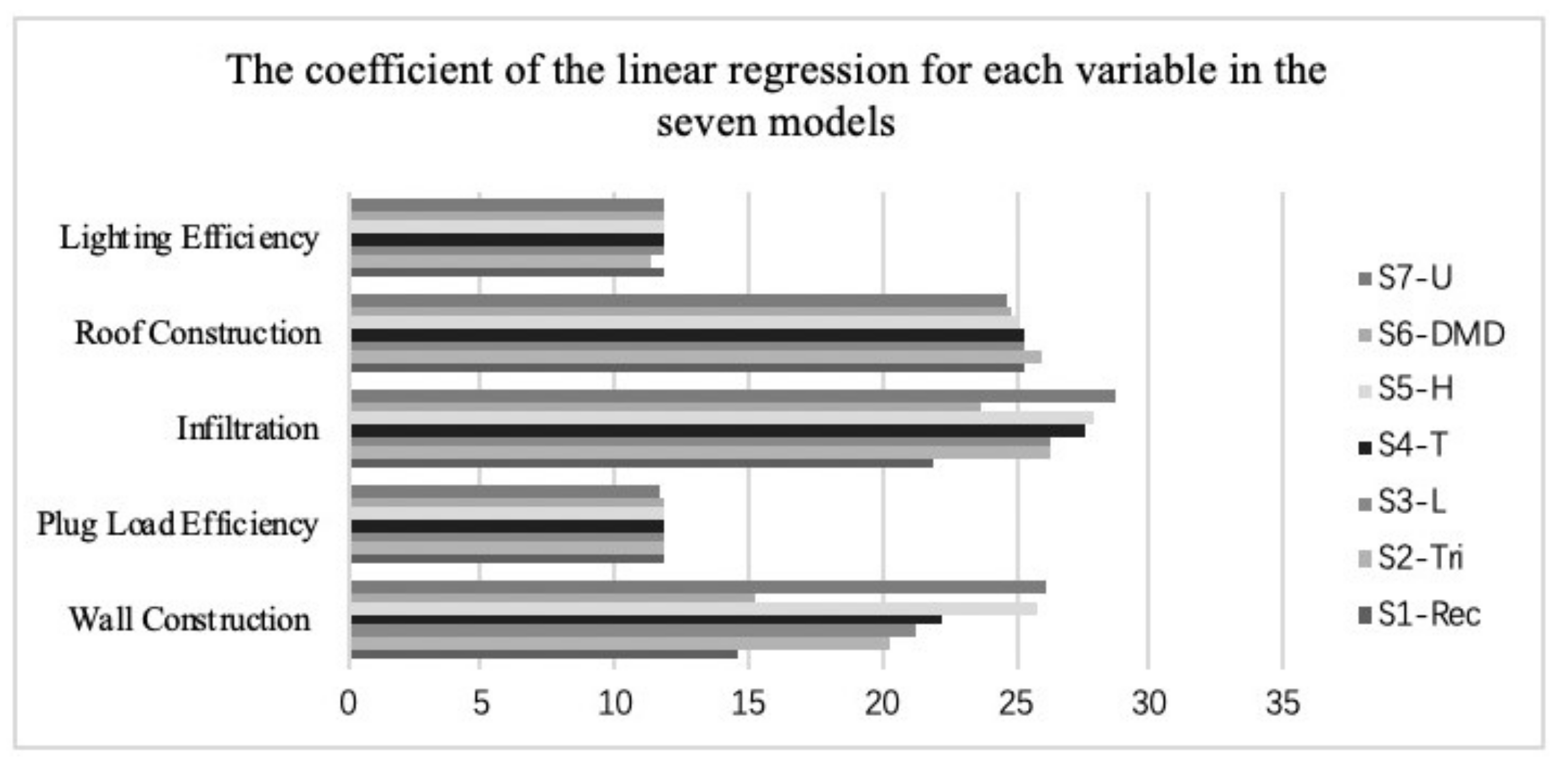
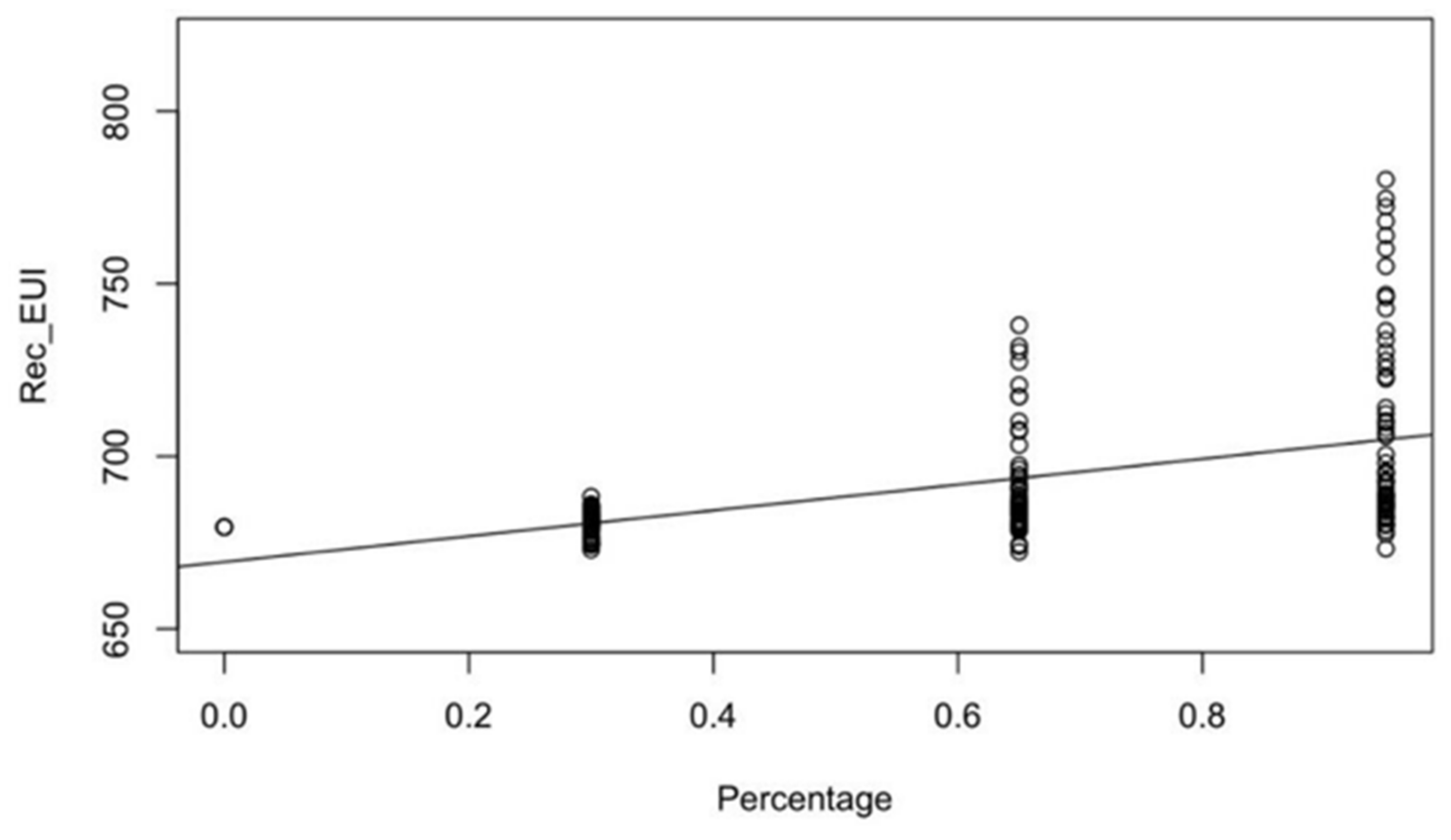
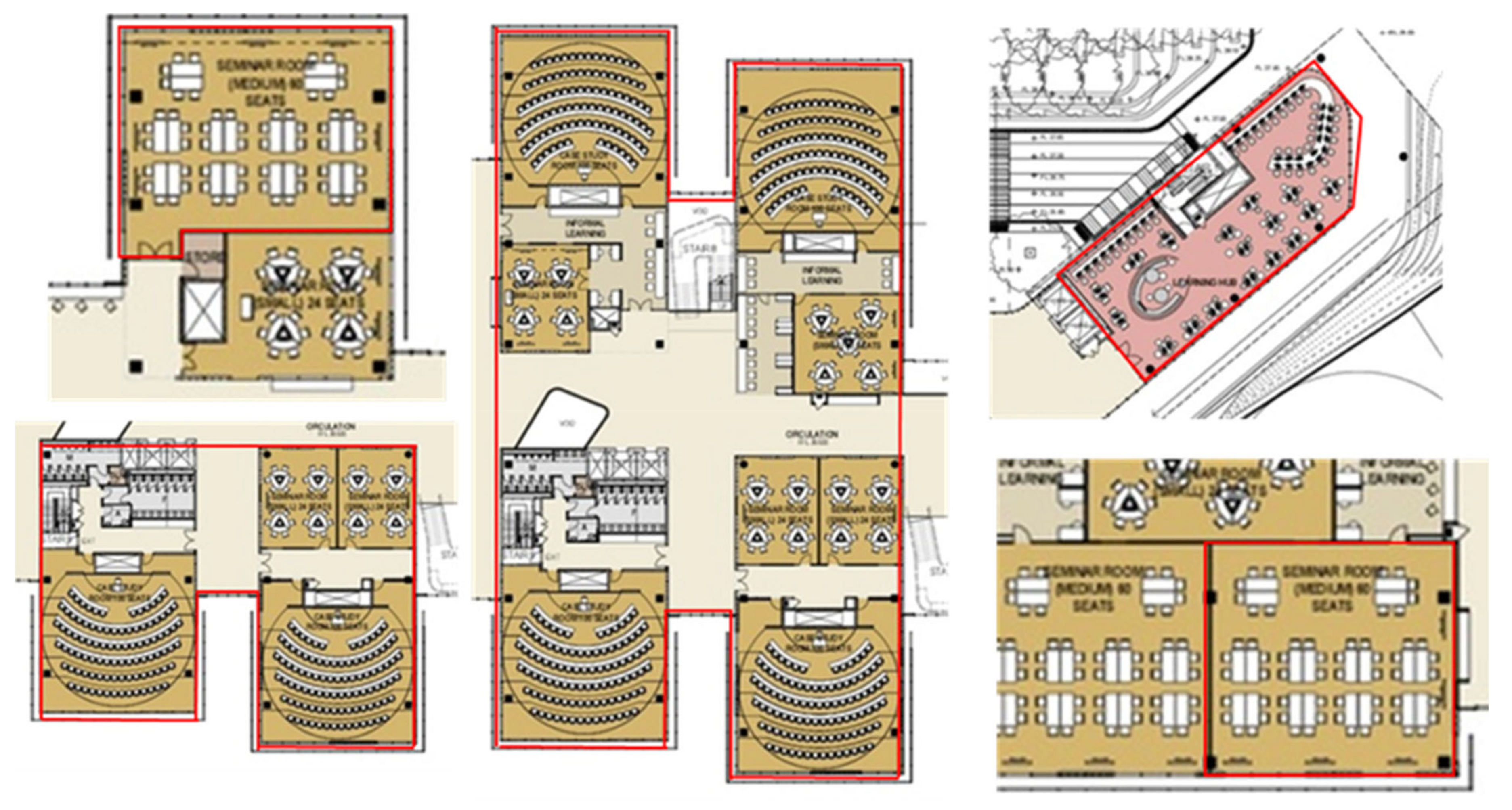
Energy consumption in the building sector poses a huge burden in terms of global energy and pollution. Recent advancements in building information modelling and simulating building energy performance (BEP) have provided opportunities for energy optimization. The use of building information modelling (BIM) also has increased significantly in the last decade based on the requirement to accommodate and manage data in buildings. By using the data, some building information modelling tools have developed the function of energy analysis. This paper aims to identify design parameters critical to BEP to assist architects in the initial stages of building design and to investigate their relationship. The outcomes of the prototype model’s energy simulations were then used to construct multilinear regression models. For the rest of the independent building design variables, linear regression models are used to analyse the relationship between it and energy consumption. It was concluded that, in the same building conditions, diamond-shaped buildings have the highest energy consumption, while triangle-shaped buildings showed the most efficient energy performance through energy simulations for seven fundamental prototype building models based on Autodesk Kits, Green Building Studio (GBS) with a Doe-2 engine. In addition, the developed regression models are validated to within 10% error via a case study of the ABS building. At the end of this paper, recommendations are provided on energy optimisation for the initial stages of building design. The parametric analysis of design variables in this study contributed to the total energy consumption at the early phases of design and recommendations on energy optimization.
Keywords: green building; building information modelling; analytical analysis; statistical analysis; linear and multilinear analysis; regression analysis; energy optimization green building; building information modelling; analytical analysis; statistical analysis; linear and multilinear analysis; regression analysis; energy optimization