Article

Short-Term Solar Power Forecasting: A Combined Long Short-Term Memory and Gaussian Process Regression Method

1
School of Law, Minzu University of China, Beijing 100081, China
2
Shanghai Minghua Electric Power Science & Technology Co., LTD., Shanghai 200090, China
3
College of Nuclear Science and Technology, Beijing Normal University, Beijing 100875, China
4
Key Lab of Energy Thermal Conversion and Control of Ministry of Education, Southeast University, Nanjing 210096, China
*
Author to whom correspondence should be addressed.
Sustainability 2021, 13(7), 3665; https://doi.org/10.3390/su13073665
Submission received: 29 December 2020 / Revised: 23 February 2021 / Accepted: 26 February 2021 / Published: 25 March 2021
(This article belongs to the Special Issue Machine Learning for Sustainable Energy)

Abstract

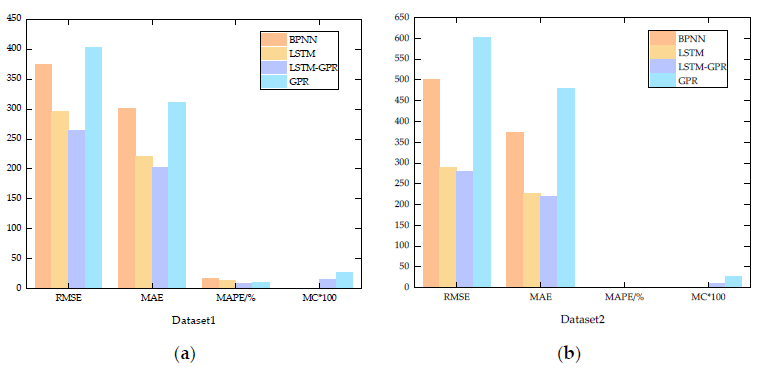
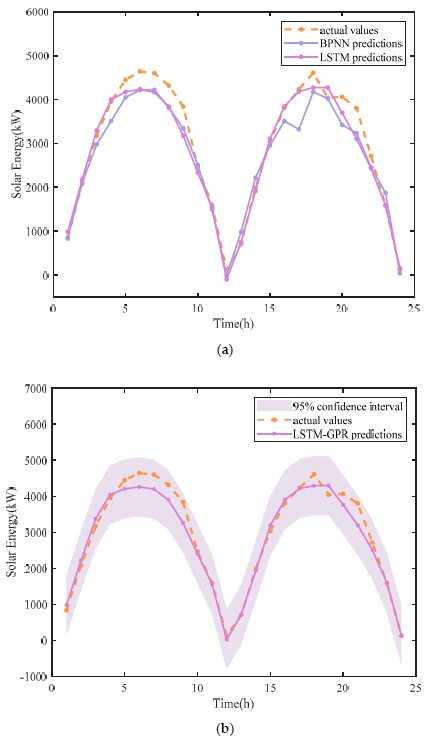
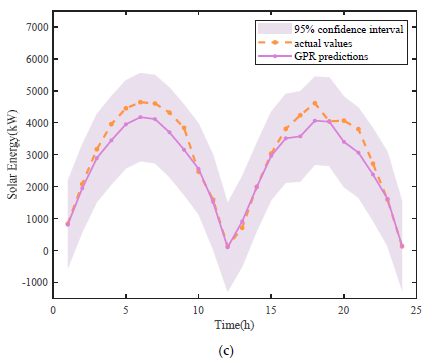
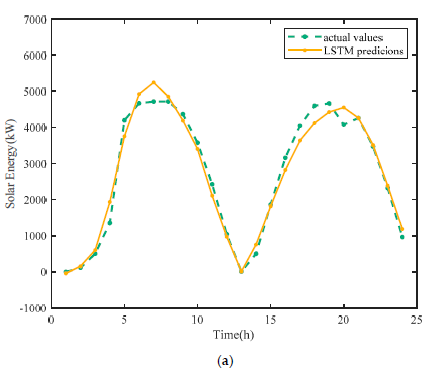
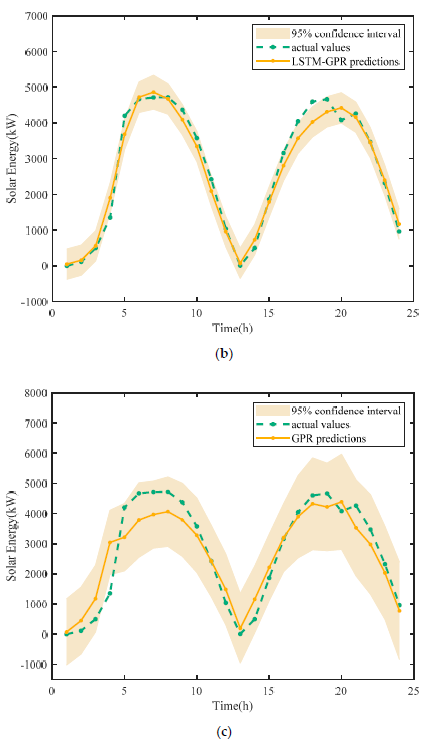
Solar power is considered a promising power generation candidate in dealing with climate change. Because of the strong randomness, volatility, and intermittence, its safe integration into the smart grid requires accurate short-term forecasting with the required accuracy. The use of solar power should meet requirements proscribed by environmental law and safety standards applied for consumer protection. First, time-series-based solar power forecasting (SPF) model is developed with the time element and predicted weather information from the local meteorological station. Considering the data correlation, long short-term memory (LSTM) algorithm is utilized for short-term SPF. However, the point prediction provided by LSTM fails in revealing the underlying uncertainty range of the solar power output, which is generally needed in some stochastic optimization frameworks. A novel hybrid strategy combining LSTM and Gaussian process regression (GPR), namely LSTM-GPR, is proposed to obtain a highly accurate point prediction with a reliable interval estimation. The hybrid model is evaluated in comparison with other algorithms in terms of two aspects: Point prediction accuracy and interval forecasting reliability. Numerical investigations confirm the superiority of LSTM algorithm over the conventional neural networks. Furthermore, the performance of the proposed hybrid model is demonstrated to be slightly better than the individual LSTM model and significantly superior to the individual GPR model in both point prediction and interval forecasting, indicating a promising prospect for future SPF applications.
Keywords: solar power forecasting (SPF); long short-term memory (LSTM); Gaussian process regression (GPR); hybrid model; environmental protection solar power forecasting (SPF); long short-term memory (LSTM); Gaussian process regression (GPR); hybrid model; environmental protection