Article

National Limits of Sustainability: The Czech Republic’s CO2 Emissions in the Perspective of Planetary Boundaries


Department of Development and Environmental Studies, Faculty of Science, Palacky University, TR 17 listopadu 12, 771 46 Olomouc, Czech Republic
*
Author to whom correspondence should be addressed.
Sustainability 2021, 13(4), 2164; https://doi.org/10.3390/su13042164
Submission received: 23 January 2021 / Accepted: 12 February 2021 / Published: 18 February 2021
(This article belongs to the Special Issue Bioeconomy, Circular Economy and Sustainability)

Abstract

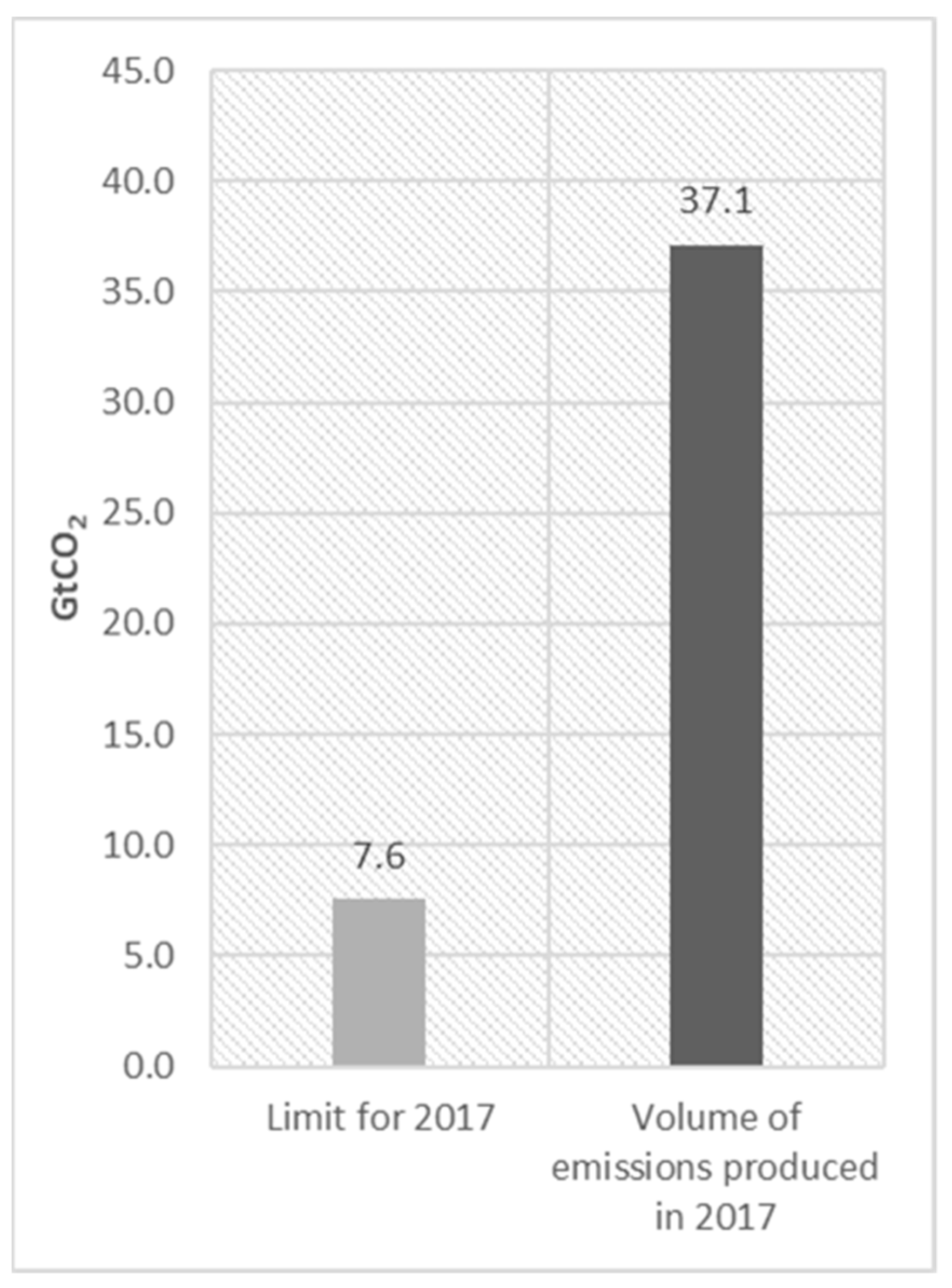
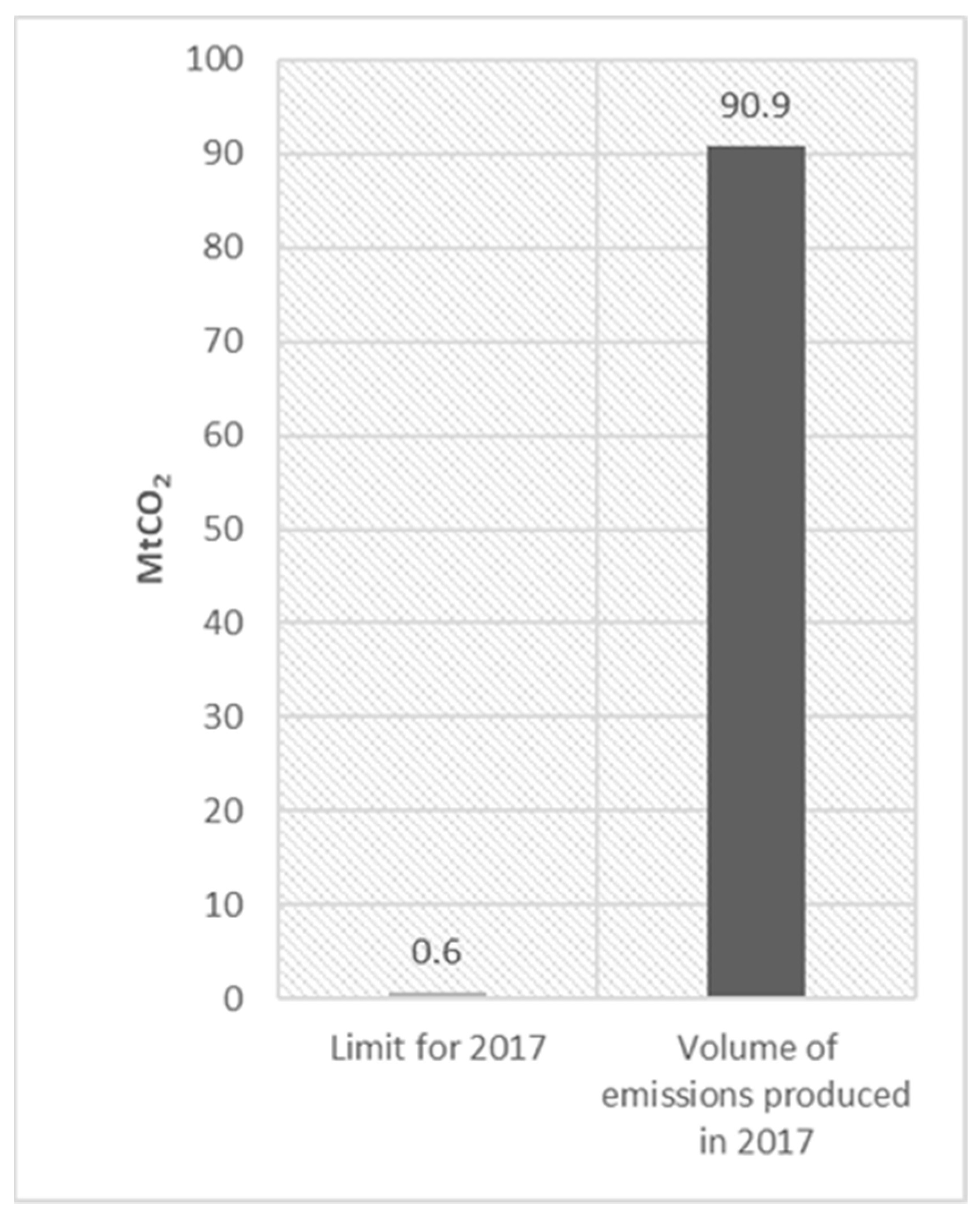
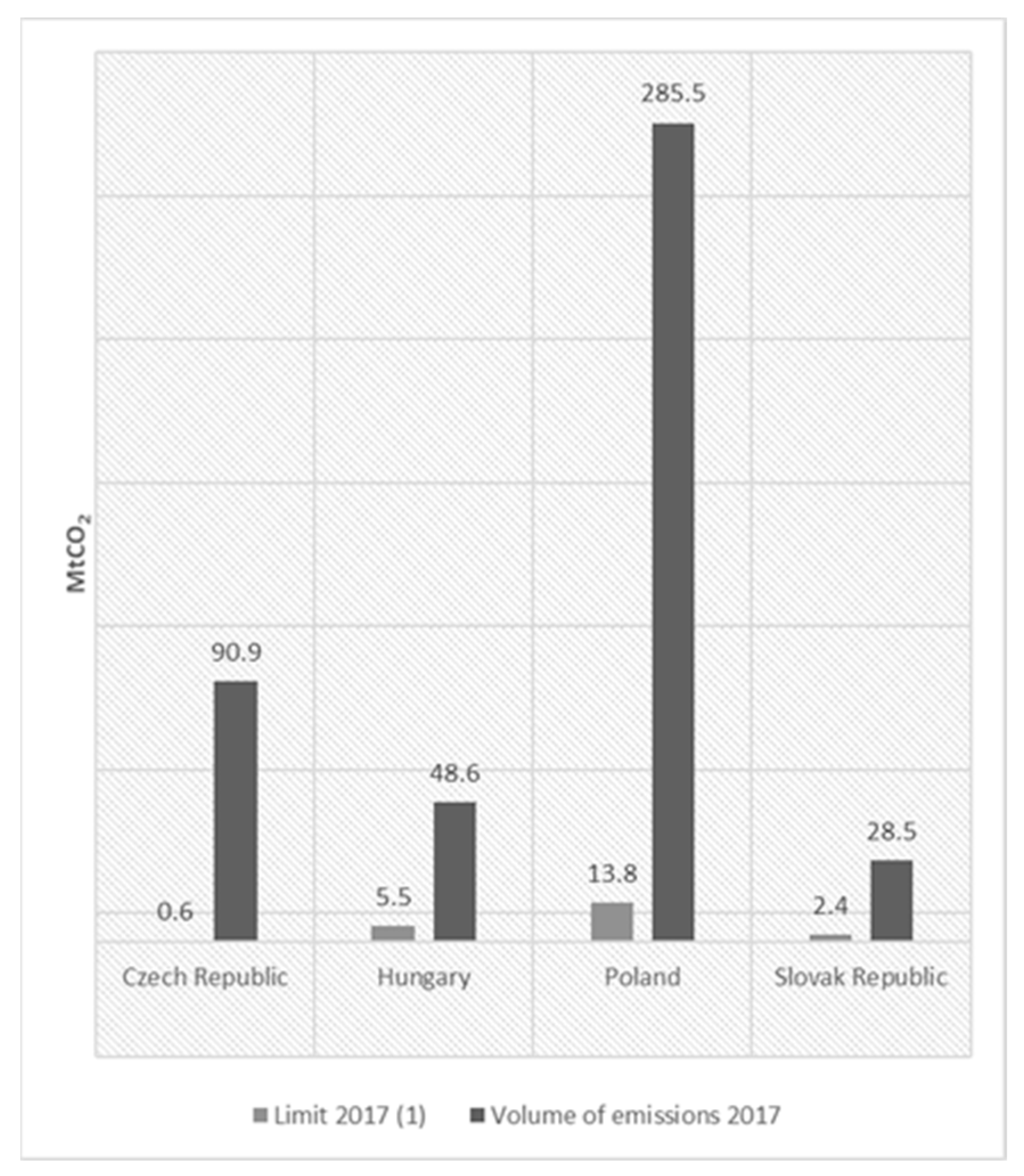
Building on the planetary boundaries (PB) concept and recent studies on assessing the PB at the national level, this paper proposes a new method for addressing the growing need to conceptualize the national environmental limits in the global perspective. The global and national limits for the climate change PB are set using the GDP-adjusted model that represents an innovative and fairer CO2 emissions distribution mechanism. It elaborates on the equity principle and distributes the remaining global emission budget to countries on the basis of their past, current, and future population; past emissions; and current state of economic development. The results point to insufficient global efforts to reduce the CO2 emissions to avoid a global temperature rise of more than 2 °C by 2100. When examining the data in accordance with this climate change scenario, we see that some countries have already spent their CO2 budget and most high-income countries will spend their remaining budget by the end of the decade. This is also the case for the Czech Republic, which exceeded the limit for the period from 2017 onwards in 2018. While the result clearly points to the urgency of the decarbonization process, it also shows that some high-income countries, including the Czech Republic, are currently emitting at the expense of other countries. On the policy level, the findings could contribute to the re-evaluation of the GHG reduction plans as well as setting more appropriate and fairer national targets.
Keywords: climate change; CO2 emissions; planetary boundaries; sustainability climate change; CO2 emissions; planetary boundaries; sustainability