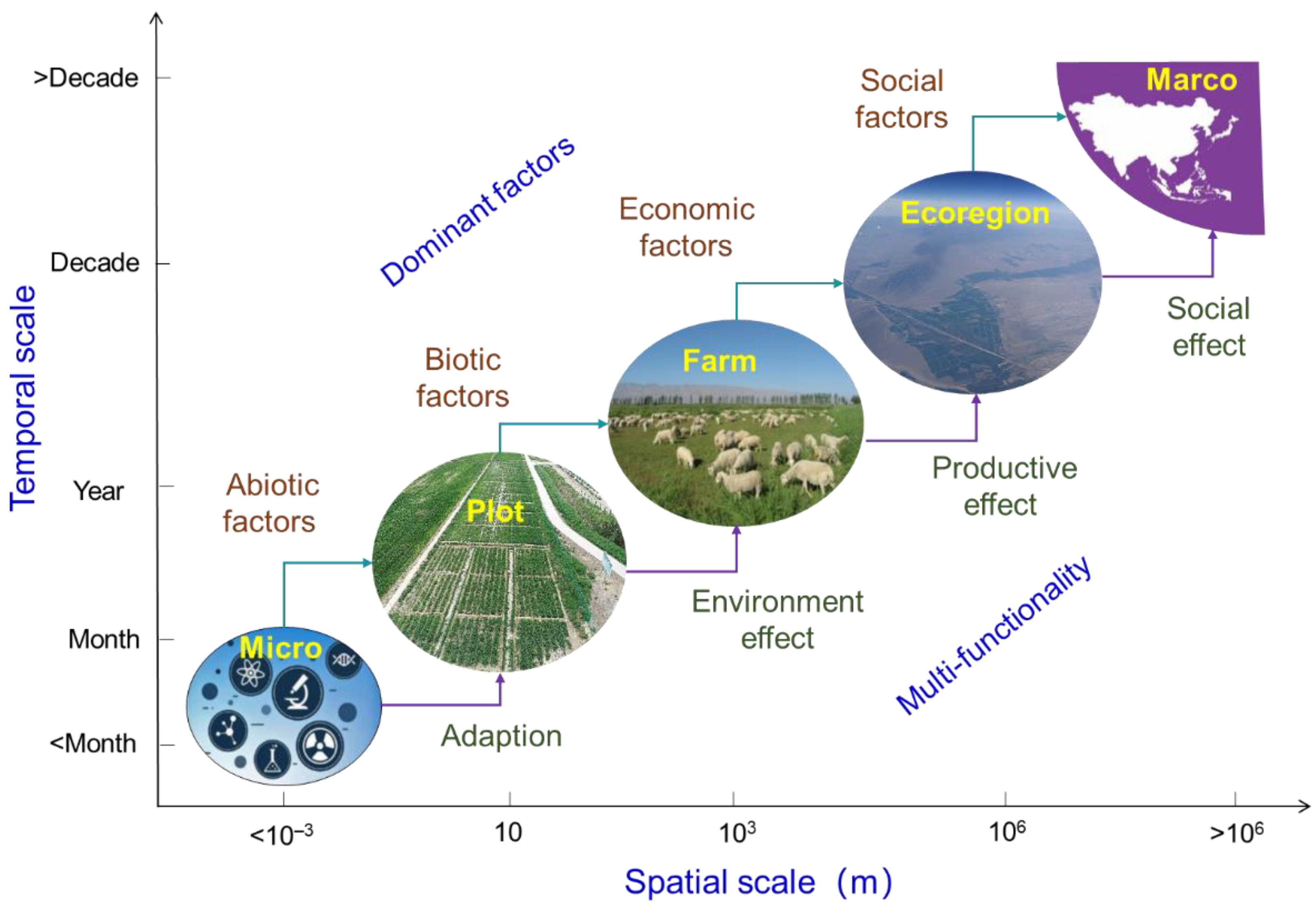
Multi-Scale Evaluation of Dominant Factors (MSDF) on Forage: An Ecosystemic Method to Understand the Function of Forage


Abstract
Share and Cite
Lou, S.; Ning, J.; Zhang, C.; Wang, C.; Zhu, W.; Chang, S.; Hou, F. Multi-Scale Evaluation of Dominant Factors (MSDF) on Forage: An Ecosystemic Method to Understand the Function of Forage. Sustainability 2021, 13, 2163. https://doi.org/10.3390/su13042163
Lou S, Ning J, Zhang C, Wang C, Zhu W, Chang S, Hou F. Multi-Scale Evaluation of Dominant Factors (MSDF) on Forage: An Ecosystemic Method to Understand the Function of Forage. Sustainability. 2021; 13(4):2163. https://doi.org/10.3390/su13042163
Chicago/Turabian StyleLou, Shanning, Jiao Ning, Cheng Zhang, Chunmei Wang, Wanhe Zhu, Shenghua Chang, and Fujiang Hou. 2021. "Multi-Scale Evaluation of Dominant Factors (MSDF) on Forage: An Ecosystemic Method to Understand the Function of Forage" Sustainability 13, no. 4: 2163. https://doi.org/10.3390/su13042163
APA StyleLou, S., Ning, J., Zhang, C., Wang, C., Zhu, W., Chang, S., & Hou, F. (2021). Multi-Scale Evaluation of Dominant Factors (MSDF) on Forage: An Ecosystemic Method to Understand the Function of Forage. Sustainability, 13(4), 2163. https://doi.org/10.3390/su13042163