Abiotic Stress Tolerance-Progress and Pathways of Sustainable Rice Production
 , ,
, ,
Abstract
1. Introduction
2. Methodology
3. Results and Discussion
3.1. Major Abiotic Stresses in Rice
3.1.1. Drought
3.1.2. Submergence
3.1.3. Salinity
3.1.4. Heat
3.1.5. Cold
3.2. Stress Tolerant Rice Varieties (STRVs) for Ensuring High Yields under Stress
3.2.1. Drought Tolerant Rice Varieties
3.2.2. Submergence Tolerant Rice Varieties
3.2.3. Salinity Tolerant Rice Varieties
3.2.4. Heat Tolerant Rice Varieties
3.2.5. Cold Tolerant Rice Varieties
3.3. Social Impact of STRVs
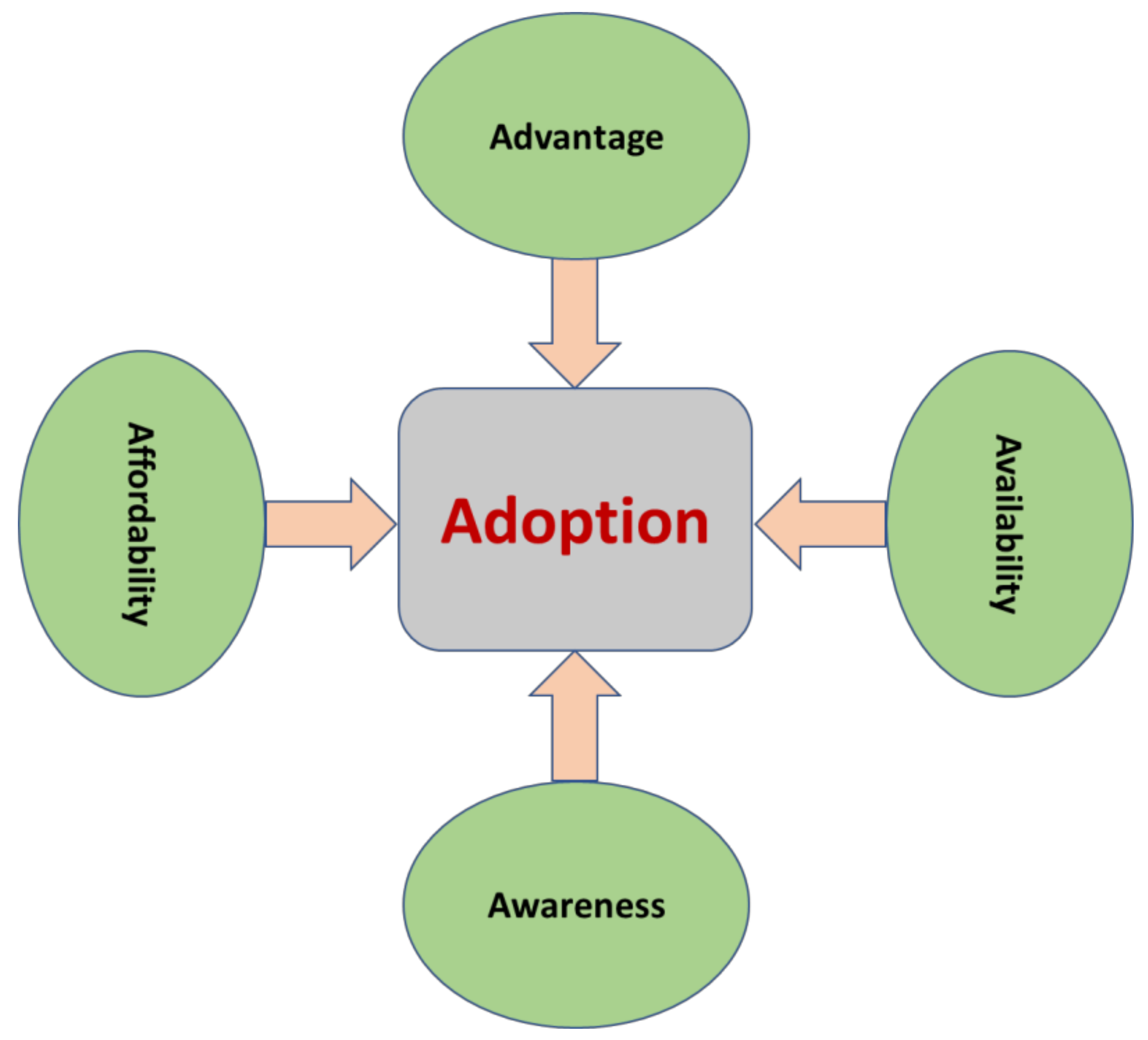
3.4. Barriers in the Adoption of STRVs
3.5. Strategies for Enhancing Rice Production in Stress Prone Areas
3.5.1. Establishing Linkages between Different Stakeholders
3.5.2. Engaging Seed Dealers and Agrovets for Delivering Extension Services
3.5.3. Deploying Women Self-Help Groups for Dissemination and Sustainability of STRVs
3.5.4. Deploying Progressive Farmers for Sustainability of STRVs
3.5.5. Head-to-Head Trials as Efficient and Innovative Means of Demonstration through Learning
3.5.6. Varietal Dissemination through Mini-Kits
3.5.7. Strategic Partnerships
3.5.8. Establishing the Client-Oriented Crop Cafeteria
3.5.9. Ensuring Capacity Building
3.5.10. Evaluation Hubs for Formalized Feedback
3.5.11. Cropping System-Based Targeting
4. Challenges and Way Forward
5. Conclusions
Funding
Institutional Review Board Statement
Informed Consent Statement
Data Availability Statement
Acknowledgments
Conflicts of Interest
References
- Thomas, K.; Dean-Hardy, R.; Lazrus, H.; Mendez, M.; Orlove, B.; Rivera-Collazo, I.; Timmons-Roberts, J.; Rockman, M.; Warner, B.P.; Winthrop, R. Explaining differential vulnerability to climate change: A social science review. Wiley Interdisciplinary Reviews. Climate Chang. 2018, 10, e565. [Google Scholar]
- Dar, M.H.; de-Janvry, A.; Emerick, K.; Raitzer, D.; Sadoulet, E. Flood-tolerant rice reduces yield variability and raises expected yield, differentially benefitting socially disadvantaged groups. Sci. Rep. 2013, 3, 3315. [Google Scholar] [CrossRef]
- Dar, M.H.; Waza, S.A. Science and technology: Helping to satisfy the food needs of every individual. Rice Today 2017, 16, 29. [Google Scholar]
- Ericksen, P.J.; Ingram, J.; Liverman, D.M. Food security and global environmental change: Emerging challenges. Environ. Sci. Policy 2009, 12, 373–377. [Google Scholar] [CrossRef]
- Zaidi, N.W.; Singh, M.; Kumar, S.; Sangle, U.R.; Singh, R.; Prasad, R.; Singh, S.S.; Singh, S.; Yadav, A.K.; Singh, A.; et al. Trichoderma harzianum improves the performance of stress tolerant rice varieties in rainfed ecologies of Bihar, India. Field Crops Res. 2018, 220, 97–104. [Google Scholar] [CrossRef]
- Arif, M.; Ali, K.; Jan, M.T.; Shah, Z.; Jones, D.L.; Quilliam, R.S. Integration of biochar with animal manure and nitrogen for improving maize yields and soil properties in calcareous semi-arid agroecosystems. Field Crops Res. 2016, 195, 28–35. [Google Scholar] [CrossRef]
- Fischer, R.A.; Byerlee, D.; Edmeades, G.O. Crop Yields and Global Food Security: Will Yield Increase Continue to Feed the World? ACIAR Monograph No. 158; Australian Centre for International Agricultural Research: Canberra, Australia, 2014. [Google Scholar]
- Popp, J.; Pető, K.; Nagy, J. Pesticide productivity and food security. A review. Agron. Sustain. Dev. 2013, 33, 243–255. [Google Scholar]
- Bailey-Serres, J.; Fukao, T.; Ronald, P.; Ismail, A.M.; Heuer, S.; Mackill, D.J. Submergence tolerant rice: SUB1’s journey from landrace to modern cultivar. Rice 2010, 3, 138–147. [Google Scholar] [CrossRef]
- Dar, M.H.; Singh, S.; Singh, U.S.; Ismail, A.M. Stress tolerant rice varieties: Making headway in India. SATSA Mukhapatra Ann. Tech. Issue 2014, 18, 1–14. [Google Scholar]
- Bodner, G.; Nakhforoosh, A.; Kaul, H.P. Management of crop water under drought: A review. Agron. Sustain. Dev. 2015, 35, 401–442. [Google Scholar] [CrossRef]
- Dar, M.H.; Waza, S.A.; Shukla, S.; Zaidi, N.W.; Nayak, S.; Hossain, M.; Kumar, A.; Ismail, A.M.; Singh, U.S. Drought tolerant rice for ensuring food security in Eastern India. Sustainability 2020, 12, 2214. [Google Scholar] [CrossRef]
- Lagorio, A.; Pinto, R.; Golini, R. Research in urban logistics: A systematic literature review. Int. J. Phys. Distrib. Logist. Manag. 2016, 46, 908–931. [Google Scholar] [CrossRef]
- Friday, D.; Ryan, S.; Sridharan, R.; Collins, D. Collaborative risk management: A systematic literature review. Int. J. Phys. Distrib. Logist. Manag. 2018, 48, 231–253. [Google Scholar] [CrossRef]
- Paciarotti, C.; Torregiani, F. The logistics of the short food supply chain: A literature review. Sustain. Prod. Consum. 2020, 26, 428–442. [Google Scholar] [CrossRef]
- Badampudi, D.; Wohlin, C.; Petersen, K. Experiences from Using Snowballing and Database Searches in Systematic Literature Studies. In Proceedings of the 19th International Conference on Evaluation and Assessment in Software Engineering, Nanjing, China, 27–29 April 2015. [Google Scholar]
- Singh, R.; Singh, Y.; Xalaxo, S.; Verulkar, S.B.; Yadav, N.; Singh, S.; Singh, N.; Prasad, K.; Kondayya, K.; Rao, P.R.; et al. From QTL to variety-harnessing the benefits of QTLs for drought, flood and salt tolerance in mega rice varieties of India through a multi-institutional network. Plant Sci. 2016, 242, 278–287. [Google Scholar] [CrossRef]
- Dolferus, R. To grow or not to grow: A stressful decision for plants. Plant Sci. 2014, 229, 247–261. [Google Scholar] [CrossRef] [PubMed]
- Dar, M.H.; Chakravorty, R.; Waza, S.A.; Sharma, M.; Zaidi, N.W.; Singh, A.N.; Singh, U.S.; Ismail, A.M. Transforming rice cultivation in flood prone coastal Odisha to ensure food and economic security. Food Secur. 2017, 4, 711–722. [Google Scholar] [CrossRef]
- Yang, X.L.; Wang, B.F.; Chen, L.; Li, P.; Cao, C.G. The different influences of drought stress at the flowering stage on rice physiological traits, grain yield, and quality. Sci. Rep. 2019, 9, 3742. [Google Scholar]
- Gregorio, G.B. Tagging Salinity Tolerance Genes in Rice Using Amplified Fragment Length Polymorphism (AFLP); University of the Philippines: Los Baños, Philippines, 1997; 118p. [Google Scholar]
- Ahmad, W.; Noor, M.A.; Afzal, I.; Bakhtavar, M.A.; Nawaz, M.M.; Sun, X.; Zhou, B.; Ma, W.; Zhao, M. Improvement of sorghum crop through exogenous application of natural growth-promoting substances under a changing climate. Sustainability 2016, 8, 1330. [Google Scholar] [CrossRef]
- Bakhtavar, M.A.; Afzal, I.; Basra, S.M.A.; Ahmad, A.H.; Noor, M.A. Physiological strategies to improve the performance of spring maize (Zea mays L.) planted under early and optimum sowing conditions. PLoS ONE 2015, 10, e0124441. [Google Scholar] [CrossRef] [PubMed]
- Thakur, P.; Kumar, S.; Malik, J.; Berger, J.; Nayyar, H. Cold stress effects on reproductive development in grain crops: An overview. Environ. Exp. Bot. 2010, 67, 429–443. [Google Scholar] [CrossRef]
- Raza, A.; Razzaq, A.; Mehmood, S.S.; Zou, X.; Zhang, X.; Lv, Y.; Xu, J. Impact of climate change on crops adaptation and strategies to tackle its outcome: A review. Plants 2019, 8, 34. [Google Scholar] [CrossRef] [PubMed]
- Bouman, B.A.M.; Peng, S.; Castaoeda, A.R.; Visperas, R.M. Yield and water use of irrigated tropical aerobic rice systems. Agric. Water Manag. 2005, 74, 87–105. [Google Scholar] [CrossRef]
- Pandey, S.; Bhandari, H. Drought: Economic Costs and Research Implications. In Drought Frontiers in Rice: Crop Improvement for Increased Rainfed Production; Serraj, R., Bennett, J., Hardy, B., Eds.; World Scientific Publishing: Singapore, 2008; pp. 3–17. [Google Scholar]
- Fukao, T.; Yeung, E.; Bailey-Serres, J. The submergence tolerance regulator SUB1A mediates crosstalk between submergence and drought tolerance in rice. Plant Cell 2011, 23, 412–427. [Google Scholar] [CrossRef]
- Ahadiyat, Y.R.; Hidayat, P.; Susanto, U. Drought tolerance, phosphorus efficiency and yield characters of upland rice lines. Emir. J. Food Agric. 2014, 26, 25–34. [Google Scholar]
- Raman, A.; Verulkar, S.B.; Mandal, N.P.; Variar, M.; Shukla, V.D.; Dwivedi, J.L.; Singh, B.N.; Singh, O.N.; Swain, P.; Mall, A.K.; et al. Drought yield index to select high yielding rice lines under different drought stress severities. Rice 2012, 5, 1–12. [Google Scholar] [CrossRef] [PubMed]
- Kumar, S.; Dwivedi, S.K.; Singh, S.S.; Bhatt, B.P.; Mehta, P.; Elanchezhian, R.; Singh, V.P.; Singh, O.N. Morph-physiological traits associated with reproductive stage drought tolerance of rice (Oryza sativa L.) genotypes under rainfed condition of eastern Indo-Gangetic Plains. Ind. J. Plant. Physiol. 2014, 19, 87–93. [Google Scholar] [CrossRef]
- Kamoshita, A.; Rofriguez, R.; Yamauchi, A.; Wade, L.J. Genotypic variation in response of rainfed lowland to prolonged drought and re-watering. Plant Prod. Sci. 2004, 7, 406–420. [Google Scholar] [CrossRef]
- Botwright-Acuna, T.L.; Latte, H.R.; Wade, L.J. Genotype and environment interactions for grain yield of upland rice backcross lines in diverse hydrological environments. Field Crops Res. 2008, 108, 117–125. [Google Scholar] [CrossRef]
- Anjum, S.A.; Xie, X.; Wang, L.; Saleem, M.F.; Man, C.; Lei, W. Morphological, physiological and biochemical response of plant to drought stress. Afr. J. Agric. Res. 2011, 6, 2026–2032. [Google Scholar]
- Gana, A.S. Screening and resistance of traditional and improved cultivars of rice to drought stress at Badeggi, Niger State, Nigeria. Agric. Biol. J. North. Am. 2011, 2, 1027–1031. [Google Scholar]
- Mackill, D.J.; Coffman, W.R.; Garrity, D.P. Rainfed Lowland Rice Improvement; International Rice Research Institute: Manila, Philippines, 1996. [Google Scholar]
- Setter, T.L.; Ellis, M.; Laureles, E.V.; Ella, E.S.; Senadhira, D.; Mishra, S.B.; Sarkarung, S.; Datta, S. Physiology and genetics of submergence tolerance in rice. Ann. Bot. 1997, 79, 67–77. [Google Scholar] [CrossRef]
- Septiningsih, E.M.; Pamplona, A.M.; Sanchez, D.L.; Neeraja, C.N.; Vergara, G.V.; Heuer, S.; Ismail, A.M.; Mackill, D.J. Development of submergence-tolerant rice cultivars: The Sub1 locus and beyond. Ann. Bot. 2009, 103, 151–160. [Google Scholar] [CrossRef]
- Bhowmick, M.K.; Dhara, M.C.; Singh, S.; Dar, M.H.; Singh, U.S. Improved management options for submergence-tolerant (Sub1) rice genotype in flood-prone rainfed lowlands of West Bengal. Am. J. Plant Sci. 2014, 5, 14–23. [Google Scholar]
- Wassmann, R.; Jagadish, S.V.K.; Sumfleth, K.; Pathak, H.; Howell, G.; Ismail, A.; Serraj, R.; Redona, E.; Singh, R.K.; Heuer, S. Regional vulnerability of climate change impacts on Asian rice production and scope for adaptation. Adv. Agron. 2009, 102, 91–133. [Google Scholar]
- Nishiuchi, S.; Yamauchi, T.; Takahashi, H.; Kotula, L.; Nakazono, M. Mechanisms for coping with submergence and waterlogging in rice. Rice 2012, 5, 2. [Google Scholar] [CrossRef] [PubMed]
- Adkins, S.W.; Shiraishi, T.; McComb, J.A. Submergence tolerance of rice- a new glasshouse method for the experimental submergence of plants. Physiol. Plant. 1990, 80, 642–646. [Google Scholar] [CrossRef]
- Ram, P.C.; Singh, A.K.; Singh, B.B.; Singh, V.K.; Singh, H.P.; Setter, T.L.; Singh, V.P.; Singh, R.K. Environmental characterization of floodwater in eastern India: Relevance to submergence tolerance of lowland rice. Exp. Agric. 1999, 35, 141–152. [Google Scholar] [CrossRef]
- Mishra, A.K.; Erickson, K.; Harris, M.; Hallahan, C.; Uematsu, H. Determinants of Farm Household Income Diversification in the United States. In Evidence from Farm-Level Data. In Proceedings of the Agricultural and Applied Economics Association Annual Meeting, Denver, CO, USA, 25–27 July 2010. [Google Scholar]
- Das, K.K.; Panda, D.; Sarkar, R.K.; Reddy, J.N.; Ismail, A.M. Submergence tolerance in relation to variable floodwater conditions in rice. Environ. Exp. Bot. 2009, 66, 425–434. [Google Scholar]
- Flowers, T.J.; Flowers, S.A. Why does salinity pose such a difficult problem for plant breeders? Agric. Water Manag. 2005, 78, 15–24. [Google Scholar] [CrossRef]
- Bano, D.A.; Singh, R.K.; Singh, N.P.; Waza, S.A. Effect of Cowpea Bradyrhizobium (RA-5) on growth parameters of pigeon pea plant under various salt concentrations at different time intervals. Indian J. Ecol. 2015, 42, 179–182. [Google Scholar]
- Reynolds, M.P.; Ortiz-Monasterio, J.I.; McNab, A. (Eds.) Application of Physiology in Wheat Breeding; D.F.: CIMMYT; International Maize and Wheat Improvement Center: Texcoco, Mexico, 2001. [Google Scholar]
- Kamran, M.; Parveen, A.; Ahmar, S.; Malik, Z.; Hussain, S.; Chattha, M.S.; Saleem, M.H.; Adil, M.; Heidari, P.; Chen, J.T. An Overview of Hazardous Impacts of Soil Salinity in Crops, Tolerance Mechanisms, and Amelioration through Selenium Supplementation. Int. J. Mol. Sci. 2019, 21, 148. [Google Scholar] [CrossRef]
- Reddy, I.N.B.L.; Kim, B.K.; Yoon, I.S.; Kim, K.H.; Kwon, T.R. Salt tolerance in rice, focus on mechanisms and approaches. Rice Sci. 2017, 24, 123–144. [Google Scholar] [CrossRef]
- Ali, S.; Gautam, R.K.; Mahajan, R.; Krishnamurthy, S.L.; Sharma, S.K.; Singh, R.K.; Ismail, A.M. Stress indices and selectable traits in SALTOL QTL introgressed rice genotypes for reproductive stage tolerance to sodicity and salinity stresses. Field Crops Res. 2013, 154, 65–73. [Google Scholar] [CrossRef]
- Bano, D.A.; Singh, R.K.; Waza, S.A.; Singh, N.P. Effect of Cowpea Bradyrhizobium (RA-5) and Burkholderia cepacia (RRE-5) on growth parameters of pigeonpea under salt stress conditions. J. Pure Appl. Microbiol. 2015, 9, 2539–2545. [Google Scholar]
- Waza, S.A.; Jaiswal, H.K. Effect of WA cytoplasm on yield and yield attributes of rice hybrids. Oryza 2015, 52, 100–104. [Google Scholar]
- Munns, R. Plant Adaptations to Salt and Water Stress. Differences and Commonalities. In Advances in Botanical Research; Turkan, I., Ed.; Elsevier Ltd: Amsterdam, The Netherlands, 2011; pp. 1–32. [Google Scholar] [CrossRef]
- Todaka, D.; Nakashima, K.; Maruyama, K.; Kidokoro, S.; Osakabe, Y.; Ito, Y.; Matsukura, S.; Fujita, Y.; Yoshiwara, K.; Ohme-Takagi, M.; et al. Rice phytochrome-interacting factor-like protein OsPIL1 functions as a key regulator of internode elongation and induces a morphological response to drought stress. Proc. Natl. Acad. Sci. USA 2012, 109, 15947–15952. [Google Scholar] [CrossRef]
- Senanayake, R.N.N.H.; Herath, H.M.V.G.; Wickramesinghe, I.P. Phenotypic screening of rice varieties for tolerant to salt stress at seed germination, seedling and maturity stages. Trop. Agric. Res. 2017, 29, 90–100. [Google Scholar] [CrossRef]
- Singh, R.K.; Redoña, E.; Refuerzo, L. Varietal Improvement for Abiotic Stress Tolerance in Crop Plants: Special Reference to Salinity in Rice. In Abiotic Stress Adaptation in Plants; Pareek, A., Sopory, S., Bohnert, H., Eds.; Springer: Dordrecht, Germany, 2009. [Google Scholar] [CrossRef]
- Zafar, S.A.; Hameed, A.; Nawaz, M.A.; Wei, M.A.; Noor, M.A.; Hussain, M.; Mehboob-ur, R. Mechanisms and molecular approaches for heat tolerance in rice (Oryza sativa L.) under climate change scenario. J. Integr. Agric. 2018, 17, 726–738. [Google Scholar] [CrossRef]
- IPCC. Contribution of Working Groups I, II and III to the Fifth Assessment Report of the Intergovernmental Panel on Climate Change; Climate Change 2014 Synthesis Report; Pachauri, R.K., Meyer, L.A., Eds.; IPCC: Geneva, Switzerland, 2014; 151p. [Google Scholar]
- Gomez-Zavaglia, A.; Mejuto, J.C.; Simal-Gandara, J. Mitigation of emerging implications of climate change on food production systems. Food Res. Int. 2020, 134, 109256. [Google Scholar] [CrossRef]
- Wang, H.; Zhang, M.S.; Guo, R.; Shi, D.C.; Liu, B.; Lin, X.Y.; Yang, C.W. Effects of salt stress on ion balance and nitrogen metabolism of old and young leaves in rice (Oryza sativa L.). BMC Plant Biol. 2012, 12, 194. [Google Scholar] [CrossRef]
- Aghamolki, M.T.K.; Yusop, M.K.; Oad, F.C.; Zakikhani, H.; Jaafar, H.Z.; Kharidah, S.; Musa, M. Heat stress effects on yield parameters of selected rice cultivars at reproductive growth stages. J. Food Agric. Environ. 2014, 12, 741–746. [Google Scholar]
- Jagadish, S.V.K.; Craufurd, P.Q.; Wheeler, T.R. High temperature stress and spikelet fertility in rice (Oryza sativa L.). J. Exp. Bot. 2007, 58, 1627–1635. [Google Scholar] [CrossRef]
- Shah, F.; Huang, J.; Cui, K.; Nie, L.; Shah, T.; Chen, C.; Wang, K. Impact of high-temperature stress on rice plant and its traits related to tolerance. J. Agric. Sci. 2011, 149, 545–556. [Google Scholar] [CrossRef]
- Umesh, U.; Jaiswal, H.K.; Sravan, T.; Waza, S.A.; Bhardwaj, R. Estimation of genetic variability, heritability and genetic advance for yield and quality traits in some indigenous Basmati rice (Oryza sativa L.) genotypes. Int. J. Farm. Sci. 2015, 5, 32–40. [Google Scholar]
- Shanmugavadivel, P.S.; Amitha Mishra, S.V.; Prakash, C.; Ramkumar, M.K.; Tiwari, R.; Mohapatra, T.; Singh, N.K. High resolution mapping of QTLs for heat tolerance in rice using a 5K SNP array. Rice 2017, 10, 28. [Google Scholar]
- Barnabás, B.; Jäger, K.; Fehér, A. The effect of drought and heat stress on reproductive processes in cereals. Plant Cell Environ. 2008, 31, 11–38. [Google Scholar] [CrossRef] [PubMed]
- Xiao, Y.; Pan, Y.; Luo, L.; Zhang, G.; Deng, H.; Dai, L.; Liu, X.; Tang, W.; Chen, L.; Wang, G.L. Quantitative trait loci associated with seed set under high temperature stress at the flowering stage in rice (Oryza sativa L.). Euphytica 2011, 178, 331–338. [Google Scholar]
- Zafar, S.A.; Hameed, A.; Khan, A.S.; Ashraf, M. Heat shock induced morpho-physiological response in indica rice (Oryza sativa L.) at early seedling stage. Pak. J. Bot. 2017, 49, 453–463. [Google Scholar]
- Shi, W.; Yin, X.; Struik, P.C.; Solis, C.; Xie, F.; Schmidt, R.C.; Huang, M.; Zou, Y.; Ye, C.; Jagadish, S.V.K. High day-and night-time temperatures affect grain growth dynamics in contrasting rice genotypes. J. Exp. Bot. 2017, 68, 5233–5245. [Google Scholar] [CrossRef]
- Díaz, S.H.; Morejón, R.; Castro, R.; Pérez León, N. Comportamiento de genotipos de arroz (Oryza sativa L.) seleccionados para tolerancia a bajas temperaturas en siembra temprana de frío. Cultiv. Trop. 2006, 27, 71–75. [Google Scholar]
- Sravan, T.; Jaiswal, H.K.; Waza, S.A.; Priyanka, K. Analysis of variability and character association in indigenous aromatic rice (Oryza sativa L.). Electron. J. Plant Breed. 2016, 7, 159–164. [Google Scholar] [CrossRef]
- Da-Cruz, R.P.; Milach, S.C.K.; Federizzi, L.C. Inheritance of rice cold tolerance at the germination stage. Genet. Mol. Biol. 2006, 29, 314–320. [Google Scholar] [CrossRef][Green Version]
- Najar, Z.A.; Sheikh, F.A.; Najeeb, S.; Shikari, A.B.; Ahangar, M.A.; Sheikh, G.A.; Wani, S.H. Genotypic and morphological diversity analysis in high altitude maize (Zea mays L.) inbreds under Himalayan temperate ecologies. Maydica 2018, 63, 1–7. [Google Scholar]
- Matsuo, T.; Kumuzawa, K.; Ishii, R.; Ishihara, K.; Hirata, H. Science of the Rice Plant. Volume 2: Physiology; Food and Agriculture Policy Research Centre: Tokyo, Japan, 1995. [Google Scholar]
- Zeng, Y.; Zhang, Y.; Xiang, J.; Uphoff, N.T.; Pan, X.; Zhu, D. Effects of low temperature stress on spikelet-related parameters during anthesis in Indica-Japonica hybrid rice. Front. Plant. Sci. 2017, 8, 1350. [Google Scholar] [CrossRef]
- Satake, T.; Koike, S. Circular dense planting water culture of rice plants, with the purpose of obtaining many uniform panicles of main stems from a pot. Jpn. J. Crop. Sci. 1983, 52, 598–600. [Google Scholar] [CrossRef]
- Rashid, A.; Sofi, N.R.; Shikari, A.B.; Khan, G.H.; Waza, S.A.; Sheikh, F.A.; Parray, G.A.; Bhat, M.A.; Sofi, M.; Hussain, A. Developing rice hybrids for temperate conditions using three-line approach. Indian J. Genet. Plant Breed. 2019, 79, 25–33. [Google Scholar]
- Aghaee, A.; Moradi, F.; Zare-Maivan, H.; Zarinkamar, F.; Pour-Irandoost, H.; Sharif, P. Physiological responses of two rice (Oryza sativa L.) genotypes to chilling stress at the seedling stage. Afr. J. Biotechnol. 2011, 10, 7617–7621. [Google Scholar]
- Suzuki, K.; Nagasuga, K.; Okada, M. The chilling injury induced by high root temperature in the leaves of rice seedlings. Plant. Cell Physiol. 2008, 49, 433–442. [Google Scholar] [CrossRef] [PubMed]
- Ye, H.; Du, H.; Tang, N.; Li, X.; Xiong, L. Identification and expression profiling analysis of TIFY family genes involved in stress and phytohormone responses in rice. Plant Mol. Biol. 2009, 71, 291–305. [Google Scholar] [CrossRef]
- Ismail, A.M.; Singh, U.S.; Singh, S.; Dar, M.H.; Mackill, D.J. The contribution of submergence-tolerant (Sub1) rice varieties to food security in flood-prone rainfed lowland areas in Asia. Field Crops Res. 2013, 152, 83–93. [Google Scholar] [CrossRef]
- Singh, U.S.; Dar, M.H.; Singh, S.; Zaidi, N.W.; Bari, M.A.; Mackill, D.J.; Collard, B.C.Y.; Singh, V.N.; Singh, J.P.; Reddy, J.N.; et al. Field performance, dissemination, impact and tracking of submergence tolerant (Sub1) rice varieties in South Asia. SABRAO J. Breed. Genet. 2013, 45, 112–131. [Google Scholar]
- Mackill, D.J.; Ismail, A.M.; Singh, U.S.; Labios, R.V.; Paris, T.R. Development and rapid adoption of submergence-tolerant (Sub1) rice varieties. Adv. Agron. 2012, 115, 303–356. [Google Scholar]
- Serraj, R.; Atlin, G. Drought-Resistant Rice for Increased Rainfed Production and Poverty Alleviation: A Concept Note. In Drought Frontiers in Rice: Crop Improvement for Increased Rainfed Production; Serraj, R., Bennett, J., Hardy, B., Eds.; World Scientific Publishing: Singapore, 2008; pp. 385–400. [Google Scholar]
- Kumar, A.; Bernier, J.; Verulkar, S.; Lafitte, H.R.; Atlin, G.N. Breeding for drought tolerance: Direct selection for yield, response to selection and use of drought tolerant donors in upland and lowland adapted populations. Field Crops Res. 2008, 107, 221–231. [Google Scholar] [CrossRef]
- Swamy, B.P.M.; Ahmad, H.U.; Henry, A.; Mauleon, R.; Dixit, S.; Vikra, P.; Tilatto, R.; Verulkar, S.B.; Perraju, P.; Mandal, N.P.; et al. Genetic, physiological, and gene expression analyses reveal that multiple QTL enhance yield of rice mega-variety IR64 under drought. PLoS ONE 2013, 8, e62795. [Google Scholar]
- Basu, S.; Jongerden, J.; Ruivenkamp, G. Development of the drought tolerant variety Sahbhagi Dhan: Exploring the concepts commons and community building. Int. J. Commons 2017, 11, 144–170. [Google Scholar] [CrossRef]
- Dar, M.H.; Zaidi, N.W.; Waza, S.A.; Verulkar, S.B.; Ahmed, T.; Singh, P.K.; Bardhan Roy, S.K.; Chaudhary, B.; Yadav, R.; Islam, M.M.; et al. No yield penalty under favorable conditions paving the way for successful adoption of flood tolerant rice. Sci. Rep. 2018, 8, 9245. [Google Scholar] [CrossRef]
- Tester, M.; Langridge, P. Breeding technologies to increase crop production in a changing world. Science 2010, 327, 818–822. [Google Scholar] [CrossRef]
- Emerick, K.; de-Janvry, A.; Sadoulet, E.; Dar, M.H. Technological innovations, downside risk, and the modernization of agriculture. Am. Econ. Rev. 2016, 106, 1537–1561. [Google Scholar] [CrossRef]
- Jaiswal, S.; Gautam, R.K.; Singh, R.K.; Krishnamurthy, S.L.; Ali, S.; Sakthivel, K.; Iquebal, M.A.; Rai, A.; Kumar, D. Harmonizing technological advances in phenomics and genomics for enhanced salt tolerance in rice from a practical perspective. Rice 2019, 12, 89. [Google Scholar]
- Ali, M.N.; Yeasmin, L.; Gantait, S.; Goswami, R.; Chakraborty, S. Screening of rice landraces for salinity tolerance at seedling stage through morphological and molecular markers. Physiol. Mol. Biol. Plants 2014, 20, 411–423. [Google Scholar] [CrossRef]
- Bimpong, I.K.; Manneh, B.; Sock, M.; Diaw, F.; Amoah, N.K.A.; Ismail, A.M.; Gregorio, G.; Singh, R.K.; Wopereis, M. Improving salt tolerance of lowland rice cultivar ‘Rassi’ through marker-aided backcross breeding in West Africa. Plant Sci. 2016, 242, 288–299. [Google Scholar]
- Thomson, M.J.; de-Ocampo, M.; Egdane, J.; Rahman, M.A.; Sajise, A.G.; Adorada, D.L.; Tumimbang-Raiz, E.; Blumwald, E.; Seraj, Z.I.; Singh, R.K.; et al. Characterizing the saltol quantitative trait locus for salinity tolerance in Rice. Rice 2010, 3, 148–160. [Google Scholar] [CrossRef]
- Mansuri, R.M.; Shobbar, Z.S.; Jelodar, N.B.; Ghaffari, M.R.; Nematzadeh, G.A.; Asari, S. Dissecting molecular mechanisms underlying salt tolerance in rice: A comparative transcriptional profiling of the contrasting genotypes. Rice 2019, 12, 13. [Google Scholar] [CrossRef] [PubMed]
- Lekklar, C.; Pongpanich, M.; Suriya-arunroj, D.; Chinpongpanich, A.; Tsai, H.; Comai, L.; Chadchawan, S.; Buaboocha, T. Genome-wide association study for salinity tolerance at the flowering stage in a panel of rice accessions from Thailand. BMC Genom. 2019, 20, 76. [Google Scholar] [CrossRef]
- Ismail, A.M.; Horie, T. Genomics, physiology, and molecular breeding approaches for improving salt tolerance. Annu. Rev. Plant Biol. 2017, 68, 405–434. [Google Scholar] [CrossRef] [PubMed]
- Batayeva, D.; Labaco, B.; Ye, C.; Li, X.; Usenbekov, B.; Rysbekova, A.; Dyuskalieva, G.; Vergara, G.; Reinke, R.; Leung, H. Genome-wide association study of seedling stage salinity tolerance in temperate japonica rice germplasm. BMC Genet. 2018, 19. [Google Scholar] [CrossRef]
- Zheng, H.; Wang, J.; Zhao, H.; Liu, H.; Sun, J.; Guo, L.; Zou, D. Genetic structure, linkage disequilibrium and association mapping of salt tolerance in japonica rice germplasm at the seedling stage. Mol. Breed. 2015, 35, 152–168. [Google Scholar]
- Khan, S.; Anwar, S.; Ashraf, M.Y.; Khaliq, B.; Sun, M.; Hussain, S.; Zhi-qiang, G.; Noor, H.; Alam, S. Mechanisms and Adaptation Strategies to Improve Heat Tolerance in Rice. A Review. Plants 2019, 8, 508. [Google Scholar] [CrossRef]
- Cheabu, S.; Panichawong, N.; Rattanametta, P.; Wasuri, B.; Kasemsap, P.; Arikit, S.; Vanavichit, A.; Malumpong, C. Screening for spikelet fertility and validation of heat tolerance in a large rice mutant population. Rice Sci. 2019, 26, 229–238. [Google Scholar] [CrossRef]
- Bahuguna, R.N.; Jha, J.; Pal, M.; Shah, D.; Lawas, L.M.F.; Khetarpal, S.; Jagadish, S.V.K. Physiological and biochemical characterization of NERICA-L-44: A novel source of heat tolerance at the vegetative and reproductive stages in rice. Physiol. Plant. 2015, 154, 543–559. [Google Scholar] [CrossRef] [PubMed]
- Ye, C.; Argayoso, M.A.; Redoña, E.D.; Sierra, S.N.; Laza, M.A.; Dilla, C.J.; Mo, Y.; Thomson, M.J.; Chin, J.; Delaviña, C.B.; et al. Mapping QTL for heat tolerance at flowering stage in rice using SNP markers. Plant Breed. 2012, 131, 33–41. [Google Scholar] [CrossRef]
- Kilasi, N.L.; Singh, J.; Vallejos, C.E.; Ye, C.; Jagadish, S.V.K.; Kusolwa, P.; Rathinasabapathi, B. Heat stress tolerance in rice (Oryza sativa L.): Identification of quantitative trait loci and candidate genes for seedling growth under heat stress. Front. Plant Sci. 2018, 9, 1578. [Google Scholar] [CrossRef]
- Govindaraj, M.; Pattanashetti, S.K.; Patne, N.; Kanatti, A. Breeding Cultivars for Heat Stress Tolerance in Staple Food Crops. In Next Generation Plant Breeding; Intech Open Limited: London, UK, 2018; pp. 45–74. [Google Scholar]
- Jaiswal, H.K.; Waza, S.A.; Rai, V.P. Validation of Functional Markers Associated with Genes for Fragrance in Rice (Oryza sativa L.). Indian J. Plant Genet. Resour. 2019, 32, 217–222. [Google Scholar]
- Majid, A.; Parray, G.A.; Sofi, N.R.; Khan, G.H.; Waza, S.A.; Shikari, A.B. Marker-assisted identification of potential fertility restorers for the development of three-line hybrids in rice (Oryza sativa L.). Oryza 2020, 57, 181–189. [Google Scholar] [CrossRef]
- Ye, C.; Tenorio, F.A.; Redoña, E.D.; Morales-Cortezano, P.S.; Cabrega, G.A.; Jagadish, K.S.V.; Gregorio, G.B. Fine mapping and validating qHTSF4.1 to increase spikelet fertility under heat stress at flowering in rice. Theor. Appl. Genet. 2015, 128, 1507–1517. [Google Scholar] [CrossRef]
- Ma, X.; Feng, F.; Wei, H.; Mei, H.; Xu, K.; Chen, S.; Li, T.; Liang, X.; Liu, H.; Luo, L. Genome-wide association study for plant height and grain yield in rice under contrasting moisture regimes. Front. Plant. Sci. 2016, 7, 1801. [Google Scholar] [CrossRef] [PubMed]
- Joshi, M.; Singh, P.K.; Pallavi, S.; Waza, S.A.; Singh, A. Estimation of genetic diversity among the rice (Oryza sativa L.) genotypes using microsatellite markers. Indian J. Plant Genet. Resour. 2017, 30, 130–135. [Google Scholar] [CrossRef]
- Lafarge, T.; Bueno, C.; Frouin, J.; Jacquin, L.; Courtois, B.; Ahmadi, N. Genome-wide association analysis for heat tolerance at flowering detected a large set of genes involved in adaptation to thermal and other stresses. PLoS ONE 2017, 12, e0171254. [Google Scholar] [CrossRef]
- Majid, A.; Parray, G.A.; Wani, S.H.; Kordostami, M.; Sofi, N.R.; Waza, S.A.; Shikari, A.B.; Gulzar, S. Genome Editing and its Necessity in Agriculture. Int. J. Curr. Microbiol. Appl. Sci. 2017, 6, 5435–5443. [Google Scholar] [CrossRef]
- Singh, S.; Ahlawat, S.; Sanwal, S. Role of ICT in Agriculture: Policy implications. Orient. J. Comp. Sci. Technol. 2017, 10, 691–697. [Google Scholar] [CrossRef]
- Zhang, Q.; Chen, Q.H.; Wang, S.L.; Hong, Y.H.; Wang, Z.L. Rice and cold stress: Methods for its evaluation and summary of cold tolerance-related quantitative trait loci. Rice 2014, 7, 1–12. [Google Scholar] [CrossRef]
- Lou, Q.J.; Chen, L.; Sun, Z.X. A major QTL associated with cold tolerance at seedling stage in rice (Oryza sativa L.). Euphytica 2007, 158, 87–94. [Google Scholar] [CrossRef]
- Priyanka, K.; Jaiswal, H.K.; Waza, S.A.; Sravan, T. Response of rice seedlings to cold tolerance under boro conditions. SABRAO J. Breed. Genet. 2015, 47, 185–190. [Google Scholar]
- Dien, D.C.; Yamakawa, T. Phenotypic variation and selection for cold-tolerant rice (Oryza sativa L.) at Germination and Seedling Stages. Agriculture 2019, 9, 162. [Google Scholar] [CrossRef]
- Shikari, A.B.; Najeeb, S.; Khan, G.; Mohiddin, F.A.; Waza, S.A. KASP™ based markers reveal a population sub-structure in temperate rice (Oryza sativa L.) germplasm and local landraces grown in the Kashmir valley, north-western Himalayas. Genet. Resour. Crop. Evol. 2020. [Google Scholar] [CrossRef]
- Biswas, P.S.; Rashid, M.M.; Khatun, H.; Yasmeen, R.; Biswas, J.K. Chapter 11: Scope and Progress of Rice Research Harnessing Cold Tolerance. In Advances in Rice Research for Abiotic Stress Tolerance; Hasanuzzaman, M.M., Fujita, N.K., Biswas, J.K., Eds.; Elsevier: Amsterdam, The Netherlands, 2019; pp. 225–264. [Google Scholar]
- Satoh, T.; Tezuka, K.; Kawamoto, T.; Matsumoto, S.; Satoh-Nagasawa, N.; Ueda, K.; Sakurai, K.; Watanabe, A.; Takahashi, H.; Akagi, H. Identification of QTLs controlling low-temperature germination of the East European rice (Oryza sativa L.) variety Maratteli. Euphytica 2016, 207, 245–254. [Google Scholar] [CrossRef]
- Wang, X.; Zou, B.; Shao, Q.; Cui, Y.; Lu, S.; Zhang, Y.; Huang, Q.; Huang, J.; Hua, J. Natural variation reveals that OsSAP16 controls low-temperature germination in rice. J. Exp. Bot. 2018, 69, 413–421. [Google Scholar] [PubMed]
- Jiang, L.; Liu, S.; Hou, M.; Tang, J.; Chen, L.; Zhai, H.; Wan, J. Analysis of QTLs for seed low temperature germinability and anoxia germinability in rice (Oryza sativa L.). Field Crop. Res. 2006, 98, 68–75. [Google Scholar] [CrossRef]
- Yang, T.; Zhang, S.; Zhao, J.; Huang, Z.; Zhang, G.; Liu, B. Meta-analysis of QTLs underlying cold tolerance in rice (Oryza sativa L.). Mol. Plant Breed. 2015, 13, 1–15. [Google Scholar]
- Ahangar, M.A.; Dar, Z.A.; Waza, S.A.; Shikari, A.B.; Sheikh, F.A.; Sapna, S.; Teeli, N.A.; Lone, A.A. Larnoo Purple: A high yielding, early maturing, cold tolerant maize line with high carotenoid and protein content. Indian J. Plant Genet. Resour. 2020, 33, 106–108. [Google Scholar] [CrossRef]
- Zepeda, L. Agricultural Investment, Production Capacity and Productivity. In Agricultural Investment and Productivity in Developing Countries; Zepeda, L., Ed.; FAO: Rome, Italy, 2001. [Google Scholar]
- Courtois, B.; McLaren, G.; Sinha, P.K.; Prasad, K.; Yadav, R.; Shen, L. Mapping QTL associated with drought avoidance in upland rice. Mol. Breed. 2000, 6, 55–66. [Google Scholar] [CrossRef]
- Sarkar, R.K.; Panda, D.; Reddy, J.N.; Patnaik, S.S.C.; Mackill, D.J.; Ismail, A.M. Performance of submergence tolerant rice genotypes carrying the Sub1 QTL under stressed and non-stressed natural field conditions. Indian J. Agric. Sci. 2009, 79, 876–883. [Google Scholar]
- Singh, S.; Mackill, D.; Ismail, A. Responses of Sub1 rice introgression lines to submergence in the field: Yield and grain quality. Field Crops Res. 2009, 113, 12–23. [Google Scholar] [CrossRef]
- Ahangar, M.A.; Shikari, A.B.; Waza, S.A.; Sheikh, F.A.; Najeeb, S.; Teeli, N.A.; Dar, Z.A.; Lone, A.A. Shalimar Maize Hybrid 4, a Most Promising Hybrid for High Altitude Ecologies of Kashmir Valley. Curr. J. Appl. Sci. Technol. 2020, 39, 136–144. [Google Scholar]
- Ahmad, M.D.; Kirby, M.; Islam, M.S.; Hossain, M.J.; Islam, M.M. Groundwater use for irrigation and its productivity: Status and opportunities for crop intensification for food security in Bangladesh. Water Resour. Manag. 2014, 28, 1415–1429. [Google Scholar] [CrossRef]
- Abebe, G.; Alemu, A. Role of improved seeds towards improving livelihood and food security at Ethiopia. Int. J. Res. Granthaalayah 2017, 5, 338–356. [Google Scholar] [CrossRef]
- Emerick, K. Trading frictions in Indian village economies. J. Dev. Econ. 2018, 132, 32–56. [Google Scholar]
- Chapagain, T.; Raizada, M.N. Impacts of Natural Disasters on Smallholder Farmers: Gaps and Recommendations. Agric. Food Secur. 2017, 6, 39. [Google Scholar] [CrossRef]
- Rankin, M.; Galvez, N.E.; Santacoloma, P.; Mhlanga, N.; Rizzo, C. Public-Private Partnerships for Agribusiness Development—A Review of International Experiences; FAO: Rome, Italy, 2016; 183p. [Google Scholar]
- Vernooy, R.; Shrestha, P.; Sthapit, B. (Eds.) Community Seed Banks: Origins, Evolution and Prospects; Routledge: Oxford, UK, 2015. [Google Scholar]
- Rutsaert, P.; Donovan, J. Sticking with the old seed: Input value chains and the challenges to deliver genetic gains to small holder maize farmers. Outlook Agric. 2020, 49, 39–49. [Google Scholar] [CrossRef] [PubMed]
- Odame, H.; Muange, E. Can agro-dealers deliver the green revolution in Kenya? IDS Bulletin 2011, 42, 78–89. [Google Scholar] [CrossRef]
- Smale, M.; Simpungwe, E.; Birol, E.; Kassie, G.T.; De Groote, H.; Mutale, R. The changing structure of the maize seed industry in Zambia: Prospects for orange maize. Agribusiness 2015, 31, 132–146. [Google Scholar] [CrossRef]
- Dar, M.H.; Waza, S.A.; Nayak, S.; Chakravorty, R.; Zaidi, N.W.; Hossain, M. Gender focussed trainings and knowledge uplifts the adoption of climate resilient seeds. Technol. Soc. 2020, 63, 101388. [Google Scholar] [CrossRef]
- Lukuyu, B.; Place, F.; Franzel, S.; Kiptot, E. Disseminating improved practices: Are volunteer farmer trainers effective? J. Agr. Educ. Ext. 2012, 18, 525–540. [Google Scholar] [CrossRef]
- Burgus, S.; Duysen, E. Identifying topics and dissemination methods for agricultural safety and health messages. Safety 2017, 3, 3. [Google Scholar] [CrossRef]
- Kidder, T.; Romana, S.; Canepa, C.; Chettleborough, J.; Molina, C. Oxfam’s Conceptual Framework on Women’s Economic Empowerment; Oxfam: Oxford, UK, 2017. [Google Scholar]
- Ibrahim, S.; Alkire, S. Agency and empowerment: A proposal for internationally comparable indicators. World Dev. 2007, 35, 379–403. [Google Scholar] [CrossRef]
- Rubin, D.; Manfre, C.; Nichols-Barret, K. Handbook: Promoting Gender Equitable Opportunities in Agricultural Value Chains; USAID: Washington, DC, USA, 2009. [Google Scholar]
- Coles, C.; Mitchell, J. Gender and Agricultural Value Chains—A Review of Current Knowledge and Practice and Their Policy Implications; ODI Paper forthcoming for un FAO sofa 2010; ODI: London, UK, 2009. [Google Scholar]
- Waza, S.A.; Rastogi, N.K.; Verulkar, S.B.; Chandrakar, P.K. DNA fingerprinting and purity testing of the two pureline varieties of rice (Oryza sativa L.) using SSR markers. Seed Res. 2012, 40, 110–114. [Google Scholar]
- Emerick, K.; Dar, M.H. Farmer field days and demonstrator selection for increasing technology adoption. Rev. Econ. Stat. 2020, 1–41. [Google Scholar] [CrossRef]
- Duflo, E.; Kremer, M.; Robinson, J. How high are rates of return to fertilizer? Evidence from field experiments in Kenya. Am. Econ. Rev. 2008, 98, 482–488. [Google Scholar] [CrossRef]
- Dhehibi, B.; Rudiger, U.; Moyo, H.P.; Dhraief, M.Z. Agricultural Technology Transfer Preferences of Smallholder Farmers in Tunisia’s Arid Regions. Sustainability 2020, 12, 421. [Google Scholar] [CrossRef]
- Hansson, S.O. Farmers’ experiments and scientific methodology. Eur. J. Philos. Sci. 2019, 9, 32. [Google Scholar] [CrossRef]
- Veteläinen, M.; Negri, V.; Maxted, N. (Eds.) European Landraces: On-farm Conservation, Management and Use; Biodiversity Technical Bulletin; Biodiversity International: Rome, Italy, 2009. [Google Scholar]
- Dar, M.H.; de Janvry, A.; Emerick, K.; Kelley, E.M.; Sadoulet, E. Casting a Wider Net: Sharing Information beyond Social Networks. Working paper. 2020. Available online: https://are.berkeley.edu/esadoulet/wp-content/uploads/2020/11/Casting-a-wider-net.pdf (accessed on 15 January 2021).
- Coomes, O.T.; McGuire, S.J.; Garine, E.; Caillon, S.; McKey, D.; Demeulenaere, E.; Jarvis, D.; Aistara, G.; Barnaud, A.; Clouvel, P.; et al. Farmer seed networks make a limited contribution to agriculture? Four common misconceptions. Food Policy 2015, 56, 41–50. [Google Scholar] [CrossRef]
- Janvry, A.D.; Emerick, K.; Sadoulet, E.; Dar, M. The Agricultural Technology Adoption Puzzle: What Can We Learn from Field Experiments? FERDI Working paper 178. Policy Brief. Fondation Pour Les Etudes et Recherges sur Le Development International (FERDI). 2016. Available online: https://ferdi.fr/dl/df-fp2tipEP79TxRtujbBYbr5Ke/ferdi-p178-the-agricultural-technologyadoption-puzzle-what-can-we-learn.pdf (accessed on 15 January 2021).
- Singh, S.P.; Behura, D.; Kumar, S. Harmonizing Seed Policies for Better Cooperation in Rice Seed Trade between India and Bangladesh. In Proceedings of the 29th International Conference of Agricultural Economists (ICAE), Milan, Italy, 8–14 August 2015. [Google Scholar]
- Witcombe, J.R.; Petre, R.; Jones, S.; Joshi, A. Farmer participatory crop improvement. IV. The spread and impact of a rice variety identified by participatory varietal selection. Exp. Agric. 1999, 35, 471–487. [Google Scholar] [CrossRef]
- Dar, M.H.; de Janvry, A.; Emerick, K.; Sadoulet, E.; Wiseman, E. Private Input Suppliers as Information Agents for Technology Adoption in Agriculture. CEPR Discussion Paper, No. DP15584. Available online: https://ssrn.com/abstract=3753989 (accessed on 15 December 2020).
- Chi, T.T.N. Factors affecting technology adoption among rice farmers in the Mekong Delta through the lens of the local authorial managers: An analysis of qualitative data. OmonRice 2008, 16, 107–112. [Google Scholar]
- Waddington, H.; Snilstveit, B.; Hombrados, J.; Vojtkova, M.; Phillips, D.; Davies, P.; White, H. Farmer field schools for improving farming practices and farmer outcomes: A systematic review. Campbell Syst. Rev. 2014, 6, 335. [Google Scholar] [CrossRef]
- Anandajayaskeram, P.; Puskur, R.; Workneh, S.; Hoekstra, D. Concepts and Practices in Agricultural Extension in Developing Countries: A Source Book; IFPRI (International Food Policy Research Institute): Washington, DC, USA; ILRI (International Livestock Research Institute): Nairobi, Kenya, 2008; 275p. [Google Scholar]
- Radanielson, A.M.; Yoichiro, K.; Palao, L.K.; Feyisa, G.; Malabayabas, A.J.; Aunario, J.K.; Garcia, C.; Balanza, J.G.; Win, K.T.; Singh, R.K.; et al. Targeting management practices for rice yield gains in stress-prone environments of Myanmar. Field Crops Res. 2019, 224, 107631. [Google Scholar] [CrossRef]
- Waza, S.A.; Jaiswal, H.K.; Sravan, T.; Bano, D.A.; Priyanka, K.; Singh, P.K.; Umesh, U. Heterosis for yield and quality traits in rice (O. sativa L.). J. Appl. Nat. Sci. 2016, 8, 1510–1522. [Google Scholar]

Publisher’s Note: MDPI stays neutral with regard to jurisdictional claims in published maps and institutional affiliations. |
© 2021 by the authors. Licensee MDPI, Basel, Switzerland. This article is an open access article distributed under the terms and conditions of the Creative Commons Attribution (CC BY) license (http://creativecommons.org/licenses/by/4.0/).
Share and Cite
Dar, M.H.; Bano, D.A.; Waza, S.A.; Zaidi, N.W.; Majid, A.; Shikari, A.B.; Ahangar, M.A.; Hossain, M.; Kumar, A.; Singh, U.S. Abiotic Stress Tolerance-Progress and Pathways of Sustainable Rice Production. Sustainability 2021, 13, 2078. https://doi.org/10.3390/su13042078
Dar MH, Bano DA, Waza SA, Zaidi NW, Majid A, Shikari AB, Ahangar MA, Hossain M, Kumar A, Singh US. Abiotic Stress Tolerance-Progress and Pathways of Sustainable Rice Production. Sustainability. 2021; 13(4):2078. https://doi.org/10.3390/su13042078
Chicago/Turabian StyleDar, Manzoor H., Dilruba A. Bano, Showkat A. Waza, Najam W. Zaidi, Asma Majid, Asif B. Shikari, M. Ashraf Ahangar, Mosharaf Hossain, Arvind Kumar, and Uma S. Singh. 2021. "Abiotic Stress Tolerance-Progress and Pathways of Sustainable Rice Production" Sustainability 13, no. 4: 2078. https://doi.org/10.3390/su13042078
APA StyleDar, M. H., Bano, D. A., Waza, S. A., Zaidi, N. W., Majid, A., Shikari, A. B., Ahangar, M. A., Hossain, M., Kumar, A., & Singh, U. S. (2021). Abiotic Stress Tolerance-Progress and Pathways of Sustainable Rice Production. Sustainability, 13(4), 2078. https://doi.org/10.3390/su13042078