Article

Telepresence with Hologram Effect: Technological Ecosystem for Distance Education
by
Carla Victoria Ramirez-Lopez
1,
Leticia Castano
1,
Patricia Aldape
1 and
Santa Tejeda
2,*
1
Vice-Rectory Educational Innovation and Academic Norm, Tecnologico de Monterrey, Monterrey 64849, Mexico
2
School of Engineering and Sciences, Institute for the Future of Education, Tecnologico de Monterrey, Monterrey 64849, Mexico
*
Author to whom correspondence should be addressed.
Sustainability 2021, 13(24), 14006; https://doi.org/10.3390/su132414006
Submission received: 30 October 2021 / Revised: 27 November 2021 / Accepted: 10 December 2021 / Published: 18 December 2021
(This article belongs to the Special Issue Education 4.0: Mobilizing for Sustainable Development)

Abstract

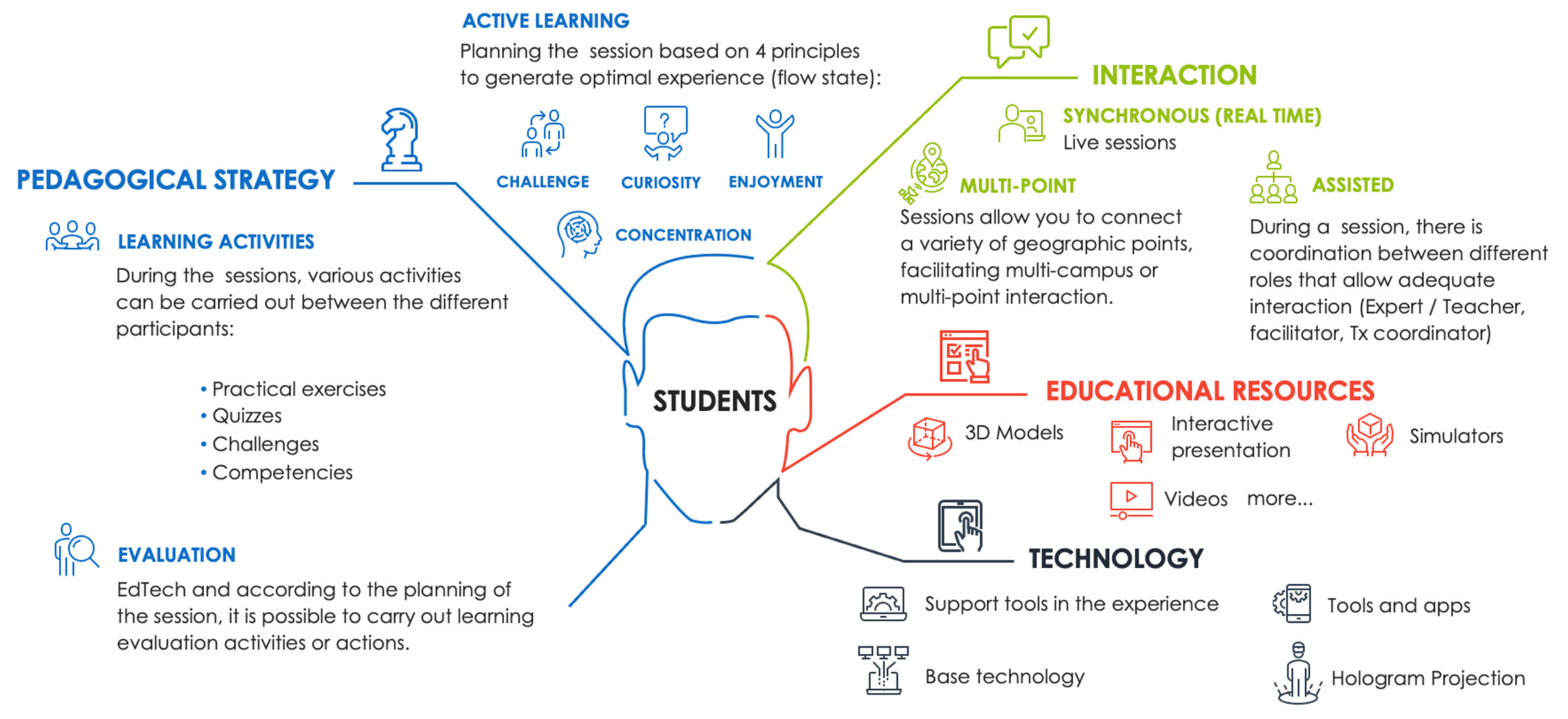
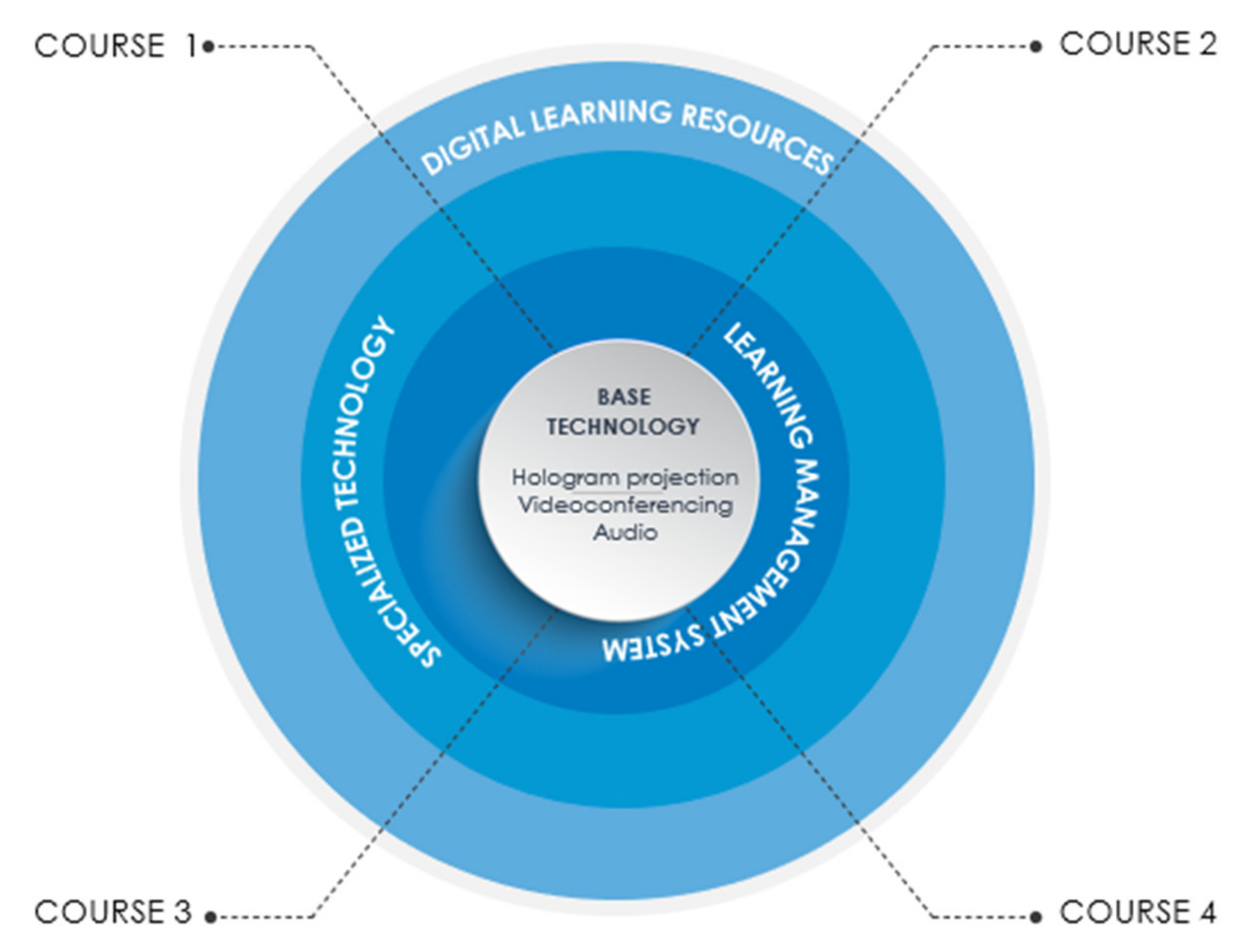
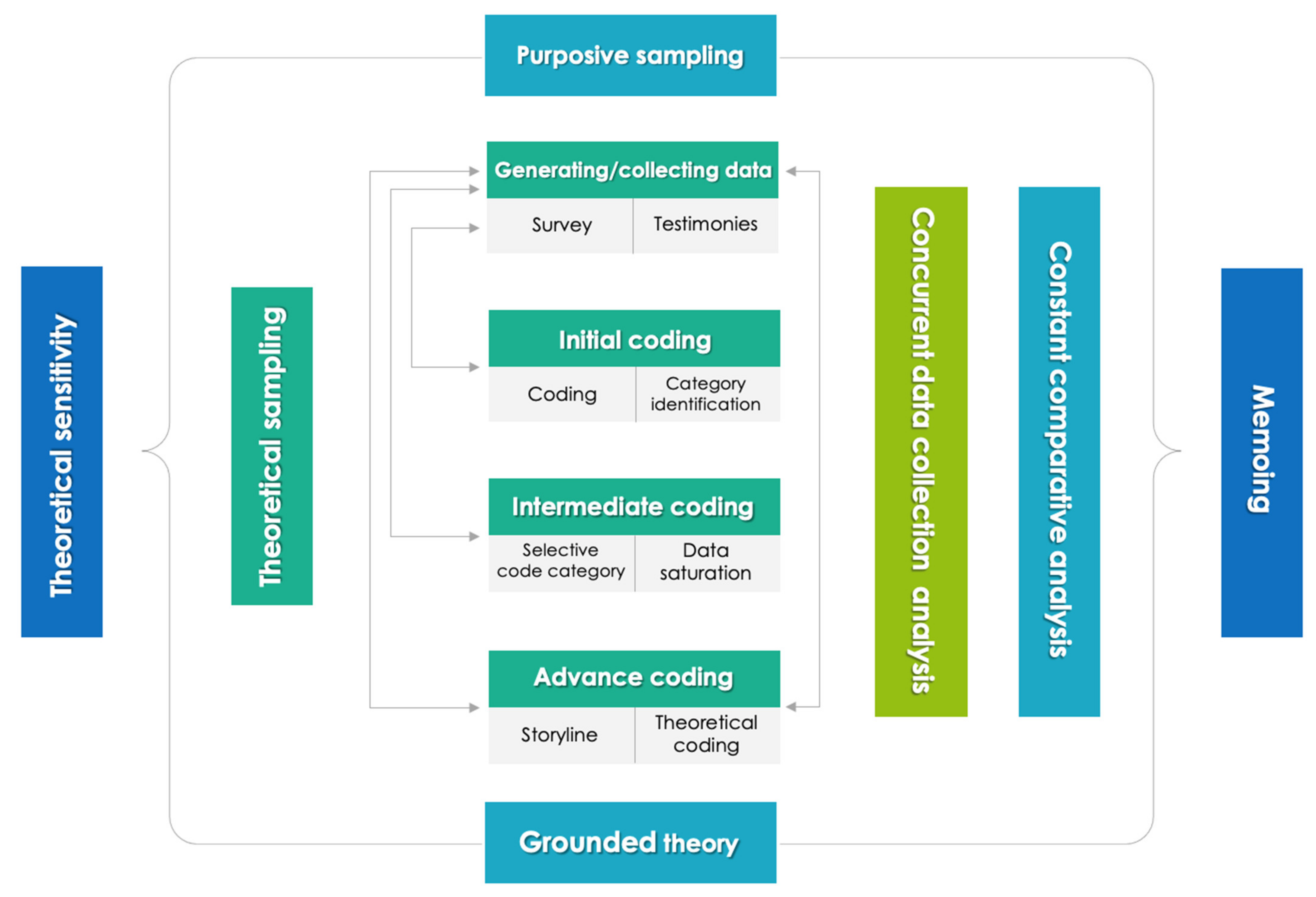
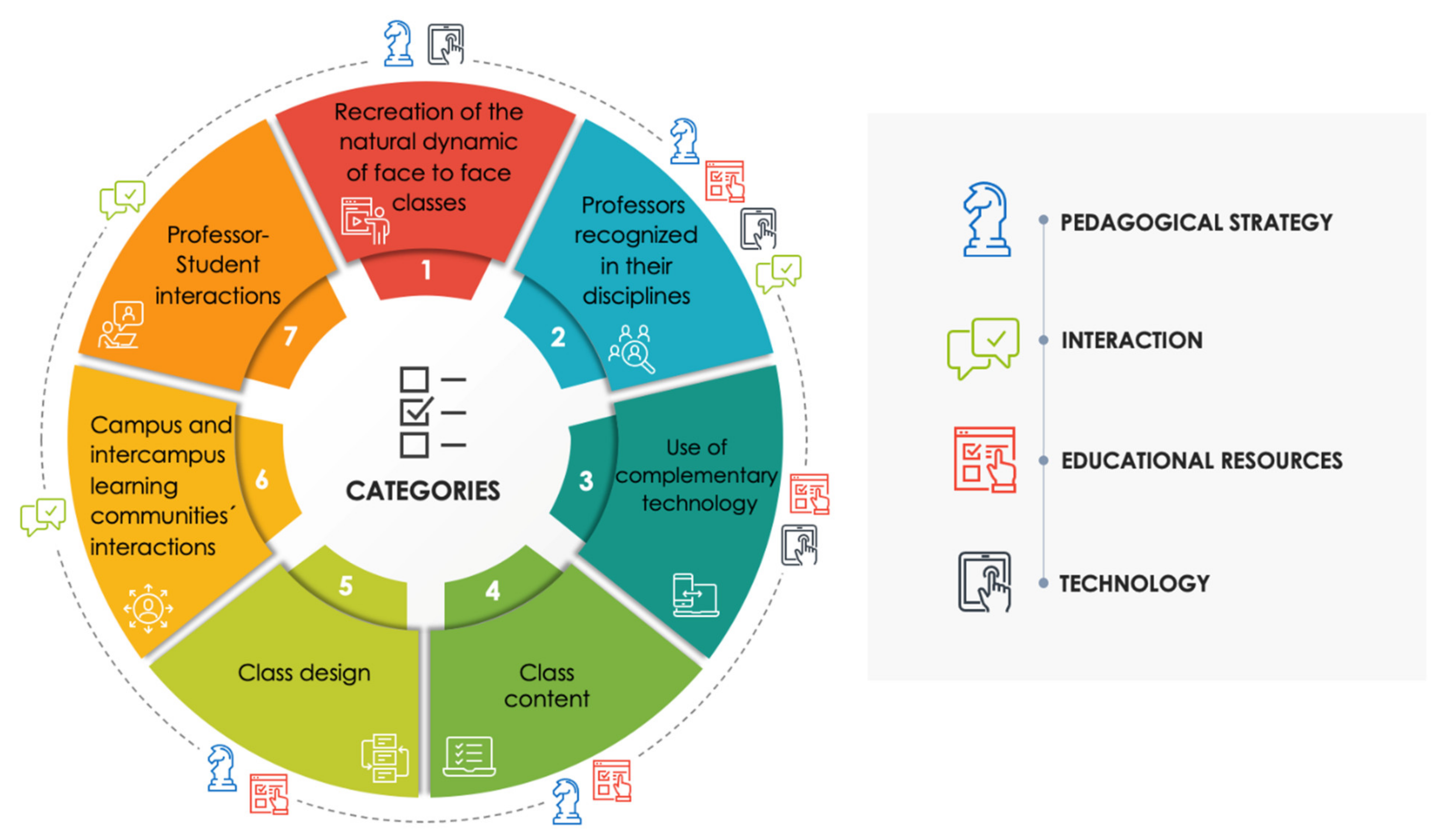
One of the most significant challenges of telepresence distance education is to bring the professor and the students closer together in a synchronistic educational experience where the professor is perceived as anatomically proportionate. Telepresence, an educational technology ecosystem using holograms, offers a way to solve this technological challenge. Our mixed exploratory research investigating this methodology had two purposes: (1) propose the key elements to teach distance courses synchronously in an educational technology ecosystem, and (2) demonstrate the technological, didactic practices that result in positive student learning outcomes in several specified courses. This methodology included applying a student questionnaire to collect their perceptions of the educational experience. The scores and written comments from the questionnaire were analyzed using Grounded Theory. On a Likert scale from 1 to 5, the students scored their educational experience, attaining a mean of 4.05. The positive perception affirmed that they valued: (a) recreating the natural dynamics of face-to-face classes, where the students perceived their professors as being physically present in the classroom; (b) professors renowned in their disciplines; (c) professor–student and campus and intercampus learning community interactions, and, finally, (d) class design and content. The main conclusions of this research were that students positively perceived the “wow” effect of the technology, feeling comfort, amazement, interest, and engagement. In addition, we found that professors and keynote speakers with excellent pedagogical skills and experts in their disciplines were well appreciated. Key elements for the success of the experience were professor-student, campus, and intercampus interactions and the quality of the technological and communication infrastructure.
Keywords: telepresence; holographic effect; educational technology; educational innovation; higher education; innovative practices; Education 4.0 telepresence; holographic effect; educational technology; educational innovation; higher education; innovative practices; Education 4.0